
REVIEW · KATHMANDU HIKING TOURS
Annapurna base camp trek 5 Days
Five days of Himalayan walking, one big reward. This Annapurna Base Camp trek combines a scenic bus ride, village trails, forest walks, and snowy mountain views for $699 per person. I like that airport transfers, permits, meals, tea-house lodging, a guide, and ground transport are bundled together. I also like the small group limit of 12, which should make the mountain days easier to manage.
The main caution is organization. Two poor accounts describe confusion over the planned route and missing water-purification tablets, with one guide initially asking them to pay for bottled water. The trip requires moderate fitness, and weather can affect the schedule. You should confirm the water plan, daily route, and guide arrangements before setting off.
Five useful things to know before booking
- The trip lasts six days overall: The mountain portion is paired with the road journey from Kathmandu to Pokhara and the return to Pokhara.
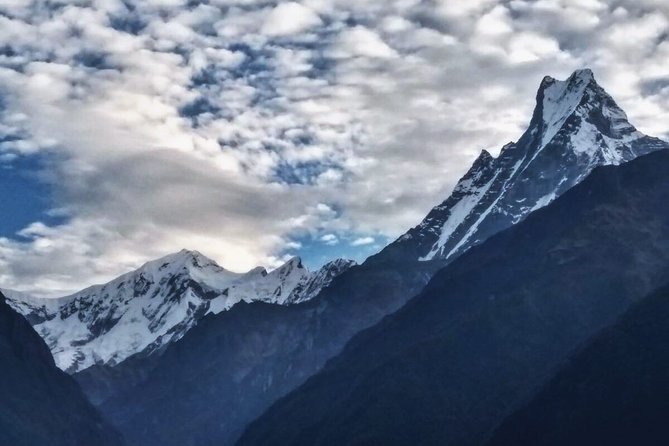
- Fish Tail is a major visual reward: Machhapuchare, also called Fish Tail, appears among the high peaks seen along the route.
- The first day is mostly transport: Expect about seven hours by tourist bus before exploring Pokhara Lakeside.
- Tea-house trekking keeps costs controlled: Lodging, five breakfasts, five lunches, and five dinners are included.
- The group is capped at 12 people: That is small enough for a more manageable guided walk.
- Water and planning deserve extra attention: Ask exactly how purification tablets, drinking water, and route changes will be handled.
What the $699 price really covers
At $699, this is not simply a guided walk. It is a package that begins with airport pickup and includes the tourist bus from Kathmandu to Pokhara, local road transport, permits, a guide, mountain accommodation, meals, equipment, and the return transfer to Pokhara.
That bundle gives the price real value. You do not need to arrange separate trekking permits, find lodges each night, or negotiate every jeep ride. A down jacket and sleeping bag are also provided, along with a hiking T-shirt and a certificate of achievement. A farewell dinner is included as well.
The package lists insurance among the included items, while travel insurance is specifically excluded. I would treat those as different things and arrange your own travel insurance before departure. The package also excludes food in Kathmandu and Pokhara, arrival visa fees, tips, and any extra accommodation caused by schedule changes.
You receive five breakfasts, five lunches, and five dinners. That fits the five-night mountain portion described in the package, though the overall schedule runs for six days because the first day begins with the journey to Pokhara. If you are comparing this with a cheaper trek, check what transport, meals, permits, and equipment are missing from the other price.
More Annapurna Treks in Kathmandu:
- Annapurna Circuit Trek with Tilicho Lake
★ 5.0 · 368 reviews - 14-Day Private Annapurna Base Camp Trek
★ 5.0 · 180 reviews - Annapurna Circuit with Tilicho Lake Trek
★ 5.0 · 25 reviews
Day 1: Seven hours from Kathmandu to Pokhara Lakeside
The trip begins early, at about 6:45 am, with a tourist bus from Kathmandu to Pokhara. The drive follows the Prithvi Highway and takes roughly seven hours. This is a long road day, so do not think of it as a gentle introduction to the trek. It is the price of starting in Kathmandu rather than making your own way to Pokhara beforehand.
Once you reach Pokhara, the plan includes time around Lakeside. This is a useful change of pace after the bus ride. Pokhara is the gateway town for the Annapurna region, and Lakeside gives you a chance to walk around, see the lake area, and prepare mentally for the mountain days ahead.
The practical drawback is the early start and uncertain road pace. The schedule gives an approximate duration, not a guaranteed arrival time. Keep important items in your day bag, including water, medication, a light layer, and anything you need during the drive.
Airport transfers are included, which helps if you are arriving in Nepal for this trip. Still, make sure your arrival timing matches the pickup plan. The first day starts early, so an arrival immediately beforehand may leave little room for rest.
Day 2: Jeep roads and the trail to Chhomrong Cottage
After breakfast at the Pokhara hotel, you take a local jeep toward Siwai. The drive is expected to take about two hours, with a stop at Birethati, described as an entry point for the route. From Siwai, the walking begins.
The day ends at Chhomrong Cottage after about five hours. This is your first real taste of the Annapurna trail, with village paths replacing the road and tea-house lodging replacing a standard hotel. The change matters. You are no longer just visiting the mountains from a vehicle. You are moving through the foothill communities on foot.
The jeep section is useful because it cuts out part of the approach and leaves more time for walking. It can also be a tiring part of the day. Local road transport is included, but the schedule does not promise a private vehicle for every road segment. You should expect a practical mountain transfer, not a polished coach service.
Chhomrong is an important point in the route and a good place to settle into the tea-house rhythm. Your guide handles the lodge arrangements, permits, and route planning, allowing you to focus on walking rather than paperwork. That service is one of the strongest reasons to choose an organized trip.
Day 3: Bamboo, oak, rhododendron, and Upper Sinuwa
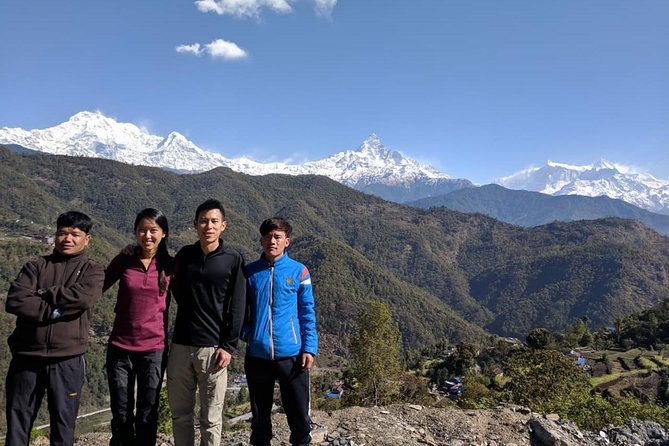
The third day starts with tea and, weather permitting, sunrise views of the white mountains. Breakfast follows at the lodge before you continue along the trail toward Upper Sinuwa.
The route passes through rhododendron, bamboo, and oak forests. This variety keeps the walk from becoming a simple march toward a distant snow peak. You get changing textures underfoot, shaded sections, and glimpses of the high mountains through the trees.
The itinerary gives about six hours for the day, although one detail lists the stop duration as only six minutes. That appears to be a scheduling error, so you should use the broader daily plan rather than rely on that small time entry. The route itself is the important point: this is a full walking day, not a short sightseeing stop.
Upper Sinuwa Hilltop Lodge and Restaurant is the overnight base. The next morning begins with another possible sunrise view, so the lodge location helps put you near the trail and the mountain scenery. Tea-house accommodation is simple, functional, and part of the experience. Do not book this expecting resort comforts.
More Five-Day Trips around Kathmandu:
- Machu Picchu: 5-Day Salkantay Trek with Panoramic Train
★ 5.0 · 79 reviews - 5-Day Pearl of Africa Chimps and Gorilla Trekking Safari
★ 5.0 · 52 reviews - 5-Day: Salkantay Trek to Machupicchu and Humantay Lake
★ 5.0 · 42 reviews
Day 4: The main goal, Annapurna Base Camp
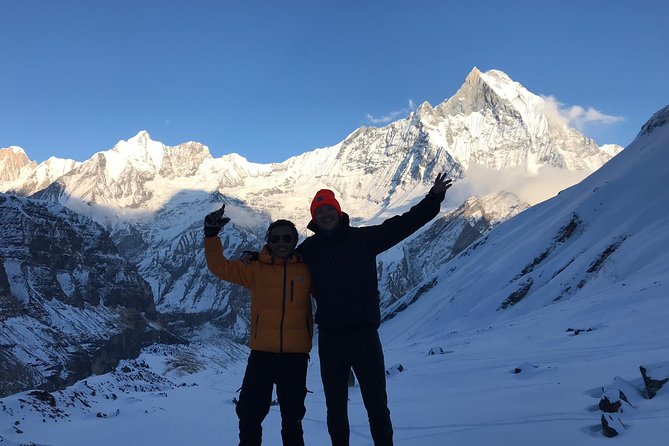
Day four is the emotional center of the trip. After breakfast, you walk toward Annapurna Base Camp, described as the base camp of the world’s tenth tallest mountain. The route brings you farther into the high mountain setting, with Annapurna and Machhapuchare dominating the views when the weather cooperates.
Machhapuchare is also called Fish Tail, a name that makes sense when you see its distinctive twin-peaked shape. It is one of the most memorable sights on this route and one of the main reasons this short trek has such appeal.
The day is presented as the point when you reach base camp on foot. That distinction matters. You are not driving to a viewpoint or taking a cable car. You are walking through the forests and mountain settlements first, then entering the higher part of the Annapurna route.
Weather is the great unknown. Cloud can cover the peaks, and the package specifically says the activity requires good weather. If conditions force a cancellation, you are offered another date or a full refund. On the trail itself, poor weather can still change what you see, so keep your expectations focused on the walk as well as the photographs.
The route requires moderate fitness. You should be comfortable with several hours of walking on consecutive days. The tour is not presented as a technical climbing trip, but it is still a mountain trek, and the schedule gives you little spare time if you fall behind.
Day 5: Sunrise above the trail and the return to Sinuwa
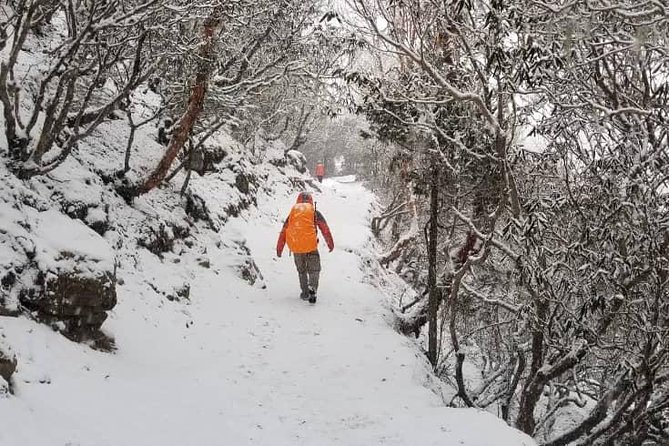
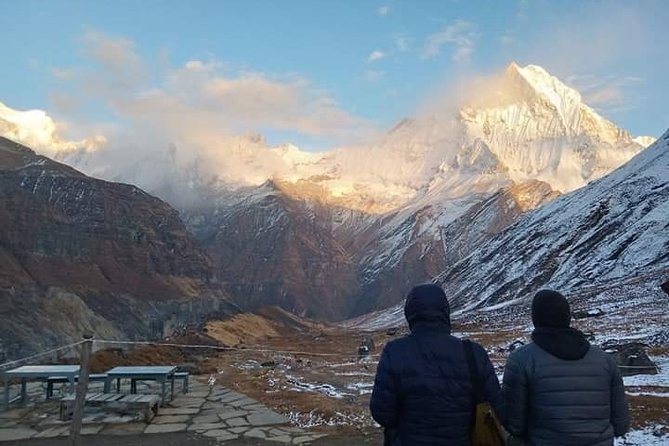
The morning begins with a short walk upward to watch the sun rise over Machhapuchare and Annapurna. This is a smart part of the schedule because the early light can make the vertical mountain faces look very different from the previous afternoon.
After breakfast, you return toward Sinuwa Hilltop Lodge. The six-hour estimate gives you a clear idea of the day: reaching base camp is not the end of the effort. You must also retrace part of the route and spend another night before completing the descent.
The return section can feel easier because the route is familiar, but downhill walking has its own demands. Take care on uneven trail sections and use the pace set by the guide. A small group helps here, since the guide can keep an eye on different walking speeds more easily than on a large departure.
The included meals are especially useful on these longer days. You do not have to stop and make separate arrangements for lunch or dinner. You should still confirm how drinks and extra snacks are handled, since the inclusions specify meals rather than every item you might buy along the route.
Day 6: Chhomrong, the hot spring, and the road back
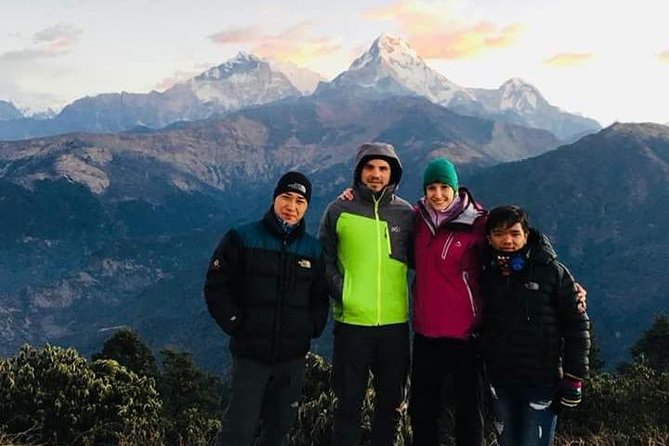
The final day follows the trail toward Chhomrong before descending steeply to the Jhinu hot spring. The route then continues to Siwai, with about two hours of trekking from Jinu Dada before you take a local jeep.
This is a satisfying finish because it adds a different kind of stop after the high mountain views. The descent to the hot spring gives the day a clear target, and the jeep back reduces the amount of road walking afterward.
The itinerary also mentions Pokhara Museum, although the detailed plan focuses on the trail, hot spring, Siwai, and the return drive. Do not assume a long museum visit unless the guide confirms it. The day is already shaped around a steep descent, a couple of hours of walking, and local transportation.
The trip ends in Pokhara, not Kathmandu. That is important when planning flights or onward travel. If you need to return to Kathmandu, arrange a separate bus or flight and allow enough time for mountain road delays.
The mountain views and the walking experience
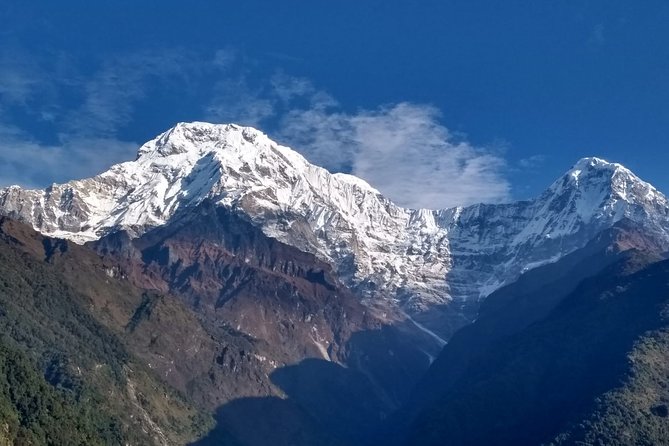
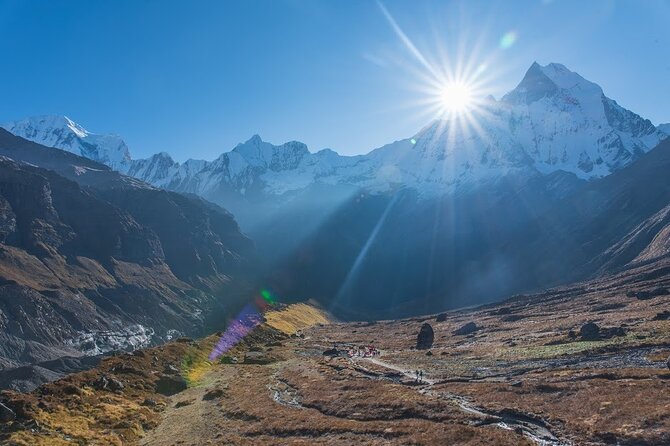
The appeal here is not just one viewpoint. The route changes from road to village, then forest, then high mountain terrain. You see rhododendron, bamboo, and oak before the snowy peaks take over the view.
Annapurna and Machhapuchare are the headline mountains. The plan also promises views of several of the world’s tallest peaks, though the exact visibility depends on weather and your position on the trail. Early morning is the best time to watch for clear views, which is why the sunrise stops are worth taking seriously.
The walking has a good mix of scenery. Forest sections give shade and a sense of progress through the hills. Open sections expose the great peaks. Tea houses break the route into manageable stages, even though the days remain physically demanding.
I like that the itinerary includes time to see the mountains at sunrise rather than treating the trek as a race from one lodge to the next. The schedule does not give long rest days, though, so you should arrive ready to walk rather than expecting a leisurely holiday.
Guides, water, and the details to confirm
An English-speaking local guide or Sherpa is included. The guide is meant to manage permits, lodges, transport, and the day-to-day route so you can pay attention to the trail. That support is valuable, especially when the itinerary includes buses, jeeps, permits, and several different lodges.
There is also a clear reason to ask questions before departure. Two poor accounts describe a guide who did not seem familiar with the route plan and forgot water-purification tablets. In one case, the issue led to a request that the participants pay for drinking water. This is not a small detail on a multi-day trek.
Before you leave, ask:
- Are purification tablets supplied for the full trek?
- Is bottled or treated water included, or is it extra?
- Who is the assigned guide?
- What is the confirmed route for each day?
- Which transport is private and which is local?
- What happens if road or weather conditions change?
These questions do not make you difficult. They make the arrangement clear. The package includes a maximum of 12 people, so you should also confirm the final group size and how the guide manages different walking speeds.
What you need to bring
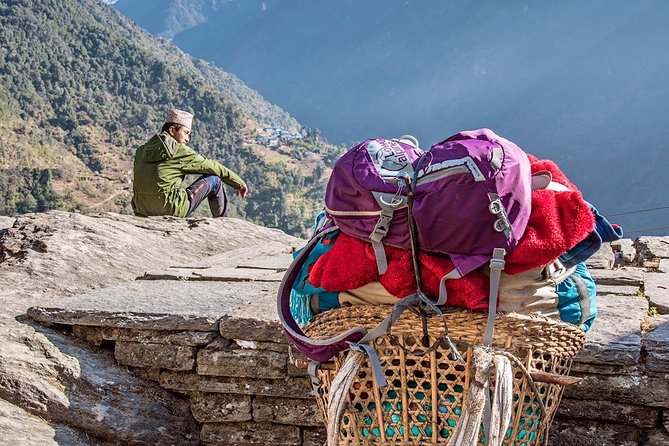
The operator supplies a down jacket and sleeping bag, which reduces the amount of bulky equipment you need to pack. A hiking T-shirt is also included, but you still need suitable walking clothes and personal items.
Bring a day bag with water, sun protection, a warm layer, basic personal medication, and anything you need during the road transfers. You should also have a backup plan for drinking water in case the tablets are unavailable or the arrangement changes.
Food in Kathmandu and Pokhara is not included, so budget for meals outside the listed trek meals. Arrival visa fees, tips, and travel insurance are also extra. The package lists insurance among the inclusions but separately excludes travel insurance, so read that distinction carefully before booking.
A moderate fitness level is required. You do not need to approach this as a climbing expedition, but you should be ready for several hours of walking on days two, three, five, and six, with the base camp approach as the main goal.
Who should book this Annapurna trip?
This trek suits you if you want a classic Himalayan route without arranging every permit, lodge, meal, bus, and jeep yourself. It works particularly well for someone with limited time in Nepal, since it links Kathmandu, Pokhara, and Annapurna Base Camp in one organized plan.
It is also a good match if you enjoy simple tea-house accommodation and want a small group rather than a large tour. The combination of forest walking, village trails, sunrise views, and high snowy peaks gives you more variety than a short mountain sightseeing trip.
I would be more cautious if you need a relaxed schedule, dislike basic lodging, or want complete flexibility. The itinerary has several long transport and walking days, and the return to Kathmandu is not included at the end. You should also be comfortable confirming practical details about water and the guide before departure.
The 99 percent recommendation figure and five-star rating from 252 ratings suggest strong overall satisfaction, but the two detailed low scores point to a real operational risk. The scenery and package value are attractive. The quality of the experience depends heavily on clear guide communication and good preparation.
Should you book it?
Book this trek if you want a reasonably priced, organized route to Annapurna Base Camp and value having transport, food, permits, equipment, and tea-house lodging arranged for you. The views of Fish Tail, Annapurna, and the surrounding peaks give the trip its power, while the forest trails keep the route varied.
Before paying, get written confirmation of the guide, water-purification plan, daily route, and end point in Pokhara. If those details are clear and you are fit for several hours of mountain walking, this six-day package offers a practical way to experience one of Nepal’s best-known short treks.
FAQ
How long does the Annapurna Base Camp trek take?
The full experience lasts approximately six days. The first day is the journey from Kathmandu to Pokhara, followed by the mountain route and the return to Pokhara.
What time does the tour start?
The stated start time is 6:45 am.
Is transport from Kathmandu to Pokhara included?
Yes. The package includes airport transfers, the tourist bus to Pokhara, local jeep transport, and ground transportation connected with the trek.
Is accommodation included?
Yes. Hotel accommodation in Pokhara and trekking lodges on the mountain route are included. Extra accommodation caused by schedule changes is not included.
Are meals included?
Five breakfasts, five lunches, and five dinners are included. Food in Kathmandu and Pokhara outside the stated package is not included.
Is a guide provided?
Yes. An English-speaking local trekking guide or Sherpa is included, along with trekking permits and arrangements for the route.
What happens if bad weather cancels the experience?
If poor weather causes the experience to be canceled, you are offered a different date or a full refund. Cancellation by you is fully refundable when made at least 24 hours before the start time.
Just added around Kathmandu
- Kathmandu: 15-Day Everest Base Camp Trek with Guide★ 4.3 · 12 reviews
- 14 Days Private Tour Everest Base Camp Trek★ 5.0 · 105 reviews
- Kathmandu: Nagarkot Sunrise & Hike with Lunch -Private/Group★ 4.9 · 122 reviews
- 4 Days Poon Hill Trek★ 5.0 · 94 reviews
- Annapurna Circuit Trek with Tilicho Lake (16 Days)★ 5.0 · 15 reviews
- Manaslu Circuit Trek★ 5.0 · 184 reviews
- Langtang Valley Trek★ 5.0 · 140 reviews
- Annapurna Circuit with Tilicho Lake Trek★ 5.0 · 25 reviews
Kathmandu Hiking Tours, compared.
Nagarkot Sunrise View and Day Hiking from Kathmandu
Read our review →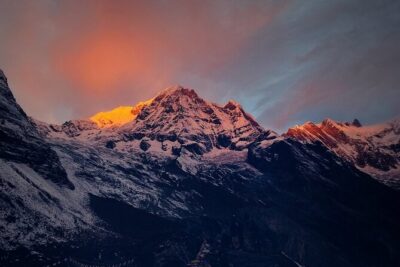
Browse the lists this tour appears in