
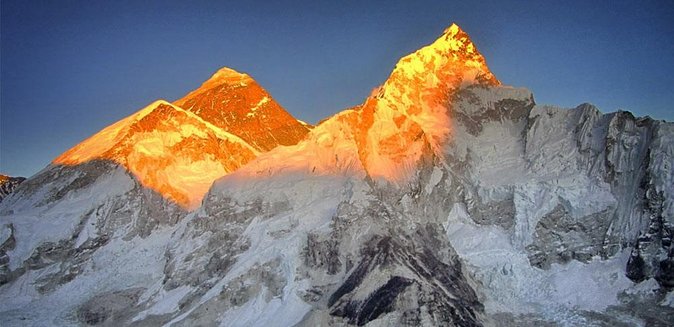
REVIEW · KATHMANDU HIKING TOURS
Everest Base Camp Trek – 14 Days
Everest rewards steady feet. This 14-day Everest Base Camp trek combines dramatic Himalayan scenery with the practical support that makes a high-altitude route manageable: guides, porters, meals, permits, lodging, and domestic flights are arranged for you. I especially like the two acclimatization days, plus the porter service that lets you hike without hauling your main bag.
I also like the small-group format, capped at 14 people, and the clear safety backup of a first-aid-trained guide and emergency evacuation arrangements. The main caution is the physical demand: you reach 5,365 meters at Base Camp and climb Kala Patthar to 5,555 meters. Flights can also shift between Kathmandu and Manthali Airport during busy seasons, so you need patience and flexible plans.
Key points to know before booking
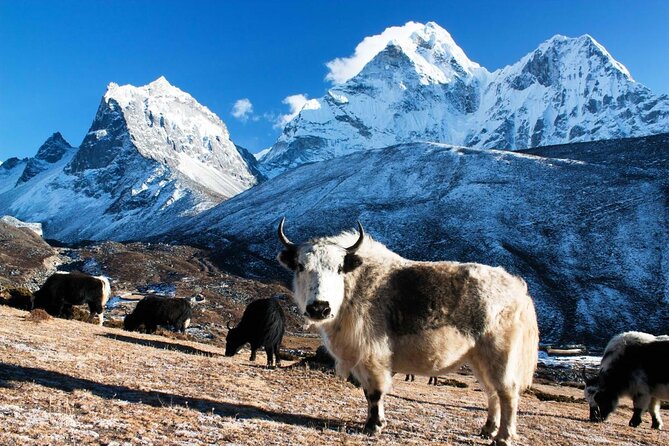
- Kala Patthar is the visual high point: The climb to 5,555 meters offers the finest mountain views of the route, but it is also one of the hardest mornings.
- Two acclimatization days are built in: You spend time in Namche Bazaar and Dingboche, with hikes that help you adjust rather than simply pushing higher.
- Porters carry the main load: One porter serves two clients for 11 days, with a 15-kilogram domestic flight luggage allowance.
- The group stays small: The maximum group size is 14, and solo bookings may incur a $250 single surcharge.
- The price covers the major trekking costs: At $1,800, the package includes flights, permits, guide, porter service, most meals, trail lodging, and airport transfers.
- The route is demanding but well supported: A first-aid-trained guide, filtered trail water, a medical kit, and emergency evacuation arrangements are included, but high-altitude rescue insurance is not.
What this Everest trek actually gives you
At $1,800 per person, this is not simply a guided walk to a famous sign. The price gathers together the expensive and awkward pieces of a Himalayan trip: the Kathmandu to Lukla flight, return airfare, national park entry, local fees, trail accommodation, staff wages, porter support, food, and transfers.
You also receive two nights in a three-star twin-share hotel in Kathmandu, breakfast there, and twin-share guesthouse rooms along the route. In Lukla, Phakding, and Namche, the lodging has attached toilets. Elsewhere, facilities may be more basic, so you should not expect hotel comfort every night.
The group limit of 14 is useful. You get the social energy of a shared trek without joining a huge procession. The guide can keep a closer eye on the group, which matters as the air thins and walking speeds separate.
The strongest value comes from organization. Your guide and porters handle much of the daily work, while you concentrate on pacing, hydration, scenery, and staying well. The package also includes seasonal fruit and filtered trail water using a Katadyn Pocket Water Filter, small touches that reduce the need to buy every drink along the way.
Still, the price does not cover everything. You pay for lunch and dinner in Kathmandu, alcoholic and other drinks, personal trekking gear, tips, international airfare, your Nepal visa, and travel insurance. The insurance must cover emergency high-altitude rescue and evacuation. That is not an optional detail on a trek reaching more than 5,000 meters.
More Everest Base Camp Treks in Kathmandu:
- Everest Base Camp Trek
★ 5.0 · 842 reviews - Everest Base Camp Trekking
★ 5.0 · 485 reviews - Everest Base Camp Trekking – 13 Day
★ 5.0 · 365 reviews
Days 1 and 2, Kathmandu to the trailhead
Your first day begins at Tribhuvan International Airport in Kathmandu. An Ace the Himalaya representative meets you outside the terminal with a sign and transfers you by private tourist vehicle. The first day is deliberately simple, giving you time to arrive, settle in, and meet the team.
The next stage is the flight toward Lukla and the start of the trek. During busy trekking months, flights may operate from Manthali Airport in Ramechhap instead of Kathmandu because of airport congestion. This can add ground transport and a very early start, so ask for the current flight arrangement before you arrive.
The flight to Lukla is short, listed at about 35 minutes on the return, but it moves you quickly from city streets to a mountain trailhead. The Lukla airport setting gives the trip an immediate sense of scale. You are no longer preparing for a trek in theory. You are at the start of it.
Your domestic baggage allowance is 15 kilograms. The porter system means you do not carry your main duffel on the trail, but you still need a daypack for essentials. Pack carefully. High-altitude trekking rewards light, useful gear, not a suitcase full of hopeful extras.
Days 3 and 4, bridges and Sherpa culture in Namche Bazaar
The route follows the Dudh Koshi River toward Namche Bazaar, crossing suspension bridges decorated with prayer flags. These crossings are part of the character of the trail, not just a way to get from one bank to another. The path enters Sagarmatha National Park, and the climb begins to feel more serious.
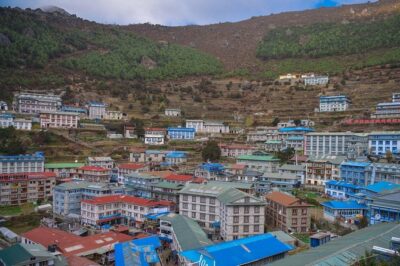
Namche Bazaar is one of the most important stops because it is both a mountain town and an acclimatization base. The first approach is a long trekking day, and the steepening trail can expose any weakness in your preparation. Go slowly. High altitude punishes enthusiasm more quickly than it rewards it.
The following day is reserved for adjustment. You take a shorter hike to the Sherpa Museum, which presents local customs and the history of Sherpa life. This pause gives your body time to adapt while adding cultural context to the mountain scenery.
I like this part of the plan because it avoids the common mistake of treating every day as a race toward Base Camp. The extra day in Namche costs you no progress on the map, but it gives you a better chance of continuing safely.
Days 5 and 6, Tengboche and Dingboche
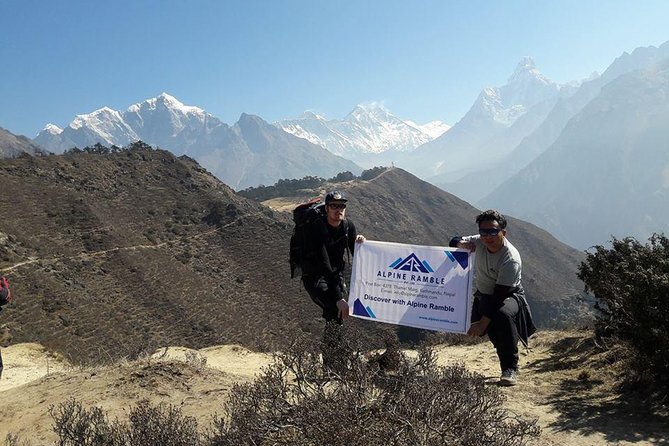
From Namche, the trail continues beside the Dudh Koshi, with mountain views opening along the way. You descend to Debuche, cross the Imja Khola, and climb toward Pangboche. Mani stones line parts of the trail, offering a reminder that this is a religious route as well as a famous trekking corridor.
Tengboche sits at about 3,860 meters and is home to Tengboche Gompa. The monastery gives the day a strong cultural focus. You can expect mountain scenery, rushing water, prayer flags, and Buddhist details woven into the route rather than kept behind a museum door.
The next day brings another long walk toward Dingboche. The trail climbs through Pangboche and continues into higher, more exposed country. At this point, the physical challenge becomes harder to ignore. You may find the reduced oxygen affects your sleep, appetite, or walking rhythm, though the itinerary allows for a slower pace.
The support system matters here. Your guide is first-aid trained and government licensed, while staff accommodation, food, insurance, equipment, and medicine are covered by the operator. That does not remove the risks of altitude, but it means you are not handling every problem alone.
A few more hikes around Kathmandu worth a look
- Nagarkot Sunrise View and Day Hiking from Kathmandu
★ 5.0 · 471 reviews - Annapurna Circuit Trek with Tilicho Lake
★ 5.0 · 368 reviews - Everest Base Camp Trek
★ 5.0 · 350 reviews - Everest Base Camp Trek -14 Days
★ 5.0 · 321 reviews
Day 7, the Dingboche acclimatization hike
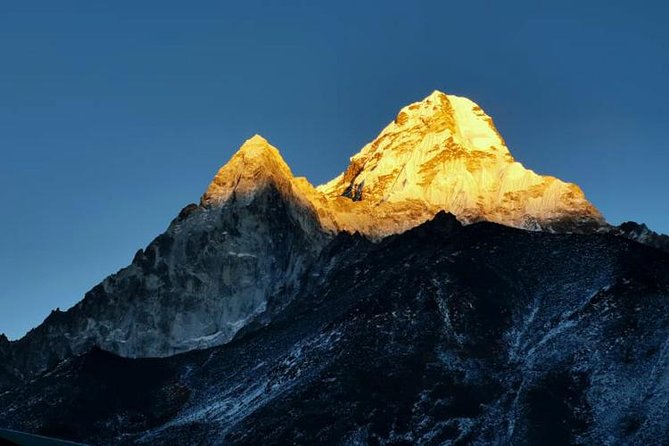
Dingboche provides the second major acclimatization day. Instead of moving closer to Base Camp, you hike toward Nangkartshang Peak above the village.
The purpose is practical. You gain altitude during the day, see how your body responds, and return to the same lodging rather than sleeping higher that night. The peak is also a strong viewpoint, so the day feels like more than a medical exercise.
This is one of the itinerary’s best decisions. A 14-day schedule can look tight on paper, but removing both acclimatization days would make the route far less sensible. The mountain does not care how eager you are, and a rest day with a worthwhile hike is much better than wasting a day feeling ill.
Days 8 and 9, Lobuche and Everest Base Camp
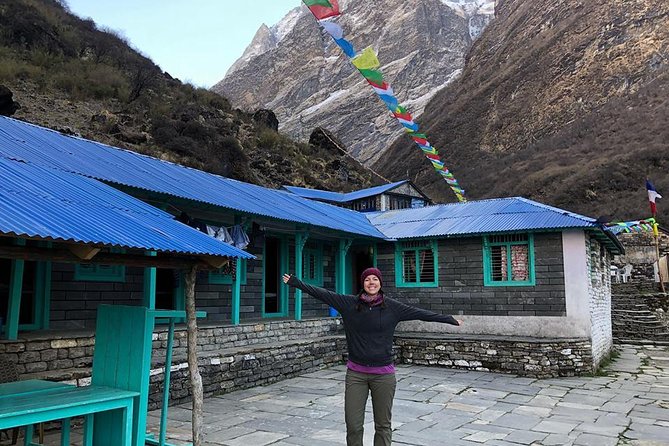
From Dingboche, the route heads toward Lobuche along the lateral moraine of the Khumbu Glacier. The trail passes stone memorials honoring climbers who died on nearby peaks. This section adds a sober note to the trip. Everest is beautiful, but it is not harmless, and the memorials make that clear.
Lobuche is a high settlement and an important overnight stop before Base Camp. The day is long, and the increasing altitude makes even ordinary inclines feel demanding. You will need to keep your pace controlled and listen closely to the guide.
The following day is the major goal: Everest Base Camp at 5,365 meters. The walk follows the Khumbu Glacier and includes rough, uneven ground. Base Camp itself is not the summit of Everest, and from here the mountain may not offer the classic full profile many people imagine. The achievement is reaching this high, remote point on foot, among the glacier and peaks.
In spring, there will likely be expedition activity at Base Camp. That can add interest, but the character of the site changes with the season. The itinerary allows about 30 minutes at the stop, enough for photographs and a moment to take in the setting before returning.
Day 10, Kala Patthar at 5,555 meters
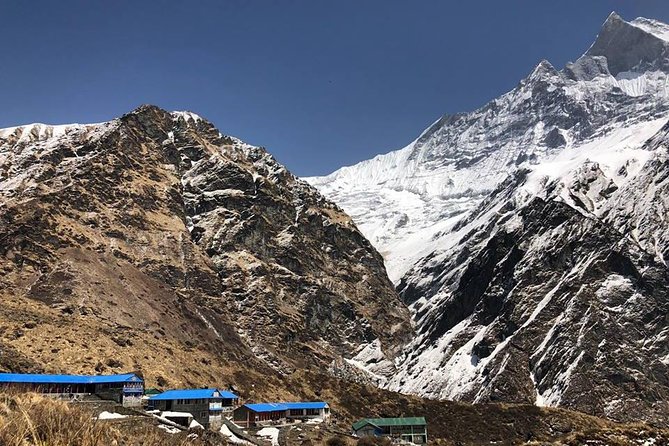
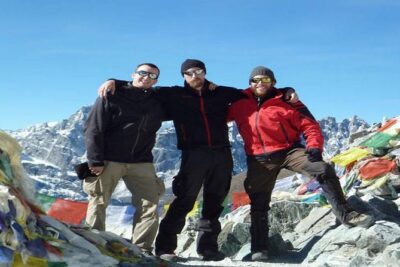
Kala Patthar is often the finest viewpoint of the trek, but it asks a price in effort. The climb reaches 5,555 meters, higher than Everest Base Camp, and the morning ascent is described as one of the hardest parts of the route.
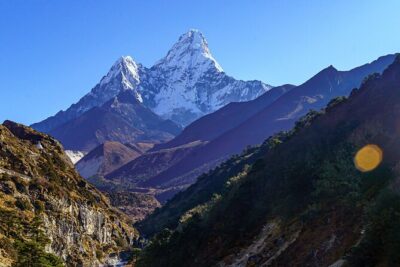
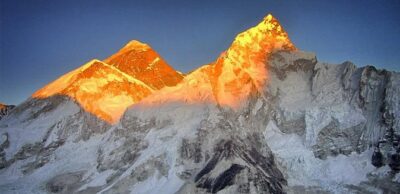
The reward is a broad mountain panorama. This is the place for the iconic Everest-area views, and it often feels more visually satisfying than Base Camp itself. If your priority is seeing Everest clearly rather than simply reaching the Base Camp marker, Kala Patthar deserves special attention.
Do not treat this as an easy photo stop. The thin air, early start, and uphill path can make the climb slow. Your guide’s role is important here, especially if someone in the group needs to turn back or adjust their pace.
After Kala Patthar, the trip shifts from reaching the goal to retracing the route. That does not make the descent effortless. Long downhill days can be hard on knees and feet, especially after several days at altitude.
Days 11 and 12, descending through the Khumbu
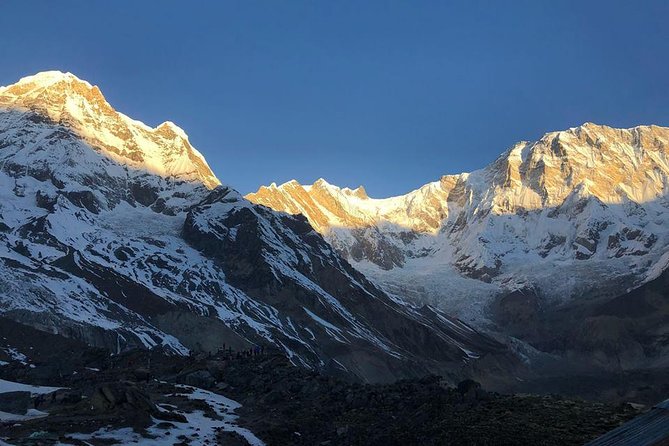
The route leaves the Base Camp area and passes back through Pangboche and Tengboche before reaching Namche Bazaar. You lose altitude, which usually feels welcome, but the walking days remain long.
Returning to Namche gives the group a chance to reflect on the harder stages while enjoying a more familiar stop. The town marks a useful psychological transition. You are still in the mountains, but the final stretch is now clear.
Day 12 continues from Namche to Lukla, where the trek began. This is another long walking day, and fatigue may be more noticeable than during the ascent. The group can use the evening to recognize the achievement and prepare for the flight out.
The porter service is especially valuable during this return section. You still carry your daypack, but your main load remains handled by the porter team. The arrangement is one porter for two clients, so pack in a way that respects the 15-kilogram limit and the shared workload.
Days 13 and 14, flying back to Kathmandu
The flight from Lukla to Kathmandu takes about 35 minutes when it operates as planned. You get a final view of the mountains before returning to the city, where a transfer takes you to your hotel.
The last night gives you a buffer before departure, rather than forcing an immediate international connection after a mountain flight. On Day 14, an airport representative transfers you to Tribhuvan International Airport.
That buffer is sensible because mountain flights can be affected by conditions and airport congestion. The itinerary does not promise a completely frictionless exit, and you should avoid booking a tight onward connection unless you have room for change.
Guides, porters, and the human side of the trek
The most praised part of this experience is the staff. Specific guides named in recent feedback include Kishor, Chris, Maddy, Sujan, and Rajendra Khatry. Maddy received repeated praise for kindness and steady support, while Rajendra was singled out for professionalism, local knowledge, safety awareness, and personal care.
Porters Saman and Sher were also repeatedly praised for their humor, hard work, and attention to the group. These details matter because the quality of a high-altitude trek is shaped by the people around you. A cheerful porter cannot shorten a climb, but good support can make a difficult day feel manageable.
Tips are expected and are not included. Set aside money for the guide and porter team, and ask the operator for current tipping guidance before departure.
What you need to pay for yourself
The main omissions are easy to overlook:
- Lunch and dinner in Kathmandu
- International flights
- Nepal visa
- Alcoholic, hot, and cold drinks
- Personal trekking equipment
- Travel insurance with high-altitude rescue and evacuation cover
- Tips for guide and porters
- Any cost not listed in the included section
The single booking rule also deserves attention. The advertised price is based on two people booking, but it can apply to a solo booking if a group or room share is available. If no group exists for your date, or if you want a private departure, a $250 single surcharge applies on arrival in Nepal.
Cancellation terms are fairly useful if you plan ahead. Cancel at least six full days before the start time for a full refund. A cancellation two to six full days before departure receives a 50 percent refund, while cancellations within two days are nonrefundable.
Who should book this Everest route
This trek suits you if you want the Everest Base Camp route with the major logistics handled. It is a good match for someone with moderate physical fitness who prefers a guided small group, wants porter support, and values acclimatization days over a rushed schedule.
It is less suitable if you want luxury lodging, private rooms throughout, complete flexibility, or a gentle holiday. You need to accept long walking days, basic trail accommodation, high-altitude risk, early transport, and possible flight changes.
The route also suits solo visitors who want company without joining a very large group. Just confirm the single-room surcharge before paying.
Should you book it?
I would recommend this trek for a fit, prepared hiker who wants a well-supported first visit to Everest Base Camp. The price is strong for what it covers, the group size is sensible, and the plan includes the two acclimatization stops that matter most.
Book it if you can handle the altitude, buy proper rescue insurance, and keep your schedule flexible around the Lukla flights. Skip it if you dislike basic lodging or expect every day to run like a city tour. Everest is the headline, but the real reward is the steady route through Sherpa villages, monasteries, suspension bridges, glaciers, and high mountain passes.
FAQ
How long is the Everest Base Camp trek?
The experience lasts approximately 14 days, including arrival and departure transfers, domestic flights, trekking days, acclimatization days, and time in Kathmandu.
Where does the trek start and finish?
It starts with pickup at Tribhuvan International Airport in Kathmandu. The experience ends with a transfer back to the same airport for your departure from Nepal.
What is the maximum group size?
The maximum group size is 14 people.
Are flights between Kathmandu and Lukla included?
Yes. The package includes the Kathmandu to Lukla and Lukla to Kathmandu airfare, including the airport departure tax. During busy seasons, flights may operate through Manthali Airport in Ramechhap instead of Kathmandu.
What is the domestic baggage allowance?
The domestic flight luggage allowance is 15 kilograms.
Is porter service included?
Yes. Porter service is included for 11 days, with one porter assigned for every two clients.
What accommodation is included?
You receive two nights in three-star twin-share accommodation in Kathmandu, with breakfast. Trekking accommodation is in twin-share guesthouses, with attached toilets in Lukla, Phakding, and Namche.
Are meals included?
Standard breakfast, lunch, and dinner are included during the trek. Breakfast is included in Kathmandu, while lunch and dinner in Kathmandu are not included.
Do I need travel insurance?
Yes. You need travel insurance that covers emergency high-altitude rescue and evacuation. That insurance is not included in the tour price.
What happens if I book alone?
The listed price can apply to a single booking if there is an existing group or someone to share accommodation with. If there is no group for your date, or you request a solo departure, a $250 single surcharge applies upon arrival in Nepal.
Just added around Kathmandu
- Kathmandu: 15-Day Everest Base Camp Trek with Guide★ 4.3 · 12 reviews
- 14 Days Private Tour Everest Base Camp Trek★ 5.0 · 105 reviews
- Kathmandu: Nagarkot Sunrise & Hike with Lunch -Private/Group★ 4.9 · 122 reviews
- 4 Days Poon Hill Trek★ 5.0 · 94 reviews
- Annapurna Circuit Trek with Tilicho Lake (16 Days)★ 5.0 · 15 reviews
- Manaslu Circuit Trek★ 5.0 · 184 reviews
- Langtang Valley Trek★ 5.0 · 140 reviews
- Annapurna Circuit with Tilicho Lake Trek★ 5.0 · 25 reviews
Kathmandu Hiking Tours, compared.
Nagarkot Sunrise View and Day Hiking from Kathmandu
Read our review →
Browse the lists this tour appears in