
REVIEW · KATHMANDU HIKING TOURS
Annapurna Base Camp Trek – 11 Days
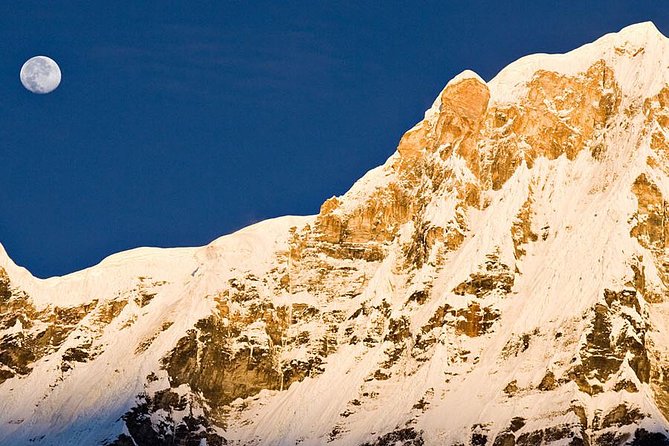
The Himalayas reward steady walkers. This 11-day Annapurna Base Camp trek combines terraced hillsides, rhododendron forests, ethnic villages, snowy peaks, and the famous sunrise from Poon Hill. I like the Poon Hill sunrise and the chance to relax at Jhinu Danda’s hot springs. The main drawback is the demanding mix of long walking days, stone stairs, early starts, and road transfers.
At $986 per person, the price covers much more than a guide and a bed. Permits, accommodation, meals, staff costs, surface transport from Kathmandu, equipment such as a sleeping bag and down jacket, and basic medical support are included. You still need travel insurance, personal gear, drinks, and tips, so budget for those separately.
Key points to know before booking
- Poon Hill sunrise: An early climb brings views toward Annapurna, Dhaulagiri, Nilgiri, and Lamjung Himal.
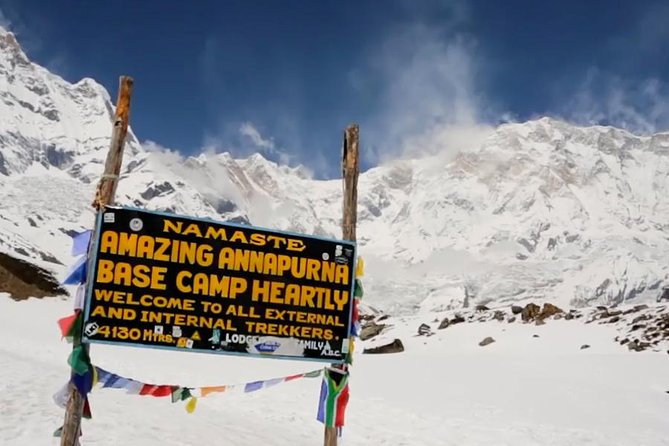
- Annapurna Base Camp at 4,130 meters: The route reaches Machhapuchhre Base Camp at 3,700 meters before continuing toward Annapurna Base Camp.
- Hot springs at Jhinu Danda: A warm soak gives your legs a welcome rest during the return section.
- Private group format: Only your own group takes part, with an English-speaking local guide.
- A lot is included: Permits, guesthouses, meals, porter and staff costs, transfers, bags, a down jacket, and first aid support are part of the package.
- A real physical test: You need moderate fitness for repeated uphill and downhill walking, stone stairs, and high-altitude trekking.
What the $986 price really covers
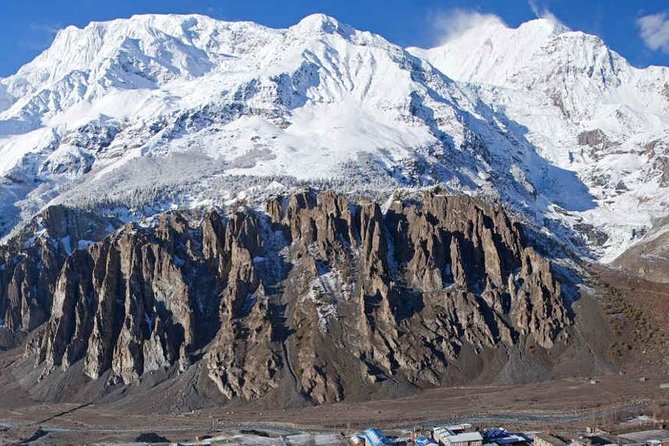
The headline price is strong for an 11-day Nepal trek because it includes several costs that can quickly add up on an independent trip. You receive surface transport between Kathmandu and Pokhara, the main road transfers to and from the trail, trekking permits, entry fees, guesthouse accommodation, and meals during the walking days.
The package includes breakfast on 10 days, lunch on 9 days, and dinner on 8 days. That suggests the first and final road-transfer days may not include every meal, so check the exact meal arrangement before setting out. Alcoholic drinks, hot and cold drinks, laundry, and personal purchases are not covered.
You also receive a sleeping bag, down jacket, and duffel bag. That is useful if you are flying into Nepal without a full trekking kit. Your personal equipment still matters, though. You need to supply items such as suitable walking shoes, clothing, toiletries, and any gear not specifically listed by the operator.
The price also pays for the trekking staff’s food, accommodation, wages, insurance, equipment, medicine, and transport. An oximeter and first aid kit travel with the group. These details do not replace travel insurance, but they show that the operator has planned for routine health checks and basic trail problems.
More Annapurna Treks in Kathmandu:
- Annapurna Circuit Trek with Tilicho Lake
★ 5.0 · 368 reviews - Annapurna base camp trek 5 Days
★ 5.0 · 252 reviews - 14-Day Private Annapurna Base Camp Trek
★ 5.0 · 180 reviews
Kathmandu to Pokhara: the road into the mountains
The trip begins in Kathmandu at 6:15 am, with a tourist bus heading toward Pokhara along the Prithvi Highway. This is not a quick airport-style transfer. You spend the day on the road, passing rivers, terraced farms, villages, and towns.
I like this opening because it lets you see how quickly Nepal changes outside the capital. You move from city traffic into farmland and hill country before reaching Pokhara. The tradeoff is simple: a bus ride takes time and can feel tiring before you have taken your first step on the trail.
Pokhara is an important pause in the route. You spend the night there before driving to Nayapul the next day. The return journey follows the same broad pattern, with a final tourist bus back to Kathmandu on Day 11.
Nayapul to Ghorepani: your first trail days
After leaving Pokhara, the group drives for about two hours to Nayapul. The trek begins by crossing a suspension bridge over the Modi River and continuing toward Birethanti.
This first walking section introduces the rhythm of the route: bridges, village paths, forest, and steady climbing. The trail passes through Banthanti and Nangethanti before reaching Ghorepani. You should expect uphill walking rather than a gentle stroll, even though the route is described as easy in parts.
The next section moves through thick rhododendron forest. Rhododendrons are especially important in Nepal’s hill country, and their presence gives the walk a strong sense of place. Orchids and ferns also appear later on the route.
Ghorepani is more than a place to sleep. It is the staging point for the famous morning climb to Poon Hill, so your first nights require an early bedtime if you want to feel human before sunrise.
Poon Hill at sunrise: the first great reward
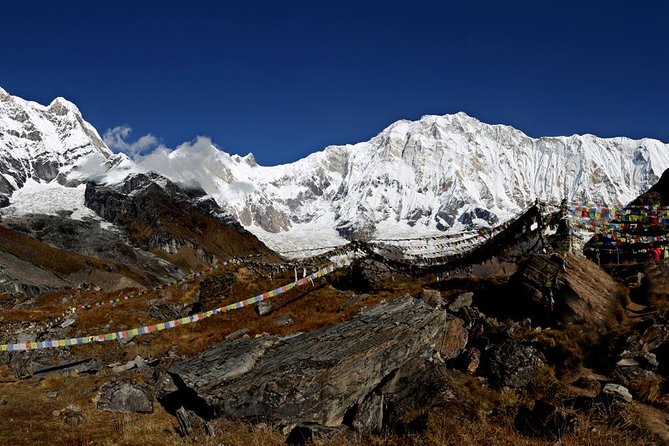
Day 4 begins with an early morning ascent to Poon Hill. The route may be snowy, and the climb is worth treating seriously. You are heading up before breakfast for a view across the Annapurna and Dhaulagiri ranges.
From Poon Hill, the itinerary identifies views toward Annapurna, Dhaulagiri, Nilgiri at 7,061 meters, and Lamjung Himal at 6,983 meters. The sunrise is the main event, but the mountain names help you understand what you are seeing instead of staring at a wall of white peaks with no context.
After Poon Hill, the trek continues through forest and village paths. The day includes uphill and downhill walking, so the morning climb is not the only physical effort. This is a good example of the route’s character: a major viewpoint is often only one part of a longer walking day.
A few more hikes around Kathmandu worth a look
- Everest Base Camp Trek – 14 Days
★ 5.0 · 1,499 reviews - Everest Base Camp Trek
★ 5.0 · 842 reviews - Everest Base Camp Trekking
★ 5.0 · 485 reviews - Nagarkot Sunrise View and Day Hiking from Kathmandu
★ 5.0 · 471 reviews
Jhinu Danda and the hot springs
The route then climbs and descends through forest before crossing the suspension bridge over Kimrong Khola. The destination is Jhinu Danda, known here for its hot spring.
The warm water is a practical treat rather than a luxury resort experience. After several days of stairs and uneven trails, a short rest in the spring can help your legs recover. It also gives the trek a welcome change of pace. You are not just walking toward a famous base camp; you are moving through villages and stopping for small local experiences along the way.
The route later returns to Jhinu Danda, giving you another opportunity for a warm soak. If you plan to use the springs, pack a small quick-drying item of clothing and keep it easy to reach. That is practical advice, not glamorous advice, but it can save you from rummaging through your duffel after a long day.
Sinuwa, Deurali, and the road to Machhapuchhre Base Camp
One of the more varied days follows a forest trail with orchids and ferns. You descend stone stairs, cross Chhomrong Khola, and climb toward Sinuwa.
This section shows why the trek needs moderate fitness. Downhill walking can be just as hard on your knees as uphill walking is on your lungs. The route does not simply rise in a straight line. You lose height, cross a river, then gain it again.
From Sinuwa, the trail continues toward Deurali and then along stone stairs toward a mountain viewpoint. Snow-capped peaks begin to dominate the scene as you approach Machhapuchhre Base Camp, at 3,700 meters.
Machhapuchhre means Fishtail, and the mountain is one of the route’s most memorable sights. The itinerary then follows moraine terrain toward Annapurna Base Camp. A moraine route is rougher and more exposed underfoot than a smooth village path, so steady pacing matters here.
Annapurna Base Camp at 4,130 meters
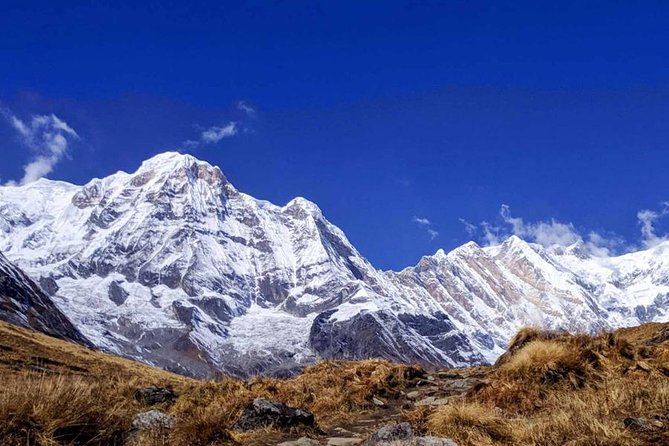
The route reaches Annapurna Base Camp after passing Machhapuchhre Base Camp and following the moraine area. At 4,130 meters, this is the highest point named in the program and the trip’s central goal.
The mountain setting changes as you gain height. Forest gives way to a more open world of snow, rock, and steep Himalayan peaks. The itinerary highlights the snowy views and the trail beside the Modi Khola, which helps place the walk within the mountain valley rather than treating the base camp as an isolated photo stop.
Altitude is the main concern here. The package includes an oximeter to check pulse, oxygen saturation, and heart rate, plus first aid supplies. Those tools are useful, but they do not make altitude harmless. You should still tell your guide promptly if you feel unwell and follow the guide’s instructions.
The program allows the group to reach base camp and begin the return rather than adding several extra acclimatization days. That makes the 11-day format efficient, but it also means you should arrive ready for sustained walking and changing elevation.
The return through Modi Khola and Chhomrong
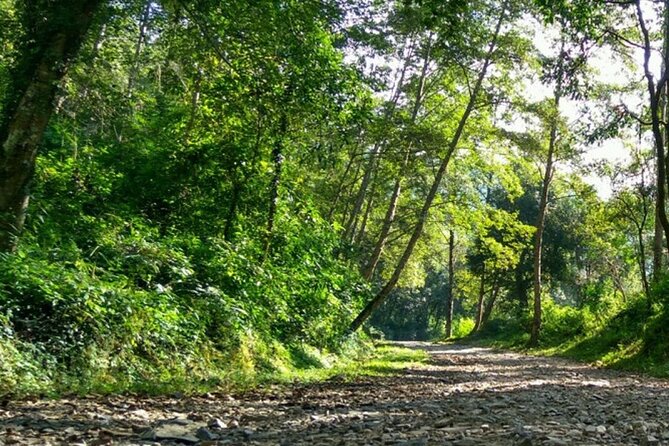
The return begins by descending through the moraine route toward Machhapuchhre Base Camp. You then follow the Modi Khola through rhododendron and fir forest.
This is not merely a repeat of the ascent. The views change when you walk downhill, and familiar villages take on a different shape. Still, your legs may be tired, so the second half of the trek deserves as much respect as the climb toward base camp.
The trail later reaches Sinuwa, descends to Chhomrong Khola, and climbs stone stairs to upper Chhomrong. From there, you descend to Jhinu Danda for the hot spring stop.
The repeated climbs and descents are worth flagging. The route is not technically described as a climbing expedition, but it is a sustained mountain hike with plenty of stairs. A person who enjoys day hikes and regular walking will be better prepared than someone who only counts the distance on a map.
Nayapul, Pokhara, and the final bus to Kathmandu
After the final trail section, you descend to Nayapul by following the Modi Khola and passing more village and hill scenery. From Nayapul, a vehicle returns you to Pokhara.
The evening in Pokhara is left open for rest or personal plans. That flexibility is useful after the trek, since some people will want a quiet meal and an early night while others may want to spend a little time in town.
On Day 11, the group leaves Pokhara early by tourist bus for Kathmandu. The road journey follows greenery, villages, and the highway route back to the capital. The activity ends at the original Kathmandu meeting point.
The transport schedule is efficient, but it is not built around maximum comfort. You spend substantial time on buses at the beginning and end. If you prefer to fly between Kathmandu and Pokhara, that option is not part of the stated package.
Guides, staff, and the private format
The trek uses a local government licensed English-speaking guide. Because the activity is private, your own group takes part rather than joining a large shared departure.
That setup can make a big difference on a route with changing energy levels. You can discuss pace, rest stops, and practical concerns with your guide instead of matching the speed of a large crowd. The guide also has the route knowledge and the basic medical equipment supplied by the operator.
Several guide names have been praised in the supplied feedback, including Prakash, Mansing, Shiva, Naba, and Dhakal Saroj. One solo trekker specifically highlighted Saroj’s helpful service. Other accounts praised Prakash for patience, politeness, and keeping the group comfortable. These names do not guarantee who will lead your departure, so ask for the assigned guide if that matters to you.
There is also an important caution. One unhappy solo customer described an unprofessional guide, while the company replied that the complaint appeared to concern a different operator and said it had not organized that person’s trip. I would treat this as a reminder to confirm the company name, guide, and booking details before arrival.
Who will enjoy this trek most
I would recommend this route to someone who wants a classic Nepal trek with several types of scenery rather than a single mountain viewpoint. You receive forests, bridges, villages, rivers, hot springs, Poon Hill, Machhapuchhre Base Camp, and Annapurna Base Camp in one organized trip.
It also suits solo participants who want a private arrangement with guide support. Families and small groups can benefit from the same format, though every person should be comfortable with long days on foot and repeated stone stairs.
You should think carefully before booking if you dislike early starts, shared guesthouses, basic mountain accommodation, long bus rides, or changes in weather. The package promises the best available guesthouses, mainly in twin rooms, not luxury hotels along the trail.
The route requires moderate physical fitness. You do not need to be a technical mountaineer based on the information provided, but you do need to walk uphill and downhill for several days and handle a high point of 4,130 meters.
Practical details, cancellation, and final decision
Confirmation arrives at booking, and the meeting point is in Kathmandu at 6:15 am. The experience ends back at that meeting point after the return from Pokhara.
Free cancellation is available if you cancel at least 24 hours before the start time. A cancellation inside that window is not refunded, and changes are not accepted. Since the trek depends on good weather, a cancellation caused by poor conditions offers either another date or a full refund.
I think you should book this trek if you want strong value, a private guide, and a well-known Himalayan route with both Poon Hill and Annapurna Base Camp. The package is especially appealing if you need some equipment supplied and prefer to have permits, transport, meals, and staff arrangements handled for you.
I would skip it if you want short walking days, premium accommodation, or a relaxed road itinerary. For the right person, though, this is a demanding but rewarding way to see the Annapurna region without organizing every moving part yourself.
FAQ
How long is the Annapurna Base Camp trek?
The experience lasts approximately 11 days, beginning and ending in Kathmandu.
What time does the trek begin?
The listed start time is 6:15 am in Kathmandu.
Is transport from Kathmandu included?
Yes. Surface transport from and to Kathmandu is included, with tourist bus travel between Kathmandu and Pokhara and vehicle transfers connected with the trail.
Is Annapurna Base Camp included in the itinerary?
Yes. The route continues beyond Machhapuchhre Base Camp at 3,700 meters to Annapurna Base Camp.
Are meals included?
Breakfast is included for 10 days, lunch for 9 days, and dinner for 8 days. Alcoholic drinks and other hot or cold drinks are not included.
Do I need travel insurance?
Yes. Travel insurance is not included, so you must arrange it separately.
Just added around Kathmandu
- Annapurna Base Camp Trek 12 Days★ 5.0 · 18 reviews
- Annapurna Base Camp Trek 10 Days★ 5.0 · 35 reviews
- Annapurna Base Camp Trekking★ 5.0 · 38 reviews
- Adventurous Annapurna Base Camp Trekking★ 5.0 · 7 reviews
- Annapurna Base Camp Trek★ 5.0 · 80 reviews
- Annapurna Base Camp Private Short Trek★ 5.0 · 8 reviews
- Annapurna Base Camp Short trek★ 5.0 · 13 reviews
- 9 Days short and Easy Ghorepani Poonhill Trekking in Nepal★ 5.0 · 9 reviews
Kathmandu Hiking Tours, compared.
Nagarkot Sunrise View and Day Hiking from Kathmandu
Read our review →
Browse the lists this tour appears in