
REVIEW · NEPAL HIKING TOURS
From Pokhara: 10-Day Poon Hill and Annapurna Base Camp Trek
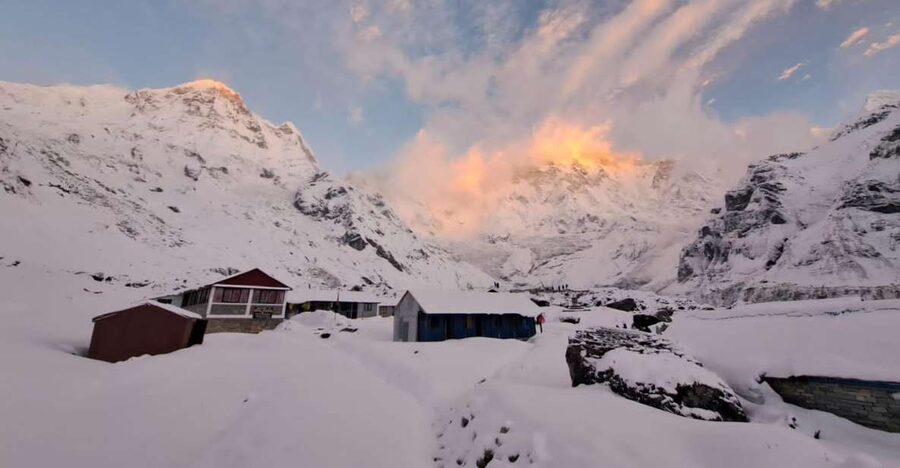
The mountains reward steady steps. This 10-day private trek from Pokhara combines two of Nepal’s best-known Himalayan viewpoints, Poon Hill and Annapurna Base Camp, with village paths, terraced fields, rhododendron forests, and quiet mountain valleys. I like the route’s gradual rhythm, with most walking days lasting about three to six hours, and I like that the guide can adjust the pace when needed. The main drawback is that this is still a serious mountain trek, with steep stone steps, long descents, basic guesthouses, and possible rain or cloud hiding the peaks.
The route also earns points for its human side. Gurung villages such as Chhomrong offer a look at local mountain life, while the hot springs at Jhinu Danda give your legs a welcome rest near the end. Guide support is a major strength, especially with guides such as Biru, Arjun, and Bikram praised for patience, route planning, safety, and personal attention.
Key points to know before booking
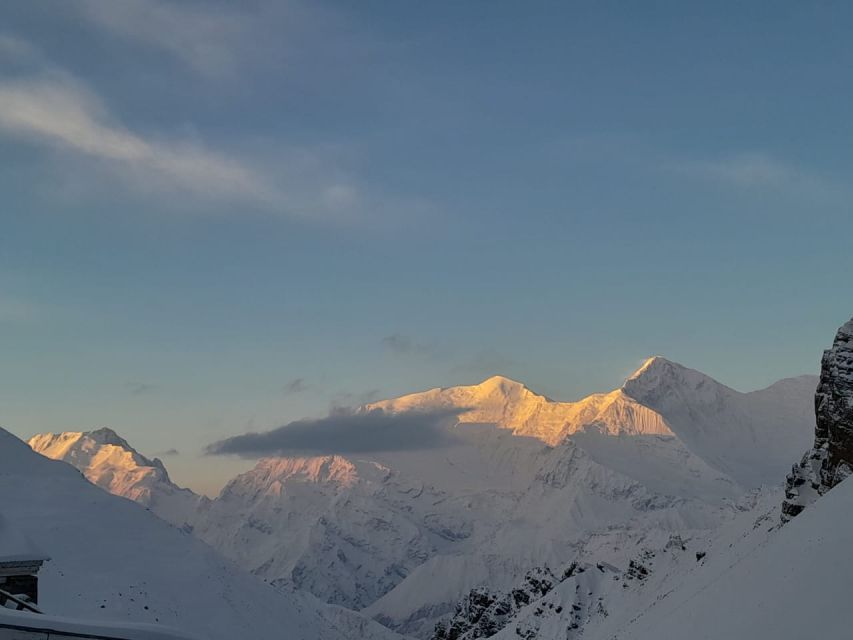
- Two famous Himalayan goals: Reach Poon Hill at 3,210 meters and Annapurna Base Camp at 4,130 meters on one route.
- A private walking experience: The group is private, with a Nepali, English, or Hindi-speaking guide and pickup from the Lakeside area of Pokhara.
- Strong guide care: Guides have adjusted walking plans for slow hikers and altitude problems, including one trek that was extended by three days.
- A real mountain budget: The $310 price covers permits, transport, guide, guesthouse lodging, and Poon Hill entry, but not meals, drinks, insurance, or optional comforts.
- Weather can change the trip: Spring and autumn usually offer the clearest conditions, but September can still bring several rainy days.
- Pack for steep steps: The Ulleri climb, forest paths, suspension bridges, and repeated ascents require comfortable shoes and reasonable fitness.
What the $310 price really covers
At $310 per person, this trek offers good value if you want the main logistics handled. The package includes pickup and drop-off in Pokhara’s Lakeside area, a private car between Pokhara and Nayapul, a professional English-speaking guide, trekking permits, official documents, guesthouse accommodation, an emergency first-aid kit, and entry to Poon Hill.
That list matters because the route involves several moving parts. Your guide handles accommodation arrangements and route decisions while you focus on walking. The private format also gives you more control over pace than a large fixed group.
Food and drinks are not included. You will buy meals along the route, and costs rise as you gain altitude. One practical budget tip is to prepare at least $30 to $40 per day if you want extras such as Wi-Fi, battery charging, hot showers, or heater use at higher elevations. That amount is separate from the tour price.
Travel insurance is required for your own protection, especially because emergency rescue is not included. Carry a passport or identification card and a passport-sized photo. Plastic bottles are not allowed, so plan to use a reusable bottle.
More Annapurna Treks in Nepal:
- Annapurna Circuit Trek with Tilicho Lake
★ 5.0 · 368 reviews - Annapurna base camp trek 5 Days
★ 5.0 · 252 reviews - 14-Day Private Annapurna Base Camp Trek
★ 5.0 · 180 reviews
Day 1: Pokhara to Tikhedhunga through Nayapul
Your morning begins with a private drive from Pokhara to Nayapul, which takes about one and a half hours. From Nayapul, you start on foot, following the Modi Khola and passing small villages and terraced fields.
Tikhedhunga sits at 1,577 meters and makes a sensible first overnight stop. The walking distance is not described as extreme, but the day introduces you to the basic pattern of the route: road transfer, village trails, stone paths, and changing elevation.
I like this gentle opening because it gives you time to settle into the trek before the harder climbs. You also get your first close look at cultivated hillsides and village life rather than rushing straight toward the high peaks.
Day 2: The Ulleri steps and Ghorepani
Day two is one of the early tests. From Tikhedhunga, you climb the steep stone steps toward Ulleri, then continue through rhododendron and marigold forests before reaching Ghorepani at 2,874 meters.
This is a demanding day, especially if you are not used to sustained uphill walking. The steps are not technical, but their repetition can tire your legs. Move slowly, drink regularly, and let the guide set a pace you can maintain.
Ghorepani is important because it gives you your first broad mountain views. You can see toward the Annapurna and Dhaulagiri ranges, though cloud may affect visibility. The village is also the launch point for the early morning walk to Poon Hill, so most people treat this stop as preparation for the next day’s sunrise.
Day 3: Sunrise at Poon Hill, then forest trails to Tadapani
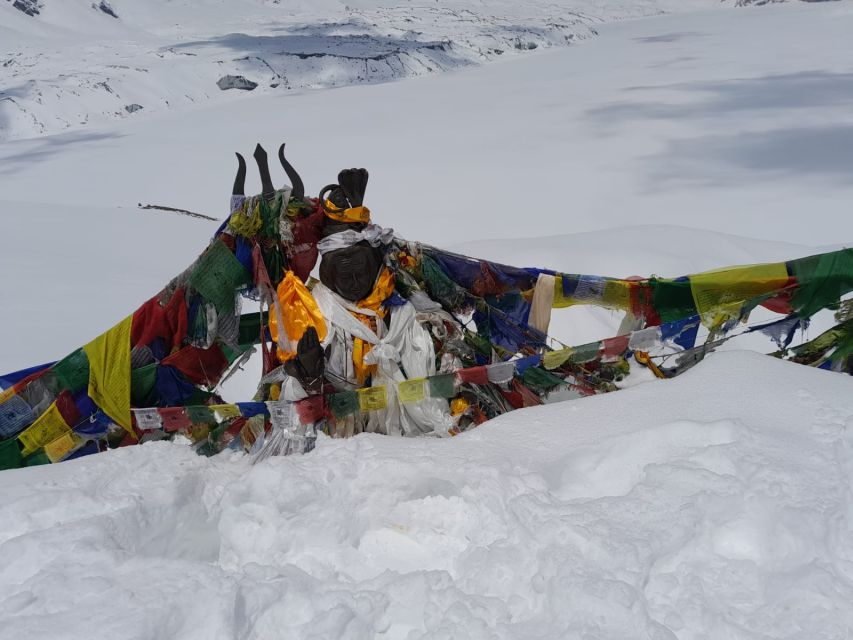
The alarm comes early. You walk up to Poon Hill at 3,210 meters to watch the sun rise over the Himalayas, then return to Ghorepani for breakfast before continuing toward Tadapani.
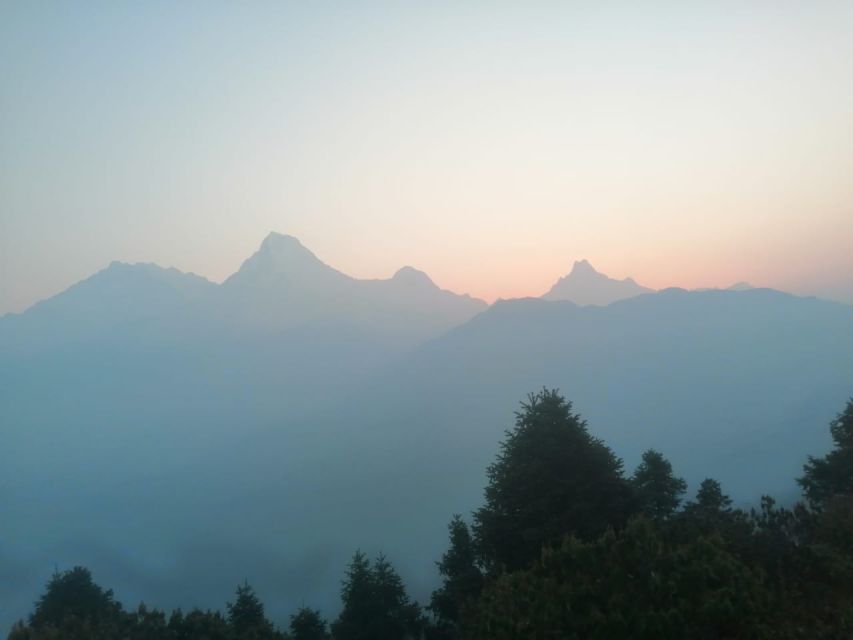
Poon Hill is one of the most worthwhile stops on the route because it gives you a wide view without requiring a full high-altitude expedition. On a clear morning, the mountain panorama includes Annapurna peaks, Dhaulagiri, Nilgiri, and Machhapuchhre, also called Fishtail.
The sunrise is not guaranteed to be clear. Clouds can cover the peaks, and September may bring several rainy days. Still, the early climb has value even in mixed conditions, with cool air, forest paths, and the quiet feeling of beginning the day before the hills wake up.
After breakfast, the trail passes through rhododendron-filled valleys and forest. Tadapani, at 2,630 meters, is a pleasant overnight point, though the day combines an early start with several more hours of walking.
More Poon Hill Treks in Nepal:
- Poon hill Trek 3 days
★ 5.0 · 176 reviews - Pokhara: 4-Day Ghorepani, Poonhill & Ghandruk Mountain Trek
★ 5.0 · 132 reviews - Ghorepani – Poon Hill Trek 3N-4D
★ 5.0 · 125 reviews - 4 Days Poon Hill Trek
★ 5.0 · 94 reviews
Day 4: Tadapani to Chhomrong and Gurung village life
From Tadapani, you descend through thick forest toward Gurjung village. The trail then drops to the Kimrong Khola before climbing again to Chhomrong at 2,170 meters.
The repeated pattern of descending and climbing is typical of the Annapurna route. You lose elevation, cross a river, then gain it back. It can feel frustrating when your legs are tired, but it also gives the day variety and brings you into a different part of the valley.
Chhomrong is one of the route’s most appealing village stops. It is a large Gurung settlement with views toward Annapurna South and Machhapuchhre. I like this overnight stay because it breaks up the mountain scenery with a stronger sense of local community and everyday life.
Your guide can also use this part of the route to explain the plan for the next day. That daily briefing is useful, especially when you want to know how much climbing remains and what sort of terrain to expect.
Day 5: Chhomrong to Bamboo through forest
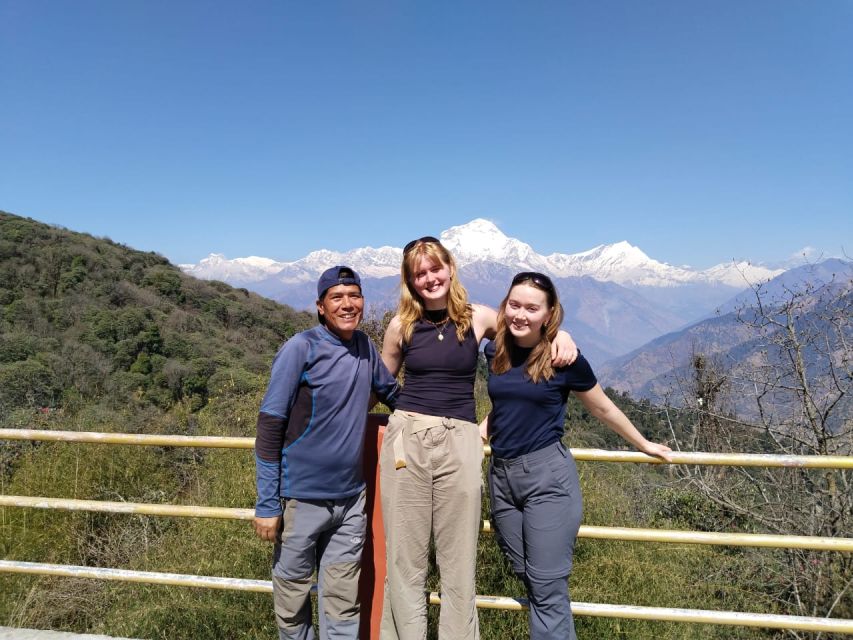
The trail descends from Chhomrong to the Chhomrong Khola, crosses a suspension bridge, and climbs toward Sinuwa. From there, you continue through bamboo and rhododendron forest to Bamboo at 2,310 meters.
This is a day when the route feels enclosed and green, with fewer wide mountain views than at Poon Hill or Chhomrong. The forest provides shade, but the steady ups and downs still require patience.
Bamboo is a practical overnight stop rather than a major viewpoint. Its value is in breaking the journey into manageable stages before the route climbs higher toward Deurali and the Annapurna Sanctuary.
Day 6: Bamboo to Deurali beside the Modi Khola
You continue through bamboo forest and follow the Modi Khola valley. The trail passes the Himalayan Hotel and Hinku Cave before climbing steadily to Deurali at 3,230 meters.
The air and terrain begin to feel more alpine as you gain height. Deurali is an important acclimatization point because the following day takes you well above 4,000 meters.
The route is not a race. A slow pace is sensible here, and your guide should watch for signs of altitude difficulty. One guide, Arjun, adjusted a trek for a participant who had trouble with altitude and extended the overall plan by three days. That kind of flexibility is valuable, but you should still carry suitable insurance and take symptoms seriously.
Day 7: Deurali to Annapurna Base Camp at 4,130 meters
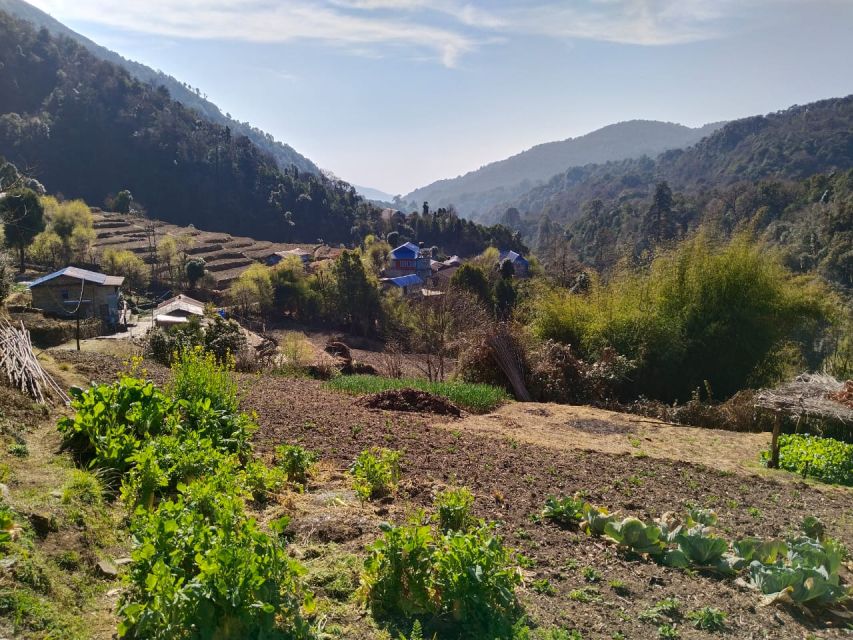
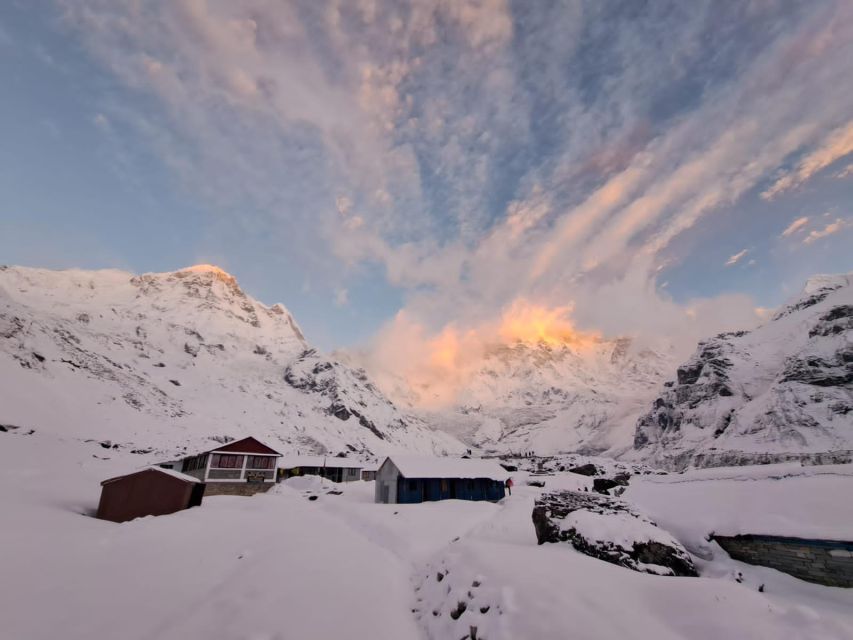
This is the main goal of the trek. From Deurali, you follow a narrow valley that opens into the Annapurna Sanctuary. You pass Machhapuchhre Base Camp at 3,700 meters before continuing to Annapurna Base Camp at 4,130 meters.
The scale changes quickly. The valley opens around you, and the surrounding peaks include Annapurna I at 8,091 meters, Annapurna South, Hiunchuli, Machhapuchhre, and other high summits. You also have the chance to see the Annapurna range’s different faces, including references to Annapurna II, III, and IV, along with Dhaulagiri and Nilgiri from earlier viewpoints.
Arriving at base camp is physically demanding. The altitude, cold, and long uphill approach can make the final stretch slow. The reward is the enclosed mountain setting, with towering peaks rising around the sanctuary.
You sleep at Annapurna Base Camp, which makes this night special but basic. Bring warm layers and do not expect city comforts. A hot shower, Wi-Fi, charging, or a heater may cost extra where available.
Day 8: Sunrise at base camp and the long return to Bamboo
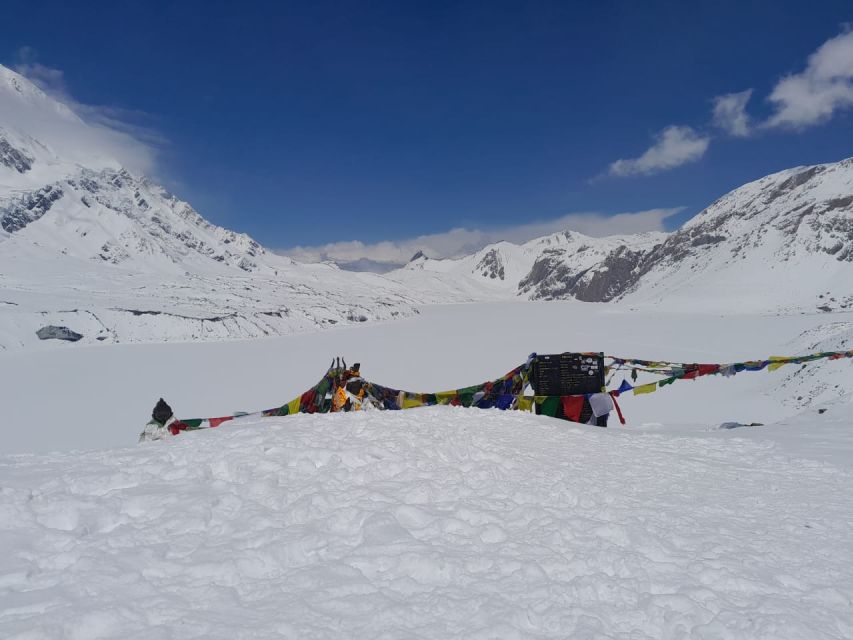
You wake early for sunrise over the mountains, then begin the descent through Deurali and back to Bamboo. The return uses much of the same route, but the experience changes when you are walking downhill and viewing the valley from another direction.
The descent is easier on the lungs but can be hard on knees and thighs. Trekking poles, if you use them, can help, though they are not listed as included equipment. Take care on uneven paths and wet stone.
Reaching Bamboo gives you a welcome lower overnight stop. After the high point of the trek, this day is about steady progress and recovery rather than collecting new sights.
Day 9: Bamboo to Jhinu Danda and the hot springs
You continue downhill through the forest, return to Chhomrong for lunch, and then descend farther to Jhinu Danda at 1,780 meters.
Jhinu Danda is one of the route’s best finishing touches. Its natural hot springs let you soak tired muscles after several days of climbing and descending. Bring swimwear and a small towel if you have room, though the package does not specify that these are supplied.
The descent to Jhinu can be hard because going downhill for hours is not effortless. Still, the lower altitude and hot springs make this night feel more relaxed than the high mountain stops.
One useful piece of advice is to complete the trek rather than ending early at Jhinu and taking a jeep. The final walking section to Nayapul forms part of the experience and gives you a proper finish to the route.
Day 10: Jhinu Danda to Nayapul and Pokhara
The final day takes you from Jhinu Danda to Nayapul, followed by a private car transfer back to Pokhara. The exact walking time is not provided, so ask your guide for the day’s plan and allow room for changing trail conditions.
Returning to Pokhara after ten days on foot can feel almost as strange as arriving in the mountains. You move from forest paths and guesthouses back to roads, shops, and lakeside hotels.
The private transfer is a useful inclusion. After a long trek, you do not have to arrange a separate vehicle or negotiate the return journey yourself.
Guides, pace, and personal attention
The most consistently praised part of this experience is the guide service. Biru is described as patient, organized, and careful with accommodation, safety, and comfort. Bikram is praised for adjusting walking speed, explaining local people and nature, and helping with practical problems, including a shortage of cash.
Softer-paced hikers should find this route more approachable with the right guide. One participant who described being a slow hiker never felt rushed, while another had the itinerary altered because of altitude problems.
That does not make the trek easy. It means the private format can respond to your condition better than a rigid group departure. Your guide speaks Nepali, English, or Hindi, depending on who leads your group. Porter arrangements are not clearly included in the package details, so ask before booking if you need help carrying a large pack.
Weather, seasons, and mountain views
The best periods are generally spring, from March to May, and autumn, from September to November. These months usually bring more stable weather and clearer mountain views.
Do not treat those months as a promise. A September departure had three rainy days and only one sunny day, with clouds often hiding the peaks. The guide’s patience mattered on that trip, especially when views appeared only in short openings.
Winter and monsoon conditions can be less predictable, though the trek is described as possible throughout the year. Mountain weather changes quickly, so pack for rain, cold, and sun. Comfortable shoes are essential, and warm clothing becomes increasingly important near Annapurna Base Camp.
Who should choose this trek?
This route suits you if you want a full Himalayan experience without rushing from one viewpoint to another. It works particularly well for people who value village stops, forests, mountain scenery, and a private guide who can adjust the pace.
You should have enough fitness for steep steps, repeated climbs, long descents, and high-altitude walking. The experience is not suitable for pregnant women or wheelchair users.
It also suits budget-conscious trekkers who are comfortable paying for meals and optional comforts along the way. The $310 fee covers important basics, but your final spending will be higher once you add food, drinks, insurance, charging, Wi-Fi, hot showers, heaters, and personal purchases.
Should you book it?
I would recommend this trek if you want Poon Hill and Annapurna Base Camp in one carefully paced journey. The strongest reasons are the private format, the helpful guides, the hot springs at Jhinu Danda, and the chance to see both village life and high mountain scenery.
Book it with realistic expectations. Clouds may block the sunrise, guesthouses are basic, and altitude can change your plans. If you pack properly, budget for daily extras, take the uphill sections slowly, and value patient local guidance, this offers a strong amount of Nepal for the price.
Free cancellation is available up to 24 hours before departure, and you can reserve without paying immediately. Pickup is limited to the Lakeside area of Pokhara, so confirm your location when arranging the start.
FAQ
How long is the Poon Hill and Annapurna Base Camp trek?
The trek lasts 10 days, including transport from Pokhara to Nayapul and the return drive from Nayapul to Pokhara.
What altitude does Annapurna Base Camp reach?
Annapurna Base Camp is at 4,130 meters. The route also passes Machhapuchhre Base Camp at 3,700 meters and Poon Hill at 3,210 meters.
What is included in the $310 price?
The price includes hotel pickup and drop-off, a professional English-speaking trekking guide, permits and official documents, private transport between Pokhara and Nayapul, guesthouse accommodation, an emergency first-aid kit, private tour arrangements, and Poon Hill entry.
Are food and drinks included?
No. Food and drinks are available for purchase during the trek and are not included in the price.
What languages can the guide speak?
Guides are available in Nepali, English, and Hindi.
What should I bring?
Bring a passport or identification card, comfortable shoes, travel insurance, and a passport-sized photo. You should also prepare for changing mountain weather and temperatures.
Is the trek suitable for everyone?
The trek is not suitable for pregnant women or wheelchair users. You should also be prepared for steep steps, several hours of walking per day, and high-altitude conditions.
Just added around Nepal
- Kathmandu: 15-Day Everest Base Camp Trek with Guide★ 4.3 · 12 reviews
- Day Hike at Annapurna Foothills★ 4.7 · 17 reviews
- From Pokhara: Budget 2 Night 3 days Poon hill trek★ 5.0 · 20 reviews
- 1 N 2 Days easy Dhampus,Australian camp trek from Pokhara★ 4.9 · 10 reviews
- 4-Day Private Poon Hill Trekking Tour★ 5.0 · 58 reviews
- Private 7 – Day Annapurna Base Camp Trekking★ 5.0 · 50 reviews
- Kathmandu: Nagarkot Sunrise & Hike with Lunch -Private/Group★ 4.9 · 122 reviews
- Pokhara: 2-Day Ghorephani and Poon Hill Private Trek★ 4.6 · 50 reviews
Nepal Hiking Tours, compared.
Nagarkot Sunrise View and Day Hiking from Kathmandu
Read our review →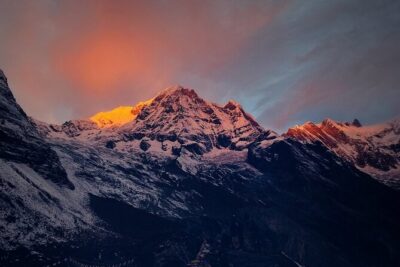
Browse the lists this tour appears in