
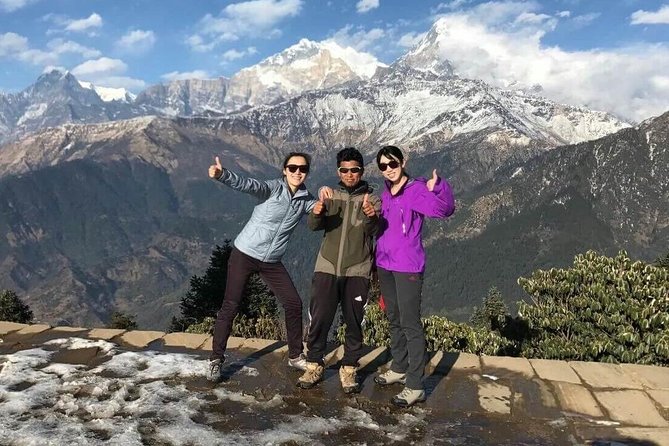
REVIEW · POKHARA HIKING TOURS
Ghorepani – Poon Hill Trek 3N-4D
Sunrise comes early in the Himalayas. This four-day private trek from Pokhara combines forest paths, stone steps, village teahouses, and a dawn climb to Poon Hill, one of Nepal’s best-known mountain viewpoints. I like the teahouse lodging, which removes the need to carry camping gear, and I like that the package includes meals, permits, transfers, and a licensed English-speaking guide. The main drawback is the physical effort: Ulleri’s long stair climb and the early ascent to Poon Hill demand a moderate level of fitness.
You’ll travel with only your own party, which gives the guide room to adjust the pace. Guides such as Anil, known affectionately as Pai by one group, and Milan have been praised for patience and friendly support. Still, the trip is not a gentle walk. One solo trekker counted more than 3,500 steps on the first day, and cloudy weather can hide the very mountains you came to see.
Key Points to Know Before Booking
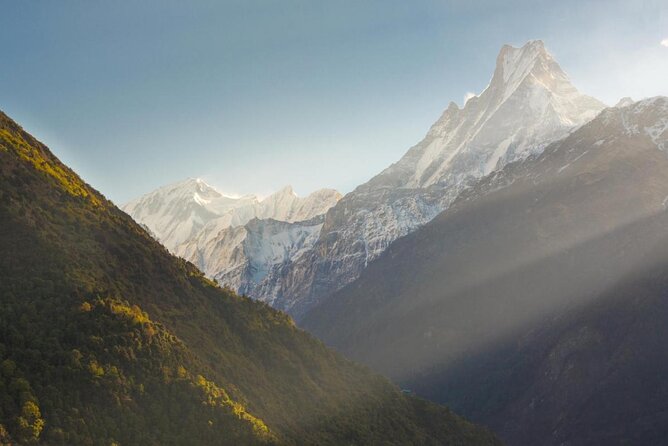
- Poon Hill sits at 3,210 meters, with the best mountain views arriving at sunrise.
- The first day includes a long stair climb to Ulleri, so the trek gets serious quickly.
- Three nights are spent in teahouses, not tents, with breakfast, lunch, and dinner included.
- Pokhara pickup and ground transport make the route easier to manage without arranging local transfers yourself.
- Cloud and rain can block the mountain views, but the forest trails and village walking still offer a worthwhile trek.
- The private format suits mixed-pace groups, since your guide can respond to your needs rather than a large group schedule.
What the $321.34 Price Really Covers
At $321.34 per person, this trek is not simply a paid walking route. The price includes transport from Pokhara, three nights of teahouse accommodation, three breakfasts, four lunches, and three dinners. It also covers an experienced, government-licensed English-speaking guide, guide and staff costs, trekking permits, paperwork, a medical kit, taxes, and a completion certificate.
That package can offer fair value if you want a managed trek rather than a collection of separate bookings. The ACAP and TIMS permits are included, so you do not need to sort out those formalities on your own. Staff costs also include salary, insurance, equipment, food, and accommodation, which makes the price more meaningful than a headline rate that leaves most practical costs out.
The value is less clear if you already have transport, permits, and lodging arranged. Personal extras are not included. You pay separately for bottled or boiled water, showers, battery charging, laundry, bar bills, extra porters, tips, and travel or rescue insurance. A Nepalese visa and international flights are also outside the package.
The trek is booked an average of 22 days ahead, which gives you a useful planning target. I would not leave it until the last moment if your dates are fixed, especially if you need to arrange flights, insurance, or extra time in Pokhara.
More Poon Hill Treks in Pokhara:
- Poon hill Trek 3 days
★ 5.0 · 176 reviews - Pokhara: 4-Day Ghorepani, Poonhill & Ghandruk Mountain Trek
★ 5.0 · 132 reviews - 4-Day Private Poon Hill Trekking Tour
★ 5.0 · 58 reviews
Leaving Pokhara for Nayapul and Ulleri
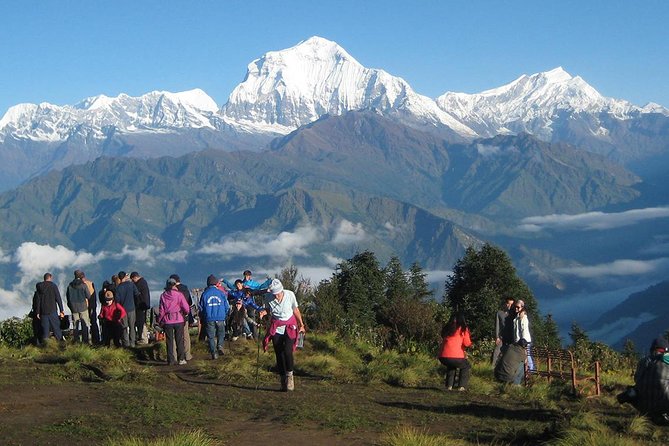
The first morning begins with a roughly one-hour drive from Pokhara to Nayapul. That transfer saves you the trouble of arranging your own vehicle and puts you at the start of the walking route without using a trekking day on a long road journey.
From Nayapul, the trail passes through sub-tropical valley forest and crosses the Bhurungdi Khola by bridge. The walking then reaches Tikhedhunga before the route turns toward Ulleri. This opening section gives you a gradual change from road-based Pokhara to a footpath through villages and woodland.
The climb to Ulleri is the day’s hard lesson. Expect many stone steps and a sustained uphill push. The route is not presented as an easy introduction, and the account of more than 3,500 steps on the first day should be taken seriously. One solo trekker found the opening road section dusty, sunny, and less scenic than the later mountain paths.
That does not make day one a poor day. It simply means you should pace yourself from the start. Keep water accessible, eat lunch properly, and resist the temptation to race uphill while your legs feel fresh. A private guide can help you take breaks when needed, which is one of the better reasons to choose this format.
Ghorepani’s Shops, Stalls, and Mountain Setting
After breakfast on day two, you continue uphill toward Ghorepani. This village has a practical role in the trek, since it provides a place to spend the night before the pre-dawn walk to Poon Hill.
Ghorepani includes small shops and stalls selling local products and crafts. The village is split into two parts, one on a saddle and another a few hundred feet away. That arrangement gives the stop a more spread-out feel than a single compact village street.
The accommodation is in a teahouse room rather than a tent. The word comfortable should be understood in trekking terms, not hotel terms. You get a roof, a bed, meals, and a place to recover, but the package does not include extras such as showers or battery charging. Those may cost more.
This overnight stop matters because the next morning starts early. You are not making a long vehicle transfer before the sunrise climb. Instead, you are already near the viewpoint, allowing the main effort to focus on the steep trail to Poon Hill.
The Pre-Dawn Climb to Poon Hill
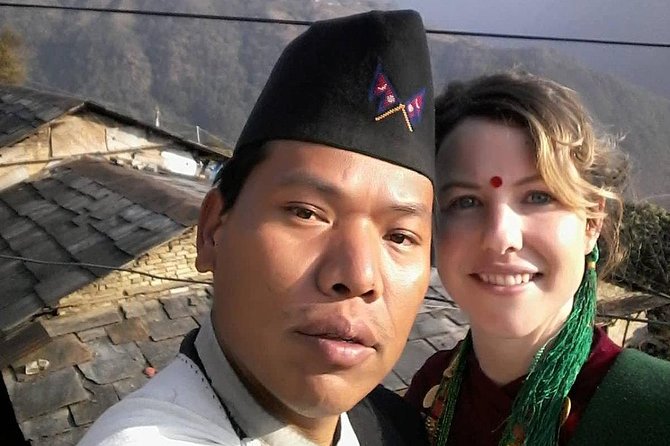
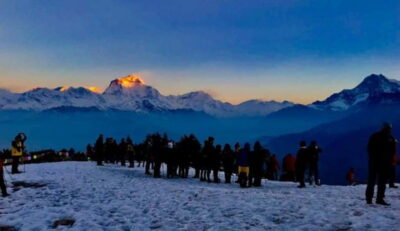
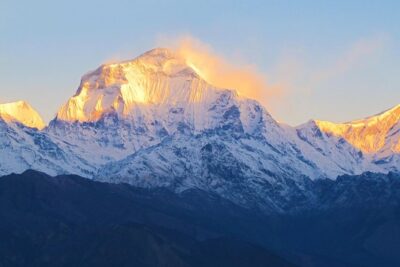
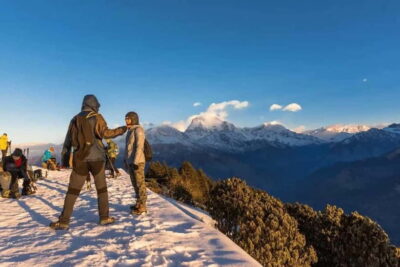
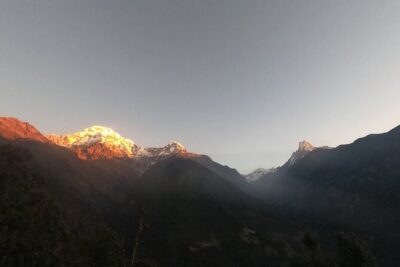
Poon Hill is the centerpiece of the trek. At 3,210 meters, it offers a sunrise view over the Annapurna mountain range, with sight lines extending as far as Mustang in clear conditions. The climb to the viewpoint is steep and begins early enough that you should expect darkness or low light on the approach.
The timing is important. This is not a viewpoint you casually reach after breakfast. You rise before dawn, climb the trail, and wait for the first light to reach the mountains. The payoff depends heavily on weather. Cloud and rain may hide the peaks, as happened to one group, but that does not erase the character of the walk.
If the sky is clear, the sunrise can be the trip’s strongest moment. If it is not, you still get the physical experience of walking through the early mountain morning and returning through forest paths. The sensible approach is to treat the view as a bonus, not a guarantee.
Bring warm layers that you can remove later, and keep your headlamp or other light source ready if you carry one. The supplied information does not specify equipment rentals, so do not assume the guide or company provides every personal item you need.
A few more hikes around Pokhara worth a look
- Trekking in Annapurna/Langtang/Everest/Upper Mustang regions
★ 5.0 · 161 reviews - Pokhara: Annapurna Foothills Day Hike with Transfers
★ 5.0 · 100 reviews - Pokhara: 3-Day Ghorephani and Poon Hill Private Trek
★ 5.0 · 58 reviews - Pokhara: 2-Day Ghorephani and Poon Hill Private Trek
★ 4.6 · 50 reviews
Forest Trails, Rhododendrons, and Tadapani
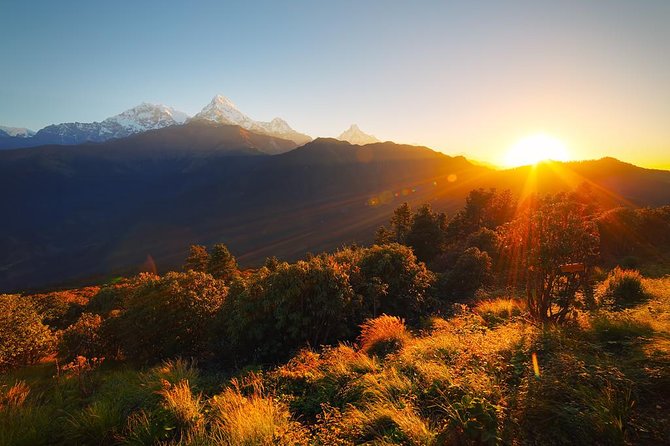
After Poon Hill, the route continues through the Annapurna mountain area toward Tadapani. The day combines the viewpoint with more walking, so the early start does not mean an early finish.
The trail passes through rhododendron forest and by waterfalls. In bloom, the old rhododendron trees can add color to the route, while outside flowering season the forest still provides shade and a change from the exposed stone stairways. This section is one reason the trek is more than a simple walk to a photo stop.
Tadapani is the starting point for day four. The route from there descends steeply through dense, dark forest, with old rhododendron trees forming much of the trail environment. A steep descent can be harder on tired knees than an uphill climb, so trekking poles may be useful, though the package does not state that they are supplied.
The combination of sunrise, forest, and waterfalls gives the middle part of the trek a good rhythm. You get the famous viewpoint, but you also spend time in quieter natural settings where the walking itself becomes the main activity.
Day Four: A Steep Descent and the Return
Day four begins from Tadapani with a steep descent through dense forest. The route is described as dark and thickly wooded, with old rhododendron trees lining the trail. When those trees are flowering, this can be one of the most attractive parts of the walk.
The supplied plan does not give every stopping point or exact walking time for this final day. It does confirm that the trek returns to Pokhara and that ground transportation is part of the package. Your guide should explain the day’s precise timing and transport arrangements before you set out.
Do not treat the last day as an easy wind-down. Descending over uneven paths after three days of walking can test your legs. Take shorter steps, watch where you place your feet, and keep your pace steady. The private setup is useful here because you are not trying to match a large group.
Guides, Porters, and the Private Format
The trek includes an English-speaking, government-licensed guide, and guide quality can shape your experience more than any printed itinerary. Anil, also called Pai by one group, was praised for explaining Nepali culture and teaching local phrases along the way. That kind of exchange adds meaning to village walking and helps the route feel like more than a physical challenge.
Milan and porter Krishnan were also singled out for being patient and caring with first-time trekkers moving at a slow pace. That matters because the route includes repeated climbs, and not everyone in a private party will have the same stamina.
A porter is not listed as automatically included in the package. Extra porters are specifically an additional personal expense, so ask the company about your luggage plan before departure. The guide’s own food, accommodation, equipment, insurance, and salary are included, but that does not mean every member of your party receives porter support.
The private format is best for couples, families, or friends who want their own rhythm. It is also useful for a solo trekker who wants company and route support without joining a larger group. The tradeoff is that a private trek can feel expensive compared with a basic shared arrangement, particularly if you are alone.
Food, Rooms, and Daily Comfort
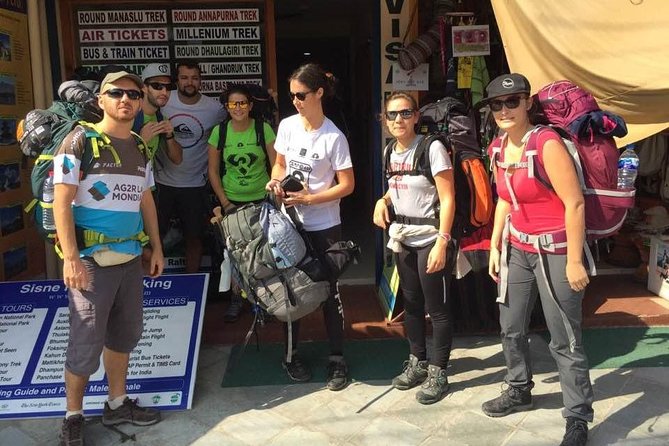
Three breakfasts, four lunches, and three dinners are included. That is a strong practical feature because food planning becomes harder once you leave Pokhara and spend full days on foot.
Teahouse accommodation keeps the trip simple. You sleep indoors each night rather than carrying a tent or arranging a campsite. The package does not promise luxury, private facilities, hot showers, or reliable charging, so budget for those extras if they matter to you.
Water, showers, laundry, and battery charging are all listed as personal expenses. The same applies to bar bills and extra porters. Travel and rescue insurance are not included, and you should arrange suitable coverage before leaving Pokhara.
You also receive a Hike More, Worry Less t-shirt and a trekking completion certificate. These are small extras, but they make pleasant souvenirs. The shirt is not a reason to book the trek, but it is a useful memento from a route that can leave your clothing and boots needing a good wash.
Weather, Fitness, and the View You May or May Not Get
The trek requires moderate physical fitness. That phrase should not be brushed aside. The route includes a major stair climb on day one, a steep pre-dawn ascent to Poon Hill, and a demanding forest descent from Tadapani.
Rain and cloud are real parts of the experience. One group missed the mountain views from Poon Hill because the weather stayed cloudy and wet, yet still found the rainy forest walking worthwhile. That is a useful way to judge the trip. If you need a guaranteed clear panorama, no mountain tour can offer that. If you enjoy walking for its own sake, the trek has more to offer than the sunrise.
The experience requires good weather, and the company may cancel it if conditions are poor. In that case, you are offered another date or a full refund. It can also be canceled if the minimum number of participants is not met, with a new date, another experience, or a refund offered.
Who Should Book This Poon Hill Trek?
I would recommend this trek to you if you want a short Himalayan route with a guide, meals, permits, transport, and indoor sleeping already arranged. It suits people with moderate fitness who are comfortable with long stair climbs and early mornings.
It is particularly well suited to:
- First-time trekkers who want support on a marked multi-day route
- Couples or friends who prefer a private group
- Solo visitors who want a guide and organized transport
- Hikers who value teahouses over tents
- People who want a mountain sunrise without committing to a much longer trek
I would hesitate if you dislike steep steps, wet weather, basic teahouse facilities, or uncertain views. I would also compare prices if you already have a guide, permits, and transport arranged independently.
Should You Book It?
Book this Ghorepani and Poon Hill trek if you want a compact, organized introduction to trekking near Pokhara and you accept that the weather controls the grand view. The best features are the private guide service, included permits and meals, teahouse nights, and convenient transport from Pokhara.
The $321.34 price is reasonable when you count those inclusions, though personal expenses and tips will raise the final cost. Ask about luggage handling, exact teahouse arrangements, and the final-day transport before paying.
For a first Himalayan trek, this is a practical choice. You get a serious walk, a famous sunrise viewpoint, village life, forest trails, and help from guides who have shown patience with slower walkers. Just bring realistic fitness expectations, and remember that Poon Hill can offer a spectacular sunrise, but it cannot order the clouds away.
FAQ
How long is the Ghorepani and Poon Hill trek?
The trek lasts approximately four days and three nights.
Where does the trek begin?
It begins with pickup or transport from Pokhara, followed by about a one-hour drive to Nayapul.
Is camping required?
No. Accommodation is provided in teahouses during the trek.
Are meals included?
Yes. The package includes three breakfasts, four lunches, and three dinners.
Are trekking permits included?
Yes. Necessary paperwork and permits, including ACAP and TIMS, are included.
Is the trek private?
Yes. Only your own group participates in the activity.
Is travel insurance included?
No. Travel and rescue insurance are not included, so you need to arrange them separately.
Just added around Pokhara
- Day Hike at Annapurna Foothills★ 4.7 · 17 reviews
- From Pokhara: Budget 2 Night 3 days Poon hill trek★ 5.0 · 20 reviews
- 1 N 2 Days easy Dhampus,Australian camp trek from Pokhara★ 4.9 · 10 reviews
- 4-Day Private Poon Hill Trekking Tour★ 5.0 · 58 reviews
- Private 7 – Day Annapurna Base Camp Trekking★ 5.0 · 50 reviews
- Pokhara: 2-Day Ghorephani and Poon Hill Private Trek★ 4.6 · 50 reviews
- Pokhara: 3-Day Ghorephani and Poon Hill Private Trek★ 5.0 · 58 reviews
- Pokhara: 4-Day Ghorepani, Poonhill & Ghandruk Mountain Trek★ 5.0 · 132 reviews
Pokhara Hiking Tours, compared.
Trekking in Annapurna/Langtang/Everest/Upper Mustang regions
Read our review →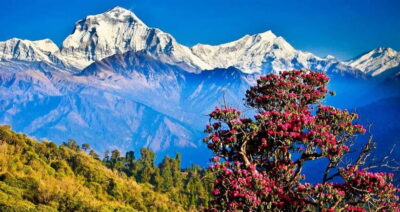
4-Day Ghorepani, Poonhill & Ghandruk Mountain Trek
Read our review →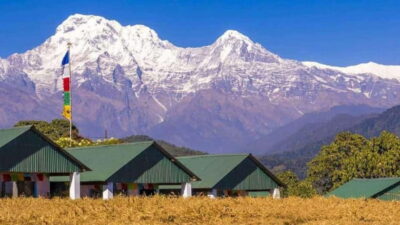
Browse the lists this tour appears in