
REVIEW · KATHMANDU HIKING TOURS
Everest Base Camp Trek with Helicopter Return from Gorakshep to Lukla
The mountain day begins long before sunrise. This 12-day Everest Base Camp trek gives you the classic Khumbu route, with suspension bridges, Sherpa villages, Tengboche Monastery, and views of Everest before a helicopter flight from Gorakshep to Lukla cuts out the long walk back. I like the sensible acclimatization stops at Namche and Dingboche, and I like that the price includes guides, porters, meals, permits, flights, and a first-aid kit with an oxygen monitor.
The main caution is simple: this is a serious high-altitude trek, not a sightseeing stroll. The price is $3,000 per person, and you still need travel insurance with emergency evacuation, personal gear, drinks, tips, and meals in Kathmandu. Weather can also disrupt the Lukla flights or helicopter transfer, so keep some patience in reserve.
Key details before you book
- Everest Base Camp at 5,365 meters: You reach the famous mountaineering starting point on a demanding full-day walk from Lobuche.
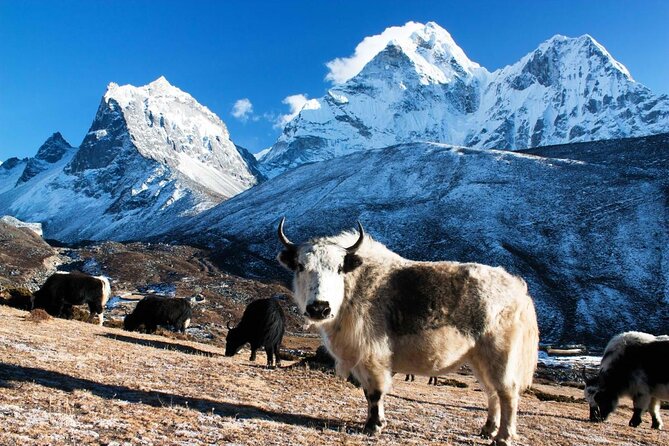
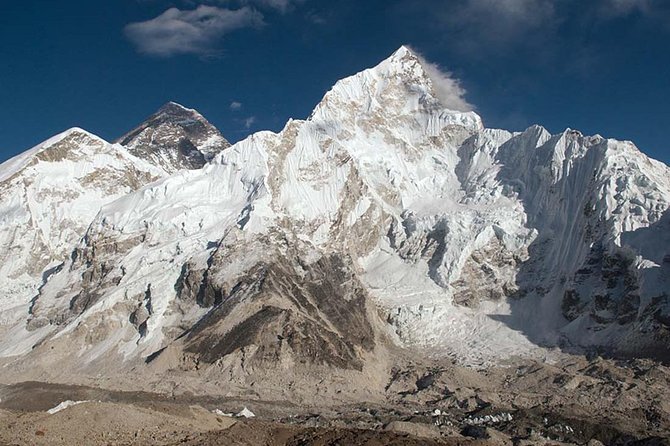
- Kala Patthar at 5,555 meters: The climb brings some of the finest mountain views on the route, but it is also one of the hardest mornings.
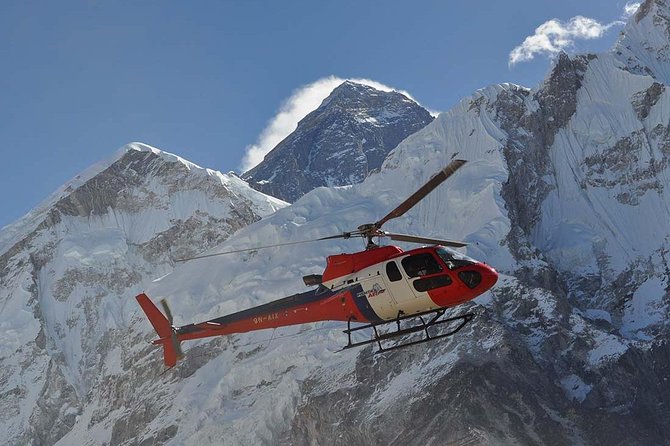
- Helicopter return from Gorakshep: A shared 20-minute flight to Lukla replaces the usual multi-day walk back.
- Two acclimatization days: Namche Bazaar and Dingboche give your body time to adjust to thin air.
- Small-group format: The maximum group size is 14, with one porter assigned for every two people.
- Strong support package: Permits, meals, staff costs, Kathmandu hotels, Lukla airfare, filtered trail water, and a duffel bag are included.
Why this Everest route works so well
I like this trip because it keeps the best parts of the classic Everest Base Camp trek and removes the least exciting part: retracing the entire route back to Lukla. You still walk through the Khumbu Valley at a steady pace, but after Gorakshep you fly out instead of spending several more days descending.
That saves time and reduces wear on tired knees. It also gives you a memorable final view of the mountains from the air. The helicopter ride is shared, so do not think of it as a private luxury flight. Still, after reaching Base Camp and Kala Patthar, even a short flight feels like a fine reward.
The support is practical rather than flashy. You get a local, English-speaking guide trained in first aid, porters, staff insurance, food and accommodation for the crew, and an oxygen saturation monitor. Those details matter at altitude, where a good guide should watch how you are coping, not simply point toward the next village.
The program requires at least two people and accepts a maximum of 14. That is a useful middle ground. You are not alone in a remote valley, but you are also less likely to be part of a huge walking line.
More Everest Base Camp Treks in Kathmandu:
- Everest Base Camp Trek – 14 Days
★ 5.0 · 1,499 reviews - Everest Base Camp Trek
★ 5.0 · 842 reviews - Everest Base Camp Trekking
★ 5.0 · 485 reviews
Days 1 and 2: Kathmandu to Phakding by way of Lukla
Your first day is easy by trekking standards. An airport representative meets you at Tribhuvan International Airport and takes you to your Kathmandu hotel in a private tourist vehicle. You attend a pre-trip meeting and meet your guide, a useful time to check your equipment and clarify the walking plan.
Day 2 brings the famous mountain flight. You head early to Kathmandu’s domestic airport for the roughly 35-minute flight to Tenzing and Hillary Airport in Lukla, at 2,804 meters. The short runway and mountain setting make this one of the more memorable pieces of transport in Nepal.
From Lukla, you walk to Phakding. This opening section lets you ease into the trip before the bigger altitude gains. Accommodation in Lukla, Phakding, and Namche includes attached toilets, while other trekking nights are in twin-sharing guesthouses. Standards are basic in the high country, so the included arrangement is best understood as practical shelter, not hotel comfort.
Weather matters from the beginning. The program depends on the Lukla flight, and the helicopter return also requires suitable conditions. Build flexibility into your wider Nepal plans if you can.
Day 3: The river trail into Namche Bazaar
The walk from Phakding to Namche takes about six hours. You follow the Dudh Koshi and cross suspension bridges decorated with prayer flags. The bridges are not simply transport links; they are one of the route’s early tests of balance and nerve.
The trail climbs more seriously as you approach Namche Bazaar. This is the gateway town of the Khumbu and the first place where altitude becomes impossible to ignore. You will feel the change more than you did in Phakding, which is exactly why the next day is used for acclimatization.
This is also where the value of a guide becomes clear. The schedule is not just a march from one overnight stop to the next. It is built around gaining height carefully, with rest and short walks placed at important points.
Day 4: Acclimatizing above Namche
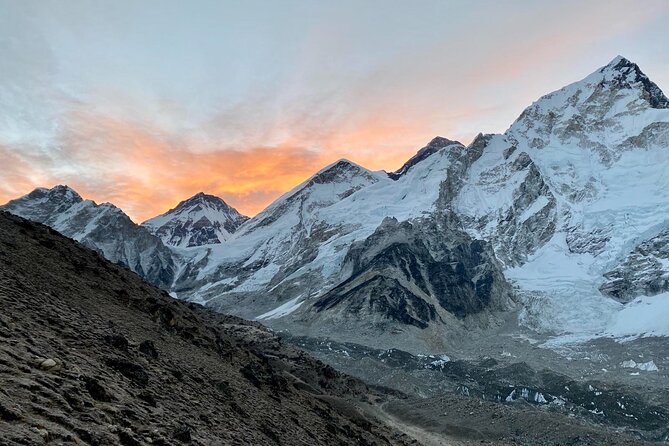
You spend a full day around Namche rather than pushing farther up the valley. A short hike to the Everest View Point gives you a look at the Himalayan peaks and helps your body adjust to the thinner air.
The point is not to win the day. It is to go higher for a while and then sleep lower, a common approach on high mountain treks. Take this day seriously. Rushing through Namche can make the later sections harder than they need to be.
The stated program includes a short outing of about 24 minutes at the viewpoint, but the important feature is the full acclimatization day, not the exact walking time. Your guide may shape the pace around the group’s condition.
More Helicopter Flights around Kathmandu:
- Franz Josef: 2.5 Hour Glacier Hike with Helicopter Transfer
★ 4.7 · 322 reviews - Fox Glacier: Up to 3 Hours Hike with Helicopter Transfer
★ 4.9 · 309 reviews - Mount Cook: 3-Hour Tasman Glacier Helicopter Ride and Hike
★ 4.9 · 235 reviews - Denali National Park: Helicopter and Hike Adventure
★ 4.8 · 7 reviews
Day 5: Tengboche and its monastery
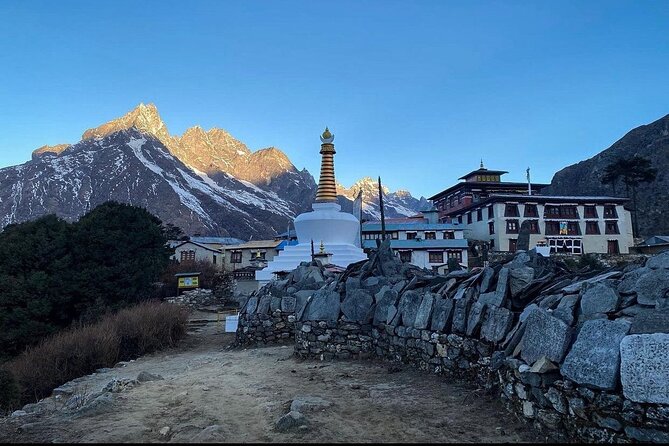
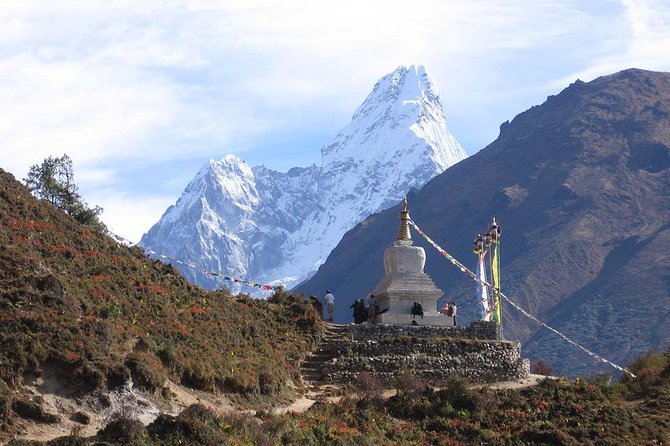
From Namche, the trail follows the Dudh Koshi with strong mountain views before reaching Tengboche at 3,860 meters. The route includes a descent to Debuche and another suspension bridge over the Imja Khola, followed by the climb toward the monastery town.
Tengboche Monastery gives the day a cultural focus. Inside are religious images and a quieter atmosphere than the exposed trail outside. This is one of the places where the walk feels like more than a test of stamina. You are moving through a living Himalayan region, not merely toward a coordinate on a map.
The downside is that the day is long, listed at about 16 hours in the schedule. That figure may represent the full operational day rather than continuous walking, but you should still expect a demanding stage. At this point, pacing yourself matters more than speed.
Day 6: Dingboche and the Imja Valley
The route drops to Debuche, crosses the Imja Khola, and climbs through Pangboche. Mani stones line parts of the way, adding a distinctly Tibetan Buddhist character to the trail.
Dingboche is at a higher altitude than Tengboche and is another key overnight stop. The path is becoming more open and rugged, with fewer trees and more direct views of the high peaks. You are now moving into the section where cold, thin air, and steady uphill walking become the main facts of the day.
Food is included throughout the trek, with breakfast, lunch, and dinner provided. Filtered water is also supplied on the trail using a Katadyn Pocket Water Filter. That reduces the need to buy bottled water, though alcoholic, hot, and cold drinks are not included.
Day 7: Nangkartshang Peak for a second altitude check
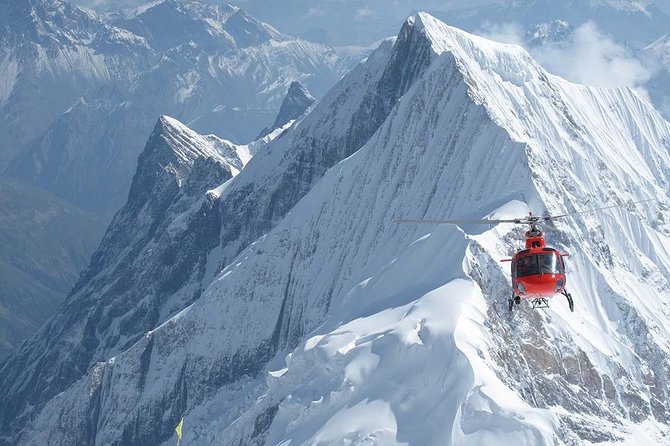
The second acclimatization day comes at Dingboche. Instead of moving toward Base Camp, you hike up Nangkartshang Peak.
This is a smart use of a rest day. You gain height during the outing, see the surrounding peaks from a higher viewpoint, and return to Dingboche to sleep. The stop also breaks up the long sequence of upward progress, which can help you stay patient when the body needs time.
Do not treat the word rest as meaning effortless. Nangkartshang Peak is still an uphill hike at altitude. Keep your pace slow and let your guide know if you are struggling.
Day 8: Lobuche beside the Khumbu Glacier
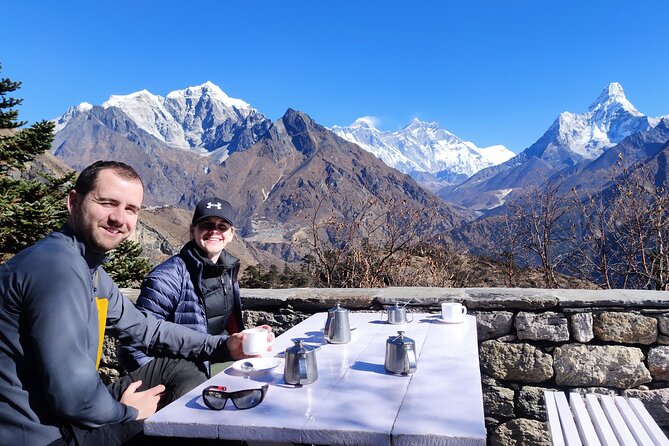
The trail continues along the lateral moraine of the Khumbu Glacier toward Lobuche. The terrain feels more severe here, with stone, ice, and high mountain air replacing the greener lower valleys.
You pass memorial stones dedicated to climbers who died on nearby peaks. This is a quiet and sobering part of the trek. It reminds you that Everest is not just a famous view or a personal challenge. The mountain environment demands respect.
Lobuche is the staging point for the biggest day of the trip. Accommodation and food are included, but you should expect simpler conditions than in Kathmandu. The higher you go, the less comfort matters and the more important rest, hydration, and steady pacing become.
Day 9: Everest Base Camp at 5,365 meters
The walk from Lobuche to Everest Base Camp is a major effort. You follow the Khumbu Glacier and climb to 5,365 meters, the highest point of the route to Base Camp.
Reaching the camp is emotionally powerful, but it is not a polished viewpoint. The surroundings are glacial and rough, and in the spring climbing season the area may be busier with expedition activity. The reward is standing at the starting point used by climbers attempting Everest, surrounded by the walls and ice of the Khumbu.
This is a full-day outing, and the altitude makes every uphill section feel longer. Keep expectations realistic. You may arrive tired rather than triumphant in a movie-like way, but that fatigue is part of what makes the achievement meaningful.
You return to Gorakshep after the Base Camp visit. The next morning brings another hard climb, so an early night is valuable.
Day 10: Kala Patthar at 5,555 meters
Kala Patthar is the high point of the trek, both literally and visually. At 5,555 meters, the ascent is demanding, but the view gives you a close look at Everest and the surrounding Himalayan peaks.
This is often the morning when the effort of the whole route pays off. You climb a small peak rather than simply walking to a named village, so the terrain is steeper and the air thinner. Your guide’s pacing and encouragement can make a real difference here.
The schedule lists a short stop at Kala Patthar, but the wider day is one of the hardest of the trip. Do not measure success by how quickly you reach the top. At this altitude, slow and steady is the sensible approach.
After Kala Patthar, you return toward Gorakshep for the helicopter transfer. Exact flight timing can shift because of weather and operating conditions, so stay flexible.
Day 11: The helicopter from Gorakshep to Lukla
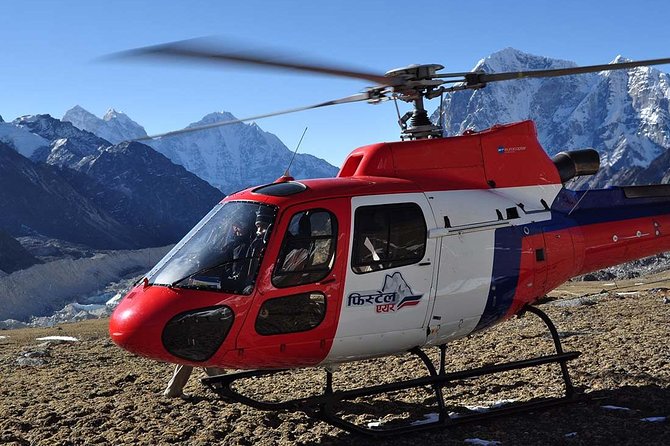
The signature feature arrives after the walking is done: a shared helicopter flight from Gorakshep to Lukla, taking about 20 minutes. From the air, you get a different view of the valley and the route you have just walked.
This is where the trip saves several days. A normal return would involve retracing the trail through the Khumbu, but this plan sends you out by air. The flight is not just a time-saving trick. It also spares you a long descent after two exhausting high-altitude days.
The schedule also refers to a scenic flight back to Kathmandu, but the stated arrangement is a helicopter from Gorakshep to Lukla, followed by the included Lukla to Kathmandu airfare. Confirm the exact flight sequence with the operator before departure, since weather can alter the plan.
You then return to Kathmandu and transfer to your hotel. Two nights in a three-star Kathmandu hotel with breakfast are included in the overall package, along with airport transfers and a farewell dinner.
What the $3,000 price really covers
At first glance, $3,000 is a large price for a 12-day trek. I think it offers fair value if you want organized support rather than piecing the trip together yourself.
The package includes:
- Kathmandu hotel accommodation with breakfast
- Airport and hotel transfers by private vehicle
- Kathmandu to Lukla and Lukla to Kathmandu airfare
- Shared helicopter transport from Gorakshep to Lukla
- Trekking accommodation and all standard meals
- A licensed English-speaking guide
- Porters, with one porter for every two people
- Everest National Park and TIMS permits
- Staff wages, insurance, equipment, and medicine
- Filtered trail water and seasonal fruit
- A first-aid kit with an oxygen saturation monitor
- A duffel bag, trekking map, and sun hat
The helicopter is the biggest value difference from a standard Base Camp trek. It costs more, but it saves the return trek and gives you a memorable final flight. The package also covers staff costs and permits, which are easy to underestimate when planning independently.
Budget extra money for Kathmandu lunches and dinners, drinks, personal trekking equipment, tips, Nepal’s entry visa, international airfare, travel insurance, and emergency evacuation. Tipping is expected, so include it in your planning rather than treating it as an afterthought.
Who should book this trek?
You should consider it if you want the classic Everest Base Camp experience but have limited time for the return journey. It suits people with a moderate physical fitness level who are prepared for long walking days and high altitude.
You should also be comfortable with simple guesthouse accommodation and changing flight plans. This is not a soft adventure with a guaranteed schedule. The mountains set the timetable, especially around Lukla and Gorakshep.
The trip may suit you especially well if you value strong logistical support. Guides such as Raj, Ram, Madan, Rajendra, and Maddy are named in the available feedback, along with porters including Bishal, Krishna, Probin, Saman, Jit, Sher, Girija, and Pesal. Names alone do not guarantee who will lead your group, but the repeated praise for guide care, motivation, and porter support points to the human side of the operation.
The 99 percent recommendation rate and 5 out of 5 rating from 161 published ratings suggest a very strong satisfaction record. Still, no rating removes the hard parts: altitude, cold, basic lodging, long days, and weather delays.
Small details that make the trip easier
Bring proper personal trekking equipment because the package does not supply it. You also need insurance that specifically covers emergency rescue and evacuation. Standard travel insurance may not be enough, so check the wording carefully before you leave home.
Use the acclimatization days well. Walk slowly, drink the filtered water provided, eat the included meals, and tell your guide when you feel unwell. The oxygen monitor and first-aid kit are useful tools, but they do not replace good judgment or a willingness to stop.
Keep your flight days flexible. The cancellation terms allow a full refund when you cancel at least six full days before the start time, with smaller refunds closer to departure. If poor weather cancels the experience, you are offered another date or a full refund. That protection is helpful, but it does not prevent delays during the trip.
Should you book it?
I would book this trek if reaching Everest Base Camp is a major personal goal and you want the return made easier by helicopter. The route gives you the essential Khumbu experience, two well-placed acclimatization days, a strong support team, and a memorable flight out.
I would not book it if you dislike strenuous hiking, basic mountain accommodation, uncertain flight timing, or spending extra for a helicopter return. For the right person, the $3,000 cost buys more than transport and beds. It buys a carefully supported route to Base Camp, with the long walk home replaced by a spectacular shortcut.
FAQ
How long does the Everest Base Camp trek with helicopter return take?
The experience lasts approximately 12 days, including arrival in Kathmandu, the trek, the helicopter transfer to Lukla, the flight back to Kathmandu, and departure.
Where does the helicopter flight go?
The shared helicopter flight goes from Gorakshep to Lukla and takes about 20 minutes.
Is the flight from Lukla to Kathmandu included?
Yes. Airfare from Kathmandu to Lukla and from Lukla to Kathmandu is included.
What is the highest point reached on the trek?
Kala Patthar is the highest point, at 5,555 meters. Everest Base Camp is reached at 5,365 meters.
Are meals included?
Breakfast, lunch, and dinner are included during the trek. Lunch and dinner in Kathmandu are not included. A farewell dinner is included on the final night.
Is accommodation included?
Yes. The package includes two nights in a three-star Kathmandu hotel with breakfast and twin-sharing guesthouse accommodation during the trek.
What fitness level is required?
A moderate physical fitness level is required. The route includes long walking days, significant uphill sections, Everest Base Camp at 5,365 meters, and Kala Patthar at 5,555 meters.
Is travel insurance included?
No. You must arrange your own travel insurance, including coverage for emergency rescue and evacuation.
Just added around Kathmandu
- Kathmandu: 15-Day Everest Base Camp Trek with Guide★ 4.3 · 12 reviews
- 14 Days Private Tour Everest Base Camp Trek★ 5.0 · 105 reviews
- Kathmandu: Nagarkot Sunrise & Hike with Lunch -Private/Group★ 4.9 · 122 reviews
- 4 Days Poon Hill Trek★ 5.0 · 94 reviews
- Langtang Valley Trek★ 5.0 · 140 reviews
- Annapurna Circuit Trek with Tilicho Lake (16 Days)★ 5.0 · 15 reviews
- Manaslu Circuit Trek★ 5.0 · 184 reviews
- Nagarkot Sunrise Trip & Day Hike with Lunch from Kathmandu★ 4.5 · 83 reviews
Kathmandu Hiking Tours, compared.
Nagarkot Sunrise View and Day Hiking from Kathmandu
Read our review →
Browse the lists this tour appears in