
REVIEW · KATHMANDU HIKING TOURS
Annapurna Circuit Trek with Tilicho Lake
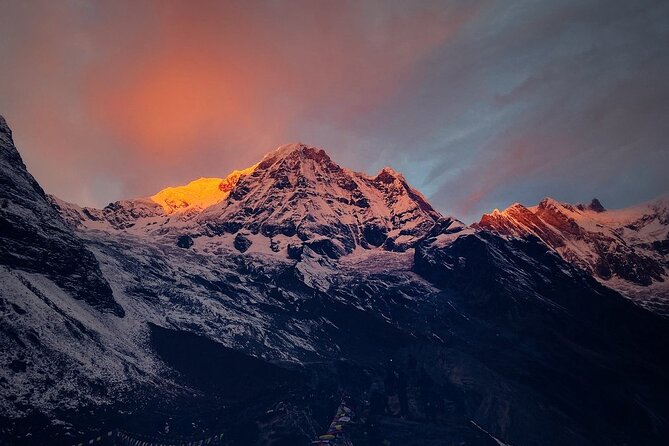
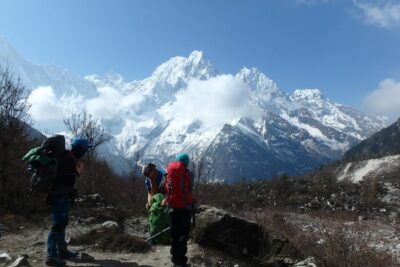
The high Himalaya rewards steady feet. This 16-day Annapurna Circuit trek adds a demanding side trip to Tilicho Lake, then crosses Thorong La before winding through Muktinath, Tatopani, and Poon Hill. I like the varied scenery, from river valleys and pine woods to dry high country, and I like that permits, meals, lodging, guides, porters, and much of the transport are handled for you.
I also like the warm, personal support built into the trip. Guides such as Hari Gurung, Suresh, Dev, and Kersing have led groups connected with this program, while porters including Damar, Sangkar, Bikesh, Asis, and Monis have been praised for kindness, encouragement, and practical help. The main drawback is clear: this is a hard mountain trek, not a sightseeing holiday, and long uphill days, thin air, rough trails, and an early Thorong La start will test you.
The trip in six useful points
- Tilicho Lake adds a serious high-altitude detour: You spend extra days reaching one of the world’s highest lakes before returning to the main circuit.
- Thorong La is the physical high point: The pass crossing begins around 3 a.m. and reaches the trek’s highest elevation.
- Meals and tea-house lodging are included: Breakfast, lunch, and dinner are provided throughout the trek, which keeps daily planning simple.
- The scenery changes almost every day: Expect rivers, waterfalls, forest, dry mountain valleys, old monasteries, farmland, and hot springs.
- You travel in a small group of up to 15: That gives you support without the feel of a large coach tour.
- The $1,093 price covers major essentials: Permits, a licensed guide, porters, accommodation, meals, local transport, and some Kathmandu and Pokhara transfers are included.
Why this Annapurna route earns 16 days
The Annapurna Circuit is appealing because it does not give you one mountain view and call it a day. It moves through several climate zones and communities, with the scenery changing as quickly as your breathing rate.
The Tilicho Lake section makes the trip longer and tougher than a basic circuit. You leave the main route near Manang, enter a rougher side valley, climb to the lake, then return toward the Thorong La route. That detour is the reason to choose this package over a shorter Annapurna itinerary.
You also get a satisfying finish. After the high pass and dry Mustang region, the route reaches Muktinath, Tatopani’s hot springs, rhododendron forests, and Poon Hill. The trip has a real arc: low valleys first, high mountains in the middle, then warmer villages and a sunrise viewpoint near the end.
More Lake and Lagoon Hikes in Nepal
- Annapurna Circuit with Tilicho Lake Trek
★ 5.0 · 25 reviews - Annapurna Circuit Trek with Tilicho Lake (16 Days)
★ 5.0 · 15 reviews - From Pokhara : Hiking to Peace Pagoda via Fewa Lake & Jungle
★ 5.0 · 10 reviews
Kathmandu to Besishar and the first mountain roads
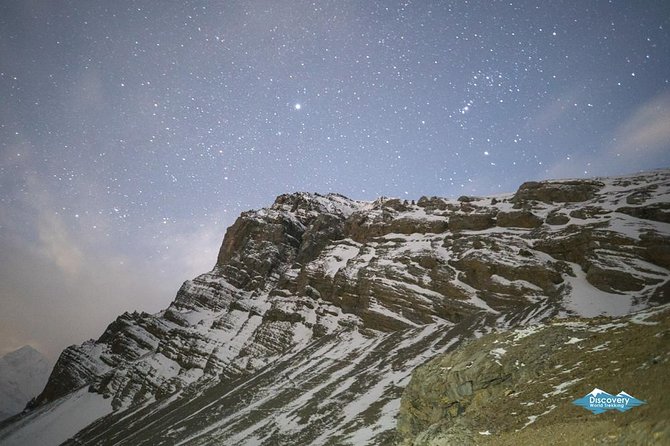
Day one begins with a long drive from Kathmandu, about six to seven hours over roughly 190 kilometers, toward Besishar and the trail access near Syange. This is not a glamorous transfer, but it gets you into the mountains quickly.
You will pass villages, farms, rivers, and early views of the ranges. The package includes an air-conditioned vehicle for the drive from Kathmandu to Syange, along with local transport arrangements. The roads can make this a tiring first day, so think of it as the opening travel day rather than an easy walking day.
This early drive is one reason the guided format is useful. You do not have to arrange vehicles, permits, or trail access yourself. You simply need to be ready for an early start and a full day on the road.
Tal, Dharapani, and the first real walking days
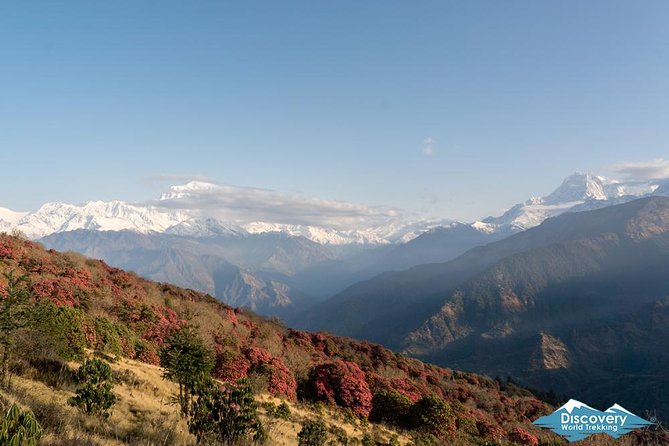
The second day brings a suspension bridge, a steep climb, and the village of Tal. Waterfalls run toward the river, and sandy riverbanks give the valley a softer feel than the rocky high country still ahead.
The route continues toward Dharapani, where you enter the Manang region. The walking day is listed as a full day, so you should expect more than a short village stroll. A moderate level of fitness is the stated minimum, but I would prepare beyond that if you want to enjoy the scenery instead of simply enduring the climb.
On day three, the trail follows a river through pine, fir, oak, and maple forest toward Chame, the district headquarters of Manang. Forest shade helps, but the route continues to gain height. You get views toward Lamjung and the Annapurna range, along with a growing sense that the valley is narrowing around you.
Chame, Pisang, and the change in mountain scenery
Day four takes you through a steep, narrow valley toward Paungda Danda, a striking curved rock face rising about 1,500 meters from the river. Annapurna II and Pisang Peak come into view, giving you some of the trek’s first grand mountain scenes.
The following day uses the upper trail through Upper Pisang and Geru. This higher route is chosen for its broad views of Annapurna II, Annapurna III, Annapurna IV, Gangapurna, Tilicho, and Pisang Peak. The air becomes colder, drier, and harsher as you climb.
That contrast is one of the best features of the route. You move from green woodland and rushing water into a more open mountain world. The tradeoff is that the air is thinner, the nights are colder, and every uphill section takes more effort.
More Lake and Lagoon Hikes in Kathmandu:
- From Tirana: Bovilla Lake & Gamti Mountain Hiking Day Trip
★ 4.9 · 4,397 reviews - From Tirana: Bovilla Lake & Gamti Mountain Hiking Tour
★ 4.9 · 3,003 reviews - From Tirana: Bovilla Lake & Gamti Mountain Viewpoint Hike
★ 4.8 · 2,053 reviews - Hike Gamti Mountain with Bovilla lake view & canyon- From Tirana
★ 5.0 · 1,280 reviews
Manang acclimatization and Gangapurna Lake
Day six is set aside for acclimatization in Manang. This is not wasted time. You hike toward Gangapurna Lake and Base Camp, admire the surrounding peaks, and explore Manang village and a monastery.
I especially like this pause in the schedule because it gives your body time to adjust before the Tilicho section and Thorong La. It also gives you a chance to look around instead of treating every village as a place to sleep and leave.
The itinerary mentions views of Annapurna III, Tilicho, Pisang, and Chulu peaks. Manang is also a useful cultural stop, with mountain architecture, local religious sites, and a setting that shows how communities live at high elevation. Your guide can add context about the towns, mountains, and local culture, something several highly praised guides have done well.
Khangsar and the rough route to Tilicho Base Camp
Day seven is described as an easier walking day. The upper route drops toward a river, crosses it, and passes through conifer forest before reaching the Tibetan settlement of Khangsar after roughly three hours. From there, the trail continues toward Tilicho Base Camp.
The approach becomes more rugged. On day eight, you follow an easier path through a landslide area with striking rock formations before reaching Tilicho Base Camp. You should not read easier as effortless. The route remains high and exposed, and loose ground can make each step slower.
This section is where a guide earns his or her keep. The route can be confusing around rough slopes and landslide areas, and the package specifically aims to reduce the risk of getting lost. You will still do the walking, but you are not responsible for solving every navigation problem while tired.
Tilicho Lake, the trip’s dramatic detour
Day nine starts early to avoid the afternoon wind. You climb steadily for two to three hours to reach Tilicho Lake, described in the program as one of the highest lakes in the world and known as the Great Ice Lake.
The lake is the payoff for the extra effort. Snow-covered peaks and steep mountain walls create a stark setting, very different from the forests and farms near the beginning of the trek. You should allow yourself time to enjoy the view, but remember that you still need to descend.
The climb is short compared with some days, yet the altitude makes it serious. Walk slowly, keep warm, and follow your guide’s advice. If you are already struggling with the height, this is not the place to prove a point. A high mountain view is never worth ignoring signs that your body is in trouble.
Returning toward Thorong Phedi
After Tilicho Lake, the route descends toward Khangsar, passes Tare Gumba, and follows a rock wall before dropping toward the Thorong Khola valley. The itinerary then continues across a river and up to a plateau near Yak Kharka.
This is a useful transition day. You are leaving the side route and returning to the main Annapurna Circuit, but the terrain remains demanding. The old monastery adds a cultural detail to a day otherwise shaped by steep paths, open slopes, and high mountain air.
Day eleven climbs toward Thorong Phedi, a small and busy settlement with views toward Mount Gundang, Mount Syagang, Thorung Peak, and Mount Khatungkan. Thorong Phedi is less about comfort than position. You stay there because it places you close to the pass for the early crossing.
Accommodation on the trek is in tea houses or lodges, with breakfast, lunch, and dinner included. Standards can be simple in mountain villages, so pack with that in mind. The value is not luxury. It is having a bed, meals, and a support team arranged along a difficult route.
Thorong La and the long descent to Muktinath
Day twelve is the most demanding day. You wake around 3 a.m. and climb to Thorong La, one of the highest passes in the world and the highest point on this trek.
The early start is practical. Wind and weather often become worse later in the day, and the crossing can take several hours. You will need patience, warm layers, water, and a willingness to walk at a slow pace. This is the day when fitness, acclimatization, and guide support matter most.
After reaching the pass, you descend toward Muktinath. The downhill is a relief for your lungs, but it can be hard on knees and feet. Do not assume the challenge ends at the pass. A long descent after a high climb can be just as tiring.
Muktinath, Tatopani, and a welcome soak
Day thirteen begins with a visit to Muktinath Temple before a vehicle transfer to Tatopani. Muktinath is an important religious site, and its position on the dry side of the mountains gives the area a different feel from the forested valleys.
Tatopani is known for its natural hot springs. After the pass and the long descent, soaking here is more than a pleasant extra. It gives your tired legs a welcome break and creates a clear change of pace.
The package includes public transportation from Muktinath to Tatopani. As with the first long drive, local transport saves you from arranging a separate vehicle, but it may not offer the quiet or comfort of a private transfer.
Ghorepani forests and the Poon Hill finale
Day fourteen climbs through Sikha and Chitre toward Ghorepani. You pass terraced farmland and villages associated with the Thakali people, then enter forests of rhododendron, birch, and magnolia.
This section feels greener and more welcoming after the dry, high-altitude country around Thorong La. It is still an uphill day, so the hot springs will not make your legs entirely fresh. The scenery, though, gives you a strong final stretch rather than a dull exit.
On day fifteen, you make an early ascent to Poon Hill at 3,210 meters for sunrise. The viewpoint looks toward the Annapurna and Dhaulagiri massifs, Machhapuchhre, Manaslu, and surrounding rice terraces. It is a favorite stop for photographers, but you do not need expensive equipment to appreciate it. The appeal is the wide view after so many days in narrow valleys.
The itinerary does not provide every detail of the descent after Poon Hill, so expect the guide to manage the day’s exact walking and transport arrangements. The next major stop is Pokhara, where one night in a selected hotel with breakfast is included.
Transport, meals, permits, and the real value of $1,093
At $1,093, this is a substantial purchase, but the price covers many costs that quickly add up on a self-arranged trek. You receive tea-house or lodge accommodation, three meals each day, the Annapurna Conservation Area Permit, and the Trekkers Information Management System card.
The package also covers the licensed guide and porters, including their meals, insurance, salary, lodging, and transport. It includes the Kathmandu to Syange drive, public transport from Muktinath to Tatopani, the Pokhara to Kathmandu tourist bus, a night in Pokhara with breakfast, farewell dinner, government taxes, and help arranging rescue operations in a complicated health situation.
That is good value if you want a supported trek and do not want to negotiate every bed, meal, permit, and vehicle yourself. Extra dietary requirements are catered for, but costs not specifically listed as included are excluded. A flight from Pokhara to Kathmandu is possible, but the 225-minute flight is not included.
The package also provides a completion certificate and mobile ticketing, with pickup offered. The group size can reach 15 people, small enough for a shared experience but large enough that your pace may not always match everyone else’s.
Guides, porters, and the human side of the trek
The strongest praise connected with this experience focuses on the guide and porter teams. Names include Hari Gurung, Suresh, Dev, Kersing, Damar, Sangkar, Bikesh, Asis, Monis, Rupesh, and Surya. Assignments can change, but the qualities you want are clear: calm support, good communication, mountain knowledge, and care when the route gets tough.
Specific touches make a difference. Porters have been praised for being friendly and supportive, and one porter was remembered for preparing fruit platters in the evenings. Guides have also been appreciated for explaining the mountains, villages, and local culture while keeping groups moving safely.
That personal contact is a major reason to choose a guided trek. The Annapurna Circuit is not only about peaks. It is also about the people who carry supplies, prepare meals, run lodges, maintain local life, and help you understand the places you pass through.
Who should book this trek?
You should consider it if you are fit, active, and comfortable with repeated full days of mountain walking. You need to accept steep climbs, rough trails, early starts, basic lodge accommodation, and the possibility that weather or altitude can alter the plan.
This is a good fit if you want the main Annapurna Circuit but also care strongly about reaching Tilicho Lake. It is also a practical choice if you want permits, meals, porters, guides, and local transport organized in one package.
I would hesitate to recommend it to anyone seeking a relaxed holiday, private luxury, or a flexible day-by-day schedule. The fixed route, high pass, early start, and non-refundable booking policy require commitment. If poor weather or an insufficient group size forces cancellation by the operator, you are offered another date or a full refund. If you cancel or request an amendment, the payment is not refunded.
Should you book the Annapurna Circuit with Tilicho Lake?
Book it if the thought of crossing Thorong La, reaching Tilicho Lake, walking through Manang, soaking in Tatopani, and watching sunrise from Poon Hill sounds worth the effort. The program offers strong practical value because it combines the major permits, meals, lodge stays, guides, porters, and transport for $1,093.
Skip it if you are not ready for high-altitude exertion or if you want a short, gentle introduction to Nepal. This is a serious trek with a generous reward: changing scenery, memorable mountain communities, and a route that feels like a real journey rather than a string of quick viewpoints.
FAQ
How long is the Annapurna Circuit Trek with Tilicho Lake?
The trek lasts approximately 16 days, beginning with the journey from Kathmandu and ending with transport back to Kathmandu.
Is accommodation included?
Yes. Tea-house or lodge accommodation with breakfast, lunch, and dinner is included during the trek. One night in a selected Pokhara hotel with breakfast is also included.
Are permits included in the price?
Yes. The Annapurna Conservation Area Permit and Trekkers Information Management System card fee are included.
What is the highest point of the trek?
Thorong La is the highest point of the trek. The crossing takes place on day twelve and requires an early start around 3 a.m.
Is transportation included?
Yes. The package includes transport from Kathmandu to Syange, public transportation from Muktinath to Tatopani, and a tourist bus from Pokhara to Kathmandu. A flight from Pokhara to Kathmandu is available at an additional cost and is not included.
How large can the group be?
The tour has a maximum group size of 15 people.
More Annapurna Treks in Kathmandu
- Annapurna base camp trek 5 Days
★ 5.0 · 252 reviews - 14-Day Private Annapurna Base Camp Trek
★ 5.0 · 180 reviews - Trekking in Annapurna/Langtang/Everest/Upper Mustang regions
★ 5.0 · 161 reviews - Pokhara: Annapurna Foothills Day Hike with Transfers
★ 5.0 · 100 reviews
Just added around Kathmandu
- Kathmandu: 15-Day Everest Base Camp Trek with Guide★ 4.3 · 12 reviews
- 14 Days Private Tour Everest Base Camp Trek★ 5.0 · 105 reviews
- Kathmandu: Nagarkot Sunrise & Hike with Lunch -Private/Group★ 4.9 · 122 reviews
- 4 Days Poon Hill Trek★ 5.0 · 94 reviews
- Langtang Valley Trek★ 5.0 · 140 reviews
- Annapurna Circuit Trek with Tilicho Lake (16 Days)★ 5.0 · 15 reviews
- Manaslu Circuit Trek★ 5.0 · 184 reviews
- Annapurna Circuit with Tilicho Lake Trek★ 5.0 · 25 reviews
Kathmandu Hiking Tours, compared.
Nagarkot Sunrise View and Day Hiking from Kathmandu
Read our review →
Browse the lists this tour appears in