
REVIEW · KATHMANDU HIKING TOURS
Annapurna Base Camp Trek 12 Days
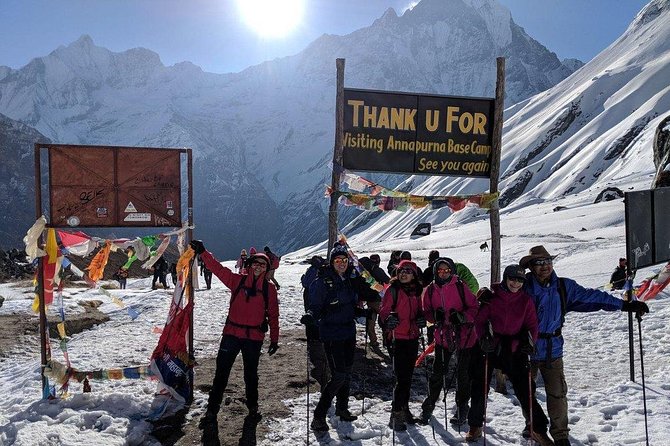
The Himalayas reward steady feet. This 12-day Annapurna Base Camp trek combines a famous sunrise at Poon Hill, high mountain scenery, village life, and the Annapurna Sanctuary in one well-paced route from Kathmandu. I especially like the Poon Hill sunrise and the chance to pass through Gurung and Magar communities rather than simply racing toward base camp. The main catch is physical: 3,000 stone steps to Ulleri, long uphill days, and altitude near Annapurna Base Camp demand more than casual fitness.
The price is $799 per person, with mountain lodging, three meals a day on the trail, permits, ground transport, a guide, and airport transfers included. That is strong value for a private trip, though you still need to budget for Kathmandu and Pokhara lodging, most meals in those cities, drinks, insurance, tips, and a porter if you want one.
Adventure Glacier Treks & Expedition receives a 4.9 rating from 18 submitted ratings, with a 100 percent recommendation figure. Specific staff members praised for their help include guides Arjun and Sudip, porter-guide Ram, and porter Krishna. One useful sign of good service is the company’s reported help with a canceled Pokhara flight, although this 12-day plan normally uses a tourist bus from Kathmandu.
Key points before you book
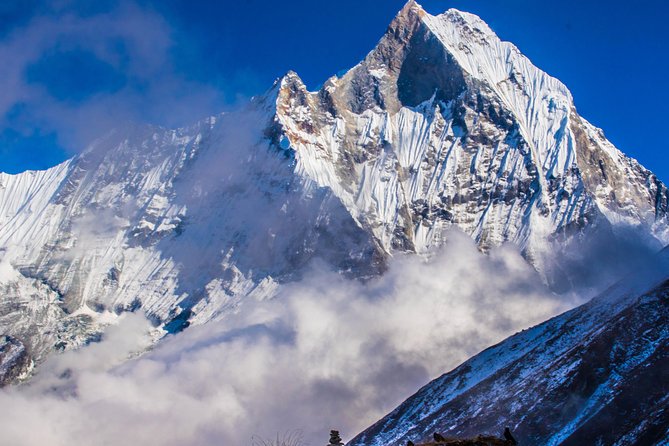
- Poon Hill at 3,200 meters: An early morning walk leads to a broad Himalayan sunrise viewpoint with about 15 peaks visible in clear conditions.
- A real Annapurna Sanctuary route: The trail continues beyond the lower villages into the mountain basin below Annapurna South and Machhapuchare, also called Fishtail.
- Private trip format: Only your group takes part, giving you more room to set the walking rhythm than a large scheduled group.
- Strong package value: Lodges, trail meals, permits, ground transport, guide costs, and airport pickup and drop-off are included.
- Gurung and Magar culture: Villages such as Chhomrong add human character to a trek that could otherwise become a long parade of mountain views.
- A demanding but manageable schedule: Moderate fitness is required, with steep stairs, long descents, and altitude to handle.
What the 12 days are really like
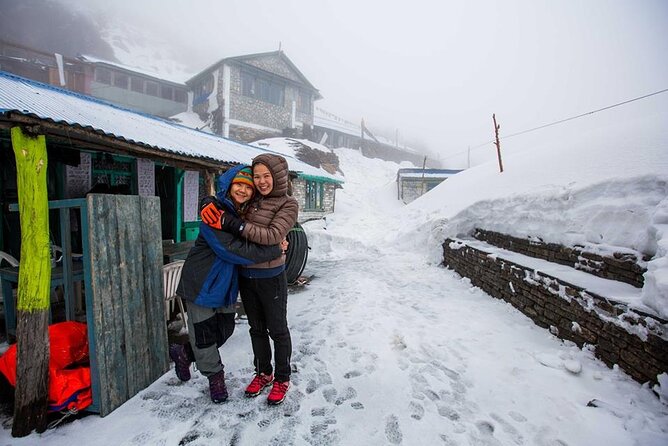
This is not a quick walk to a single viewpoint. The route begins with city transfers and a long bus ride, then moves through foothill villages, rhododendron and forest sections, river valleys, and higher settlements before reaching Annapurna Base Camp. The return follows a different rhythm, with a hot spring stop at Jhinu before the drive back to Pokhara.
The plan is private, which matters. You are not tied to the pace of a large group, and the guide can give more attention to your walking speed and comfort. Still, a private trek is not an easy trek. The schedule includes steep stairways, descents that can be hard on knees, and a high point where altitude becomes a serious concern.
The route also has a practical safety detail: the section between Deurali and Fishtail Base Camp can be exposed to avalanches. The crossing near the Modi River may change with the season and current conditions. That flexibility is sensible, but you should accept that mountain routes do not always follow a fixed script.
More Annapurna Treks in Kathmandu:
- Annapurna Circuit Trek with Tilicho Lake
★ 5.0 · 368 reviews - Annapurna base camp trek 5 Days
★ 5.0 · 252 reviews - 14-Day Private Annapurna Base Camp Trek
★ 5.0 · 180 reviews
Day 1: Kathmandu arrival and Thamel
An airport representative meets you at Tribhuvan International Airport and transfers you to a hotel in Kathmandu. The day includes a briefing, which is useful for checking permits, transport plans, equipment, and the walking schedule before you leave the city.
The itinerary places you in Thamel, Kathmandu’s main visitor district. You should treat this first day as a practical setup day, not as a sightseeing day. Arrival delays, luggage trouble, and jet lag can quickly eat up your time, so having airport pickup included is a genuine convenience.
Accommodation in Kathmandu is not included, and meals in Kathmandu are also excluded apart from any stated daily breakfast arrangement. Confirm exactly what hotel and breakfast arrangements apply before arrival.
Day 2: The long road from Kathmandu to Pokhara
You travel by tourist bus from Kathmandu to Pokhara. Departures are usually around 7:00 a.m., and the journey takes roughly six to seven hours, depending on road conditions.
This transfer is not glamorous, but it is part of the Nepal experience. You see the countryside change as the road leaves the capital and heads toward Pokhara. The drawback is time. After an early start and a full day on the road, you may want little more than a shower and a quiet evening at Lakeside.
Pokhara is the staging point for the trek. Once at the hotel, the schedule allows time to rest and prepare for the trail. The package includes ground transportation, but you should check whether the Pokhara hotel itself is covered, since the inclusion list clearly excludes accommodation in Kathmandu and does not clearly list Pokhara lodging.
Day 3: Nayapul to Tikhedhunga
After breakfast, a private vehicle takes you from Pokhara to Nayapul, the trailhead, in about two hours. Nayapul is near the meeting point of the Modi River and the surrounding valley routes.
From there, you begin walking toward Tikhedhunga. This first trail day gives you a gentle introduction to village paths and river scenery, though the exact walking time is not provided. The road access makes the start easier than some remote Himalayan treks, but you should not mistake an accessible trailhead for an easy route.
Tikhedhunga is a simple overnight stop in the lower foothills. Lodging is in a local lodge, and three meals a day are included on the trail, with tea or coffee. Drinks beyond the included tea or coffee are extra.
A few more hikes around Kathmandu worth a look
- Everest Base Camp Trek – 14 Days
★ 5.0 · 1,499 reviews - Everest Base Camp Trek
★ 5.0 · 842 reviews - Everest Base Camp Trekking
★ 5.0 · 485 reviews - Nagarkot Sunrise View and Day Hiking from Kathmandu
★ 5.0 · 471 reviews
Day 4: The 3,000 steps to Ghorepani
This is one of the days you will remember in your legs. After breakfast, the trail climbs toward Ulleri on roughly 3,000 stone steps. The climb takes about two hours, according to the schedule, and then continues through forest toward Ghorepani.
The stone steps are the day’s defining feature. They are straightforward to understand, but not easy to walk, especially if you carry a full pack. This is where the optional porter becomes worth considering. A porter is not included, so arrange and pay for one separately if you do not want to carry your own heavier luggage.
Ghorepani is important because it sets up the early visit to Poon Hill. Keep your evening quiet. The next morning begins before sunrise, and the best part of the day comes early.
Day 5: Poon Hill sunrise and Tadapani
The walk to Poon Hill takes about 50 minutes and reaches roughly 3,200 meters. The reward is a sunrise view over the Annapurna region, with about 15 peaks visible in clear weather.
This is one of the strongest parts of the itinerary because the viewpoint offers a big Himalayan payoff before the route enters the more confined Annapurna Sanctuary. Weather controls the show, so no one can promise a perfect sunrise. Even with cloud, the early walk gives you a memorable mountain morning.
After Poon Hill, you continue toward Tadapani. The day combines a short pre-dawn climb with more trail walking, so it is not merely a viewpoint excursion. Pace yourself and keep warm while waiting for sunrise.
Day 6: Tadapani to Chhomrong
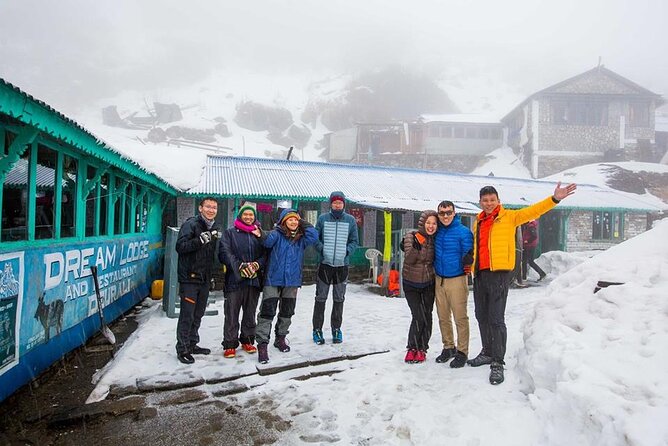
From Tadapani, the trail descends about 900 meters to the Gurjung River valley before climbing again along a ridge to Chhomrong. This is a classic Himalayan pattern: lose altitude, then gain it back.
Chhomrong is a large Gurung village on the Annapurna route. It gives the trek a stronger cultural side, with a settled community rather than only lodges surrounded by trees and rock. The stated aim of the trip includes contact with Gurung and Magar communities, and this is one of the places where that promise makes sense.
The descent can be harder than it sounds. A long downhill stretch tests knees and ankles, while the later climb asks for fresh effort. Trekking poles would be useful, though the supplied information does not confirm that equipment is provided.
Day 7: Chhomrong to Dovan
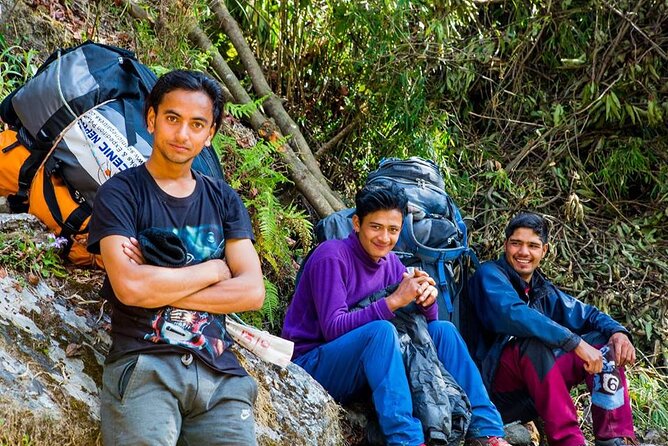
The path first descends toward Chhomrong Khola, then climbs to Sinuwa in about three hours. From Sinuwa, the trail enters a steep valley leading toward the Annapurna Sanctuary, below Annapurna South and Machhapuchare.
This is where the trip begins to feel more enclosed and mountainous. The trail follows a river corridor and passes through forest, with waterfalls and bird sounds adding a quieter note to the walk. You are moving away from the broad lower foothills and toward the high basin.
Dovan is a river junction where two streams meet. It is a practical overnight stop, not a grand destination, but that is the point of mountain trekking. You sleep where the route allows, then keep moving.
Day 8: Dovan to Deurali
Above Dovan, the effects of altitude begin to matter more. The trail climbs slowly through peaceful forest for about two hours to another Himalayan hamlet, Deurali.
The schedule’s advice to move slowly is important. This is not the place to prove anything by charging uphill. Watch for headache, unusual tiredness, nausea, or difficulty sleeping, and tell your guide if you feel unwell. The supplied plan includes a professional guide, but you remain responsible for speaking up about your condition.
Deurali marks the approach to the most sensitive section of the route. The forest thins as you near higher terrain, and the next day includes a route that may change because of avalanche risk.
Day 9: Annapurna Base Camp
From Deurali, you head toward Fishtail Base Camp and then Annapurna Base Camp. The route near Fishtail Base Camp can be avalanche-prone, so the crossing of the Modi River area may change according to season and current conditions.
This is the trek’s main goal, but it is not a simple final stroll. You are at higher altitude, the trail can be exposed, and the day requires a steady pace. Your guide’s local judgment matters here more than a printed route line.
At Annapurna Base Camp, the setting is the payoff: you are inside the Annapurna Sanctuary, surrounded by high Himalayan peaks. The information provided does not state the exact overnight arrangement at base camp, so ask how the lodge or teahouse stay is handled and what happens if weather forces a route change.
Day 10: Sunrise and the return to Dovan
After sunrise over the Annapurnas, you hike back toward Dovan. The first part of the descent can be steep, then the trail settles into a more gradual downhill.
This day shows why the trek is not just about reaching base camp. The mountains can look completely different in morning light, and the return route gives you time to notice sections you passed too quickly on the way up. Still, downhill walking can be punishing after the high-point day, so protect your knees and keep your pack light.
Dovan is again the overnight point. Repeating a stop may sound dull on paper, but it breaks the return into a reasonable stage rather than forcing an excessive descent.
Day 11: Forest paths toward Sinuwa
The route follows the river through peaceful forest, with waterfalls, birds, and running water along the way. You then climb gently toward Sinuwa Hill and spend the night at a trekking lodge near Sinuwa.
This is one of the more pleasant descriptions in the schedule because the walking is less about reaching a famous marker and more about the sounds and rhythm of the trail. After the high country, forest and water provide a welcome change.
The wording around Hilltop Lodge and Restaurant suggests a meal or lodging stop along this section, but the exact accommodation details should be confirmed before booking. Mountain lodges are functional rather than luxurious, and the price reflects that style of travel.
Day 12: Jhinu hot spring and Pokhara
The final walking section takes about two hours to Jhinu, where you can visit the natural hot spring. You have time to bathe, eat lunch, and then drive back to Pokhara, with the option to trek farther before the drive.
The hot spring is a smart ending. After nearly two weeks of stairs, river valleys, and high-altitude walking, a warm soak offers simple relief. Lunch is included as part of the trail meal plan, while the drive returns you to Pokhara and closes the mountain portion of the trip.
The final day is not entirely predictable because the timing depends on how long you spend at Jhinu and whether you walk farther. If you have a flight or another booked activity from Pokhara, leave extra room rather than planning a tight connection.
What the $799 price includes
For $799, the package covers:
- Lodge accommodation along the trekking route
- Breakfast, lunch, and dinner during the trek
- Tea or coffee with trail meals
- Ground transportation
- A professional guide, including the guide’s insurance and equipment
- Airport pickup and drop-off
- Annapurna Conservation Area and local permits
- The listed trail breakfasts, lunches, and dinners
That is a useful bundle. Permits, transport, guide costs, and meals can add up quickly on a Himalayan trek, so the price is not simply paying for a walking route.
You still pay for drinks, tips, personal expenses, your own insurance, and a porter if needed. Food in Kathmandu and Pokhara is excluded except for daily breakfast, and accommodation in Kathmandu is excluded. The package details for Pokhara accommodation are not fully clear, so ask for a written breakdown before you pay.
Guide and porter insurance is included for the guide, and company material also places importance on staff insurance and safety. Your own travel insurance is not included. Arrange coverage that specifically fits trekking and high-altitude activity before departure.
Who should choose this trek?
I would recommend this route to someone who wants a classic Nepal trek with both a famous viewpoint and a proper base camp finish. It suits you if you can handle long walking days, steep stone stairs, repeated climbs and descents, and a moderate fitness requirement.
It is also a good fit if you value a private group and local guiding more than hotel comfort. The company has been praised for professional service, reasonable pricing, and flexible support, with Arjun, Sudip, Ram, and Krishna each named positively for their work.
I would hesitate to recommend it to anyone seeking a relaxed holiday or a fixed, low-effort schedule. The 12 days include several demanding sections, and the route near Fishtail Base Camp can change for safety reasons. You should also be comfortable with basic lodge accommodation and paying extra for items outside the package.
Free cancellation is available if you cancel at least 24 hours before the experience begins. Cancellations within 24 hours are not refunded, and changes made within that period are not accepted.
Should you book the Annapurna Base Camp Trek?
I would book this trek if you want strong value, a private guide-led format, Poon Hill, village culture, and Annapurna Base Camp in one trip. The price includes many of the costly essentials, and the high rating, named staff praise, and reported flexibility with travel problems add confidence.
Before booking, ask three direct questions: Is Pokhara accommodation included, what exact lodge arrangements apply at base camp, and what porter options and prices are available? If the answers are clear and you are ready for the stairs, altitude, and simple lodges, this is a well-priced way to experience one of Nepal’s best-known trekking routes.
FAQ
Where does the Annapurna Base Camp trek begin?
The experience begins with airport pickup at Tribhuvan International Airport in Kathmandu, Nepal.
How long does the trek last?
The planned duration is 12 days, approximately.
What is the tour price?
The listed price is $799 per person.
Is this a private tour?
Yes. Only your group participates in the private tour or activity.
Is airport pickup included?
Yes. Airport pickup and drop-off are included.
Is transportation included?
Yes. Ground transportation is included, including the tourist bus from Kathmandu to Pokhara and the listed private vehicle transfers.
Are meals included?
Breakfast, lunch, and dinner are included during the trek, along with a cup of tea or coffee. Meals in Kathmandu and Pokhara are not included except for daily breakfast.
Is a trekking porter included?
No. A trekking porter is available if needed, but the cost is not included.
Are permits included?
Yes. Annapurna Conservation Area permits and local permits are included.
What fitness level is required?
A moderate physical fitness level is required. The route includes about 3,000 stone steps to Ulleri, steep climbs and descents, and higher-altitude walking.
Can I cancel for a full refund?
Yes, if you cancel at least 24 hours before the experience start time. Cancellations within 24 hours are not refunded.
Just added around Kathmandu
- Annapurna Base Camp Trek – 11 Days★ 5.0 · 30 reviews
- Annapurna Base Camp Trek 10 Days★ 5.0 · 35 reviews
- Annapurna Base Camp Trekking★ 5.0 · 38 reviews
- Adventurous Annapurna Base Camp Trekking★ 5.0 · 7 reviews
- Annapurna Base Camp Trek★ 5.0 · 80 reviews
- Annapurna Base Camp Private Short Trek★ 5.0 · 8 reviews
- Annapurna Base Camp Short trek★ 5.0 · 13 reviews
- 9 Days short and Easy Ghorepani Poonhill Trekking in Nepal★ 5.0 · 9 reviews
Kathmandu Hiking Tours, compared.
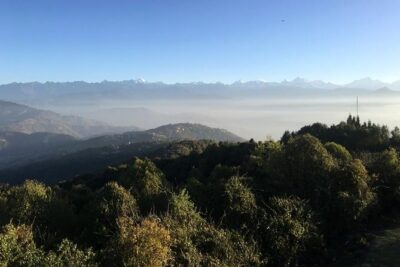
Nagarkot Sunrise View and Day Hiking from Kathmandu
Read our review →
Browse the lists this tour appears in