
REVIEW · KATHMANDU HIKING TOURS
Everest Base Camp Trek
The world’s highest mountains come with a price.
This 14-day Everest Base Camp trek gives you the classic Khumbu route: Lukla, Namche Bazaar, Tengboche, Dingboche, Gorak Shep, Everest Base Camp, and Kala Patthar. I like the built-in acclimatization days and the support of guides and porters, especially guides such as Pradip, who is praised for his humor, mountain experience, and eye for wildlife. The main drawback is the demanding altitude, plus the risk of Lukla flight delays and extra helicopter costs.
I also like the straightforward package at $1,500 per person. It covers Kathmandu hotels, tea-house lodging, meals during the trek, porters, guide costs, permits, airport transfers, and a duffle bag if needed. You still need to budget for insurance, drinks, Kathmandu meals, tips, showers, snacks, and possible flight disruption.
Key things to know before booking
- The trek reaches both Everest Base Camp and Kala Patthar, with Kala Patthar at about 5,545 meters offering one of the highest viewpoints on the route.
- Two acclimatization days are built in, one at Namche Bazaar and one at Dingboche, which makes the schedule more sensible for high altitude.
- Lukla flights are the weak link, and a cancellation can mean waiting another day or paying at least $500 for a helicopter seat.
- Porters carry the main luggage, while you carry a day pack with water, sunscreen, a camera, and extra clothing.
- The group can include up to 15 people, so this is supported group trekking rather than a private walk.
- Guides receive strong praise, with Pradip, Pradam, Laxman, and Niti singled out for care, organization, and mountain experience.
Why this Everest trek is worth your time
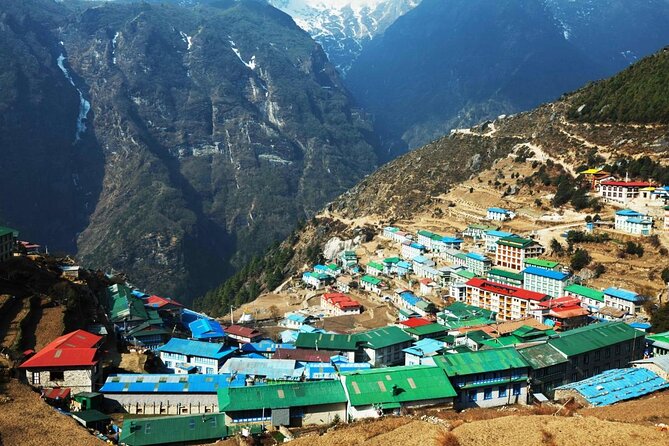
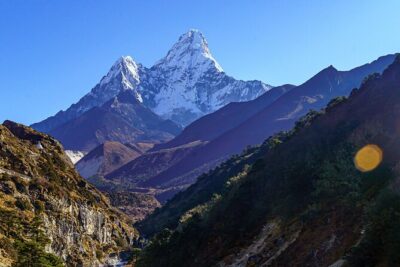
Everest Base Camp is not a sightseeing stop you reach by road. You earn it one uphill hour at a time. The reward is a gradual change from Kathmandu’s busy streets to high Himalayan villages where Sherpa culture, monasteries, suspension bridges, stone trails, and giant peaks shape the day.
I like that this program does not rush straight toward Base Camp. The stops at Namche Bazaar and Dingboche give your body time to adjust. At this altitude, an extra day is not wasted time. It can make the difference between continuing comfortably and needing to turn back.
The trek also gives you more than a photograph of Mount Everest. You pass through Namche, the main Sherpa center of the Khumbu, and Tengboche, known for its monastery. At Base Camp, you are close to the starting point used by climbers attempting Everest. The experience connects the physical walk with the human story of sacrifice, risk, and endurance on the mountain.
Still, this is not a soft adventure. Several days involve around six hours of walking, and the altitude rises from 1,320 meters in Kathmandu to more than 5,500 meters at Kala Patthar. You should have a strong level of fitness and be ready for basic tea-house conditions.
More Everest Base Camp Treks in Kathmandu:
- Everest Base Camp Trek – 14 Days
★ 5.0 · 1,499 reviews - Everest Base Camp Trek
★ 5.0 · 842 reviews - Everest Base Camp Trekking
★ 5.0 · 485 reviews
Days 1 and 2: Kathmandu to Lukla and Phakding
Your arrival day begins at Tribhuvan International Airport in Kathmandu. A representative meets you after customs and transfers you to your hotel by private vehicle. Two nights in a standard three-star Kathmandu hotel are included, one at the start and one after the trek.
The schedule lists an early flight from Kathmandu to Lukla on Day 2. Lukla sits at about 2,886 meters, so the change is quick. After landing, you begin walking toward Phakding, at around 2,640 meters, with about four hours of trekking planned.
This first walking day is useful because it lets you begin gradually rather than pushing toward Namche immediately. Phakding is a practical overnight stop, not the main prize of the trek, but it gives you a first taste of tea-house life and the mountain trail.
Lukla flights operate under conditions that can change. If the flight is canceled, the operator says it will try to move you to the next day, subject to availability. A helicopter may be arranged for a group, but the stated minimum cost is $500 per person. Travel insurance covering this risk is a very sensible purchase.
Days 3 and 4: The Sherpa center of Namche Bazaar
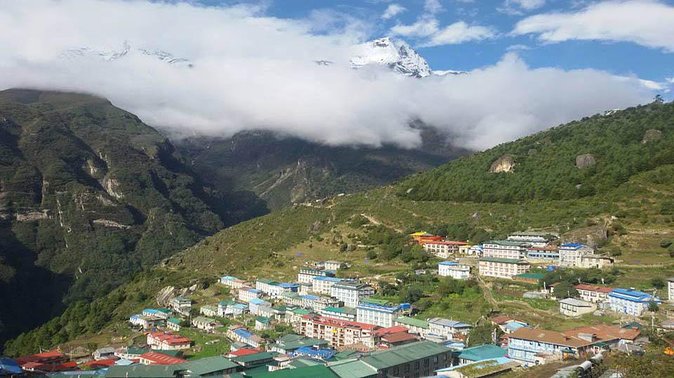
From Phakding, you walk roughly six hours to Namche Bazaar, reaching about 3,440 meters. This is one of the key days of the trek. The trail gains height, and you begin to feel the effort in your legs and breathing.
Namche is described as the capital of the Sherpa community in the Khumbu. It is also the place where the schedule wisely pauses for acclimatization. You spend a full day there rather than climbing higher immediately.
The program describes the Namche acclimatization day as a rest day, though the stated duration is six hours. That means you should confirm with your guide what the planned activity involves. A rest day at this altitude may include a short walk, but the supplied details do not promise a particular viewpoint or excursion.
I like this pause because it gives you time to settle into the rhythm of the trek. You can also use it to check your clothing, charge batteries where power is available, and speak with your guide about how you feel. Do not treat a rest day as a chance to prove your fitness. At high altitude, patience is useful.
Days 5 to 7: Tengboche and Dingboche acclimatization
Day 5 takes you from Namche to Tengboche, also written as Tyangboche in the schedule. The village is about 3,867 meters above sea level and is known for its monastery.
Tengboche is one of the more meaningful stops on the route. The monastery gives the day a spiritual character, and the setting brings you closer to the high mountain world that makes the trek special. The description promises time here, but it does not specify a monastery tour or ceremony, so ask your guide what can be visited during your stop.
The next day continues to Dingboche, at about 4,260 meters. This is another six-hour walking day, and the increase in altitude is serious. The schedule lists a stop at Dingboche View Point, though it does not provide further detail about the exact walk or viewpoint.
Day 7 is the second acclimatization day. A Chhukhung Path stop is listed, followed by a return to Dingboche for rest. Again, confirm the exact walking plan locally, since the supplied schedule describes the day in broad terms.
Two acclimatization days are one of the strongest parts of this plan. You are not simply racing upward to Base Camp. You have time to adjust before the trail becomes colder, higher, and more demanding.
A few more hikes around Kathmandu worth a look
- Nagarkot Sunrise View and Day Hiking from Kathmandu
★ 5.0 · 471 reviews - Annapurna Circuit Trek with Tilicho Lake
★ 5.0 · 368 reviews - Everest Base Camp Trekking – 13 Day
★ 5.0 · 365 reviews - Everest Base Camp Trek
★ 5.0 · 350 reviews
Days 8 and 9: Lobuche, Gorak Shep, and Everest Base Camp
From Dingboche, you walk to Lobuche, at about 4,930 meters. The schedule allows around six hours and includes lunch at Dugla, at about 4,595 meters.
This is where the trek begins to feel especially high. The air is thinner, and ordinary tasks require more time. You should keep your pace steady, drink water, and follow your guide’s advice rather than trying to stay with the fastest person in the group.
The following day is the central goal: Lobuche to Everest Base Camp through Gorak Shep. Gorak Shep sits around 5,140 meters, while Everest Base Camp is listed at approximately 5,364 meters. The walk takes about six hours and is described as the most rewarding section of the trek.
The route passes through rocky terrain, and the final approach is not a simple stroll. At Base Camp, you are at the foothill area of Everest and close to the staging ground for major expeditions. You will not be climbing Everest itself, but you will be able to connect the surrounding peaks with the stories of climbers who face the mountain’s hazards.
Overnight conditions at this altitude are basic. The company provides local tea-house accommodation throughout the trek, described as clean and comfortable, but you should not expect city-hotel facilities. Twin-share rooms are the standard, and hot showers may cost extra where available.
Day 10: Kala Patthar and the long return to Pheriche
Day 10 begins at Gorak Shep and climbs to Kala Patthar, listed at about 5,545 meters. This is the highest point of the program and one of its most important visual rewards.
You then descend to Pheriche, at about 4,243 meters. That makes this a demanding day: a high early climb followed by a long descent. The schedule allows around six hours, but walking times at altitude can vary with weather, pace, and health.
I like the inclusion of Kala Patthar because the Base Camp stop itself is not always the best place for a broad view of Everest. The program specifically includes this high point, giving you another chance to see the Everest range from above the trail.
You should take this day seriously. The combination of early climbing, thin air, and a long descent can drain you. Keep your day pack light, carry water, and make sure your extra jacket is easy to reach.
Days 11 to 14: Returning to Lukla and Kathmandu
The return route takes you from Pheriche toward Namche Bazaar, with the schedule describing a six-hour walking day. The wording in the program refers to the route from Tengboche to Namche, so you should confirm the precise overnight sequence with the operator before departure.
The next major stage is Namche to Lukla, another roughly six-hour walk. You descend through familiar villages and trail sections, but the return is not automatically easy. Your body may be tired, and uneven ground can be hard on knees after so many days.
Once in Lukla, you stay overnight before the early flight to Kathmandu. A representative meets you at Tribhuvan International Airport and transfers you to the hotel. The final day provides a transfer to the airport for your flight home.
The fourteen-day length includes arrival, departure, flights, walking days, and acclimatization. Some customer descriptions refer to ten-, eleven-, or twelve-day versions, so ask the operator to confirm the exact number of nights and walking days attached to your booking. The supplied schedule itself is built as a 14-day program.
What the $1,500 price really covers
At $1,500 per person, the package offers solid value if you use the included services. Airport pickup and drop-off, two Kathmandu hotel nights, tea-house accommodation, meals during the trek, guide and porter support, domestic flights, TIMS fees, first aid equipment, taxes, and service charges are all included.
The porter arrangement is one porter for two people. You carry a small day pack while the porter handles the main luggage. This is a major help on steep trails, though you should keep within the airline’s stated domestic luggage allowance of 15 kilograms, including your hand luggage. Extra weight costs more.
Breakfast is included for 14 days, with 11 lunches and 11 dinners included. Lunch and dinner in Kathmandu are not included, and alcoholic and non-alcoholic drinks are extra. You also need money for snacks, hot drinks, showers, charging batteries, souvenirs, and tips.
The company suggests allowing around $12 to $15 per day on the trek if you do not drink alcohol or shop. It also suggests tips of roughly 10 to 15 percent of the total tour cost if you feel the support team has done a good job. Tipping is not a fixed fee in the supplied details, so treat that figure as a planning guide rather than a requirement.
Guides, porters, and group size
The human support is a major reason to consider this trip. Pradip, also called Master Zi in one account, receives repeated praise for his humor, mountain experience, safety awareness, and ability to identify wildlife. Pradam and Laxman are also praised, while Niti is described as highly organized and responsive before and after the trek.
That does not guarantee a particular guide for your departure. If you have a preference, ask for the name and experience of your assigned guide before you travel.
The maximum group size is 15 people. That is small enough for organized support, but it is not the same as walking alone with a private guide. A group of this size may have different walking speeds and different responses to altitude, so patience matters.
The guide and porter package includes their salary, food, drinks, lodging, transport, and insurance. That removes a large amount of planning from your hands and helps you focus on the walk.
Practical preparation for the high trail
Pack a main trekking bag and a smaller day pack. Your day pack should hold water, sunscreen, a camera, a spare jacket, and items you may need during the day.
Battery charging is available in some villages, using electricity or solar power, but supply may be limited. Bring spare batteries and expect to pay for charging. Water can be bought bottled or boiled, and purification tablets are recommended for normal water.
The company describes the Kathmandu hotels as having attached bathrooms, air conditioning, and hot and cold showers. Tea houses on the trek are more basic. Single accommodation can be requested for an additional $200, but twin sharing is the normal arrangement.
You need strong physical fitness. The schedule includes repeated six-hour walking days, high passes of altitude, and a final climb to Kala Patthar. The information does not give medical screening rules, so speak with a medical professional about high-altitude trekking before you book.
Free cancellation is offered up to 24 hours before the local start time. After that point, the amount paid is not refunded, and late changes are not accepted.
Who should book this trek?
I would choose this trip if you want the classic Everest Base Camp route with a guide, porter support, included meals, and two acclimatization days. It suits people who value structure but still want the physical challenge and simple lodging of a Himalayan trek.
I would be cautious if you need flexible dates, dislike basic accommodation, or cannot handle long uphill days. Lukla flight delays are a real planning issue, and helicopter transport can cost at least $500 per person.
The strongest reasons to book are the full route, Kala Patthar, Sherpa villages, Tengboche monastery, and the included support team. The most important questions to ask before paying are your exact guide assignment, the precise walking sequence on Days 11 and 12, and how flight delays will affect your dates.
FAQ
Is Everest Base Camp reached on this 14-day trek?
Yes. The route goes from Lobuche to Everest Base Camp through Gorak Shep, with Base Camp listed at about 5,364 meters.
Is Kala Patthar included?
Yes. The program includes a climb from Gorak Shep to Kala Patthar, listed at approximately 5,545 meters, followed by a descent to Pheriche.
Are flights between Kathmandu and Lukla included?
Yes. The package includes flights from Kathmandu to Lukla and back. If a flight is canceled, a later flight may be arranged, subject to availability.
What happens if a Lukla flight is canceled?
The flight may be rescheduled for the following day. A helicopter may also be hired for a group, but the stated minimum cost is $500 per person and is not included in the tour price.
Are meals included?
Breakfast is included for 14 days, along with 11 lunches and 11 dinners. Lunch and dinner in Kathmandu, plus alcoholic and non-alcoholic drinks, are not included.
Can I have a private room?
Twin-share accommodation is standard. A single supplement is available on request for an additional $200.
Should you book it?
Book this Everest Base Camp trek if you want a well-supported classic route and you accept that high-altitude trekking demands effort, patience, and flexible plans. The price covers many costly basics, and the two acclimatization days improve the schedule.
Before booking, confirm the guide, flight arrangements, exact return route, and insurance coverage for delays and helicopter evacuation. If those details suit you, this is a strong way to reach Base Camp, experience Sherpa country, and return with more than a mountain photograph.
Just added around Kathmandu
- Annapurna Base Camp Trek – 11 Days★ 5.0 · 30 reviews
- Annapurna Base Camp Trek 12 Days★ 5.0 · 18 reviews
- Annapurna Base Camp Trek 10 Days★ 5.0 · 35 reviews
- Annapurna Base Camp Trekking★ 5.0 · 38 reviews
- Adventurous Annapurna Base Camp Trekking★ 5.0 · 7 reviews
- Annapurna Base Camp Trek★ 5.0 · 80 reviews
- Annapurna Base Camp Private Short Trek★ 5.0 · 8 reviews
- Annapurna Base Camp Short trek★ 5.0 · 13 reviews
Kathmandu Hiking Tours, compared.
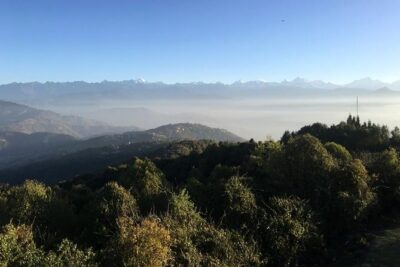
Nagarkot Sunrise View and Day Hiking from Kathmandu
Read our review →
Browse the lists this tour appears in