
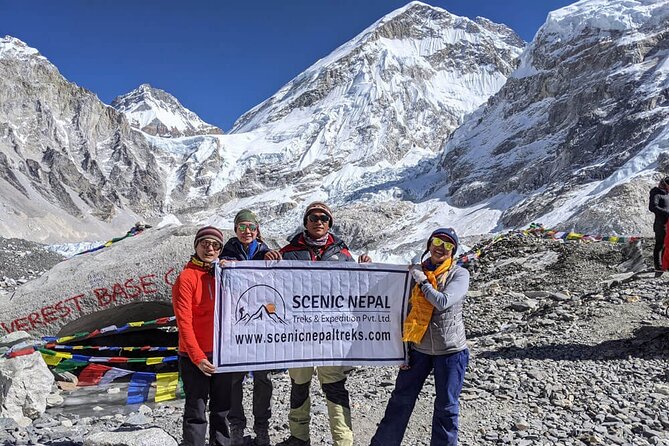
REVIEW · KATHMANDU HIKING TOURS
Everest Base Camp Trek 12 Days – Best Himalayan Adventure
The mountains make you work for the view. This 12-day private Everest Base Camp trek takes you from Kathmandu through Lukla, Namche Bazaar, Tengboche, Dingboche, and Gorak Shep to Everest Base Camp at 5,364 meters. You get an experienced Sherpa guide, domestic flights, permits, tea-house lodging, and support from a local trekking crew.
I like the private format, which gives a small party more personal attention than a large group. I also like the strong focus on safety, with acclimatization days and staff trained to handle high-altitude trekking. Guides named in past trips include Shankar, Binod, Ramjee, Santosh, and others from the Scenic Nepal Treks team.
The main caution is physical: this is not a sightseeing holiday with a few walks attached. You need moderate fitness, suitable clothing, and patience with altitude. Also confirm what is covered before paying, since one description says meals are included while the detailed inclusions say personal meals during the trek are not included.
Five details worth knowing before you book
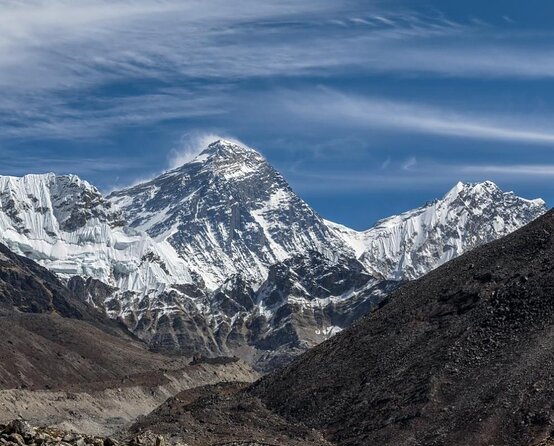
- Everest Base Camp reaches 5,364 meters: altitude, not technical climbing, is the main challenge.
- Flights to Lukla are included: schedules may use Ramechhap Airport instead of Kathmandu.
- One porter serves two hikers: confirm the baggage arrangement if you want a porter carrying your own pack.
- Tea-house lodging covers 11 nights: expect simple mountain accommodation rather than hotel comfort.
- A private booking needs at least two people: groups can reach a maximum of 15, although another note lists a maximum of 10.
- Guide care is a major strength: the named guides and crew receive especially warm praise for patience, organization, and safety.
Kathmandu to Lukla: The adventure starts early
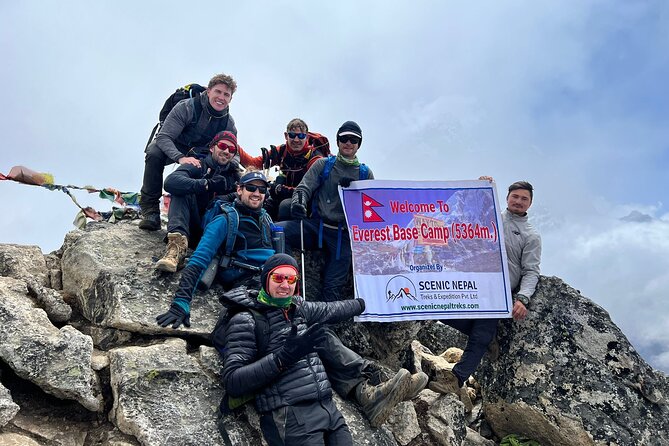
The trip begins at Scenic Nepal Treks and Expedition on Bhagwati Marg in Kathmandu. This office is both the starting point and the finish point, so the arrangement is straightforward. You meet the company team there, complete the required checks, and set out for the Khumbu region.
The domestic flight to Lukla is one of the memorable parts of the journey. Flights are included in the price, but the operator notes that the plane may use Ramechhap Airport. That matters because you should ask where your flight will depart and allow time for the transfer if needed.
Lukla is the gateway to the trek. From here, the route leaves roads behind and follows mountain paths through Sherpa villages, suspension bridges, forests, and high valleys. The first day gives you a clear sense of the trip’s rhythm: walk, eat, rest, and adjust to the altitude.
The flight schedule can be affected by mountain weather, so keep your plans flexible. Do not arrange a tight international connection immediately after the trek. The return flight is included, but a delayed mountain flight can affect your timing.
More Everest Base Camp Treks in Kathmandu:
- Everest Base Camp Trek – 14 Days
★ 5.0 · 1,499 reviews - Everest Base Camp Trek
★ 5.0 · 842 reviews - Everest Base Camp Trekking
★ 5.0 · 485 reviews
Namche Bazaar gives you your first real altitude test
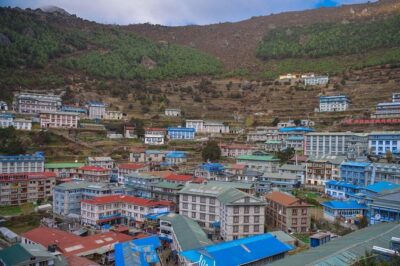
Namche Bazaar is one of the most important stops on the route. It is a high-altitude Sherpa settlement and a natural place to slow down, rest, and adjust before continuing uphill.
The itinerary includes acclimatization days for safety. That is not wasted time. At altitude, your body needs a chance to adapt, and a slower schedule is one of the most useful protections available on this kind of trek.
You can expect a mix of stone paths, mountain views, local lodges, and busy trail sections around Namche. The setting changes quickly from wooded lower valleys to more open mountain country. You will also notice how much the guide matters here. A good guide watches your pace, checks how you feel, and helps you avoid the common mistake of walking too fast at the start.
The tour is private, but the minimum booking is two people. That suits couples, friends, or siblings who want shared support without joining a large fixed group. Solo hikers cannot book this package alone unless they arrange another participant.
Tengboche brings culture and wide mountain views
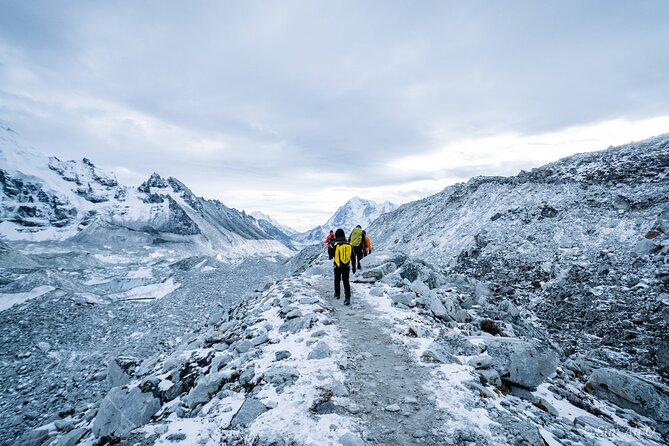
The trail continues to Tengboche, a particularly memorable stop because it combines mountain scenery with Sherpa Buddhist culture. The route passes through forests and high mountain villages before opening toward major peaks.
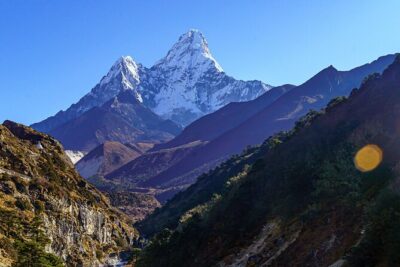
Tengboche is associated with its important monastery and its views of Ama Dablam and other Himalayan summits. The exact sightseeing schedule is not set out in detail, so you should ask the guide what time is available for a monastery visit and how the walking plan affects that stop.
This section is also where the changing conditions become more obvious. The air is thinner, the walking surface can be uneven, and cold weather may affect comfort. Pack layers that you can add or remove without stopping for long. A fleece jacket, warm hat, scarf, gloves, and waterproof jacket are all listed as required equipment.
The accommodation is in tea houses. These lodges provide practical shelter and a chance to meet the people who live along the route, but you should not expect the facilities or privacy of a city hotel. Bring earplugs, toiletries, toilet paper, and a quick-drying towel, all of which are specifically recommended.
Dingboche is where altitude demands respect
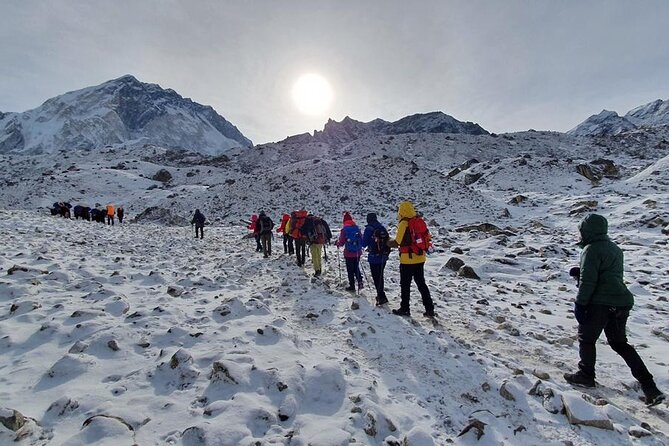
Dingboche is another key acclimatization point. By this stage, the route has reached serious altitude, and even fit hikers may notice that ordinary walking takes more effort.
The program is designed for fit beginners as well as experienced hikers, but that should not be read as a promise that the trek is easy. A beginner with moderate fitness and proper preparation may manage it, while a strong walker who ignores altitude symptoms can still struggle.
Your Sherpa guide is especially valuable here. The company provides staff insurance, medication and equipment, a first-aid kit, and an experienced guide. Those provisions offer useful backup, but they do not replace personal travel insurance or sensible preparation.
You need your own insurance, and the package does not include international airfare, a Nepal entry visa, personal trekking gear, tips, or gratuities. Meals and personal expenses also need clarification before booking because the supplied information gives conflicting details about meal coverage.
A few more hikes around Kathmandu worth a look
- Nagarkot Sunrise View and Day Hiking from Kathmandu
★ 5.0 · 471 reviews - Annapurna Circuit Trek with Tilicho Lake
★ 5.0 · 368 reviews - Everest Base Camp Trekking – 13 Day
★ 5.0 · 365 reviews - Everest Base Camp Trek
★ 5.0 · 350 reviews
Gorak Shep and Kala Patthar deliver the big view
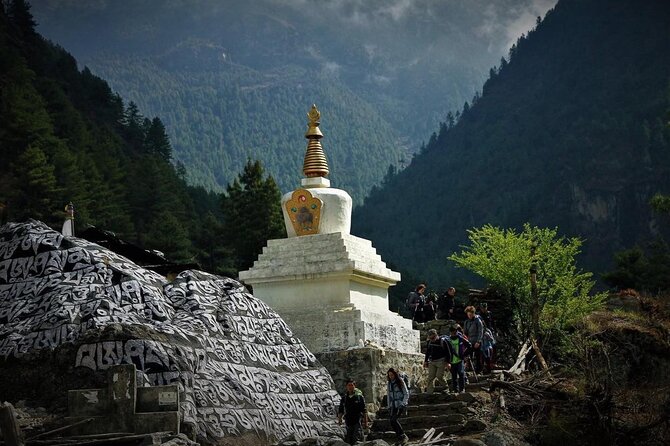
Gorak Shep is the final high settlement named in the route. It serves as the base for reaching Everest Base Camp and for visiting Kala Patthar, the famous viewpoint included in the trip description.
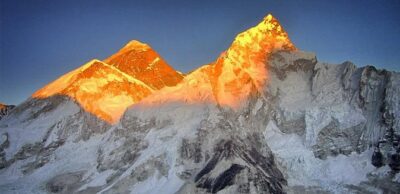
Kala Patthar is often the visual high point of the trek. From there, the route offers views of Mount Everest, Lhotse, Nuptse, Ama Dablam, and Pumori. The sunrise is singled out as a memorable part of the experience, so ask your guide about the exact timing and walking plan.
At this altitude, cold, wind, and thin air can turn a short outing into a demanding effort. Your down jacket should be suitable for temperatures around minus 10 degrees Celsius, depending on the season and location. Sunglasses with polarization, sunblock, lip protection, water purification tablets, and a water bottle are practical items, not extras.
The guide’s job here is not to make the mountain easy. It is to help you move at a sensible pace, recognize problems early, and make sound decisions. The praise for guides such as Binod, Ramjee, Santosh, and Shankar centers on patience, care, and attention to safety. That is exactly what you want at Gorak Shep.
Everest Base Camp is the goal, not a climb to the summit
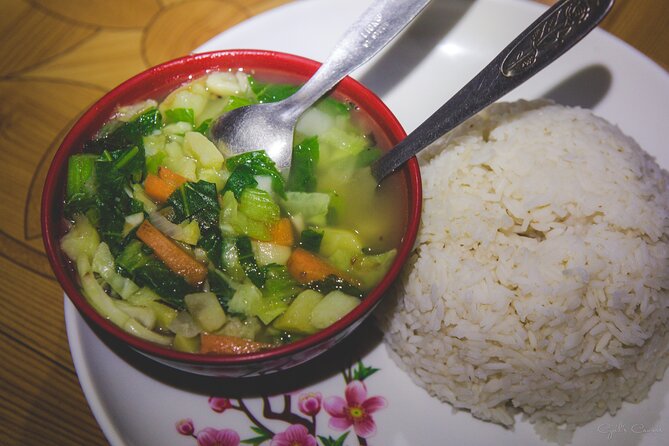
Everest Base Camp sits at 5,364 meters. Reaching it gives you the satisfaction of walking to the staging area for the world’s highest mountain, but this tour does not climb Mount Everest itself.
That distinction matters. You are completing a high-altitude trek, not a mountaineering expedition. The appeal is the route itself: suspension bridges, Sherpa villages, glaciers, high passes of experience, and views of peaks that have shaped the story of Himalayan climbing.
The final approach can be physically demanding, especially after several days of walking. The route may include rocky ground and glacial terrain, and weather can change quickly. A review of one trip describes snowstorms around Lobuche before the group reached Base Camp. The group succeeded, but the example is a useful reminder that conditions may affect the schedule.
Take the guide’s advice seriously if weather or altitude becomes a problem. A flexible plan is safer than treating Base Camp as a promise that must be reached at any cost.
Tea houses, food, and what the $1,439 price really covers
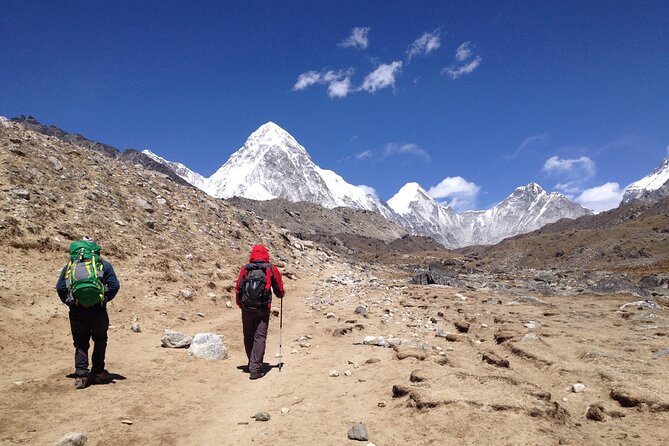
The listed price is $1,439 per person. For that amount, you receive an experienced Sherpa guide, return domestic flights, trekking permits, staff insurance, medication and equipment, a first-aid kit, tea-house accommodation, and porter support for two hikers sharing one porter.
That is a substantial package for a guided Himalayan trek. The price is most useful for someone who wants the difficult logistics handled by a local company rather than arranging flights, permits, lodging, and mountain support separately.
Still, you need to check the fine print. The overview says meals are included, while the detailed information says personal expenses and meals during the trek are not included. Get a written answer before booking. Ask whether meals, airport transfers, baggage charges, and any transport to Ramechhap are covered.
The porter arrangement also needs a clear conversation. The detailed information says two hikers receive one porter, while the highlights describe a porter as an add-on option. Ask how much baggage the porter carries, what weight limit applies, and whether the porter is included in your quoted price.
There are 11 nights of twin-sharing tea-house accommodation during the hike. That is practical and appropriate for the route, but not luxurious. If you want a private room or have special lodging needs, ask before departure rather than assuming they are available.
Packing for cold, wet, and simple conditions
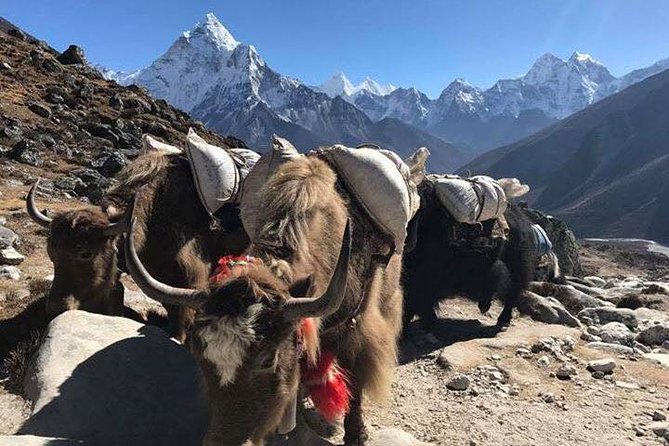
The packing list is detailed, and you should take it seriously. The essentials include trekking boots with spare laces, a waterproof jacket, warm trousers, thermal underwear, wool and liner socks, a down jacket, gloves, a hat, a fleece, quick-drying shirts, and a backpack.
You also need a sleeping bag and silk liner. The company says it provides those items, along with a duffel bag, maps, a flashlight, and a medical and first-aid kit. Confirm the exact equipment supplied and its condition before you leave Kathmandu.
Small items can make a big difference. Pack toilet paper, laundry soap, locks for your bags, earplugs, toiletries, a quick-drying towel, polarized sunglasses, sunblock, lip balm, and water purification tablets. Sandals or flip-flops are useful for resting your feet after a day in boots.
The list also includes a cigarette lighter if you smoke. Smoking at high altitude can make breathing feel harder, so this is a personal choice that deserves extra care.
Who will get the most from this trek
I would recommend this trip to you if you want a classic Everest route with local guidance and do not want to manage permits, flights, lodging, and route planning alone.
It fits:
- Fit beginners who are prepared for long days and high altitude
- Experienced hikers who want a private Sherpa-led itinerary
- Couples, friends, and siblings booking together
- People who value a local crew and simple tea-house accommodation
- Hikers who want a porter option rather than carrying every item themselves
It is less suitable if you dislike basic lodging, need a fixed weather-proof schedule, or want a relaxed holiday with minimal walking. The tour requires moderate physical fitness, and the route reaches an altitude where cold and thin air are serious concerns.
The group policy is a little unclear. One section gives a maximum of 15 people, while another says the maximum is 10. Since the tour is private and requires at least two people, ask for the expected group size before booking.
Should you book the Everest Base Camp trek?
I would book this trek if the company confirms the meal policy, porter arrangement, flight departure point, group size, and exact baggage rules in writing. Those are small questions, but clear answers make a big difference on a demanding trip.
The strongest reason to choose it is the local support. Past trips consistently praise the organization, guides, porters, and personal care, with special praise for guides including Binod, Ramjee, Santosh, and Shankar. The itinerary also gives you the major landmarks: Lukla, Namche Bazaar, Tengboche, Dingboche, Gorak Shep, Everest Base Camp, and Kala Patthar.
The price offers good value if the listed transport, permits, guide services, tea houses, and porter support are all included as described. If you want a well-supported route to Base Camp and are willing to work for it, this is a strong choice. Free cancellation is available up to 24 hours before the start time, which gives you some flexibility while finalizing plans.
FAQ
How long is the Everest Base Camp trek?
The trek lasts approximately 12 days, including the route from Kathmandu through the Khumbu region and the return to Kathmandu.
What is the minimum number of people needed to book?
A minimum of two people is required per booking.
What is the maximum group size?
The information gives two different limits: 15 people in one section and 10 people in another. Confirm the current maximum with Scenic Nepal Treks before booking.
Is the flight to Lukla included?
Yes. Return domestic flights are included, but the flight may depart from Ramechhap Airport rather than Kathmandu.
Is a porter included?
The detailed inclusions say one porter is provided for every two hikers. Another part describes a porter as an add-on option, so confirm the porter arrangement and cost before departure.
What accommodation is provided?
Twin-sharing tea-house accommodation is provided for 11 nights during the hike.
Are meals included?
The information is inconsistent. The overview says meals are included, while the detailed exclusions say personal meals during the trek are not included. Ask the operator to confirm this in writing.
What cancellation policy applies?
You can cancel at least 24 hours before the experience starts for a full refund. Cancellations or changes made less than 24 hours before the start time are not accepted for a refund.
Just added around Kathmandu
- Annapurna Base Camp Trek – 11 Days★ 5.0 · 30 reviews
- Annapurna Base Camp Trek 12 Days★ 5.0 · 18 reviews
- Annapurna Base Camp Trek 10 Days★ 5.0 · 35 reviews
- Annapurna Base Camp Trekking★ 5.0 · 38 reviews
- Adventurous Annapurna Base Camp Trekking★ 5.0 · 7 reviews
- Annapurna Base Camp Trek★ 5.0 · 80 reviews
- Annapurna Base Camp Private Short Trek★ 5.0 · 8 reviews
- Annapurna Base Camp Short trek★ 5.0 · 13 reviews
Kathmandu Hiking Tours, compared.
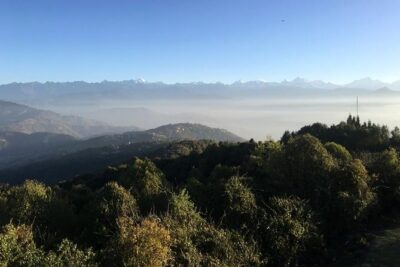
Nagarkot Sunrise View and Day Hiking from Kathmandu
Read our review →
Browse the lists this tour appears in