
REVIEW · KATHMANDU HIKING TOURS
Kathmandu: 15-Day Everest Base Camp Trek with Guide
Everest begins with a mountain flight. This 15-day journey combines Kathmandu sightseeing, a guided trek through Sagarmatha National Park, and Sherpa villages on the route to Everest Base Camp. I like the built-in acclimatization days, especially the hike to the Everest View Hotel near Namche Bazaar and the day trip to Chhukung Valley. I also like that the package includes permits, trekking staff costs, a sleeping bag, and a down jacket if needed.
The main catch is the price. At $675 per person, it looks attractive, but your Kathmandu to Lukla flights, meals during the trek, drinks, insurance, city entrance fees, and porter service are extra. The route is also physically demanding, so the promise of flexibility for different fitness levels should not be mistaken for an easy holiday.
Five useful things to know before booking
- The itinerary includes two acclimatization stops: one full day in Namche Bazaar and one day trip from Dingboche to Chhukung Valley.
- Kathmandu sightseeing is included: you visit Kathmandu Durbar Square, Swayambhunath, Boudhanath, and Pashupatinath.
- Flights are not included in the $675 price: the listed route is Kathmandu or Ramechhap to Lukla and back.
- The guide support is a major strength: English-speaking Sherpa guides lead the trek, with staff costs, insurance, equipment, and medicine included.
- Porters cost extra: luggage carrying can be added, with the service described as shared between two people.
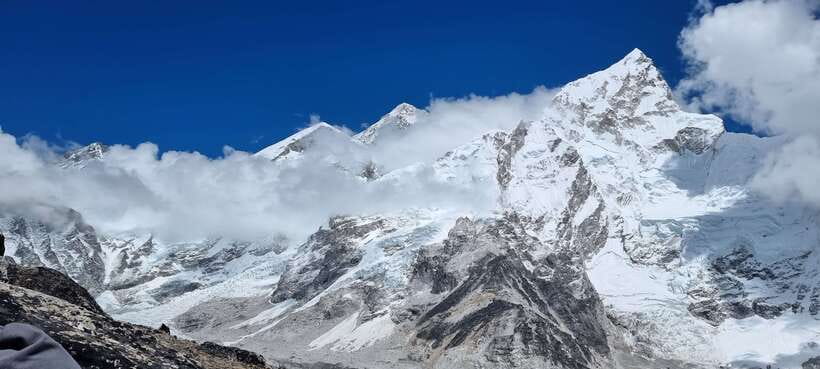
- The trek reaches the Everest Base Camp area and Kalapatthar: the itinerary includes an early morning hike to Kalapatthar for mountain views.
What the $675 price really covers
This trip gives you the basic structure needed for a serious Everest trek without making you organize every moving part yourself. Airport and hotel transfers in Kathmandu are included, as are three nights of standard Kathmandu hotel accommodation, the city tour, trekking permits, and guesthouse accommodation along the trail.
The package also covers food, accommodation, salary, insurance, equipment, and medicine for the staff. That matters in the Khumbu, where a guide is not simply someone who points out mountains. You need help with route decisions, lodging, altitude concerns, and the practical rhythm of a long mountain walk.
Still, $675 is not the final cost of the trip. You must pay for the flights to Lukla, or the Ramechhap airport route when used, and those flights can be a major part of an Everest trek budget. Breakfast, lunch, and dinner during the trek are also excluded, as are hot, cold, and alcoholic drinks.
Travel insurance is your responsibility, along with city entrance fees. Porters are optional and cost extra. Read the inclusions carefully before you book, then build a separate budget for flights, meals, tips, insurance, drinks, and personal gear.
More Everest Base Camp Treks in Kathmandu:
- Everest Base Camp Trek – 14 Days
★ 5.0 · 1,499 reviews - Everest Base Camp Trek
★ 5.0 · 842 reviews - Everest Base Camp Trekking
★ 5.0 · 485 reviews
Days 1 and 2: Kathmandu gives you a useful start
Your first day begins with pickup at Kathmandu International Airport and a private transfer to your hotel. You then receive trek information from the guide. This is a useful arrangement because you can ask questions early, check your equipment, and sort out any last-minute needs before leaving for the mountains.
One particularly helpful detail comes from the experience of a December trekker, who said the company helped arrange needed trekking gear during the first days in Kathmandu. That can be valuable if you arrive without every item packed, though you should not rely on this as a substitute for preparation.
Day 2 is a private-car sightseeing day with four major stops. Kathmandu Durbar Square gives you a first look at the city’s historic royal center. Swayambhunath, often called the Monkey Temple, sits above the city and provides a strong introduction to Kathmandu’s Buddhist and Hindu traditions.
Boudhanath is one of the city’s best-known Buddhist sites, with its large stupa and surrounding religious life. Pashupatinath, identified in the itinerary as a cremation temple, offers a more solemn look at Hindu practice along the Bagmati River.
This city day is more than a pleasant extra. It gives you cultural context before you enter Sherpa country. The drawback is that Kathmandu sightseeing can feel full after a long international flight, so arrive ready for a busy first two days.
Day 3: Lukla and the short walk to Phakding
The flight from Kathmandu to Lukla is the gateway to the Everest region. The airfare is not included, and the itinerary notes that flights may be arranged on request. It also references the Kathmandu or Ramechhap to Lukla route, so confirm the exact departure airport and transfer plan before booking.
After landing in Lukla, you make an easier trek toward the upper part of Phakding. This first walking day gives you time to settle into the pace of the trail without immediately facing the hardest climbs.
Phakding is your first night in the trekking region. From here, the route follows the Dudh Koshi valley toward Namche Bazaar. You are also entering Sagarmatha National Park, a World Heritage Site known for its Himalayan peaks, Buddhist monasteries, and Sherpa communities.
Days 4 and 5: Namche Bazaar and the first acclimatization test
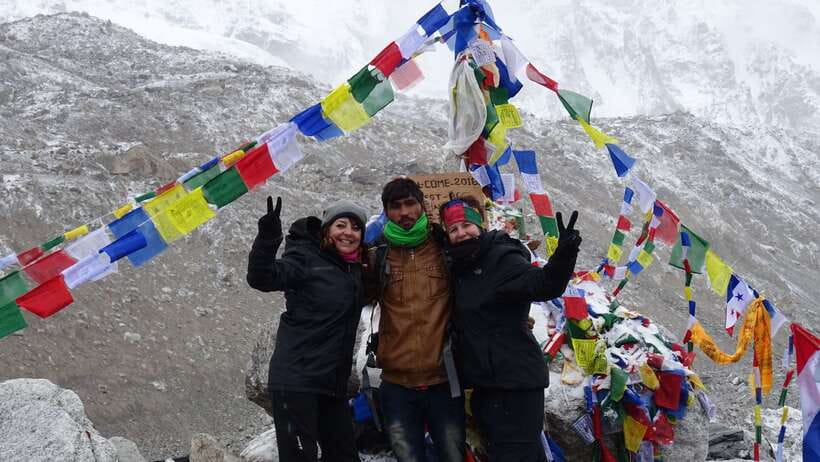
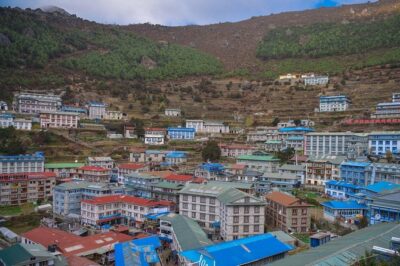
The trek to Namche Bazaar follows the Dudh Koshi before climbing more sharply toward the main trading town of the Khumbu. Namche is an important stopping point for both local Sherpas and people headed higher into the mountains.
The setting is one of the trip’s first big rewards. Rhododendron forests, steep hillsides, and snow-covered peaks begin to make the route feel properly Himalayan. Namche also gives you a chance to adjust to altitude before moving farther up the valley.
Day 5 is a rest and acclimatization day, but do not picture a day spent entirely indoors. You hike up to the Everest View Hotel in Syangboche, at about 3,850 meters, for wider views and a useful altitude gain before returning to Namche.
I like this part of the plan because acclimatization is built into the schedule rather than treated as an afterthought. The trail is still physically serious, and you should use the day to walk steadily, drink water, and tell your guide immediately if you feel unwell.
One trekker specifically praised guide Kale Prakash for taking good care of him after he became sick. That is the sort of support you want in the Himalaya. It does not remove the risks of altitude, but it shows why a reliable guide is worth more than a cheap, unsupported itinerary.
More Guided Tours around Kathmandu:
- From Marrakech: Ouzoud Waterfalls Guided Hike and Boat Trip
★ 4.7 · 33,630 reviews - Bali: Sunrise Mount Batur Guided Hike with Breakfast
★ 4.8 · 9,660 reviews - Bali: Mount Batur Sunrise Guided Hike and Natural Hot Spring
★ 4.8 · 9,284 reviews - Mount Etna: Summit Guided Hiking Tour up to 3,400 m
★ 4.8 · 4,792 reviews
Days 6 and 7: Monasteries, ridges, and Sherpa villages
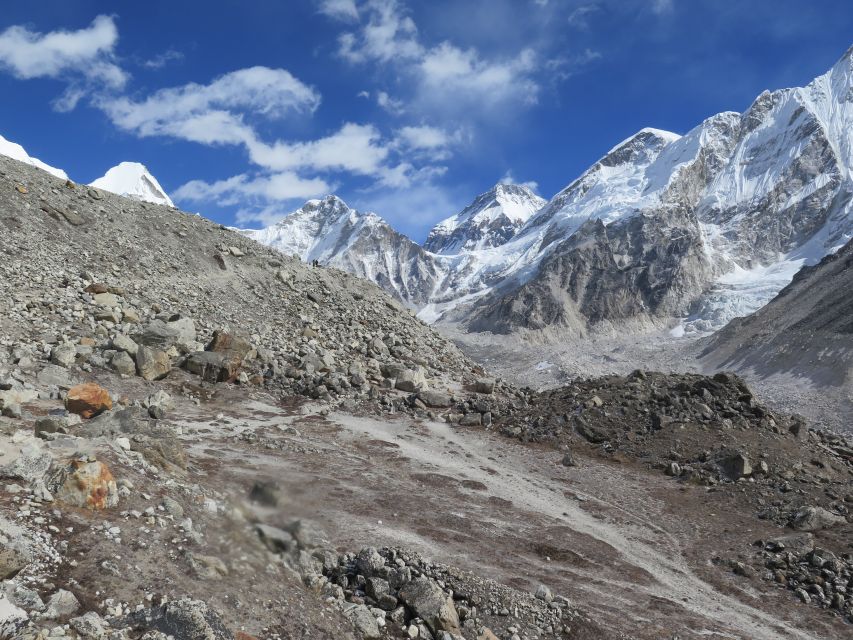
From Namche, the trail continues toward Tengboche through higher, colder terrain. After roughly two hours of climbing, you reach Thyangboche Monastery at 3,867 meters, set on a ridge with views toward Sagarmatha, the Nepali name for Mount Everest.
Tengboche is a special overnight stop because the monastery gives the route a strong cultural character. You are not simply walking from lodge to lodge. You are passing through a region where Buddhist practice, mountain work, and village life are closely linked.
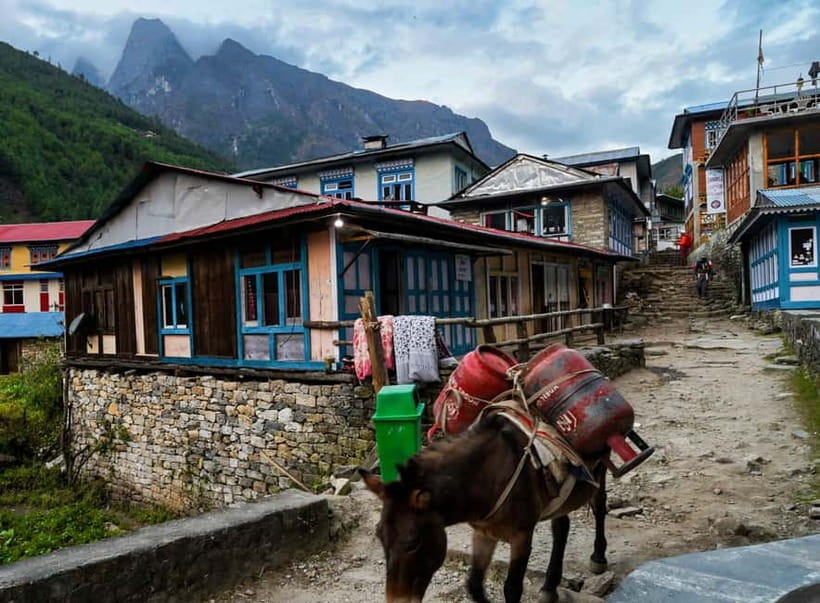
The next day takes you toward Dingboche through Imja Khola, Pangboche, and Pheriche. The itinerary describes views toward the Khumbu Glacier and time passing through Sherpa villages. These places let you see how settlements continue at high altitude, where weather and distance shape everyday life.
The cold and thinner air become more noticeable here. You should expect shorter walking steps, more breaks, and less energy than you might have at home. The guide’s role becomes increasingly important as the route climbs and the group adjusts to changing conditions.
Days 8 and 9: Chhukung Valley and Lobuche
Day 8 includes a day trip to Chhukung Valley, followed by a return to Dingboche. The itinerary calls this one of the world’s best hikes, but the more useful point is that it gives you another acclimatization day without moving your overnight base higher.
Chhukung adds a different view of the high Khumbu and gives you time to walk at altitude before the push toward Everest Base Camp. It also makes the schedule less rushed than a simple upward march. You still need to treat the outing seriously, since high-altitude day hikes can be tiring even when the route is not described in detail.
Day 9 takes you to Lobuche. The description is brief, but this is an important stage of the journey. You are moving into the upper part of the route, with fewer comforts and a stronger sense that the main objective is close.
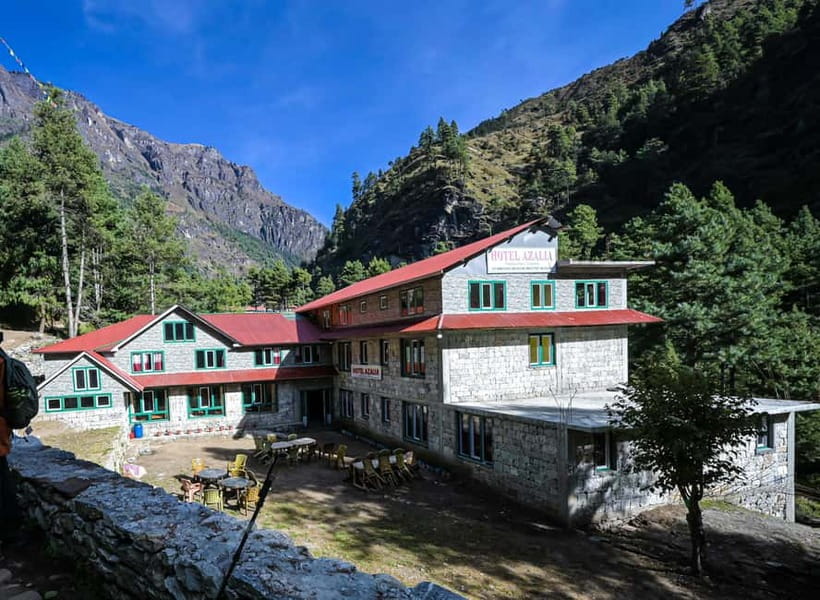
Accommodation during the trek is in the best available guesthouses. That wording is worth noticing. You should expect practical mountain lodging rather than hotel standards. A sleeping bag is available if needed, and a down-filled jacket can also be supplied, which reduces the amount of bulky equipment you must bring from home.
Days 10 and 11: Gorakshep, Everest Base Camp, and Kalapatthar
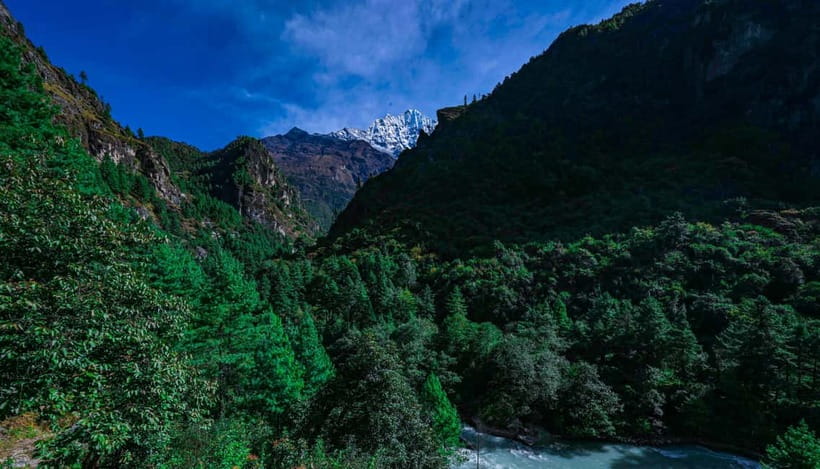
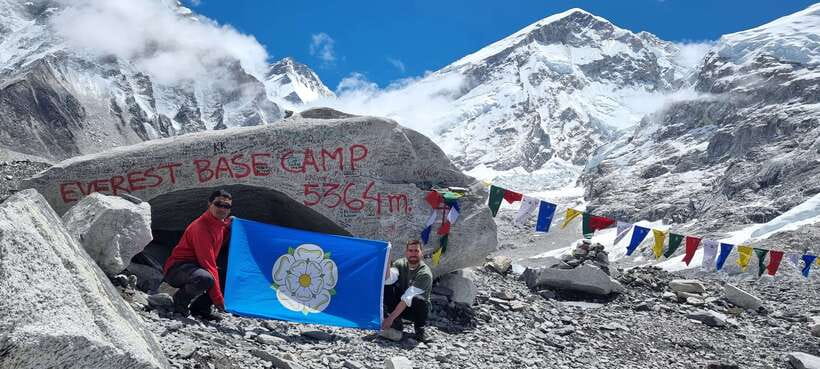
From Lobuche, you walk to Gorakshep, a small settlement beside a frozen lake. Gorakshep is the overnight base for the Everest Base Camp section and the departure point for the main hike.
The itinerary describes the Everest hike from Gorakshep on Day 10, followed by an early morning hike to Kalapatthar on Day 11. It then sends you down to Pheriche. Because the wording does not give exact walking times or clearly separate the Base Camp outing from the overnight schedule, confirm the precise sequence with the operator before departure.
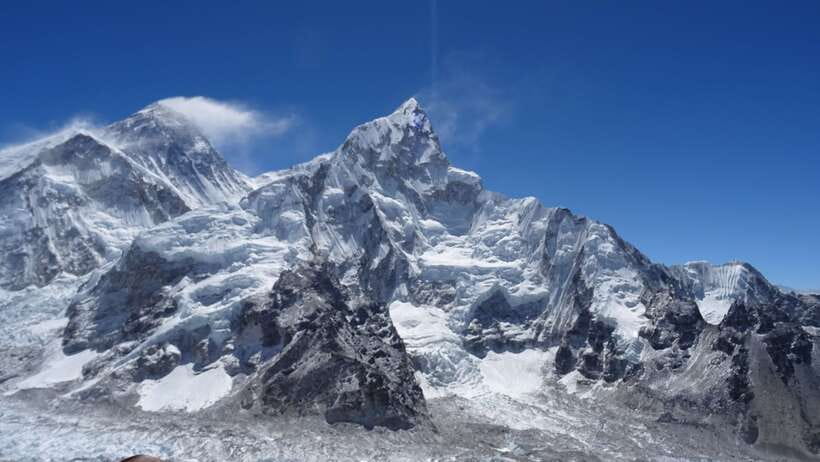
Kalapatthar is included for its mountain views, particularly at first light. An early start means cold conditions, but the reward is a broad look across the Everest region. You should bring comfortable shoes and sunglasses, two items specifically recommended for the trip, and you will also want warm layers for this section.
This is the hardest and most memorable part of the route. You are dealing with high altitude, cold, basic lodging, and long walking days. Base Camp itself is less about a grand building or a single viewpoint than about reaching a famous expedition staging area after days of effort. Kalapatthar provides the more direct mountain panorama.
Days 12 and 13: The descent to Namche and Lukla
After the high point of the trek, the route turns downhill toward Namche Bazaar. The itinerary describes another stop in Namche to acclimatize, although acclimatization is generally most critical while gaining altitude. Either way, the overnight return gives you a familiar place to rest during the descent.
Day 13 is the long walk back to Lukla. The downhill direction helps, but tired legs can make this day demanding. Many people focus so intensely on reaching Base Camp that they underestimate the return. Here, your guide and walking partners still matter, especially if the pace needs adjusting.
The small-group approach is one of the package’s stated features. A smaller group can make it easier to stay together, ask questions, and build a good rhythm with your guide. The exact group size is not provided, so ask before booking if this matters to you.
Days 14 and 15: Return to Kathmandu and departure
Day 14 is the flight back to Kathmandu, followed by a hotel night. This buffer is sensible because mountain flights can be affected by conditions, and an overnight in Kathmandu gives you time to recover from the trek before your international departure.
Day 15 includes transfer to the international airport. Airport pickup and drop-off in a private car are included, which keeps the final day simple after two weeks of walking.
The flight schedule is an important point to clarify in advance. The package does not include the airfare, and the return flight is part of the practical risk of a Lukla-based trek. Ask how the operator handles changes, delays, or the Ramechhap departure arrangement before you commit.
Guides, staff, and the human side of the trek
The tour uses English-speaking, licensed Sherpa guides. The package covers staff food, accommodation, salary, insurance, equipment, and medicine. Those inclusions give you a clearer idea of what your payment supports and reduce the chance of surprise staff charges during the walk.
Several named staff members received especially strong praise. Kale Prakash was described as caring and helpful when a trekker became sick. Kumar and Santos were praised for their kindness and mountain knowledge, while Gokul was credited with organizing the stay and helping the group return to Kathmandu without trouble.
Those details matter because the Everest Base Camp route is not only a test of fitness. It is also a long sequence of small decisions: when to rest, how to respond to illness, where to sleep, and how to manage the return. Good organization can make a difficult trip feel controlled.
Porter service is not included. The available option is described as shared between two people, so ask exactly how much luggage is carried, what the weight limit is, and what the extra charge will be. If you carry your own bag, pack carefully and keep the load modest.
Who should book this Everest trek?
I would consider this trip if you want a guided Everest Base Camp route with Kathmandu sightseeing, planned acclimatization, Sherpa support, and a low advertised price. It suits people who value practical organization more than luxury and who want cultural stops included before the mountain walking begins.
It is less suitable if you want every cost bundled into one payment. You must budget for flights, meals, drinks, insurance, city entry fees, and porters. It is also not suitable for wheelchair users, and you should not treat the phrase various fitness levels as proof that the trek is easy.
The overall rating is 4.3 from 12 ratings, with particularly strong praise for organization, staff care, mountain meals and lodging, and help during difficult moments. The strongest evidence points to the people running the trek, especially the guides and organizer.
Should you book it?
Book this trek if you want a serious Everest route with a useful acclimatization plan and strong guide support at a competitive starting price. Before paying, confirm the flight cost, Ramechhap arrangements, meal budget, porter charge, exact Base Camp and Kalapatthar schedule, and group size.
I like the combination of Kathmandu culture, Sherpa villages, Tengboche Monastery, Namche acclimatization, Chhukung Valley, and the Everest Base Camp section. Just remember that $675 is the entry price, not the full cost of your Himalayan holiday.
FAQ
How long is the Everest Base Camp trek?
The experience lasts 15 days, including arrival and departure days, Kathmandu sightseeing, the trek, and flights between Kathmandu or Ramechhap and Lukla.
Is airport pickup included?
Yes. Pickup and drop-off at Kathmandu International Airport are included in a private car.
Are flights to Lukla included in the price?
No. Flights from Kathmandu or Ramechhap to Lukla and back are excluded. The operator can reserve or book them on request as an optional service.
What accommodation is provided in Kathmandu?
The package includes standard hotel accommodation in Kathmandu for three nights.
What accommodation is provided during the trek?
You stay in the best available guesthouses along the trekking route.
Are meals during the trek included?
No. Breakfast, lunch, and dinner during the trek are not included. Hot, cold, and alcoholic drinks are also extra.
Is a porter included?
No. Porter service is optional and can be added. The listed porter arrangement is shared between two people.
Is trekking equipment provided?
A down-filled jacket and sleeping bag are available if needed. Staff equipment is also included in the package.
What language does the guide speak?
The live guide service is in English, and the trek is led by an English-speaking licensed Sherpa guide.
Just added around Kathmandu
- 14 Days Private Tour Everest Base Camp Trek★ 5.0 · 105 reviews
- Kathmandu: Nagarkot Sunrise & Hike with Lunch -Private/Group★ 4.9 · 122 reviews
- 4 Days Poon Hill Trek★ 5.0 · 94 reviews
- Langtang Valley Trek★ 5.0 · 140 reviews
- Annapurna Circuit Trek with Tilicho Lake (16 Days)★ 5.0 · 15 reviews
- Manaslu Circuit Trek★ 5.0 · 184 reviews
- Kathmandu: Dhulikhel to NamoBuddha Day Hike with Lunch★ 4.8 · 62 reviews
- Annapurna Circuit with Tilicho Lake Trek★ 5.0 · 25 reviews
Kathmandu Hiking Tours, compared.
Nagarkot Sunrise View and Day Hiking from Kathmandu
Read our review →
Browse the lists this tour appears in