
REVIEW · KATHMANDU HIKING TOURS
Everest Base Camp Trekking
The Himalayas demand steady feet. This 14-day Everest Base Camp trek gives you a guide, small-group support, teahouse lodging, meals, and local transport, so you can focus on the trail instead of arranging every night and flight. The route also includes Namche Bazaar, Pangboche, Everest Base Camp, and a sunrise walk to Kala Patthar.
I like the small group of no more than 10 people, which should make it easier to match the walking pace and get help when the altitude bites. I also like the strong praise for individual guides and porters, especially Biru, Amabar, Ramesh, and Kanchar. The main drawback is the physical demand: this is not a sightseeing trip with a few scenic walks. You need strong fitness, patience, and a willingness to handle cold, steep ground and changing mountain weather.
Key points to know before booking
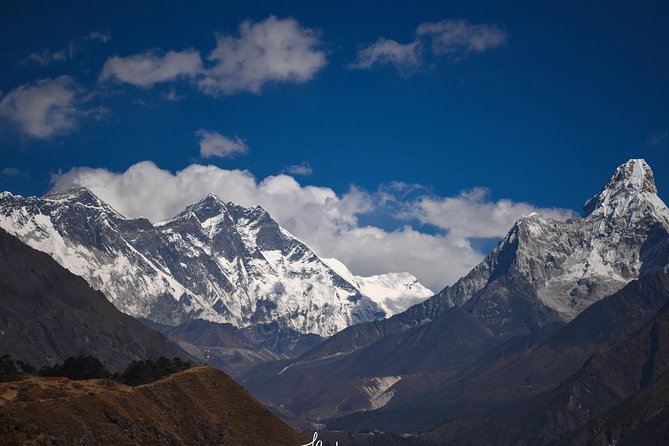
- Lukla flight begins the mountain journey: The early domestic flight offers sunrise views of snowy peaks before you even reach the trail.
- Acclimatization is built in: A rest day at Namche Bazaar includes a short viewpoint walk, an important pause before gaining more height.
- Small groups matter here: With a maximum of 10 people, you should receive more direct help than on a large commercial trek.
- The main goal comes late: Everest Base Camp arrives on Day 9, followed by a pre-dawn Kala Patthar walk on Day 10.
- The price covers useful basics: At $1,350 per person, the package includes teahouse accommodation, meals, local transport, guiding, and the Lukla flights described in the schedule.
- The return is part of the challenge: The steep descent over rocky ground can be hard on knees, ankles, and tired legs.
What the $1,350 price really buys you
At $1,350, this trek is priced as a guided package rather than a bare-bones walking holiday. The value comes from combining several things that would otherwise require careful planning: airport pickup, Kathmandu hotel arrangements, domestic transport, a guide, teahouse stays, meals, and the mountain route itself.
I would not judge this price only by the number of nights. The support is more important than the room. The route reaches remote Himalayan settlements where transport choices are limited, and a guide helps you stay on the correct trail, manage the day, and deal with changes caused by weather or altitude.
The small-group limit is another useful part of the deal. A group of up to 10 is large enough to share the experience, but small enough for a guide to notice when someone is struggling. Several people praised the care and practical help provided by their guides and porters. One particularly strong pattern is personal attention from named guides such as Biru, Amabar, and Ramesh.
Still, check exactly what is included before paying. The supplied details confirm meals, teahouse accommodation, and local transportation, but they do not spell out every extra cost. Ask about permits, porter arrangements, drinks, medical expenses, tips, and any hotel nights beyond the stated plan.
More Everest Base Camp Treks in Kathmandu:
- Everest Base Camp Trek – 14 Days
★ 5.0 · 1,499 reviews - Everest Base Camp Trek
★ 5.0 · 842 reviews - Everest Base Camp Trekking – 13 Day
★ 5.0 · 365 reviews
Kathmandu arrival and the early flight to Lukla
Your trip starts at Tribhuvan International Airport, where an airport representative meets you and takes you to your hotel by private tourist vehicle. Day 1 is intentionally light. You can rest, meet the company team, and receive the final details before the mountain section begins.
That first day matters more than it may seem. Kathmandu can feel noisy and hectic after a long international flight, and having a pickup removes one early task. Use the time to check your clothing, passport, medication, and walking gear. The tour requires a current valid passport, and passport details for every participant are needed at booking.
On Day 2, you leave early for the domestic airport after breakfast. The flight to Lukla is described as a scenic morning ride, with views of sunrise on snow-covered peaks. Lukla’s Tenzing-Hillary Airport marks the real beginning of the trek.
The flight is exciting, but it also brings a practical warning. The tour operates in all weather, and mountain conditions can affect plans. You should arrive with a flexible attitude. The schedule is clear, but Himalayan weather has the final word.
Lukla to Namche Bazaar: pine forests and a key rest day
The first walking day follows pine forest, the Dudh Koshi River, and views of Mount Thamserku. You pass small settlements before reaching a checkpoint at the entrance to Sagarmatha National Park.
This opening section lets you settle into the rhythm of the route. You are not yet at the highest ground, but the trail already asks for steady effort. Bridges, slopes, and uneven paths require attention. I would resist the urge to walk too fast at the beginning. Saving energy here helps later.
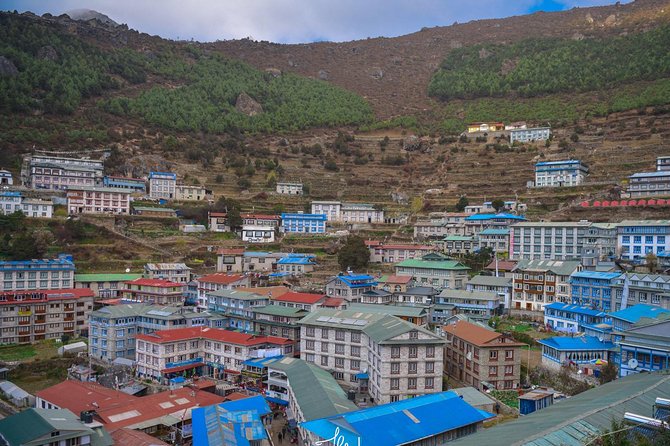
Day 4 brings Namche Bazaar, the largest settlement in the Khumbu region. It has ATMs, internet cafes, restaurants, and bakeries, making it a useful place to rest and check in with home. It is also your acclimatization day.
The phrase rest day can mislead you. You still take a short hike to a nearby viewpoint, with the goal of giving your body time to adjust to altitude. That gentle climb is valuable. The mountains may tempt you to push ahead, but the slower schedule helps reduce the risk of altitude problems.
Namche is also one of the best places to appreciate how the trek combines mountain scenery with local life. You get a functioning high-altitude settlement, not just a row of sleeping huts. The cafes and bakeries are a welcome change after the first days on foot.
Namche to Phorse and the views toward Ama Dablam
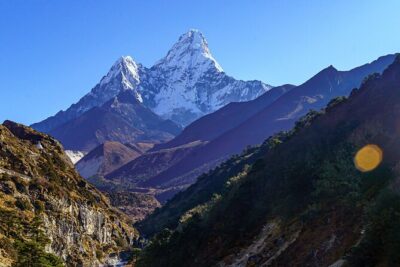
After breakfast in Namche, the trail heads toward Phorse. The route reaches Mugla Pass, where you can see Ama Dablam, Mount Khumbu, and Mount Thamserku.
Ama Dablam is one of the most recognizable peaks in the region, and this section gives the scenery a dramatic lift. You then descend toward the Dudh Koshi and cross the river before continuing through mountain villages.
The combination of ascent and descent is worth noting. You may gain height overall, but the trail does not simply climb in a straight line. You will work uphill, lose some elevation, and then climb again. That pattern can be tiring, especially if you are still adjusting to the altitude.
Phorse gives the route a quieter feel than Namche. The supplied schedule does not promise a long list of activities there, and that is part of the point. You are here to eat, sleep, recover, and prepare for the next gain in altitude.
A few more hikes around Kathmandu worth a look
- Nagarkot Sunrise View and Day Hiking from Kathmandu
★ 5.0 · 471 reviews - Annapurna Circuit Trek with Tilicho Lake
★ 5.0 · 368 reviews - Everest Base Camp Trek
★ 5.0 · 350 reviews - Everest Base Camp Trek -14 Days
★ 5.0 · 321 reviews
Phorse to Dingboche through Pangboche
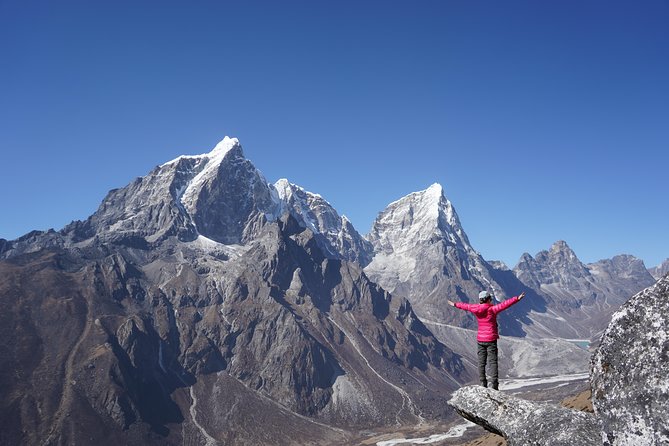
Day 6 begins with a visit to the region’s largest Buddhist monastery before the trail continues through alpine forest. You pass through Pangboche, a large village, then continue toward Dingboche through other settlements.
This is a good day for paying attention to the cultural side of the trek. Your guide can explain more about Buddhist practice, the villages, and the people who live far above the road network. The tour promises insight into Himalayan life and Nepali culture, and this section provides a natural setting for those conversations.
The route also changes in character as you climb. Forest becomes less dominant, villages feel more exposed, and the mountain views grow broader. Dingboche is an important stop because the route is moving into higher country. Take meals seriously, drink what your guide recommends, and keep your pace controlled.
Dingboche, Duglha, and the Khumbu glacier area
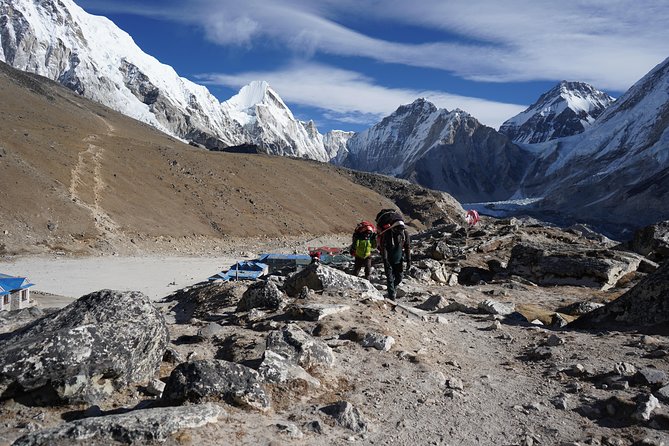
The next section heads through the Khumbu Khola valley from Duglha. Along the way, you pass Dusa, associated with yak herders, and Phulong Karp, connected with the first successful Everest expedition in 1953.
These details give the walk more meaning than a simple peak-counting exercise. The route connects present-day trekking with the working life of yak herders and the history of early Everest expeditions. You also encounter views and landmarks linked to the glacier region, including mention of Chola Lake in the schedule.
The exact descriptions for Days 7 and 8 are somewhat compressed, so I would ask the operator to confirm the precise overnight stops and walking distances before departure. The overall route is clear, but the daily notes use several place names in a way that could confuse anyone trying to follow the map independently.
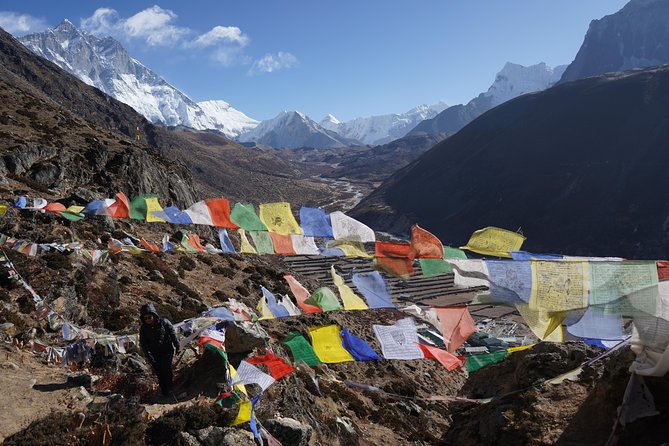
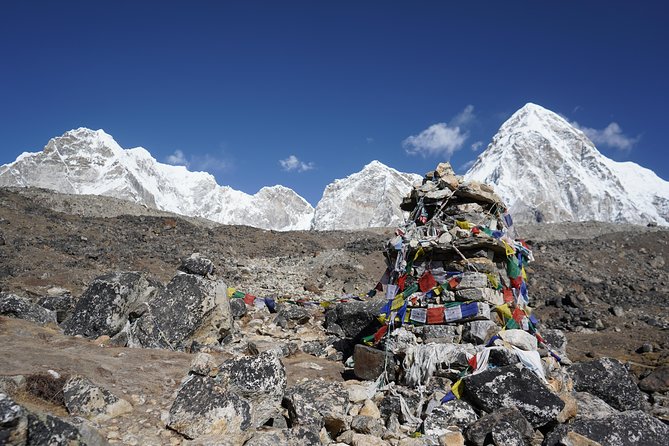
Day 8 includes a steep climb over the terminal moraine of the Khumbu Glacier toward Chupki Lhara. You pass boulders and a collection of stones decorated with prayer flags. This is a striking cultural marker, but it also signals the harsher ground ahead.
At this point, the trek is no longer a casual mountain walk. The air is thinner, the trail is rocky, and your body has less spare energy. A guide is especially useful here because the pace needs to remain sensible.
Everest Base Camp on Day 9
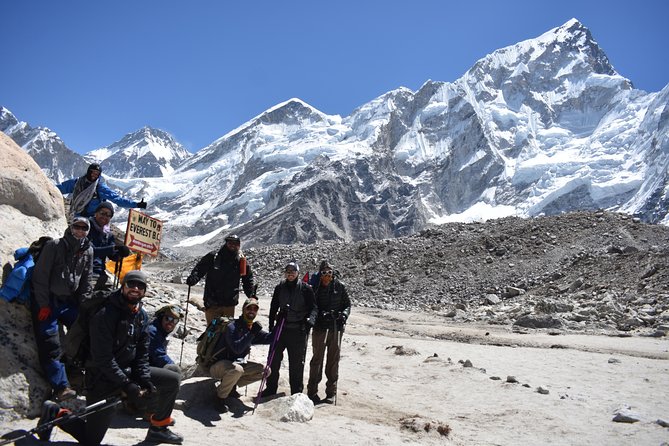
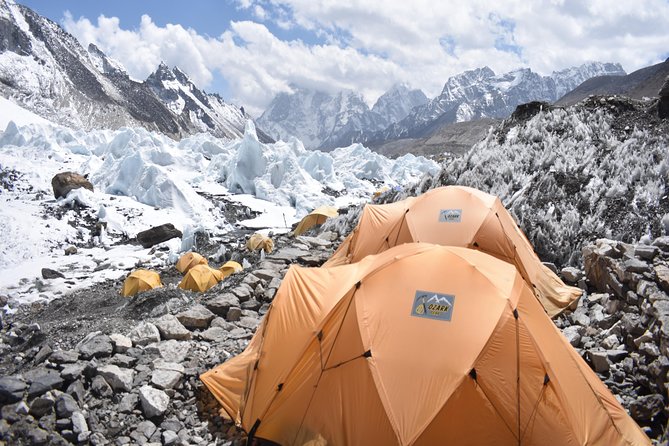
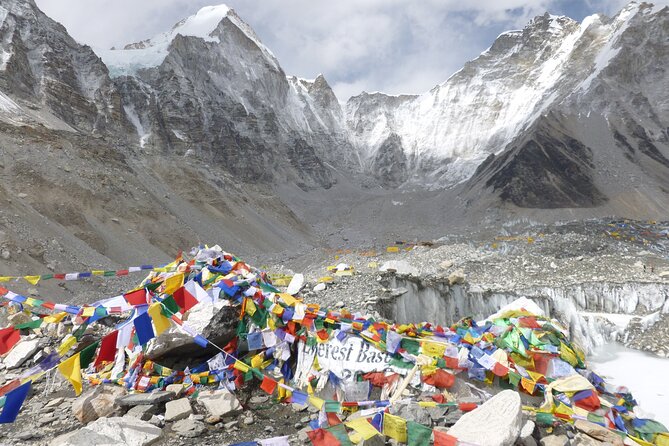
Day 9 is the emotional center of the trip. The route reaches Everest Base Camp, with about 30 minutes listed at the stop. The path includes Thangma Riju, where the schedule describes a panoramic view of snow-covered peaks.
There is an important detail: Mount Everest is not visible from every viewpoint on this approach. The mountain can be hidden by nearer peaks depending on your position and the weather. That does not make the day less worthwhile. You are walking through the Khumbu region, alongside glacier terrain, toward the base camp used by climbers preparing for Everest.
Do not expect a polished attraction with a large visitor center. Base Camp is a high mountain staging area, and its appearance can vary by season and climbing activity. The achievement comes from reaching it under your own power.
The day may feel harder than the distance suggests. Altitude affects breathing, and rough ground slows you down. Keep your expectations practical. You are not racing to a finish line. You are making a careful, controlled approach.
Kala Patthar sunrise and the best mountain view
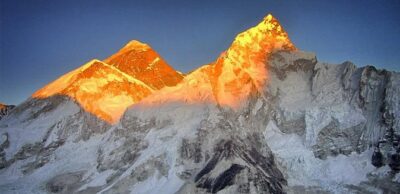
Day 10 begins very early, before dawn, for the climb to Kala Patthar. The purpose is to see Everest and nearby peaks as the darkness gives way to morning light.
This is often the visual high point of the trek. The schedule allows about 30 minutes at Kala Patthar for the sunrise view, but the total walking time depends on the group’s pace and conditions. Bring suitable warm clothing, since a pre-dawn start at altitude can be extremely cold.
The route description names peaks such as Lingtr… in the surrounding view, though the supplied details do not give the complete name. The larger point is clear: Kala Patthar provides a broad mountain panorama and a stronger chance of seeing Everest than the Base Camp approach itself.
You may find this morning tougher than expected. The climb comes after several demanding days, and the thin air makes even a modest slope feel serious. If you feel unwell, tell your guide. The mountain view is never worth hiding symptoms.
The long return through Pangboche and Lukla
After Kala Patthar and the high point of the route, the trail descends through Duglha, Pheriche, Orsho, and Shomare before reaching Pangboche. Descending is faster in some places, but it is not easy. Rocky downhill sections can strain your knees and demand careful balance.
At Pangboche, you can explore the old Buddhist monastery. This is a welcome cultural stop after the intense focus on altitude and mountain goals. It also gives the return journey a different mood. You are no longer pushing toward Base Camp, so you have more space to notice the villages and trail details.
Day 12 continues downhill over steep terrain. The schedule specifically warns you to move slowly and stay controlled until you reach the suspension bridge over the Dudh Koshi. That is sound advice. Tired legs often make the descent more dangerous than the climb.
You then pass through familiar settlements on the way back toward Lukla. The final mountain day is a test of patience. Keep your boots secure, use trekking poles if you have them, and do not treat the lower altitude as permission to rush.
Day 13 brings the flight from Lukla back to Kathmandu. Once back in the city, you have time for shopping and walking around Kathmandu, followed by a celebration of completing the trek.
Day 14 is your final day in Nepal. You can shop or sightsee around the Kathmandu Valley before heading to Tribhuvan International Airport for your scheduled departure.
Guide support, porters, and the human side
The strongest praise is directed at the guides and porters. Biru is repeatedly singled out for friendly company, safe guidance, and practical help. Amabar and porter Kanchar are also praised for going beyond basic duties and helping a trekker feel secure. Ramesh is described as a particularly good Sherpa guide for a solo trek.
That human support is a major reason to choose a guided trip. A good guide does more than point out the trail. The right person watches your pace, helps with logistics, answers questions, and notices when you are not coping well with altitude.
There are also examples of plans changing because of health. One trekker originally aimed for a more demanding Three Passes route but adjusted the plan after feeling unwell before the first pass. That is a useful reminder: the best mountain guide is not the person who pushes you at all costs. It is the person who helps you make a safe decision.
Who should book this trek?
I would choose this experience if you want the full Everest Base Camp route but do not want to manage every flight, sleeping place, meal, and trail decision yourself. It suits active people with strong fitness who can handle 14 days of walking and the strain of altitude.
It is also a good fit for solo visitors who want company without joining a huge group. The maximum of 10 people provides a social setting while retaining some personal attention.
I would think twice if you want a relaxed holiday, dislike early starts, or have not prepared for sustained physical effort. The tour description specifically calls for strong fitness. You also need to accept cold, steep rocky trails, weather changes, and the possibility that mountain transport will not run exactly to the clock.
The 99% recommendation rate and 5 rating from 485 recorded ratings are encouraging, especially alongside the detailed praise for guides and porters. Still, no rating can remove the central fact: Everest Base Camp is demanding. Good organization helps, but your fitness and judgment remain essential.
Final verdict: should you book it?
Book this trek if reaching Everest Base Camp matters more to you than comfort, speed, or a flexible luxury schedule. For $1,350, the package offers useful structure, a small group, mountain transport, teahouse stays, meals, and experienced human support in a place where mistakes can be costly.
Before paying, confirm the exact daily distances, inclusions, permit costs, porter setup, and procedures for flight delays or altitude illness. If those answers are clear, this is a strong choice for an active person who wants the classic Everest Base Camp route with help close at hand.
If you want the view but not the long physical commitment, choose a shorter Himalayan trip instead. This trek rewards patience, fitness, and humility. The mountains set the pace.
FAQ
How long does the Everest Base Camp trek take?
The experience lasts approximately 14 days, including arrival and departure days in Kathmandu, the trek to Everest Base Camp, the return to Lukla, and the flight back to Kathmandu.
Where does the experience start?
The meeting point is Tribhuvan International Airport on Ring Road in Kathmandu, Nepal. An airport representative meets you and arranges transport to the hotel.
How large is the trekking group?
The group has a maximum of 10 participants.
Is a guide included?
Yes. The experience is guided, with support intended to help you stay on the route, manage logistics, and learn about the Himalaya and Nepali culture.
What fitness level is required?
A strong physical fitness level is required. The tour is best suited to active and moderately fit people who can manage steep, rocky trails and many days of walking.
Can I cancel for a full refund?
Yes, you can cancel up to 24 hours before the experience start time for a full refund. Cancellations or changes made less than 24 hours in advance are not accepted for a refund.
Just added around Kathmandu
- Kathmandu: 15-Day Everest Base Camp Trek with Guide★ 4.3 · 12 reviews
- 14 Days Private Tour Everest Base Camp Trek★ 5.0 · 105 reviews
- Kathmandu: Nagarkot Sunrise & Hike with Lunch -Private/Group★ 4.9 · 122 reviews
- 4 Days Poon Hill Trek★ 5.0 · 94 reviews
- Langtang Valley Trek★ 5.0 · 140 reviews
- Annapurna Circuit Trek with Tilicho Lake (16 Days)★ 5.0 · 15 reviews
- Manaslu Circuit Trek★ 5.0 · 184 reviews
- Annapurna Circuit with Tilicho Lake Trek★ 5.0 · 25 reviews
Kathmandu Hiking Tours, compared.
Nagarkot Sunrise View and Day Hiking from Kathmandu
Read our review →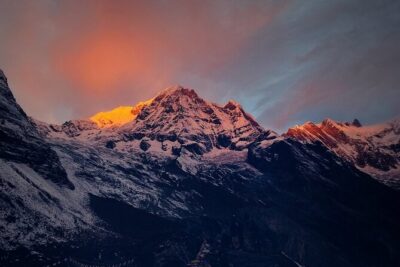
Browse the lists this tour appears in