
REVIEW · KATHMANDU HIKING TOURS
Everest Base Camp Trek
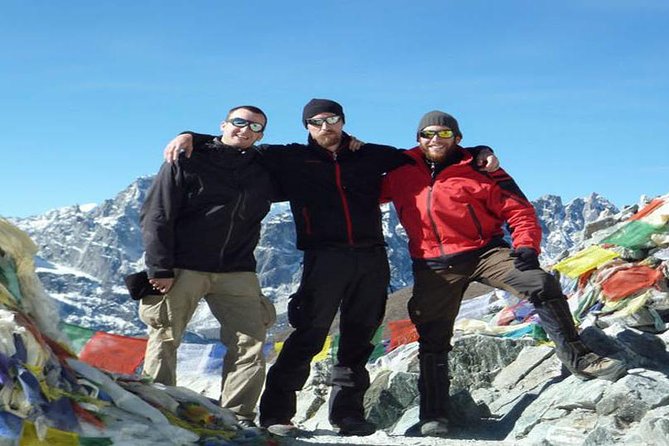
The trail earns every mountain view. This 12-day Everest Base Camp trek packs the classic route into a demanding journey from Kathmandu to Lukla, Namche Bazaar, Dingboche, Gorakshep, and the foot of Everest. I like that meals, permits, and Lukla flights are included, since those are the details that can turn a high-altitude trip into a paperwork chore. I also like the small maximum group size of 12 and the repeated acclimatization days.
The main caution is simple: this is not a casual walk. You need strong physical fitness, and the route includes long uphill days, rocky ground, thin air, and an early start at 5:15 a.m. Porter service, travel insurance, tips, and personal expenses cost extra, so the advertised price is not your final budget.
Key points at a glance
- Reach Everest Base Camp on foot: The route takes you through Phakding, Namche Bazaar, Dingboche, Lobuche, and Gorakshep before the base camp hike.
- Two acclimatization days: Time is set aside around Namche Bazaar and Dingboche to help you adjust to increasing altitude.
- Flights to Lukla included: Round-trip flights from Kathmandu are part of the package, along with trekking permits.
- Support from local guides: Guides such as Nima, Ramesh, Madan, Manoj, Pralhad, and Purna have been praised for encouragement, flexibility, and careful support.
- A compact group: The maximum group size is 12, while at least two people are required to book.
- Good value, with extra costs: At $1,445 per person, the package covers major trek essentials, but not insurance, porters, tips, or personal spending.
What $1,445 buys you on the Everest route
The price is reasonable for a guided Everest Base Camp package because it includes the major moving parts: flights between Kathmandu and Lukla, trekking permits, accommodation and meals during the trek, and a local guide.
You receive 11 breakfasts, 11 lunches, and 11 dinners. That removes much of the daily guesswork, especially on a route where meal choices and supplies can become more limited as you climb. It also means you should tell the operator about dietary needs when booking.
Still, keep your wallet handy. Travel insurance, porter service, tips, and personal expenses are not included. You may also want spending money for extras along the way, though the exact personal costs are not specified here. Travel insurance deserves special attention because this is a high-altitude trek and the route can be affected by weather.
The package offers pickup, and confirmation is provided at booking. You must supply each participant’s passport name, number, expiry date, and country. That is standard for international transport and permits, but it is worth preparing the information before you book.
More Everest Base Camp Treks in Kathmandu:
- Everest Base Camp Trek – 14 Days
★ 5.0 · 1,499 reviews - Everest Base Camp Trek
★ 5.0 · 842 reviews - Everest Base Camp Trekking
★ 5.0 · 485 reviews
Day 1: Kathmandu to Lukla, then a gentle start at Phakding
The trek begins with a short flight from Kathmandu to Lukla, one of the best-known gateways to the Everest region. After landing, you walk for about 3.5 hours to Phakding.
This first day is useful because it gets you moving without immediately throwing you into a huge walking day. You begin to settle into the rhythm of walking, eating, resting, and carrying only what you need for the day.
The early start matters. Your meeting time is 5:15 a.m., so do not plan a late night before departure. The flight is included, but air travel in the mountains can be sensitive to weather. The trip operates in all weather conditions, so bring proper clothing and expect plans to require patience.
Day 2: The long uphill approach to Namche Bazaar
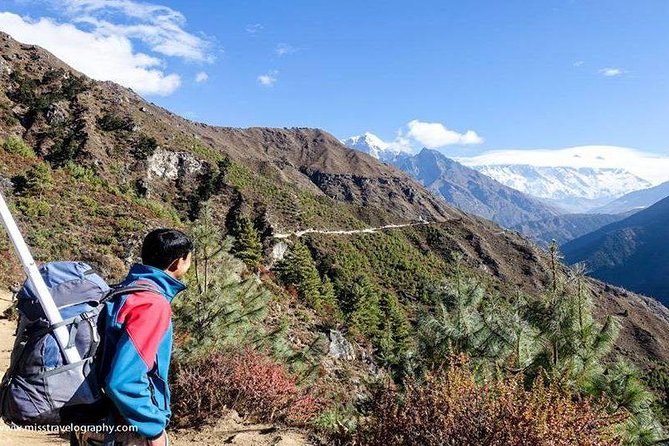
The walk to Namche Bazaar is listed at about eight hours. The route includes rocky and dirty terrain with plenty of uphill walking, so this is where the trek begins to feel serious.
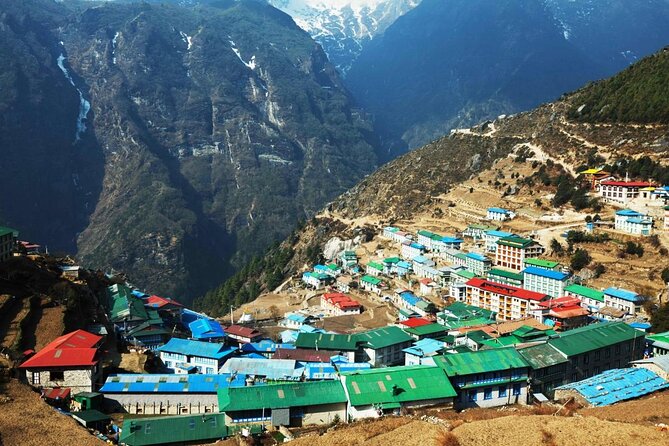
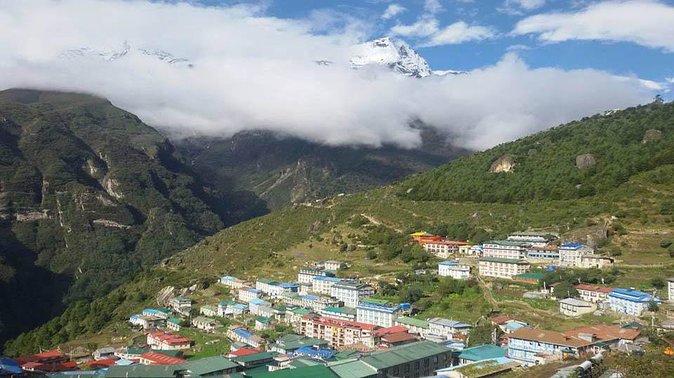
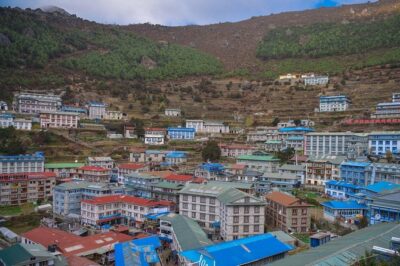
Namche is one of the key settlements on the route and an important place to slow down. Its colorful streets and mountain setting give you a welcome change from the trail, but you will arrive after a tiring day. Good boots, trekking poles if you use them, and a sensible pace can make a major difference.
I would not judge your fitness by how you feel during the first few hours. Save energy. The guide’s role becomes important here, since a steady pace is more useful than racing ahead and paying for it later.
Day 3: Acclimatization around Namche Bazaar
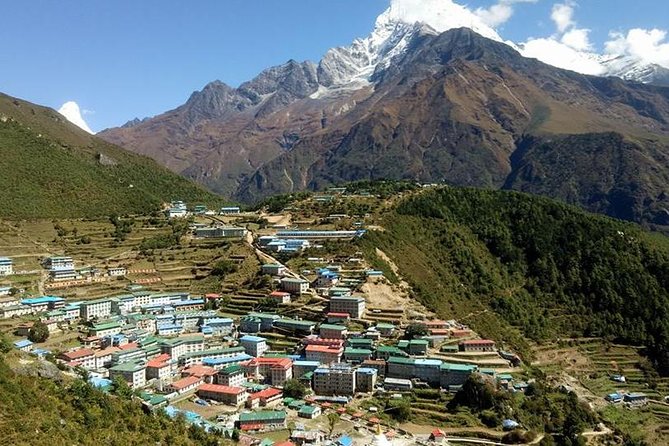
Instead of spending the whole day resting, you take a day trip around Namche. The route includes the Everest View Hotel, which gives you an early mountain lookout and a reason to walk higher before returning to sleep at the same elevation.
That pattern matters at altitude. You gain height during the day, then return lower to rest. It is not a spare day or a sightseeing extra. It is one of the most valuable parts of the schedule.
The acclimatization day also gives you time to get comfortable with the pace of the group. You can ask your guide questions, check your gear, and pay attention to how your body is handling the altitude before the route becomes more demanding.
A few more hikes around Kathmandu worth a look
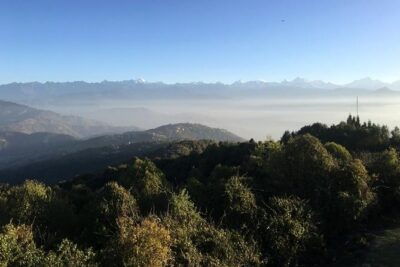
- Nagarkot Sunrise View and Day Hiking from Kathmandu
★ 5.0 · 471 reviews - Annapurna Circuit Trek with Tilicho Lake
★ 5.0 · 368 reviews - Everest Base Camp Trekking – 13 Day
★ 5.0 · 365 reviews - Everest Base Camp Trek -14 Days
★ 5.0 · 321 reviews
Day 4: A monastery visit and a quieter mountain day
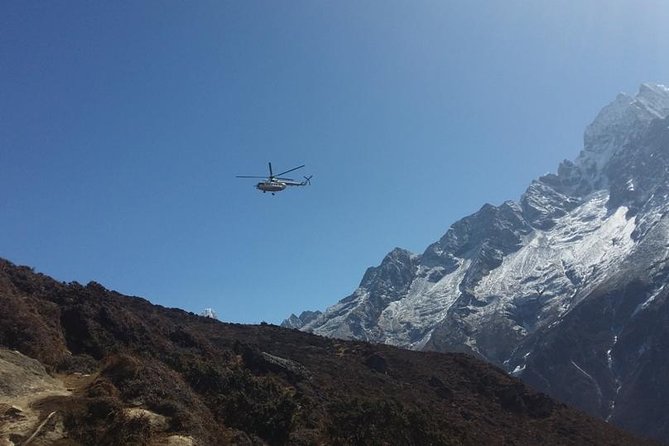
Day four includes a trip to a monastery. The details of which monastery and how long you spend there are not specified, so you should ask for the exact plan before departure.
This stop adds a cultural element to a route often reduced to mountain views. A monastery visit gives you a chance to see another side of the region, beyond the physical challenge of reaching base camp. It also breaks up the long sequence of uphill and downhill walking.
Do not assume the day is effortless. At altitude, even a shorter walk can feel demanding. Keep your pace calm and use the day to recover while still staying active.
Day 5: Climbing toward Dingboche
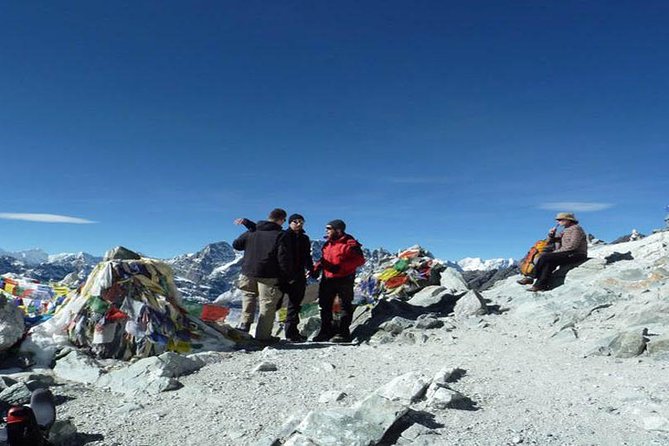
The walk to Dingboche is listed at about eight hours. This is another long day, and the increasing altitude changes the feel of ordinary tasks. Walking uphill, eating, and getting ready for bed can all take more time than they would at home.
Dingboche is an important point in the route because the next day is set aside for acclimatization. Arriving tired is normal. The useful question is not whether the day feels easy, but whether you can manage it steadily and communicate clearly with your guide.
This is also a good point to check your clothing and water routine. The supplied information does not specify a water system, equipment list, or altitude medication policy, so ask the operator before you leave Kathmandu.
Day 6: Acclimatization around Dingboche
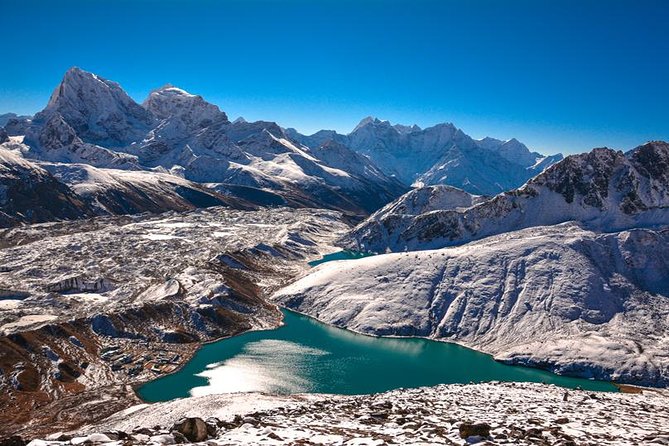
The day trip around Dingboche helps you adjust to the higher elevation before the push toward Lobuche and Gorakshep. Like the Namche acclimatization day, it is built into the program for a reason.
You may be eager to keep going, but rushing through acclimatization is a poor bargain. This pause gives your body more time to adjust and gives your guide a chance to monitor how you are doing.
The group size can help here. With no more than 12 people, the guide has a better chance of noticing when someone needs a slower pace or a changed plan. Several people who praised the company’s support described guides arranging different walking speeds when members of a group were not feeling well.
Day 7: The trail to Lobuche
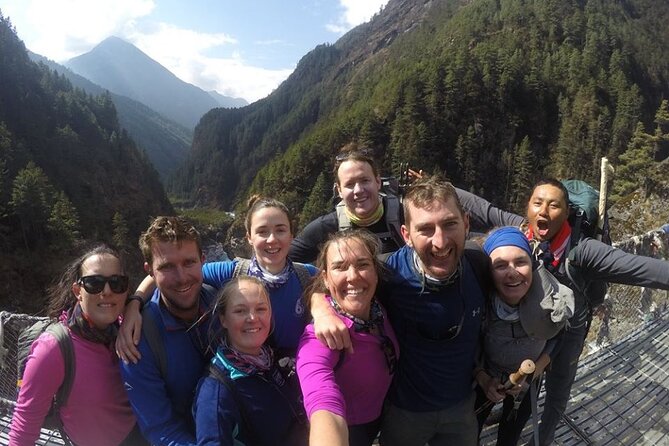
The route continues to Lobuche. No walking time is given for this day, but the direction is clear: you are moving deeper into the high mountains and closer to the base camp section of the trek.
At this stage, excitement can work against you. You are close enough to start counting the hours, but altitude makes patience essential. Walk slowly, follow your guide’s instructions, and do not treat discomfort as a contest.
This is where the value of a local guide becomes clear. The strongest praise for the company centers on personal support. Guides including Nima, Madan, Manoj, and Pralhad were described as encouraging and responsive, while one guide changed the schedule when two people had altitude problems. That flexibility matters more than a polished speech about adventure.
Day 8: Everest Base Camp and back to Gorakshep
This is the central day: you trek to Everest Base Camp, then return to Gorakshep.
The route is a serious out-and-back push rather than a quick photo stop. You walk to the base camp area, take in the surroundings, and then retrace your steps to Gorakshep for the night. The exact walking distance and total time are not supplied, so ask for the current estimate before booking.
The emotional reward comes from the setting and the effort required to reach it. Base Camp is not the summit of Everest, but it is the destination that gives this trek its shape. You have walked from Lukla through the Khumbu region, spent days adjusting to altitude, and reached the foot of the world’s highest mountain.
Do not expect the day to feel comfortable. You may be tired before reaching the goal, and the return to Gorakshep still requires energy. This is a day to follow the guide’s pace rather than your own excitement.
Day 9: Kala Patthar, then down to Pheriche
The next morning begins with a hike to Kala Patthar, followed by a trek to Pheriche. This is one of the most important viewpoints on the route, and it gives you another high mountain experience after reaching base camp.
The early start is part of the challenge. The tour’s overall schedule already begins early, and this day is likely to demand extra discipline. The supplied details do not give the start time, so confirm it with the operator.
After Kala Patthar, the route heads down to Pheriche. That descent should feel welcome, but downhill walking can still be hard on tired knees. Trekking poles may be useful if they are part of your normal walking kit.
Day 10: Retracing the trail to Namche Bazaar
You return to Namche Bazaar by the same general trail. The route is familiar now, but it is not automatically easy. Descending from high altitude can improve your breathing, while long downhill sections can test your legs.
Retracing the trail has one advantage: you know some of what is coming. You can compare how you felt on the way up and enjoy the route without the same pressure of reaching base camp.
This is also a good time to appreciate the support team. Many positive accounts focus not only on the guide but on the wider staff, including porters and coordinators. One group was especially grateful that a second support person walked with a slower member while another hiker continued at a different pace.
Day 11: The long return to Lukla
The trek continues back to Lukla. The route may feel like the final walking day, but do not let that thought make you careless. You still need to manage your pace and protect your feet.
Reaching Lukla gives you a clear sense of completion, yet mountain transport remains part of the next day’s uncertainty. Keep your essentials organized and do not put important medication or documents out of reach.
Day 12: Flight to Kathmandu and hotel transfer
The final day includes the return flight to Kathmandu and a transfer to your hotel. Round-trip flights are included, which is one of the package’s strongest practical benefits.
Mountain flights can be affected by weather. The experience is designed to operate in all weather conditions, but that does not guarantee a perfectly fixed schedule. Leave room in your broader Nepal plans if possible, especially if you have an international flight immediately after the trek.
Guide support is the heart of the trip
The strongest pattern in the available feedback is the human support. Names that come up repeatedly include Nima, Ramesh, Madan, Manoj, Pralhad, Purna, Madhav, and others on the Mosaic Adventure team.
The praise is specific rather than vague. Guides encouraged tired hikers, adjusted plans around altitude problems, helped groups move at different speeds, and kept people informed during difficult travel to and from Lukla. One guide even arranged a birthday cake for a trekker, a small gesture that shows how personal the support can feel.
That does not remove the risks of high altitude. A guide cannot make the route easy, and you remain responsible for preparing properly and speaking up when you feel unwell. Still, a responsive guide is one of the best reasons to choose a guided trek instead of trying to manage every detail alone.
Who should book this trek?
This trip suits fit hikers who want a guided route and do not want to arrange permits, mountain flights, meals, and local support separately. It is also a good match for people who value a small group rather than a large departure.
You should be comfortable with long walking days, rocky ground, substantial uphill sections, and the possibility that high altitude will slow you down. The operator specifically requires a strong physical fitness level, so this is not the right choice if you are looking for a gentle introduction to Nepal.
Couples and small groups may find the format especially appealing. The minimum booking is two people, and the maximum group size is 12. The company has also shown flexibility with different ages, needs, and walking speeds, based on the specific experiences described.
Small details that deserve attention before booking
Ask about the exact accommodation, porter rates, current flight arrangements, daily walking times, and the monastery visit. Those details are not fully specified in the supplied information, and they can affect how you pack and budget.
Confirm your dietary requirements at booking. Bring clothing suitable for changing mountain conditions, since the trek runs in all weather. You should also arrange suitable travel insurance before departure, because it is not included.
The cancellation terms are strict close to departure. Cancellation two to six full days before the start allows a 50 percent refund, while cancellation less than two full days before the start receives no refund. Changes inside those time limits are not accepted.
Should you book the Everest Base Camp trek?
I would recommend this trek to a fit, prepared hiker who wants a classic Everest route with strong logistical support. The included Lukla flights, permits, meals, acclimatization days, and local guide make the $1,445 price useful rather than artificially low.
I would hesitate if you dislike early starts, long uphill walks, uncertain mountain transport, or paying extra for porters, insurance, tips, and personal expenses. Go in knowing that Base Camp is earned one slow step at a time.
For the right person, this is a focused and well-supported way to reach Everest Base Camp. The biggest advantage is not luxury. It is having a capable local team nearby when the trail gets hard.
FAQ
How long does the Everest Base Camp trek take?
The trek lasts approximately 12 days, including the flights from Kathmandu to Lukla and the return flight to Kathmandu.
Is the flight from Kathmandu to Lukla included?
Yes. Round-trip flights from Kathmandu to Lukla are included in the package price.
Are meals included during the trek?
Yes. The package includes 11 breakfasts, 11 lunches, and 11 dinners.
Are trekking permits included?
Yes. Trekking permits are arranged as part of the experience.
How large is the group?
The maximum group size is 12 people. A minimum of two people is required per booking.
What fitness level is required?
A strong physical fitness level is required. The route includes long walking days, uphill sections, rocky ground, and high altitude.
What is not included in the price?
Travel insurance, personal expenses, porter service, and tipping are not included.
Just added around Kathmandu
- Kathmandu: 15-Day Everest Base Camp Trek with Guide★ 4.3 · 12 reviews
- Kathmandu: Nagarkot Sunrise & Hike with Lunch -Private/Group★ 4.9 · 122 reviews
- 14 Days Private Tour Everest Base Camp Trek★ 5.0 · 105 reviews
- 4 Days Poon Hill Trek★ 5.0 · 94 reviews
- Langtang Valley Trek★ 5.0 · 140 reviews
- Annapurna Circuit Trek with Tilicho Lake (16 Days)★ 5.0 · 15 reviews
- Manaslu Circuit Trek★ 5.0 · 184 reviews
- Kathmandu: Dhulikhel to NamoBuddha Day Hike with Lunch★ 4.8 · 62 reviews
Kathmandu Hiking Tours, compared.
Nagarkot Sunrise View and Day Hiking from Kathmandu
Read our review →
Browse the lists this tour appears in