
REVIEW · KATHMANDU HIKING TOURS
Everest Gokyo Valley Trek – 12 days
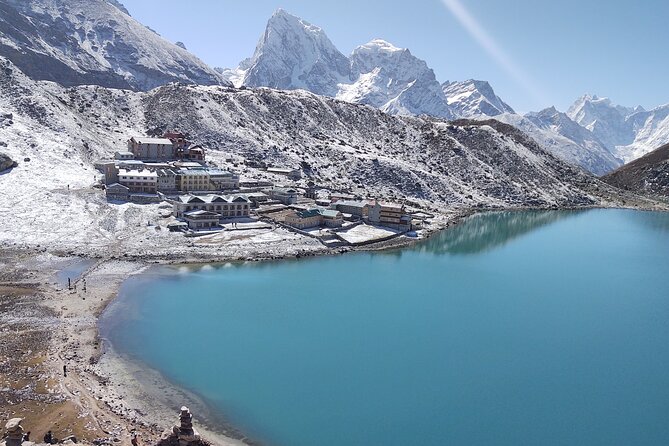
The best views come after hard climbs. This 12-day Everest Gokyo Valley Trek takes you from Kathmandu to Lukla, through Namche Bazaar and Sherpa villages, then up to the turquoise lakes and high ridge of Gokyo Ri. I especially like the quieter Gokyo route and the chance to see Everest, Lhotse, Cho Oyu, and Makalu from one high viewpoint.
I also like that the price includes Lukla flights, permits, a guide, porter support, mountain lodging, and breakfast. The main caution is altitude: Gokyo sits at about 4,750 meters, and the early hike to Gokyo Ri reaches roughly 5,463 meters, so this is a serious trek, not a casual mountain walk.
Key details that make this trek special
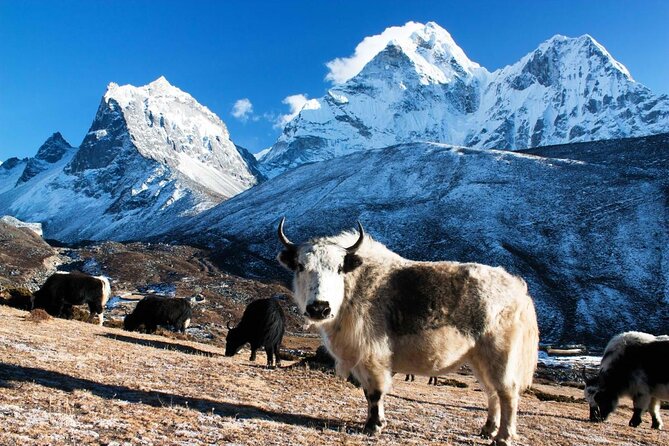
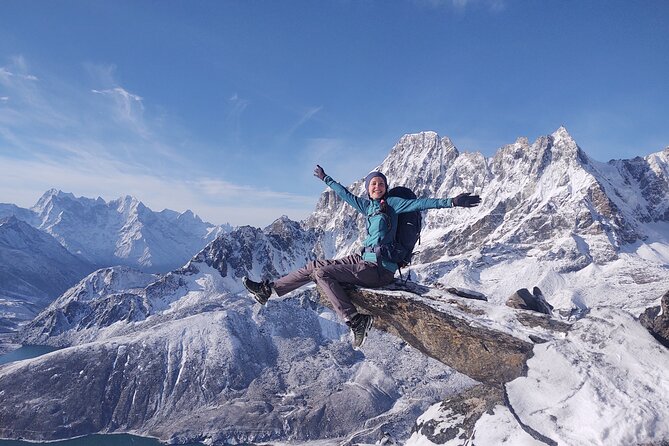
- Sunrise from Gokyo Ri: Reach about 5,463 meters for broad views toward Everest, Lhotse, Cho Oyu, and Makalu.
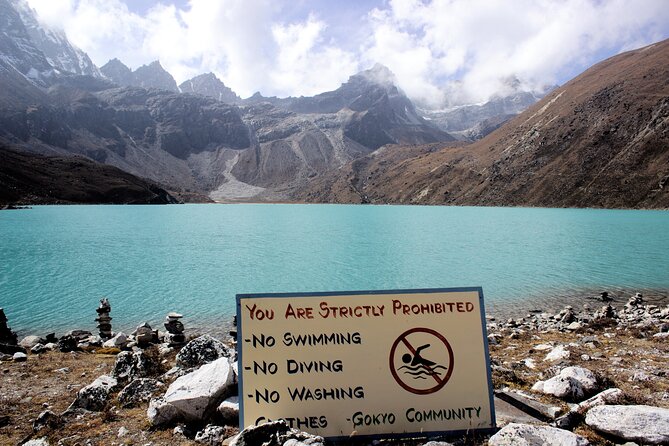
- Gokyo’s chain of lakes: Walk beside several high-altitude lakes, including Longponga, and explore toward the fourth and fifth lakes.
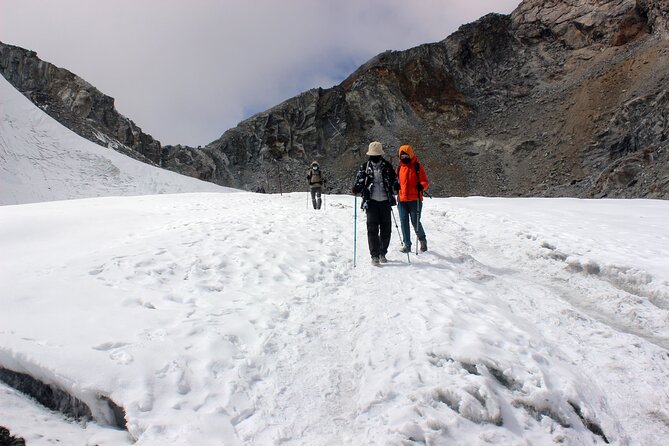
- Ngozumpa Glacier: Cross rough glacial terrain beside Nepal’s longest glacier.
- A quieter alternative to the main Everest route: The itinerary reaches the Everest region without going to Everest Base Camp.
- Sherpa culture along the trail: See prayer wheels, Mani stones, chortens, prayer flags, suspension bridges, and villages linked with schools and hospitals supported by Sir Edmund Hillary.
- Private guiding: Only your own group takes part, with an English-speaking guide and porter support arranged for two guests to one porter.
What this 12-day Gokyo trek is really about
The Gokyo Valley Trek gives you a grand Everest-region experience without following the classic route all the way to Everest Base Camp. Its reward is not a famous base camp sign. It is the high-country scenery around Gokyo, where blue-green lakes, ice, glacier moraine, and giant peaks take over the view.
You begin with a short flight from Kathmandu to Lukla, then walk steadily upward along the Dudh Koshi River. The route passes through Namche Bazaar, climbs into thinner air, and reaches small settlements where yak pastures replace forest. By the time you reach Gokyo, the scenery has changed from green woodland to rock, snow, and ice.
I like the way the schedule gives you time in Namche and Gokyo rather than treating each place as a quick overnight stop. You get an acclimatization day in Namche and a full day around Gokyo Ri and the lakes. That said, the program remains demanding because several days involve six hours of walking, steep climbs, and high altitude.
This is a private activity, so your group is not combined with other bookings. That can make the pace and daily decisions more personal. It also puts more responsibility on you to be honest about how you feel, since there is no larger group setting the rhythm.
More Everest Base Camp Treks in Kathmandu:
- Everest Base Camp Trek – 14 Days
★ 5.0 · 1,499 reviews - Everest Base Camp Trek
★ 5.0 · 842 reviews - Everest Base Camp Trekking
★ 5.0 · 485 reviews
Day 1: Flying to Lukla and walking to Phakding
Your day begins with a 6:15 am start and an airport transfer in Kathmandu. The flight to Lukla takes about 35 minutes and offers views of terraced hills and distant Himalayan peaks. The flight is a major part of the adventure, but mountain weather can disrupt plans, so you should keep your schedule flexible.
After landing at Lukla, you walk for about three hours to Phakding. The path follows the Dudh Koshi River with several modest climbs and descents. This first walking day is short enough to ease you into the trek, though you are already moving at altitude.
You spend the night in a tea house with standard accommodation. Breakfast is included, while lunch and dinner during the trek are not. Keep that distinction in mind when judging the total cost.
Day 2: Suspension bridges and the climb to Namche Bazaar
The route continues beside the Dudh Koshi and crosses the river several times on suspension bridges decorated with prayer flags. These crossings are memorable, but they can feel exposed if heights make you uneasy.
After entering Sagarmatha National Park, the trail climbs steeply from Larja Dobhan toward Namche Bazaar. The day takes about six hours, and this is one of the first points where the trek feels properly strenuous.
Namche is more than a sleeping stop. It is the main settlement in the upper Khumbu region, with shops, food, vendors, and mountain views. You stay in a tea house and begin adjusting to the altitude.
Day 3: Acclimatization above Namche
The third day is designed for acclimatization, a wise feature of the plan. You remain based in Namche and make an early hike to an Everest viewpoint before clouds can obscure the peaks.
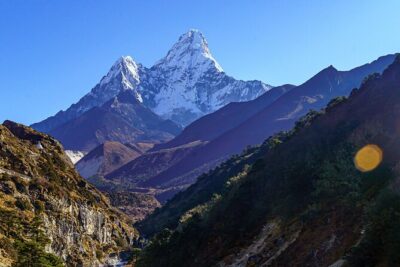
From above town, you may see Everest, Lhotse, Ama Dablam, and other Himalayan summits in the morning light. The walk takes about four hours. It is a useful day because you gain height during the hike but return to sleep at Namche’s lower elevation.
The Sherpa Museum is another worthwhile stop. It presents aspects of traditional Sherpa life and includes a photography display by a local Nepalese naturalist. This gives the day some cultural substance rather than making it only a rest period.
The schedule includes breakfast and tea or coffee. The early start matters, since mountain views often become less clear later in the day.
A few more hikes around Kathmandu worth a look
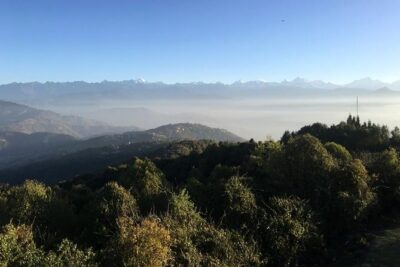
- Nagarkot Sunrise View and Day Hiking from Kathmandu
★ 5.0 · 471 reviews - Annapurna Circuit Trek with Tilicho Lake
★ 5.0 · 368 reviews - Everest Base Camp Trekking – 13 Day
★ 5.0 · 365 reviews - Everest Base Camp Trek
★ 5.0 · 350 reviews
Day 4: Khumjung, chortens, and the route toward Phortse
The trail climbs Khumjung Hill before descending toward the Dudh Koshi valley. A chorten sits on a ridge at about 3,973 meters, below Khumbila, a mountain regarded as sacred in the Khumbu region.
You also pass through Mohang, described as the birthplace of a reincarnated lama associated with Rongbuk Monastery in Tibet. Details such as these help turn the walk into more than a sequence of mountain photographs.
The path eventually drops through steep switchbacks on a sandy slope to the Dudh Koshi. The day is listed as taking about four hours, although the schedule has some inconsistent time labels. You should confirm the exact walking plan with the operator before departure.
The overnight stop is Phortse. This village gives you a less polished, more local-feeling part of the route before the trail enters the high valley.
Day 5: Climbing through rhododendron country
From the lower valley, the trail climbs steeply through rhododendron forest. In the warmer months, this section can feel very different from the exposed upper trail, with trees and shrubs framing the path.
You pass several kharkas, seasonal settlements used by Sherpa families when they bring yaks to higher grazing areas. Tongba, around 3,950 meters, and Gyele, around 3,960 meters, appear along the route.
The itinerary labels this stop as Gokyo Lakes, but the description focuses on the approach through forest and pasture settlements. Since the supplied schedule also repeats Gokyo as a stop on later days, ask for the exact overnight village and walking time when you book. That small clarification will help you pack your expectations as well as your bag.
Day 6: Machhermo and views toward Cho Oyu
The route from Dole climbs steadily along the side of the valley. Rhododendron gives way to scrub juniper as the altitude increases, and seasonal yak settlements continue to appear.
Cho Oyu comes into view ahead, while Kantega and Thamserku rise behind you down the valley. The day is described as relatively short, with arrival in Machhermo around lunchtime at about 4,410 meters.
A short day at this height is useful. It gives you time to rest, drink, and adjust before the harder push toward Gokyo. Do not treat the shorter mileage as an easy day, since breathing becomes more difficult as you climb.
Day 7: Ngozumpa Glacier and the third Gokyo lake
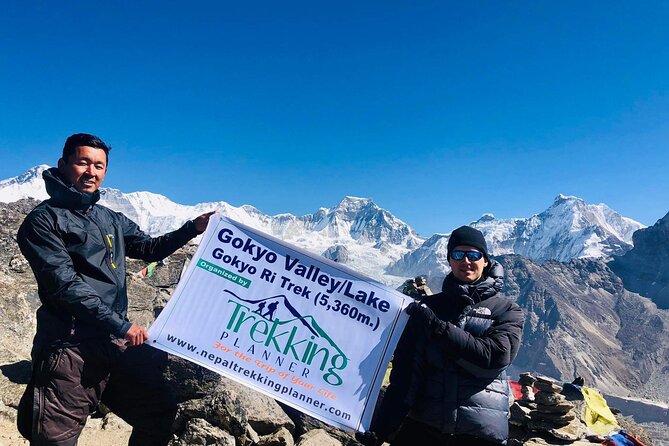
This is one of the trek’s key days. A ridge above Machhermo opens views down toward Kantega and up toward Cho Oyu, which rises to about 8,153 meters.
The route passes Pangram at approximately 4,390 meters, descends to the river, and then climbs toward the terminal moraine of the Ngozumpa Glacier. The moraine section is steep and rough, with uneven boulders underfoot.
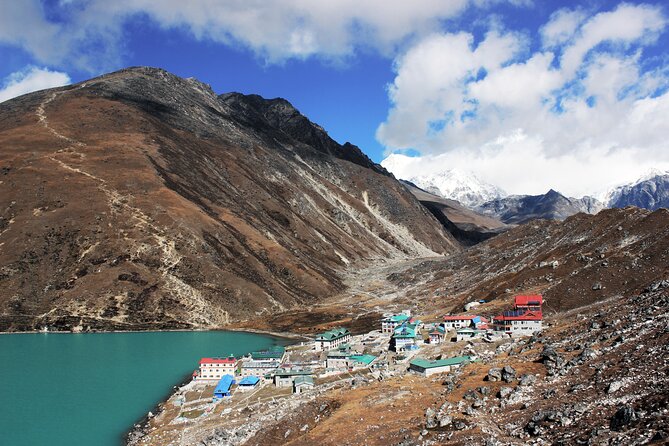
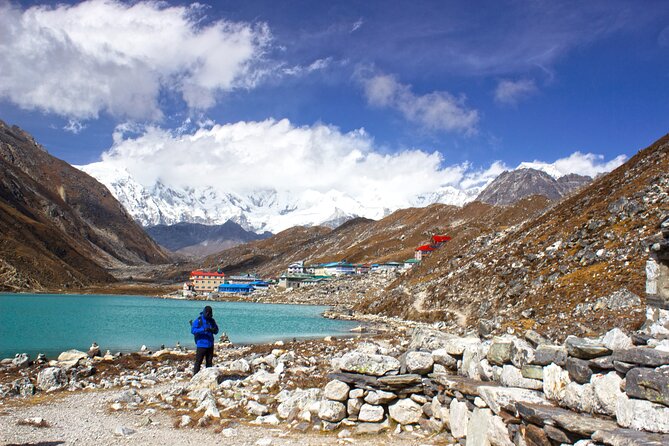
After the climb, the path levels out beside the valley. You pass Longponga Lake at about 4,690 meters, where Lama footprints are noted, before continuing toward Gokyo’s third lake. Gokyo sits at around 4,750 meters and has only a small number of lodges, listed at roughly six to eight.
This five-hour day may look modest on paper, but the altitude and moraine make it a demanding approach. Walk slowly and stay close to your guide on rough sections.
Day 8: Sunrise at Gokyo Ri and the higher lakes
The early hike to Gokyo Ri is the trip’s visual high point. The summit is listed at about 5,463 meters, or 17,923 feet, and the climb is timed for sunrise.
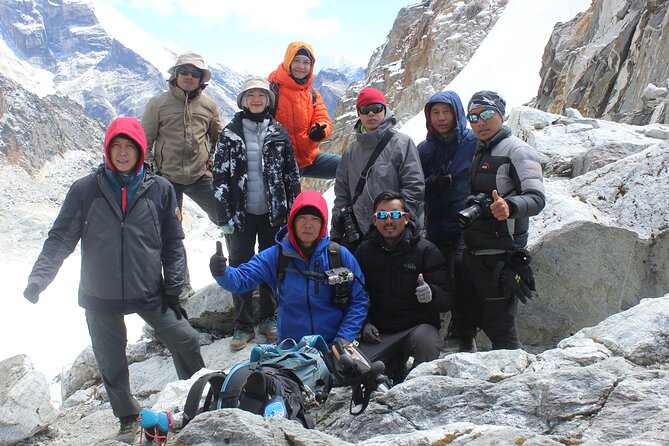
From the ridge, you can look across the Gokyo Valley and toward Everest, Cho Oyu, Lhotse, and Makalu on the eastern horizon. You also see the glacier and the chain of lakes below. The view is wide rather than confined to one famous peak, which is one reason this route appeals to strong walkers who want more than the standard Everest Base Camp path.
After returning to the lodge for breakfast, the afternoon is used to explore toward the fourth and fifth lakes. This gives you a second chance to see the high valley without rushing every photograph into the sunrise climb.
The total walking time is listed at about four hours, but the steep ascent and thin air make the effort much greater than the number suggests. If altitude affects you, the guide should know early. A good mountain day is not about proving a point.
Days 9 to 11: Returning through Dole, Mongla, Namche, and Lukla
Day 9 retraces the route through Machhermo toward Dole, with about six hours of walking. Returning by the same path lets you see familiar peaks from a new angle, but it also means you do not get a loop route through a different pass.
On Day 10, you descend toward Phortse Tenga, then climb again to Mongla Dada before continuing toward Namche Bazaar. This combination of descent and ascent can be tiring. The trail is not simply downhill, so save energy for the Mongla climb.
Namche is an important return stop. It gives you a more comfortable base than the high villages and breaks up the long walk back to Lukla.
Day 11 follows the trail back to Lukla, taking about six hours. There are still several ups and downs, so do not expect the final trekking day to be a simple stroll. You stay in a tea house before the flight back to Kathmandu.
Day 12: Flight back to Kathmandu
The final morning begins with another short scenic flight. On arrival in Kathmandu, an airport representative picks you up and transfers you to your hotel.
The program includes breakfast that day, but the wider package does not include Kathmandu accommodation or meals. The supplied information says the activity ends back at the original meeting point, Tribhuvan Airport, although it also describes a hotel transfer and overnight stay. Confirm whether the Kathmandu hotel is arranged separately.
What the $1,399 price covers
At $1,399 per person, the price has real value for a private 12-day Himalayan trek. It includes airport transfers by private vehicle, Kathmandu to Lukla flights in both directions, airport departure tax, Sagarmatha National Park entry, and a TIMS card.
You also receive an experienced English-speaking guide, with the guide’s salary, food, accommodation, and insurance covered. Porter support is arranged at one porter for every two guests, including the porter’s salary, food, accommodation, equipment, and insurance.
Mountain accommodation is twin or double sharing. Breakfast is included for 11 days. That package removes several large expenses that can be difficult to arrange on your own.
You still need to budget for international flights, a Nepal visa, Kathmandu lodging and meals, lunch and dinner during the trek, personal travel and health insurance, helicopter evacuation insurance, and tips for the crew and driver. The price is attractive only if you include those extra costs in your planning.
Guides, support, and the human side of the trek
The strongest praise attached to this experience focuses on the guides. Names connected with especially positive feedback include Sonam, Kiran, FT Sherpa, Dipendra, Dibash, Pasang, and Gyeljen Sherpa.
The useful details are practical. FT Sherpa was praised for helping arrange a horse at a low price when one person could not continue on foot. Guides such as Dibash were valued for keeping people calm, explaining the area, and encouraging a steady one-day-at-a-time approach.
The company representative Dipak also received credit for responding quickly and adjusting plans during Lukla flight trouble. Weather diversions and delays are a real possibility on this route, so calm communication matters as much as a cheerful personality.
The displayed feedback gives the experience a 5 out of 5 rating from 27 ratings, with 100 percent recommending it. That is a strong signal, especially for a trek where guide judgment and support affect the whole experience. Still, no rating can remove the physical demands or mountain weather risks.
Who should book this trek?
You should consider this trek if you want:
- High Himalayan views without adding Everest Base Camp to the route.
- A private trip with your own guide and group.
- A blend of mountain scenery and Sherpa cultural details.
- A demanding but relatively compact 12-day schedule.
- Dedicated time at Gokyo Ri and the surrounding lakes.
- Porter support and included Lukla flights.
You should think twice if you want a relaxed holiday, dislike steep trails, or are not prepared for sleeping above 4,000 meters. The program requires moderate physical fitness, but the altitude makes the experience harder than that phrase may suggest.
The trek also suits people who value scenery over collecting famous trail destinations. Gokyo is about the lakes, glacier, high ridge, and views toward several eight-thousand-meter peaks. You will not visit Everest Base Camp on this itinerary.
Free cancellation is available up to 24 hours before the local start time for a full refund. If poor weather cancels the activity, you are offered another date or a full refund. Changes made inside the 24-hour window are not accepted, so keep that policy in mind when arranging connecting flights.
Should you book the Everest Gokyo Valley Trek?
I would book this trek if your priority is a dramatic high-altitude route with time for Gokyo Ri, the lakes, and the Ngozumpa Glacier. The included flights, guide, porter arrangement, permits, and mountain lodging make $1,399 a fair starting price, provided you budget properly for meals, insurance, Kathmandu costs, and tips.
The best reason to choose it is the scenery. The best reason to hesitate is the altitude and the possibility of Lukla flight disruption. If you can handle both, this route offers a rewarding view of the Everest region without following the busiest base camp itinerary.
FAQ
How long is the Everest Gokyo Valley Trek?
The trek lasts approximately 12 days, including flights between Kathmandu and Lukla.
Where does the trek begin?
The meeting point is Tribhuvan Airport in Kathmandu, with a stated start time of 6:15 am.
Is airport pickup included?
Yes. Airport pickup and drop-off by private vehicle are included.
Are flights to Lukla included?
Yes. The package includes flights from Kathmandu to Lukla and back, along with airport departure tax.
Is accommodation included?
Twin or double-sharing accommodation in mountain tea houses is included. Accommodation in Kathmandu is not included.
Which meals are included?
Breakfast is included for 11 days. Lunch and dinner during the trek are not included, and meals in Kathmandu are also excluded.
Is a guide provided?
Yes. An English-speaking guide is included, along with the guide’s salary, food, accommodation, and insurance.
What happens if bad weather cancels the trip?
If poor weather causes cancellation, you can choose a different date or receive a full refund.
Just added around Kathmandu
- Annapurna Base Camp Trek – 11 Days★ 5.0 · 30 reviews
- Annapurna Base Camp Trek 12 Days★ 5.0 · 18 reviews
- Annapurna Base Camp Trek 10 Days★ 5.0 · 35 reviews
- Annapurna Base Camp Trekking★ 5.0 · 38 reviews
- Adventurous Annapurna Base Camp Trekking★ 5.0 · 7 reviews
- Annapurna Base Camp Trek★ 5.0 · 80 reviews
- Annapurna Base Camp Short trek★ 5.0 · 13 reviews
- Annapurna Base Camp Private Short Trek★ 5.0 · 8 reviews
Kathmandu Hiking Tours, compared.
Nagarkot Sunrise View and Day Hiking from Kathmandu
Read our review →
Browse the lists this tour appears in