
REVIEW · JAPAN HIKING TOURS
Morning Hiking Tour: Mt. Futaba & Hiroshima’s History
Hiroshima’s quietest view starts near the station. This private morning hike leads from Hiroshima Station through Hiroshima Toshogu, Kinko Inari Shrine, and a forested slope to Mt. Futaba’s summit. I like the clever mix of city history, Shinto sites, nature, and breakfast. I also like that the group is limited to six people, so your guide can explain details and adjust the pace.
The main thing to consider is the uphill walk. The route is often described as manageable, but it is still a hike, not a flat sightseeing stroll. The price, $157.60 per person, is also a serious spend for three and a half hours, though it includes guiding, food, shrine visits, forest bathing, and an open-air tea ceremony.
Key points at a glance
- Start at Hiroshima Station: You can meet your guide at the Shinkansen Exit and reach the trail without arranging a taxi or complicated transfer.
- Climb through sacred sites: Hiroshima Toshogu and Kinko Inari Shrine add cultural meaning before the trail reaches the mountain.
- Walk beneath more than 100 red torii gates: The gates create one of the most memorable sections of the route.
- See Hiroshima from Futabayama Peace Pagoda: On a clear morning, you can look across Hiroshima City, the Seto Inland Sea, and Miyajima.
- Eat breakfast at Okugu Shrine: A bento made with local products turns the summit stop into more than a photo break.
- Finish with Nodate tea: Your guide prepares an open-air tea ceremony, giving the morning a calm Japanese touch.
Why this short hike works so well in Hiroshima
Hiroshima is often treated as a city of memorials, museums, and the nearby island of Miyajima. Those places deserve your time, but this walk shows another side of the city. Within a short distance of the station, you move from streets and commuter traffic into woods, shrines, stone steps, and mountain air.
That change happens quickly. The morning begins at Hiroshima Station, then heads toward the city’s eastern hills. You do not spend time sitting on a bus or waiting for a distant trailhead. The city remains close, yet the forest gives the walk a quieter feel.
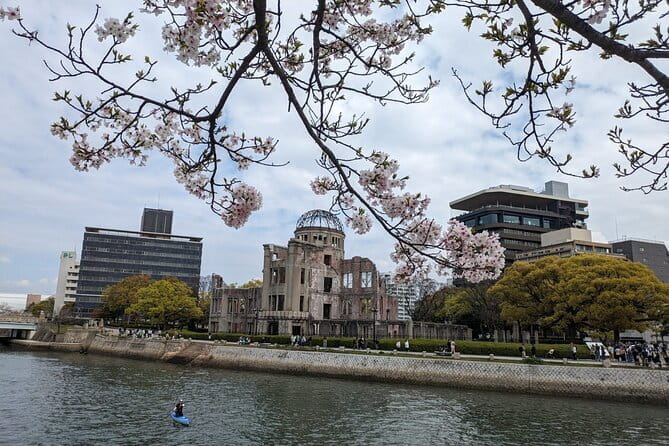
I especially like the way this tour connects Hiroshima’s past and present. At the shrines, your guide can explain religious customs, architecture, and local history. At the summit, the view gives you a physical sense of the city’s recovery and continued life.
The small-group format matters here. With no more than six people, you can ask about shrine etiquette, Japanese religious traditions, or the places visible from the summit. Guides named in the feedback include Michi, Naomi, Michiyo, Kota, and Lisa, with repeated praise for their friendly English explanations and personal knowledge of Hiroshima.
More Mountain and Summit Hikes in Japan
- Full Day Hiking Tour at Mt.Takao including Hot Spring
★ 5.0 · 52 reviews - Hike Japan Heritage Hakone Hachiri with certified mountain guide
★ 5.0 · 46 reviews - Explore Kiso Valley : Magome – Tsumago Mountain Trail Walk
★ 5.0 · 33 reviews
Meeting at Hiroshima Station at 7:30 or 10:00
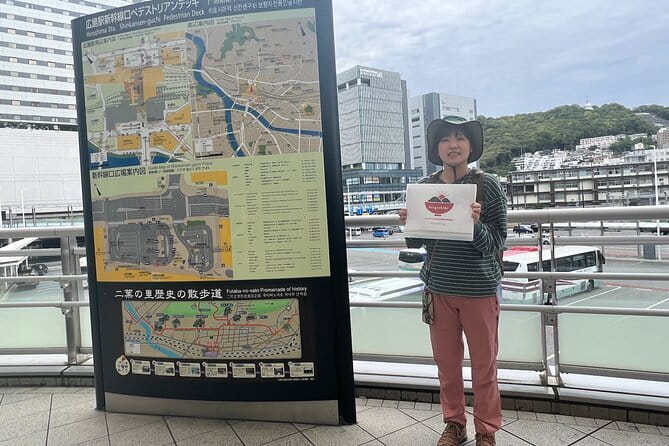
The published schedule shows a 7:30 start and also a 10:00 start, so confirm your exact departure time after booking. Either way, the meeting point is at Hiroshima Station, at the Shinkansen Exit area in Minami Ward.
A station meeting is a real advantage. If you arrive by train, you can walk to the start rather than spend the morning hunting for a local meeting point. The tour also finishes back at Hiroshima Station, which makes it easy to continue to the Peace Memorial Park, catch a train, or collect luggage.
The early departure deserves some thought. Starting at 7:30 puts you on the trail during the cooler part of the day and leaves most of the afternoon free. It also means you should arrange breakfast plans carefully, since the included meal comes later at the mountain shrine.
The tour is approximately three hours and thirty minutes. The stop times add up to a morning of walking, shrine visits, forest time, food, and tea rather than a fast climb to a viewpoint.
Hiroshima Toshogu, where the cultural portion begins
The first major stop is Hiroshima Toshogu, reached after the introduction and route briefing. You spend about 30 minutes here, learning about the shrine and its important cultural features.
This is not simply a quick stop to snap a photo before hiking. The detailed explanations can cover the building’s design, decorative patterns, craftsmanship, and the meaning behind architectural choices. That context helps you read the rest of the route more carefully.
A guide is especially useful at a shrine because the details are easy to miss. You may know the basic rules of washing your hands or bowing, but a local explanation can show how the spaces are arranged and why certain objects matter.
The stop also sets the tone for the morning. You begin with culture, move into nature, and then connect both with a wide view of modern Hiroshima. If your main interest is only exercise, this section may feel slow. If you want a better understanding of Japan beyond temples and photographs, it earns its place.
Kinko Inari Shrine and the red torii climb
From Hiroshima Toshogu, the route continues to Kinko Inari Shrine. The visit takes about 25 minutes and leads into the Mt. Futaba trail.
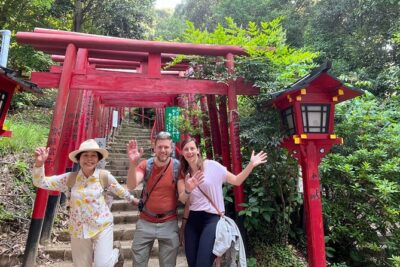
This is where the walk begins to feel more removed from the city. The route passes through woodland and shrine grounds, with more than 100 red torii gates marking the sacred path. The gates give the climb a strong visual rhythm, but the setting is not only about photographs. Your guide can explain the shrine customs and the meaning of the route as you walk.
The slope is uphill, and that is the point where you should judge your own comfort. The walk has been described as easier than some Hiroshima-area hikes, with the climb from the lower area to the summit taking roughly 20 to 30 minutes in one local description. Still, the route includes steps and incline, so comfortable shoes are important.
You do not need to approach this like a full-day mountain trek. The outing is short and paced around cultural stops, food, and rest. But people who rarely exercise should not assume that easy means effortless. Bring water, dress for the weather, and expect to warm up as you climb.
More Mountain and Summit Hikes in the world:
- Berber villages : Atlas Mountains Day Hike from Marrakech
★ 5.0 · 14,007 reviews - Bali: Sunrise Mount Batur Guided Hike with Breakfast
★ 4.8 · 9,660 reviews - Bali: Mount Batur Sunrise Guided Hike and Natural Hot Spring
★ 4.8 · 9,284 reviews - From Marrakech: Atlas Mountains Full-Day Hiking Trip w Lunch
★ 4.8 · 7,417 reviews
Futabayama Peace Pagoda and the best view of the morning
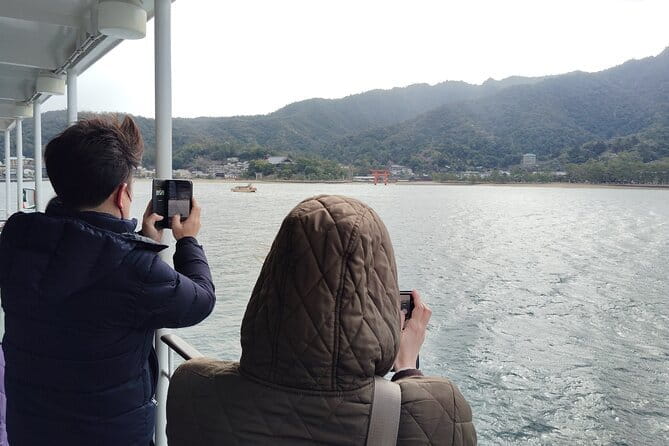
The summit section is the heart of the tour. At Futabayama Peace Pagoda, you can look across Hiroshima City toward the Seto Inland Sea and Miyajima. On a clear day, the view reaches beyond the city to the islands, giving you a different sense of Hiroshima’s setting.
This viewpoint also adds meaning to the tour’s historical theme. From above, you see a living city of roads, buildings, neighborhoods, and water. The view is not a museum display. It is a reminder that Hiroshima is a functioning city with a difficult past and a strong present.
The quality of the view depends on weather and visibility. Clear morning air can make the islands and Miyajima especially striking. Cloud, haze, or rain will reduce the range, so you should treat the view as a valuable possibility, not a guarantee.
The stop is scheduled for a substantial part of the morning, not just a quick pause. You have time to take photographs, listen to the guide, rest, and enjoy the surroundings. That slower pace is one reason the tour feels more personal than a simple self-guided climb.
Forest bathing, breakfast, and Nodate tea
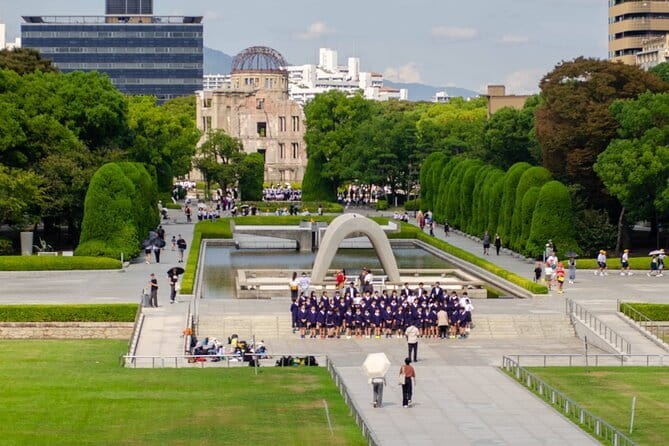
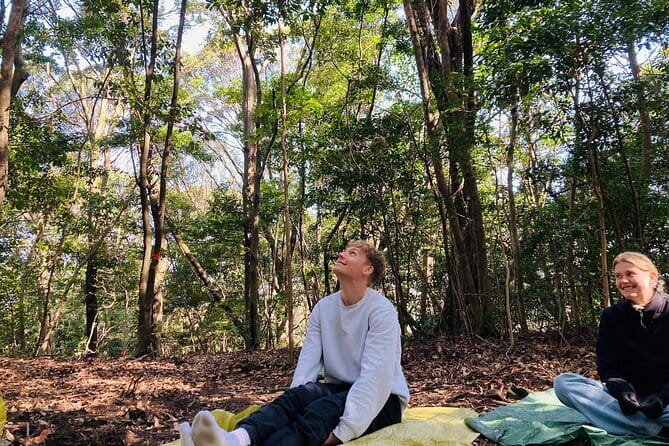
After reaching the summit, the tour includes Shinrinyoku, or forest bathing. This is a guided pause to relax among the trees and pay attention to the setting rather than rush from one attraction to the next.
The idea fits the morning well. You have already climbed, listened, and taken in the view. A quiet forest break gives your body time to settle before breakfast. Some versions of the experience have also included sensory activities and gentle forest-based exercises, but the core schedule here specifically promises forest bathing.
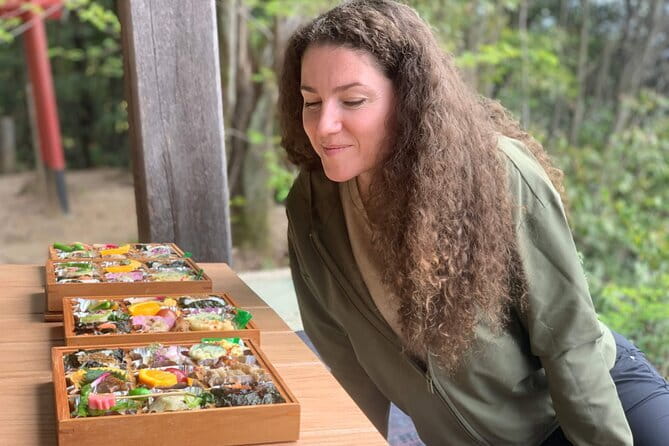
Breakfast is served at Okugu Shrine, with a bento box filled with local products. Eating at the shrine, with the city and water below, is a memorable part of the value. It also gives you a chance to try a Japanese-style meal in a setting that a standard restaurant visit cannot provide.
Food requirements can be accommodated for allergies, halal, Muslim-friendly, vegetarian, and vegan diets. You need to contact the operator before applying, rather than waiting until the morning of the tour. That advance notice is important because the meal is arranged as part of the experience.
The final touch is Nodate, an open-air tea ceremony led by your guide. Tea served outside on the mountain feels less formal than a dedicated tea-house ceremony, but that is also its charm. You learn through the setting and the guide’s actions, with the forest and view forming the backdrop.
If you want a highly formal tea ceremony with elaborate presentation, this may not be the right choice. If you like the idea of tea connected to a walk, a shrine, and a mountain view, it is a strong ending.
How much value do you get for $157.60?
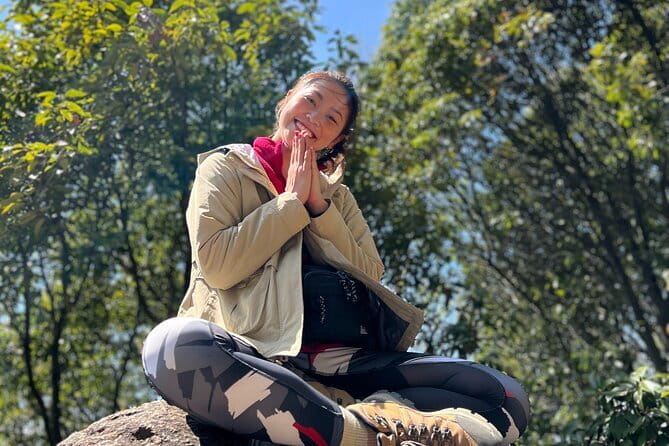
At $157.60 per person, this is not a budget walk. You are paying for a private or very small group, an English-speaking guide, shrine interpretation, a planned route, bento breakfast, forest bathing, and tea. The group limit of six is important because the experience depends on conversation and a calm pace.
You can walk around Mt. Futaba independently for much less. You could also visit shrines without a guide and bring your own breakfast. The extra cost makes sense mainly if you want the cultural explanations, help with shrine customs, a prepared meal, and a structured morning that begins and ends at the station.
I would see the price as fair for couples, families, and small groups who value personal guiding. It is harder to justify for a solo visitor focused only on reaching the viewpoint. The strongest value comes from treating this as a cultural walking tour with food, not as a basic hike.
A 5 out of 5 rating from 25 ratings and a 100 percent recommendation record suggest very strong satisfaction, especially with the guides, scenery, and mix of activities. That record does not remove the practical limitations: the uphill route, weather dependence, and strict nonrefundable booking terms.
Who should book this morning in Hiroshima?
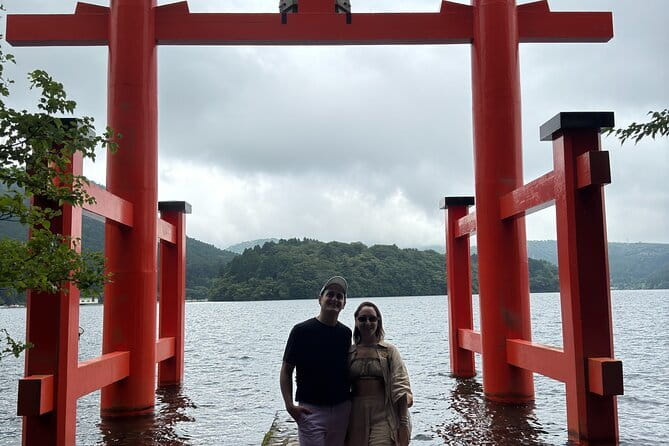
I would recommend it to you if you want a gentle introduction to Hiroshima beyond the main memorial sites. It suits people who enjoy short walks, local religious customs, city views, and food with a sense of place.
It also works well for first-time visitors who want help understanding what they see. The guides have been praised for explaining Japanese religion, shrine architecture, Hiroshima’s history, and everyday culture in clear, friendly English.
Families can consider it because children aged 0 to 5 can participate free, but the hill and steps still matter. Free admission does not mean the route is stroller-friendly or effortless for very young children. The supplied information says most people can participate, but you should judge your group’s walking ability honestly.
You may want to skip it if you dislike uphill walking, need a fully accessible route, or prefer a late start. It is also a poor match if your schedule cannot tolerate a nonrefundable activity. Weather may affect the outing, and the operator asks you to make contact by the morning of the previous day if cancellation appears likely.
Final verdict: a thoughtful half-day choice
I would book this tour if you want Hiroshima to feel like more than a list of famous sights. The walk gives you shrines, torii gates, forest, a city-and-sea view, a local bento, and tea in one compact morning.
The best part is the connection between those pieces. You start near the station, learn how sacred places work, climb through trees, look out over the city, and share breakfast at the top. That is a lot of substance for three and a half hours.
The decision comes down to price and fitness. You can hike Mt. Futaba independently for less, but you will miss the guide’s explanations and the arranged meal and tea. For a small group that wants a personal, culturally grounded morning, the cost is easier to defend. For a budget-minded walker, the route alone may be enough.
FAQ
Where does the Mt. Futaba tour start?
It starts at Hiroshima Station, near the Shinkansen Exit, at 1-2-37 Matsubaracho, Minami Ward, Hiroshima.
Where does the tour finish?
The activity ends back at Hiroshima Station, at the meeting point.
How long does the experience last?
The tour lasts approximately three hours and thirty minutes.
What time does the tour start?
The published schedule lists start times of 7:30 and 10:00. Confirm your specific start time after booking.
How large is the group?
The activity has a maximum of six participants.
Is breakfast included?
Yes. You receive a bento box made with local products at Okugu Shrine.
Can the meal meet dietary requirements?
Yes. The food and drinks can be adapted for food allergies, halal, Muslim-friendly, vegetarian, and vegan requirements. Contact the operator before booking.
Can young children join?
Children from 0 to 5 years old can participate free. The tour information also says most people can participate, but the route includes an uphill hike.
More Early-Start Trips around the world
- Funchal: Pico do Arieiro Sunrise Hiking Transfer
★ 4.8 · 4,021 reviews - Bali: Mount Batur Sunrise Trek With Guide and Breakfast
★ 4.8 · 3,461 reviews - Mount Batur Sunrise Hike and Natural Hot Spring Option
★ 5.0 · 1,927 reviews - Mount Batur Sunrise Hike with Breakfast
★ 5.0 · 1,757 reviews
More History Tours around the world
- Hiking the Historic Nakasendo Trail [1 Day Tour from Nagoya]
★ 5.0 · 104 reviews - 1-Day Tour from Nagoya: Hiking the Historic Nakasendo Trail
★ 4.9 · 34 reviews - 3Hour Outdoor Budapest Normafa Hike&History With a Historian
★ 3.7 · 10 reviews - Semi – Private Tour at Cape of Rodon; Hidden Beaches & History
★ 5.0 · 46 reviews
Just added around the world
- From Jökulsárlón: Vatnajökull Easy Level Glacier Hike★ 4.2 · 20 reviews
- From Kanab: 3-Hour Peek-a-Boo Slot Canyon Hiking/Photo Tour★ 4.9 · 25 reviews
- From Jujuy: Salinas Grandes, Purmamarca & Los Colorados Hike★ 4.2 · 75 reviews
- From Kalamata: Polylimnio Waterfalls Guided Hiking Tour★ 4.9 · 19 reviews
- From Kalkan: Saklikent Gorge and Gizlikent Waterfall Trek★ 4.7 · 13 reviews
- From Hanoi: Hoa Lu, Hang Mua Hike, Tam Coc Boat, and Lunch★ 4.4 · 28 reviews
- From Huaraz: Hike to the Lagoon 69★ 4.4 · 121 reviews
- From Kalabaka: Authentic Meteora Hiking Tour – Local Agency★ 5.0 · 20 reviews
Japan Hiking Tours, compared.
Fushimi Inari Hidden Hiking Tour (Private Option Available)
Read our review →
Hiroshima Local guided Hiking Tour&Open-air Tea Ceremony
Read our review →![Hiking the Historic Nakasendo Trail [1 Day Tour from Nagoya]](https://7.hikingjourneys.com/wp-content/uploads/hiking-the-historic-nakasendo-trail-1-day-tour-from-nagoya-400x267.jpg)
Hiking the Historic Nakasendo Trail [1 Day Tour from Nagoya]
Read our review →
Full Day Hiking Tour at Mt.Takao including Hot Spring
Read our review →
Hike Japan Heritage Hakone Hachiri with certified mountain guide
Read our review →
1-Day Tour from Nagoya: Hiking the Historic Nakasendo Trail
Read our review →
From Matsumoto/Nagano: Nakasendo Trail Walking Tour
Read our review →Browse the lists this tour appears in