
REVIEW · JAPAN HIKING TOURS
Hiroshima Local guided Hiking Tour&Open-air Tea Ceremony
Start Hiroshima above the streets. This three-hour outing leads you through the wooded Futaba Mountains, past Shinto shrines and up to the Futabayama Peace Pagoda, where Hiroshima, the Seto Inland Sea, and Miyajima spread below. I like the small groups of up to six and the way guides such as Nana, Michi, and Naomi explain local customs instead of simply pointing at buildings. I also like the open-air Nodate tea ceremony, a calm and memorable way to experience tea outside a formal tea room.
The main thing to consider is the climb. You need to handle about 500 steps on uneven and sometimes steep paths, and hot weather can make the ascent much harder. The pace includes frequent stops, but this is still a hike, not a flat city walk.
What makes this Hiroshima morning special
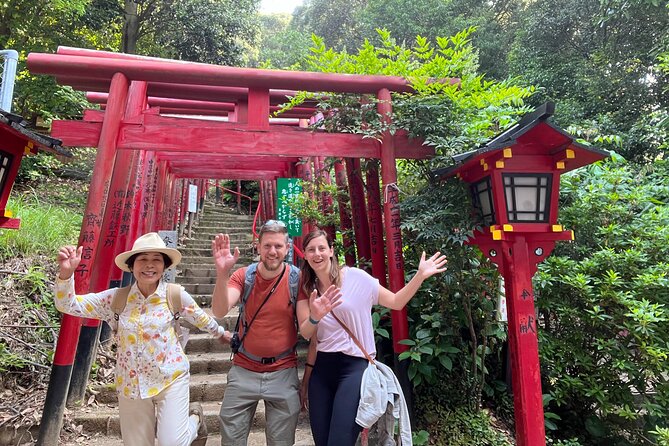
- Shrines before sightseeing crowds: Visit Hiroshima Toshogu and Kinko Inari Shrine along a quiet mountain route close to Hiroshima Station.
- A view tied to recovery: From Futabayama Peace Pagoda, you can see Hiroshima, the Seto Inland Sea, and Miyajima while hearing how the city recovered.
- Tea in the open air: The Nodate ceremony takes place at the mountain’s Okumiya Shrine, with a broad view rather than four walls around you.
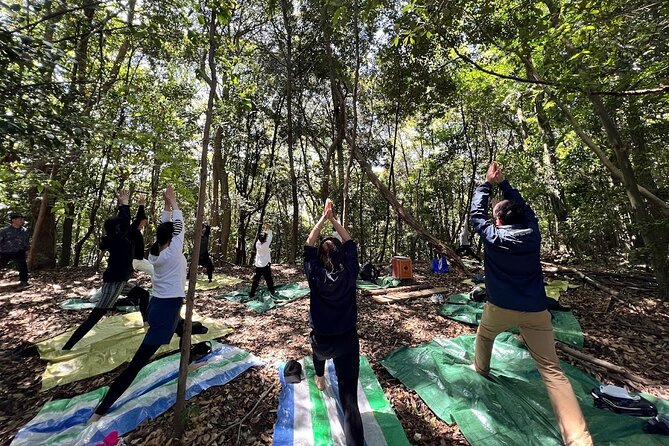
- Forest bathing with a guide: A short Shinrinyoku session gives you time to notice the forest through your senses.
- A genuinely small group: With no more than six people, the guide can explain Shinto rituals and adjust pauses to the group.
- Good use of an early start: The 7:30 departure finishes around 10:30, leaving most of your day for the Peace Memorial Park, museums, or Miyajima.
Why Futaba Mountain adds something different to Hiroshima
Most first visits to Hiroshima focus on the Peace Memorial Park, the Atomic Bomb Dome, and the city’s museums. Those places matter, but this hike gives you another way to understand Hiroshima. You move from the station into wooded hills, moving through living religious sites rather than viewing history only through exhibits and memorials.
The Futaba Mountains rise close to the city center. That makes the tour practical for a short stay, but the setting feels removed once the trees close around the path. You still hear Hiroshima’s story, yet the focus shifts toward Shinto practice, Buddhist remembrance, local geography, and the city’s recovery.
I especially like that the experience does not treat the mountain as just a lookout point. The shrines, steps, forest, pagoda, and tea ceremony form one connected route. You are not simply driven to a viewpoint, given a photo stop, and sent back down.
The group limit of six matters here. Religious customs often need a little explanation, and a small group makes it easier to ask why people bow, where offerings go, or what a shrine feature means. Guides Nana, Michi, and Naomi receive repeated praise for being warm, patient, and good at explaining Japanese customs in clear terms.
More Guided Day Hikes in the world:
- From Marrakech: Ouzoud Waterfalls Guided Hike and Boat Trip
★ 4.7 · 33,630 reviews - Berber villages : Atlas Mountains Day Hike from Marrakech
★ 5.0 · 14,007 reviews - Bali: Sunrise Mount Batur Guided Hike with Breakfast
★ 4.8 · 9,660 reviews
From Hiroshima Station to Hiroshima Toshogu Shrine
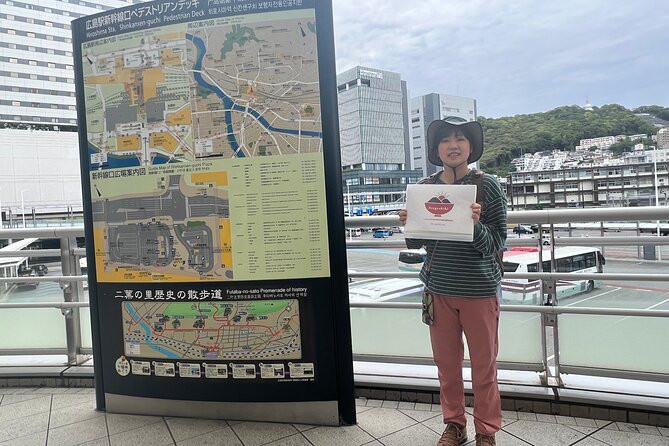
The meeting point is at the Shinkansen side of Hiroshima Station, with the first departure listed for 7:30. Other listed departure times are 10:00 and 13:00. You should choose carefully because only the early departure gives you a full afternoon after the tour.
At the station, you meet your guide, receive an outline of the route, and begin on foot. The station meeting point is convenient if you are staying nearby or arriving by train, and the tour returns to the same place.
The first major stop is Hiroshima Toshogu. Toshogu shrines are linked with Tokugawa Ieyasu, the founder of the Tokugawa shogunate, and this site gives you an early introduction to the cultural setting of the walk. The guide explains important cultural assets and helps you notice details you could easily pass without understanding.
This is a good place to learn basic shrine manners before the path gets steeper. You will have time to look around rather than rush through for a quick photograph. The 30-minute stop also gives your legs a gentle start before the climb.
The 500 steps to Kinko Inari Shrine
From Hiroshima Toshogu, the route continues toward Kinko Inari Shrine and into Mt. Futaba. The tour information specifies about 500 steps, and that number is worth taking seriously. The climb is manageable for many people, but the steps and uneven sections can feel strenuous, especially in summer.
The guide breaks up the effort with stops and explanations. People who hike often may find the route easy, while less experienced walkers can still enjoy it if they take their time. One account describes the elevation gain as roughly 500 feet, but the steps are the part you will notice most.
At Kinko Inari Shrine, you learn about the local sacred route and the meaning of Shinto practices. The shrine setting gives the hike purpose. You are not climbing only to reach a view; you are following a path used for worship and reflection.
The route may also include moments for you to make an offering or write a wish. That possibility gives families and first-time visitors a simple way to take part without needing prior knowledge of Japanese religion. Your guide can explain what to do and why it matters.
Wear proper walking shoes. Sandals or smooth-soled footwear would make the steps less comfortable, and rain would make any uneven section more difficult. Bring water, especially in warm months. One group completed the route in extreme heat, with temperatures reported around 36 degrees Celsius and a real-feel temperature near 40 degrees, and still needed a cold shower afterward.
Futabayama Peace Pagoda and the view over Hiroshima
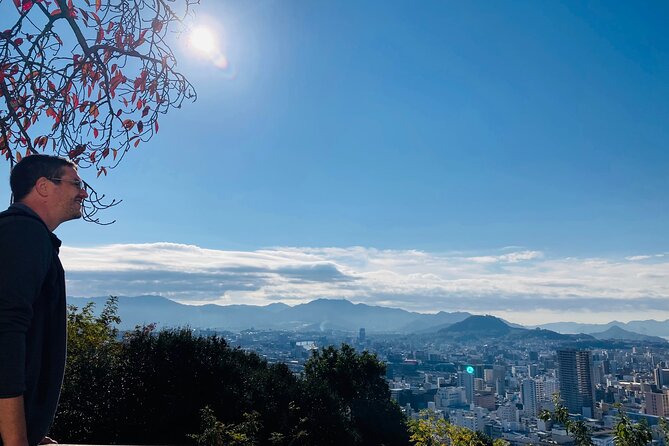
After the shrine section, you reach Futabayama Peace Pagoda. This is the visual high point of the tour, with views over Hiroshima City, the Seto Inland Sea, and Miyajima.
The view carries more meaning than a standard city panorama. From above, you can see the city as a whole and consider its recovery after wartime destruction. Your guide connects the geography with Hiroshima’s past, giving you a broader frame for the memorial sites you may visit later.
This stop is also a good test of the tour’s balance. You get a worthwhile view, but you reach it through a forest route and religious sites rather than a bus or an elevator. If you want a major viewpoint with no physical effort, this is not the right outing. If you like earning a view slowly, the climb makes the arrival more satisfying.
Take a moment here. The itinerary allows time to enjoy the scenery before the forest-bathing portion, and you will appreciate the pause after the stairs. On clear days, Miyajima adds a memorable island silhouette to the view.
More Guided Tours around the world:
- Bali: Mount Batur Sunrise Guided Hike and Natural Hot Spring
★ 4.8 · 9,284 reviews - Mount Etna: Summit Guided Hiking Tour up to 3,400 m
★ 4.8 · 4,792 reviews - Marrakech: ourika valley lunch & guided hike to waterfalls
★ 4.9 · 3,737 reviews - Bali: Mount Batur Sunrise Trek With Guide and Breakfast
★ 4.8 · 3,461 reviews
Shinrinyoku, or forest bathing, on the way down
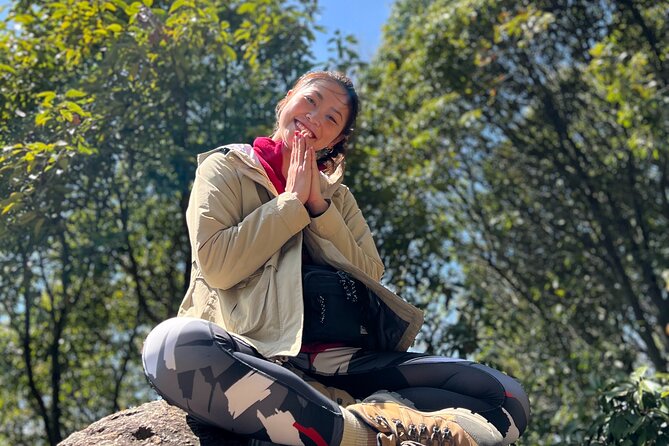
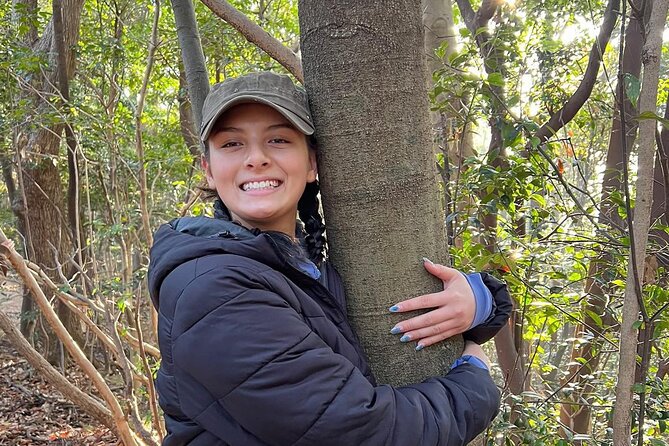
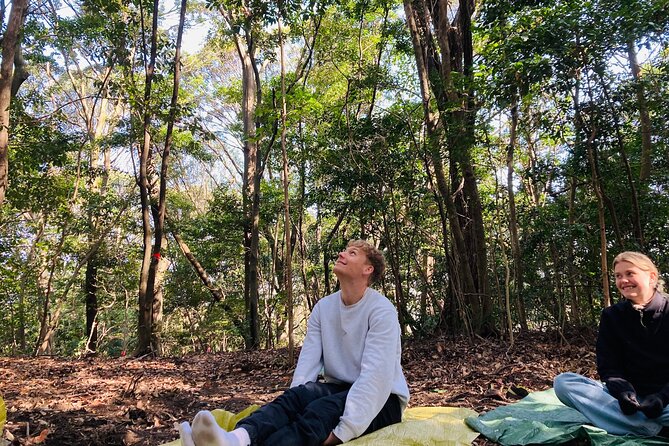
The tour includes about 35 minutes of Shinrinyoku, often translated as forest bathing. This is not a plunge into water. It means slowing down in the forest and paying attention to your surroundings through sight, sound, smell, and other senses.
The guide may lay down groundsheets in a clearing and lead a short meditation. One session included exercises that asked participants to focus on different senses, giving the group a quiet break before continuing downhill.
I like this part because it changes the rhythm. The hike begins with movement and explanation, then the view opens up, and the forest session asks you to stop trying to see everything. Hiroshima is a busy destination, and this quiet pause can feel as valuable as another historical fact.
The forest-bathing segment may not suit you if you want nonstop sightseeing. It is intentionally slow. You will get more from it if you are willing to sit quietly for a while and let the mountain be the main attraction.
Nodate tea at the mountain’s Okumiya Shrine
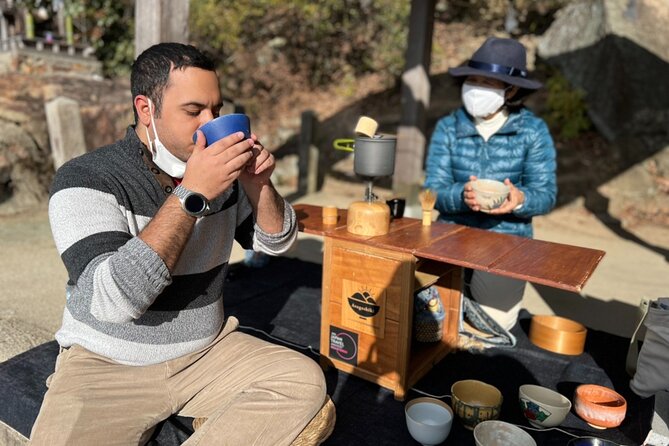
The final major experience is the Nodate tea ceremony at Kinko Inari Shrine’s Okumiya Shrine. Nodate is an outdoor tea service, so this is different from sitting in a formal tea house. The setting, the guide’s preparation, and the view become part of the ceremony.
The tea is served after the climb, which gives it practical value as well as cultural interest. One group received cold green tea on a very hot day and found it especially refreshing. The experience can include matcha, and one group specifically praised the true matcha tea service.
Do not expect a long formal ceremony with strict silence and elaborate architecture. The appeal is more personal and informal. Your guide performs the ceremony, explains what is happening, and helps you take part without worrying about getting every gesture perfect.
This is where guides such as Nana, Michi, and Naomi make a difference. Their friendly approach helps the ceremony feel welcoming rather than intimidating. You can ask questions and enjoy the ritual without pretending to be an expert in Japanese tea customs.
The tea stop is scheduled for about an hour. That is generous compared with a quick tasting, and it gives you time to enjoy the view and recover before returning to Hiroshima Station.
What the three-hour schedule really means
The tour is advertised as approximately three hours, with the morning route running from 7:30 to around 10:30. The listed schedule also includes departures at 10:00 and 13:00, returning at about 13:30 and 16:30. Check the time you book, since a later departure changes how much of the day remains afterward.
The early start is the strongest option for most visitors. You finish before lunch and can then visit the Peace Memorial Park, see the Atomic Bomb Dome, or take a train or ferry toward Miyajima. It also avoids the worst part of the day’s heat during much of the climb.
The later departures may work if your morning is already full, but they leave less room for other sights. Since the tour includes a mountain climb, tea, and a quiet forest session, rushing into another appointment afterward would weaken the experience.
The tour begins and ends at Hiroshima Station. That return point is useful because you do not need to arrange a separate ride from the mountain. The activity is listed as suitable for most people, but the 500 steps remain the key physical consideration.
Price, group size, and the value of the experience
At $109.43 per person, this is not the cheapest way to see a Hiroshima view. You are paying for about three hours with a guide, a small group capped at six, shrine visits, historical and cultural interpretation, forest bathing, and an outdoor tea ceremony.
The value depends on what you want from Hiroshima. If you only need transportation to a viewpoint, the price will seem high. If you want someone to explain the sacred route, show you how to approach the shrines, lead the forest exercise, and prepare tea in a special setting, the cost is easier to justify.
The small group is important. A group of six allows conversation and makes the tea ceremony feel more like a shared local welcome than a large tour production. It also gives the guide a better chance to watch the pace and offer breaks in hot weather.
Five percent of the fee goes toward Futaba Mountain conservation activities. That is a useful extra for anyone who values the upkeep of the forest and its paths.
The tour receives a five-star rating from 213 reviews, with 100 percent recommending it. Those figures do not remove the need to consider the stairs, heat, and weather, but they fit the consistent strengths of the experience: kind guides, excellent views, cultural explanation, and a peaceful route away from the busiest sightseeing areas.
Who should book this hike
I would choose this tour if you want a break from museums and memorials, enjoy moderate walking, and prefer local cultural context over a checklist of major sights. It works especially well for couples, families with older children, and solo visitors who want a small group without spending a full day outside the city.
Families with children aged six and older may find the stops and tea ceremony engaging, while children from birth to age five can participate free of charge. Parents should still judge the 500 steps and heat for themselves.
This is also a good choice for repeat visitors to Hiroshima. You may already know the Peace Memorial Park, but the Futaba route shows a quieter side of the city and explains religious customs you might otherwise miss.
I would be cautious if you have difficulty with stairs, dislike uneven trails, or want a purely indoor cultural activity. Hot weather can make the walk demanding, and the experience requires good weather. If poor weather cancels the tour, you are offered another date or a full refund.
Free cancellation is available up to 24 hours before the start time. Arriving more than 10 minutes late without contacting the provider can lead to automatic cancellation and a full charge, so give yourself enough time to find the station meeting point.
Should you book the Hiroshima Futaba Mountain tour?
Book it if you want Hiroshima to feel like more than a memorial destination. The combination of shrine customs, forest quiet, a recovery-focused viewpoint, and tea prepared outdoors gives you a side of the city that a standard sightseeing route does not provide.
Choose the 7:30 departure if possible. You will have cooler conditions, a free afternoon, and the best chance to fit this hike into a larger Hiroshima plan. Bring water, wear sturdy shoes, and expect a real climb with frequent pauses.
Skip it if stairs are a serious problem or if your schedule leaves no room for a three-hour outdoor activity. For everyone else, this is a thoughtful, small-scale way to see Hiroshima from above and share a simple tea ritual in the forest.
FAQ
Where does the tour begin and end?
It begins at the Shinkansen Exit of Hiroshima Station, at 1-2-37 Matsubaracho, Minami Ward, Hiroshima. The tour ends back at the same meeting point.
How long does the experience last?
The tour lasts approximately three hours. The listed morning schedule runs from 7:30 until about 10:30, with later departures also available.
How many steps are involved?
The hike includes about 500 steps. The route also has uneven and steep sections, although the guide includes pauses along the way.
Is the tour suitable for most people?
The activity is listed as suitable for most people, but you should be comfortable with a mountain walk, stairs, and outdoor conditions. Reviews describe it as easy to moderate, with the climb becoming harder in very hot weather.
What is included in the tea ceremony?
You take part in a Nodate, or open-air, tea ceremony at the Okumiya Shrine on the mountain. The ceremony is performed by the guide and includes a view over Hiroshima.
Can young children join?
Children from birth through age five can participate free of charge. The tour information does not give a separate child fitness recommendation, so parents should consider the 500 steps and uneven path.
What happens if the weather is poor?
The activity requires good weather. If it is canceled because of poor conditions, you will be offered a different date or a full refund. You can also cancel for a full refund up to 24 hours before the start time.
Just added around the world
- From Jökulsárlón: Vatnajökull Easy Level Glacier Hike★ 4.2 · 20 reviews
- From Kanab: 3-Hour Peek-a-Boo Slot Canyon Hiking/Photo Tour★ 4.9 · 25 reviews
- From Jujuy: Salinas Grandes, Purmamarca & Los Colorados Hike★ 4.2 · 75 reviews
- From Kalamata: Polylimnio Waterfalls Guided Hiking Tour★ 4.9 · 19 reviews
- From Kalkan: Saklikent Gorge and Gizlikent Waterfall Trek★ 4.7 · 13 reviews
- From Hanoi: Hoa Lu, Hang Mua Hike, Tam Coc Boat, and Lunch★ 4.4 · 28 reviews
- From Huaraz: Hike to the Lagoon 69★ 4.4 · 121 reviews
- From Kalabaka: Authentic Meteora Hiking Tour – Local Agency★ 5.0 · 20 reviews
Japan Hiking Tours, compared.
Fushimi Inari Hidden Hiking Tour (Private Option Available)
Read our review →
![Hiking the Historic Nakasendo Trail [1 Day Tour from Nagoya]](https://7.hikingjourneys.com/wp-content/uploads/hiking-the-historic-nakasendo-trail-1-day-tour-from-nagoya-400x267.jpg)
Hiking the Historic Nakasendo Trail [1 Day Tour from Nagoya]
Read our review →
Full Day Hiking Tour at Mt.Takao including Hot Spring
Read our review →
Hike Japan Heritage Hakone Hachiri with certified mountain guide
Read our review →
1-Day Tour from Nagoya: Hiking the Historic Nakasendo Trail
Read our review →
From Matsumoto/Nagano: Nakasendo Trail Walking Tour
Read our review →
Explore Kiso Valley : Magome – Tsumago Mountain Trail Walk
Read our review →Browse the lists this tour appears in