
REVIEW · JAPAN HIKING TOURS
Hike Japan Heritage Hakone Hachiri with certified mountain guide
Walk an old highway through Hakone. This seven-hour hike follows about 8 kilometers of the Japan Heritage Hakone Hachiri route, combining forest paths, stone paving, Lake Ashi, castle ruins, and local buses. I especially like the way the tour connects the old road with everyday Japanese history, and the small group of no more than six people should keep the experience personal.
I also like the route’s grand finish in Mishima, where you visit Mishima Taisha and the Genbe River before ending at the station. The main drawback is the physical demand: this is not a gentle sightseeing stroll, and part of the route includes steep mountain walking. You also pay extra for lunch, local transport, and the return train.
The guide, Akihiro, is a major part of the appeal. His background in history and nature, calm manner, first-aid training, and ability to coordinate buses and trails give the day a reassuring structure. Just remember that Mt Fuji is a weather bonus, not a guarantee.
Key points about the Hakone Hachiri day
- Follow an Edo-period highway: Walk sections of the Old Tokaido, including the famous cobblestone road across the Hakone Mountains.
- See Lake Ashi from several angles: The route includes the lake shore, Heiwa no Torii, Hakone Shrine’s torii gate, and the cedar avenue.
- Pair history with real walking: Yamanaka Castle Ruins, Hakone Checkpoint, and old paving make the past easier to picture.
- Small group, personal guiding: The group is limited to six people, and the certified guide holds a wilderness first-aid certificate.
- Finish in Mishima: Visit Mishima Taisha and the Genbe River, then continue by train or bus from Mishima Station.
- Budget for extras: Lunch costs around 2,000 yen, local transport around 2,000 yen, and the Shinkansen to Odawara about 2,500 yen.
Why the Hakone Hachiri route matters
Hakone Hachiri was part of the Old Tokaido Highway, the major route linking Edo, now Tokyo, with Kyoto during the Edo period. Crossing Hakone was no easy task. The mountains brought steep slopes, rough footing, and a serious break in the journey between eastern and western Japan.
That context gives the walk more purpose than a standard forest hike. You are not simply moving from one scenic stop to another. You are following a route used by samurai, merchants, officials, and ordinary people making the long trip between major cities.
The guide helps turn scattered sites into one connected story. A cedar-lined road, a checkpoint, a castle ruin, and a riverside shrine can otherwise feel like separate attractions. Here, each place fits into the larger question of how people crossed Japan before modern roads and railways.
You will walk about 8 kilometers, but the distance alone does not tell the whole story. The route also uses a shared taxi and local buses, partly to reach the trail and partly to skip a temporarily closed section. That makes the day practical, but it also means this is not a continuous walk from Hakone to Mishima.
More Mountain and Summit Hikes in Japan
- Full Day Hiking Tour at Mt.Takao including Hot Spring
★ 5.0 · 52 reviews - Explore Kiso Valley : Magome – Tsumago Mountain Trail Walk
★ 5.0 · 33 reviews - Morning Hiking Tour: Mt. Futaba & Hiroshima’s History
★ 5.0 · 25 reviews
Starting at Hakone-Yumoto and reaching the trail
The day begins at Hakone-Yumoto Station at 9:00 a.m. This is a useful starting point because Hakone-Yumoto is one of the area’s main transport points, and the route then moves into the mountain section rather than wasting time on a long approach walk.
A shared taxi takes you to the trailhead. The taxi fare is not included, so allow around 2,000 yen for transportation during the day. The exact total depends on the shared taxi and buses used between sites.
From the trailhead, you walk for about an hour before reaching the woodcraft village near Amazake Tea House. This opening section gives you time to settle into the pace. It also keeps the day from becoming a string of quick photo stops.
You should wear proper walking shoes with good grip. The tour calls for moderate physical fitness, and the route includes mountain paths and old stone paving. Smooth or uneven stones can be tiring, especially if they are wet.
Amazake Tea House and the old mountain road
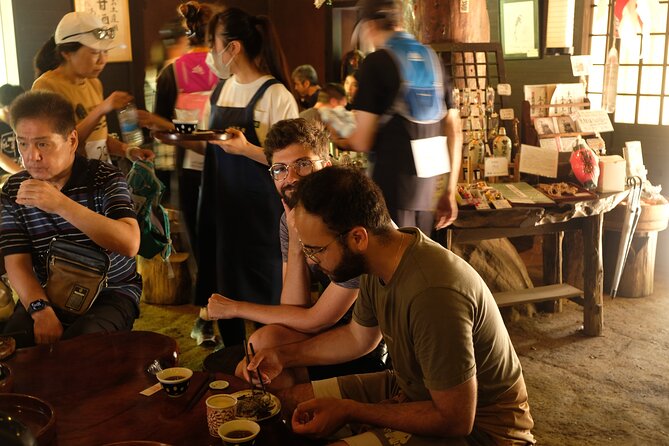
Amazake Tea House is one of the most atmospheric early stops. The setting connects naturally with the road’s past, since sweet rice drink and roadside rest places helped people manage long journeys over the mountains.
The tour also passes a woodcraft village where you can see artisans working with timber. This adds a useful local detail. Hakone is not only about hot springs and lake views, and the craft stop gives you a glimpse of the hands-on work that remains part of the area’s identity.
Amazake and snacks are not included, so bring some spending money if you want something along the way. That small extra is worth keeping in mind because the day lasts about seven hours and lunch comes later.
The historic road itself is the star here. Parts of the Hachiri path retain their stone paving, allowing you to experience the uneven surface that made this route so demanding. I like this kind of sightseeing because the physical effort supplies information that a museum label cannot. You feel the slope under your feet.
Lake Ashi, Heiwa no Torii, and the cedar avenue
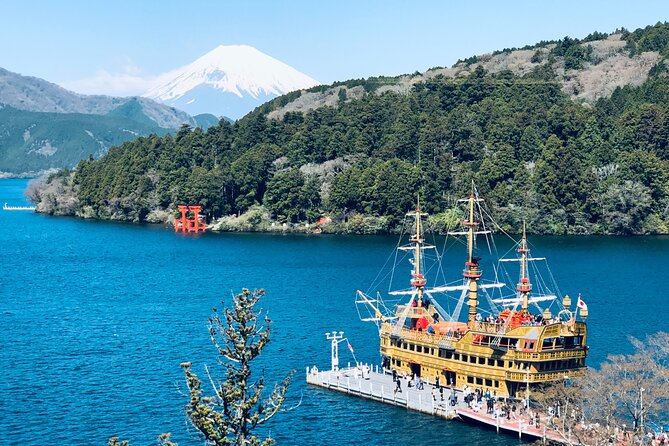
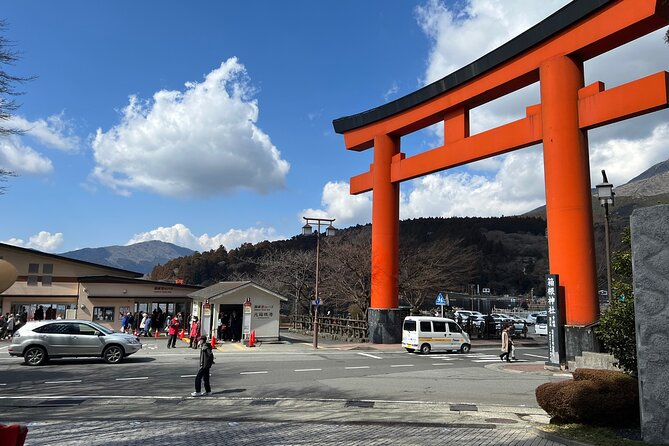
After the mountain walking, the route reaches Lake Ashi near the Motohakone-Ko area. You then walk along the shoreline toward Heiwa no Torii, the large red gate associated with Hakone Shrine.
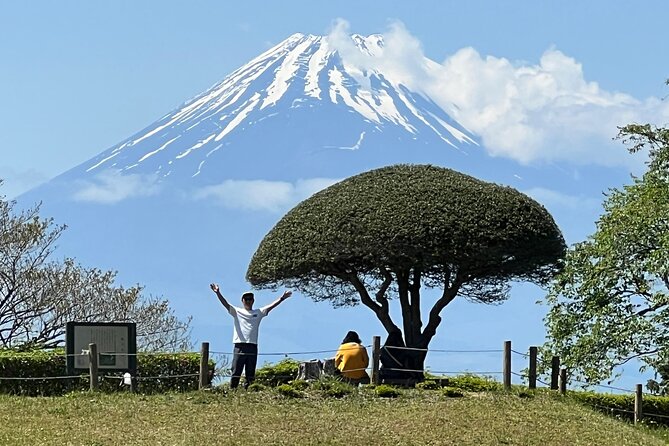
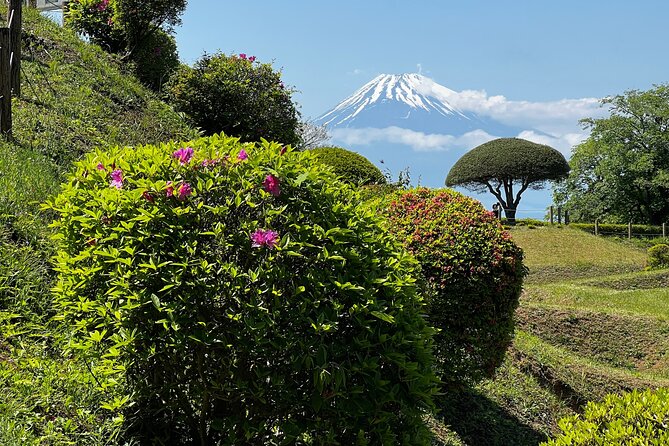
On a clear day, Mt Fuji may appear behind the gate and across the lake. The views are one of the strongest reasons to choose this tour, but the weather controls the result. Clouds, rain, or mist can hide the mountain, so you should book this for the historical walk and scenery as a whole, not for a guaranteed Fuji photograph.
The lake section lasts about an hour and a half. It gives you a change of pace after the forest and stone path. You get open water, shrine architecture, and a chance to look back at the mountain route you have crossed.
Then comes the Cedar Trees of Hakone Old Road. These tall trees line the old highway and create a shaded corridor with a strong sense of age. The avenue is less about a single grand viewpoint and more about atmosphere. It is easy to picture people and pack animals moving through this passage long before buses and sightseeing boats served the area.
This is also a good stretch for photographs, but you should keep your attention on the footing. Historic cobblestones can be irregular, and the day involves enough walking that comfort matters more than stylish footwear.
More Mountain and Summit Hikes in the world:
- Berber villages : Atlas Mountains Day Hike from Marrakech
★ 5.0 · 14,007 reviews - Bali: Sunrise Mount Batur Guided Hike with Breakfast
★ 4.8 · 9,660 reviews - Bali: Mount Batur Sunrise Guided Hike and Natural Hot Spring
★ 4.8 · 9,284 reviews - From Marrakech: Atlas Mountains Full-Day Hiking Trip w Lunch
★ 4.8 · 7,417 reviews
Hakone Checkpoint and lunch near Hakone-machi
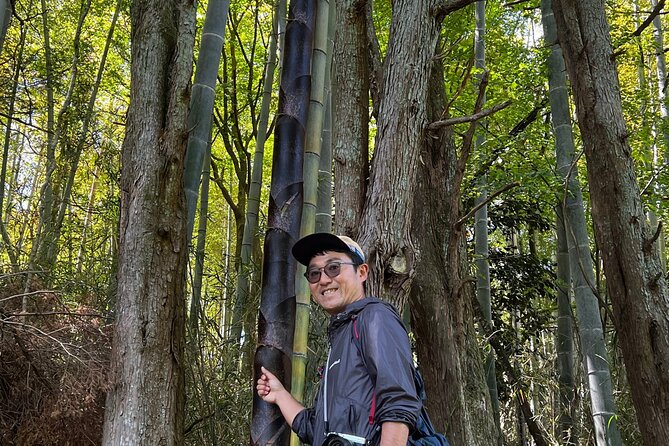
The Cedar Avenue leads toward Hakone Checkpoint. During the Edo period, this controlled movement along the Tokaido and functioned much like an immigration office today. The guide explains why the checkpoint mattered and how it fit into the political system of the time.
This stop is valuable because it shows that the road was not only a trade and travel route. It was also monitored by the authorities. A simple gate or checkpoint can look modest until you understand the rules and power behind it.
Lunch follows at a local Japanese restaurant near Hakone-machi. The meal is not included, and the expected cost is around 2,000 yen for your group arrangement. Since the specific restaurant and menu are not provided, you should treat this as a practical local meal rather than a fixed food tasting.
The timing makes sense. By this point, you have walked through the mountain section, visited the lake, and passed through the cedar avenue. A proper break is welcome before the route continues toward Shizuoka.
The bus transfer and Yamanaka Castle Ruins
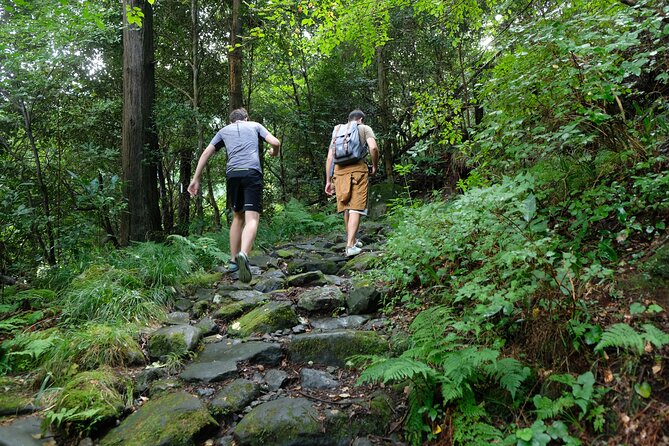
After lunch, a local bus takes you to a trailhead on the Shizuoka side of Hakone Hachiri. This bus section skips a part of the route that is temporarily closed. That is a sensible safety decision, though it does mean the day is not a complete foot crossing of every meter of the historic highway.
You should see the bus ride as part of the practical design rather than a flaw. It lets you keep the most meaningful walking sections while avoiding a closed area. It also gives your legs a short break before the next historic site.
Yamanaka Castle Ruins sit along the Hachiri Heritage Path. The remains are not a preserved castle in the sense of intact rooms and towers. Their value comes from the shape of the old site and its position along the mountain route.
If the weather cooperates, Mt Fuji may be visible from this area. The view gives the castle ruins a wider setting, but again, clouds can change the experience. I would pay attention to the earthworks and the route itself even if Fuji is hidden.
This part of the tour should suit you if you like history that requires some imagination. You will not find a large indoor exhibit explaining every detail. Instead, the guide supplies the context while you stand among the remains.
Ending in Mishima at Mishima Taisha and Genbe River
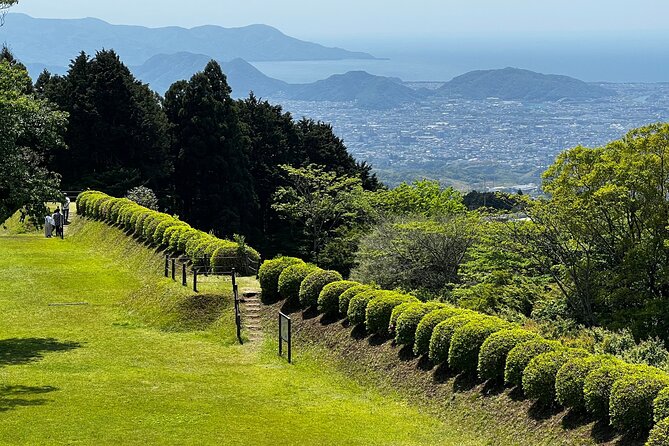
The final section leads into Mishima, where the tour visits Mishima Taisha and the Genbe River before ending at Mishima Station. This finish gives the day a welcome shift from mountain heritage to a living city.
Mishima Taisha is the largest shrine in Mishima. The visit provides a calm cultural ending after the more strenuous route through Hakone. The Genbe River adds another kind of scenery, with water and town life replacing the wooded mountain paths.
Ending at Mishima Station is especially useful for onward travel. From there, you can take a Shinkansen to Odawara in about 15 minutes for roughly 2,500 yen, or continue to Tokyo in about 45 minutes for around 4,400 yen. Buses also connect Mishima with Hakone and other parts of Izu.
The train fare is not included, so plan your return before booking. The ending point is different from the starting point, which is convenient if you are continuing east or south, but less convenient if you need to return to Hakone-Yumoto immediately.
What the guide adds to the day
The guide is not just there to point out landmarks. Akihiro’s role is to connect transportation, pacing, local history, and route decisions. That matters on a day that mixes walking with taxis and buses.
His calm manner is useful on a long outing. He has also taken photographs for families during the experience, a small service that lets you enjoy the walk without constantly asking someone else to take a picture.
The guide holds a national professional guide qualification and a wilderness first-aid certificate. That does not remove the need for sensible clothing and careful footing, but it is reassuring on a mountain route.
The small group size is another real benefit. With a maximum of six people, it should be easier to ask questions, hear explanations, and adjust the pace than on a large coach excursion. Group discounts are available, though the exact discount is not specified.
Price, extra costs, and overall value
The advertised price is $158.52 per person. That is not the full cost of the day. You should also allow approximately 2,000 yen for the shared taxi and buses, around 2,000 yen for lunch, and about 2,500 yen if you take the Shinkansen from Mishima to Odawara.
Amazake and snacks cost extra as well. The total can therefore rise noticeably, especially if you are traveling as a family or need the train connection afterward.
Still, I think the price can be fair for the right person. You are paying for a certified guide, route planning, historical interpretation, a small group, and help with a complicated mountain transport system. The guide’s ability to combine trail sections with local buses is particularly useful because the route is not a simple marked walk from one station to another.
The value is weaker if you only want Lake Ashi and a quick Fuji photo. You can visit the lake and Hakone Shrine area independently. This tour earns its price through the history, walking, and connection between Hakone and Mishima.
The experience is booked on average 61 days in advance, which suggests you should not leave it until the last moment if the date matters. It also requires good weather. If poor weather causes cancellation, you are offered another date or a full refund. If you cancel for your own reasons, the payment is non-refundable and cannot be changed.
Who should book this hike?
I would choose this tour if you enjoy walking with a clear cultural purpose. It suits people who want more than the standard Hakone circuit and who are happy to trade some comfort for old roads, forest paths, and historical explanation.
It is a good fit for:
- Hikers with moderate fitness who can manage about 8 kilometers and mountain sections
- People interested in Edo-period Japan and the Old Tokaido Highway
- Small groups and families who value personal guiding
- Visitors who want to finish in Mishima rather than return to Hakone
- Anyone comfortable with a mix of walking, shared taxi, and local bus travel
I would hesitate if you need a fully accessible route, dislike uneven ground, or want a relaxed sightseeing day with little exertion. The tour also makes less sense if you cannot accept weather-dependent views or the extra transport costs.
Service animals are allowed, and the meeting point is near public transportation. The experience begins at Hakone-Yumoto Station at 9:00 a.m. and finishes at Mishima Station, so check your accommodation and onward train plans carefully.
Should you book the Hakone Hachiri hike?
Book it if you want to understand Hakone by walking through it, not just looking at it from a bus window. The old stones, cedar avenue, checkpoint, castle ruins, shrine, and river form a satisfying chain of places, while Akihiro provides the historical thread that holds them together.
Skip it if your main goal is a guaranteed Mt Fuji view or an easy half-day outing. For everyone else, this is a thoughtful and active way to connect Lake Ashi with Mishima, especially if you value local history, small groups, and a guide who can handle the route’s buses and changing conditions.
FAQ
How long is the Hakone Hachiri hike?
The experience lasts approximately seven hours and covers around 8 kilometers of walking, with shared taxi and local bus transportation between some sites.
Where does the tour start?
The tour starts at Hakone-Yumoto Station in Hakone at 9:00 a.m.
Where does the tour end?
The tour ends at Mishima Station after visits to Mishima Taisha and the Genbe River.
Is lunch included?
No. Lunch is not included and costs around 2,000 yen for your group.
Are transportation costs included?
No. Transportation to the trailhead and between sites costs approximately 2,000 yen by shared taxi or bus. The Shinkansen from Mishima to Odawara costs around 2,500 yen and is also separate.
Is Mt Fuji guaranteed to be visible?
No. Mt Fuji can be seen from different points on the route if weather permits, including near Lake Ashi and Yamanaka Castle Ruins.
More History Tours around the world
- Hiking the Historic Nakasendo Trail [1 Day Tour from Nagoya]
★ 5.0 · 104 reviews - 1-Day Tour from Nagoya: Hiking the Historic Nakasendo Trail
★ 4.9 · 34 reviews - 3Hour Outdoor Budapest Normafa Hike&History With a Historian
★ 3.7 · 10 reviews - Semi – Private Tour at Cape of Rodon; Hidden Beaches & History
★ 5.0 · 46 reviews
Just added around the world
- From Jökulsárlón: Vatnajökull Easy Level Glacier Hike★ 4.2 · 20 reviews
- From Kanab: 3-Hour Peek-a-Boo Slot Canyon Hiking/Photo Tour★ 4.9 · 25 reviews
- From Jujuy: Salinas Grandes, Purmamarca & Los Colorados Hike★ 4.2 · 75 reviews
- From Kalamata: Polylimnio Waterfalls Guided Hiking Tour★ 4.9 · 19 reviews
- From Kalkan: Saklikent Gorge and Gizlikent Waterfall Trek★ 4.7 · 13 reviews
- From Hanoi: Hoa Lu, Hang Mua Hike, Tam Coc Boat, and Lunch★ 4.4 · 28 reviews
- From Huaraz: Hike to the Lagoon 69★ 4.4 · 121 reviews
- From Kalabaka: Authentic Meteora Hiking Tour – Local Agency★ 5.0 · 20 reviews
Japan Hiking Tours, compared.
Fushimi Inari Hidden Hiking Tour (Private Option Available)
Read our review →
Hiroshima Local guided Hiking Tour&Open-air Tea Ceremony
Read our review →![Hiking the Historic Nakasendo Trail [1 Day Tour from Nagoya]](https://7.hikingjourneys.com/wp-content/uploads/hiking-the-historic-nakasendo-trail-1-day-tour-from-nagoya-400x267.jpg)
Hiking the Historic Nakasendo Trail [1 Day Tour from Nagoya]
Read our review →
Full Day Hiking Tour at Mt.Takao including Hot Spring
Read our review →
1-Day Tour from Nagoya: Hiking the Historic Nakasendo Trail
Read our review →
From Matsumoto/Nagano: Nakasendo Trail Walking Tour
Read our review →
Explore Kiso Valley : Magome – Tsumago Mountain Trail Walk
Read our review →Browse the lists this tour appears in