

REVIEW · JAPAN HIKING TOURS
Hike Japan Heritage Hakone Hachiri (Half Day)
Step into old Japan on foot. This four-hour Hakone hike follows the old Tokaido highway through quiet forest, preserved cobbles, the woodcraft village of Hatajuku, and the shores of Lake Ashi. I like the historic route and the small group size, which gives the national mountain guide room to explain what you are seeing. I also like the stop for amasake at a tea house with 400 years of history.
The main point to consider is that this is a moderate walk, not a gentle sightseeing stroll. The tour skips the steepest section by bus, but you still need to manage two to three hours of hiking on forest trails and cobbled paths. The extra transport costs also matter: a shared taxi to the trailhead costs 2,000 yen split among the group, and the bus to the tea house costs less than 400 yen.
Key points to know before booking
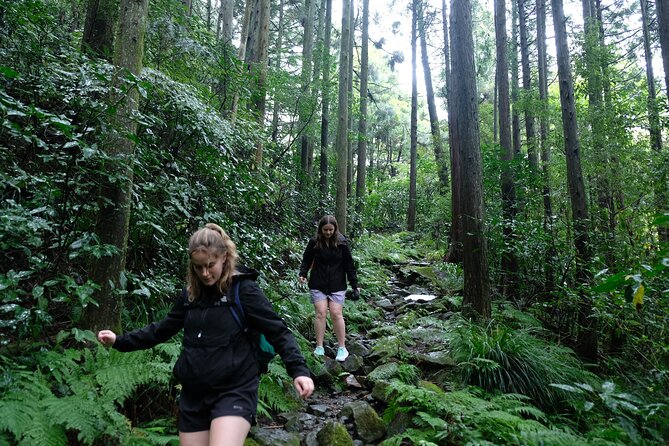
- Follow Japan’s old Tokaido highway: Walk a preserved section of the road that once connected Tokyo and Kyoto during the Edo era.
- Reach Hatajuku after about an hour: This traditional woodcraft village adds a working cultural stop to the forest walk.
- Enjoy amasake at a 400-year-old tea house: The sweet, energizing drink is a memorable break before the final section.
- Finish beside Lake Ashi: You may see Mount Fuji across the water if weather conditions cooperate.
- Keep the group small: A maximum of six people makes it easier to ask questions and keep a steady pace.
- Plan your onward route: The tour begins at 9 a.m. in Hakone-Yumoto and finishes around 1 p.m. at Motohakone.
Why this old Tokaido walk is worth your morning
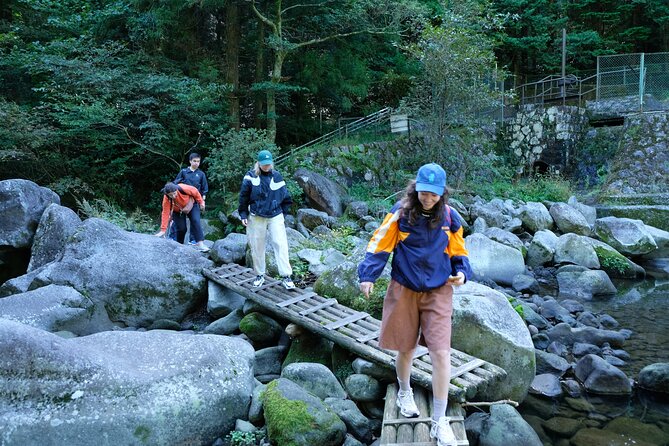
Hakone is famous for hot springs, mountain views, and Lake Ashi boat rides. Those are good reasons to visit, but this walk shows you the area at a slower pace. You are not simply being taken from one viewpoint to another. You are following an old travel route and seeing how the road moves from town into forest, then down toward the lake.
The Tokaido was the major road linking Tokyo and Kyoto during the Edo era. The Hakone section was especially important because the mountain pass created a natural checkpoint between eastern and western Japan. Walking even part of this route gives the scenery a clear purpose. The cobbles, woods, village, tea house, and checkpoint are pieces of one larger story.
I especially like the way the tour combines several kinds of experience in a short morning. You get exercise, local history, traditional food and drink, and a practical finish at Lake Ashi. It is a better fit for someone who wants to understand Hakone than for someone who only wants the quickest possible view of Mount Fuji.
The maximum group size is six. That matters on a path where you may want to stop and ask about a stone road, a forest section, or an old building. Guides including Akihiro and Aki have been praised for clear English, local knowledge, and a friendly manner. Akihiro is from the area, and one account notes that he had studied in Seattle, which helped make communication easy.
More History Tours around Japan:
- Hiking the Historic Nakasendo Trail [1 Day Tour from Nagoya]
★ 5.0 · 104 reviews - Hike Japan Heritage Hakone Hachiri with certified mountain guide
★ 5.0 · 46 reviews - 1-Day Tour from Nagoya: Hiking the Historic Nakasendo Trail
★ 4.9 · 34 reviews
Starting in Hakone-Yumoto at 9 a.m.
The meeting point is Hakone-Yumoto Station. From there, the group uses a shared taxi to reach the trailhead. This transport is not included in the tour price and costs 2,000 yen to be divided among the group. With the maximum group size of six, the exact amount per person will depend on how many people join.
This arrangement is worth understanding before you arrive. You are paying $114.95 for the guided experience, but the local transport is an additional cost. The taxi helps the walk begin in the right place, so it is not an unnecessary add-on, but you should have yen ready and allow time for the group to organize it.
The guide sets the tone from the start. This is a small-group walk, so you can expect more explanation than you would get from a large coach excursion. You should also expect the pace to adjust to the group, within reason. A moderate fitness level is required, and the route is not designed as a completely flat walk.
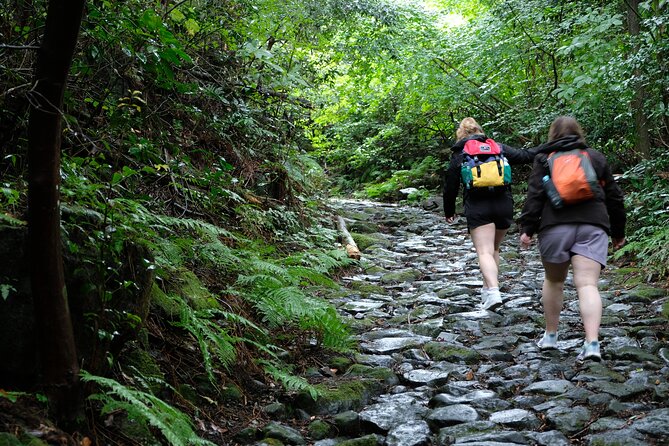
Wear shoes suited to uneven surfaces. The old road includes cobbled sections, while other parts pass through forest. The information provided does not promise walking poles, equipment, or a particular type of trail surface beyond those details, so you should arrive prepared for a proper woodland hike.
Hatajuku and the first hour on the trail
After about an hour of hiking, you reach Hatajuku. This village is known for traditional Hakone woodcraft, and the stop gives the walk a human scale. Instead of hearing only about an old road, you get a chance to connect the route with a local craft tradition.
Hatajuku is also a useful point in the morning because it breaks up the physical effort. The first hour gives you time to settle into the walk, while the village offers a cultural pause before the route continues toward the tea house.
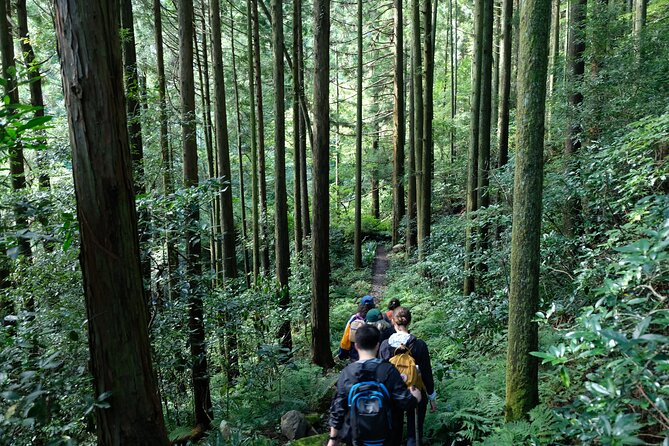
The forest is one of the strongest parts of this experience. This section of Hachiri includes some of the best-preserved cobbled path and more primitive forest along the route. Parts of it are described as off the beaten track, and the group may have the woods largely to itself.
That quiet setting is the reason to choose this hike over a simple transfer around Hakone. You are not just taking photos from a roadside stop. You are moving through the same broad corridor that mattered to people crossing the country centuries ago.
Still, the cobbles and woodland paths require attention. If your idea of a half-day in Hakone means easy pavement and frequent cafés, this may feel more demanding than expected. The route is short enough to fit into a morning, but it is still a hike.
Skipping the steepest section by bus
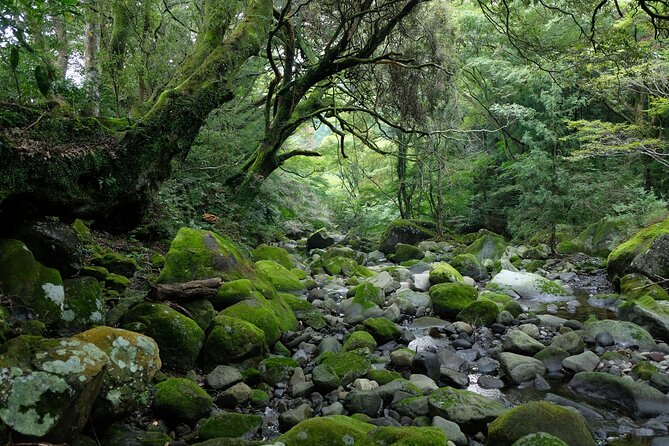
After Hatajuku, the tour uses a local bus to skip the steepest part of the trail and reach the tea house. This is a sensible design choice. You still get a substantial walk, but you do not have to tackle the hardest climb on the old route.
The bus fare is not included and costs less than 400 yen. You should treat this as part of the plan, not as a sign that the hike has been cut short. The walk continues after the bus, and the route still includes forest and cobbled sections.
This portion also makes the tour accessible to a wider range of moderately fit walkers. Someone who wants a historical trail but does not want the full steep ascent may find the balance appealing. On the other hand, serious hikers may consider the bus a missed section. The experience is designed around the most scenic and culturally useful portion, not around completing every step of Hachiri on foot.
A few more hikes around Japan worth a look
- Fushimi Inari Hidden Hiking Tour (Private Option Available)
★ 5.0 · 1,750 reviews - Kyoto: 3-Hour Fushimi Inari Shrine Hidden Hiking Tour
★ 4.9 · 270 reviews - Hiroshima Local guided Hiking Tour&Open-air Tea Ceremony
★ 5.0 · 213 reviews - Hiroshima: Morning Hiking Tour with Open-air Tea Ceremony
★ 4.8 · 58 reviews
Amasake at the 400-year-old tea house
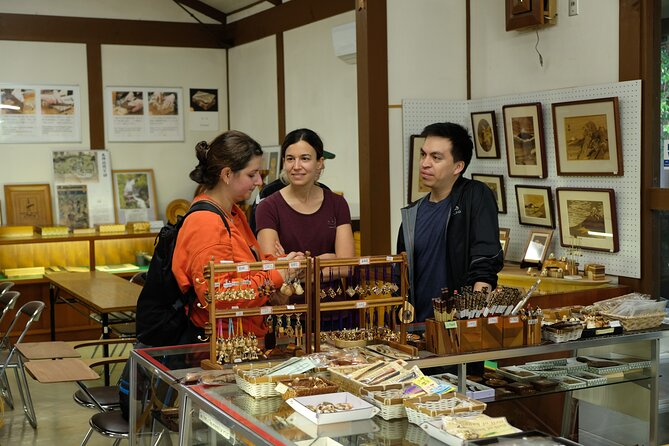
The stop at Hakone Amazake Tea House is the most distinctive refreshment break of the morning. You receive an amasake drink at a tea house with a 400-year history. Amasake is a traditional sweet rice drink, and here it serves as both a local taste and a useful source of energy before the last part of the walk.
The setting matters as much as the drink. After forest paths and old cobbles, a historic tea house gives you a clear sense of how this road once worked. People crossing the pass needed places to rest, drink, and regain strength. The stop keeps that practical connection alive.
The scheduled visit lasts about 30 minutes. That is long enough to enjoy the drink and listen to the guide without turning the morning into a long meal stop. One account also describes a break involving barley tea and a traditional rice dessert, so you may find additional local refreshments depending on the day and the guide. The confirmed included item is the amasake drink, so do not count on extra food being part of the price.
This is a good moment to ask questions. Guides such as Akihiro and Aki have been praised for explaining the old road and the Edo era in an easy, engaging way. Their local connection adds value here because the tea house is not just a photo stop. It is part of the route’s story.
Reaching Lake Ashi and looking for Mount Fuji
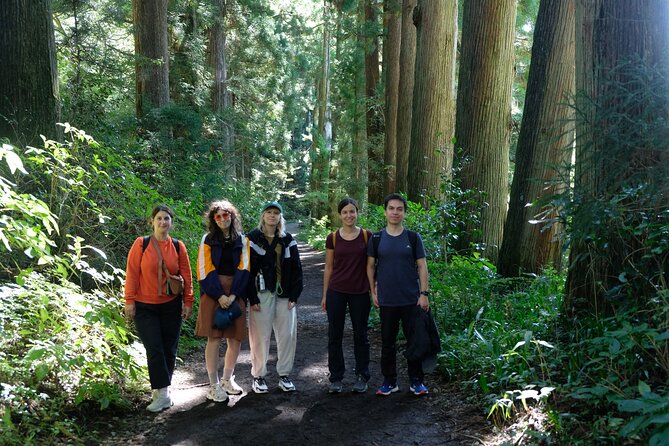
From the tea house, the hike continues toward Lake Ashi. The lake is the destination of the forest walk, and the change from woodland trail to open water gives the morning a satisfying finish.
If the weather is clear, you may see Mount Fuji across the lake. That view is never guaranteed, so keep your expectations flexible. Hakone weather can change the experience, and the tour itself requires suitable conditions. If poor weather forces cancellation, you are offered another date or a full refund.
The possibility of a Fuji view is a bonus, not the only reason to book. The route remains worthwhile for the forest, old road, tea house, village, and checkpoint. If clouds cover the mountain, you still finish beside one of Hakone’s main natural sights.
The itinerary allows about an hour for the Lake Ashi portion. That gives you time to take in the view and finish the guided part without rushing. The tour ends in Motohakone, where you can continue by bus toward Odawara, Hakone-Yumoto, or your Hakone hotel. You can also take a ferry, including the well-known pirate ship, to another destination around the lake.
That finish is especially useful if you are building a full day in Hakone. You can walk in the morning and then continue with the lake transport of your choice rather than returning to the original meeting point.
The Hakone Checkpoint and the meaning of the route
The Hakone Checkpoint is the final guided stop. This is where the guide explains Hakone’s role in Japanese history and why the mountain route mattered.
The checkpoint gives the walk a strong ending because it ties the physical path to the wider Tokaido system. You have seen the road, the forest, and the rest stop. Now you learn why Hakone was such an important place along the route.
The visit lasts about 30 minutes. That is enough time for an explanation without overwhelming a half-day schedule. If historical context is important to you, this is one of the tour’s best features. The guide helps turn scattered sights into a connected story.
The experience is less suitable if you want to spend most of your time inside formal buildings or museums. Much of the learning happens outdoors, while walking or pausing along the route. You should be comfortable absorbing information in that setting.
What the $114.95 price really buys you
At $114.95 per person, this is not the cheapest way to see Lake Ashi. You are also responsible for the shared taxi to the trailhead and the bus fare to the tea house. That puts the total cost above the headline price.
The value comes from the guide rather than from admission tickets. The main stops have no separate admission charge listed, so you are paying for a small, guided experience with local interpretation, route planning, and historical context.
I think the price is easier to justify if you care about the old Tokaido, want a small group, or would otherwise struggle to connect the trail sections and transport. The guide handles the route while explaining what you are passing. That can be worth more than saving money on a self-guided walk, especially if your time in Hakone is limited.
The value is weaker for a strong independent hiker who only wants to walk the trail and does not need a guide. It may also feel expensive if your main goal is simply to see Mount Fuji, since the view depends on weather and is not guaranteed.
Group discounts may be available, which could improve the cost for a party traveling together. The group is capped at six, so even a discounted booking should retain the small-scale feel.
Who should book this half-day hike?
I would recommend it to people who want a mix of walking and cultural explanation. It suits couples, families with older children, and small groups who can manage a moderate hike. A 16-year-old joined the walk with a parent and had a strong experience, so active teenagers may also fit well.
It is a particularly good choice if you have already planned Lake Ashi but want to reach it through the forest instead of arriving only by bus or ferry. The finish gives you plenty of options for continuing your day.
You should think twice if you have limited mobility, dislike cobbled paths, or want a very easy morning. The tour asks you to walk for two to three hours, and the moderate fitness requirement is real even though the steepest section is skipped.
Book only when your schedule can handle a firm plan. The experience is non-refundable and cannot be changed for personal reasons. Since poor weather can cancel the tour, check the forecast and keep a little flexibility if possible.
Should you book Hike Japan Heritage Hakone Hachiri?
Book this tour if you want Hakone’s scenery with a story attached. The old Tokaido path, Hatajuku woodcraft, 400-year-old tea house, amasake, Hakone Checkpoint, and Lake Ashi create a varied morning that feels more meaningful than a quick series of viewpoints.
Skip it if you want a low-cost, fully self-guided walk or a guaranteed Mount Fuji photograph. For the right visitor, the strongest value is the small group and the guide’s local explanation. With Akihiro, Aki, or another certified national mountain guide leading the way, you get a clear route through one of Hakone’s most important historic corridors, then finish in the ideal place to continue exploring.
FAQ
Where does the Hakone Hachiri hike start?
The tour starts at Hakone-Yumoto Station in Hakone. The meeting time is 9 a.m.
Where does the tour finish?
The guided experience finishes at Motohakone beside Lake Ashi. From there, you can take a bus toward Odawara, Hakone-Yumoto, or your Hakone hotel, or continue by ferry.
How long is the hike?
The full experience lasts about four hours. The walking portion takes roughly two to three hours, with a bus used to skip the steepest part of the trail.
Is transportation included in the price?
No. A shared taxi to the trailhead costs 2,000 yen divided among the group. The bus to the tea house costs less than 400 yen.
Is Mount Fuji guaranteed?
No. You can see Mount Fuji across Lake Ashi if the weather permits. Poor weather can also lead to cancellation, in which case you are offered another date or a full refund.
How many people can join the tour?
The group has a maximum of six travelers. A certified national mountain guide leads the experience.
Just added around Japan
- Mt. Inunaki Trekking and Goma Prayer Experience in Osaka★ 5.0 · 8 reviews
- 3.5hours Primeval Forest Snowshoe hike and Wildlife Watching Tour★ 5.0 · 14 reviews
- 3hours Primeval Forest and Stunning Views of Cliff Trekking Tour★ 5.0 · 20 reviews
- 3 hours Snowshoe hike to “Furepe fall” and Wildlife Watching★ 5.0 · 9 reviews
- Traverse Outer Rim of Hakone Caldera and Enjoy Onsen Hiking Tour★ 5.0 · 30 reviews
- Hike Hakone Hachiri★ 5.0 · 48 reviews
- Magome & Tsumago Nakasendo Trail Day Hike with Government-Licensed Guide★ 5.0 · 38 reviews
- Frozen fall trekking★ 5.0 · 21 reviews
Japan Hiking Tours, compared.
Fushimi Inari Hidden Hiking Tour (Private Option Available)
Read our review →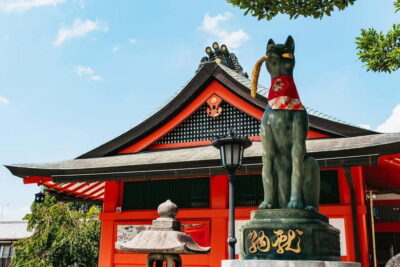
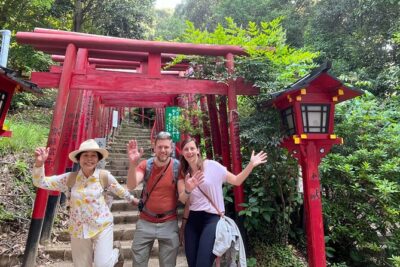
Hiroshima Local guided Hiking Tour&Open-air Tea Ceremony
Read our review →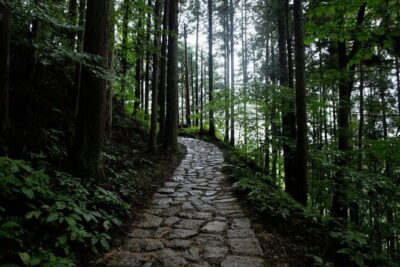
Hiking the Historic Nakasendo Trail [1 Day Tour from Nagoya]
Read our review →
Hiroshima: Morning Hiking Tour with Open-air Tea Ceremony
Read our review →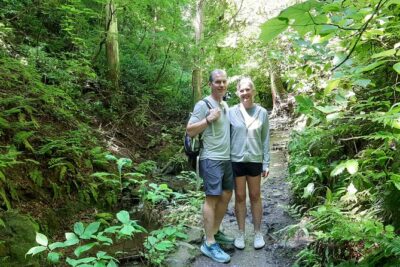
Full Day Hiking Tour at Mt.Takao including Hot Spring
Read our review →

Browse the lists this tour appears in