
REVIEW · KATHMANDU HIKING TOURS
Everest Gokyo Lake Trek
Gokyo’s blue lakes reward the long climb. This 11-day trek from Kathmandu takes you through Namche Bazaar, rhododendron forests, Ngozumpa Glacier, and the famous Gokyo Lakes. I especially like the Gokyo Ri viewpoint, where you can see Everest, Lhotse, Makalu, Cho Oyu, and several other high peaks, and the smaller scale of the route compared with the Everest Base Camp trail. The turquoise lakes and glacier scenery are the real stars.
I also like that the package includes the Lukla flights, permits, a guide, porters, a sleeping bag, down jacket, airport transfers, and Kathmandu hotels. The main drawback is that the $1,290 price does not include your three daily meals during the trek, tea, coffee, tips, internet, or phone calls. You should also allow for flight delays, since Lukla flights depend heavily on mountain weather.
Key points at a glance
- Gokyo Ri gives you a broad Everest panorama: The summit view includes Everest, Lhotse, Makalu, Cho Oyu, Gyachung Kang, Cholatse, and Tawache.
- The route reaches four or five Gokyo Lakes: Dudh Pokhari, Thonak Tsho, and Ngozumpa Tsho are the main scenic highlights.
- Ngozumpa Glacier adds serious high-mountain scenery: You walk along its terminal moraine before reaching the lakes.
- Two nights around Namche help with acclimatization: The schedule includes a viewpoint walk, museum visit, and time in the trading town.
- The package is well supported: A guide, one porter for every two people, permits, flights, gear, and staff insurance are included.
- The walking is demanding but not technical: You need moderate fitness, steady footing, and patience with altitude.
Why the Gokyo route is different
The Gokyo Valley offers a quieter alternative to the better-known Everest Base Camp route. It still delivers the great peaks, Sherpa villages, suspension bridges, and high-altitude walking, but the main reward is a chain of glacial lakes rather than a base camp finish.
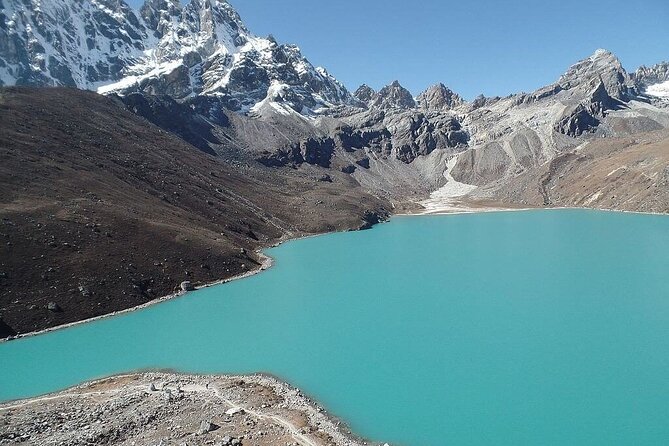
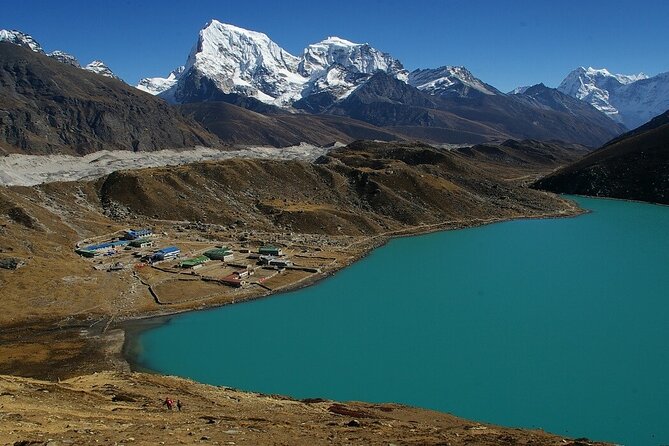
You may visit four or five of the six Gokyo Lakes, depending on conditions and the pace of the group. The third lake, Dudh Pokhari, sits beside the settlement of Gokyo and is the most familiar view. The fourth lake, Thonak Tsho, and the fifth, Ngozumpa Tsho, add a more remote feel to the day.
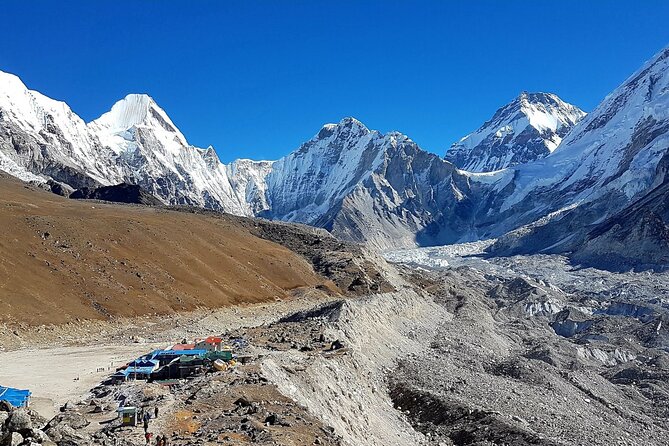
The route also gives you a clear look at Ngozumpa Glacier, Nepal’s largest glacier according to the tour description. At this altitude, the glacier is not just a patch of ice in the distance. It becomes part of the walking route, with the trail climbing across its terminal moraine before reaching the first lake.
I like the way this trek combines major mountain views with small cultural details. You pass yak pastures, Sherpa settlements, trading routes, forests, and monasteries or museums around Namche. The crew may also share local stories about the Yeti, adding a bit of Himalayan folklore to the walk.
More Lake and Lagoon Hikes in Nepal
- Annapurna Circuit Trek with Tilicho Lake
★ 5.0 · 368 reviews - Annapurna Circuit with Tilicho Lake Trek
★ 5.0 · 25 reviews - Annapurna Circuit Trek with Tilicho Lake (16 Days)
★ 5.0 · 15 reviews
Kathmandu arrival and the first practical steps
Your trip begins with pickup at Tribhuvan International Airport. A representative meets you outside the terminal with an Accessible Adventure sign and takes you to your Kathmandu hotel in a private tourist vehicle.
This first day is useful even though it contains little sightseeing. You have time to settle in, meet the team, and check your trekking equipment before the early flight to Lukla. Two nights in a three-star Kathmandu hotel with breakfast are included in the package, although the stated meal details are a little unclear, so I would confirm exactly which breakfasts are covered before departure.
The meeting time is listed as 6:30 am. That early start matters because the Lukla flight is scheduled in the morning, when mountain visibility is usually more favorable. You should keep your schedule flexible after the trek as well, since the return flight can be delayed by weather.
Day 2: Lukla to Phakding and the first mountain walk
The flight from Kathmandu to Lukla is one of the memorable parts of the trip. Lukla’s airfield sits at high elevation, and the runway has only about a 60-meter difference between its two ends. The description calls the flight a lifetime experience, and that is fair, though you should expect a small aircraft and a dramatic mountain setting rather than a routine airport arrival.
From Lukla, you walk for roughly four hours to Phakding. The route passes through green scenery with views toward Kusum Kangraru. This is a gentle introduction to the trek, but it is still important to take it seriously. Your body is beginning to adjust to altitude, and an easy first day is better than racing ahead.
Accommodation is in a best-available twin-sharing lodge. Private bathrooms are specifically provided in Phakding, Namche, and Lukla. That is a useful comfort, since bathroom arrangements become more basic as you move higher.
Days 3 and 4: Namche Bazaar and a smart acclimatization plan
The walk from Phakding to Namche Bazaar takes about five hours. You follow the Dudh Koshi through pine and cedar forests, crossing suspension bridges and climbing toward the Khumbu’s main trading town.
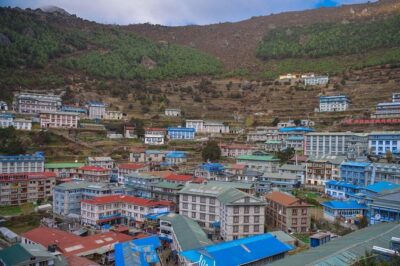
Namche is more than a stopping point. It has long served as a meeting place for Nepalese and Tibetan traders, and today it remains the main shopping and supply center in the Khumbu. You can browse traditional crafts, trekking equipment, and local goods. If your visit falls on a Saturday, the large marketplace offers an especially good chance to see local trade and shop for souvenirs.
The schedule keeps you in Namche for two days. That is one of the strongest features of the trip. Acclimatization is not wasted time at this altitude. It gives your body a better chance to adjust before the trail rises toward Dole and Gokyo.
The acclimatization walk climbs toward Syangboche Airport, listed at about 3,700 meters, then continues to the Everest View Hotel. From there, you can see Everest, Lhotse, Ama Dablam, and Tawache. The return route includes the Sherpa Culture Museum and Everest Photo Gallery.
You should treat this as a real hiking day, not just a sightseeing outing. The four-hour walk helps your body adjust while keeping the pace manageable. The museum visit also gives the mountain scenery some context, especially if you want more than photographs.
More Lake and Lagoon Hikes in Kathmandu:
- From Tirana: Bovilla Lake & Gamti Mountain Hiking Day Trip
★ 4.9 · 4,397 reviews - From Tirana: Bovilla Lake & Gamti Mountain Hiking Tour
★ 4.9 · 3,003 reviews - From Tirana: Bovilla Lake & Gamti Mountain Viewpoint Hike
★ 4.8 · 2,053 reviews - Hike Gamti Mountain with Bovilla lake view & canyon- From Tirana
★ 5.0 · 1,280 reviews
Day 5: Dole, rhododendrons, and high pasture
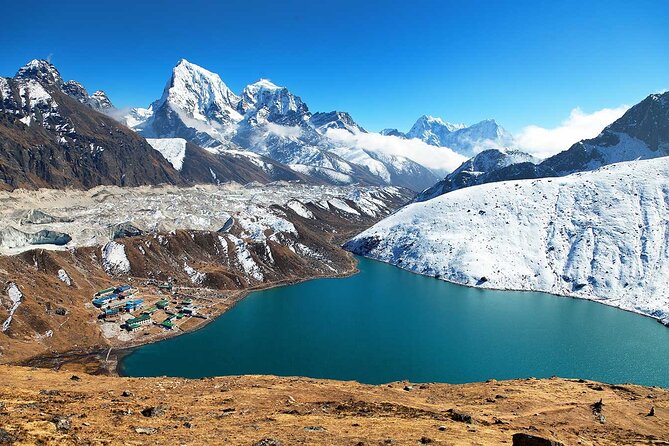
The walk from Namche toward Dole takes about five hours. The trail begins fairly easily around Kyangjuma, then climbs steeply out of the valley through rhododendron forest.
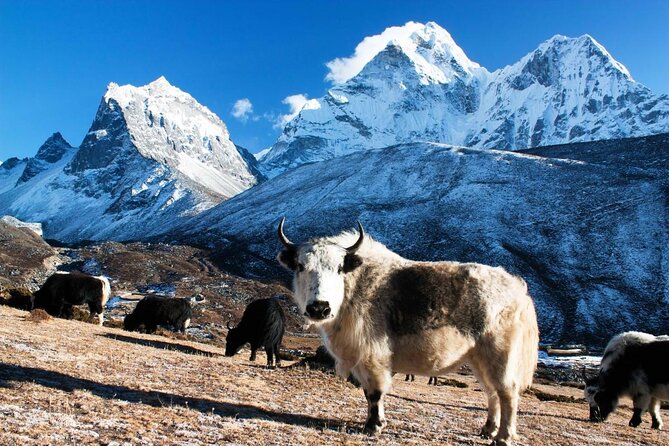
Spring is the best time for the flowers, when the rhododendrons bloom along the route. Higher up, the forest changes to juniper and large conifers. The trail passes kharkas, seasonal pasture areas where Sherpa families bring yaks to graze.
You pass the settlements of Tongba and Gyele before reaching Dole, where a few lodges provide accommodation. The route offers repeated views of Khumbila and Tawache. The itinerary names an Irish Pub as the stop, but the detailed description clearly refers to the walking section toward Dole, so I would confirm the exact overnight location with the operator.
This is one of the more demanding days because the trail climbs steadily. Keep your pace slow and even. You do not need to prove anything on this section, and saving energy for Gokyo Ri is a wise choice.
Day 6: Ngozumpa Glacier and the first Gokyo Lakes
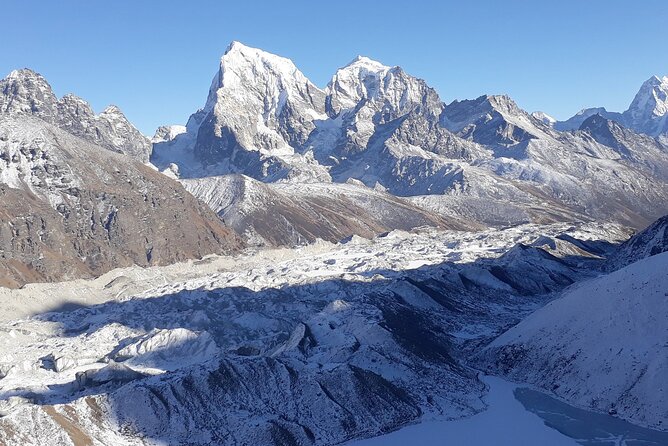
The six-hour estimate for the Dole to Gokyo section may vary, but the listed itinerary describes about four hours of walking. Either way, this is a major transition day as the trail leaves the forest and enters a high, open mountain valley.
You climb a ridge with views down toward Kantega and up toward Cho Oyu, which rises to 8,201 meters. Beyond the ridge, the valley widens around Pangka. The trail then drops toward the river before climbing onto the terminal moraine of Ngozumpa Glacier.
The moraine section is steep and involves switchbacks beside a stream. This is where good footwear and a steady pace matter most. The first small lake appears at about 4,650 meters. The description notes a family of green-brained ducks there, likely referring to the distinctive Himalayan bar-headed geese or other high-altitude waterfowl, but I would treat the exact wildlife sighting as a pleasant possibility rather than a promise.
As you approach Gokyo, the scenery becomes more severe and more beautiful. The lakes reflect the surrounding peaks, and the air feels thin enough to remind you that this is not a casual valley walk.
Day 7: Gokyo Ri and the best mountain views
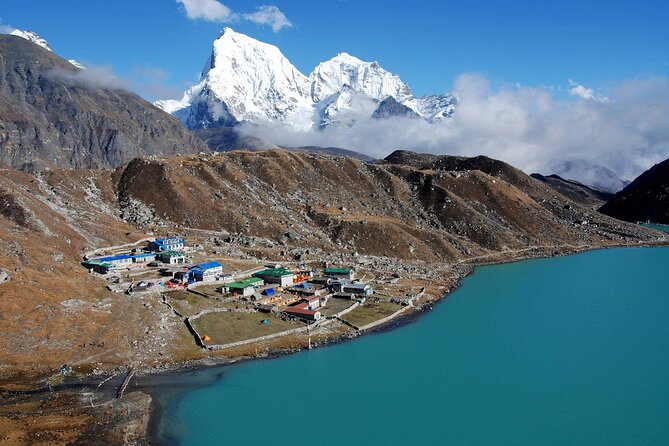
Gokyo Ri is the high point of the trip and the reason many people choose this route. The early morning climb takes about two hours to reach the top, followed by a total day of around six hours.
The ascent is steep but not described as technical. You should expect a slow climb over rocky ground, with altitude making each section feel longer than it appears on a map. Start early, dress warmly, and carry water. The morning light is often the best time for clear views, though mountain weather can change quickly.
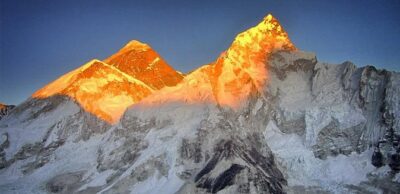
From Gokyo Ri, the panorama includes Cho Oyu, Gyachung Kang, Everest, Lhotse, Makalu, Cholatse, and Tawache. You also look down over Ngozumpa Glacier and the Gokyo Lakes. This is a wider view than you get from many points on the Everest Base Camp route.
One useful point from the supplied experience details is the comparison with the Everest Base Camp trek. The Gokyo route is described as shorter, about 92 kilometers compared with roughly 103 kilometers for the Base Camp route, while offering a broader mountain panorama. You should not treat the distance difference as a measure of ease. Altitude, steep climbs, and the Gokyo Ri ascent still make this a serious trek.
Days 8 and 9: Returning through Mongla, Namche, and Lukla
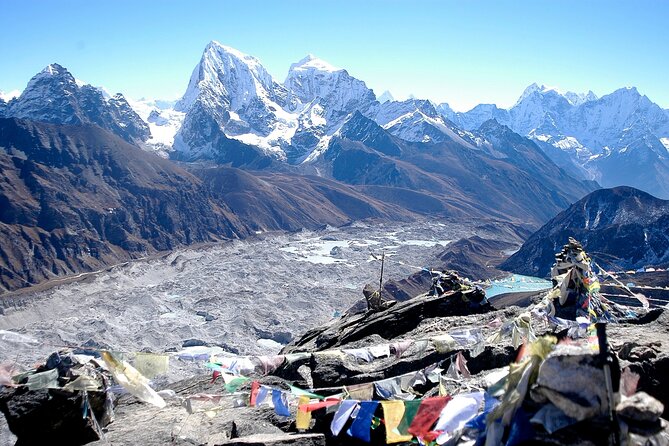
The descent from Gokyo follows the trail back toward Namche. Looking behind you toward Cho Oyu gives the return walk a different character, while waterfalls, rhododendrons, and Himalayan plant life fill the lower sections.
From Mongla, you may get another view toward Ama Dablam, Tawache, and Thamserku, with Tengboche visible in the distance. The trail continues through Sansa before joining the main Everest route and reaching Namche Bazaar.
Day 9 follows the route from Namche to Lukla and takes about seven hours. You cross the Dudh Koshi several times on suspension bridges, pass through Jorsale, and gradually return to greener, denser surroundings as the altitude drops.
This is a long day, and descending does not always mean easy. Tired knees and sore feet can make the downhill sections uncomfortable. The upside is that breathing becomes easier, and the changing vegetation gives you a clear sense of returning to lower ground.
You have another chance to shop in Namche before leaving. The market is especially active on Saturdays, and trekking gear, local goods, and souvenirs are available. If you want something specific, ask your guide about timing rather than assuming the market will be open on your day.
Day 10: Lukla to Kathmandu and the farewell evening
The morning flight from Lukla returns you to Kathmandu. The flight is usually scheduled early because visibility is often better at that time of day.
Once back in Kathmandu, the company helps you check into your hotel. A farewell dinner at a cultural restaurant near Thamel is included, along with breakfast at the hotel. This evening gives you a comfortable ending after days of simple lodge meals and high-altitude walking.
Keep a little flexibility in your plans. If weather delays the Lukla flight, the return to Kathmandu may not happen exactly as scheduled. The itinerary is sensible, but mountain flights do not operate like city buses.
Day 11: Airport transfer and the end of the trip
On the final day, a company representative transfers you to Tribhuvan International Airport three hours before your international flight. Breakfast is included.
The airport transfer is a small but useful detail. After an 11-day trek, managing luggage and transport is easier when the company handles the final ride. The activity ends back at the original meeting point.
What the $1,290 price really covers
At $1,290 per person, the package offers solid value if you want a supported trek rather than arranging each part yourself. The price includes:
- Private airport and ground transfers
- Two Kathmandu hotel nights with breakfast
- Lodge accommodation during the trek
- A guide and one porter for every two people
- Round-trip Kathmandu to Lukla flights
- National park and TIMS permits
- Down jacket, sleeping bag, duffle bag, and trekking map
- First-aid kit and trip certificate
- Staff accommodation, salaries, equipment, and accident insurance
- Government taxes and office service charges
The important catch is food. Breakfast, lunch, and dinner with tea or coffee during the trek are listed as not included. You should budget separately for these costs, plus tips, internet, phone calls, and any fuel surcharge.
There is also a confusing note about private transportation appearing both among the inclusions and exclusions. Ask the company to confirm exactly which transfers are covered before paying. The package clearly includes airport transfers and ground transport in a private vehicle, but the wording deserves clarification.
The group limit is 20 people. That is not a tiny private trek, but it is still manageable if the group stays together. You can also ask about group discounts, which are offered.
Guides, porters, and the level of support
The company assigns one experienced guide and one porter for every two people. That porter arrangement keeps your personal load more manageable, but you should still pack carefully and carry the items you need during the day.
The operator’s staff has included guides named Shiva, Himal, Ishwor, and Anil, with Shobit also serving as a porter on one trip. The strongest praise attached to the company centers on friendly staff, steady walking pace, quick problem-solving, and careful organization. I would still ask for your guide’s name and experience before departure, since the exact team may change.
The provided down jacket, sleeping bag, and duffle bag are useful because warm trekking gear can be costly to buy for a single trip. Ask about sizes and collection arrangements before flying to Lukla.
Who should book this trek?
You should consider this trek if you want:
- A high-altitude Himalayan experience without committing to Everest Base Camp
- Turquoise glacial lakes and glacier scenery
- A strong mountain panorama from one main viewpoint
- A supported route with flights, permits, gear, guide, and porter included
- Time in Namche for acclimatization and shopping
- A group trip with a maximum of 20 people
You should think twice if you dislike early starts, basic lodge accommodation, steep climbs, or uncertain mountain flights. The route requires moderate physical fitness, and the Gokyo Ri morning climb is not a walk you should underestimate.
Free cancellation is available up to 24 hours before the experience starts. After that point, the payment is not refunded, and changes made within 24 hours are not accepted.
Should you book the Everest Gokyo Lake Trek?
I would book this trek if your priority is scenery rather than reaching Everest Base Camp. Gokyo Ri gives you an outstanding view of the major Himalayan peaks, while the lakes and Ngozumpa Glacier make the route feel distinct from the standard Everest corridor.
The price is fair for the included flights, permits, gear, staff, and transfers, but you must add food, tips, and personal expenses to your real budget. Confirm the meal plan, private transport details, guide assignment, and Lukla flight arrangements before you pay.
For a fit walker who wants a well-supported route with serious mountain views, this is a strong choice. If you want a gentler holiday or dislike altitude, the thin air above 4,000 meters will be the real deciding factor.
FAQ
How long does the Everest Gokyo Lake Trek take?
The trek lasts approximately 11 days, including arrival and departure transfers in Kathmandu.
Where does the trek begin?
The experience begins at Tribhuvan International Airport in Kathmandu, where a representative provides airport pickup.
Is the Lukla flight included?
Yes. Round-trip flights between Kathmandu and Lukla, including departure taxes, are included.
Are meals included during the trek?
Three daily meals with tea or coffee during the trek are not included. Breakfast is included for the stated Kathmandu hotel stays, though you should confirm the exact number with the operator.
What level of fitness is required?
The tour specifies a moderate physical fitness level. The route includes steep climbs, high altitude, a Gokyo Ri ascent, and long walking days of up to about seven hours.
How large can the group be?
The maximum group size is 20 people.
What trekking equipment is provided?
The package includes use of a down jacket and sleeping bag, plus a trekking map and duffle bag. A first-aid medicine kit is also provided.
More Everest Base Camp Treks in Kathmandu
- Everest Base Camp Trek – 14 Days
★ 5.0 · 1,499 reviews - Everest Base Camp Trek
★ 5.0 · 842 reviews - Everest Base Camp Trekking
★ 5.0 · 485 reviews - Everest Base Camp Trekking – 13 Day
★ 5.0 · 365 reviews
Just added around Kathmandu
- Annapurna Circuit Trek★ 5.0 · 34 reviews
- Annapurna Circuit Trek★ 5.0 · 35 reviews
- 8 Days Private Guided Trekking in Annapurna Circuit with Pickup★ 5.0 · 13 reviews
- 10 Days Annapurna Circuit Trek★ 5.0 · 7 reviews
- Annapurna Circuit Trek in Nepal (9 Days)★ 5.0 · 7 reviews
- Annapurna Circuit Short Trek★ 5.0 · 17 reviews
- Annapurna Base Camp Trekking★ 5.0 · 116 reviews
- 12 Days Annapurna Circuit Trek from Kathmandu★ 5.0 · 8 reviews
Kathmandu Hiking Tours, compared.
Nagarkot Sunrise View and Day Hiking from Kathmandu
Read our review →
Browse the lists this tour appears in