
REVIEW · AUSTRALIA HIKING TOURS
Uluru: Guided Trek of Uluru’s Base in a Small Group
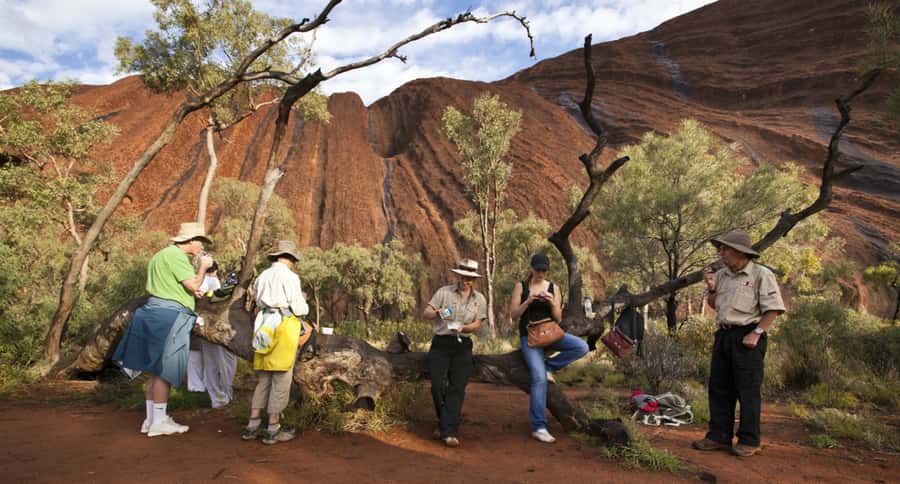
Uluru changes by the minute at dawn. This six-hour walk gives you time to see the rock from every side while an expert guide explains its geology, wildlife, Aboriginal culture, and sacred stories. I especially like the small group of no more than 11 people, which makes it easier to hear your guide and ask questions. I also like that the walk includes breakfast, hotel pickup, and the full 10.5-kilometre circuit. The catch is simple: you need to be ready for an early start and a long walk in a hot, exposed part of Australia.
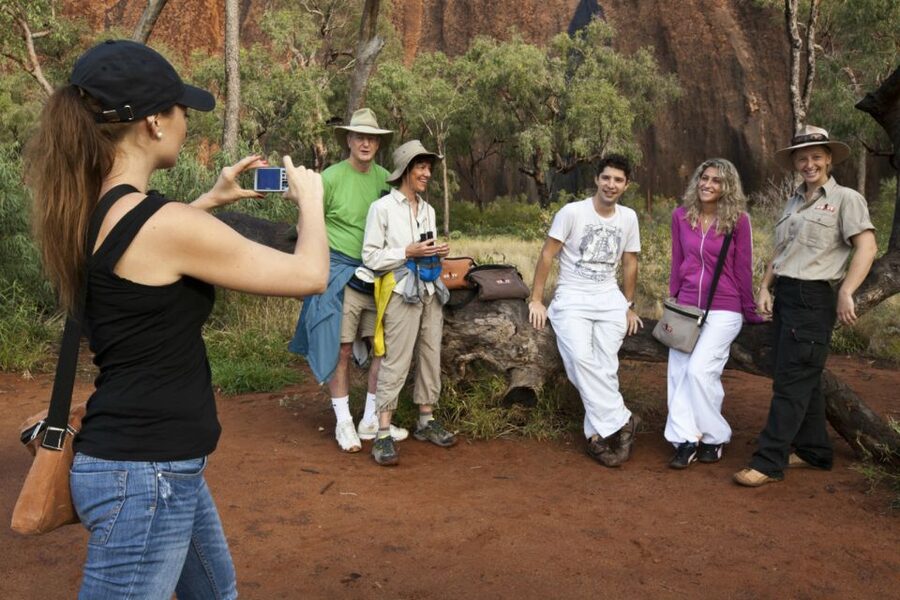
The experience begins about an hour before sunrise at your Ayers Rock Resort hotel. You ride into Uluru-Kata Tjuta National Park, start walking before the heat builds, and return to your accommodation after roughly six hours. Guides such as Lucia, Michael, Lily, Rachel, and Dimitri have earned praise for their care and storytelling, though breakfast is a light picnic rather than a substantial meal. Bring your own water, sensible shoes, sun protection, and a warm layer for the cool morning.
Five things to know before booking
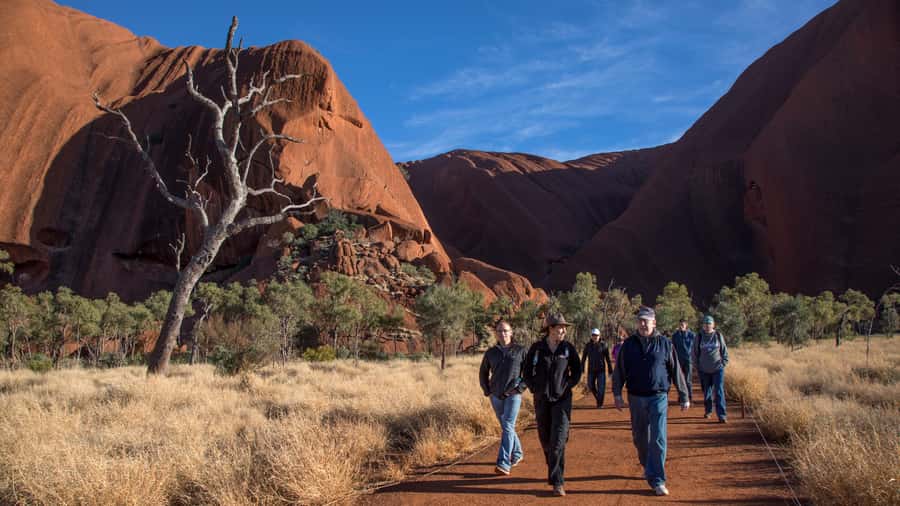
- The full base walk covers about 10.5 kilometres: The route is mostly flat and follows gravel tracks, but the distance is real.
- Sunrise comes before the walking: You reach a good viewing point before the first light catches Uluru, then continue around the rock.
- The cultural stories give the walk meaning: You hear about Tjukurpa, including the stories of Kuniya, Liru, and the Mala people.
- The small vehicle keeps the morning personal: Transport carries a maximum of 11 participants, with pickup at Ayers Rock Resort hotels.
- Breakfast is practical, not lavish: A carry pack with tea and coffee is supplied, so you can eat without stopping for a long meal.
- The park ticket costs extra: You buy entry separately, and the ticket lasts for three consecutive days from the date of issue.
Why the full 10.5-kilometre circuit matters
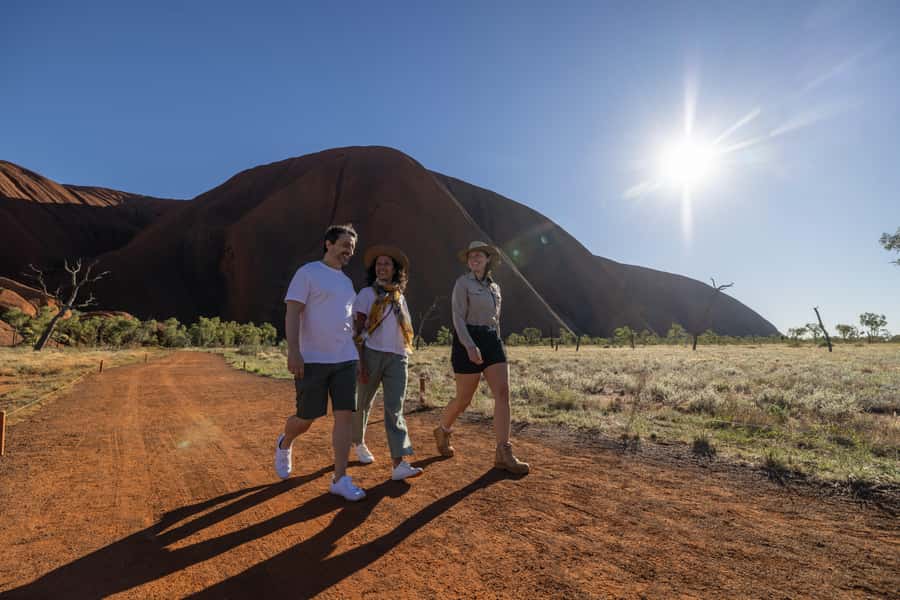
Uluru is easy to admire from a lookout. It is far harder to understand from one fixed viewpoint. The base walk changes constantly, taking you past smooth walls, caves, waterholes, rock art, shaded sections, and narrow gorges.
The full circuit also shows how different each side of the monolith can feel. One section may reveal a sheer red wall. Another may bring you close to a quiet pool or a shaded overhang. You begin to notice that Uluru is not simply one red rock viewed from a distance. Its details tell a much bigger story.
The route is mainly flat, with gravel underfoot. Several people have found it an easy-paced walk rather than a technical hike, but the distance still asks something of you. One person recorded more than 14 kilometres after allowing for extra movement, while the advertised route is about 10.5 kilometres. Your pace, rest stops, and small detours can affect the final total.
I would call it suitable for anyone with reasonable fitness who can comfortably walk for several hours. It is not the right choice if you want a short photo stop or a bus-based sightseeing tour. In summer, the early start matters. You are moving before the strongest heat arrives, and guides may choose the direction of travel to give you more shade later in the morning.
More Small-Group Hikes in the world:
- Small Group Waterfall and Rainforest Hiking Adventure on Maui
★ 5.0 · 1,417 reviews - Glacier Hike and South Coast Small-Group Tour from Reykjavik
★ 5.0 · 827 reviews - Sólheimajökull Glacier Hike – Adventure in a Small Group
★ 5.0 · 799 reviews
Dawn at Uluru, before the heat arrives
Pickup takes place about one hour before sunrise from the front of your hotel reception within Ayers Rock Resort. If you stay at Emu Walk Apartments, you meet at Desert Gardens Hotel. If you stay at The Lost Camel, pickup is at Sails in the Desert.
The vehicle holds up to 11 participants. That is a useful size for this outing. You avoid the feel of a large coach, and your guide can keep an eye on the group without shouting across a crowd. Transport is air-conditioned, which matters in the Red Centre, particularly after several hours outside.
As you approach Uluru, the rock begins to take shape in the dim light. The first view is part of the experience. Uluru seems to rise out of the plain, and its colour changes as the sun comes up. The sunrise is not just a quick photo opportunity. It gives you a quiet start before the main heat and activity of the day.
Bring a warmer layer in the cooler months. An early morning near Uluru can feel cold before the sun appears, even though the day may become very warm later. In warmer months, take a hat, sunscreen, and enough water. One person carried four litres and used all of it, while another advised carrying around two litres and refilling along the way. The safest approach is to bring a refillable bottle and take the conditions seriously.
Kuniya Walk and Mutitjulu Waterhole
The Kuniya section leads toward Mutitjulu Waterhole, one of the most rewarding parts of the route. Here, your guide connects the physical setting with the Tjukurpa story of Kuniya and Liru.
The value of this stop is not only the water. Your guide explains why certain places around Uluru matter to the Anangu, the traditional owners of the area. The stories are tied to rock shapes, markings, water, animals, and the responsibilities passed through generations.
You also get a closer look at the texture of Uluru. From a distance, it can look smooth and solid. At the base, you see hollows, ledges, weathered surfaces, and patterns made by water and time. A guide who can explain the geology alongside the cultural meaning gives you two useful ways to read the site.
This is one reason I prefer the guided walk to simply circling Uluru alone. You can see the waterhole without knowing why it matters. With a guide, the place becomes connected to living culture rather than treated as a scenic stop.
Rock art, caves, and the stories in the walls
Rock art sites form another important part of the route. Your guide explains what you are seeing and why the locations were used. The walk is not built around a long museum-style lecture. Instead, information arrives as you reach each relevant place.
The guides bring in several subjects: Aboriginal survival, local plants and animals, geology, history, and the cultural significance of Uluru. This mix helps keep the six hours moving. You are not hearing one subject repeated all morning.
The markings and caves can be easy to miss if you walk past on your own. I like that the guide points out details in the rock and links them to the wider stories of the area. Earlier participants especially praised guides who made the ancient stories understandable without rushing the group.
You should also expect some walking sections with little shade. The rock itself provides shade in places, but it is not a shaded trail from beginning to end. Wear clothing that covers your shoulders, use sunscreen, and consider a fly net for your face in the warmer months. That last item may sound fussy until flies become part of your morning company.
More Guided Tours around the world:
- From Marrakech: Ouzoud Waterfalls Guided Hike and Boat Trip
★ 4.7 · 33,630 reviews - Bali: Sunrise Mount Batur Guided Hike with Breakfast
★ 4.8 · 9,660 reviews - Bali: Mount Batur Sunrise Guided Hike and Natural Hot Spring
★ 4.8 · 9,284 reviews - Mount Etna: Summit Guided Hiking Tour up to 3,400 m
★ 4.8 · 4,792 reviews
Kantju Gorge and the Mala story
The Mala Walk leads toward Kantju Gorge, another major stop on the base route. Here, the guide shares the story of the Mala people and explains the cultural importance of the surrounding formations.
Kantju Gorge gives you a different view from the open sections of the circuit. The walls feel closer, and the scale of Uluru becomes more dramatic. You are looking up rather than across, which helps show how much the rock changes from one side to the next.
This part of the walk also shows why a full circuit takes time. Uluru is not a single lookout followed by a straight path. You are moving through a sequence of places, each with its own appearance and story.
The stories are central to the outing. Guides such as Michael, Lucia, Tim, Lily, and Rachel have been praised for explaining the Anangu connection with warmth and care. The best guides do not simply fill silence with facts. They help you understand why Uluru is sacred and why certain actions and sites deserve respect.
Breakfast on the trail
The supplied breakfast comes in an outback picnic carry pack. Tea and coffee are included, and you eat along the route in the surrounding setting.
This is a sensible arrangement for a long morning walk. You do not lose much time to a formal meal, and you can keep moving at the group’s pace. The food has been described as sufficient for the walk, but one person wanted something more filling. If you usually eat a large breakfast, bring an extra snack if permitted and practical.
You carry the breakfast yourself, so keep your bag light. Water is more important than packing a large meal. There are two water points along the route according to one detailed account, though the refill water may taste earthy or metallic and may not be cold.
The guides also make frequent stops for hydration and rest. A well-run group should not hurry you around the base. Previous outings have finished early on occasion, with a guide taking the group to the Cultural Centre to use the remaining time. That extra stop is not guaranteed, but it shows the benefit of having a guide who pays attention to the day’s pace.
What the guide adds to the morning
The guide is the main reason to pay for this experience instead of walking independently. You get transport, route-finding, safety oversight, and a steady flow of information, but the cultural interpretation is the real gain.
A guide may explain why a waterhole matters, identify a plant, point out a geological feature, or connect a marked wall to a Tjukurpa story. You can ask questions while the information is fresh in front of you.
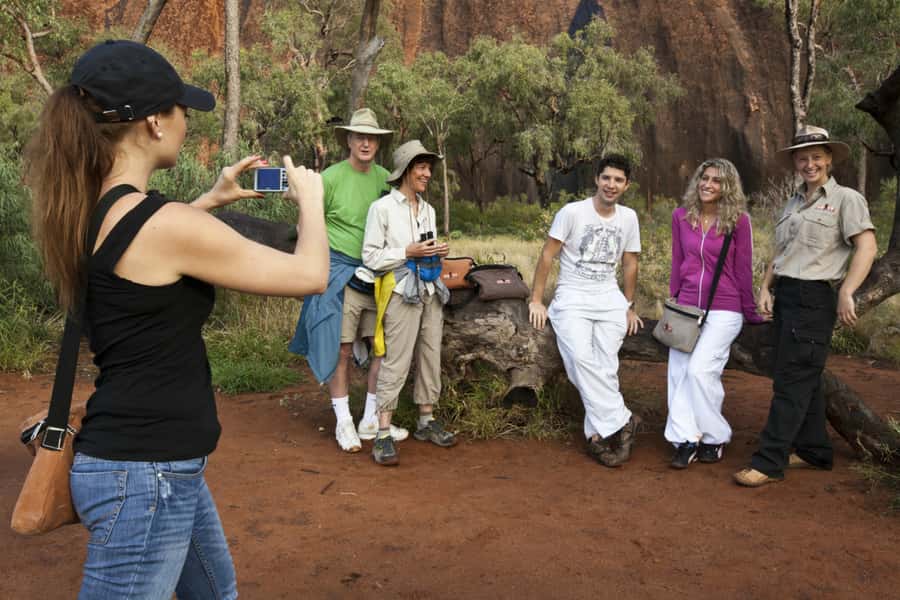
The small group helps here. With up to 11 participants, the guide can speak to the group more naturally. People who joined with Michael, Lily, Rachel, Lucy, Andy, Max, and Dimitri praised their friendly manner and ability to make everyone feel included. Those are practical qualities on a six-hour walk. A guide who checks the pace and encourages rest can make the same route feel far easier.
English is the main guided language. Optional audio guides are available in Spanish, Chinese or Mandarin, French, German, Italian, and Russian. If you need an audio guide, confirm the arrangement when booking so you know how it will fit alongside the live commentary.
Price, park entry, and overall value
The tour costs $169 per person, before the Uluru-Kata Tjuta National Park entry ticket. The park ticket is purchased separately at the entry station and is valid for three consecutive days from the date of issue.
That price is fair if you want a full base walk with transport and interpretation. You are paying for six hours, a small vehicle, a professional driver-guide, breakfast, tea, coffee, and a route that covers the whole base rather than one short section.
The value is strongest for a first visit to Uluru. You do not have to plan the route, judge the timing, work out the best sunrise position, or decide which cultural sites are important. You also avoid spending the hottest part of the day on the trail.
The value is weaker if you already have transport, park access, and a strong plan to walk independently. The extra cost then mainly buys the guide and cultural explanation. For most first-time visitors, that is the part worth paying for.
Free cancellation is available up to three days before the activity for a full refund. The duration is six hours, though the exact start time changes with sunrise and availability.
Who should book this walk?
I would choose this for anyone who wants to understand Uluru rather than simply photograph it. It suits couples, families with older children, solo visitors, and people who prefer a smaller group to a large coach outing.
It also works well for people with limited time at Ayers Rock Resort. In one morning, you see the full base, visit Mutitjulu Waterhole and Kantju Gorge, hear several important stories, eat breakfast, and return to your hotel.
You should think twice if you dislike early mornings, struggle with long walks, or want a slow day with very little physical effort. The track is mostly flat and manageable, but 10.5 kilometres is not a short stroll. In hot weather, the combination of distance, sun, and dry conditions can be tiring.
Wear walking shoes with good comfort, not brand-new footwear. Carry water, a hat, sunscreen, warmer clothing when needed, and clothing that protects your shoulders. If flies bother you, pack a face net. The supplied breakfast is light, so consider how much food you need for a morning outside.
FAQ
How long is the Uluru base walk?
The walk is approximately 10.5 kilometres. One detailed account recorded more than 14 kilometres, so your final distance may be higher depending on the route, stops, and movement during the day.
How long does the whole experience last?
The experience lasts six hours, including hotel pickup, transport, the guided walk, breakfast, and the return journey to your Ayers Rock Resort accommodation.
What time does pickup take place?
Pickup is approximately one hour before sunrise. The exact starting time depends on availability and the time of sunrise on the date of your tour.
Where does hotel pickup happen?
Pickup is from outside hotel reception at Ayers Rock Resort hotels. Guests at Emu Walk Apartments meet at Desert Gardens Hotel, and guests at The Lost Camel meet at Sails in the Desert.
Is breakfast included?
Yes. An outback picnic breakfast is supplied in a carry pack, with tea and coffee. It is designed for eating during the walk and is described as a light or sufficient breakfast rather than a large meal.
Is the national park entry ticket included?
No. You purchase the Uluru-Kata Tjuta National Park ticket separately at the entry station. The ticket is valid for three consecutive days from its issue date.
Which languages are available?
The live tour guide speaks English. Optional audio guides are available in Spanish, Chinese or Mandarin, French, German, Italian, and Russian.
How large is the group?
The transport and tour are limited to a maximum of 11 participants. This keeps the experience smaller than a large coach tour and gives you more direct access to the guide.
Should you book it?
Book this tour if you want the full Uluru experience in one carefully timed morning: sunrise, the complete base walk, Mutitjulu Waterhole, Kantju Gorge, rock art, breakfast, and stories that explain why the site matters.
Skip it if you want a short visit or are not prepared for a long walk. For everyone else, the combination of a small group, thoughtful guides, and a route that avoids the worst daytime heat makes the $169 worthwhile. Bring water, wear proper shoes, and keep your morning free. Uluru deserves more than a quick stop, and this walk gives you the time to see why.
Just added around the world
- From Jökulsárlón: Vatnajökull Easy Level Glacier Hike★ 4.2 · 20 reviews
- From Kanab: 3-Hour Peek-a-Boo Slot Canyon Hiking/Photo Tour★ 4.9 · 25 reviews
- From Jujuy: Salinas Grandes, Purmamarca & Los Colorados Hike★ 4.2 · 75 reviews
- From Kalamata: Polylimnio Waterfalls Guided Hiking Tour★ 4.9 · 19 reviews
- From Kalkan: Saklikent Gorge and Gizlikent Waterfall Trek★ 4.7 · 13 reviews
- From Huaraz: Hike to the Lagoon 69★ 4.4 · 121 reviews
- From Kalabaka: Authentic Meteora Hiking Tour – Local Agency★ 5.0 · 20 reviews
- From Hanoi: Hoa Lu, Hang Mua Hike, Tam Coc Boat, and Lunch★ 4.4 · 28 reviews
Australia Hiking Tours, compared.

Blue Mountains Hiking Glow worms Cave Wildlife Spotlighting Night Adventure
Read our review →
Small-Group Grampians Great Wildlife Escape Day Trip with Hiking
Read our review →
4 Day Wild Tasmania Tour / Wildlife, Nature, Hiking / Inc. Accom
Read our review →
Mackay: Finch Hatton Gorge Hike, Swim & Platypus Adventure
Read our review →Browse the lists this tour appears in