
REVIEW · NEW ZEALAND HIKING TOURS
Volcanic Valley Self Guided Walking and Hiking at Waimangu
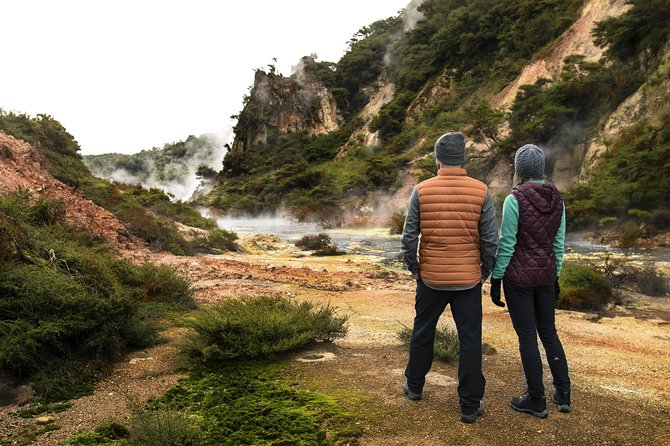
Geothermal wonders wait around every bend. Waimangu gives you time to explore Rotorua’s youngest volcanic system at your own pace, with bubbling pools, steaming vents, native bush, and broad views toward Lake Rotomahana. I especially like the natural setting, which feels less staged than a traditional thermal attraction, and the free shuttle bus, which saves your legs after the downhill walk. The main catch is timing: late arrivals may need to hurry for the final return bus.
The walk costs $46.54 per person and usually takes about two hours, though you can spend anywhere from one to four hours depending on your route and pace. You receive a guide sheet at check-in, and the free Waimangu app may add useful background. This is a self-guided outing, so you get freedom, but not a guide walking beside you to explain every pool.
Key things to know before you go
- Waimangu is the world’s youngest geothermal system, shaped by the 1886 Tarawera eruption.
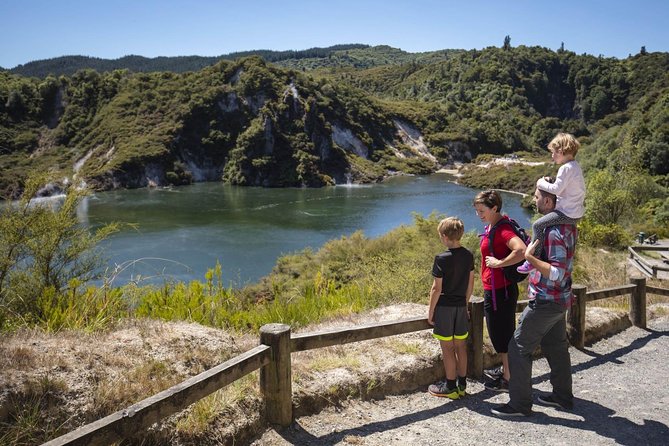
- Frying Pan Lake and Inferno Crater Lake are the major sights, with steam, color, and volcanic activity close to the walking track.
- The route is mainly downhill, with several options and rest stops, then a shuttle returns you uphill.
- A guide sheet gives context about the eruption, the vanished Pink and White Terraces, plants, birds, and geothermal features.
- Cold weather can improve visibility, since steam may show more clearly in cooler air.
- The walk suits moderately fit visitors, but uneven ground and steeper sections make it unsuitable for some mobility needs.
Why Waimangu feels different from Rotorua’s other thermal stops
Rotorua offers several places to see geothermal activity, but Waimangu has a wilder feel. The route moves through forest, open grassland, wetlands, crater walls, lakes, and steaming ground rather than keeping you inside a compact viewing area. You are not simply stopping at one famous pool, taking a photograph, and moving on.
The valley also carries a strong historical story. The Tarawera eruption reshaped this part of the region and buried the famous Pink and White Terraces. The guide sheet helps connect the dramatic scenery to that event, so the walk becomes more than a string of colored pools.
I like the balance here. You can pause beside a steaming lake, listen for birds in the bush, or keep moving if you want to cover more ground. There is no need to match a group leader’s pace. That freedom is the main reason to choose Waimangu over a more tightly scheduled attraction.
The trade-off is that self-guiding requires some attention. You need to read the guide sheet and keep an eye on the route. If you prefer an expert explaining every feature in real time, this may feel a little quiet.
More Self-Guided Tours around New Zealand:
- Queen Charlotte Track: Cruise & Self-Guided Hike from Picton
★ 4.8 · 383 reviews - PR1 Sunrise Pico do Arieiro Self-Guided Hiking Transfer
★ 5.0 · 299 reviews - Self guided Hike Trail to Nature Walk & Waterfall
★ 4.5 · 283 reviews
Check-in at 587 Waimangu Road
Your visit begins at Waimangu Volcanic Valley, at 587 Waimangu Road in the Bay of Plenty region. Check in, collect the Wanderer Guide, and consider downloading the free Waimangu app before setting off.
The guide sheet matters. It points out the main thermal features and gives background on the volcanic activity, plant life, animal life, and the 1886 eruption. Read it as you go instead of waiting until the end. The walk has plenty of visual drama, but the notes explain why the valley looks and behaves as it does.
There is no transport to Waimangu included. You need to arrange your own way to the entrance, and the activity finishes back at the same meeting point after the shuttle ride. Food, drinks, and alcoholic drinks are available to purchase, but they are not part of the admission price.
The attraction operates in all weather. That is useful in changeable Rotorua, but it also means you should dress for wet or cool conditions rather than treating this as a guaranteed sunny stroll. Good shoes matter because the path includes uneven surfaces and sections with a steeper feel.
The downhill route through forest and grassland
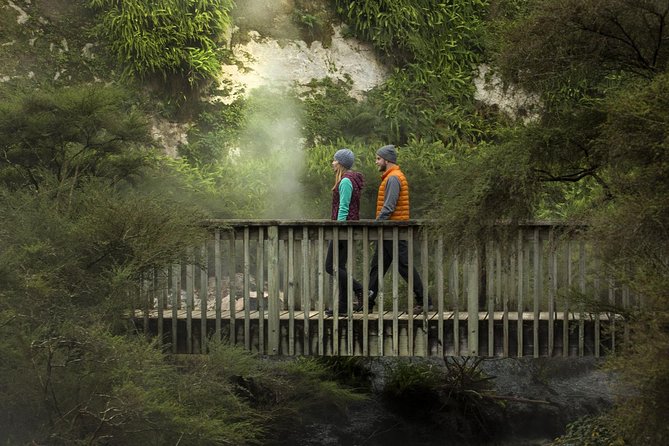
The walk starts with a gradual descent through a setting that can feel surprisingly peaceful. Native woodland and open areas frame the thermal features, and the vegetation gives the valley a more natural character than a bare volcanic field.
Steam vents and hot springs appear among the greenery. You may see water bubbling, steam rising, and volcanic gases escaping through fissures. The mix of forest and geothermal activity is one of Waimangu’s best qualities. One moment you are looking at ferns and birds, and the next you are watching a lake send steam into the air.
The route includes stopping points and benches, which make it easy to pause without blocking the path. You can choose a shorter walk or continue farther into the valley. Three shuttle stops along the route give you options if your energy runs low, although the exact operating schedule should be confirmed when you arrive.
The downhill direction makes the first part fairly manageable for many people. Do not mistake that for a completely effortless walk. The return climb would be harder, which is why the internal bus is such a useful part of the admission.
Frying Pan Lake and the valley’s moving water
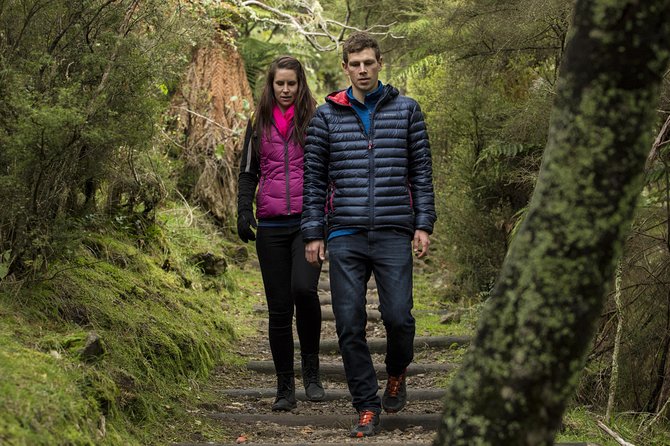
Frying Pan Lake is one of the defining sights at Waimangu. Its broad waters and rising steam show the scale of the geothermal system better than a small bubbling mud pool can.
The attraction here is not just color. Look for movement, vapor, and the way the lake sits within the surrounding forest and crater walls. The valley feels active without becoming a theme-park show. You are watching natural heat work its way through water and rock.
Streams and smaller geothermal features add variety along the route. Some parts are quiet and green, while others smell strongly of sulfur or show obvious signs of heat. The changing smells are part of the visit, though anyone sensitive to geothermal odors should be prepared for them.
The guide sheet helps you avoid rushing past features that might otherwise look like ordinary water or steam. I would keep it in hand and use the marked stops as a loose framework, while still leaving time for your own photographs and pauses.
More Guided Tours around New Zealand:
- Rotorua Hiking: Mt Tarawera Guided Volcanic Crater Experience
★ 5.0 · 283 reviews - Tongariro Alpine Crossing: Premium Guided Hike
★ 4.6 · 189 reviews - From Marrakech: Ouzoud Waterfalls Guided Hike and Boat Trip
★ 4.7 · 33,630 reviews - Bali: Sunrise Mount Batur Guided Hike with Breakfast
★ 4.8 · 9,660 reviews
Inferno Crater Lake and the strongest visual moment
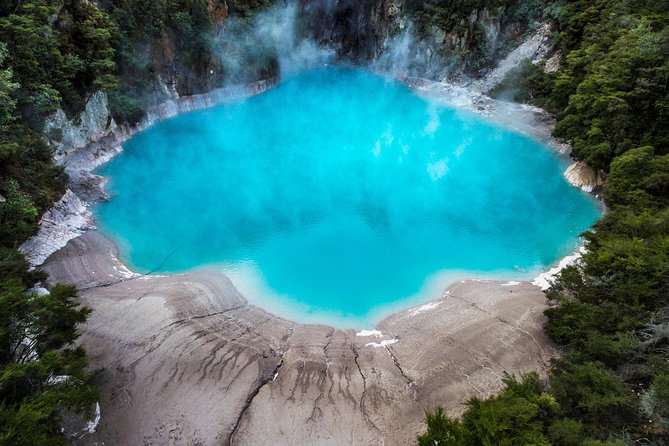
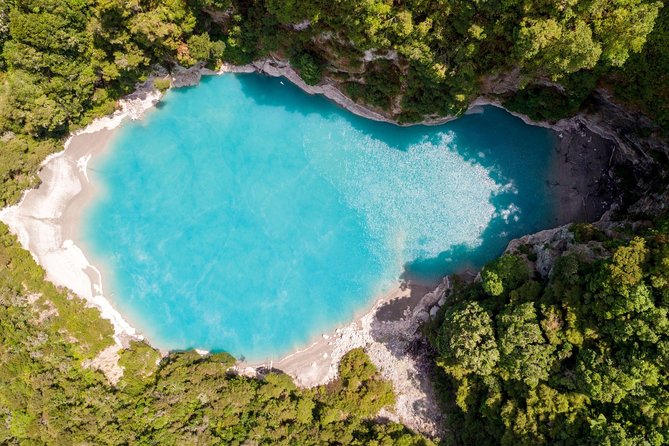
Inferno Crater Lake is one of Waimangu’s most memorable sights. Its intense blue appearance catches the eye immediately, especially when the weather is clear and the view is open.
This is the place where the guide sheet earns its keep. The color is striking, but the surrounding explanation gives you a better sense of the geothermal forces at work. You are seeing a volcanic feature in a living system, not just a bright-colored lake placed in a scenic setting.
Photo opportunities are strong here, but do not let the camera turn the stop into a quick glance. The steam, crater shape, surrounding vegetation, and changing light all make the view worth studying for a few minutes.
Weather affects the mood of the walk. Cool conditions can make steam more visible, while clear weather gives you stronger views across the valley. One practical tip is to consider a morning visit if you want cooler air and more obvious vapor. Perfect weather is not required, but it can change how much detail you see.
Lake Rotomahana and the story of the terraces
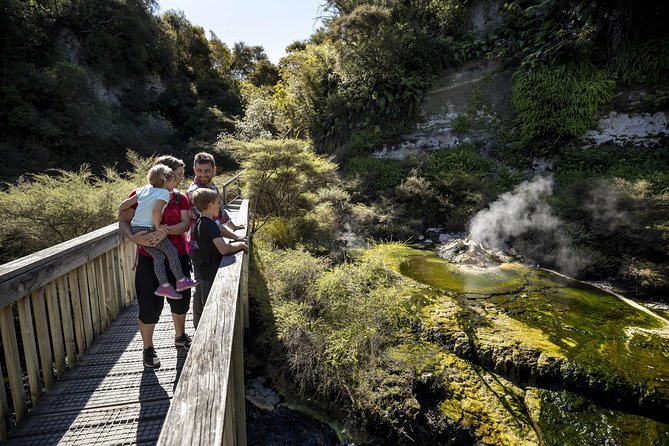
As the walk continues, views toward Lake Rotomahana connect Waimangu with the wider volcanic region. The lake is also tied to the story of the Pink and White Terraces, which were hidden or destroyed during the Tarawera eruption.
That history gives the valley extra weight. You are not only looking at a pleasant collection of pools. The scenery records a major volcanic event that changed the area and erased a famous natural attraction.
The guide sheet sets out this story in a manageable way, without requiring you to join a formal tour. If you have children with you, the combination of lakes, craters, steam, and eruption history can make the walk more engaging than a plain nature trail.
Some visitors spend about two hours on the route, while others take longer to stop at benches, read the notes, and take photographs. The advertised duration ranges from one to four hours, so plan around your interests rather than assuming you must finish in a fixed two-hour slot.
Birds, plants, and quiet stretches
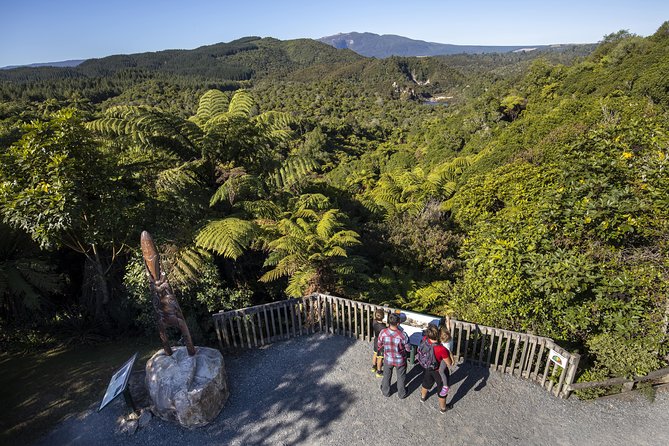
Waimangu is not only about boiling water and volcanic color. Native plants line parts of the route, and the forest creates habitat for birdlife. The quieter sections are a welcome contrast to the more dramatic lakes and vents.
I like that the walk rewards slower attention. Listen between the geothermal sounds, and watch the vegetation around the path. The valley’s plant and animal life gives it a sense of place, rather than making it feel like a collection of isolated attractions.
This is also where the self-guided format works best. You can stop for a bird call or examine a plant without holding up a group. You can also move on when a particular feature does not interest you.
Do not expect every section to deliver a major spectacle. Some stretches are simply pleasant walking through woodland and grassland. That variation is part of the appeal, but it may disappoint if you want nonstop geysers and vivid pools.
The shuttle bus back uphill
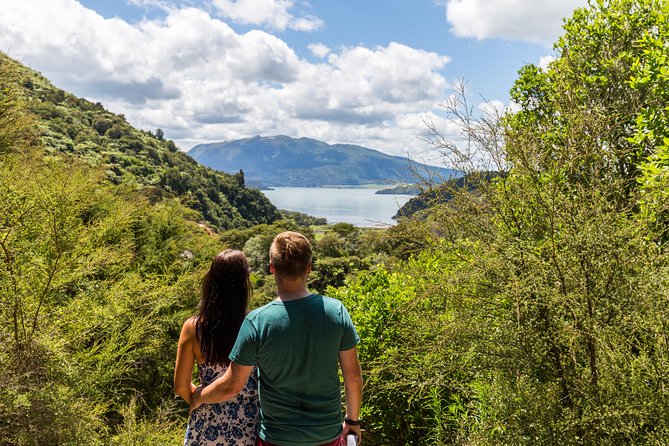
At the end of the route, the internal shuttle bus brings you back toward the starting point. This is not a minor convenience. The walk descends through the valley, so returning on foot would add a demanding uphill section after you have already spent time on uneven ground.
The shuttle also gives you an exit option from points along the route. If your legs are tired, the weather turns poor, or children lose interest, you do not have to force the full walk.
Pay close attention to the final bus time, especially with a late afternoon booking. A 3 p.m. start can leave little room if the last service from a lower stop leaves around 4:35 p.m. You may need to shorten your visit or walk briskly to avoid a rushed finish.
The bus may also provide a brief orientation from the driver, but you should treat the walking guide as your main source of information. The bus is primarily practical transport, not a replacement for the self-guided route.
How difficult is the Waimangu walk?
The walk is often manageable for people with moderate fitness, and the main route includes benches and shuttle stops. Several route choices let you adjust the outing to your energy and interest.
Still, this is not a flat paved promenade. Uneven surfaces, slopes, and steeper sections are part of the experience. The activity is not recommended for people with walking disabilities, and children must remain with an adult.
A stroller may be possible on parts of the walkway, but the route should not be treated as universally easy. Conditions, hills, and the chosen section make a difference. If anyone in your group has limited mobility, ask staff about the current route before setting off.
Wear comfortable walking shoes and bring clothing suitable for all weather. There is no need to pack for a serious mountain hike, but flimsy footwear would make the visit less pleasant.
Is $46.54 good value?
At $46.54 per person, Waimangu is not the cheapest short outing in Rotorua. The value depends on how you use the time.
You are paying for admission to a large geothermal area, the guide material, access to several walking options, and the internal shuttle. The visit can last two hours or more, and you control the pace. That makes it better value for people who enjoy walking and want a broad mix of scenery rather than a quick photo stop.
The price feels less convincing if you only have time for a very short visit. A late booking, missed bus, or rushed route reduces what you get from the ticket. Give yourself enough time to reach the main sights, read the guide, and enjoy the valley without watching the clock every few minutes.
Compared with a compact thermal park, Waimangu offers more space and a stronger sense of a natural setting. Compared with a fully guided excursion, it offers less personal explanation but more independence. For many people, that is a fair exchange.
Best time, pace, and practical planning
Cooler conditions can make steam easier to see, so morning is a sensible choice if you want the geothermal activity to show clearly. Sunny weather can improve views and make the path more pleasant, but the attraction remains open in poor weather.
Allow around two hours for a comfortable visit, and more if you like photography, guide notes, birdwatching, or longer pauses. Check the shuttle schedule at the entrance. This is especially important for afternoon arrivals.
You can buy food and drinks on site, but they are not included. Since the walk can take several hours, plan your meal timing rather than assuming you will finish quickly.
The activity has a maximum group size of 15, although the self-guided format means you are not tied to a walking group. Confirmation is provided at booking, and free cancellation is available up to 24 hours before the start time. Changes or cancellations inside that window are not accepted for a refund.
Who should choose this Waimangu experience?
I would choose this walk if you like natural scenery, volcanic features, moderate exercise, and the freedom to stop when something catches your eye. It works particularly well for couples, families with older children, and independent visitors who dislike being hurried from one viewpoint to the next.
It is also a strong choice if you want more than a mud pool or a single geyser. Forest, wetlands, lakes, steam vents, crater views, and volcanic history all appear along the route.
I would think twice if you need a fully accessible path, dislike uneven ground, or want a guide beside you throughout. You should also reconsider a late start if you want the full route and do not enjoy walking against the clock.
Should you book the Waimangu walk?
Book it if you want Rotorua geothermal scenery in a natural, spacious setting and you are happy to guide yourself with printed notes. The strongest reasons are the varied route, Inferno Crater Lake, Frying Pan Lake, the Tarawera eruption story, and the shuttle back uphill.
Skip it if your schedule allows only a rushed hour, or if walking over slopes and uneven surfaces would be uncomfortable. For most moderately fit visitors, though, the $46.54 ticket offers a satisfying half-day outing, especially when you arrive early, dress for changing weather, and protect enough time for the valley to unfold at its own pace.
FAQ
Where does the Waimangu walk start?
The experience starts at Waimangu Volcanic Valley, 587 Waimangu Road, Bay of Plenty Region 3073, New Zealand.
How long does the self-guided walk take?
The visit can take about one to four hours. Many people allow around two hours, depending on their walking speed, route, stops, and interest in the guide material.
What is included in the admission price?
Admission includes the self-guided walking access, a guide sheet, the internal shuttle bus, and an air-conditioned vehicle.
Is transport to Waimangu included?
No. Transport to and from the attraction is not included. You need to make your own way to the Waimangu entrance.
Does the shuttle return you to the start?
Yes. The internal shuttle operates from the walking route and returns you toward the starting point, helping you avoid the uphill walk.
Is the walk suitable for people with limited mobility?
The activity is not recommended for people with walking disabilities because the route includes uneven surfaces. A moderate level of physical fitness is advised.
Can I cancel for a full refund?
Yes, if you cancel at least 24 hours before the experience start time. Cancellations or changes made less than 24 hours in advance are not accepted for a refund.
Just added around New Zealand
- Cardrona Valley: Horse Trekking Experience★ 5.0 · 12 reviews
- Abel Tasman National Park: Cruise, Kayak, & Hike Tour★ 5.0 · 9 reviews
- Queenstown: Walter Peak Horse Trek & Queenstown Lake Cruise★ 4.7 · 151 reviews
- Bay of Islands Cruise & Island Tour – Snorkel, Hike,Swim,Wildlife★ 5.0 · 177 reviews
- Tongariro Alpine Crossing: Premium Guided Hike★ 4.6 · 189 reviews
- Rubicon Valley Horse Treks – 2 Hour River Trail Horse Trek★ 5.0 · 196 reviews
- Mount Cook: 3 Hour Heli Hike to the Tasman Glacier★ 4.7 · 218 reviews
- Mount Cook: 3-Hour Tasman Glacier Helicopter Ride and Hike★ 4.9 · 235 reviews
New Zealand Hiking Tours, compared.
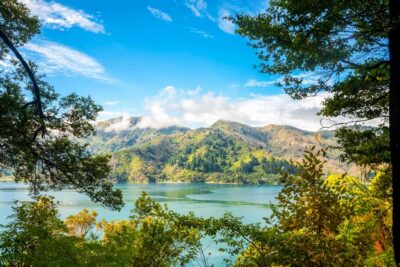
Queen Charlotte Track: Cruise & Self-Guided Hike from Picton
Read our review →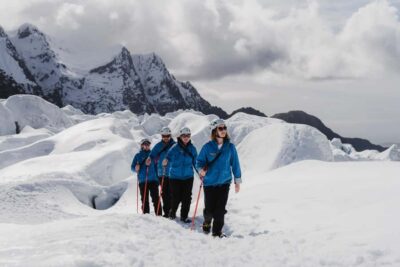
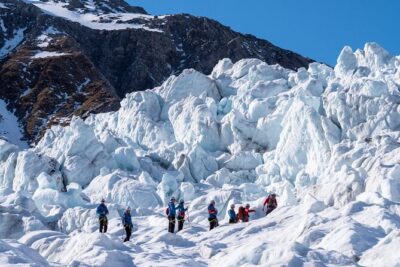
Franz Josef: 2.5 Hour Glacier Hike with Helicopter Transfer
Read our review →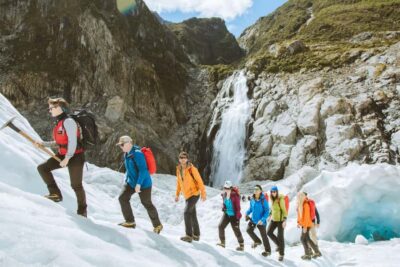
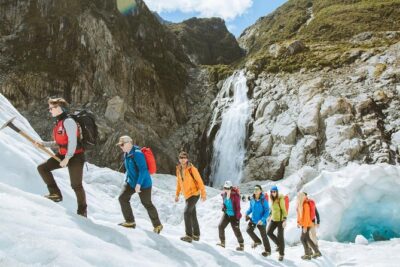
Fox Glacier: Up to 3 Hours Hike with Helicopter Transfer
Read our review →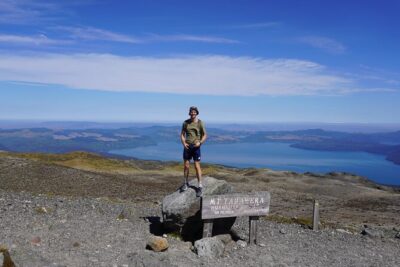
Rotorua Hiking: Mt Tarawera Guided Volcanic Crater Experience
Read our review →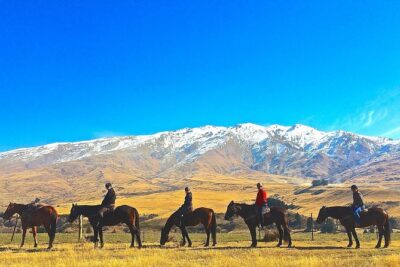
Cardrona High Country Pub Trail Horse Trek (Intermediate level+)
Read our review →
Mount Cook: 3-Hour Tasman Glacier Helicopter Ride and Hike
Read our review →Browse the lists this tour appears in