
REVIEW · CHILE HIKING TOURS
Stargazing Hiking Valle de Elqui
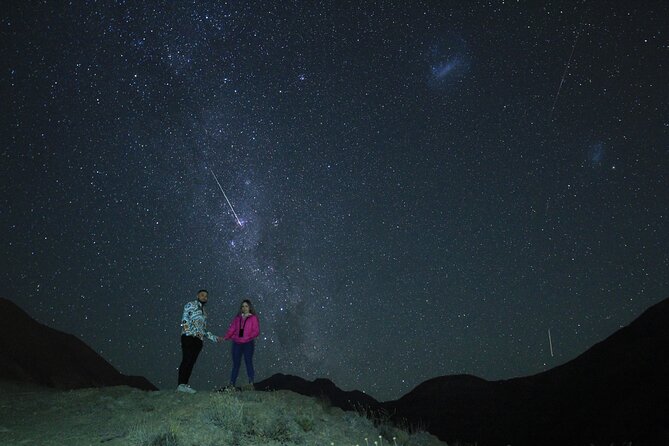
The stars arrive after the sunset show. This four-and-a-half-hour outing combines a mountain viewpoint, guided astronomy, meditation with sound bowls, and an introduction to the indigenous view of the sky. I like the use of a Celestron 20×80 astronomical binocular on a tripod, which gives the night-sky portion more purpose than simply pointing out a few bright stars. I also like the small comforts: trekking poles, a portable chair, hot coffee or herbal tea, snacks, and astronomical photography.
The main thing to weigh is the physical side. You need moderate fitness and proper hiking shoes, and the activity is not for anyone under 14. The timing also shifts with the season, so you must check your start time carefully and arrive 15 minutes early. A delay of more than 10 minutes means you may be excluded.
Key points at a glance
- Sunset comes first: You begin at a mountain viewpoint, where the changing light over the Elqui Valley sets up the evening.
- Astronomy has a cultural angle: The guide introduces indigenous ideas about the sky and connects them with ancestral traditions.
- A proper viewing tool is provided: The Celestron 20×80 binocular is mounted on a tripod for steadier viewing.
- The outing is private: Only your own group takes part, giving the guide room to adjust the pace and conversation.
- Small comforts matter: Trekking poles, a chair, snacks, coffee, and herbal tea are included.
- Loreto brings personal energy: One highly praised review singles out Loreto’s passion and her care for the cultural side of the evening.
Why the Elqui Valley works so well after dark
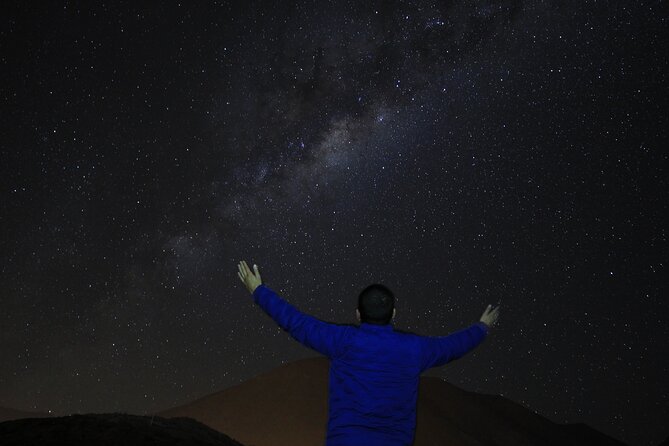
The setting gives this outing two distinct moods. First comes the open mountain viewpoint and the sunset. Then, as daylight fades, the focus shifts upward toward the stars and the Andean constellations.
That change is one of the best reasons to choose this activity instead of a basic evening lookout. You are not asked to arrive after dark and wait for the sky to become interesting. You get a full transition from late-day color to night, with the valley providing the first visual reward.
The exact viewpoint is described as majestic, but the available details do not name it. You should expect an outdoor setting rather than a built observatory or formal planetarium. That matters if you prefer a polished indoor program. It is also part of the appeal if you want to feel the temperature drop, hear the quiet around you, and watch the sky change without a roof overhead.
The activity begins at Casa Pumagui with safety recommendations. From there, the group heads toward the viewpoint. Private transport is provided between Vicuña and Villaseca, the place of the activity. The stated meeting point is in Navarino, Peralillo, Vicuña, and the outing returns there at the end.
Because the transfer details are limited, I would confirm the exact pickup arrangement when booking. The included transport covers the move from the city of Vicuña to Villaseca. It does not cover transfers from other places that are not named, and an air-conditioned vehicle is not included as a separate feature.
A few more hikes around the world worth a look
- From Marrakech: Ouzoud Waterfalls Guided Hike and Boat Trip
★ 4.7 · 33,630 reviews - Berber villages : Atlas Mountains Day Hike from Marrakech
★ 5.0 · 14,007 reviews - Bali: Sunrise Mount Batur Guided Hike with Breakfast
★ 4.8 · 9,660 reviews
Sunset at the viewpoint, then a slower evening
The first major part of the outing is the walk and sunset stop. Trekking poles are supplied, which is useful on uneven ground and also means you do not need to bring your own poles. Still, this is not a sightseeing bus stop with a short stroll from the vehicle. Moderate fitness is required, and hiking shoes are mandatory.
The sunset has a practical role beyond taking pictures. It gives you time to settle into the setting before the astronomy begins. The view over the mountains provides a clear visual opening, while the later darkness shifts your attention from the land to the sky.
Bring layers. The supplied information does not give a temperature range, but an outdoor evening activity can feel cooler once the sun is gone. You should also arrive ready to walk, rather than wearing casual shoes that are fine for a town street but poor on a trail.
The private format is helpful here. Only your group participates, so you are not being moved through the viewpoint in a large crowd. That can make it easier to ask questions, stop for a photograph, or take a quiet moment without having to match the rhythm of a busload of people.
Sound bowls and meditation before the stars
After the sunset portion, the program turns inward with meditation and sound therapy using bowls. This is not simply a technical astronomy lesson. The activity asks you to pause, listen, and connect with the setting before looking through the binoculars.
I like this idea because it gives the evening a clear rhythm. You first watch the valley change color. Then you slow down through sound and meditation. Only after that do you begin the sky-focused part of the program.
That said, meditation is not everyone’s favorite travel activity. If you want a fast-moving night of equipment, star charts, and facts, this section may feel less direct. If you enjoy quiet outdoor moments and a more reflective pace, it adds something that a standard stargazing session often leaves out.
The supplied description does not state how long the meditation or sound therapy lasts. You should therefore treat it as one part of the four-and-a-half-hour outing, not as a separately timed session.
Andean constellations and indigenous astronomy
The cultural section is a major reason to consider this outing. The guide introduces the indigenous worldview and explores ancestral links between cultures and astronomy. The focus is not only on naming stars from a modern scientific chart. It is also on how different cultures understood patterns in the sky and connected them with life on Earth.
The guide then directs your attention to Andean constellations. That gives the night a local identity. You are not simply receiving a repeatable list of famous objects that could be presented anywhere in the world. The setting in the Elqui Valley and the regional sky traditions are part of the subject.
The description does not identify which specific constellations you will see or guarantee particular planets, galaxies, or other objects. That is worth keeping in mind. Astronomy depends on conditions, season, visibility, and the timing of the session. The strongest promise here is the guided way of looking, not a fixed checklist of celestial objects.
Loreto is the guide named in the available feedback. A highly positive comment praises her passion and recommends the tour strongly. Her response also highlights the cultural content and the respectful attitude expected from participants. That gives you a useful sense of the tone: this is intended to be more than a quick photo stop under the stars.
Same trailhead, a different kind of day:
- Bali: Mount Batur Sunrise Guided Hike and Natural Hot Spring
★ 4.8 · 9,284 reviews - Cinque Terre Day Trip with Optional Hiking or Pisa
★ 5.0 · 8,486 reviews - From Marrakech: Atlas Mountains Full-Day Hiking Trip w Lunch
★ 4.8 · 7,417 reviews - Marrakech: Ourika Valley Trip with Waterfall Hike
★ 4.6 · 6,792 reviews
The Celestron 20×80 binocular makes a difference
The supplied astronomical binocular is a Celestron 20×80 model mounted on a tripod. That combination matters. High-powered binoculars are difficult to hold steady by hand, especially when you are trying to examine a small point of light. A tripod provides the stability needed for a clearer view.
Binoculars also offer a different experience from looking through a narrow telescope eyepiece. You use both eyes, and the view can feel more natural and easier to share. The guide controls the setup and directs your gaze, so you do not need to know how to position or adjust astronomical equipment.
This is still an outdoor viewing session, not a promise of perfect detail. Clouds or poor weather can cancel the activity, and the schedule does not guarantee any particular celestial object. The equipment adds real value, but it cannot change the sky conditions.
The experience includes astronomical photography as a memory of the evening. The information does not specify whether you receive individual portraits, sky images, or both, nor does it state the delivery method. I would ask for those details before booking if the photographs are a major reason you are interested.
What the $100 price includes
At $100 per person, the cost is easier to justify if you plan to use the full package. You are paying for a private activity, transport from Vicuña to Villaseca, a guide-led cultural and astronomy program, viewing equipment, photography, a chair, trekking poles, drinks, and snacks.
The private format is the biggest value point. A private outing can be worthwhile for couples, families with older teenagers, or small groups who want a more personal pace. You are not paying only for access to a viewpoint. You are paying for the guide’s interpretation and for an evening designed around your group.
Coffee, tea, herbal tea, and snacks are modest additions, but they are practical after an outdoor walk and several hours outside. The portable chair is another thoughtful touch. You do not have to remain standing during the star-watching portion.
The price does not include transfers from places outside the named Vicuña service. If you are staying elsewhere in the Elqui Valley, check the transport plan before assuming pickup is included. This is one of the few points that could push the real cost higher.
Timing changes by month
The activity runs in the evening, but the listed hours change during the year:
- In January, the opening range is 8:00 PM to 9:00 PM.
- In February, it shifts to 7:30 PM to 9:00 PM.
- In March, it shifts again to 7:00 PM to 9:00 PM, Monday through Saturday.
These ranges appear to reflect changing sunset conditions. Your exact departure time should be confirmed at booking, since the activity itself lasts about four hours and 30 minutes.
The 15-minute early arrival rule is firm. Arriving late is not a minor inconvenience here because transport and the outdoor schedule are linked. More than 10 minutes late can mean exclusion, with no useful way to catch up once the group has left.
The activity runs Monday through Sunday in January and February. In March, it is listed Monday through Saturday, so Sunday plans may not work then.
Who will enjoy this most
I would recommend this outing to you if you like nature, astronomy, cultural interpretation, and a calm outdoor pace. It suits people who want the sunset and the stars in one evening, rather than choosing between a daytime valley view and a separate nighttime program.
It is also a good fit for a couple or small private group. The chance to ask questions directly and set a comfortable pace is more valuable in a private setting than in a large group.
You should think twice if you dislike walking, meditation, or outdoor evening conditions. The activity calls for moderate physical fitness and hiking shoes. It is not suitable for children under 14, and participants must not attend under the influence of alcohol. The provider reserves the right to refuse admission in that situation.
Service animals are allowed, and the meeting point is near public transportation. Those facts help with access, but they do not remove the need for suitable footwear or the ability to manage an outdoor hike.
Weather, cancellations, and practical planning
Good weather is required. If poor weather forces a cancellation, you are offered a different date or a full refund. That policy is sensible for an activity built around sunset and night-sky viewing.
You can cancel for a full refund up to 24 hours before the start time. Cancellations or changes made within 24 hours are not accepted for a refund. The cut-off uses local time, so check the clock in Chile rather than relying on your home time zone.
Pack hiking shoes, warm layers, and anything you normally need for an evening outside. Trekking poles, a chair, snacks, and drinks are already provided. Since the exact photography details are not given, bring your own phone or camera if you want additional personal images.
The activity has a five-star rating from 46 reviews, with 100 percent recommending it. The most specific praise centers on Loreto’s passion and the memorable nature of the outing. That matches the design of the program, which places equal weight on the setting, cultural ideas, and astronomy equipment.
Should you book Stargazing Hiking Valle de Elqui?
Book it if you want a private evening that connects sunset, Andean astronomy, indigenous culture, and quiet reflection. The Celestron binocular, included photography, transport from Vicuña, and small comforts make the $100 price easier to defend, especially for a couple or private group.
Skip it if you want a short, purely scientific observatory visit, or if a moderate hike and outdoor meditation do not appeal to you. Before paying, confirm your exact meeting time, transport from your lodging, and what the astronomical photographs include. For the right kind of visitor, this is a thoughtful way to experience the Elqui Valley after dark, with Loreto’s personal guidance adding warmth to the program.
FAQ
How long does the Stargazing Hiking Valle de Elqui experience last?
The activity lasts approximately four hours and 30 minutes.
Where does the activity start and end?
It starts at Navarino, Peralillo, Vicuña, Coquimbo, Chile, and ends back at the meeting point.
Is transportation included?
Private transportation is included from the city of Vicuña to Villaseca, the activity location. Transfers from other places not mentioned are not included.
What ages can participate?
The activity is designed for people aged 14 and older. Children under 14 cannot participate.
What should I wear?
You must wear hiking shoes. Participants should also have a moderate level of physical fitness.
What is included in the price?
The price includes trekking poles, astronomical photography, a portable chair, astronomical binoculars, coffee or tea, herbal tea, snacks, and private transportation from Vicuña to Villaseca.
Can I cancel for a full refund?
Yes. You can cancel at least 24 hours before the start time for a full refund. Cancellations or changes made less than 24 hours before the start time are not refunded or accepted.
What happens if the weather is poor?
The activity requires good weather. If it is canceled because of poor weather, you will be offered another date or a full refund.
Just added around the world
- Annapurna Base Camp Trek 10 Days★ 5.0 · 35 reviews
- Annapurna Base Camp Trek – 11 Days★ 5.0 · 30 reviews
- Annapurna Base Camp Trek 12 Days★ 5.0 · 18 reviews
- Annapurna Base Camp Trekking★ 5.0 · 38 reviews
- Adventurous Annapurna Base Camp Trekking★ 5.0 · 7 reviews
- Annapurna Base Camp Trek★ 5.0 · 80 reviews
- Annapurna Base Camp Private Short Trek★ 5.0 · 8 reviews
- Annapurna Base Camp Short trek★ 5.0 · 13 reviews
Chile Hiking Tours, compared.
From Santiago: Cajón del Maipo and Volcán San José Hike 8K
Read our review →
Puerto Natales: Base of the Towers Trekking Experience
Read our review →
Puerto Natales: Base Torres Small Group Trekking
Read our review →
San Pedro de Atacama: Desert Tour with Canyoning & Trekking
Read our review →Browse the lists this tour appears in