
REVIEW · MOUNTAIN & SUMMIT HIKES
From Sharm: Mount Moses Trekking, Sunrise & Monastery Visit
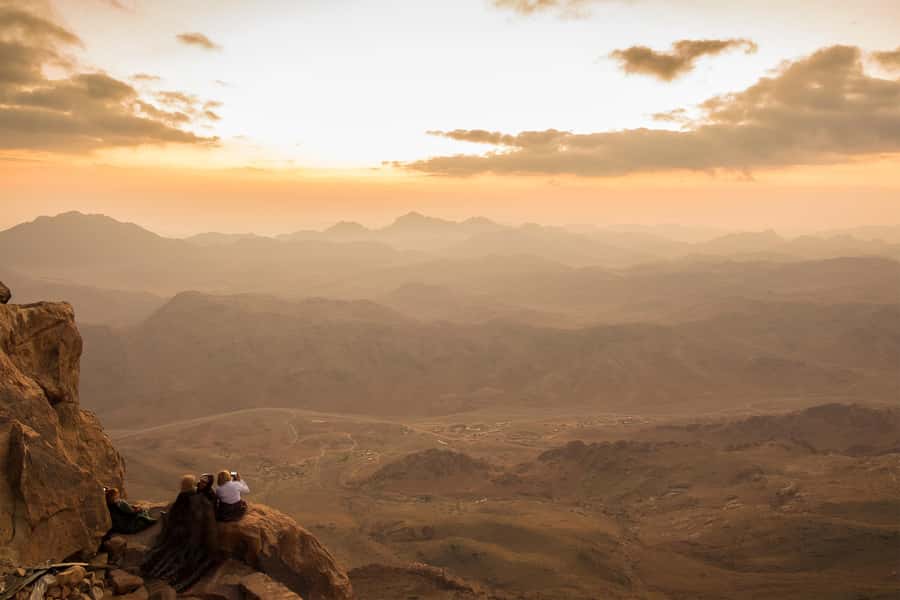
Sunrise makes this mountain unforgettable. From Sharm El Sheikh, this long overnight trip takes you up Mount Sinai for dawn views, then to St. Catherine’s Monastery, one of the world’s oldest working Christian monasteries. I like the powerful sense of place and the chance to see the Sinai mountains under stars before daylight. I also like the Bedouin guides, who set a steady pace, offer breaks, and help people over the rougher sections.
The main drawback is the physical demand. You climb at night after several hours on the road, and the final 750 steps are really uneven stone rather than neat stairs. The summit can be bitterly cold, even after a warm day in Sharm, and the monastery visit may feel rushed by the end.
Key points before you book
- The summit is 2,285 meters high, and the climb usually takes about two to three hours each way.
- The final 750 steps are the hardest part, with irregular rocks, steep sections, and few proper steps.
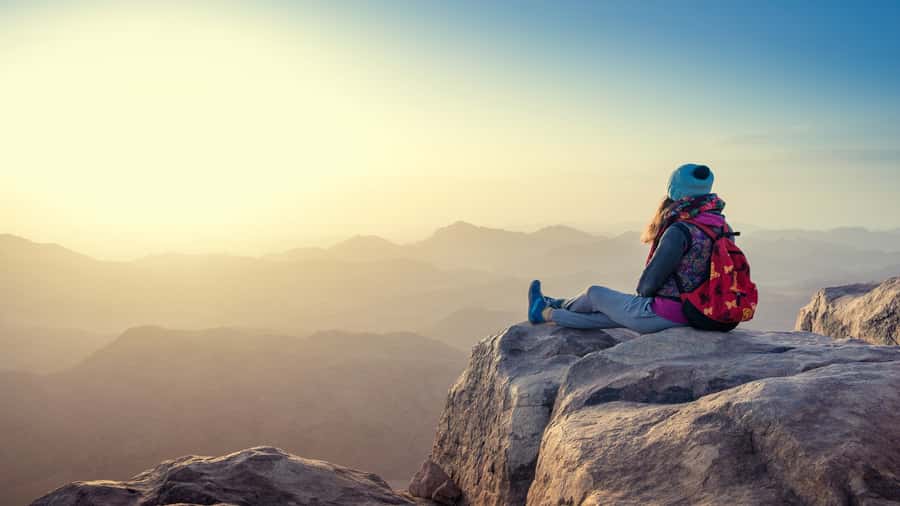
- Sunrise can be spectacular, with stars above you and wide views over the Sinai mountains.
- Bring serious warm clothing, including a hat and gloves. Blankets can be rented near the summit.
- The camel option only covers the first part, not the final 750 steps, and it is not recommended by the operator.
- The $50 price is good value if you can handle the long transport, overnight hike, guide support, and monastery visit.
Why Mount Moses feels different from a standard day trip
This is not a quick sightseeing outing. It is a night journey, a mountain climb, a religious pilgrimage route, and a historic monastery visit packed into roughly 16 to 17 hours.
Mount Sinai is traditionally identified as the place where Moses received the Ten Commandments. The mountain is also important in Christian and Islamic tradition, so the climb has a quiet pilgrimage quality even when the trail is crowded. You may hear prayers, see people carrying blankets, and watch groups from different countries wait together for the same sunrise.
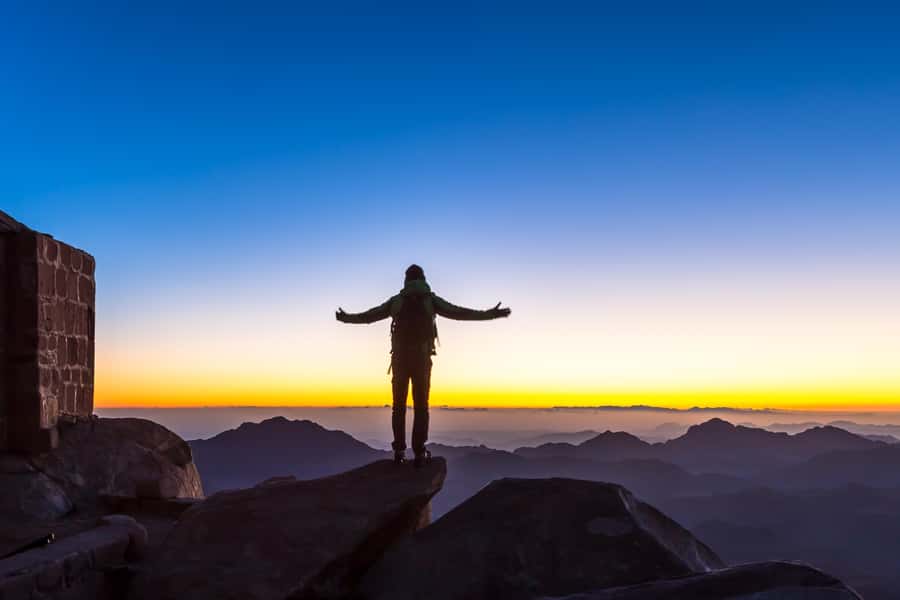
I like that the experience gives you time to see Sinai in three different moods. You start in darkness beneath the stars, reach the summit in the cold blue light before dawn, and descend in warm sunshine. The change makes the mountain feel much bigger than the basic distance suggests.
The route is not remote in the purest sense. There are other climbing groups, Bedouin guides, camels, small refreshment stops, and basic toilets along the way. Still, the night setting and the silence between groups give it a strong sense of occasion.
More Sunrise Hikes in the world:
- Bali: Sunrise Mount Batur Guided Hike with Breakfast
★ 4.8 · 9,660 reviews - Bali: Mount Batur Sunrise Guided Hike and Natural Hot Spring
★ 4.8 · 9,284 reviews - Funchal: Pico do Arieiro Sunrise Hiking Transfer
★ 4.8 · 4,021 reviews
The overnight departure from Sharm
Hotel pickup is usually between 8:00 PM and 9:00 PM, though the exact time can change. You need to wait at the main gate of your hotel along the highway, not inside the reception area. This detail matters, since waiting in the wrong place can cause a stressful start.
The transport arrangements may involve a small vehicle collecting people from hotels before transferring everyone to a larger air-conditioned coach. The drive to the Mount Sinai area takes about four hours, followed by the return journey after the hike and monastery visit.
Transport is one of the less predictable parts of the outing. Some departures run smoothly with comfortable coaches and helpful drivers. Other groups have dealt with crowded vehicles, cramped legroom, delays during hotel pickups, or passengers using folding seats in the aisle. Security checkpoints can also extend the stated journey time.
I would treat the ride as part of the challenge. Take a small travel pillow if you have room, keep water and warm layers close by, and do not pack anything you will need from the luggage compartment during the night.
Starting the climb in darkness
At the mountain, the Egyptologist guide normally stays with the group until the base camp. A Bedouin mountain guide then leads the actual climb. This division is useful because the local guide knows the route, the stopping points, and the practical details of moving a group uphill at night.
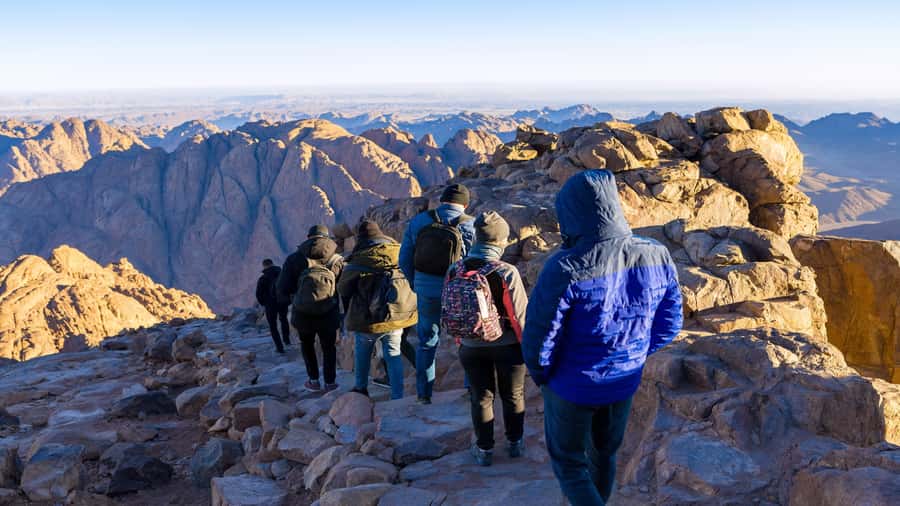
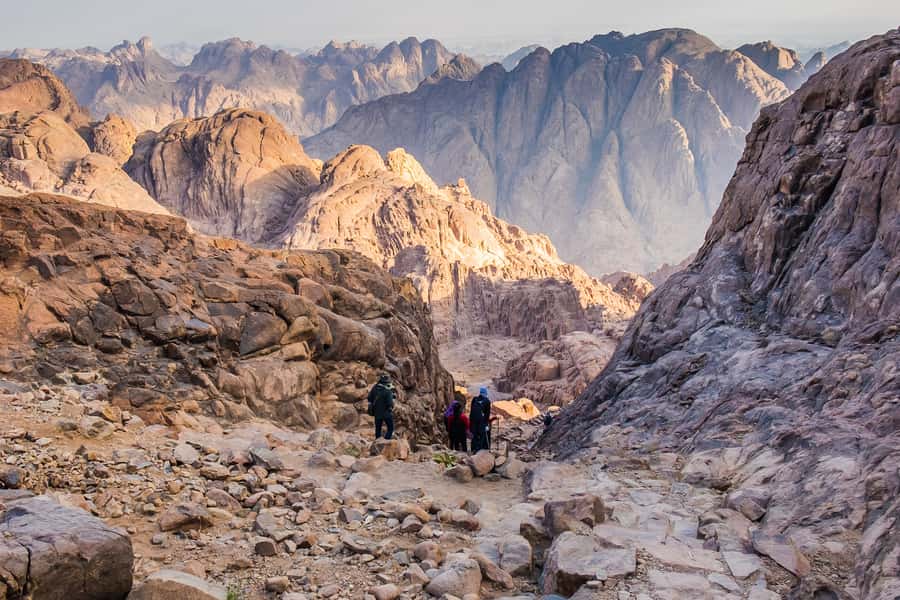
The path begins with a roughly 7-kilometer climb on a steep, uneven trail. It is not a technical mountaineering route, but loose stones, rough surfaces, camel traffic, and darkness make it more tiring than the distance suggests.
Bring a proper flashlight or headlamp. A phone light can work in an emergency, but it leaves one hand occupied and gives a narrow beam. You will want both hands free on the rougher sections.
The pace is usually steady, with regular pauses. Several people found the climb manageable because of these stops, while others felt the Bedouin guide moved quickly. If you are a fast walker, you may reach the summit well before the rest of the group. If you need a slower pace, tell the guide early rather than trying to force yourself to keep up.
The trail can be noisy and crowded, especially during popular months. Camels have priority in some sections, so you need to step aside and watch your footing. Basic toilets and small shops appear along the route, but standards are very simple. Carry tissues and small cash.
The 750 steps that are not really steps
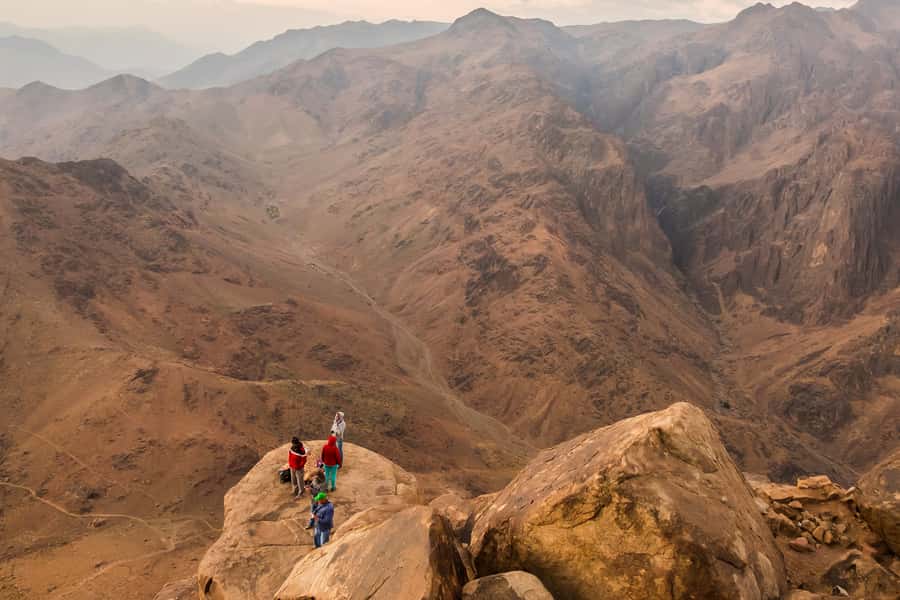
The last section is the part to respect. The advertised 750 steps are mostly irregular stones and boulders, with different heights and awkward gaps. This short stretch can feel harder than the longer lower path, especially after several hours without sleep.
You will use your legs, balance, and patience here. Good hiking shoes are far more useful than trainers with smooth soles, and flip-flops are a poor choice. Keep your backpack light, since every extra item feels heavier near the top.
The climb is not suitable for children under 14, pregnant women, wheelchair users, or people with shortness of breath, bone pain, or serious difficulty with exertion. A reasonable level of fitness helps, but regular gym sessions do not always prepare you for a steep night hike on uneven rock.
Camels can be hired for the opening part of the ascent if you are struggling. They cannot take you up the final 750 steps, so you still need to complete the steepest section on foot. The operator does not recommend relying on the camel option, but it may help someone with a respiratory problem or a temporary loss of energy. The cost is extra, and prices reported in the area vary.
More Mountain and Summit Hikes in the world:
- Berber villages : Atlas Mountains Day Hike from Marrakech
★ 5.0 · 14,007 reviews - From Marrakech: Atlas Mountains Full-Day Hiking Trip w Lunch
★ 4.8 · 7,417 reviews - Mount Etna: Summit Guided Hiking Tour up to 3,400 m
★ 4.8 · 4,792 reviews - From Tirana: Bovilla Lake & Gamti Mountain Hiking Day Trip
★ 4.9 · 4,397 reviews
Waiting for sunrise at 2,285 meters
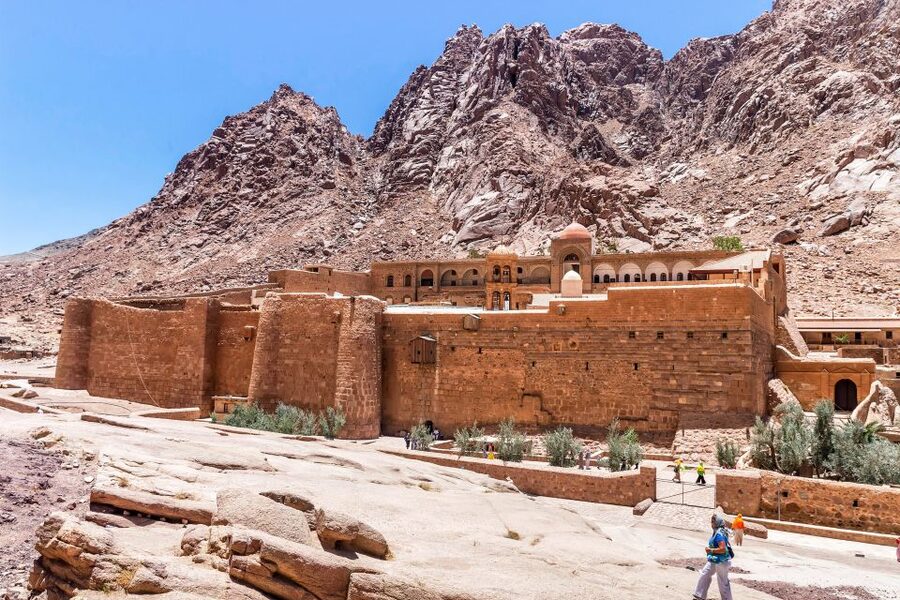
You may reach the top one to two hours before sunrise. That early arrival helps secure a good viewing place, but it also means standing or sitting in mountain wind while your clothes are damp from the climb.
This is where poor preparation can spoil a wonderful moment. In winter, temperatures at the summit have been reported around minus 2 degrees Celsius, with some guides warning that it can fall between minus 5 and minus 10 degrees at night. Summer is warmer, but the height and wind still make the summit cooler than Sharm.
Bring several layers:
- Thermal or long-sleeved base layers
- Fleece or sweater
- Warm jacket and windproof outer layer
- Hat, gloves, and wool socks
- Hiking shoes with good grip
Blankets can be rented near the top, often for around 200 Egyptian pounds according to recent experience. A blanket is not essential for everyone, but it makes the waiting period much easier. Small shops sell hot drinks, snacks, and extra clothing. Carry Egyptian pounds, euros, or US dollars in small notes, since cash is needed for toilets, drinks, snacks, and possible blanket rental.
Then the waiting pays off. As the sky lightens, the surrounding ridges appear one at a time. The sunrise is not just a bright orange disk. It is the gradual reveal of the mountain folds, valleys, and distant desert beneath you.
You can take photographs, pray, or simply sit quietly. The summit can be crowded, so do not expect complete solitude. Even so, the shared anticipation gives the moment a special feeling.
Descending in daylight
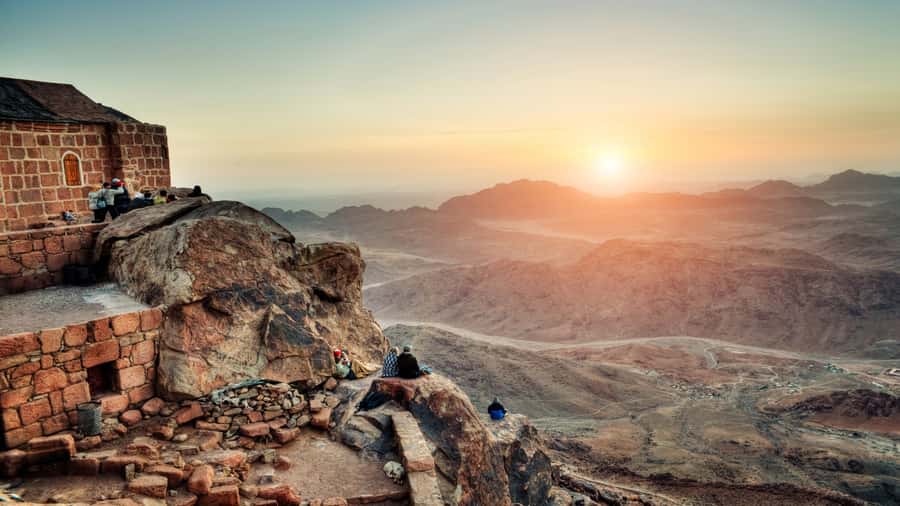
The descent takes about two hours and is easier on your breathing but harder on tired knees. Daylight reveals the loose stones and uneven surfaces that were hidden on the way up, so take your time.
You will also see more of the route, including refreshment stalls, camel handlers, and the surrounding rock formations. Some people find the descent straightforward. Others feel the strain after the summit, especially if they have not eaten or slept.
You may encounter children asking for money or selling items along the path. Carrying small change is practical, but you should decide in advance how you want to respond. The trail is not a polished attraction, and these encounters are part of the human reality of the route.
After reaching the base, you have time to rest and eat breakfast. The tour does not automatically provide a hotel breakfast, so order a breakfast box from your hotel before leaving Sharm and collect it before pickup. This is one of the most useful preparations you can make.
St. Catherine’s Monastery after the climb
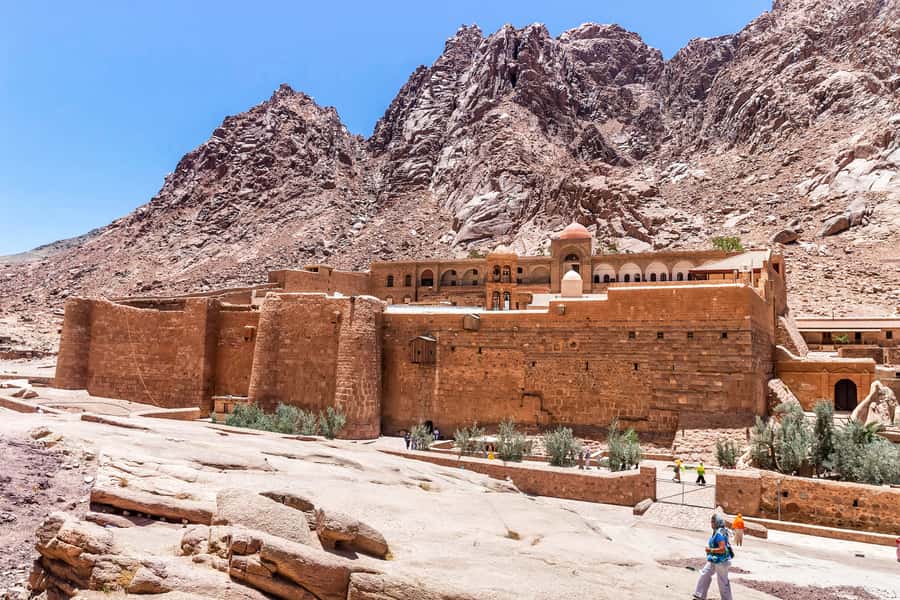
The monastery visit follows the mountain, which creates both a strength and a weakness. It is valuable to see the religious site immediately after the pilgrimage route, but you may be exhausted by then.
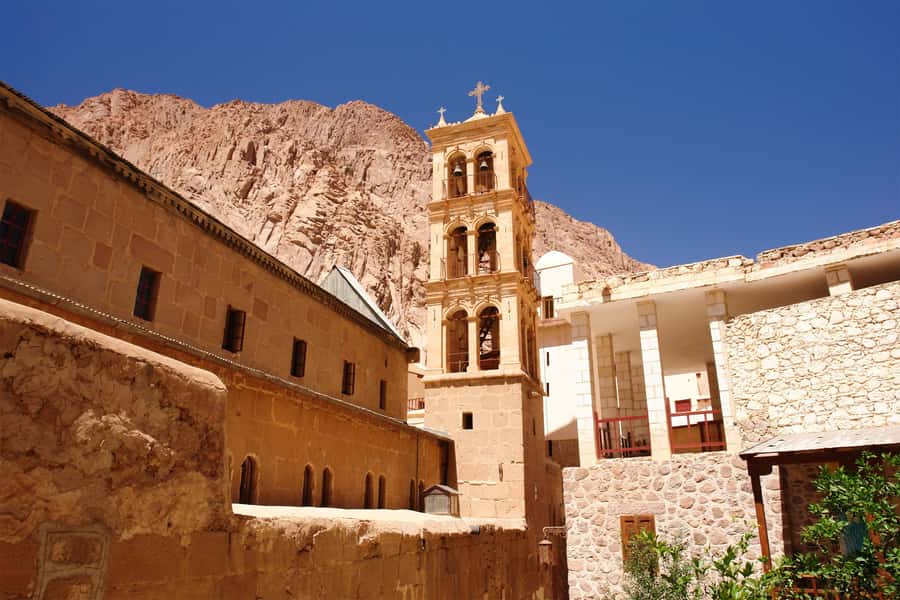
St. Catherine’s Monastery is a UNESCO World Heritage Site and is described as the oldest functioning Christian monastery in the world. The complex includes a sixth-century church associated with the biblical burning bush, as well as old manuscripts, religious icons, and museum displays.
The small museum is particularly worthwhile. It contains ancient manuscripts and icons, including material described as having been excavated from the Vatican. The site gives you a physical connection to the stories attached to Mount Sinai, rather than leaving the mountain as a scenic viewpoint alone.
The time inside can be short. If the group arrives late, security arrangements or the return schedule may limit the visit. Some people are too tired to enter and rest outside instead. If this monastery is a major reason for booking, conserve some energy on the mountain and ask the guide how much time is available once you arrive.
The monastery is closed on Sundays and certain Christian holidays. The holiday calendar can change, so check the operating date before you commit to a particular departure.
Guides, group pace, and the human side of the trip
The guide team is one of the strongest parts of this outing. The Bedouin guides are repeatedly praised for encouragement, safety checks, humor, and practical help on the rough trail. Names mentioned by past participants include Jimmy, Mohammed, Ibrahim, Amr, Ashrof, Ali, and Oman, although the actual team depends on the departure.
Several guides speak English, Arabic, and Russian, and some switch between languages during the trip. The bus guide handles background information and organization, while the Bedouin guide focuses on the climb.
Group size and transport can vary. A minibus may be crowded during hotel collection before you transfer to a larger coach. Delays are possible when gathering people from several hotels, so do not expect the tour to operate like a private excursion.
The group system is reassuring if you want support, but it limits your independence. You can sometimes walk ahead or fall slightly behind, yet you should stay within the agreed route and follow the guide’s instructions. This is not the best choice if you want to hike entirely alone at your own rhythm.
Is $50 good value?
At $50 per person, the price is attractive for a 16 to 17-hour outing that includes hotel pickup and drop-off from Sharm, air-conditioned transport, a bus guide, a Bedouin mountain guide, water, the sunrise climb, and the monastery visit.
You should still budget for the extras. Drinks, food, toilets, camel rides, and blankets are not included. Food is especially important because the hike begins late at night and continues through breakfast time.
The value is strongest if you want one major Sinai experience and do not mind a long day. It is less appealing if you dislike group transport, need a guaranteed timetable, or prefer a relaxed sightseeing tour. You are paying less for comfort and more for access, guidance, and a memorable mountain morning.
Free cancellation up to 24 hours before departure and reserve-now, pay-later booking add flexibility, but the practical details still need attention. Confirm your pickup time, stand at the correct hotel gate, and check that the monastery will be open.
What to pack for the mountain
Keep your daypack small and useful. I would pack:
- Passport
- Hiking shoes
- Headlamp or strong flashlight
- Warm layers, hat, and gloves
- Water and a hotel breakfast box
- Tissues and basic personal supplies
- Small notes in Egyptian pounds, euros, or US dollars
- Phone and portable charger
- Comfortable clothes that allow movement
Water is included, but extra drinks and food are not. You may buy hot drinks and snacks along the way, though prices can be high by local standards.
Do not rely on the shops to provide every item you need. Warm clothing in particular should come from you, not from a mountain stall at the last minute.
Who should book this Mount Sinai experience?
You should book it if you want a physically demanding, spiritually meaningful outing with a major sunrise payoff. It suits people who can manage a steep hike, lose a night of sleep, tolerate basic facilities, and accept a group schedule.
I would be cautious if you have breathing trouble, bone pain, limited mobility, are pregnant, or are bringing a child under 14. The route is not dangerous in the sense of technical climbing, but the darkness, cold, steep stones, fatigue, and thin air at altitude demand respect.
The tour is also a good match for visitors who want more than the usual Sharm beach routine. The monastery gives the day historical weight, while the Bedouin guides add local knowledge and practical care.
Final verdict
I recommend this trip for fit and well-prepared visitors who want a genuine Sinai challenge rather than an easy excursion. The transport may be crowded, communication about pickup can be uneven, and the monastery visit may be rushed. Yet the guides are caring, the price is fair, and sunrise from Mount Sinai can justify the sore legs, cold wait, and lost night of sleep.
Book it with proper shoes, serious winter layers, cash, food, and realistic expectations. If you do, this can become the defining experience of your time in Sharm.
FAQ
How long does the Mount Moses tour take?
The full experience lasts about 16 to 17 hours, including hotel pickup, transport, the climb, descent, breakfast, monastery visit, and return to Sharm. Security checkpoints can make the journey longer.
What time is hotel pickup?
Pickup is usually between 8:00 PM and 9:00 PM. You should wait at the main gate of your Sharm El Sheikh hotel along the highway, not at the reception area.
How difficult is the Mount Sinai hike?
The climb is physically demanding. It takes about two to three hours to reach the summit and includes a rough trail followed by approximately 750 uneven stone steps. The descent takes about two hours.
Can I ride a camel all the way to the summit?
No. Camel rides are available only for the first part of the ascent. You must climb the final 750 steps on foot. The operator does not recommend the camel option.
How cold is it at the summit?
The summit can be very cold and windy. Temperatures around minus 2 degrees Celsius have been reported in February, and guides have warned of temperatures between minus 5 and minus 10 degrees at night. Bring warm layers and consider renting a blanket.
Is breakfast included?
Breakfast is not included. You should pre-order a breakfast box from your hotel and collect it before the tour begins.
Is St. Catherine’s Monastery always open?
The monastery is closed on Sundays and certain Christian holidays. Check the opening date before booking, since holiday dates may vary.
What languages are available for the tour?
Live guides are available in English, Russian, and Arabic. The bus guide and Bedouin mountain guide may have different language abilities.
More Early-Start Trips around the world
- Bali: Mount Batur Sunrise Trek With Guide and Breakfast
★ 4.8 · 3,461 reviews - Mount Batur Sunrise Hike and Natural Hot Spring Option
★ 5.0 · 1,927 reviews - Mount Batur Sunrise Hike with Breakfast
★ 5.0 · 1,757 reviews - Pico Do Arieiro Pico Ruivo Sunrise or Morning Hike Transfers
★ 4.8 · 1,169 reviews
Just added around the world
- From Jökulsárlón: Vatnajökull Easy Level Glacier Hike★ 4.2 · 20 reviews
- From Kanab: 3-Hour Peek-a-Boo Slot Canyon Hiking/Photo Tour★ 4.9 · 25 reviews
- From Jujuy: Salinas Grandes, Purmamarca & Los Colorados Hike★ 4.2 · 75 reviews
- From Kalamata: Polylimnio Waterfalls Guided Hiking Tour★ 4.9 · 19 reviews
- From Kalkan: Saklikent Gorge and Gizlikent Waterfall Trek★ 4.7 · 13 reviews
- From Kalabaka: Authentic Meteora Hiking Tour – Local Agency★ 5.0 · 20 reviews
- From Hanoi: Hoa Lu, Hang Mua Hike, Tam Coc Boat, and Lunch★ 4.4 · 28 reviews
- From Huaraz: Hike to the Lagoon 69★ 4.4 · 121 reviews
Mountain & Summit Hikes, compared.
Berber villages : Atlas Mountains Day Hike from Marrakech
Read our review →
Sunrise Mount Batur Guided Hike with Breakfast
Read our review →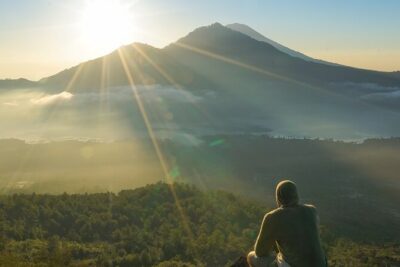
Mount Batur Sunrise Guided Hike and Natural Hot Spring
Read our review →
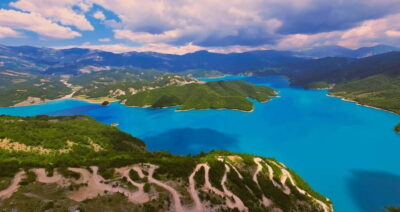
Bovilla Lake & Gamti Mountain Hiking Day Trip
Read our review →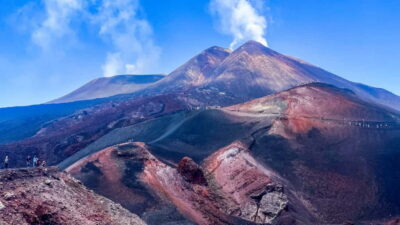
Mount Batur Sunrise Trek With Guide and Breakfast
Read our review →Browse the lists this tour appears in