
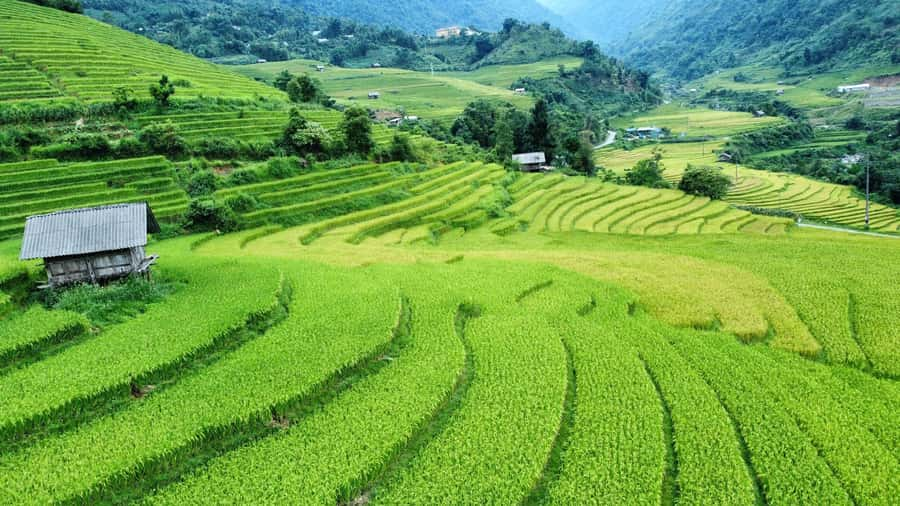
REVIEW · SAPA HIKING TOURS
Sapa: Trekking Sapa One Day With Group Tour
Rice terraces make every uphill step worthwhile. This five-hour Sapa trek takes you from the cathedral into bamboo forest, rice paddies, and Black Hmong villages, with a local lunch along the way. I like the personal cultural insight from local guides such as May Sieu and May Pham, and I like that the outing includes transport back to Sapa. The main caution is the muddy, steep opening section, which can be slippery after rain.
You meet at Sapa Cathedral at 9:30 AM and finish there around 3:30 PM after a short drive from Ta Van. I also appreciate the choice between a harder route with better views and an easier route, when conditions and the guide allow it. Bring proper shoes, sun protection, and some cash, since the countryside walk is more demanding than the low price might suggest.
Key points to know before you book
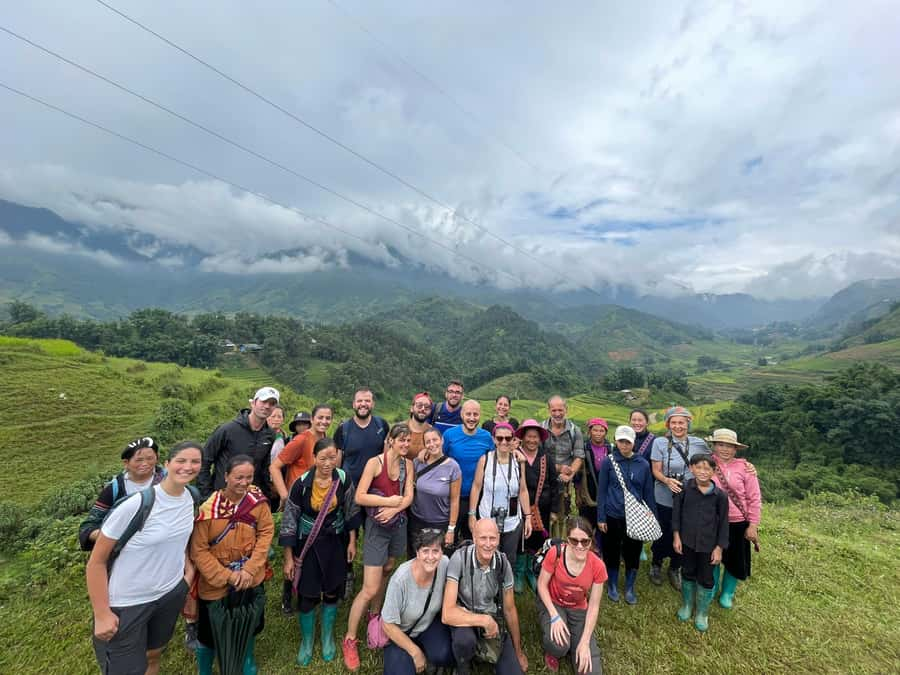
- The best scenery comes early: Bamboo forest paths lead toward the rice terraces of Muong Hoa Valley.
- Local guides shape the experience: May Sieu, May Pham, Du, Chi, and others have been praised for explaining village life with warmth and personal detail.
- The first section can be tough: Mud, rocks, steep ground, and slippery paths are possible after rain.
- Lunch is included: You eat at a village restaurant, with a vegetarian option noted in the experience details.
- The route connects three villages: Y Linh Ho, Lao Chai, and Ta Van offer different views of Hmong and Giay life.
- The price covers the important basics: Your $26 includes guiding, entrance fees, lunch, water, rain protection, and the ride back to Sapa.
From Sapa Cathedral into the highlands
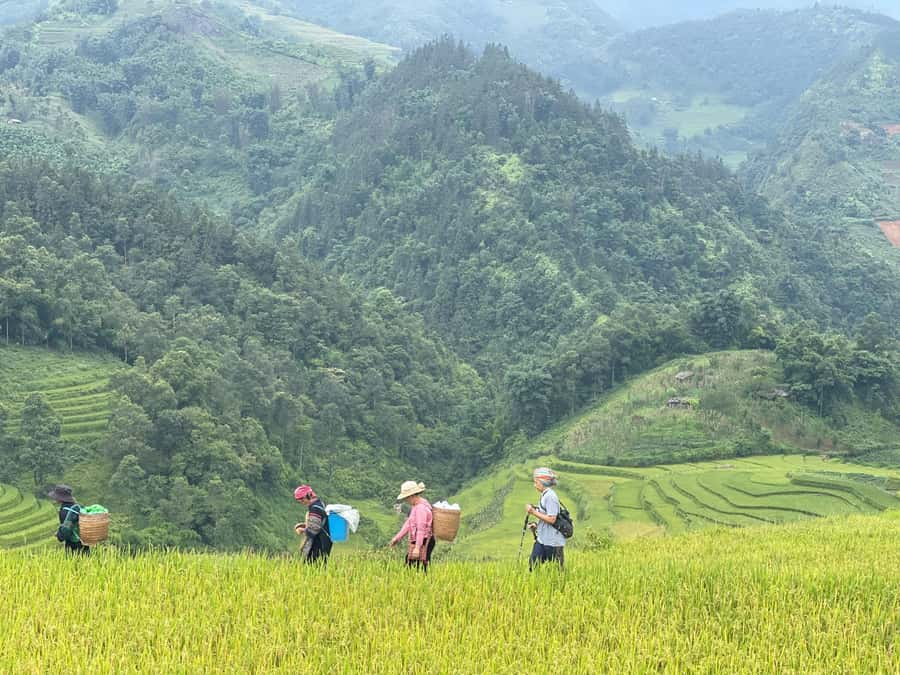
The meeting point is easy to find: the stone church in central Sapa, known as Sapa Cathedral. Arrive 10 to 15 minutes early for the 9:30 AM departure. Your English-speaking local guide gives a short safety briefing before leading the group away from town.
The route quickly trades shopfronts and traffic for open country. That change is part of the appeal. You are not spending the morning on a bus looking at distant scenery. You are walking through it, with the pace shaped by the path, the weather, and the people in your group.
The schedule describes a five-hour activity, but the day runs from about 9:30 AM to 3:30 PM because the return drive is included. The walking portion is roughly three to four hours, with stops for photos, village visits, lunch, and conversation.
More Day Trips around Sa Pa:
- From Sapa: 1-Day Guided Trek to Lao Chai & Ta Van with Lunch
★ 4.9 · 416 reviews - Sapa 1 Day Long Trek: Trek to Hau Thao and Sa Seng Villages
★ 4.6 · 344 reviews - 1-day Authentik trek & Panorama valley views
★ 5.0 · 189 reviews
Bamboo forest and the first steep descent
The walk begins with bamboo forest and rougher ground. This section is scenic, but it is not a gentle stroll on a paved path. After rain, the soil can become thick with mud, and rocks may be slick. Several people have found the opening part strenuous, especially on steep sections.
Take your time here. A guide can help you choose a less difficult route when one is available. One particularly useful feature is the option described by Julie from Belgium: she could choose a more demanding path with better views or an easier alternative. That choice may depend on weather and trail conditions, but it is worth asking about before you set off.
Wear shoes with a solid grip. Sandals and smooth trainers are poor choices for wet bamboo paths. A walking pole is not listed as part of the equipment, so bring one if you normally rely on extra support.
The forest is also a good place to slow down. The bamboo gives the early walk a shaded, enclosed feel before the views open over the valley. In wet weather, the forest may be more atmospheric, but visibility across the hills can be limited.
Y Linh Ho and the Black Hmong way of life
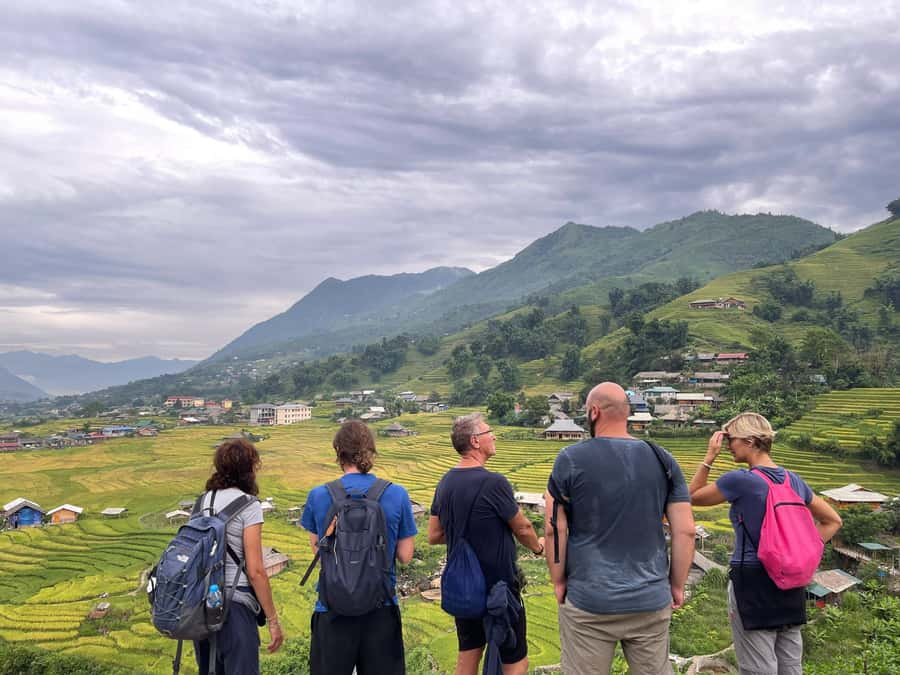
Around 11 AM, you reach Y Linh Ho, a quiet Black Hmong village in the Muong Hoa Valley. This is where the walk becomes more than a scenic hike. The guide explains local customs, traditional homes, handwoven textiles, and everyday life in the community.
The guide matters greatly here. May Sieu was praised for sharing stories about her family, ancestors, and connection to the land. Another guide, May Pham, has been described as especially good at explaining clothing, embroidery, and local culture. Guides named Du and Chi have also been praised for answering questions and describing their own villages.
Those personal details give the visit its value. You are not simply stopping to photograph a house. You can ask how a home is used, what the clothing means, or how village life differs from life in Sapa town. If your guide comes from one of the communities on the route, you may receive a more personal account of local customs.
You may also encounter Hmong women walking near the route and offering textiles or other handmade items. This is not listed as an included part of the tour, and buying something is optional. Keep a friendly but clear answer ready if you do not want to purchase anything.
Lao Chai, rice terraces, and lunch
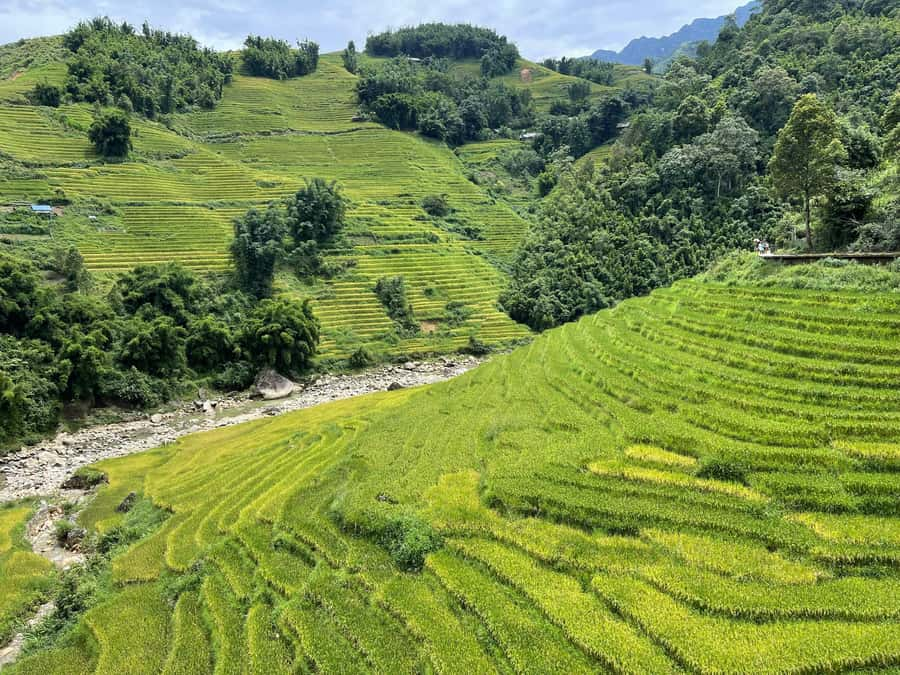
The path continues toward Lao Chai, described as the largest Hmong village on the route. The walk becomes more open as you pass rice fields and look across the terraced slopes. Depending on the season and weather, the paddies can appear bright green, muted, or partly covered by mist.
This is the section for photographs, but do not spend the whole time looking through your phone. The terraces are best understood from the footpath, where you can see how narrow tracks connect homes, fields, and neighboring villages.
At about 12:30 PM, you stop for lunch at a village restaurant. The meal is included, and a vegetarian option has been available. The food is described as freshly prepared local fare, though the exact dishes are not specified, so do not book this expecting a particular menu.
Lunch also gives your legs a proper break. The walking pace is not necessarily fast, but uneven ground takes work, especially in wet weather. You can use this hour to dry off, ask further questions, and enjoy the view instead of rushing from one photo stop to the next.
The lunch stop is simple rather than luxurious. That is appropriate for this outing. The appeal is eating in the village during the trek, not dining in a polished restaurant back in Sapa.
A few more hikes around Sa Pa worth a look
- Sa Pa: Muong Hoa Valley Trek and Local Ethnic Villages
★ 4.6 · 864 reviews - Sapa: Eco Adventure Terrace Fields and Local Villages Trek
★ 4.9 · 636 reviews - Number one top rated ethical cultural trekking and homestay by ETHOS
★ 5.0 · 456 reviews - Sa Pa Full Day Trekking Tour
★ 5.0 · 414 reviews
The route to Ta Van and the Giay community
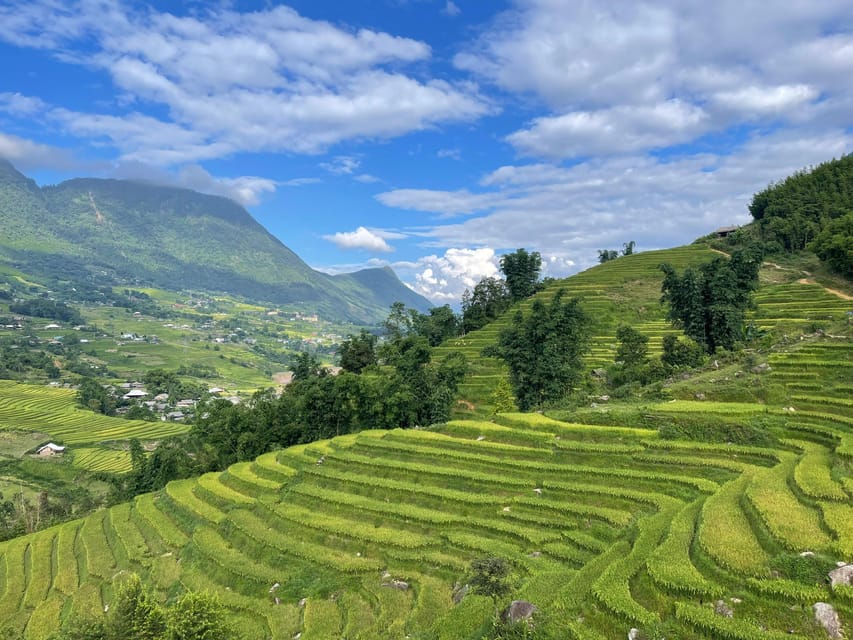
After lunch, you walk for about an hour toward Ta Van. This village is associated with the Giay people, giving the afternoon a slightly different cultural focus. You may see traditional stilt houses and hear about how different ethnic communities live in the same valley.
The route through the rice paddies is generally easier than the steep opening section. That change helps the day finish at a comfortable pace, though the trail can still be muddy or uneven. Stop when you need to. The schedule allows for photos and sightseeing, and the guides have been praised for waiting patiently while people take pictures.
Ta Van is a useful final stop because it shows that Sapa’s countryside is not a single-culture setting. The walk introduces Black Hmong villages earlier in the day, then adds Giay traditions before returning you to town. You receive a broader view of the area without needing a long multi-day trek.
The experience does not include an overnight stay or an extended village homestay. If you want several days in the mountains, this is too short. If you want a concentrated introduction to the valley, the route gives you a lot in one day.
A simple ride back to Sapa
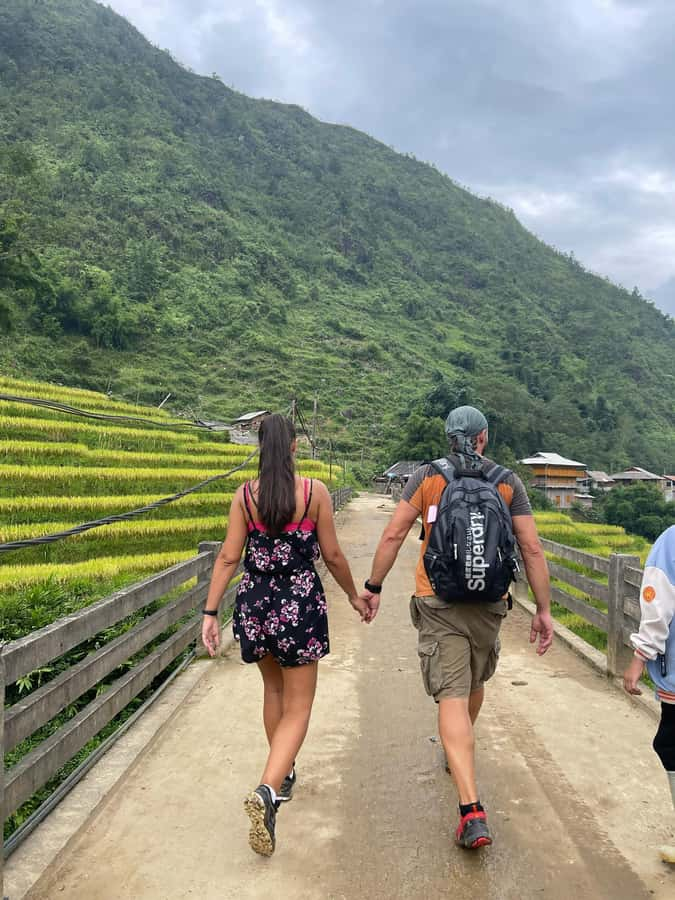
At roughly 2:30 PM, the walking ends and you return to Sapa by private car or coach. The drive takes about 30 minutes, with drop-off at the cathedral around 3:30 PM.
This included ride is a valuable detail. You do not need to walk back over the same rough paths, arrange your own taxi from Ta Van, or guess where to meet a driver. After several hours on muddy trails, a seated ride is welcome.
The return also gives you a natural end point. You can continue exploring central Sapa, return to your hotel, or plan an evening meal without being stuck in the valley after dark.
What the guides add to the day
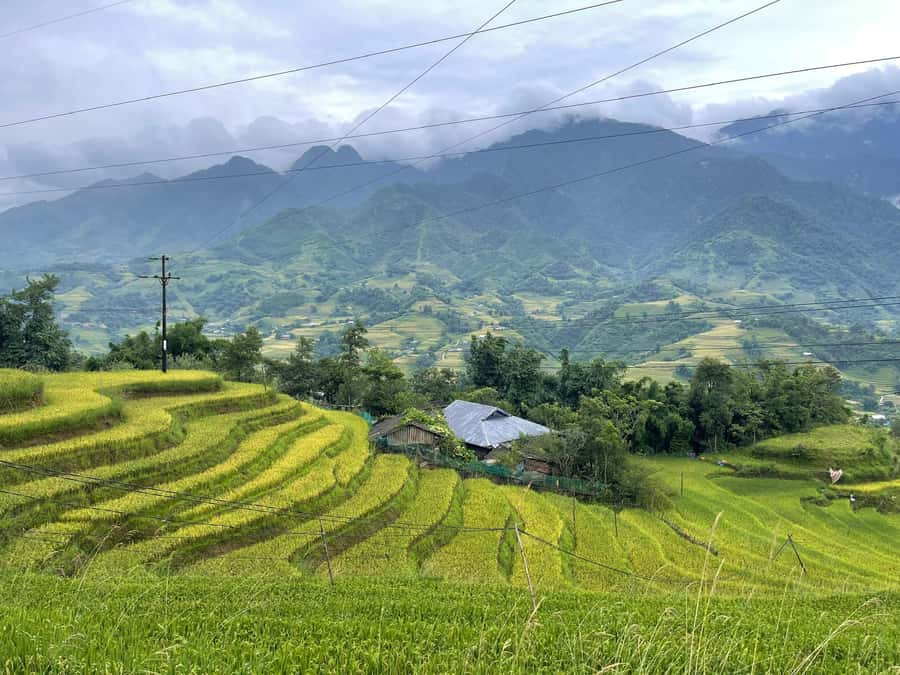
The strongest part of this outing is the guide rather than any single viewpoint. The scenery is excellent, but the guide turns rice fields and houses into places with meaning.
May Sieu has been praised for bringing family stories and personal pride into the walk. May Pham received similar praise for her clear English, gentle manner, and explanations of Hmong and Red Dao life. Du, Chi, Pang Chau, Zu, and Mrs Ghenh have also been singled out for kindness, patience, and good communication.
Guide assignments can change, so you should not book on the assumption that one named person will lead your group. Still, the repeated praise for several guides suggests that local knowledge is central to the operation.
Ask questions. This is one of those tours where a quiet walk can become much more interesting when you ask about homes, embroidery, farming, clothing, family life, and village customs. The cultural conversation is not an extra. It is one of the main reasons to choose this route.
Price, group size, and what you receive
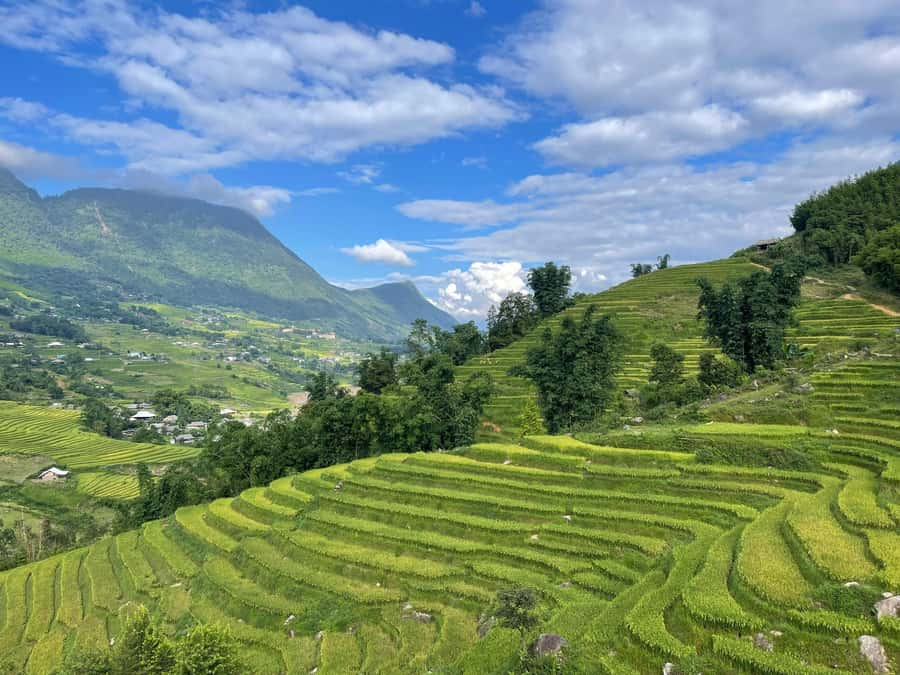
At $26 per person, this is strong value if you want a guided introduction to Sapa’s valley. The price includes an English-speaking local guide, village entrance fees, lunch, one large bottle of water, a raincoat if needed, and transport back from the final village.
You still pay for extra drinks, personal purchases, tips, travel insurance, and any items you buy along the route. Bring cash. Small village restaurants and local sellers may not accept cards, and cash is also useful for a drink or souvenir.
The tour is sold as a group experience. If five people in your party book together, the operator says it can arrange a private tour at the group price. If only two or three people book and no one else joins, an additional $5 per person may apply.
That pricing detail matters for couples. You may get a small, personal group, but you should confirm the final cost if no other participants are booked. A smaller group can make it easier to ask questions and adjust the pace, while a larger group may feel less flexible on narrow paths.
Fitness, weather, and what to pack
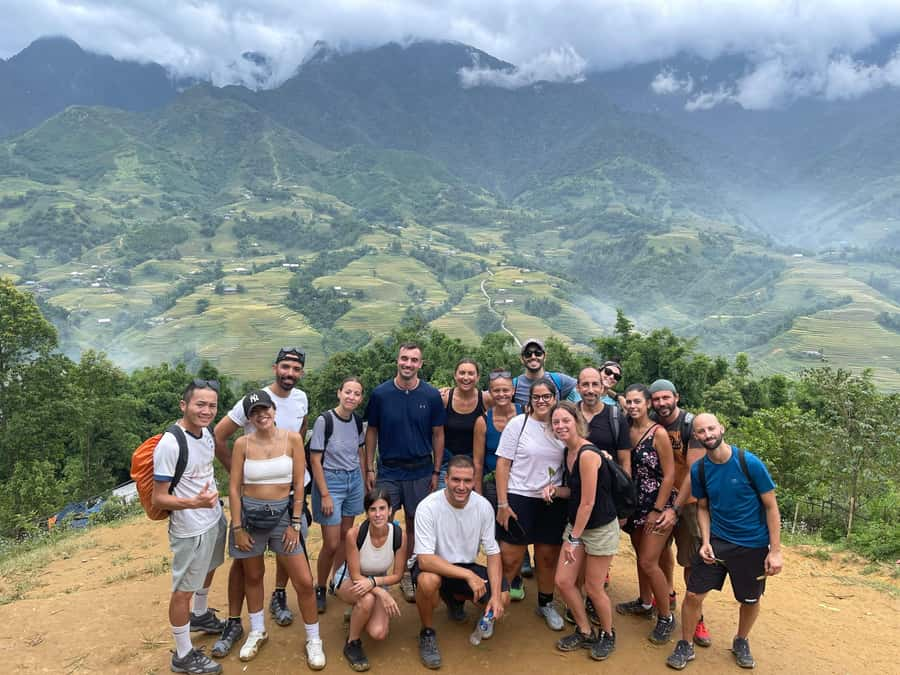
You do not need to be a serious mountain hiker, but you should be comfortable walking for several hours on uneven ground. The tour is not suitable for wheelchair users, people with heart problems, or people over 70 according to the stated restrictions.
The muddy sections are the biggest physical issue. Several people completed the route in wet or foggy conditions, but they described slower walking, frequent photo stops, and slippery ground. Do not judge the trek only by its five-hour duration. A short steep path can be harder than a longer flat walk.
Bring:
- Shoes with good grip
- Comfortable clothing
- A hat
- Sunscreen
- Cash
- A phone or camera with protection from rain
A raincoat is provided if needed, but an umbrella is also useful. One person specifically recommended bringing an umbrella and sunscreen. The weather can shift quickly in the highlands, and fog may reduce the long views even when the village visits remain worthwhile.
Fog is not a total failure. It can hide the distant mountains and soften the rice terraces, but you can still see parts of the bamboo forest, paddies, and villages. If clear views are your main goal, allow some flexibility in your Sapa plans.
Who should book this Sapa trek?
I would choose this tour if you want one active day that combines nature, village life, food, and cultural explanation. It suits couples, solo visitors, and small groups who prefer walking to sitting on a sightseeing vehicle.
It is also a good first outing in Sapa. You get a clear sense of the Muong Hoa Valley and learn how the surrounding communities differ. The route is long enough to feel like a real countryside experience, but short enough to leave your evening free.
I would look elsewhere if you want a soft, easy walk, guaranteed sunshine, or a luxury meal. The path can be muddy, the first section may be steep, and the food is local and simple. You should also choose a longer trek or homestay if your main goal is extended time in the mountains.
Cancellation is free up to 24 hours before departure, but cancellations inside that period do not receive a refund. The exact starting time is listed as subject to availability, although the supplied schedule begins at 9:30 AM.
Should you book it?
Book this trek if you want good value and genuine contact with local communities without committing to a multi-day hike. The included lunch, village fees, water, rain protection, and return ride make $26 a fair price.
Choose it with realistic footwear and realistic expectations. You are buying a guided countryside walk, not a polished attraction. For many people, that is exactly the point: bamboo, mud, terraces, homes, stories, and a local guide who can explain what you are seeing.
FAQ
Where does the Sapa trekking tour meet?
The meeting point is in front of Sapa Cathedral, also called Notre Dame Cathedral or Nhà Thờ Đá Sapa.
What time does the tour start?
The scheduled pick-up time is 9:30 AM. You should arrive 10 to 15 minutes early.
How long does the tour last?
The stated duration is five hours, with the planned schedule running from about 9:30 AM to 3:30 PM. Walking takes roughly three to four hours, with stops and a return drive included.
Which villages does the route visit?
The route includes Y Linh Ho, Lao Chai, and Ta Van. Y Linh Ho and Lao Chai are associated with the Black Hmong community, while Ta Van is home to the Giay people.
Is lunch included?
Yes. Lunch at a village restaurant is included, and a vegetarian option has been available.
Is transportation back to Sapa included?
Yes. After the walk from Ta Van, transportation back to Sapa is included and takes about 30 minutes.
What should I bring?
Bring a hat, sunscreen, comfortable clothing, sturdy shoes, and cash. An umbrella can also be useful in wet weather.
Is the trek suitable for wheelchair users?
No. The experience is not suitable for wheelchair users. It is also not recommended for people with heart problems or people over 70.
Can I cancel for a full refund?
You can cancel up to 24 hours before departure for a full refund. Cancellations made within 24 hours do not receive a refund.
Just added around Sa Pa
- Sapa: Y Linh Ho – Lao Chai, and Ta Van Trekking Day Tour★ 5.0 · 25 reviews
- From Sapa: Guided Full-Day Trekking with Lunch and Drop-Off★ 4.2 · 86 reviews
- Sapa Trekking Bargains With Local Guide★ 4.9 · 91 reviews
- Sapa: Ta Phin Village Trek with Lunch and Bathing Experience★ 4.7 · 13 reviews
- Sapa: Muong Hoa Valley View & Villages Trek with Local Guide★ 5.0 · 25 reviews
- Sapa: Muong Hoa Mountain Views and Villages Trek with Lunch★ 4.3 · 28 reviews
- Sapa: Ta Phin Village Trek & Red Dao Herbal Bath★ 5.0 · 22 reviews
- Sapa Cat Cat Village And Y Linh Ho Private Trekking Tour★ 4.4 · 7 reviews
Sapa Hiking Tours, compared.
Sa Pa: Muong Hoa Valley Trek and Local Ethnic Villages
Read our review →
Eco Adventure Terrace Fields and Local Villages Trek
Read our review →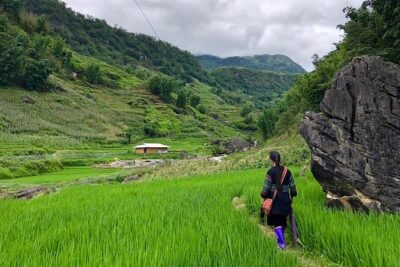
Number one top rated ethical cultural trekking and homestay by ETHOS
Read our review →
1-Day Guided Trek to Lao Chai & Ta Van with Lunch
Read our review →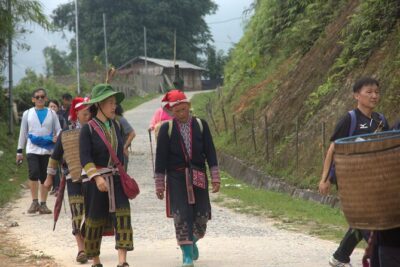
Sapa 1 Day Long Trek: Trek to Hau Thao and Sa Seng Villages
Read our review →
EXPLORE SAPA: 2D1N TREKKING & HMONG CULTURE WITH DINH
Read our review →
Browse the lists this tour appears in