
REVIEW · SAPA HIKING TOURS
SAPA: 2-DAY 1-NIGHT TREKKING & CULTURE WITH HMONG GUIDE LINH
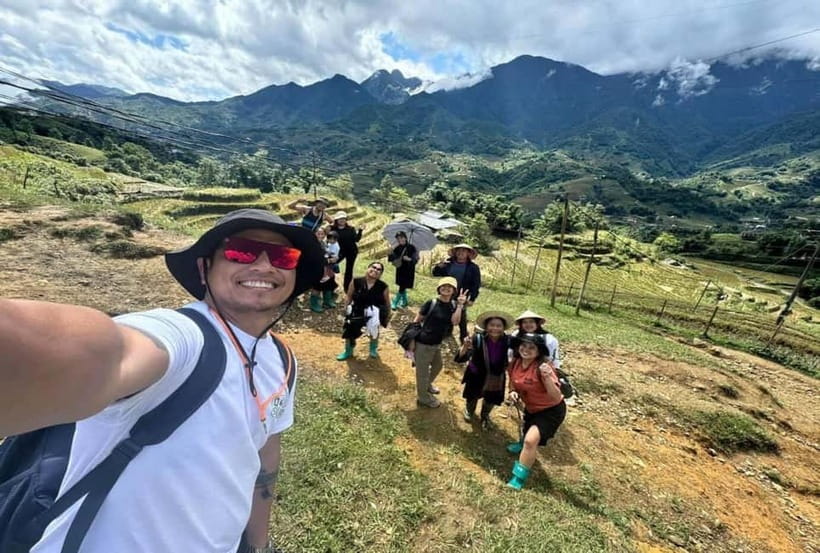
Rice terraces reward every muddy step. I like the close look at daily life in Y Linh Ho, Lao Chai, and Ta Van, and I especially like the family homestay and cooking class. The main catch is the terrain: 19 kilometers of steep, uneven paths can feel long in heat or rain.
I also like the small-group feel and the warm, personal guidance associated with Linh and her family. You get views, meals, village access, and an overnight stay for a remarkably low total cost, though the advertised $6 is not the full tour price. The remaining 700,000 VND per person is due after the trip.
Key points at a glance
- Three communities in two days: Walk through villages linked with the Black Hmong, Giay, and Red Dao.
- A real overnight stay: Sleep at a simple family homestay in Ta Van, with dinner, breakfast, and a Vietnamese spring-roll lesson.
- 19 kilometers on foot: Expect five to six hours of walking on Day 1, followed by three to four hours on Day 2.
- Strong guide-led experience: Linh is praised for her humor, care, English, cultural explanations, and attention to the group.
- Great value, with a price detail: The $6 booking amount is followed by a 700,000 VND final payment, while meals, entry fees, transport, and lodging are included.
- Pack for real mountain conditions: Bring proper shoes, water, sun protection, rain gear, insect repellent, and dry clothes.
Why this Sapa trek feels different from a town sightseeing tour
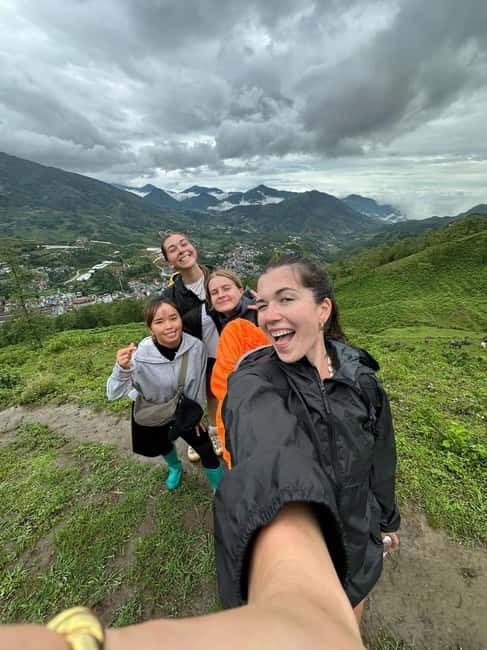
Sapa town is easy to reach, but its famous views make more sense once you walk into the Muong Hoa Valley. This trip moves away from cafés and hotel streets and into rice terraces, narrow village paths, bamboo groves, waterfalls, and working farms.
The value here is not only the scenery. A local Hmong guide can explain how rice is planted and grown, identify the communities you pass through, and help you understand why houses, paths, bridges, and fields are arranged as they are. Linh is praised for answering questions, keeping people hydrated, and making the walk feel friendly rather than formal.
You should expect a group tour, not a private expedition. That usually makes the evening more social, and the shared dinner, games, karaoke, and happy water can become part of the fun. It also means the walking pace and meal timing may not always suit everyone.
More Evening Trips around Sa Pa:
- Sapa: 2-Day Local Guided Valley Trek with Night Homestay
★ 5.0 · 27 reviews - Hanoi: Sapa Trekking 2 Days 1 Night – Sleeper Bus from Hanoi
★ 4.6 · 18 reviews - 2 Night Lao Chai-Ta Van Homestay- Trekking & Fansipan Visit
★ 4.0 · 8 reviews
Day 1: from Sapa Church into Muong Hoa Valley
Meet at Sapa Stone Church at 9:00 AM. The church sits near Sapa’s central square on Núi Hàm Rồng Street, so it is a practical meeting point. Look for the guide near the entrance with a sign or name tag.
One detail needs checking before you go: the tour information identifies Linh as the guide, while the meeting instructions refer to Lala. Other guide names, including Mia, Mimi, and Nghing, also appear in the operating details. This may reflect different guides serving the same route, but confirm the name and meeting contact before departure so you are not scanning the church steps for the wrong person.
From Sapa, you head southeast toward the Muong Hoa Valley. The opening section offers broad views over steep hills and layered rice terraces. In clear weather, this is the part where you understand why Sapa is one of northern Vietnam’s best walking areas. In cloud, fog, or rain, the views shrink, but the mountain atmosphere becomes quieter and more intimate.
Y Linh Ho and the Black Hmong
Y Linh Ho is associated with the Black Hmong community. You pass traditional wooden and bamboo homes, cultivated slopes, and terraces that show how closely village life follows the seasons.
This is a good place to listen to Linh rather than rush for photographs. The useful part of a local guide is the explanation of what you are seeing: the farming, the houses, and the connection between the villages and the hills. The route is not a paved park trail. Expect dirt, stones, steps, and sections that may be slippery after rain.
Lao Chai and the long valley walk
Lao Chai is one of the larger Hmong communities on the route. You may see older stone carvings and get a stronger sense of everyday valley life than you would from a short viewpoint stop.
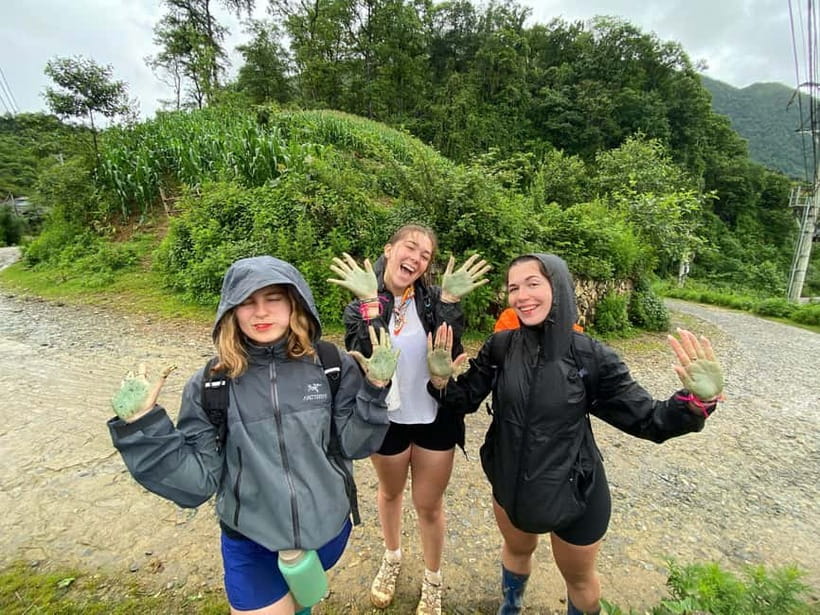
The first day covers about 12 kilometers and takes roughly five to six hours. That sounds manageable on paper, but the surface makes the distance count. You will climb and descend, cross uneven ground, and walk beside or through rice-growing areas. One useful lesson from the experience is simple: good hiking shoes matter more than stylish clothes.
Lunch is included, but timing can be slow. A meal may take about an hour to arrive, even when the dishes are straightforward. I would treat that as part of the local pace, while also carrying a snack in case you are hungry after the morning walk.
More Two-Day Trips around Sa Pa:
- EXPLORE SAPA: 2D1N TREKKING & HMONG CULTURE WITH DINH
★ 4.9 · 191 reviews - Sa Pa: 2-Day Trekking Trip with Ethnic Minority Homestay
★ 4.7 · 145 reviews - Mountain views & Rice Terraced Fields Hiking – 2D 1N
★ 5.0 · 99 reviews - 2-Day Fansipan Mountain Trek – Indochina’s Highest Peak
★ 4.3 · 42 reviews
Ta Van and the family homestay
Ta Van is home to Giay and Hmong families. The route may include suspension bridges and green valley paths before you reach the overnight accommodation.
The homestay is simple rather than hotel-like. It is described as clean, cozy, and welcoming, with basic facilities. Depending on the arrangement, you may have a private room or shared sleeping space. Reviews also refer to access to showers and toilets, but you should still expect a rural home rather than resort standards.
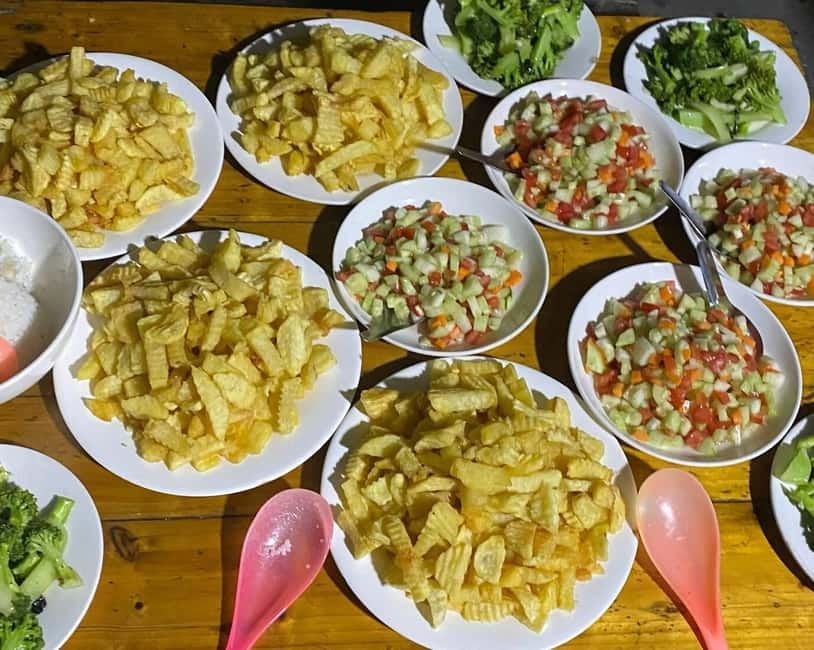
The family welcome is one of the strongest parts of this trip. Dinner is home-cooked, portions are generous, and vegetarian food is available. Several accounts describe a lively evening with games, karaoke, and happy water, the local term often used for rice liquor shared socially. You can join in, but you do not have to drink. The point is the easy contact with the host family and the rest of the group.
There can be a quiet gap between arrival, often around 3:30 PM, and dinner at about 6:45 PM. Bring a book, cards, or a small game. You may also have time to help prepare food, though that is not promised as a formal activity.
The spring-roll lesson and the value of staying overnight
The cooking lesson focuses on Vietnamese spring rolls. It is modest, hands-on, and a better cultural activity than a staged performance because it happens where you are already staying.
The overnight stop changes the rhythm of the walk. You are not simply taken back to Sapa after taking photographs. You eat with a local family, wake to rural sounds, and see the village at a different time of day. Several accounts describe sunrise views from the homestay, though weather will decide how much you see.
This is also where expectations matter. A homestay means basic comfort, not guaranteed hot water, hotel-style privacy, or a full schedule of entertainment. The accommodation receives praise for being cozy and clean, but the experience is strongest if you are happy with simple facilities and a social evening.
Day 2: bamboo forest, waterfalls, and Red Dao culture
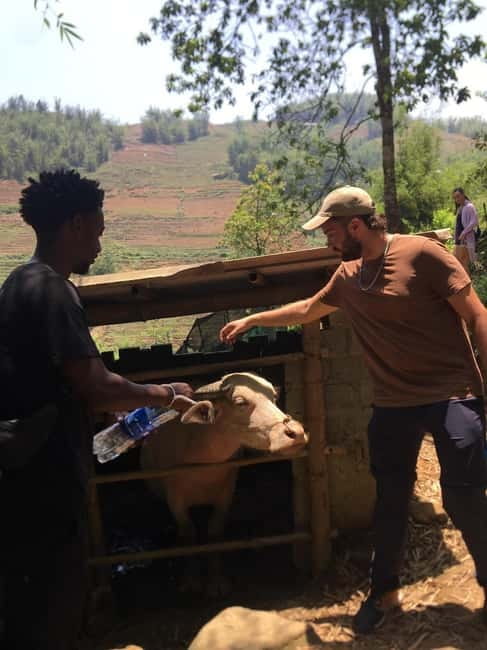
After breakfast, the second day covers about six kilometers and takes three to four hours. The route leads toward Giang Ta Chai and Supan before a vehicle returns you to Sapa Church at around 2:30 PM.
Giang Ta Chai and the Red Dao
Giang Ta Chai is linked with the Red Dao, known for red head coverings and traditional herbal bath practices. The path passes waterfalls, suspension bridges, and bamboo forest.
This section is shorter than Day 1, but it is not necessarily effortless. Wet bamboo paths and streamside tracks can be slippery, and some climbs still require balance and steady legs. One account describes swimming near a waterfall, while another recommends bringing a swimsuit for a cool-down. The information does not promise a swim on every departure, so pack one if you like the option, but do not build your plans around it.
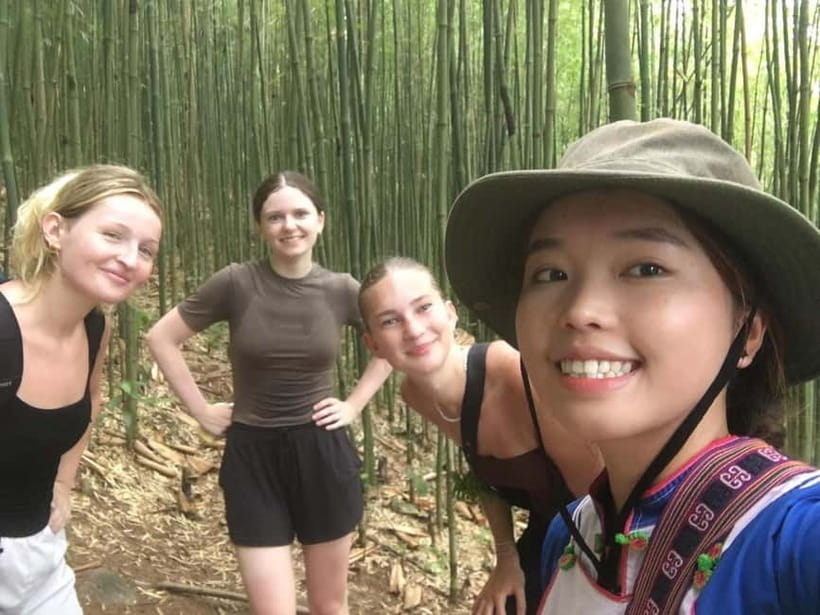
The bamboo section is a highlight for many people because it feels different from the open rice fields. You move through shade, listen to water, and walk on narrower paths. Children from nearby villages may follow the group for part of the route, adding energy to the walk.
Supan and the ride back
Supan is described as a peaceful hilltop community with wide views over the valley. Lunch takes place at a small family restaurant before the return transfer.
The vehicle back to Sapa Church is included, which matters after two days on foot. The stated arrival is about 2:30 PM, though mountain roads and group timing can affect the exact hour. If you have a bus, train, or fixed hotel transfer later that afternoon, leave a sensible buffer.
The guides: what Linh adds to the walk
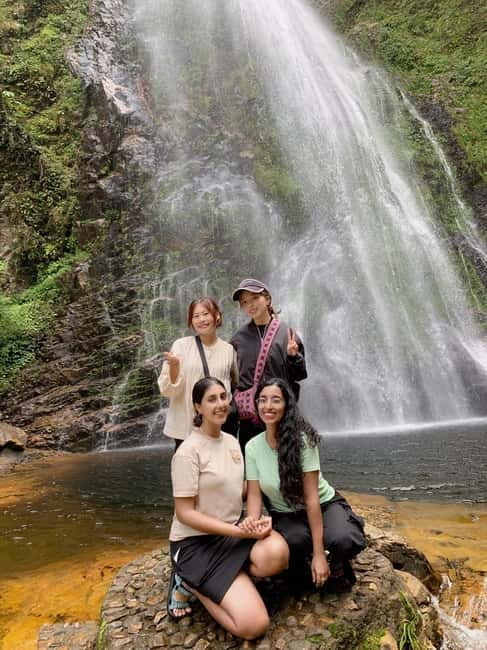
Linh’s strongest qualities are warmth, humor, patience, and local knowledge. She is praised for explaining Hmong culture, rice farming, village life, and the places along the path. She also keeps an eye on practical needs such as water, difficult sections, and questions from solo participants.
The operation may use other guides or family members on parts of the route. Lala and her husband Su are mentioned in connection with the homestay, while Mia, Mimi, and Nghing are also named in accounts of similar departures. That does not necessarily change the route or standard, but confirm who will meet you and who will host you.
A guide cannot remove every challenge from a mountain trek. You still need to watch your footing, manage your own water, and tell the guide if you are tired. The positive reports about the guides are most useful because they point to something practical: you are not left to find your way through unfamiliar village paths alone.
How hard is 19 kilometers?
The tour calls for moderate fitness. I would interpret that as suitable for someone who walks regularly, but not ideal for a person expecting a gentle village stroll.
Day 1 is the test. Twelve kilometers over five to six hours includes uneven terrain and some steep sections. Rain turns soil into mud, while clear weather can make exposed rice-field paths very hot. One account specifically warns that much of the walking may be in direct sun, so a hat, sunscreen, umbrella, and plenty of water are sensible.
Pack:
- Hiking shoes with a dependable grip
- Water and small snacks
- A hat, sunglasses, and sunscreen
- A light raincoat or jacket
- Insect repellent
- Dry clothes for the evening
- Comfortable trekking clothes
- A swimsuit if you want the possibility of a waterfall swim
Do not carry your full travel bag if you can avoid it. If your Sapa hotel cannot store luggage, a bag transfer to the homestay can be arranged for 50,000 VND per motorbike, with up to two large backpacks per bike. Confirm this in advance.
Price, meals, and what is included
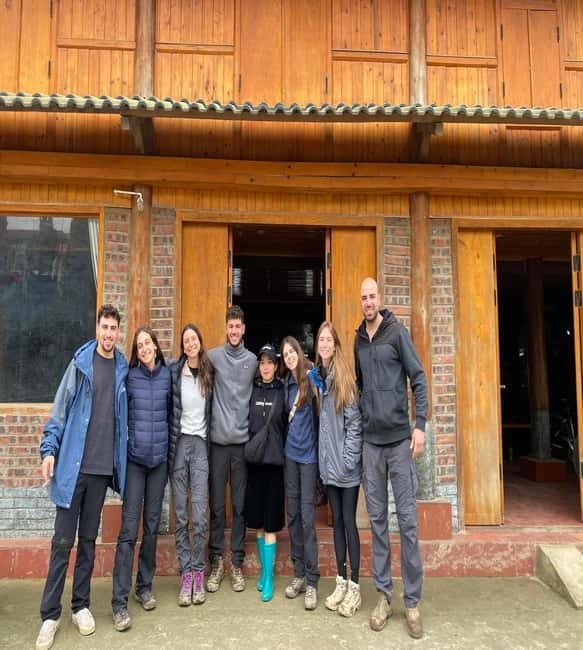
The advertised $6 is best understood as the booking fee, not the complete price. The remaining payment is 700,000 VND per person after the tour. If bad weather or an unexpected event prevents the trip, the stated charge is limited to the 160,000 VND booking fee.
For the full cost, you receive:
- An English-speaking local guide
- One night at a family homestay
- Lunch and dinner on Day 1
- Breakfast and lunch on Day 2
- Village and attraction entry fees
- Car transfer back to Sapa
That is strong value. You are paying for a two-day route, four meals, lodging, guiding, entry fees, and return transport. Drinks, alcohol, personal purchases, and travel insurance are extra.
The main financial surprise is the difference between the headline price and the final payment. Ask for the total in Vietnamese dong before booking. Also carry money for drinks or handmade goods. Local helpers may assist on steep sections and later invite you to buy bracelets, scarves, or other handmade items. You can politely decline, and knowing this in advance makes the interaction less awkward.
Weather, crowds, and the authentic trade-offs
Sapa weather changes quickly. Clear skies can bring superb views, but also intense sun. Fog and rain can hide the terraces while making the walk cooler and more atmospheric. The route may be adjusted for safety if conditions turn bad.
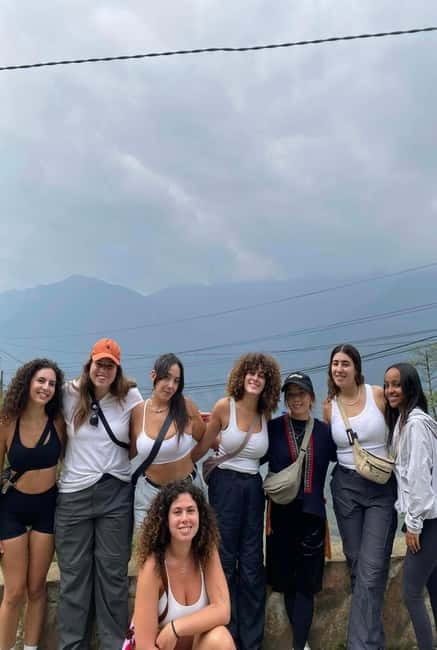
The small-group format gives the trip a more personal feel, but it is still a group activity. You will share the pace, meals, and evening with other people. That suits solo visitors especially well, since the homestay and group dinner make it easy to meet others.
The authentic setting also brings minor inconveniences. Lunch may take time. There may be a long free period before dinner. Paths can be muddy, and the homestay is basic. Those are not flaws to ignore, but they are part of the trade: you receive a closer look at local life instead of a polished resort package.
Who should book this Sapa trek?
I would choose this trip if you want scenery and cultural contact in equal measure. It suits solo visitors, couples, and friends who can handle a full day of walking and do not mind sharing a simple homestay.
It is less suitable if you need smooth paths, fixed meal times, private hotel facilities, or a tightly controlled schedule. It is also not designed for babies under one, and the stated age guidance excludes people over 95. Children under four are free, but you should inform the operator in advance.
The route is a good match for people who want more than a viewpoint photograph. You will see the terraces from foot level, hear local explanations, eat family cooking, and spend the night in the valley. Just bring the right shoes and accept that mountain travel runs on weather and village timing.
FAQ
Where does the trek start?
It starts at Sapa Stone Church, Nhà Thờ Đá Sapa, near the central square on Núi Hàm Rồng Street. You should arrive by 9:00 AM.
Where does the trek finish?
The included transfer returns you to Sapa Stone Church at about 2:30 PM on Day 2.
How far do you walk?
The stated total is 19 kilometers. Day 1 covers about 12 kilometers in five to six hours, and Day 2 covers about six kilometers in three to four hours.
Which communities do you visit?
The route includes villages associated with the Black Hmong, Giay, and Red Dao communities. Stops include Y Linh Ho, Lao Chai, Ta Van, Giang Ta Chai, and Supan.
What meals are included?
You receive lunch and dinner on Day 1, then breakfast and lunch on Day 2. A spring-roll cooking class is also included.
Is luggage storage available?
If your Sapa hotel cannot store your bags, a transfer to the homestay can be arranged for 50,000 VND per motorbike. Each bike can carry up to two large backpacks.
How much does the tour cost?
The booking amount is advertised as $6 per person, with a final payment of 700,000 VND per person after the tour. The final amount includes the guide, homestay, meals, entry fees, and return transfer.
Should you book it?
Book this trek if you want a low-cost, active way to see Sapa beyond town, and if a family homestay sounds better to you than another hotel night. Linh’s friendly guidance, the three local communities, the cooking lesson, and the excellent food value make this a strong choice.
Skip it if you dislike uneven trails, basic accommodation, changing weather, or flexible meal times. For everyone else, pack sturdy shoes, water, sun and rain protection, and an open mind. The terraces may be the headline, but the family dinner and village connection are likely to be what you remember.
Just added around Sa Pa
- Sapa: Y Linh Ho – Lao Chai, and Ta Van Trekking Day Tour★ 5.0 · 25 reviews
- Sapa: Trekking Sapa One Day With Group Tour★ 4.7 · 55 reviews
- From Sapa: Guided Full-Day Trekking with Lunch and Drop-Off★ 4.2 · 86 reviews
- Sapa Trekking Bargains With Local Guide★ 4.9 · 91 reviews
- Sapa: Ta Phin Village Trek with Lunch and Bathing Experience★ 4.7 · 13 reviews
- Sapa: Muong Hoa Valley View & Villages Trek with Local Guide★ 5.0 · 25 reviews
- Sapa: Muong Hoa Mountain Views and Villages Trek with Lunch★ 4.3 · 28 reviews
- Sapa: Ta Phin Village Trek & Red Dao Herbal Bath★ 5.0 · 22 reviews
Sapa Hiking Tours, compared.
Sa Pa: Muong Hoa Valley Trek and Local Ethnic Villages
Read our review →
Eco Adventure Terrace Fields and Local Villages Trek
Read our review →
Number one top rated ethical cultural trekking and homestay by ETHOS
Read our review →
1-Day Guided Trek to Lao Chai & Ta Van with Lunch
Read our review →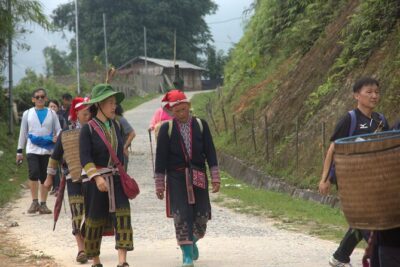
Sapa 1 Day Long Trek: Trek to Hau Thao and Sa Seng Villages
Read our review →
EXPLORE SAPA: 2D1N TREKKING & HMONG CULTURE WITH DINH
Read our review →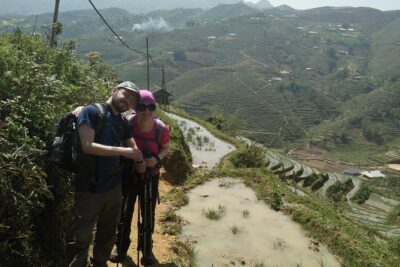
Browse the lists this tour appears in