
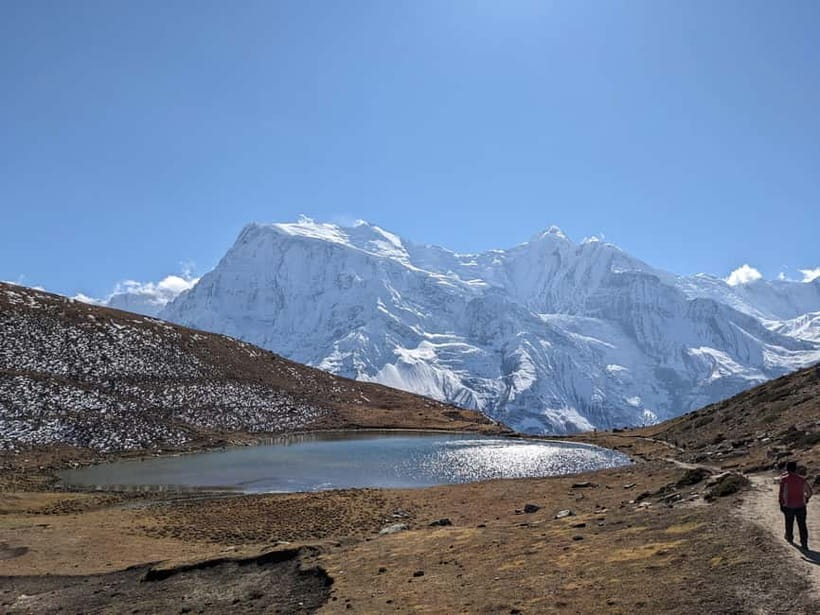
REVIEW · POKHARA HIKING TOURS
Kathmandu: 10-Day Annapurna Circuit Trek via Thorong La Pass
Thorong La rewards steady legs. This 10-day Annapurna Circuit trek combines high mountain scenery, Tibetan-style villages, local meals, and a serious pass crossing at 5,416 meters. I especially like the built-in acclimatization day in Manang and the presence of a registered local guide, since both matter when the air gets thin.
The route also offers excellent variety. You move from forested valleys near Dharapani to dry, high-altitude country around Manang and Mustang. The $447 price includes transport, tea-house lodging, meals, permits, a guide, and one night in Pokhara, which is strong value. The catch is that this is a demanding high-altitude trip, and the long transport rides, basic lodges, public bus, and risk of Acute Mountain Sickness are not minor details.
Key points to know before booking
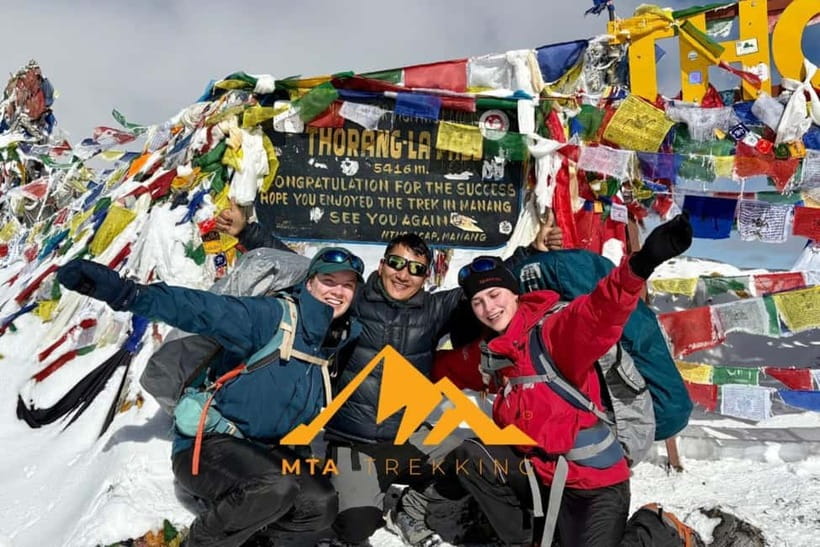
- Thorong La reaches 5,416 meters: The pass day is the physical and emotional center of the trek, with an early start and a long descent to Muktinath.
- Manang provides the crucial rest day: You can walk to the stupa, visit Gangapurna Glacier Lake, or take another short acclimatization outing.
- The scenery changes sharply: Expect oak and pine forests, apple orchards, open mountain valleys, Tibetan-style villages, and the dry Mustang side of the pass.
- The package includes the essentials: Your $447 covers permits, TIMS card, meals, tea-house accommodation, ground transport, a guide, and emergency rescue assistance.
- The guide makes a real difference: Guides named in past trips include Ganesh, Prakash, Chakra, and Ghanshyam. Their reported strengths were pacing, food advice, hydration, route knowledge, and altitude care.
- You need serious preparation: Warm layers, hiking shoes, trekking gear, sunscreen, sunglasses, and insurance with helicopter evacuation cover up to 5,400 meters are strongly advised.
Why this Annapurna route still feels special
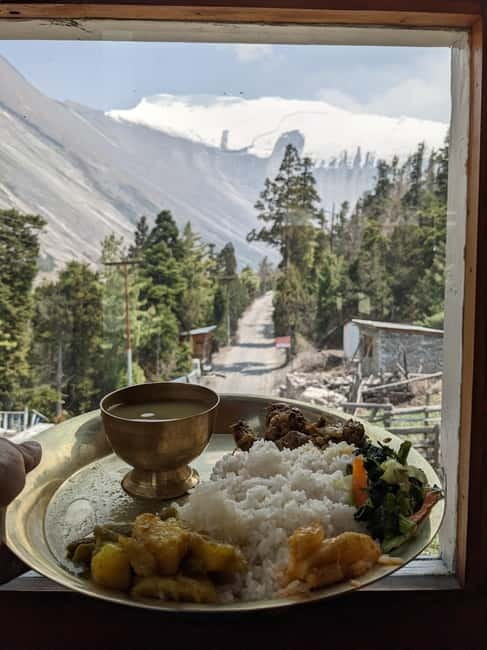
The Annapurna Circuit works because it keeps changing. You are not walking through the same type of country for ten days. The early trail follows the Marsyangdi River through green valleys, then climbs toward pine forests and high mountain settlements. After Manang, the trees thin out and the world feels broader, colder, and more exposed.
The mountain views are a major reason to choose this route. From different sections, you may see Annapurna II, Annapurna III, Annapurna IV, Lamjung Himal, Tilicho Peak, Machapuchare, Dhaulagiri, and the Mustang Valley. The exact views depend on weather, but the route gives you repeated chances to look up from the trail and see serious Himalayan peaks.
I also like the cultural side of this trip. Villages such as Bagarchhap, Braga, Manang, Muktinath, and Kagbeni are not just overnight stops. They offer Buddhist temples, prayer sites, local homes, and a sense of how people live in a place shaped by altitude, weather, and mountain trade.
The experience is private, but it is not luxurious. You travel by public bus and shared jeep at the start, sleep in tea houses and lodges, and pay extra for items such as bottled or boiled water, showers, battery charging, laundry, drinks, and personal equipment. That is normal for this route, but you should budget and pack with that reality in mind.
More Annapurna Treks in Pokhara:
- Trekking in Annapurna/Langtang/Everest/Upper Mustang regions
★ 5.0 · 161 reviews - Pokhara: Annapurna Foothills Day Hike with Transfers
★ 5.0 · 100 reviews - Kathmandu/Pokhara: 5-Day Annapurna Base Camp (ABC) Trek
★ 4.9 · 72 reviews
Day 1: Kathmandu to Besisahar and Dharapani
The first day is mostly transport. From Kathmandu, you take a public bus to Besisahar, a journey of roughly seven to eight hours, then continue to Dharapani by shared jeep.
This is not a glamorous opening, but it gets you to the walking section without adding another trekking day. The bus gives you views of Nepal’s countryside, forests, hills, and roadside settlements. The shared jeep brings a more rugged final leg and can feel tiring after the long bus ride.
Dharapani sits at about 1,850 meters, according to the trip details provided for this route. That is a useful starting height because you do not jump straight from Kathmandu into the thin air above 3,000 meters.
Day 2: Dharapani to Chame at 2,670 meters
The walk to Chame takes about six hours and reaches a maximum height of 2,670 meters. You begin through grassy country with views toward Annapurna II, then pass Bagarchhap, a Bhote village with a Buddhist temple.
The trail continues through oak and pine forest toward Timang, located below Lamjung Himal. This is a pleasing early trekking day because it gives you mountain views without yet demanding the effort required higher up.
Chame is the administrative center of the Manang area and a practical overnight stop. You sleep in a tea house, where rooms and facilities are basic. You should expect the setting and mountain access to matter more than comfort.
Day 3: Chame to Upper Pisang at 3,200 meters
This five to six hour walk takes you to about 3,200 meters. The route includes an apple orchard and the Bhratang Valley before continuing toward Pisang or Upper Pisang.
Upper Pisang is worth noting because it gives you a stronger sense of the high mountain settlements ahead. The surrounding views open toward Lamjung Himal, and the change from forest to more exposed country becomes clearer.
The increase in altitude is now significant. You have gained more than 1,300 meters from Dharapani in two walking days, so your guide’s pacing and your own willingness to walk slowly matter. Drink regularly, eat even if your appetite drops, and tell your guide early if you develop a headache, nausea, dizziness, or unusual fatigue.
A few more hikes around Pokhara worth a look
- Poon hill Trek 3 days
★ 5.0 · 176 reviews - Pokhara: 4-Day Ghorepani, Poonhill & Ghandruk Mountain Trek
★ 5.0 · 132 reviews - Ghorepani – Poon Hill Trek 3N-4D
★ 5.0 · 125 reviews - From Pokhara: 3-Day Ghorepani Poon Hill Trek with Guide
★ 4.9 · 68 reviews
Day 4: Upper Pisang to Manang at 3,540 meters
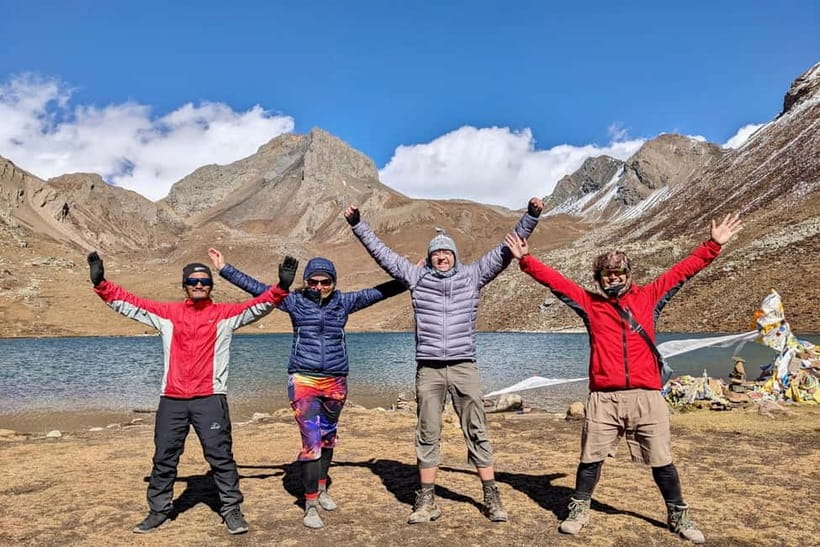
The five to six hour walk to Manang is one of the best scenic days. The route crosses the Marsyangdi River on a wooden bridge and passes through Mungji and Braga. You get broad views across the Manang Valley, including Tilicho Peak, Annapurna III, and Annapurna IV.
Braga is especially important for its Buddhist character and traditional village setting. It gives you a chance to slow down and notice the architecture, religious sites, and local rhythm rather than treating the trail as a race between lodges.
Manang is a major stopping point. At about 3,540 meters, it is high enough to require respect but still offers a useful place to rest, eat, and adjust before the pass section.
Day 5: Acclimatization in Manang
This rest day is one of the strongest parts of the itinerary. You are not simply losing a day of walking. You are giving your body time to adjust before the route rises above 4,000 meters.
The plan allows for optional outings. You might cross a river to see an icefall, walk to Gangapurna Glacier Lake, or explore the village and hike to a stupa. The listed maximum height for the day is 4,050 meters, so a short higher walk can help prepare you for the next stages.
The guides praised in past trips were particularly careful about this part. Ghanshyam was described as an experienced guide who adjusted the pace and helped with water purification tablets. Ganesh was praised for watching food, hydration, and rest. Those details matter more than a fast walking speed at this altitude.
Day 6: Manang to Yak Kharka at 4,050 meters
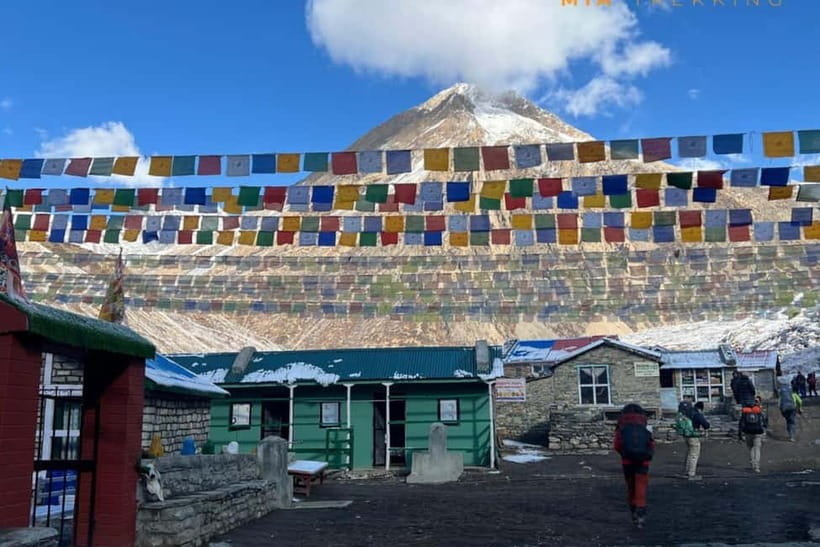
The walk to Yak Kharka takes about four hours, but do not mistake a short distance for an easy day. The trail reaches about 4,050 meters, and the thinner air can make ordinary uphill walking feel surprisingly hard.
This is a day for patience. You should walk slowly, keep your layers handy, and avoid treating the route like a fitness test. The scenery becomes more open, with wide mountain views and fewer trees.
The package includes meals during the trek, but personal food choices still matter. Guides on this route have advised avoiding junk food and meat at higher altitudes. You may find that simple, warm meals are easier to manage than heavy food when your appetite is low.
Day 7: Yak Kharka to Thorong Phedi at 4,450 meters
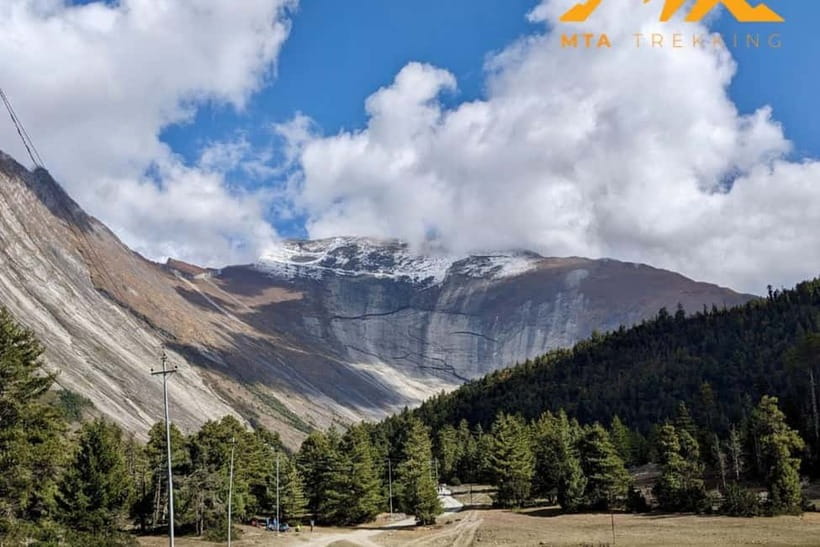
This four to five hour section takes you to Thorong Phedi, the final overnight stop before the pass. The trail rises gradually, reaches a hilltop, then descends toward the headwaters of the Marsyangdi River.
You cross a hidden wooden bridge and continue up the mountain path on the river’s right bank. The walk is not the highest point yet, but the height and anticipation make it feel serious.
Thorong Phedi is a place to conserve energy. Organize your warm clothing, water, snacks, and headlamp if you carry one. The next day begins early, and you will want as little confusion as possible before setting out.
Day 8: Crossing Thorong La at 5,416 meters
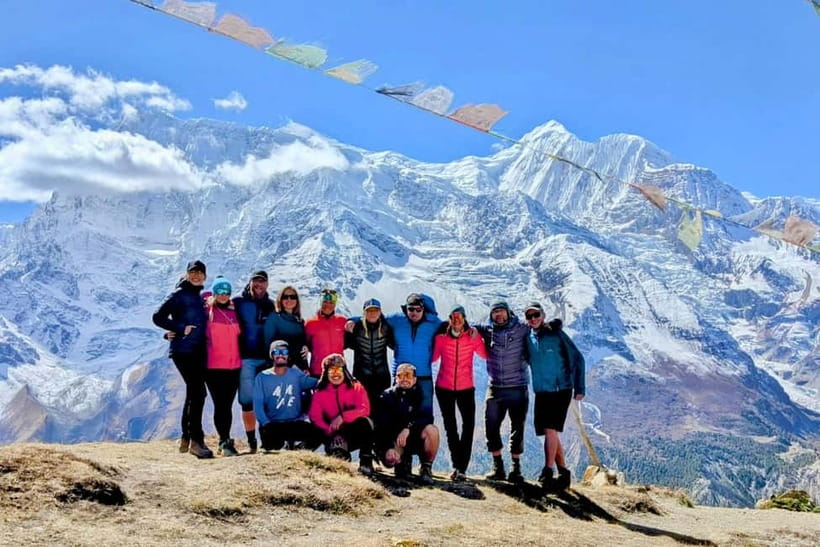
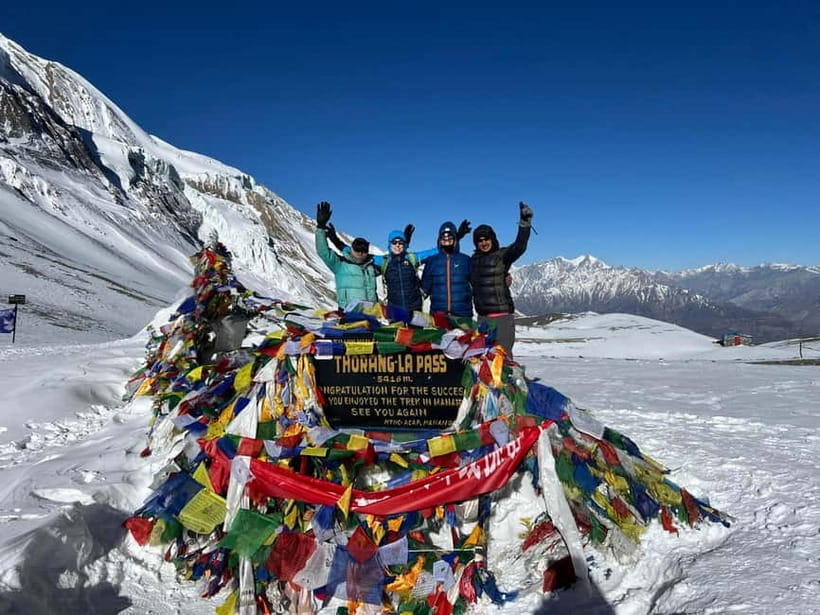
This is the hardest and most memorable day. The walk from Thorong Phedi over Thorong La to Muktinath takes about seven to eight hours, with the pass reaching 5,416 meters.
The ascent is slow and demanding. A past participant described the early start as challenging, but also found the views worthwhile. That is a fair description: the pass is not a casual viewpoint. It requires stamina, favorable conditions, and careful pacing.
At the top, you are rewarded with huge views and the satisfaction of crossing one of the world’s highest mountain passes. The descent toward Muktinath brings views of Mustang Valley and Dhaulagiri. The change in scenery is striking, with drier, more open country replacing the greener valleys below Manang.
This day carries real risk. If you show signs of altitude sickness, the guide may need to change the plan. Do not assume that determination alone will get you across. Travel insurance should include medical treatment and helicopter evacuation up to at least 5,400 meters, as specifically advised for this trip.
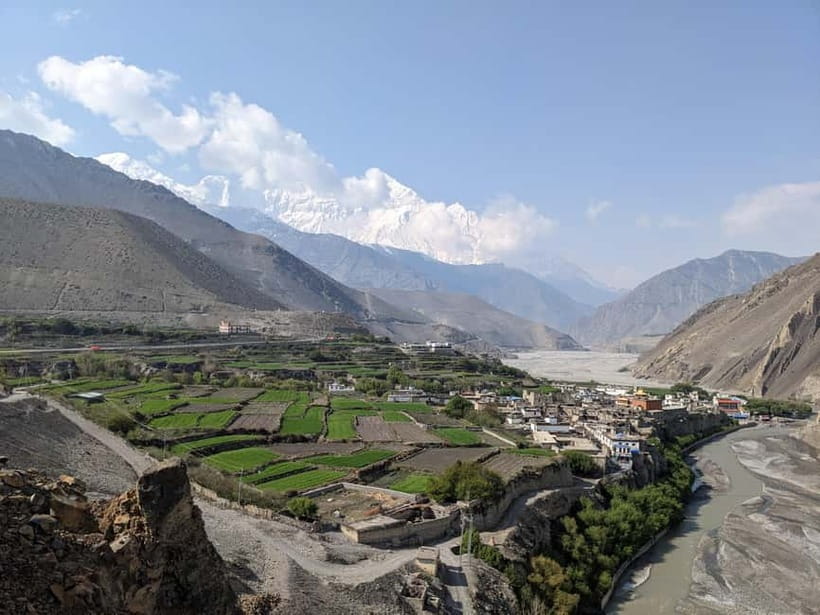
Day 9: Muktinath to Jomsom through Kagbeni
The route from Muktinath to Jomsom takes about seven to eight hours and passes through Kagbeni. This is a scenic walking day after the pass, but your legs may still feel the previous effort.
Muktinath has religious importance and is visited by both Hindu and Buddhist pilgrims. Kagbeni gives you another chance to explore an old mountain settlement before continuing toward Jomsom.
The route also helps you understand the geographic change created by Thorong La. You have crossed from the Manang side into Mustang, where the air, colors, and terrain feel drier and more Tibetan in character.
Day 10: Jomsom to Pokhara by public bus
The final transfer is an approximately eight-hour public bus ride from Jomsom to Pokhara. It is a long finish, but it brings you out of the high country and back toward a major city.
One night at Hotel Orchid in Pokhara is included, along with a farewell dinner. That extra night is useful. After ten days of walking and several long transport segments, you will appreciate a bed, a hot shower if available at the hotel, and time to settle before onward travel.
Keep your expectations practical on this final day. Public transport is part of the value of the package, but it also means the journey may be slower and less predictable than a private vehicle.
What the $447 price really covers
At $447 per person, the package offers a lot for a full circuit crossing. It includes hotel pickup and drop-off within the stated Thamel and Lakeside areas, permits and a TIMS card, public transport from Kathmandu to Besisahar, shared jeep transport to Dharapani, and the bus from Jomsom to Pokhara.
You also receive a government-registered local guide, tea-house and lodge accommodation, all breakfasts, lunches, and dinners during the trek, one Pokhara hotel night, a farewell dinner, and emergency rescue assistance.
The price does not include trekking gear, insurance, drinks, bottled or boiled water, showers, charging, laundry, phone calls, extra porters, international flights, or the Nepal visa fee. Those add-ons can affect your final budget, so the advertised price is best viewed as a solid base cost rather than your complete trip total.
The private group format is a plus if you want the guide to adjust the pace to your condition. It does not mean you avoid shared transport or basic accommodation. This is a guided trekking package, not a private luxury expedition.
Guides, porters, and the human side
The strongest praise for this trip centers on guide care. Ganesh was credited with checking acclimatization, meals, and hydration. Prakash was praised for choosing scenic routes, explaining Nepalese life, and even knowing some Polish. Chakra was valued for local route knowledge and careful advice about rest and food. Ghanshyam was praised for his experience, calm support, and help with water purification.
These details tell you what to look for from your own guide: slow pacing, honest altitude advice, regular food and water checks, and the confidence to change plans when necessary.
A porter is not included in the listed package benefits, so confirm this before departure if you need one. One past pair found a porter extremely helpful while carrying two bags of about 10 kilograms each. You should not assume that support is included unless the operator confirms it directly.
Who should book this trek?
I would recommend it to fit adults who want a classic Himalayan route and are prepared for long walking days, simple lodging, and a major altitude gain. It suits people who value local guides and mountain villages more than polished facilities.
It is not suitable for children under 15, people with altitude sickness, people over 70, people with respiratory problems, or pregnant women, according to the stated restrictions. Anyone with a medical concern should seek professional advice before booking.
Pack warm clothing, long pants, spare clothes, a waterproof bag, sunscreen, sunglasses, hiking shoes, and proper trekking gear. Alcohol and drugs are not allowed. Most important, do not treat insurance as optional on a route that reaches 5,416 meters.
Should you book the Annapurna Circuit trek?
Book it if you want a well-priced, tightly organized route with a registered guide, meals, transport, and the full Thorong La crossing in ten days. The scenery is varied, the villages feel connected to local life, and the Manang acclimatization day gives the schedule some needed common sense.
Think twice if you want private transport, soft beds, flexible rest days, or a relaxed pace. Ten days is efficient rather than leisurely, and the pass day can be very hard.
For prepared hikers who accept basic conditions, this is a strong-value way to experience the Annapurna Circuit. Your best decision will be to confirm the guide, porter arrangements, insurance requirements, gear rental, and extra costs before departure.
FAQ
How high is Thorong La Pass?
Thorong La Pass reaches 5,416 meters above sea level.
How long is the Annapurna Circuit trek?
The planned duration is 10 days, beginning in Kathmandu and ending with public bus travel from Jomsom to Pokhara.
Is transportation included?
Yes. The package includes transport from Kathmandu to Besisahar, shared jeep transport from Besisahar to Dharapani, hotel pickup and drop-off in the stated areas, and public bus transport from Jomsom to Pokhara.
Is accommodation included?
Yes. Tea-house and lodge accommodation during the trek is included, along with one night at Hotel Orchid in Pokhara after the trek.
Are meals included?
Breakfast, lunch, and dinner are included during the trek. Soft drinks, hard drinks, bottled or boiled water, and personal snacks are not included.
Is a guide included?
Yes. The package includes an experienced government-registered local guide. Guide languages are English and Hindi.
Is this a private group?
Yes. The activity is listed as a private group experience, although some transport uses public buses and a shared jeep.
Is an acclimatization day included?
Yes. Day 5 is an acclimatization day in Manang, with optional outings such as Gangapurna Glacier Lake, an icefall walk, village exploration, and a stupa hike.
What insurance do I need?
You should purchase comprehensive travel insurance covering medical care and helicopter evacuation up to an altitude of 5,400 meters.
What should I bring?
Bring warm clothing, a change of clothes, long pants, a waterproof bag, sunscreen, your passport or ID, trekking gear, hiking shoes, and sunglasses.
Just added around Pokhara
- Pokhara: 7-Day Annapurna Base Camp Trek & Natural Hot Spring★ 5.0 · 11 reviews
- Pokhara: 5 Day Annapurna Base Camp Trek & Natural Hot Spring★ 4.9 · 44 reviews
- Pokhara: 4-Day Private Trek Tour★ 4.9 · 43 reviews
- Pokhara: Annapurna Day Hike with Panoramic Views★ 4.3 · 7 reviews
- Pokhara: 4-Day Mardi Himal Trek★ 4.9 · 59 reviews
- Pokhara: 4-Day Poon Hill and Ghandruk Guided Trek★ 5.0 · 14 reviews
- Pokhara: 3-Day Trek★ 4.5 · 7 reviews
- Pokhara: 4-Day Beautiful Ghorepani Poon Hill & Ghandruk Trek★ 4.8 · 21 reviews
Pokhara Hiking Tours, compared.
Trekking in Annapurna/Langtang/Everest/Upper Mustang regions
Read our review →
4-Day Ghorepani, Poonhill & Ghandruk Mountain Trek
Read our review →
Kathmandu/Pokhara: 5-Day Annapurna Base Camp (ABC) Trek
Read our review →
Browse the lists this tour appears in