
REVIEW · ITALY HIKING TOURS
Stromboli: sunset trekking to Sciara del Fuoco – Ashàra
Fire meets the sea at sunset. This five-hour Stromboli hike takes you through Mediterranean scrub to a 400-meter viewpoint above the Sciara del Fuoco, where lava bursts may light the darkening sky. I like the dramatic sunset setting and the chance to see an active volcano at close range without planning the route yourself. I also like that Ashàra supplies key safety gear, including a helmet and headlamp. The main drawback is the physical demand: this is a steady uphill walk, followed by a dark descent, and volcanic activity can be quiet on your chosen evening.
The guides receive especially strong praise for their care, pacing, and volcano knowledge. Giuseppe and Pepe are singled out for memorable explanations, while Fabio is described as attentive and highly experienced. Still, guide quality and language ability can vary, so confirm your preferred language before booking if that matters to you.
Key points before you book
- The viewpoint reaches 400 meters: This is the highest point allowed with a volcanology guide on this route.
- Sunset is only part of the show: You watch the Aeolian Islands turn red, then look for Stromboli’s glowing bursts after dark.
- The return is by headlamp: Bring warm layers because the wind can feel strong while you wait at the viewpoint.
- The route is moderate but not casual: You need a reasonable level of fitness for the uphill climb and descent.
- Guiding adds real value: A good guide explains the volcano, rock formations, island life, and safe route choices.
- Pack your own food and water: At least 1.5 liters of water is required, and a snack or packed dinner is not included.
Why this Stromboli hike is worth your evening
Stromboli is not just an island with a volcano on it. The volcano shapes the whole experience. You walk through scrub with the sea around you, keep sight of the small volcanic stack of Strombolicchio, and finish above the black sweep of the Sciara del Fuoco, the channel where volcanic material travels down toward the sea.
That combination makes this outing more rewarding than a simple viewpoint walk. You get the physical sense of climbing a volcanic island, then the quiet drama of waiting for nature to provide the finale. Some evenings bring repeated bursts of lava. On others, you may see only one eruption or a few faint flashes. The sunset and views remain worthwhile, but you should not book this as a guaranteed fireworks display.
The price, about $36.30 per person, is strong value if you need a guided route and equipment. You are paying for roughly five hours, a volcanology guide, route management, a helmet, and a headlamp. Hiking shoes and poles are also provided according to the tour details, though you should confirm current equipment availability and wear sturdy footwear if you have your own.
The maximum group size is 25 people. That is not a tiny private walk, but it is small enough for a guide to monitor the group, especially on the climb and during the return in darkness.
More Sunset Hikes in Italy
- Stromboli: Sunset Trekking at Sciara del Fuoco
★ 4.6 · 1,372 reviews - Etna Sunset Tour: Volcano trek, Cave & tasting from Catania
★ 4.8 · 1,290 reviews - Catania: Mount Etna Sunset Trekking with Wine Tasting
★ 5.0 · 140 reviews
Starting at Piazza San Vincenzo
The meeting point is Piazza San Vincenzo, and departure is scheduled for about two hours before sunset. Allow time to find the meeting point, use the restroom, buy water, and collect any gear before the safety briefing.
A useful food stop is Muddica, which has been recommended for paninis before the hike. Bar Ingrid is another practical reference point. It has a view, and you can pick up water or a snack before setting off. At the end, the same area gives you options for pizza and a drink, which can be welcome after several hours on the trail.
The initial organization may not always feel perfectly clear. One account describes a delay between the meeting time and the actual departure, with little information during the wait. If you arrive early and the group is not moving yet, ask directly when the safety briefing will begin and when you should expect to leave. This is especially useful in hot weather, when you need to plan your water and food.
The briefing matters. Your guide explains the route, the safety rules, and the limits of the excursion. The legal height for this guided route is 400 meters, not the summit crater area, so you are booking a high viewpoint rather than a summit climb.
Walking through scrub, cemetery, and volcanic ground
The path begins on a nature trail and gradually works uphill. The pace is intentionally controlled, with regular pauses for views and explanations. That slower rhythm helps a mixed-ability group stay together, though you may find it frustrating if you prefer to walk quickly.
The surroundings change as you climb. Mediterranean scrub frames the path, and Strombolicchio remains a useful visual marker across the water. The small island is a distinctive companion throughout much of the walk, giving you something to look toward while catching your breath.
The old cemetery adds a quieter and more human moment. It gives the route a connection to Stromboli’s local community, not just its geology. A good guide uses this pause to explain aspects of island life and history, along with the forces that shaped the volcano.
Several guides have received praise for their explanations of rock formations and volcanic activity. Giuseppe is remembered for his lively commentary, while Pepe, described as a geologist, explained both the rocks and the island’s natural surroundings in English and Italian. These details can turn a tiring climb into a moving lesson in how Stromboli works.
The climb to 400 meters
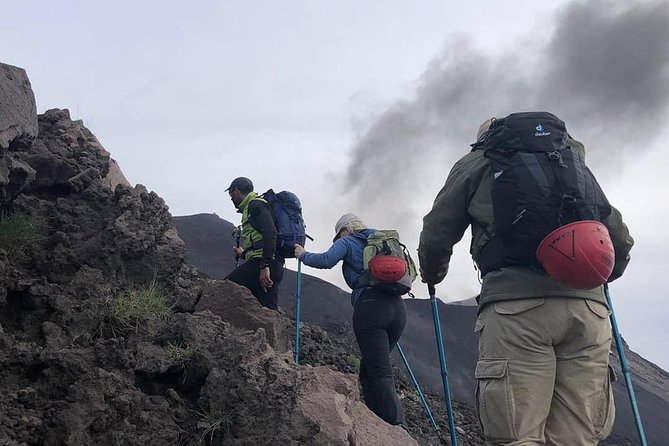
The uphill section is described as moderate. It is not presented as a technical climb, but the route is long enough to test anyone who rarely hikes. You should be comfortable walking uphill for an extended period, standing on uneven ground, and descending after sunset.
Your guide sets the pace for the group. This can be a major benefit if you are less confident on volcanic paths. Guides have been praised for waiting kindly for slower walkers and adjusting the route to suit different abilities. One reported approach used a more demanding path going up and an easier, safer path coming down.
That flexibility is one reason a guided trip makes sense here. You might be able to follow a trail independently, but you would lose the explanations and the reassurance of someone who knows the route. You also avoid the stress of judging how far to go before sunset and how to return safely in the dark.
Take the pauses seriously. Use them to drink, eat a small snack, and enjoy the view rather than trying to push through. At 400 meters, you can look back over Stromboli and the surrounding Aeolian Islands, with Strombolicchio often visible offshore.
Same trailhead, a different kind of day:
- Cinque Terre Day Trip with Optional Hiking or Pisa
★ 5.0 · 8,486 reviews - Florence: Cinque Terre Day Trip with Optional Hiking or Pisa
★ 4.9 · 4,848 reviews - Mount Etna: Summit Guided Hiking Tour up to 3,400 m
★ 4.8 · 4,792 reviews - Mount Etna: Trek to 3000m with cable car and 4×4
★ 4.6 · 3,823 reviews
Sunset above the Sciara del Fuoco
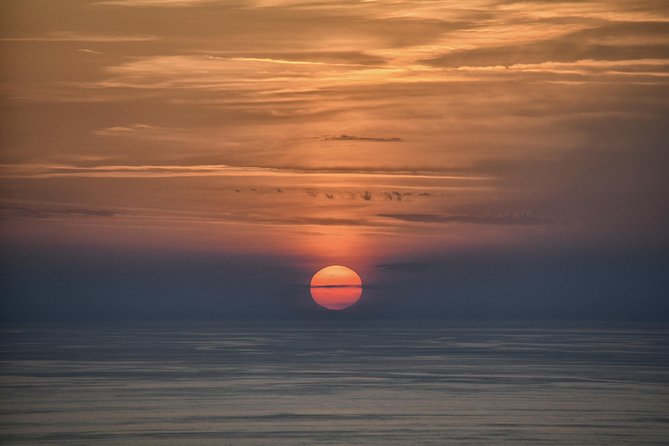
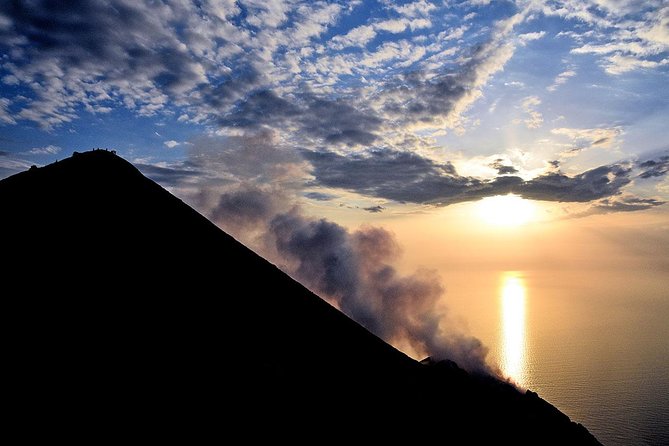
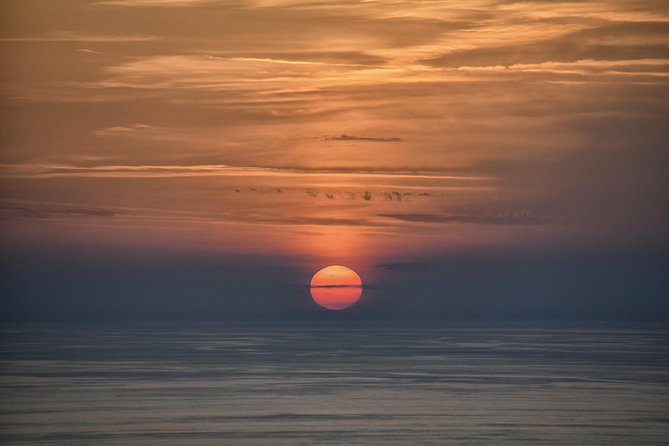
The final viewpoint is the emotional center of the tour. From the panoramic area above the Sciara del Fuoco, you can watch the sun color the islands and sea before darkness takes over. The broad view gives the climb a clear reward.
The Sciara itself is a stark volcanic channel. It is the route down which lava and loose material can move from the upper volcano toward the water. Seeing it from above helps you understand Stromboli as a living volcanic system rather than a distant mountain.
Plan to stay at the viewpoint for about an hour. This pause allows time for the sunset and for possible eruptions. The wait is part of the experience, not wasted time. You may see bright bursts soon after arriving, or you may need patience.
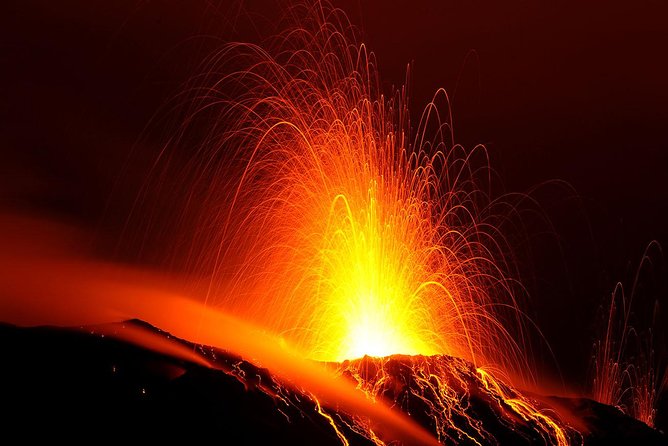
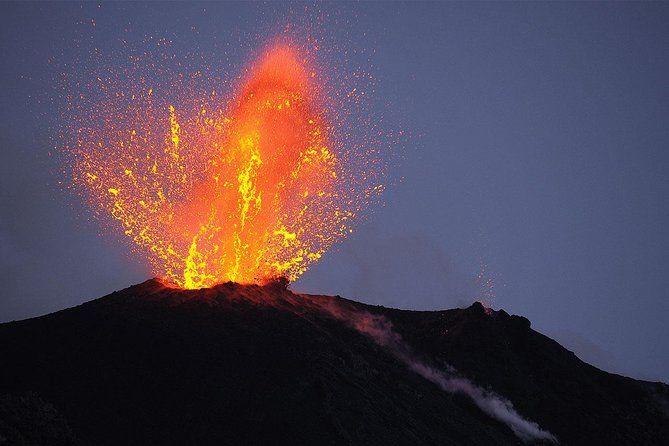
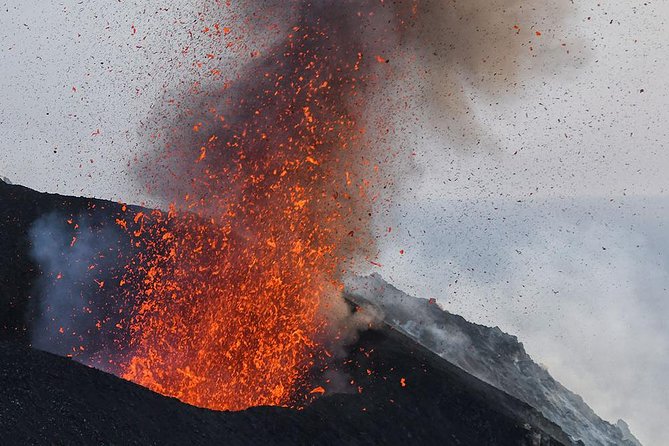
Conditions change from day to day. One evening may produce frequent glowing bursts, while another may offer only a single eruption. The strongest reports describe repeated mini-eruptions illuminating the night, but you should keep expectations sensible. The volcano is active, not scheduled.
The wind is often stronger on this side of the island. Bring a light sweater, fleece, or windbreaker even if the afternoon feels warm. Once you stop moving, the temperature can feel much lower, and the exposed viewpoint offers little shelter.
Watching the volcano after dark
As the sky darkens, the volcano becomes easier to read. Small eruptions that were hard to see in daylight can appear as brief orange flashes. If Stromboli is lively, the effect is remarkable: the red glow rises from the crater area, then fades into the night.
This is where the guide’s role can make the biggest difference. A good guide points out what you are seeing, explains the pattern of activity, and helps you understand the difference between glowing lava and ordinary reflected light. Several guides are praised for live commentary during the eruptions.
The tour does not promise a set number of eruptions. That is important. You may get a spectacular sequence, or you may spend much of the hour waiting for a modest display. The sunset, island views, and unusual setting soften the risk of a quiet volcanic evening.
Photography is welcome, but keep your attention on the view. A phone can record the general atmosphere, though low-light volcanic bursts are difficult to capture without suitable camera settings. Your best memory may be the sudden orange flash you see with your own eyes.
The dark descent with a headlamp
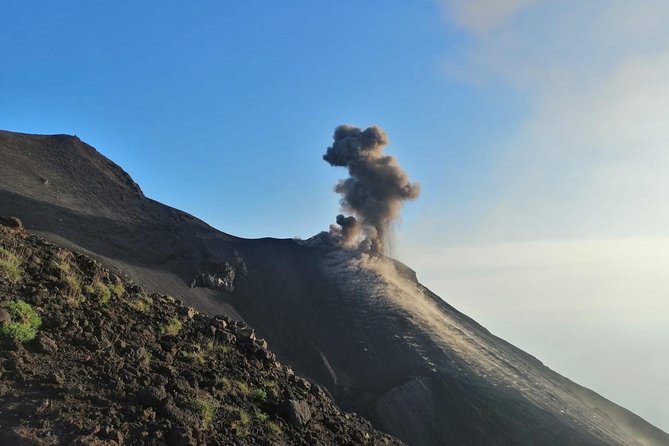
The return begins after sunset, with the group equipped with torches or headlamps. The downhill route may be longer than the way up, but it can be easier and safer because the guide chooses a gentler path.
You should still take the descent seriously. Darkness hides loose stones and uneven sections, and tired legs make small mistakes more likely. Use the provided light, keep close enough to follow the guide, and avoid racing ahead.
The descent is one reason the organized tour is useful. A guide can keep the group together and choose the safer route rather than simply retracing the uphill path. It also means you do not need to navigate an unfamiliar volcanic trail alone after dark.
Expect the full experience to take around five hours, though the exact timing depends on the sunset, walking pace, stops, and time spent watching the volcano. One account describes an outing lasting from late afternoon until about 11:30 p.m., so do not plan a tight evening connection immediately afterward.
What to bring for comfort and safety
The tour provides a helmet and headlamp. Hiking shoes and poles are listed among the supplied equipment, and some participants have also been able to borrow boots, poles, and a backpack. Still, I would wear sturdy hiking shoes if you have them, because volcanic paths can be rough and slippery underfoot.
Pack at least 1.5 liters of water. Bringing 2 liters is sensible in warm weather, especially because the hike includes a long uphill section and a wait at the viewpoint. Water is not included.
You also need food. A panini or other substantial snack before the start can work well, and you should carry a small snack or packed dinner because dinner is not included. The return is late enough that you should not assume you will eat immediately.
Your daypack should include:
- Water, ideally 1.5 to 2 liters
- A snack or packed dinner
- A light sweater or windbreaker
- Sturdy walking shoes
- A phone or camera
- Any personal medication you need during a five-hour outing
The tour is mobile-ticket friendly, and confirmation is issued when you book. Free cancellation is available if you cancel at least 24 hours before the start time. Bad weather or insufficient bookings can also lead to cancellation, with another date or a full refund offered.
Who should book the Ashàra experience
I would recommend this for anyone who wants to see Stromboli as an active volcano, not simply photograph it from town. It suits people with moderate fitness who can manage a sustained climb, a long pause in the wind, and a dark walk downhill.
Families can manage it if the children are used to hiking. One account describes completing the outing with a nine-year-old, but that does not make it an easy family stroll. You should judge your child’s stamina, patience, and comfort with darkness before booking.
This is also a good choice if you value explanation. The strongest guide experiences include geology, island history, local life, and clear safety care. English is offered, but language delivery can vary. If you need French or another language, confirm that before paying.
You may prefer another plan if you dislike group pacing, long waits, or uncertain volcanic activity. A group of up to 25 can feel busy, and one poor experience involved limited explanations and a promised language that was not available. The natural setting remains the reason to go, but the guide shapes how much you learn and how comfortable the evening feels.
Should you book this Stromboli sunset trek?
Yes, if you want the best mix of access, safety, and atmosphere at a reasonable price. The chance to watch the sunset above the Sciara del Fuoco, then see lava bursts in the night, is a powerful reason to make room for this hike.
Book with realistic expectations. You are not guaranteed a dramatic eruption, the walk is more than a casual stroll, and the wind can be cold at the top. Bring plenty of water, a packed snack, warm layers, and sturdy shoes. If you do, the excursion offers a memorable look at Stromboli’s fire without asking you to handle the route alone.
FAQ
How long does the Stromboli sunset trek last?
The experience lasts approximately five hours. Timing can vary based on the walking pace, sunset, rest stops, and time spent at the viewpoint.
How high does the hike go?
The route reaches 400 meters, which is the maximum altitude allowed with a volcanology guide on this excursion.
Is the hike difficult?
It requires a moderate level of physical fitness. The uphill and downhill sections are described as moderate, but the route is lengthy and the descent takes place in darkness.
What equipment is provided?
A helmet and headlamp are included. Hiking shoes and poles are also listed as available for the trek, though you should confirm current equipment arrangements before departure.
Do I need to bring food and water?
Yes. Bottled water is not included, and you should bring at least 1.5 liters. A snack or packed dinner is also needed because food is not included.
What happens if bad weather cancels the tour?
If poor weather causes cancellation, you will be offered a different date or a full refund. You can also cancel for a full refund if you do so at least 24 hours before the scheduled start time.
More Evening Trips around Italy
- Hanoi – Sapa 2 Days 1 Night Overnight At Homestay
★ 5.0 · 899 reviews - Marrakesh: 2-Day Mt. Toubkal Trek with 1-Night Stay & Meals
★ 4.7 · 795 reviews - Sapa 3 Days 2 Nights Trekking Tour (1 Night In Ta Van Village, 1 Night In Hotel)
★ 5.0 · 699 reviews - Cape Town: Lion’s Head Sunrise or Sunset Guided Hike
★ 5.0 · 642 reviews
Just added around Italy
- From Catania: Mount Etna Trekking Private Experience★ 4.6 · 11 reviews
- From Cala Gonone: Gorropu hiking with lunch★ 4.8 · 46 reviews
- Florence: Hiking Tuscany & Chianti wine 3 wineries and lunch★ 5.0 · 9 reviews
- Explore the Dolomites, a hiking day in the mountains★ 5.0 · 8 reviews
- Etna: Trekking to the summit craters at 3340 meters★ 4.0 · 10 reviews
- Etna: hiking to a stunning viewpoint over Valle del Bove★ 4.8 · 22 reviews
- Etna: Summit Area Guided Hike from Cable Car Station★ 4.8 · 36 reviews
- Catania: Etna Morning or Sunset Trek with Lava Tunnel & Gear★ 5.0 · 27 reviews
Italy Hiking Tours, compared.
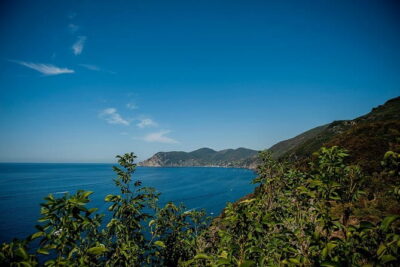
Cinque Terre Day Trip with Optional Hiking or Pisa
Read our review →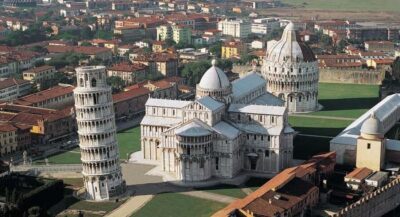
Florence: Cinque Terre Day Trip with Optional Hiking or Pisa
Read our review →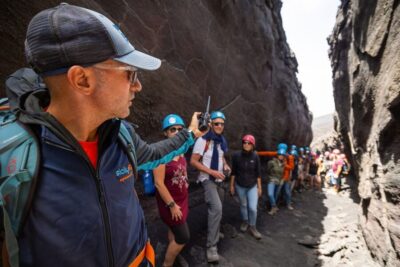
summit craters trekking with volcano guide 3350mt
Read our review →
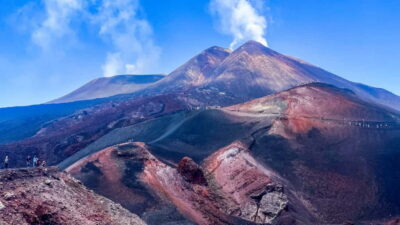
Mount Etna Trekking Tour Beyond the Tourist Trails
Read our review →Browse the lists this tour appears in