
REVIEW · ITALY HIKING TOURS
Mount Etna: Central Crater Guided Hike for Advanced Hikers
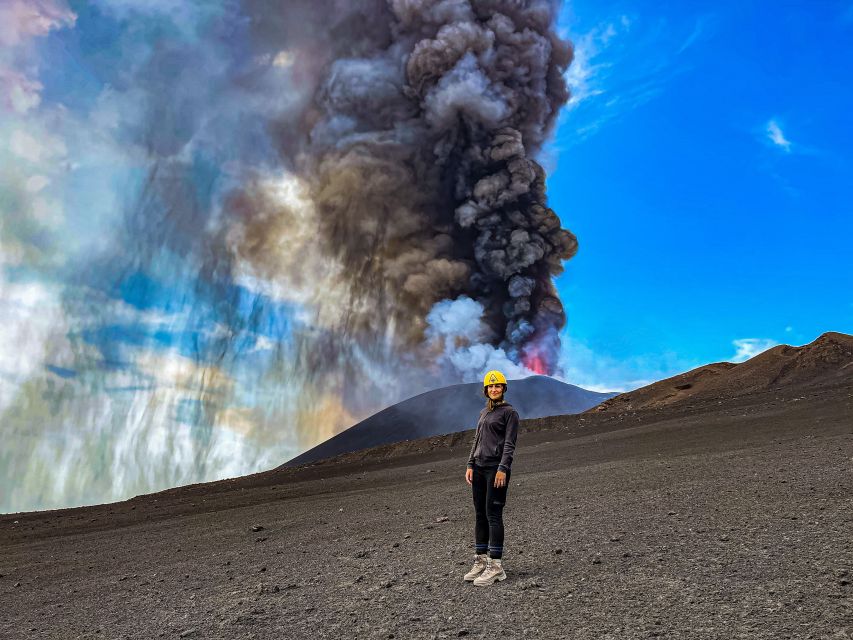
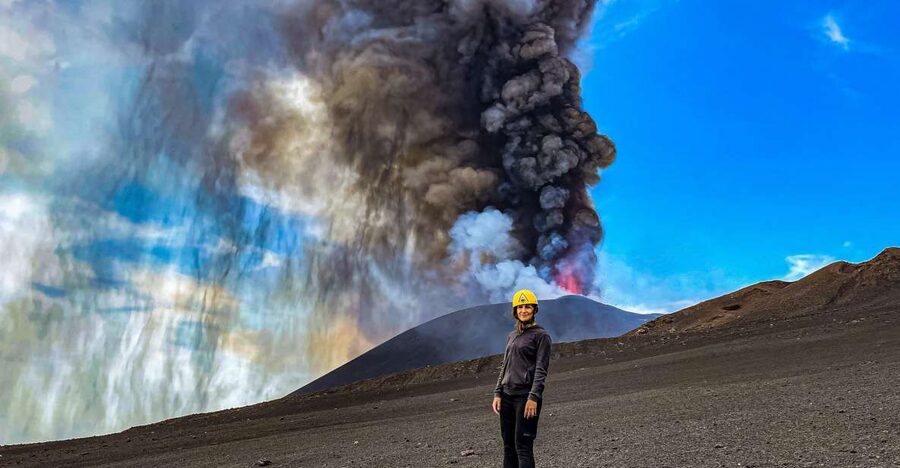
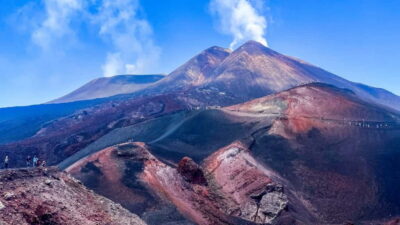
Etna is not a gentle hill. This advanced summit hike takes you from the north side to the Central Crater at about 3,315 meters, where gas, fumaroles, volcanic ash, and fresh-looking lava formations make the mountain feel active and unpredictable. I like the quieter northern route and the chance to see Etna’s summit craters with a trained volcanological guide. The main drawback is the long descent, which can be tougher than the climb, especially on knees and other joints.
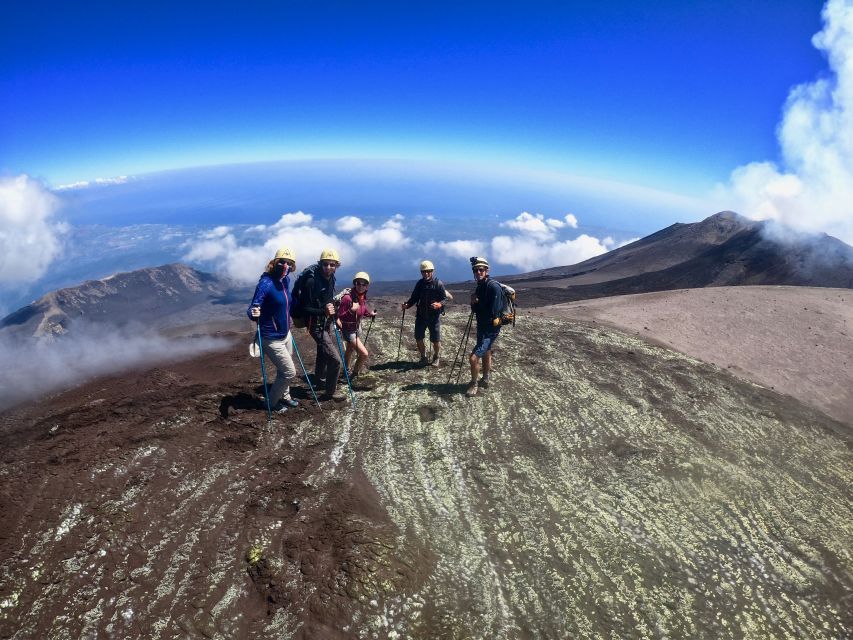
I also like that the small group is limited to 10 people and that helmets, trekking poles, warm jackets, backpacks, and even hiking shoes may be available. Guides such as Edo, Vincenzo, and Daniele have been praised for keeping groups together, adjusting the pace, and explaining how Etna changes. Still, this is not a casual sightseeing walk: high altitude, wind, loose volcanic rock, and a 1,500-meter descent demand real fitness.
Key points to know before climbing Etna
- The summit is genuinely high: You reach the Central Crater edge at roughly 3,315 meters, not just a lower scenic viewpoint.
- The route uses Etna’s north side: The trail begins near Piano Provenzana, a less crowded approach than some routes on the mountain.
- The descent deserves respect: The full route covers about 12 kilometers, with roughly 5 kilometers uphill and 7 kilometers downhill.
- The mountain may be visibly active: Gas emissions, fumaroles, volcanic sounds, and changing conditions are part of the setting.
- Transport costs extra: The advertised price covers the guide service, but off-road vehicle transport is paid separately.
- You need mountain experience: This is unsuitable for people with low fitness, medical conditions, vertigo, respiratory issues, or joint problems.
What the $130 price really covers
The listed price is about $130.28 per person. That is a fair starting point for a five-hour guided climb to Etna’s summit area, particularly with a small group and specialist equipment included. But you need to budget beyond the headline price.
The tour price covers the volcanological guide and guided hike, plus trekking poles, protective helmets, backpacks, warm jackets, trekking shoes, and extra socks. Those extras matter. Etna can be cold and windy near the top, and the gear can rescue an otherwise poorly packed day.
The price does not include the off-road vehicle ride. From the meeting point at 1,800 meters, a special 4×4 vehicle carries you up the north side for about eight kilometers to approximately 2,825 meters. This one-way ride costs 50 euros per person, paid locally. The descent by vehicle from around 2,800 meters to 1,800 meters is listed separately at 20 euros per person, also paid on site.
Because the transport wording can be confusing, ask the guide exactly what your chosen vehicle option covers before setting off. You can walk down instead, but that means taking on the full 1,500-meter descent. A 3 euro parking ticket is also due for the day, and lunch and water are your responsibility.
More Guided Day Hikes in Italy
- Mount Etna: Summit Guided Hiking Tour up to 3,400 m
★ 4.8 · 4,792 reviews - From Sorrento: Path of the Gods Guided Hike with Transfers
★ 4.8 · 530 reviews - Guided Day Hike on the Path of the Gods with Sorrento Transfer
★ 5.0 · 265 reviews
Meeting at Mareneve, not Etna Nord
Your day begins at Chiosco Bar Mareneve di Ferraro Giuseppa, near the chairlift used by skiers in winter. It is the second house among four buildings in the parking area.
This detail matters because there is another place called Chiosco Bar Etna Nord. Do not rely on a vague map search or assume the names refer to the same spot. Check the meeting point carefully before leaving your accommodation.
Arrive ready to walk. Bring long trousers, gloves, sunglasses, a hat, a windbreaker, rain gear, sturdy shoes, snacks, and a packed lunch. Water is not supplied, so carry enough for a full mountain outing.
The group is limited to 10 people, which is a useful size for a route where the guide needs to watch pace, weather, volcanic activity, and the footing. Tours operate in English, Italian, and French. The experience requires at least eight participants, so the departure can be cancelled if that minimum is not reached.
The 4×4 climb from 1,800 to 2,825 meters
The off-road vehicle ride covers the first major change in altitude. You travel along an eight-kilometer panoramic road on Etna’s north side, leaving the lower vegetation behind and entering the stark volcanic zone.
The ride saves your legs for the serious part of the day. It also gives you a fast lesson in how sharply the mountain changes with height. At the upper drop-off, the ground is made of volcanic slag and large rock fragments rather than a regular walking trail.
This is not a luxury transfer. The vehicle is practical transport over rough volcanic ground, and queues can occur for the 4×4 service. One account describes some waiting for the buses up and down, though not an extreme delay. If your schedule is tight, allow room for this part of the day to run slowly.
The five-kilometer climb to the Central Crater
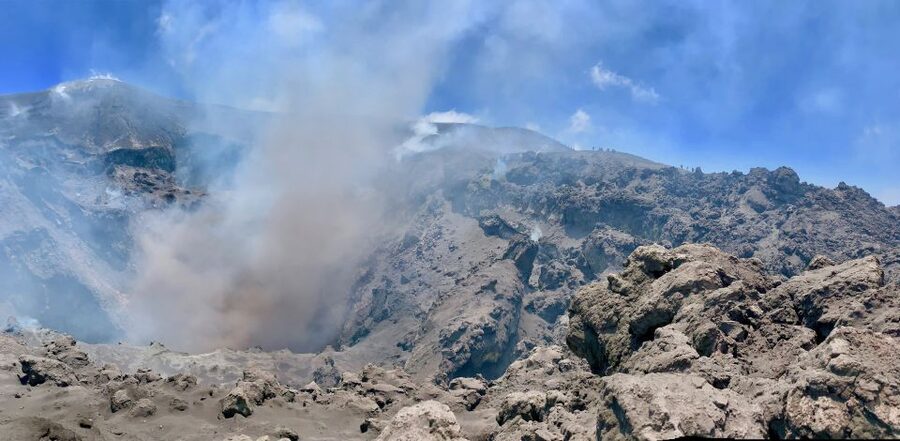
From around 2,825 meters, you begin the uphill walk. The climb covers about five kilometers and gains roughly 490 meters before reaching the edge of the main crater.
The footing is the main challenge. Volcanic slag and ash shift beneath your boots, so every step can take more effort than the distance suggests. The altitude adds another layer. Even a fit walker may breathe hard, and the pace should be steady rather than rushed.
The guide leads the group through the volcanic setting and explains Etna’s development, crater formation, lava flows, and ongoing activity. This is where a volcanological guide adds real value. The scenery is striking, but the explanation helps you understand why the ground looks broken, layered, and constantly unfinished.
Several guides have earned strong praise for their approach. Edo is described as passionate and highly organized. Vincenzo has been singled out for keeping his group together and explaining how quickly craters can form and how fast conditions may change. Daniele has also been praised for making the science clear and interesting.
The group may not move at one uniform speed. One guide adjusted his pace for the oldest member of the group, which is encouraging, but you still need enough stamina to manage a high-altitude mountain route. This is not the place to depend on a guide to carry an unprepared walker.
More Mountain and Summit Hikes in Italy
- Mount Etna: Trek to 3000m with cable car and 4×4
★ 4.6 · 3,823 reviews - Mount Etna: Summit Crater Trek with Cable Car
★ 4.8 · 1,875 reviews - Catania: Mount Etna Trekking Tour Beyond the Tourist Trails
★ 4.9 · 1,596 reviews - Mount Etna: Guided Trek 3,000 Meters to the Summit
★ 4.8 · 1,407 reviews
Standing beside Etna’s active summit area
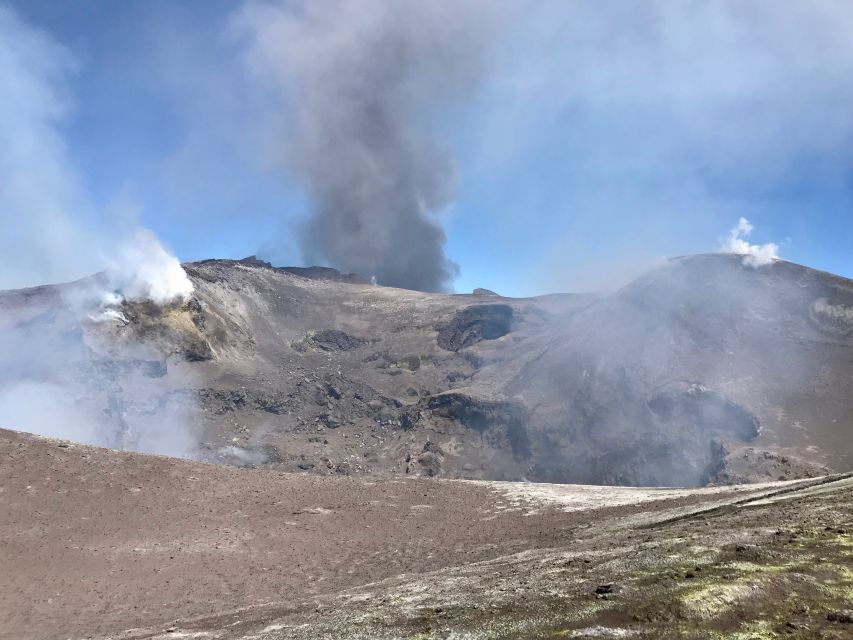
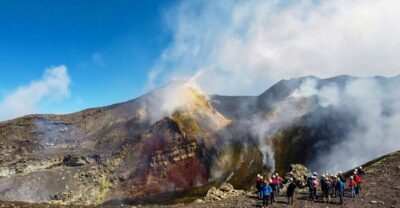
At the Central Crater edge, the character of the hike changes. You stop climbing and spend time taking in the summit zone, with about two hours scheduled for a break, photographs, explanation, and walking around the crater area.
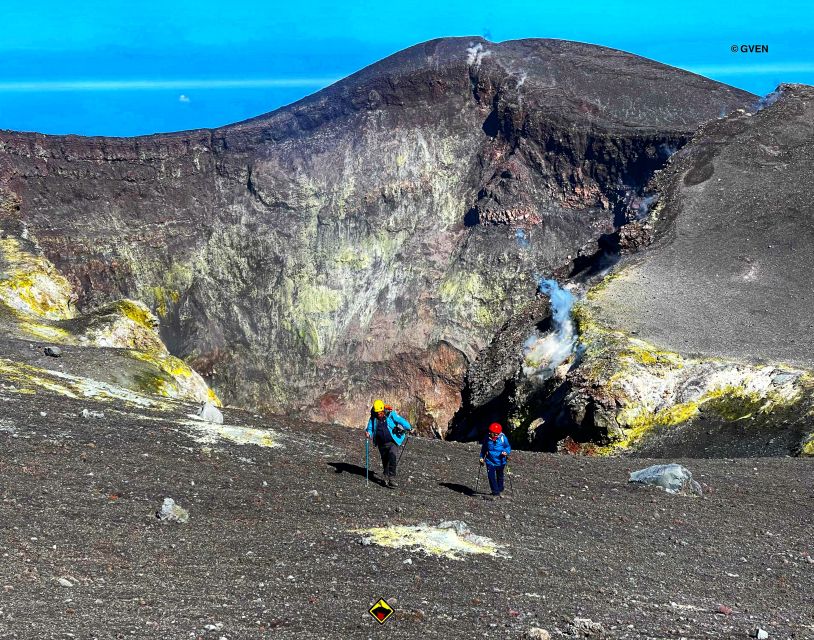
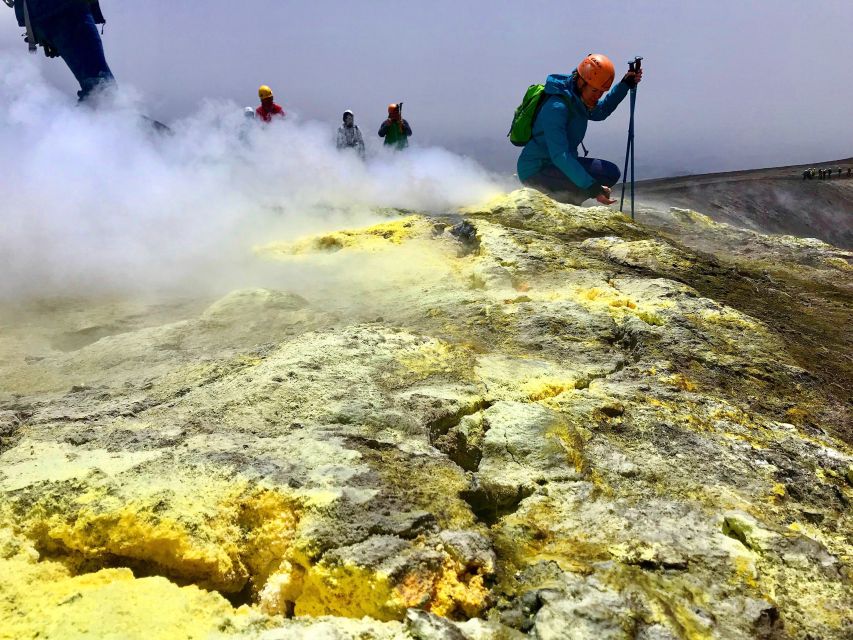
You can expect gas emissions and both low-temperature and high-temperature fumaroles. The deposits around them may show bright colors caused by sublimates. Depending on weather and the amount of volcanic gas, you may also see across Sicily from the top.
That view is never guaranteed. Clouds, wind, volcanic gases, and official safety limits can change the experience on the day. The summit can also be extremely cold and windy. One clear-weather outing still felt biting and cold at the top, so a warm layer is not optional.
Walking along crater edges can trigger vertigo. If you are afraid of heights or uneasy near steep volcanic rims, this is the wrong mountain activity for you. The guide may alter the route or move the group away from a dangerous area if volcanic activity increases.
One particularly important point is that Etna remains an active volcano. A group has reportedly experienced stronger explosions while near the summit and was moved down the side quickly but safely. That is not a reason to panic. It is a reminder to stay close to the guide, follow instructions at once, and accept that the planned route can change.
The descent through ash and volcanic channels
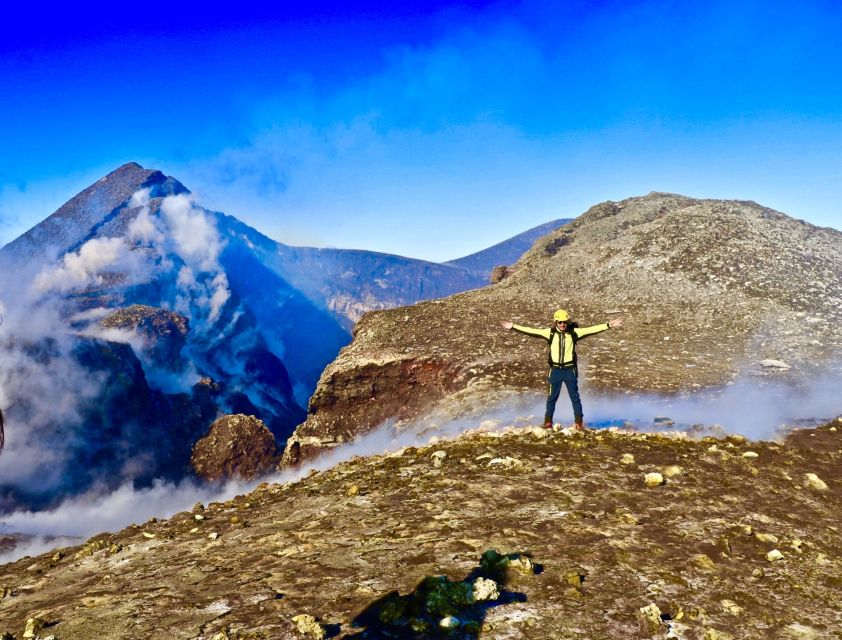
After the summit, you begin the long downhill section. This is where many fit walkers may underestimate the day.
The descent can be harder than the uphill walk because it drops about 1,500 meters, from roughly 3,300 meters to 1,800 meters. Loose ash can make the surface slippery, while uneven volcanic rock puts repeated strain on your knees and ankles. The experience is strongly discouraged for anyone with knee or other joint problems.
The route passes the Volcanological Observatory, where there is a pause for lunch. Lunch is not included, so bring a packed meal and snacks. The break is useful because the downhill route continues for hours after the summit.
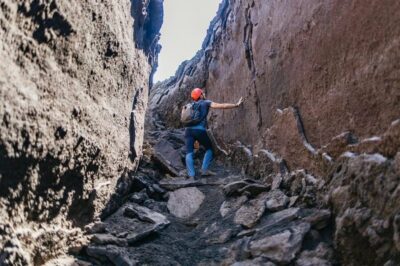
Some of the descent runs through volcanic ash and sandy channels. This can be one of the most enjoyable parts of the day. The soft surface may let you slide down sections of the slope, and one participant described this as an especially fun part of the outing. It is entertaining, but you still need to protect your footing and listen to the guide.
The route then enters one of the large sandy channels on Etna’s northeast side. Endemic plants and seasonal streams appear as you lose altitude, giving the return walk more variety than a simple retracing of the climb.
Piano delle Concazze and the Anfiteatro ski lift
The itinerary includes a lengthy section around Piano delle Concazze, with time for explanation, free time, and views. This is a good place to slow down and notice the contrast between the barren upper slopes and the lower parts of the mountain.
The next named point is the Anfiteatro ski-lift arrival area. Here, the walk continues through changing volcanic ground before reaching the lower zone. The ski infrastructure provides a clear marker in what can otherwise feel like a huge, open expanse of dark rock and ash.
The total walking route is described as variable, at about 12 kilometers. Roughly five kilometers are uphill and seven kilometers downhill, but the exact figures can change with volcanic conditions, weather, and safety orders. Expect the full trekking portion to take five to six hours, with the entire experience planned around that length.
Returning through Piano Provenzana
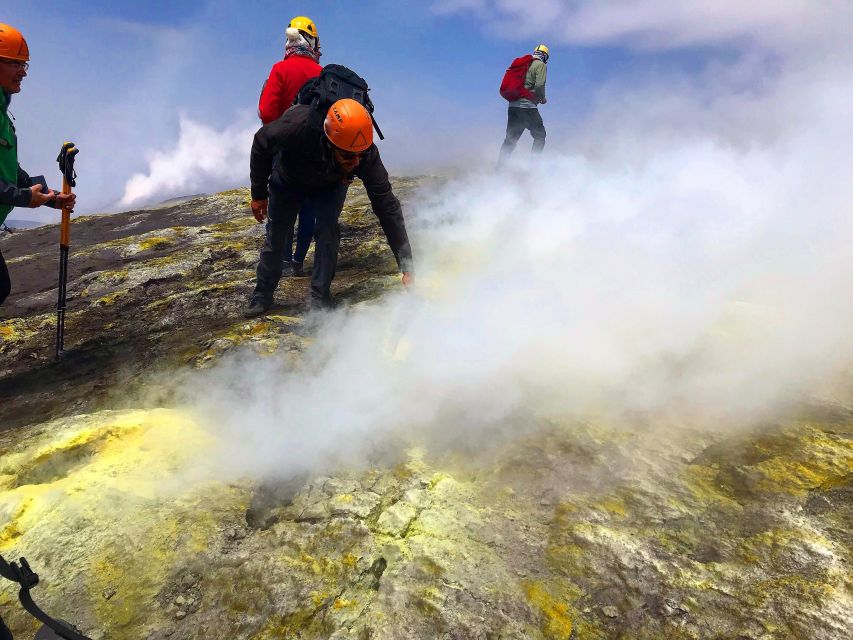
The hike ends at Piano Provenzana, the northern ski area and lower endpoint of the walking route. From there, the experience returns to the original meeting area at Mareneve.
The order of the final transport depends on your choice and the conditions. If you want a vehicle for the descent, tell the guide. If you walk down, you get more time among the ash channels and lower volcanic scenery, but you also accept the physical cost.
The northern side is a strong choice for anyone who wants a quieter approach and a more rugged feel. It does not offer the easiest version of Etna. That is exactly why it suits experienced walkers who want the mountain itself, rather than a short trip to a viewpoint.
Equipment, clothing, and physical demands
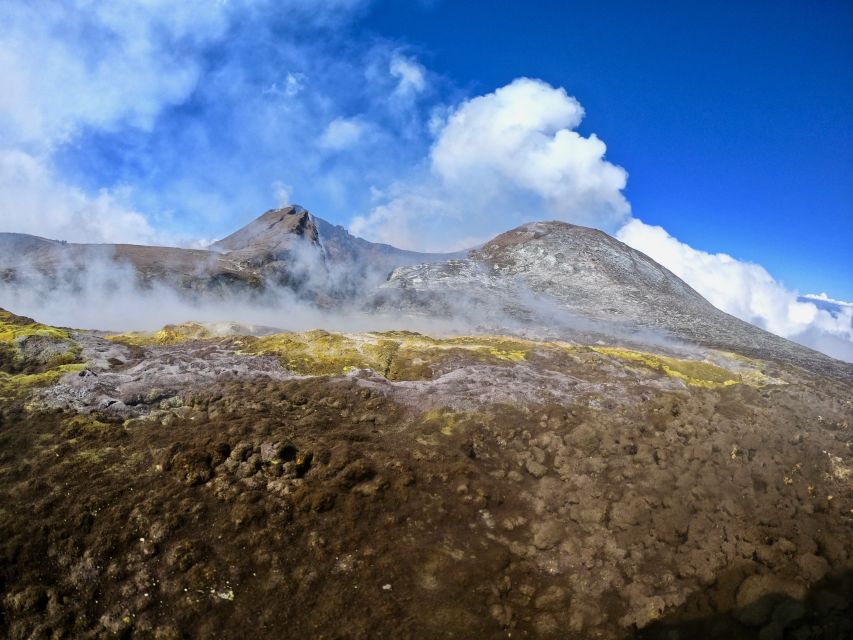
The included equipment is generous, but you should still pack as if the mountain may throw several kinds of weather at you. Bring a windbreaker, waterproof shoes, rain gear, gloves, sunglasses, a hat, long pants, food, snacks, and water.
The provider may supply trekking shoes and extra socks, warm jackets, trekking poles, helmets, and backpacks. Sizes and availability can matter, so arrive prepared rather than assuming every item will solve a poor clothing choice.
This route is intended for trained hikers who regularly walk in the mountains. It is not suitable for people without experience, low fitness, mobility impairments, back problems, heart problems, high or low blood pressure, respiratory issues, epilepsy, pregnancy, or other pre-existing medical conditions.
The altitude can bring fatigue or breathing difficulty even when the walking pace is sensible. The crater rim may also cause vertigo. If you are unsure about your fitness or health, get medical advice before booking.
Who will enjoy this Etna hike most?
I would choose this excursion if you want the highest, most volcanic version of a Mount Etna visit and you are comfortable with a demanding day outdoors. You will get more than a scenic ride: you will walk across ash and slag, reach the summit crater area, see fumaroles, and hear how the volcano changes.
It suits hikers who enjoy natural forces more than polished facilities. The route can feel stark, windy, tiring, and slightly unpredictable. Those qualities are part of its appeal, but they are not suitable for everyone.
I would avoid it if your priority is an easy family outing, a short walk, or guaranteed panoramic views. I would also avoid it if you have knee trouble or if the idea of a 1,500-meter descent sounds worse than the climb. In that case, paying for the available vehicle descent may be the sensible choice, provided you confirm the current fee.
Free cancellation is available up to 24 hours before departure, and you can reserve now and pay later. That flexibility helps because weather and volcanic conditions can affect the route, but it does not remove the need to check the forecast and your own readiness.
Should you book it?
Book this Mount Etna hike if you want to stand near the true summit at about 3,315 meters, learn from a specialist guide, and accept a serious descent. The strongest reasons to go are the small group, the northern route, the supplied safety gear, and the guides’ careful handling of pace and changing volcanic conditions.
Skip it if you want a relaxed excursion or if your knees, lungs, balance, or fitness are uncertain. Also calculate the extra transport, parking, lunch, and water costs before deciding. For a prepared hiker, this offers a powerful and unusual way to meet Etna. For everyone else, it is simply too demanding.
FAQ
How high does the hike go?
The route reaches the edge of Etna’s Central Crater at about 3,315 meters.
How long does the experience last?
The activity lasts about five hours, while the trekking route may take five to six hours depending on conditions and pace.
How far do you walk?
The route covers about 12 kilometers in total, with roughly 5 kilometers uphill and 7 kilometers downhill. These figures can vary.
Where does the hike begin?
You meet at Chiosco Bar Mareneve di Ferraro Giuseppa, near the winter chairlift on the north side of Etna.
Is the meeting point Chiosco Bar Etna Nord?
No. The specified meeting point is Chiosco Bar Mareneve, not Chiosco Bar Etna Nord.
Is transport included in the price?
No. The listed price covers the guide service and hike. One-way off-road transport costs 50 euros per person, and the off-road descent from around 2,800 to 1,800 meters is listed at 20 euros per person, paid locally.
What equipment is provided?
Trekking poles, protective helmets, backpacks, warm jackets, trekking shoes, and extra socks are included, subject to availability.
Do I need to bring lunch and water?
Yes. Lunch and water are not included. Bring food, snacks, and enough water for the full outing.
Is this suitable for beginners?
No. The route is intended for experienced hikers who are used to regular mountain walking.
Can the route change?
Yes. The excursion may change because of environmental, weather, or volcanic conditions, and it must follow current safety regulations.
More Volcano Hikes in Italy
- Etna: summit craters trekking with volcano guide 3350mt
★ 4.7 · 1,712 reviews - Etna Sunset Tour: Volcano trek, Cave & tasting from Catania
★ 4.8 · 1,290 reviews - Catania: Mount Etna Adventurous Hiking Tour with Equipment
★ 4.7 · 784 reviews - From Catania: trek on Mount Etna, Lava Cave & tasting Tour
★ 4.8 · 563 reviews
Just added around Italy
- Wild Walk – Discovering the hidden paths★ 5.0 · 31 reviews
- Hiking Tuscany & Chianti Wine – 3 Organic Wineries with lunch★ 5.0 · 27 reviews
- Hiking Florence Tuscany hills with lunch & wine★ 5.0 · 22 reviews
- Private Guided Hiking Cinque Terre Day From Florence★ 5.0 · 7 reviews
- Hike & Wine Tour★ 5.0 · 9 reviews
- Private Guided Hike to Tre Cime di Lavaredo★ 5.0 · 16 reviews
- Hike the Dolomites One Day Private Excursion from Cortina★ 5.0 · 18 reviews
- BarCa Winery Cinqueterre Trekking & Wine Tasting & Pesto Class★ 5.0 · 48 reviews
Italy Hiking Tours, compared.
Cinque Terre Day Trip with Optional Hiking or Pisa
Read our review →
Florence: Cinque Terre Day Trip with Optional Hiking or Pisa
Read our review →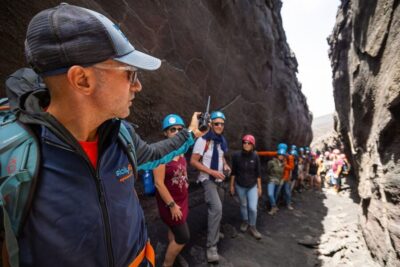
summit craters trekking with volcano guide 3350mt
Read our review →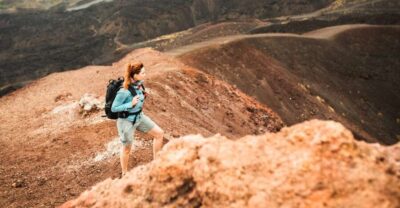
Mount Etna Trekking Tour Beyond the Tourist Trails
Read our review →Browse the lists this tour appears in