
REVIEW · LANZAROTE HIKING TOURS
Lanzarote: Volcano Hike
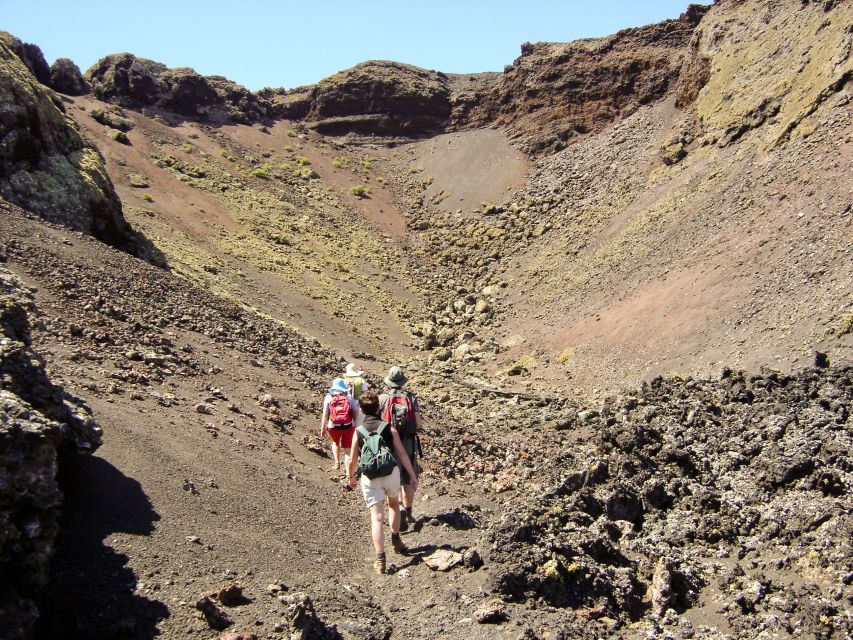
Volcanoes make a fine morning workout. This three-hour walk through Volcanoes Natural Park combines wide-open lava fields, craters, calderas, and old lava tunnels with clear explanations of Lanzarote’s volcanic past. I like the useful local context and the chance to walk into a crater rather than simply photograph one from a roadside viewpoint.
I also like the practical hotel pickup option and the small snack provided during the walk. Guides such as Famara Espino and Marcelo have earned praise for being friendly, clear, and well informed. The main drawback is the rough, loose surface. The route is mostly manageable, but trainers can collect stones, and wind, sun, or rain can change the feel of the hike quickly.
The essential details at a glance
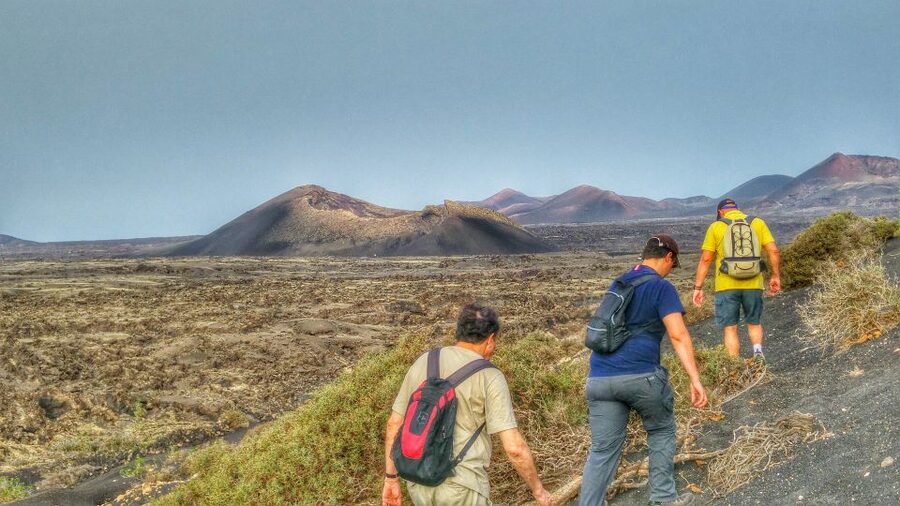
- Walk across lava fields: The route covers approximately 8 kilometers through recent volcanic terrain in the centre-south of Lanzarote.
- See craters up close: You can reach volcanic cones and enter a crater, with possible views of lava tunnels, lava lakes, and calderas.
- Learn as you walk: The guide explains Lanzarote’s eruptions, geology, island history, and the slow return of plant life.
- Expect a steady outing: The path is mostly flat, though loose stones and volcanic ground make sturdy closed shoes a smart choice.
- Choose your transport: Hotel pickup and drop-off may be available, or you can meet at Camino Testeina beside Montaña Testeina.
- Languages and price: The walk costs $48 per person and is offered in English, French, or Spanish.
Why this volcanic park matters
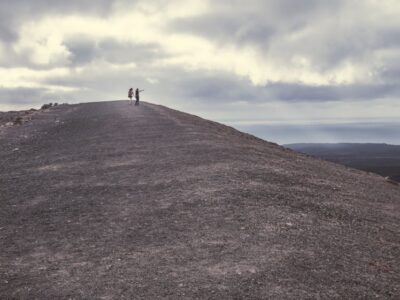
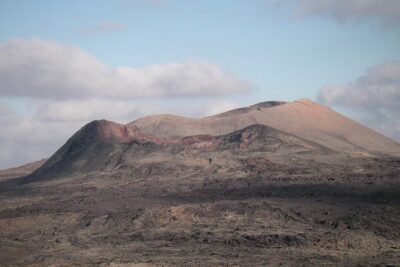
Lanzarote’s volcano country can look almost too bare to be real. Black and red cinders spread across the ground, volcanic cones rise out of the plain, and old flows twist across the island like frozen rivers. The lack of heavy vegetation gives you an unusually clear view of the volcanic shapes.
This protected park records eruptions from 1730 to 1736 and again in 1824. The 1730 eruptions continued for years and transformed large parts of Lanzarote. Here, you are not looking at one isolated volcano. You are walking through a broad area shaped by repeated eruptions, where cones, craters, lava tunnels, and lava flows remain visible.
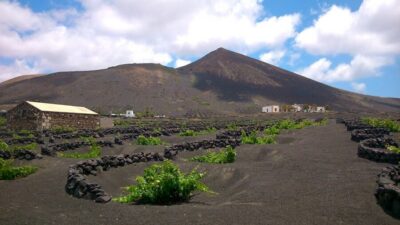
I find the slow return of life especially interesting. Lanzarote’s dry climate means plants grow slowly, so the black rock remains exposed for a long time. Your guide can use these early signs of plant growth to explain how life gradually returns after an eruption. That makes the walk more than a scenic outing. It becomes a lesson in how a newly formed volcanic surface changes over time.
More Volcano Hikes in Spain
- La Palma: Tajogaite Volcano Guided Trek
★ 4.8 · 1,810 reviews - The Volcano Heart Tour: Hiking, Tasting and Sunset Experience
★ 5.0 · 1,120 reviews - Lanzarote: Guided Volcano Hike with Transfers
★ 4.9 · 861 reviews
Starting at Camino Testeina
The meeting point is on a dirt road beside Montaña Testeina, just off the main LZ 30 road. The listed coordinates are 28°59’12.0″N 13°40’35.1″W. There is space to park a few metres along the dirt road, which makes this option useful if you have a rental car.
If you choose pickup, give the provider your hotel name when booking. Pickup times can vary by location, with listed morning collection times between 9:00 and 9:40. The exact meeting details arrive after booking, so check your email carefully, including the spam folder.
The start can involve some sorting out. One account describes a slightly chaotic beginning as people were divided between vans and language groups. That appears to be a short-lived inconvenience, since the walk itself was described as well organized once everyone was in place.
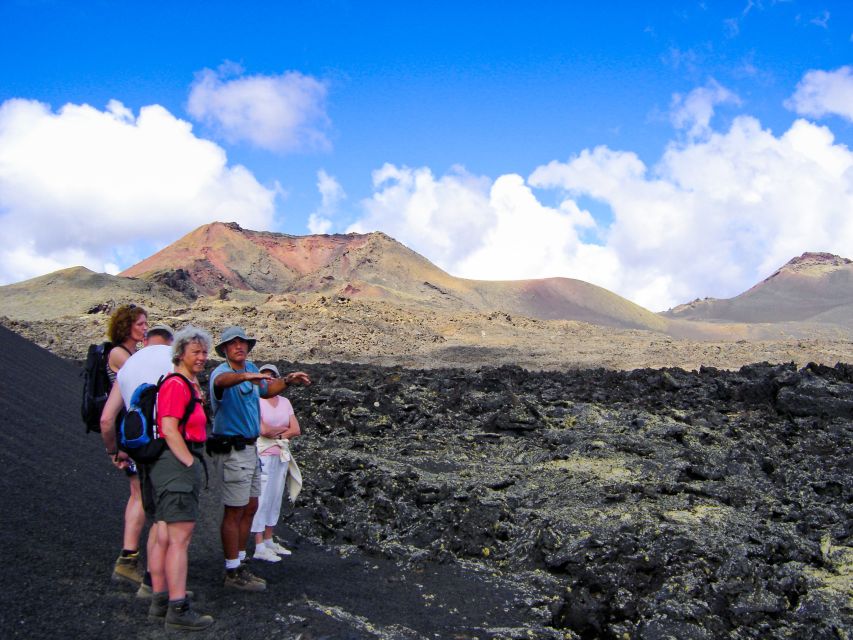
Guides lead separate language groups in English, French, or Spanish. That matters on a geology walk, because the value is not only in seeing the formations. You want to understand why one cone has a different colour, how lava moved, and what happened during the island’s major eruptions.
The first stretch across the lava fields
The route covers about 8 kilometers, although actual distances reported by participants range from roughly 8.5 to 9 kilometers. The walk may take three hours, but some outings run closer to three and a half or four hours, depending on the pace and stops.
The first section introduces you to the scale of the park. You cross exposed lava flows and volcanic ground where the surface can be uneven and loose. Most of the route is described as flat, so this is not a mountain climb in the usual sense. Still, the footing demands attention.
This is where footwear makes a real difference. Walking boots give you better grip and protect your feet from sharp rock. Trainers may be sufficient, but loose stones can work their way inside. One useful piece of advice from the experience is to avoid open shoes entirely and use closed-toe footwear with a firm sole.
Your guide sets the pace and explains the geology along the way. The strongest part of this walk is the connection between the things under your feet and the story of the island. Instead of seeing a field of black rock as one large surface, you learn to notice different lava textures, volcanic debris, ridges, and openings.
Craters, cones, and the best views
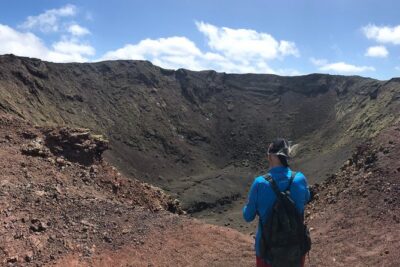
The route includes ascents to volcanic cones, where the reward is a view into spectacular craters and across the surrounding park. Reaching the top requires some effort, but the climb is not presented as a demanding summit hike. The key challenge is the loose volcanic surface, not a long, steep ascent.
One of the most memorable features is the chance to walk into a volcano crater. That puts you close to the scale of the eruption and gives the route a stronger sense of place than a normal lookout stop. You can see how the rim rises around you and how the interior differs from the outer slopes.
The views are wide and spare. You get a clear sense of how volcanic cones are arranged across the centre-south of Lanzarote. On a calm, bright day, the contrast between black rock, red cinders, pale soil, and blue sky can be striking. On a windy day, the same openness makes you feel exposed, so bring a windbreaker even if the morning begins warm.
The walk is not about finding dense shade or a series of built attractions. It is an outdoor geology lesson in a place where the rock itself provides the scenery. If you need frequent facilities, seating, or a highly polished path, this may feel basic. If you enjoy seeing natural formations without much construction around them, that simplicity is the appeal.
Same trailhead, a different kind of day:
- From Valencia: Montanejos Guided Hike with Natural Pools
★ 4.5 · 1,741 reviews - From Seville: Caminito del Rey Hike Day Trip
★ 4.5 · 1,240 reviews - Lanzarote: Hike Across Timanfaya’s Volcanic Landscapes
★ 4.8 · 1,234 reviews - From Barcelona: Montserrat Monastery, Easy Hike, Cable Car
★ 4.9 · 1,021 reviews
Lava tunnels and the story beneath your feet
The park contains remains of lava tunnels and formations linked to lava lakes. Whether you spend significant time at every feature depends on the exact route and conditions, but the guide uses these structures to explain how molten rock moved and cooled.
A lava tunnel forms when the outside of a lava flow hardens while hotter material continues moving underneath. Once the flow stops, a hollow channel can remain. Even when you only see part of such a formation, it helps explain why the surface is not simply a flat sheet of stone.
This is where the guide’s role matters most. The volcanic formations are easier to appreciate when someone explains the forces that created them. Famara Espino, praised for her polite and well informed approach, led a walk that included island history before the group set off. Another guide, Marcelo, kept the experience enjoyable despite rain.
The guide is also your interpreter of the wider island. The walk connects the park’s cones and flows with the eruptions of 1730 to 1736 and 1824, then links that volcanic past to the slow growth of new life. You leave with a better sense of why Lanzarote looks the way it does, not merely with a collection of photographs.
A steady pace, with a useful snack stop
The route is described as a leisurely or robust-paced walk, depending on the outing. That may sound contradictory, but it reflects the terrain. The distance is substantial enough to feel like a proper morning activity, while the mostly flat route keeps it from becoming a hard trek for people used to walking.
There is normally a short break around the middle. A banana and cereal bar have been provided, which is a thoughtful touch on a three-hour route. Bring your own water anyway. The dry air, direct sun, and wind can make you feel thirsty before you notice it.
Expect conditions to vary. March can be warm and windy, while rain is possible at other times. One outing remained enjoyable despite rain, but that does not mean you should rely on good weather. Pack a light waterproof layer or windbreaker, sunglasses, a sun hat, sunscreen, and a camera.
There is little reason to treat this as a speed challenge. The best value comes from listening, looking carefully, and letting the guide point out details you might otherwise miss. The walk can last longer than the advertised three hours, especially when pickup and drop-off are included in your morning plans.
Guides who make the route worthwhile
A volcanic field can become repetitive without explanation. The strongest praise for this experience focuses on the guides, and that makes sense. Famara is described as friendly, passionate about Lanzarote, and good at explaining the geography. Marcelo is also praised for keeping the group comfortable and interested in wet conditions.
One guide was compared to a mix of Indiana Jones and Lara Croft, a playful way of saying that the person leading the route brought energy as well as subject knowledge. Another guide reportedly spoke three languages fluently, which is useful when groups are divided by language.
The guide also controls the rhythm of the outing. You need enough time at the crater and lava formations to understand them, but you do not want to spend the entire morning standing in one exposed place. The balance appears to work well overall, though the start can be slightly untidy while transport and language groups are arranged.
Is $48 good value?
At $48 per person, this is reasonably priced for a guided half-day activity, particularly if you use the optional transport. You are paying for a guide, interpretation, and access to a route that would be much less meaningful without context. Pickup and drop-off can also save you the hassle of navigating the dirt-road meeting point.
The value depends on what you want from Lanzarote. If you only want a short scenic stop, $48 may seem high compared with visiting a viewpoint independently. If you want a structured walk, explanations of the eruptions, a crater visit, and help understanding the volcanic formations, the price is easier to justify.
Transport is optional, so check the booking choice carefully. If you drive yourself, the meeting point is practical, but you will need to find Camino Testeina and arrive prepared for a dirt-road start. If you are staying in one of the stated pickup areas, collection is more convenient, though the exact time depends on your location.
The flexible booking terms also help if your island plans are unsettled. You can cancel up to 24 hours in advance for a full refund, and the reserve-now, pay-later option means you do not have to pay immediately.
Who should book this walk?
You should consider it if you enjoy moderate outdoor activity, volcanic geology, and local history. It suits visitors who want more than a bus view of Lanzarote and who are happy to spend a morning on rough ground with limited shelter.
It is also a good choice if you prefer learning while walking. The route is not simply a silent hike from one photo stop to another. Your guide explains the island, the eruptions, the volcanic features, and the gradual return of life to the rock.
This is not suitable for children under seven, wheelchair users, or people with mobility impairments. Even for able walkers, the loose surface means you should be comfortable walking several kilometres outdoors. Closed-toe shoes are required, and walking boots are the best choice.
I would be cautious about booking if you dislike wind, exposed ground, or uneven footing. The walk is mostly flat, but flat does not mean smooth. Rain or strong sun can also make the same route feel very different.
Practical preparation for the morning
Wear walking shoes or boots with a firm sole. Avoid sandals, and expect trainers to collect small stones. Bring water, sunscreen, a hat, sunglasses, a camera, and a windbreaker.
Keep your morning flexible if you are using hotel pickup. The listed collection window is 9:00 to 9:40, but the exact time depends on your hotel and is confirmed after booking. Check your messages before leaving.
If you drive, save the Camino Testeina coordinates and look for the dirt road beside Montaña Testeina, off LZ 30. The parking area is beside the road rather than at a large visitor complex, so arrive ready for a simple rural meeting point.
Should you book the Lanzarote Volcano Hike?
Book this walk if you want to understand Lanzarote’s volcanic country rather than simply see it from a distance. The combination of an approximately 8-kilometre route, crater access, lava formations, and strong multilingual guiding gives the outing real substance.
The biggest reason to choose it is the explanation. Guides such as Famara and Marcelo turn bare rock into a readable story about eruptions, lava movement, and the return of life. The main caution is the ground: sturdy shoes, water, sun protection, and a windbreaker are not optional extras here.
For $48, I think it offers good value for an active morning, especially with transport included. Choose it for geology, views, and a proper walk. Skip it if you need smooth paths, shade, or a very short excursion.
FAQ
How long is the Lanzarote Volcano Hike?
The activity is advertised as three hours. The walking route is approximately 8 kilometers, though the total distance can be around 8.5 to 9 kilometers and some outings may last closer to three and a half or four hours.
How much does the experience cost?
The listed price is $48 per person.
What languages are available?
The guided hike is available in English, French, and Spanish.
Where does the hike meet?
The meeting point is Camino Testeina, on a dirt road beside Montaña Testeina near the LZ 30 road. The coordinates are 28°59’12.0″N 13°40’35.1″W.
Is hotel pickup available?
Yes, pickup and drop-off are available if you select that option. Provide your hotel name when booking, and the provider will send the exact time and meeting point after receiving the booking.
What should I wear and bring?
Wear comfortable closed-toe shoes, preferably walking boots. Bring water, sunscreen, a windbreaker, sunglasses, a sun hat, and a camera.
Is the route difficult?
The route is mostly flat and is described as a leisurely or steady walk, but the volcanic surface is loose in places. You should be comfortable walking approximately 8 kilometers outdoors.
Can children join the hike?
Children under seven cannot take part.
Can wheelchair users join the activity?
No. The experience is not suitable for wheelchair users or people with mobility impairments.
Just added around Spain
- From Barcelona: Montserrat Mountain Hike and Abbey Tour★ 4.8 · 38 reviews
- Barcelona: Costa Brava Hiking, Sea Kayaking & Lagoon Dipping★ 5.0 · 119 reviews
- Caminito del Rey Full Experience+ 2-Hour E-Bike guided Tour★ 4.9 · 20 reviews
- El Torcal de Antequera Hike with Transfer★ 5.0 · 33 reviews
- El Chorro: Zipline, Bridge, and Hiking Adventure Tour★ 5.0 · 8 reviews
- Sant Elm: Guided kayak tour to the Island Dragonera & Hiking★ 4.8 · 16 reviews
- Chulilla: Hanging Bridges & Canyon Private Hiking Day Tour★ 4.4 · 10 reviews
- Caleta de Fuste/Corralejo: Guided E-Bike Tour & Crater Hike★ 4.7 · 57 reviews
Lanzarote Hiking Tours, compared.
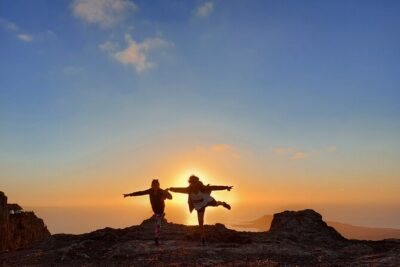
Trekking in the Volcanoes Natural Park in a small group
Read our review →Browse the lists this tour appears in