
REVIEW · CATANIA HIKING TOURS
Etna Volcano: South Side Guided Summit Hike
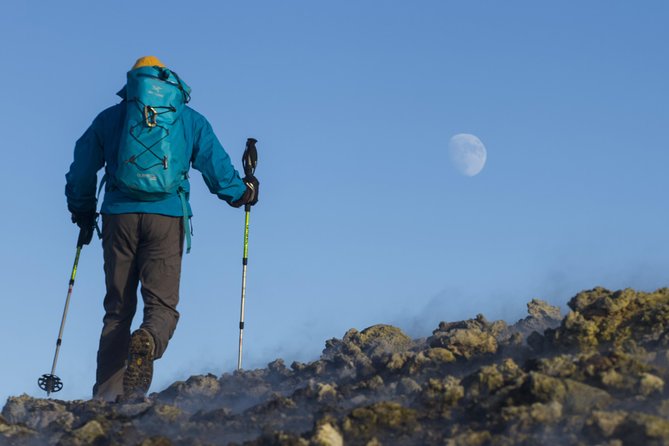
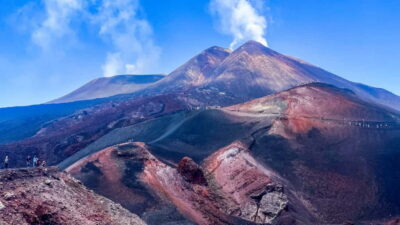
Etna changes by the hour. This guided hike takes you from Rifugio Sapienza to the high summit zone of Mount Etna, where black lava, steaming ground, volcanic bombs, and enormous craters replace the usual Sicilian scenery. I like the excellent volcanology guides, including Antonio, Max, Fabio, and Massimo, who explain what you are seeing instead of simply leading you uphill. I also like the route’s variety, from the summit craters to Valle del Bove and the Barbagallo craters.
The catch is simple: this is a serious mountain walk, not a gentle cable-car outing. You walk for about two hours to the summit area and around 8 to 10 kilometers in total, often over loose, steep, slippery ground. The cable car and 4×4 ride also cost an additional €65 per person, so the final price is much higher than the advertised tour price.
Key points to know before booking
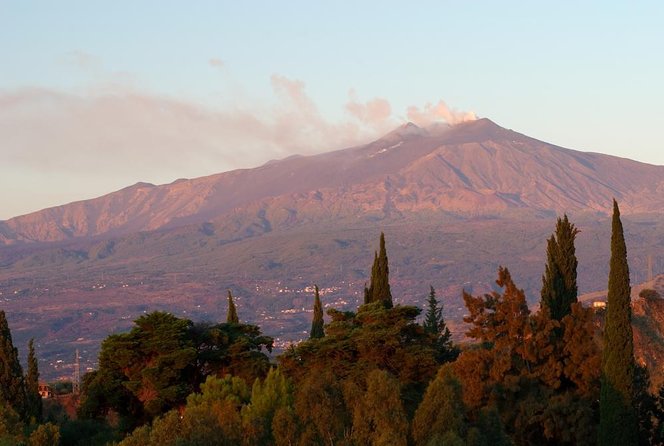
- The summit route begins at about 2,800 to 2,900 meters, after an optional cable-car and 4×4 ride from Rifugio Sapienza.
- Certified volcanology guides are the main reason to book, with strong praise for Antonio, Max, Fabio, Massimo, Marco, Angelo, and Simon.
- The route includes active volcanic features, such as gas emissions, sulfur-colored ground, lava flows, lava bombs, craters, and volcanic channels.
- Good fitness is essential, especially for steep climbs, loose gravel, wind, altitude, and the slippery descent.
- Bring water, food, warm clothing, and a windproof jacket, since some clothing details are unclear and conditions can shift quickly.
- The itinerary may change for safety, particularly when gas, weather, or volcanic activity makes the summit area unsafe.
Starting at Rifugio Sapienza at 8:00
You meet at Ashàra Etna & Stromboli Guides at Piazzale Rifugio Sapienza, on Etna’s south side. The tour begins at 8:00 in the morning and finishes back at the same meeting point after roughly six hours.
Rifugio Sapienza is a practical starting point because it gives you access to the cable car, 4×4 vehicles, food, and parking. You can buy a sandwich before setting out, which is useful because food is not included and the walk lasts much of the day.
The advertised tour price is $78.64 per person, but you need to add €65 locally for the cable car and 4×4 jeep tickets. That makes the outing a considerably larger purchase than the headline price suggests. Still, the fee includes a certified guide, insurance, trekking boots, a helmet, and hiking poles. For a demanding route on an active volcano, that can be fair value if you want interpretation and safety support rather than just transport uphill.
The group can contain up to 20 people. That is manageable, but it is not intimate. On a larger departure, stay reasonably close to the guide so you can hear the explanations. The volcanic setting is impressive enough on its own, but the geology is what turns this into a worthwhile guided experience.
More Volcano Hikes in Italy
- Mount Etna: Summit Guided Hiking Tour up to 3,400 m
★ 4.8 · 4,792 reviews - Mount Etna: Trek to 3000m with cable car and 4×4
★ 4.6 · 3,823 reviews - Mount Etna: Summit Crater Trek with Cable Car
★ 4.8 · 1,875 reviews
Riding above the tree line to 2,900 meters
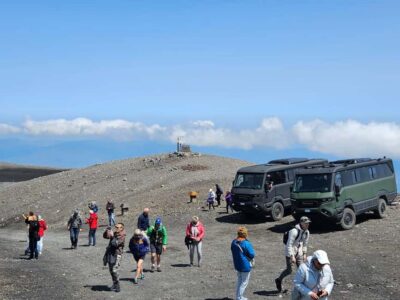
The first major stage uses the Etna cable car, followed by a 4×4 jeep or bus to the high trailhead. The tour information gives the upper starting point as roughly 2,800 or 2,900 meters, with a return to the cable car area at about 2,500 meters during the descent.
These vehicles save your legs for the summit walk, but they do not make the day easy. At this height, the air is colder and thinner, and the wind can be fierce. One day may begin in a T-shirt, while the upper mountain brings freezing temperatures, snow, or heavy gusts. A German-speaking visitor described conditions near minus 10 degrees with snow at the summit, while another person found the wind so strong that a scarf, gloves, and hat were welcome.
You should pack layers even if Catania is warm. Bring long trousers, a windproof jacket, a warm hat, gloves, and a neck covering. The included equipment list names helmet, trekking boots, insurance, and poles. The supplied information is less clear about windbreakers: one section says they are provided, while another says a wind jacket is not included. I would not rely on the provider for this item. Bring your own or ask in advance about rental clothing.
Walking across lava and black volcanic sand
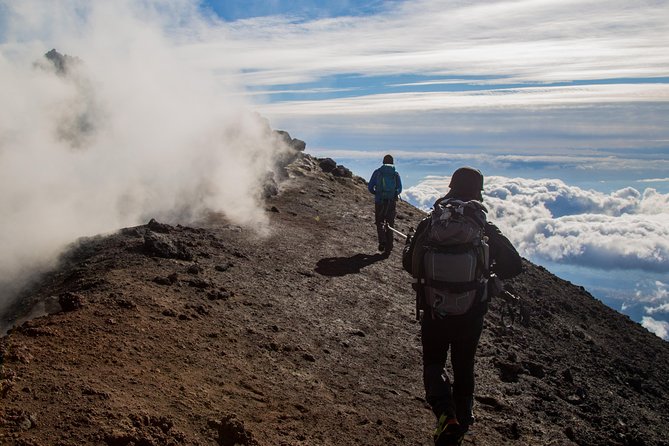
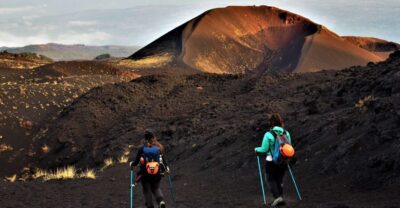
From the upper transport stop, the main walk takes about two hours to reach the summit craters. The surface changes constantly. You may cross old lava flows, deep volcanic sand, rough rock, and loose gravel that slides under your boots.
The uphill section is steady and can feel hard at altitude. The descent may be shorter in effort but trickier underfoot because the loose soil is slippery. Hiking poles are included and are genuinely useful here. Good boots matter even if the company supplies a pair, especially if you prefer footwear you have already broken in.
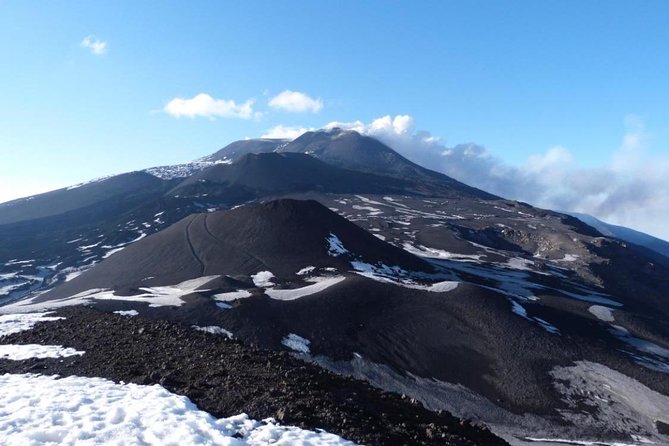
The route does not feel like a standard mountain path. You walk through a stark world of dark ash, lava formations, and rounded volcanic features. Several people found the day physically challenging but rewarding, with frequent pauses that kept the pace manageable. The guide sets the rhythm and explains the ground as you go, so you are not simply counting steps to the top.
Wear dark clothing if you can. Fine black volcanic dust can cover lighter trousers and jackets, especially when the wind moves across loose ash.
Summit craters, gas, and changing plans
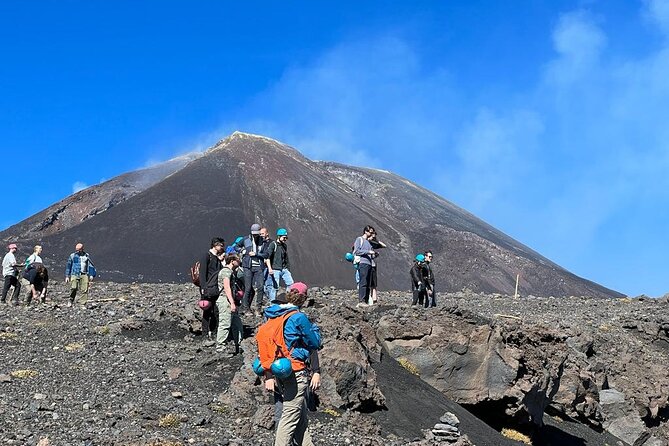
The high point of the outing is the summit crater area. The planned route takes you along the rim of the Central Crater, toward the Northeast Crater, and near the Southeast Crater. The Southeast Crater has produced some of Etna’s most recent and dramatic eruptions, so this is not a museum display. It is an active volcanic zone.
You may see gas escaping from the ground, volcanic bombs, sulfur deposits, and bright mineral colors created as gases cool and deposit elements such as sulfur. These details are easy to miss on an unguided walk. A good guide helps you understand why one patch of ground is yellow, why another area gives off vapor, and how lava has shaped the slopes.
Safety controls the route. One group could not reach the main summit because too much vapor and gas was coming from the crater. That did not end the outing, since the guide redirected the group toward older craters, lava flows, lava lakes, lava tubes, spatter cones, and other volcanic features. You should book this as a summit-zone hike, not as a guarantee that you will stand beside every crater listed in the plan.
That flexibility is appropriate. Etna is active, and the itinerary can change because of gas, weather, or volcanic conditions. A guide who keeps you farther from a dangerous crater is doing the job correctly, even if the change feels disappointing at first.
Same trailhead, a different kind of day:
- Cinque Terre Day Trip with Optional Hiking or Pisa
★ 5.0 · 8,486 reviews - Florence: Cinque Terre Day Trip with Optional Hiking or Pisa
★ 4.9 · 4,848 reviews - Etna: summit craters trekking with volcano guide 3350mt
★ 4.7 · 1,712 reviews - Catania: Mount Etna Trekking Tour Beyond the Tourist Trails
★ 4.9 · 1,596 reviews
Valle del Bove and the Barbagallo craters
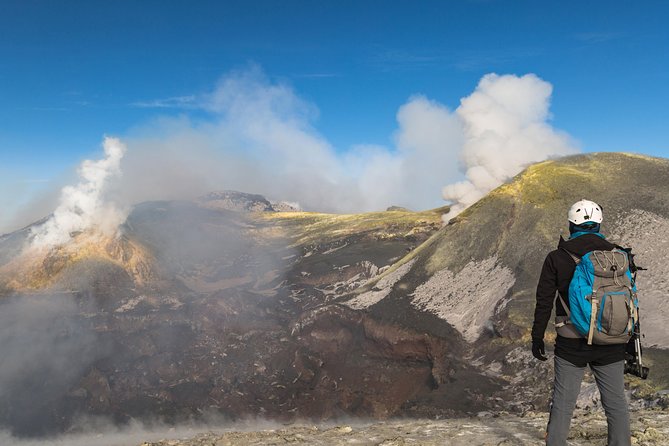
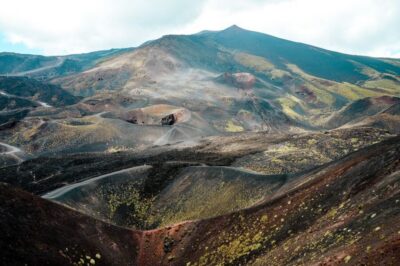
The itinerary also includes Valle del Bove, a huge volcanic depression that gives the mountain much of its scale. From high ground, you get wide views toward the valley, the Sicilian coast, and, when the air is clear, Catania and the sea.
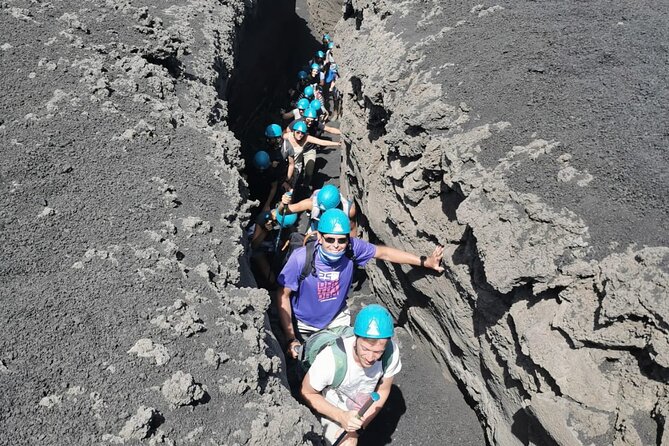
The exact order of the stops can change with conditions. After the summit area, the descent includes a visit to the Barbagallo craters and a crossing near a lava-flow channel. These features add variety to the day. You are not simply walking up one cone and walking back down the same line.
The Barbagallo area is especially useful for seeing how separate eruptions build new cones and reshape the mountain. A guide can point out fresher lava beside older surfaces and explain how the appearance of a flow changes as it cools. The setting is stark, but it is full of clues if you know what to look for.
The descent eventually brings you back toward the cable car at about 2,500 meters. From there, the cable car returns you to Rifugio Sapienza and the meeting point.
Guides who make the difference
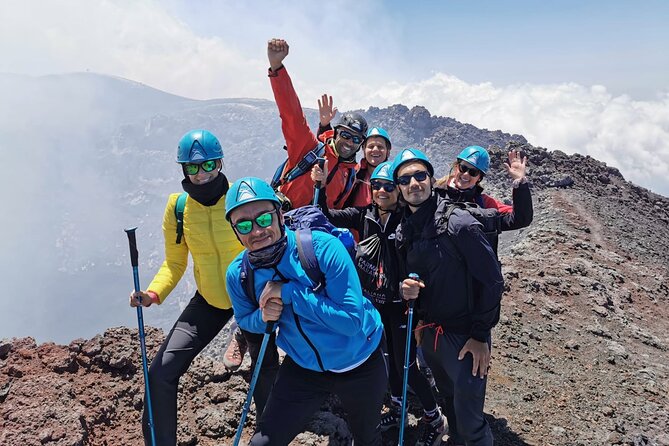
The strongest part of this experience is the guide team. Antonio is praised for combining geology, volcano science, energy, and humor. Max is described as professional and engaging, with a clear focus on the history and hazards of Etna. Fabio is noted for being attentive, especially on a difficult route, while Massimo receives praise for explaining the mountain’s volcanic features in a way that made the outing feel like a lesson rather than a simple walk.
Marco and Angelo also helped slower walkers stay with the group. Simon received praise for supporting someone nervous about heights on the final crater path. These details matter because the route can feel exposed, windy, and unfamiliar.
The guides also explain the danger without turning the day into a lecture about fear. You learn about gas, lava, crater formation, volcanic soil, and past eruptions while remaining aware that Etna is still active. That combination of curiosity and caution is exactly what you want here.
One practical weakness is group size. With as many as 20 people, it can be difficult to hear every explanation, especially in strong wind. Position yourself near the guide when the group stops. If you fall behind, let the guide know rather than silently pushing yourself beyond your comfort level.
What to pack for Etna’s summit zone
The equipment supplied is useful, but it does not replace sensible personal preparation. I would bring:
- Plenty of water
- A packed lunch and snacks
- A windproof outer layer
- Warm hat and gloves
- Long trousers and tall socks
- Scarf or neck covering
- Sunglasses and sun protection
- Sturdy footwear, even though boots are supplied
- A small daypack
Water, snacks, and food are not included. You can buy a sandwich at Rifugio Sapienza before the start, but bring enough to avoid relying on a quick purchase. The walk includes a lunch break near the upper part of the route, followed by a final climb before the descent.
Do not judge the clothing you need by the temperature in Catania. Etna’s summit zone can be cold, windy, sunny, snowy, or covered in vapor. Conditions may shift quickly. One of the most useful lessons from the practical feedback is to pack for several seasons in one day.
Fitness, altitude, and comfort
The company describes the physical level as medium to high and asks for perfect physical condition. That wording should be taken seriously. The walk includes steep and uneven ground, loose black sand, slippery descents, strong wind, and altitude close to 3,000 meters.
You do not need to be an elite mountaineer, but you should be comfortable with a long uphill hike. A fit older walker who regularly hikes found the route very hard, while another person expected something tougher and found it less intense than imagined. That difference comes down to weather, pace, fitness, and how your body handles altitude.
Frequent breaks help. The guides generally keep a controlled pace and stop for views, explanations, and rest. Even so, this is not a good choice if you are looking for a relaxed scenic ride with a short walk.
Is the €65 transport charge worth it?
The extra €65 covers the cable car and 4×4 transport and is paid locally. It is not a small add-on, so include it when comparing this tour with other Etna experiences.
The value depends on what you want. If you only want a view from the south side, a cheaper cable-car or jeep experience may be enough. If you want to walk among summit craters, learn how lava forms, and have a trained guide make safety decisions, the extra cost makes more sense.
The guide fee also covers boots, poles, helmet, insurance, and volcanology guiding. You are paying for access to a demanding environment with equipment and supervision, not simply for a ride to a viewpoint. For me, the combination is worthwhile for visitors who specifically want the active-volcano experience.
Booking, cancellation, and who should choose it
The activity is offered in English, uses a mobile ticket, and accepts free cancellation up to 24 hours before the start time. Changes or cancellations inside that window are not accepted for a refund. Poor weather or an insufficient number of bookings can also cause cancellation, in which case you are offered another date, another experience, or a full refund.
I would book this tour if you want a serious half-day hike, enjoy geology, and accept that the exact route depends on Etna’s conditions. I would skip it if you want guaranteed access to the main summit crater, dislike loose ground, or prefer a simple sightseeing excursion.
Should you book the Etna South Side summit hike?
Yes, if you are fit, properly dressed, and interested in how an active volcano works. The guides are the experience’s biggest strength, and the route gives you far more than a distant view of Mount Etna. You walk across lava, approach major craters, see gas and sulfur deposits, and learn why the mountain keeps changing.
Book with realistic expectations. You may not reach every planned crater, the wind can be fierce, and the €65 transport charge comes on top of the tour price. But if you want an active, carefully guided encounter with Etna, this is a strong choice.
FAQ
Where does the Etna summit hike start?
It starts at Ashàra Etna & Stromboli Guides at Piazzale Rifugio Sapienza, 95030 Nicolosi, on Mount Etna’s south side.
What time does the experience begin?
The scheduled start time is 8:00 am.
How long does the tour last?
The experience lasts approximately six hours and ends back at the meeting point.
Are the cable car and 4×4 jeep included?
No. Cable car and 4×4 jeep tickets cost €65 per person and are paid locally.
What equipment is included?
The tour includes a helmet, trekking boots, insurance, volcanology guides, and trekking poles.
Is food or water included?
No. Bottled water, snacks, and food are not included. You should bring water and food, although you may buy a sandwich at Rifugio Sapienza before departure.
How difficult is the hike?
It requires a medium to high fitness level and good physical condition. Expect steep, uneven, loose, and sometimes slippery ground at altitudes approaching 3,000 meters.
Can the route change during the day?
Yes. Etna is an active volcano, so the route may change because of volcanic activity, gas, weather, or safety conditions.
Just added around Italy
- From Catania: Mount Etna Trekking Private Experience★ 4.6 · 11 reviews
- From Cala Gonone: Gorropu hiking with lunch★ 4.8 · 46 reviews
- Florence: Hiking Tuscany & Chianti wine 3 wineries and lunch★ 5.0 · 9 reviews
- Explore the Dolomites, a hiking day in the mountains★ 5.0 · 8 reviews
- Etna: Trekking to the summit craters at 3340 meters★ 4.0 · 10 reviews
- Catania: Etna Morning or Sunset Trek with Lava Tunnel & Gear★ 5.0 · 27 reviews
- Etna: hiking to a stunning viewpoint over Valle del Bove★ 4.8 · 22 reviews
- Etna: Summit Area Guided Hike from Cable Car Station★ 4.8 · 36 reviews
Catania Hiking Tours, compared.
Etna Sunset Tour: Volcano trek, Cave & tasting from Catania
Read our review →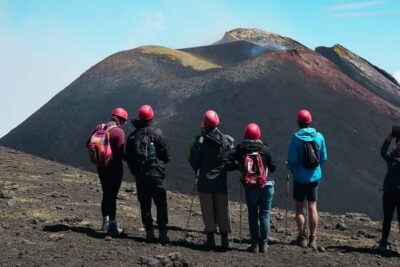
Mount Etna Adventurous Hiking Tour with Equipment
Read our review →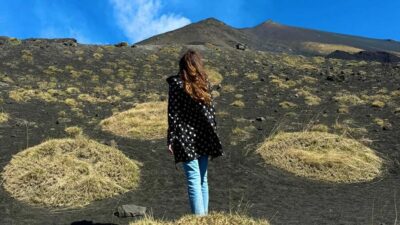
North Upper Craters Guided Tour by 4×4 with Trek
Read our review →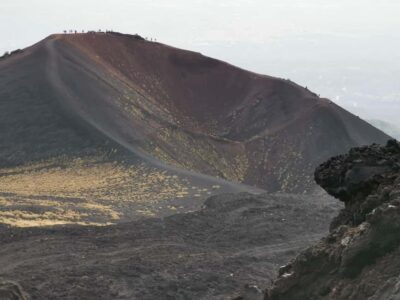
Etna Morning or Sunset Trek with Lava Tunnel & Gear
Read our review →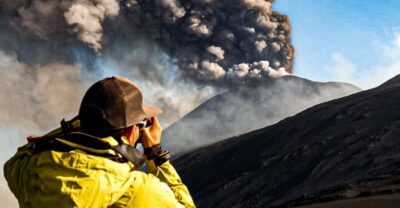
Special trekking on the most authentic and wild side of Etna
Read our review →Browse the lists this tour appears in