
REVIEW · THAILAND HIKING TOURS
Authentic trek only walk in Chiang Rai jungle
Come ready for a real jungle walk. This $57 Chiang Rai day trip combines hill-tribe villages, tea plantations, waterfall swimming, and a hands-on bamboo cooking lesson. I especially like the proper jungle hiking and the warm, entertaining guides, including James, Wat, and Tee. The main drawback is clear: this is much tougher than a casual forest stroll.
I also like that lunch is part of the experience, not just a meal break. You help prepare Thai food with bamboo and banana leaves, then eat it in the forest. Still, the route includes steep slopes, rocky ground, fallen bamboo, and sections where you may need to duck, climb, or use your hands, so good footwear and solid fitness matter.
Key points at a glance
- Three hours of serious jungle walking: Expect steep climbs, rough trails, fallen bamboo, and changing ground rather than a flat nature path.
- Bamboo cooking in the forest: Prepare a traditional Thai lunch using jungle bamboo and banana leaves, then eat what you helped make.
- Four hill-community stops: The route includes Lisu, Chinese, Akkha, and Lahu communities, each adding a different cultural angle.
- A waterfall rewards the hard part: Swimming in the cool water gives you a welcome break after the more demanding sections.
- Guides shape the day: James, Wat, Tee, and other team members are praised for humor, care, English skills, and handmade bamboo souvenirs.
- $57 includes the essentials: Hotel pickup and drop-off, a TAT guide, and lunch are included. Drinks other than water cost extra.
What this Chiang Rai trek is really like
This is a nine-hour outing from Chiang Rai, with pickup scheduled around 9:00 a.m. You should wait in your hotel lobby about 10 minutes before pickup. The day is built around walking, not riding from one photo stop to another, which is why the fitness warning deserves your attention.
The experience begins with a safety briefing and a long walking section of roughly three hours. A later part adds another two and a half hours of walking, village visits, sightseeing, and photo stops. The exact pace can vary, but you should expect much of the day to be active.
I would not book this for a relaxed half-day in the countryside. I would book it if you want mud, slopes, jungle sounds, local communities, and a day that leaves you pleasantly tired.
More Forest and Jungle Hikes in Thailand
- Chiang Mai: 2-Day Jungle Trek with Elephant Farm & Raft Ride
★ 4.7 · 881 reviews - From Khao Lak: Khao Sok Jungle Hike & River Tour
★ 4.7 · 688 reviews - Khao Sok: Private Day Trekking, Jungle Dinner & Night Safari
★ 4.7 · 206 reviews
The first walk through Chiang Rai’s jungle
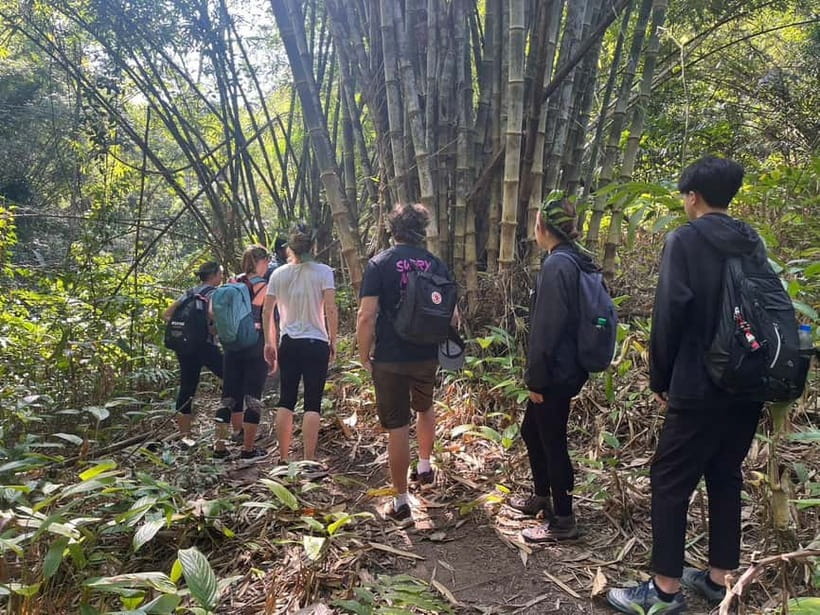
The walking begins after pickup from Chiang Rai. You move through jungle trails with scenic views along the way, and the guides provide information about the area, plants, and the route. The path is not presented as a manicured park trail.
Past participants describe steep ascents, rocky patches, and places where fallen bamboo blocks the way. In some areas, you may need to duck underneath branches or climb up and down uneven ground. That physical variety is a big reason this trip feels more genuine than a short forest walk, but it also makes the tour a poor choice for anyone with mobility difficulties.
Wear hiking shoes with a firm grip. Keep your hands free as much as possible, since you may need them for balance. A small day bag is more useful than a large backpack, and you should carry sunscreen, insect repellent, a sun hat, and water.
The jungle also supplies some of the day’s small surprises. You might see rubber trees, eat wild-grown fruit, and hear the forest around you as you walk. These details are not staged attractions. They help you understand how much food and useful material can come from the surrounding countryside.
Lisu and Chinese villages: two early cultural windows
One of the first cultural stops is a Lisu village. The purpose is to give you a look at local traditions and everyday life. The visit is part of a wider effort to connect the walk with the communities living in the hills, rather than treating the jungle as scenery alone.
You also visit a Chinese village, which adds another layer to the area’s mix of cultures. Chiang Rai Province is not culturally uniform, and this route gives you a chance to see that in a direct, practical way.
The useful approach here is to stay respectful and observant. You are visiting living communities, not walking through a museum. Your guide can help explain what you are seeing, and the guide’s role matters because a good explanation turns a quick stop into a meaningful one.
There is also time for sightseeing and shopping during the village portion. Do not expect a long commercial stop to dominate the day, but bring a little spending money if you want to buy something locally. The focus remains on walking and cultural contact.
Tea plantations and changing scenery
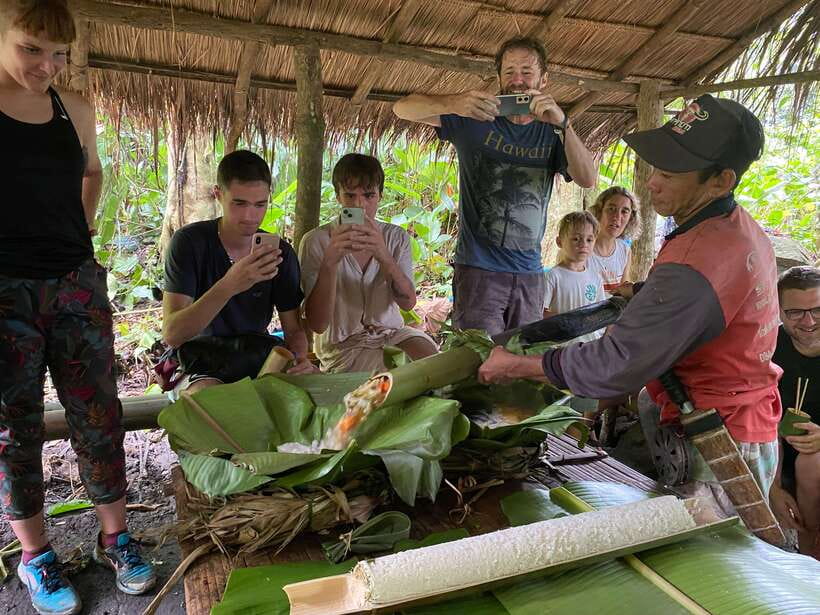
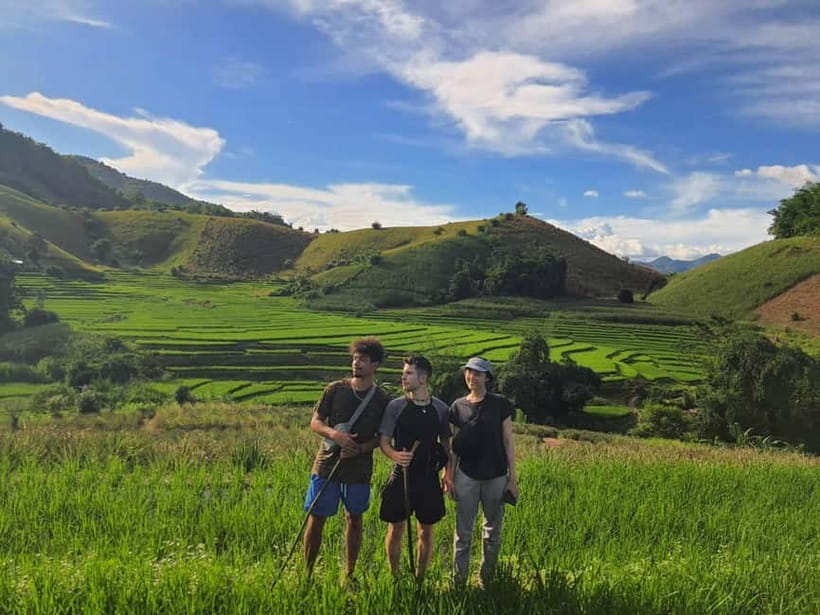
The route continues through tea plantations, where the air and views change from dense jungle to open rows of tea plants. This is a good place for photographs and a natural pause in the walking.
The tea fields are especially useful for breaking up the day. You get a different view of how the hills are used, then return to thicker vegetation and narrower trails. That variety keeps the nine-hour schedule from feeling like one long climb through identical forest.
The route also highlights hot springs, although the detailed day description gives the clearest attention to the waterfall and jungle trails. If hot springs are a must for you, confirm the exact stops before booking. The route may adjust with weather, conditions, or timing.
Same trailhead, a different kind of day:
- 3-in-1: Doi Inthanon Tour, Elephant Sanctuary, and Trekking Trail
★ 5.0 · 1,087 reviews - Chiang Mai: Doi Inthanon Trip with Pha Dok Siew Guided Trek
★ 4.6 · 910 reviews - Chiang Mai: Doi Inthanon Park with Kew Mae Pan Hike Day Trip
★ 4.7 · 841 reviews - Chiang Mai: Doi Inthanon Park and Pha Dok Siew Trail Trek
★ 4.6 · 752 reviews
Bamboo cooking is the heart of the day
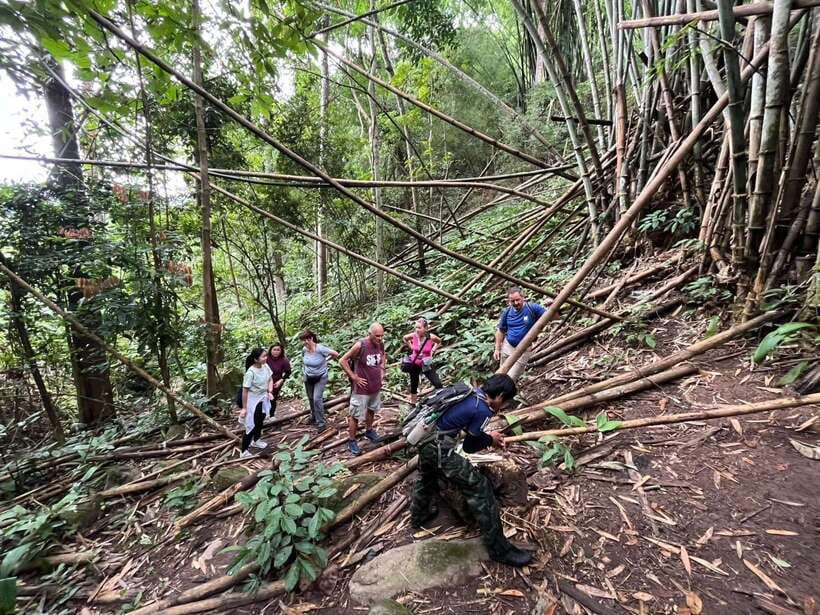
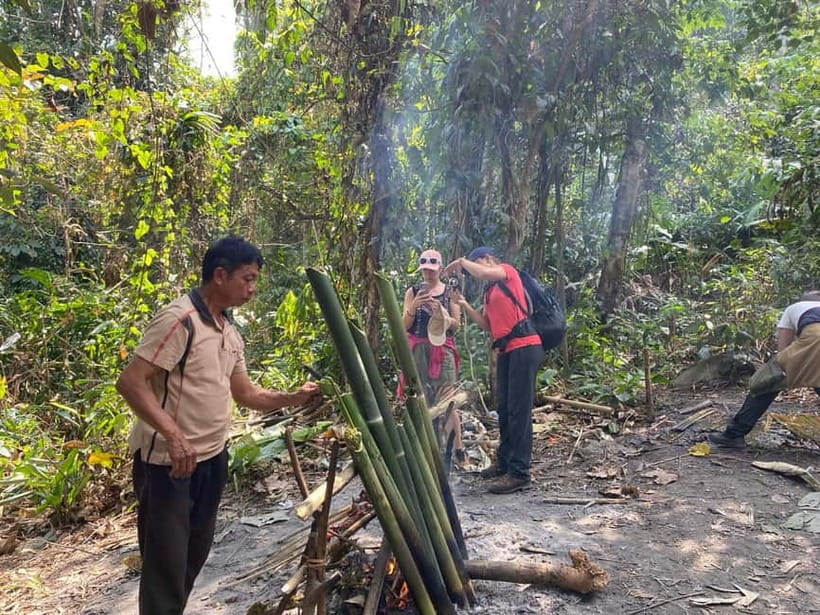
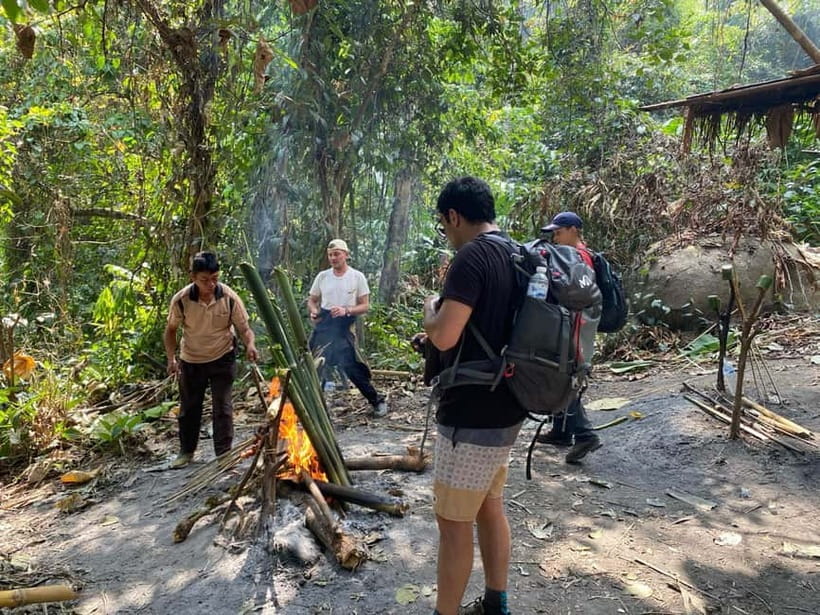
The cooking session is the most distinctive part of this experience. Rather than stopping at a standard restaurant, you help prepare lunch using bamboo gathered from the jungle and banana leaves.
The guides turn bamboo into cooking equipment and serving ware. You get a practical lesson in how food can be prepared with simple natural materials, then sit down to eat in the forest. The meal is included in the price, and the food receives some of the strongest praise from past participants.
This is not just a novelty for photographs. Cooking gives you a reason to stop, work together, and understand the setting in a hands-on way. It also breaks the trek at the right moment, after the first major walking section and before the waterfall.
The guides James and Wat are often singled out for making this part fun and well organized. Wat is also praised for speaking English clearly, while James is known for his jokes and energetic personality. The food is described as far better than expected, with one visitor calling it one of the best meals of the trip.
You should tell the operator about dietary restrictions or medical conditions before the day begins. Drinks other than water are not included, so bring enough water or be ready to purchase additional drinks if available.
The waterfall reward
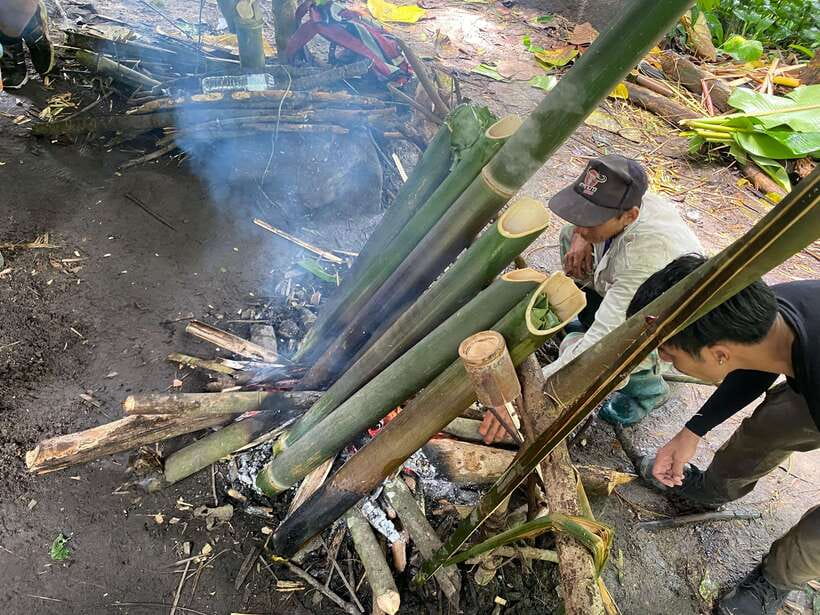
After lunch, the walk continues through dense vegetation toward a waterfall. This is the payoff for the harder sections of trail.
You can cool off and swim in the clear water, so pack swimwear and a towel. The swimming stop is not a minor photo opportunity. It gives your legs a chance to recover and makes the hot, strenuous parts of the walk easier to handle.
Conditions can vary, especially during the rainy season. One past visit was described as a private-feeling experience during wet-season conditions, while other accounts mention technical or challenging sections. You should expect the trail to feel different depending on rain and ground conditions.
The waterfall also shows why this outing is best treated as an active day. You earn the swim by walking to it. If you mainly want a vehicle-based tour with easy stops, this is not the right fit.
Akkha and Lahu villages on the return route
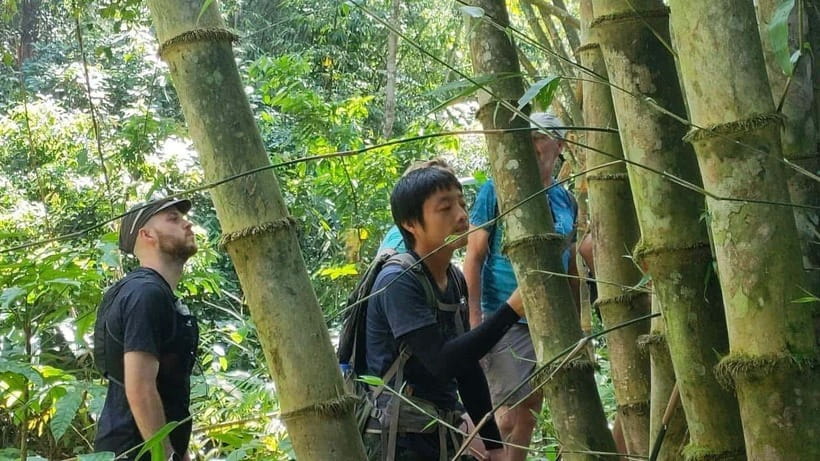
The later part of the route takes you to Akkha and Lahu villages. These visits broaden the cultural side of the day beyond the earlier Lisu and Chinese communities.
Your guide provides context about customs and daily life, while the jungle continues around you. The combination is important: you are not simply moving from one village to another by road. The walking connects the communities, forests, plantations, and water.
The guides may also make small bamboo souvenirs. Several people received carved ornaments or handmade items to take home. These are modest gifts, but they fit the day better than a generic souvenir because they come from the same bamboo craft used during lunch.
A few dogs may accompany the group for part of the day. They have become a memorable feature of some outings, though you should not book the trip specifically expecting this. The guides and route remain the main attraction.
Guides, group mood, and the practical experience
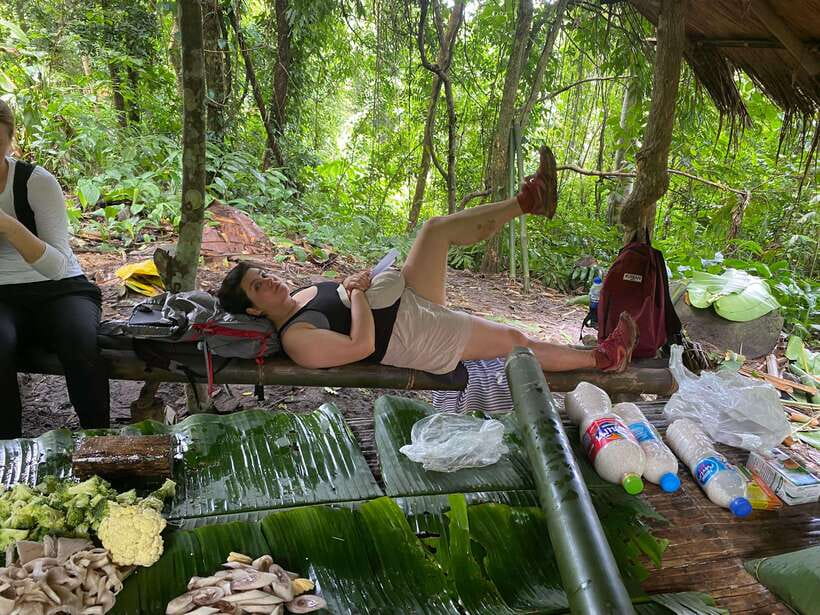
The guide team is one of the strongest parts of the outing. James, Wat, and Tee are repeatedly praised for being funny, friendly, professional, and attentive to the group. That matters on a long walk, where a guide must do more than point out scenery.
A good guide checks how people are coping, explains the route, keeps the mood light, and helps the group handle awkward sections. Wat is noted for his English and his broad local knowledge. James is known for his humor, including his playful 008 nickname.
The activity is offered in English and Thai. A TAT guide is included, along with hotel pickup and drop-off. Transportation is part of the package, although one account described a strong diesel smell in the vehicle that caused discomfort. That may not happen on every departure, but it is a fair practical warning if you are sensitive to vehicle odors.
Group size is not specified. Some outings can feel almost private, especially in quieter periods, but you should not assume that every departure will be private. The route and weather can also affect how quickly the group moves.
Is $57 good value?
At $57 per person, the price is reasonable for a full nine-hour day if you make use of what is included. You receive hotel transportation, a guide, and lunch, while the day combines hiking, village visits, tea plantations, a waterfall, and cooking.
The strongest value comes from the number of active elements packed into one trip. You are not paying only for transport to a viewpoint. You get a guide-led route, a substantial walk, a prepared meal, cultural stops, and a swimming break.
The value is less convincing if you dislike strenuous walking or prefer independent sightseeing. In that case, much of what you pay for is the trail experience, and that will not suit everyone.
Drinks other than water are excluded. Bring sunscreen, insect repellent, and a camera. A hat, swimwear, towel, and proper hiking shoes are also listed as essential items, not optional extras.
Who should book this experience?
I would recommend it to active adults, couples, friends, and families with older children who enjoy long walks and do not mind getting sweaty. It is also a good choice if you want a cultural experience that includes real participation rather than only taking photographs.
You should be comfortable with moderate to strenuous physical work. The wording moderate fitness may sound gentle, but the route can include steep climbs, rocky areas, and short sections that feel technical. One person who joined with an older relative had to leave near the beginning because the walking was too demanding.
I would not recommend it if you have mobility problems, poor balance, or a strong dislike of uneven trails. It is also not ideal if you need a guaranteed easy route, a fixed list of every stop, or a quiet luxury day.
The best preparation is simple: wear grippy shoes, keep your hands free, bring water and sun protection, and tell the operator about health or food concerns in advance.
Final verdict: book it if the walk is the point
This is one of Chiang Rai’s better choices for an active day outside town. The bamboo lunch, waterfall, hill communities, and strong guide team give it more substance than a basic jungle excursion.
Book it if you want a proper hike, local food preparation, changing scenery, and a friendly guide who helps you understand the area. Skip it if you are looking for a gentle stroll or have limited mobility.
The clearest decision rule is this: if steep slopes and rough jungle trails sound exciting, the $57 price offers good value. If they sound like a problem, believe that instinct. The route is rewarding because it is demanding.
FAQ
How long does the Chiang Rai jungle trek last?
The experience lasts nine hours, including transportation, walking, village visits, lunch, and sightseeing.
What time is hotel pickup?
Pickup is scheduled for 9:00 a.m. You should wait in your hotel lobby 10 minutes before the scheduled pickup time.
Is hotel transportation included?
Yes. Hotel pickup and drop-off in Chiang Rai are included.
Which languages do the guides speak?
The tour is available with a live guide in English or Thai.
Is lunch included?
Yes. Lunch is included, and you help prepare it using bamboo and banana leaves.
Are drinks included?
Water is included, but drinks other than water are not included.
Do I need good physical fitness?
Yes. The route includes steep slopes, rocky areas, uneven jungle trails, and fallen bamboo. A reasonable level of fitness is needed.
Can I swim during the experience?
Yes. The route includes a waterfall where you can cool off and swim. Bring swimwear and a towel.
Which villages do you visit?
The route includes Lisu, Chinese, Akkha, and Lahu communities.
What should I bring?
Bring a sun hat, swimwear, a towel, a camera, hiking shoes, sunscreen, and insect repellent. Tell the operator about dietary restrictions or medical conditions before the tour.
Just added around Thailand
- From Chiang Mai: Doi Inthanon National Park Hiking Tour★ 4.9 · 43 reviews
- From Chiang Mai: Chiang Dao Cave Trekking Full-Day Tour★ 4.8 · 126 reviews
- From Chiang Mai: Doi Inthanon National Park Day Trip & Hike★ 4.8 · 125 reviews
- From Chiang Mai: Mae Taeng Valley Hike & Bike Day Trip★ 5.0 · 50 reviews
- Chiang Mai: Elephant Sanctuary & Jungle Trek w/ Waterfall★ 4.5 · 18 reviews
- Private Doi Inthanon With Trekking Pha Dok Siew Nature Trail★ 5.0 · 7 reviews
- Chiangmai : Doi Pui Summit Hiking Experience★ 4.8 · 9 reviews
- Chingmai Sunrise Hike & Cultural Traditions★ 4.9 · 17 reviews
Thailand Hiking Tours, compared.

3-in-1: Doi Inthanon Tour, Elephant Sanctuary, and Trekking Trail
Read our review →
2-Day Jungle Trek with Elephant Farm & Raft Ride
Read our review →
Doi Inthanon Park with Kew Mae Pan Hike Day Trip
Read our review →
From Khao Lak: Khao Sok Jungle Hike & River Tour
Read our review →Browse the lists this tour appears in