
REVIEW · MOSHI HIKING TOURS
Private Kilimanjaro Hike 7 Day Lemosho Route
The long way up rewards patience. Nafika Tours’ seven-day Lemosho Route gives you Kilimanjaro’s best scenery, a quieter western approach, and a carefully paced path toward Africa’s highest summit. I especially like the route’s changing habitats, from rainforest to moorland to alpine desert, and the built-in acclimatization hike to Lava Tower. The main consideration is the summit schedule: you spend the night at high-altitude Barafu Camp, then begin the final climb around midnight.
This is a serious mountain trek, not a scenic stroll with a summit photo attached. I like that the price includes camping equipment, meals, transfers, hotel nights, treated water, emergency oxygen, and a first-aid kit. At $2,450 per person, the package offers strong value if you want a private operation handling the hard logistics, but you still need good fitness, sensible preparation, and patience with the mountain.
Key points to know before booking
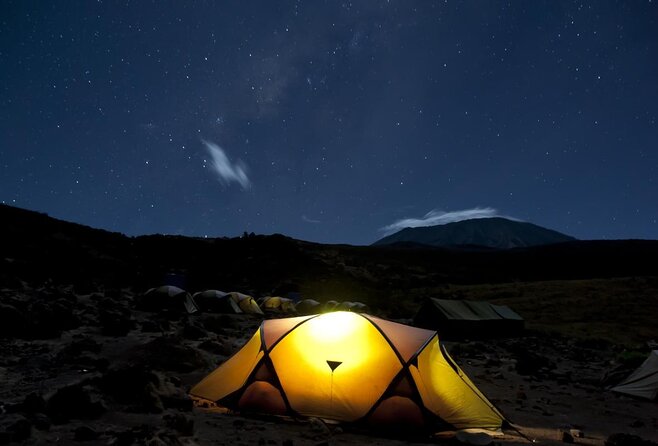
- Seven days on the Lemosho Route: You approach from the west, cross the Shira Plateau, pass Lava Tower and Barranco, then reach the summit by way of Barafu Camp.
- A route built for scenery and acclimatization: The trail moves through rainforest, heather, moorland, alpine desert, and high volcanic terrain.
- A demanding summit night: You wake around midnight at Barafu Camp, climb to Stella Point at 5,756 meters, then continue to Uhuru Peak at 5,895 meters.
- Private trip arrangements: Only your group participates, with private transportation and hotel nights in Moshi before and after the climb.
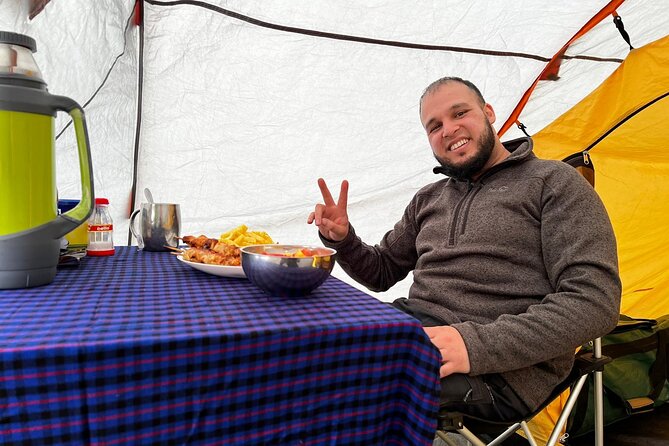
- A well-equipped package: Tents, sleeping pads, sleeping bags, tables, chairs, treated water, emergency oxygen, and a pulse oximeter are included.
- Strong emphasis on staff and organization: Guides and crew members named in past trip accounts include Elias, Eli, Sebastian, Benson, and Frank, with repeated praise for communication, food, and mountain support.
Why Lemosho is Kilimanjaro’s best scenic choice
Kilimanjaro is not one long, uniform climb. It is a sequence of different worlds, and Lemosho gives you time to notice the changes. You start at Lemosho Gate on the western side of the mountain at about 2,360 meters. From there, the route passes through forest before reaching open moorland, volcanic rock, high desert, glaciers, and the crater rim.
The western approach is a major reason to choose this route. You do not begin among the busiest lower slopes. Instead, the trail gradually circles toward the southern side of Kilimanjaro, where the mountain opens up around you.
Lemosho is also useful for acclimatization. The itinerary does not simply march upward every day. On Day 3, you climb to Lava Tower at 4,600 meters, then sleep lower at Barranco Camp at 3,900 meters. That climb high, sleep lower pattern gives your body a better chance to adjust before the summit push.
The seven-day version is still compact. An eight-day Lemosho itinerary would normally allow more time at altitude, but this seven-day plan is designed with a sensible acclimatization profile. You should not mistake that for an easy schedule.
More Private Hiking Tours in Tanzania
- Private Full Day Hiking Experience to Marangu Route
★ 5.0 · 61 reviews - Kilimanjaro 7 Day Private Trekking Experience
★ 5.0 · 40 reviews - Full Day Private Hiking Tour to Kilimanjaro Mountain
★ 5.0 · 22 reviews
Day 1: Lemosho Gate to Big Tree Camp
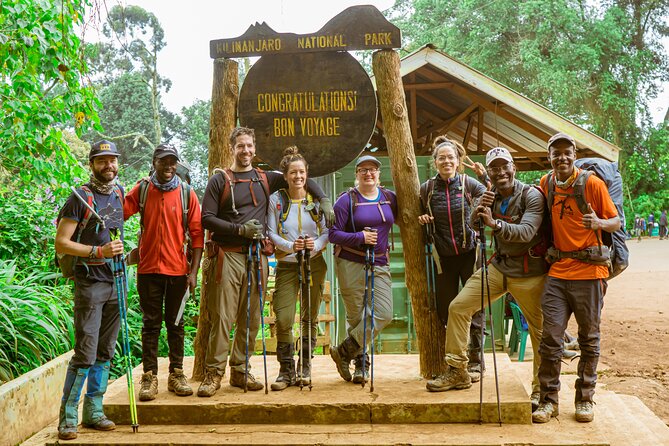
Your pickup is planned for around 8:00 am after breakfast, followed by a transfer to Lemosho Gate. The operator handles the park entry and pre-hike formalities before you begin walking.
The first hike covers about 7 kilometers and takes roughly four hours. The trail moves through the Lemosho glades and montane forest toward Big Tree Camp, where you spend the night.
This is a gentle opening by Kilimanjaro standards, but do not waste it by racing. Your body is still adjusting to the altitude, your boots are still finding their rhythm, and your pack may feel unfamiliar. Use the first day to tell your guide about hot spots on your feet, headaches, or any trouble with your equipment.
The forest is one of the most pleasant parts of the lower route. It gives you shade and a sense of entering a protected mountain world. The package includes breakfast, lunch, and dinner, so you do not need to arrange food during the climb.
Day 2: The Shira Plateau and a long 16.5-kilometer walk
Day 2 is where the itinerary becomes more demanding. You cross grassy moorland and heather, with volcanic rock formations scattered along the way. The route rises toward Shira 1 Camp, then continues to Shira 2 Camp.
The total distance is about 16.5 kilometers, with nine to ten hours of hiking. That is a long day, even if the trail is not technically difficult throughout. Start slowly and keep your pace steady. Kilimanjaro guides often use the phrase pole pole, meaning slowly slowly, and this is exactly the day to follow that advice.
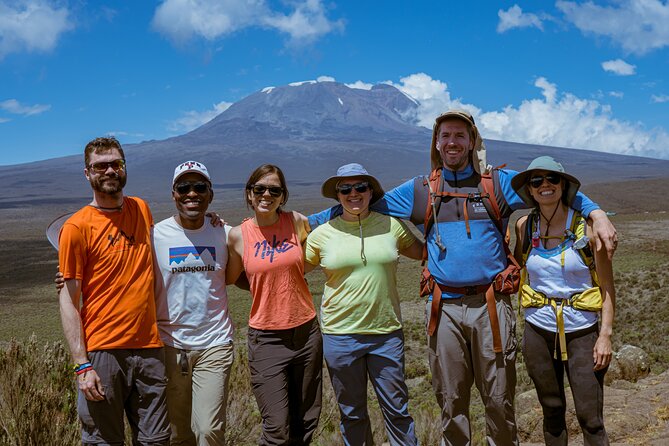
The reward is space and height. From Shira 1, you can see Kibo Peak above the clouds. From the plateau, the Northern Icefields come into view, and the wide mountain scenery begins to replace the enclosed forest.
This is also a useful acclimatization day. You are spending more time at altitude without yet attempting the extreme upper slopes. The drawback is simple: the distance can catch you by surprise. You may feel fresh in the morning and very tired by camp. Keep snacks and water close, and do not spend your energy trying to be first.
Day 3: Lava Tower at 4,600 meters, then Barranco
Day 3 is one of the most important days on the route. You hike into the alpine desert, climb to Lava Tower at 4,600 meters, and then descend to Barranco Camp at about 3,900 meters.
The distance is about 10 kilometers, with roughly six hours of hiking. Compared with Day 2, the mileage looks modest, but the altitude makes the day harder. You may notice a slower walking pace, a mild headache, shortness of breath, or reduced appetite. Tell your guide early if anything feels wrong.
The descent to Barranco takes about three hours and gives you views toward the Western Breach and Barranco Wall. The camp sits in a valley below the wall, a dramatic place to spend the night. Sunset here can be a highlight, especially when the changing light reaches the rock face and surrounding peaks.
Lava Tower is more than a viewpoint. It is the high point of the day and a test of how your body responds to altitude. Sleeping lower at Barranco is the practical advantage. You gain height during the day, then recover at a lower camp.
Same trailhead, a different kind of day:
- 8-Day Small-group Lemosho Kilimanjaro Summit Trekking
★ 5.0 · 186 reviews - Mountain Kilimanjaro Day Hike
★ 5.0 · 102 reviews - 4 Days Mount Meru Trekking
★ 5.0 · 55 reviews - From Arusha/Moshi: Kilimanjaro Hike Marangu Route Day Trip
★ 4.5 · 54 reviews
Day 4: Barranco Wall and the Karanga Valley
After breakfast, you climb Barranco Wall. It looks imposing from camp, but the route is described as easier than its appearance suggests. You should still expect a steep, hands-on section where careful foot placement matters.
The trail then passes below the Heim and Kersten glaciers before descending toward the Karanga Valley. The itinerary gives about four hours of hiking, making this a shorter day than the previous one. That shorter schedule is valuable because the summit attempt begins soon.
From Karanga, Mawenzi Peak appears to the east, while the Kibo glaciers rise above the route. After lunch, you have time to rest, and a short afternoon acclimatization walk may be offered for those feeling strong.
Do not treat the free afternoon as spare sightseeing time. Rest is part of the climb. A nap, dry socks, warm layers, and a careful meal may help more than extra walking. The route description is truncated at the afternoon walk, so confirm the exact timing with Nafika Tours before departure.
Day 5: Barafu Camp and the wait for midnight
Day 5 covers about 4 kilometers and takes roughly four hours. You hike toward Barafu Camp at 4,640 meters, with views of Kibo and Mawenzi along the way.
Barafu means ice, and the name gives you a sense of the environment. This is high, exposed country with little comfort beyond what the crew sets up. After lunch, the plan is to rest in your tent, eat an early dinner, and sleep before the summit attempt.
The difficult part is not the distance. It is trying to rest at altitude while thinking about the night ahead. Set out your warm clothes, headlamp, gloves, water, snacks, and camera before lying down. The less you need to organize at midnight, the better.
The package includes sleeping bags, sleeping pads, tents, chairs, tables, and meals. It also includes treated water, emergency oxygen, a first-aid kit, and a pulse oximeter. Those items do not remove the risks of altitude, but they show that the operator has planned for basic mountain support.
Day 6: Stella Point, Uhuru Peak, and the long descent
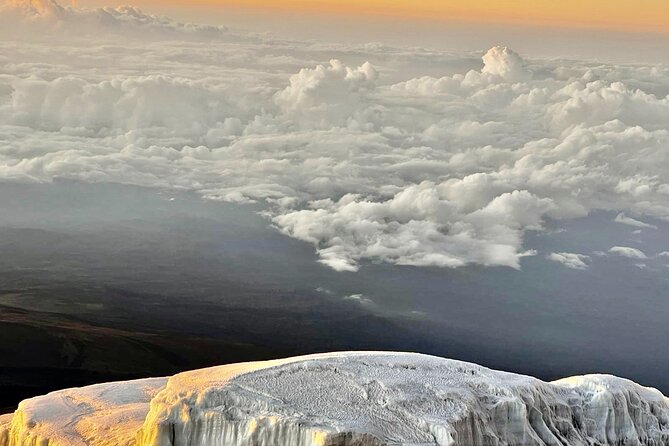
Summit day begins around midnight with light tea and breakfast. You then start a four to five-hour climb toward Stella Point on the crater rim at 5,756 meters.
This is usually the hardest section of the entire experience. You gain a great deal of height over a short distance, often in darkness, and the cold and thin air make every step feel deliberate. The schedule aims to reach Stella Point as the sun rises, when the first light can spread across the crater rim.
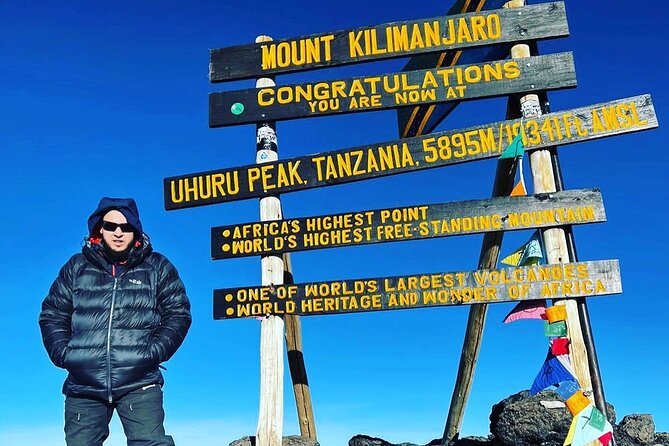
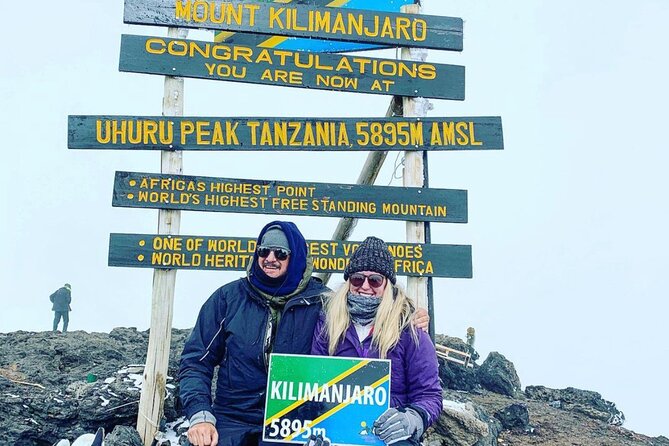
From Stella Point, the route continues for about one hour to Uhuru Peak at 5,895 meters. This is the summit of Kilimanjaro. You should allow time for photographs and a brief celebration, but keep your stay at the top sensible. At this altitude, warmth and energy matter.
The summit is only the midpoint of the day. You descend to Barafu Camp for lunch and rest, then continue down to a lower camp, identified in the schedule as Millennium Camp. The full day is listed at about 12 hours, and it can feel even longer because fatigue accumulates quickly.
This is the clearest reason to take the itinerary seriously. Reaching Uhuru Peak is a major achievement, but the descent also demands attention. Keep your knees protected, drink regularly, and follow your guide’s pace rather than rushing downhill.
Day 7: Forest descent to Mweka Gate
The final day begins with breakfast and a descent through montane forest to Mweka Gate. The stated hiking time is about five hours, covering approximately 14 kilometers.
After the open, cold upper mountain, the forest feels like a different country. The air becomes warmer, vegetation returns, and the trail eventually reaches the park exit. You collect your certificates at the gate, say goodbye to the mountain crew, and take private transportation back to your hotel.
The return vehicle matters more than it might sound. After a summit day and a final descent, you will want a straightforward ride rather than another round of public transport or negotiation. A hot shower and a proper bed in Moshi are part of the recovery.
What the $2,450 price includes
At $2,450 per person, this is not a budget walk-up attempt. It is a full-service private climb with substantial logistics included.
The package covers private transportation, park fees and taxes, camping equipment, guides and porters, fair wages for the mountain crew, meals, treated water, emergency oxygen, and first-aid equipment. You also receive two hotel nights in Moshi, one on arrival and one after the hike.
That combination gives the price real value. You are paying for more than a route and a tent. You are paying for a crew to move equipment, prepare food, arrange camps, manage park procedures, and get you back to town.
A visa costs an additional $50. The provided information does not list flights, personal clothing, trekking boots, tips, or other personal expenses, so ask Nafika Tours for a complete current packing and payment list before you commit.
Food is a notable part of the package. Breakfast is included on all seven days, lunch on all seven, and dinner on six. Several accounts specifically praise the meals, along with the general care shown by the crew.
Guides, porters, and the feel of a private climb
The experience is private, meaning only your group participates. That gives you more control over walking pace, rest stops, and communication than a large mixed group usually allows.
At the same time, private does not mean small. A five-person climbing group has previously been supported by three guides and about 20 porters. That may sound like a large crew, but Kilimanjaro climbs require people to transport tents, food, water, cooking gear, and personal equipment.
The people named in past accounts include Elias, Eli, Sebastian, Benson, and Frank. Praise has focused on organization, positive energy, communication, food, equipment, and safety. You should still confirm the names and guide assignments for your own departure.
The operator’s use of a pulse oximeter, first-aid kit, and emergency oxygen is reassuring, but oxygen is not a substitute for altitude judgment. Your guide should be the person making pace and safety decisions, and you should give accurate information about how you feel.
Who should choose this seven-day climb
I would recommend this route to a fit hiker who wants the prettiest approach to Kilimanjaro and prefers a private arrangement. It suits you if you value scenery, reliable logistics, hotel support in Moshi, and a crew that handles the camping work.
It is also a good match if you have not climbed a high mountain before but are prepared to train and take the altitude seriously. The itinerary requires a moderate level of physical fitness, and the summit day is long enough to test experienced hikers.
I would hesitate if you want a relaxed holiday with a mountain walk added on. I would also ask about an eight-day option if you are worried about acclimatization, have limited experience at altitude, or prefer more recovery time between camps.
The route is scenic, but scenic does not mean gentle. The 16.5-kilometer Shira day, the 4,600-meter Lava Tower, the Barranco Wall, and the midnight summit start all require preparation.
Booking details worth confirming
Pickup is offered, and the schedule describes collection from your hotel around 8:00 am on Day 1. The meeting information also refers to Kilimanjaro Airport and lists very early opening hours, from midnight to 5:30 am. Confirm the exact airport transfer, hotel pickup, and meeting time directly with Nafika Tours.
Confirmation is provided at booking, and mobile tickets are available. The experience requires good weather. If poor conditions cause cancellation, you are offered another date or a full refund.
Free cancellation applies when you cancel at least 24 hours before the local start time. Cancellations or changes made within 24 hours are not accepted for a refund.
Should you book the Nafika Lemosho climb?
Book it if you want Kilimanjaro’s most scenic route, a private setup, and a package that handles the major practical burdens. The included hotels, transport, meals, equipment, treated water, and mountain crew make $2,450 a reasonable price for a full seven-day operation.
Before paying, confirm the exact guide team, pickup arrangements, equipment specifications, tipping expectations, and personal gear requirements. If you are fit, willing to walk slowly, and ready for a very long summit day, this Lemosho itinerary offers a strong balance of scenery, support, and mountain challenge.
FAQ
How long is the Kilimanjaro Lemosho hike?
The experience lasts approximately seven days, including the approach, summit attempt, descent, and return to Moshi.
What is the highest point reached?
The route aims for Uhuru Peak at 5,895 meters. You first reach Stella Point on the crater rim at 5,756 meters, then continue for about one hour to the summit.
Is transportation included?
Yes. Private transportation is included, including the transfer from the starting area and the return to your Moshi hotel. Pickup is offered, but you should confirm the exact meeting location and time.
Are meals included?
Yes. Breakfast is included for seven days, lunch for seven days, and dinner for six days. The itinerary includes breakfast, lunch, and dinner on the main hiking days, with breakfast and lunch on the final day.
What camping equipment is provided?
The package includes tents, sleeping pads, sleeping bags, chairs, and tables. It also includes treated water throughout the trek.
Is this a private tour?
Yes. Only your group participates in the activity. The operator also provides private transportation.
What is not included in the price?
A Tanzania visa is not included and is listed at $50. The provided information does not specify personal clothing, boots, flights, or other individual expenses, so confirm those costs before booking.
More Kilimanjaro Hikes in Tanzania
- Best Kilimanjaro hiking day trip tour with Kilinge Adventures
★ 4.5 · 54 reviews - #1. Best Kilimanjaro Day hike Tour-Machame Route-ISMANI
★ 4.2 · 47 reviews - Best Kilimanjaro Adventure 7 days Machame route Trekking
★ 5.0 · 42 reviews - Mount Kilimanjaro Day Hike Through Marangu Route to Mandara Hut
★ 5.0 · 37 reviews
Just added around Tanzania
- From Arusha/Moshi: Kilimanjaro Hike Marangu Route Day Trip★ 4.5 · 54 reviews
- Full Day Private Hiking Tour to Kilimanjaro Mountain★ 5.0 · 22 reviews
- Kilimanjaro 7 Day Private Trekking Experience★ 5.0 · 40 reviews
- Mount Kilimanjaro Day Hike Through Marangu Route to Mandara Hut★ 5.0 · 37 reviews
- Mount Kilimanjaro Day Hike★ 4.5 · 23 reviews
- Best Kilimanjaro Adventure 7 days Machame route Trekking★ 5.0 · 42 reviews
- Best Kilimanjaro hiking day trip tour with Kilinge Adventures★ 4.5 · 54 reviews
- #1. Best Kilimanjaro Day hike Tour-Machame Route-ISMANI★ 4.2 · 47 reviews
Moshi Hiking Tours, compared.
Best Kilimanjaro hiking day trip tour with Kilinge Adventures
Read our review →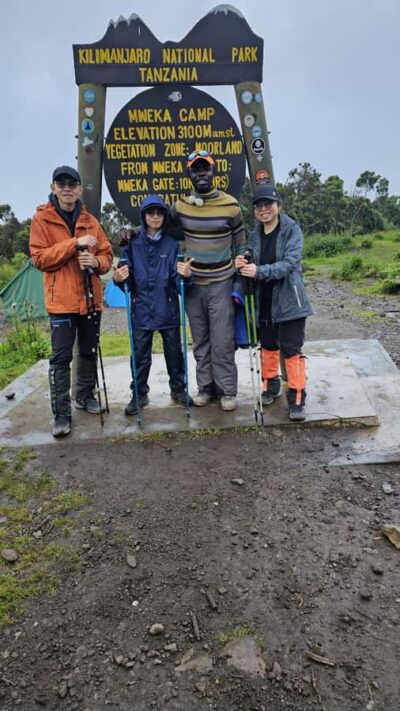
#1. Best Kilimanjaro Day hike Tour-Machame Route-ISMANI
Read our review →
Best Kilimanjaro Adventure 7 days Machame route Trekking
Read our review →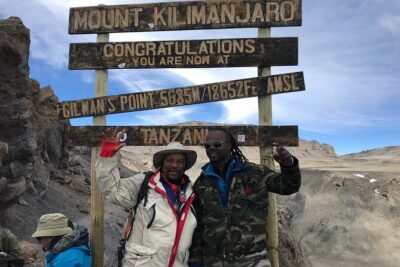
Kilimanjaro 7 Day Private Trekking Experience
Read our review →
Full Day Private Hiking Tour to Kilimanjaro Mountain
Read our review →Browse the lists this tour appears in