
REVIEW · CHIANG MAI HIKING TOURS
Chiang Mai Untouched Elephant: Nature Walk & Waterfall Trek
Elephants set the day’s pace. That is what makes this Chiang Mai outing different from a tightly choreographed animal attraction. You prepare food, feed rescued elephants, walk beside them without saddles or chains, and join them at the river for mud and bathing. I especially like the respectful approach to elephant care and the chance to eat a home-cooked Thai meal with a local family. The main catch is the journey: the drive can take around two hours each way, and the day may run closer to seven hours than the advertised five.
This is a good choice if you want rural Chiang Mai rather than another polished attraction. The no-forced-performance policy matters, since activities depend on what the elephants choose to do. I also like the Mae Wang waterfall stop, though it may be busy, and the rough open-air truck transfer can be uncomfortable for older people or anyone expecting a smooth ride.
Key points to know before booking
- The elephants are rescued and do not wear chains or hooks: You will not ride them or watch staged tricks.
- The day follows the animals’ routine: There is no fixed sequence of elephant activities, so patience is part of the experience.
- Expect a long mountain transfer: Transport may include a 12-seat air-conditioned van, an open-air pickup, and a roofed 4×4 truck.
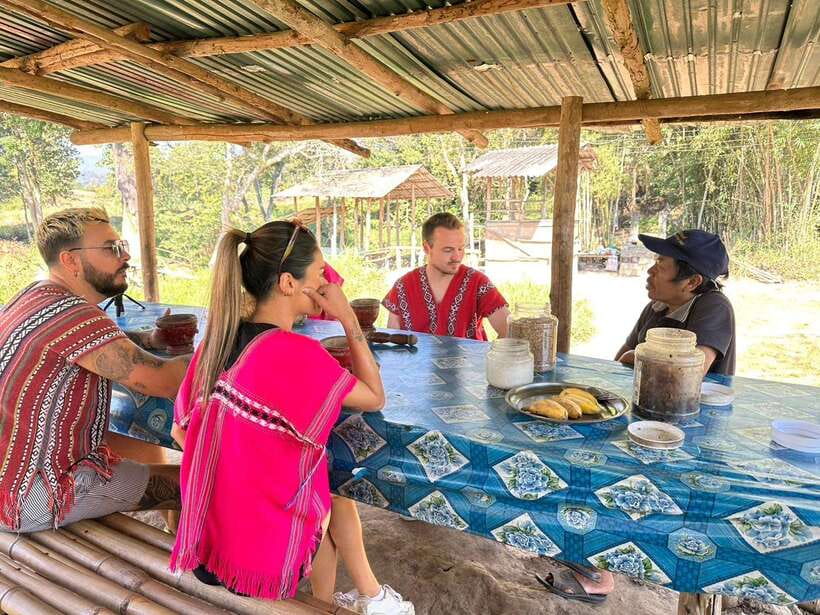
- Lunch is prepared locally: A complimentary Thai meal is served after the morning with the elephants.
- Mae Wang Waterfall adds a one-hour nature stop: It is a pleasant finish, but conditions can be busier than the word untouched suggests.
- You need moderate fitness: Walking, river activities, uneven ground, sun, and insects are all part of the day.
Why this elephant experience feels different
Chiang Mai has no shortage of elephant activities. The useful question is not simply whether you will see an elephant. It is how the animal is treated, how much control you have over the encounter, and whether the visit supports a place that treats elephants as living creatures rather than photo props.
Here, the stated approach is simple: no riding, no hooks, no chains, and no forced performances. The elephants are rescued and live with caretakers who have worked with them for generations. You are there to help with ordinary care, not to make an elephant dance, paint, or pose on command.
That difference changes the mood. You may spend time preparing food, watching an elephant eat, walking through the forest, or waiting while an animal decides where it would rather go. That can feel less polished than a standard tour, but it is also the point. If you need every minute filled with an activity, you may find the pace loose. If you like observing animals on their own terms, the quiet moments can be the best part.
The experience takes place in a secluded hill tribe village in Chiang Mai Province. You are not simply dropped at a fenced viewing area. The visit is built around the families, mahouts, and daily work connected with the elephants.
More Waterfall Hikes in Chiang Mai
- Chiang Mai: 2-Days Jungle Trek, Waterfalls and Karen Village
★ 4.8 · 103 reviews - Chiang Mai ATV & White Water Rafting & Trekking to Waterfall
★ 4.7 · 84 reviews - Chiang Mai: Whitewater Rafting and Waterfall Trekking Tour
★ 4.9 · 58 reviews
The mountain journey from Chiang Mai
Pickup is available from hotels in and around Chiang Mai Old Town, with free transfers within about five kilometres of the Old City. You should wait in your hotel lobby from 10 minutes before the arranged pickup time. Hotels farther away may require an extra transport charge.
The exact vehicle can change. You may begin in a 12-seat air-conditioned van or an open-air pickup truck, then transfer to a roofed 4×4 truck for the final approach to the sanctuary. This mixed transport is part of reaching a more remote setting, but it is not a minor detail.
One practical warning: allow more time than the five-hour headline suggests. The mountain drive can take roughly two hours from Chiang Mai, and one account described a total day of about seven hours. Road conditions, transfers, time with the elephants, and the waterfall stop can all stretch the schedule.
An older-style minibus or open pickup may also feel tiring, especially if you have back, knee, or mobility concerns. I would not book this on a day when you have a flight, an evening show, or another fixed appointment. Give the outing a wide time cushion.
The upside is the change in scenery. As the road leaves the city, Chiang Mai’s urban rhythm gives way to mountain roads and rural communities. The transfer is long, but it helps explain why this place feels removed from the city’s busy elephant-tour circuit.
Meeting the mahouts and rescued elephants
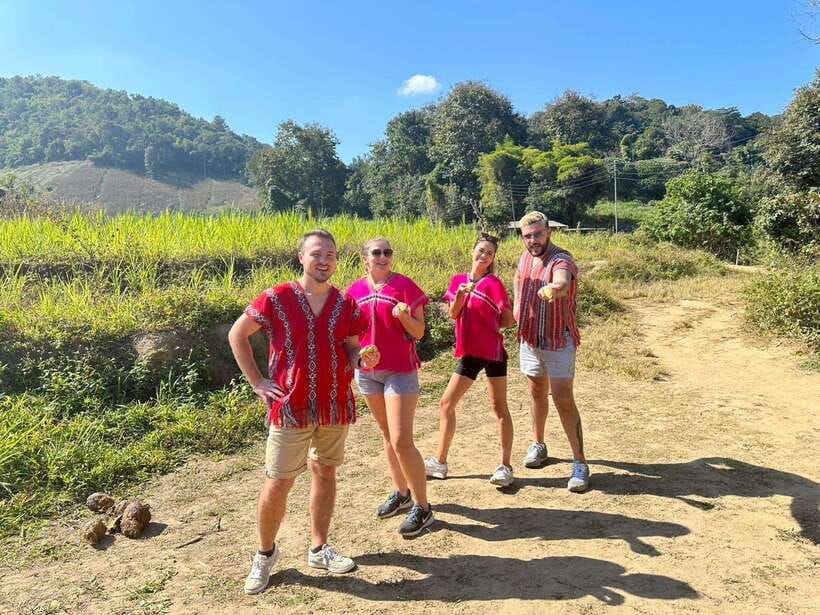
At the village, you meet the elephant caretakers and learn how the animals fit into local life. The tone is intended to be more like a visit to a working community than a quick stop at a display park.
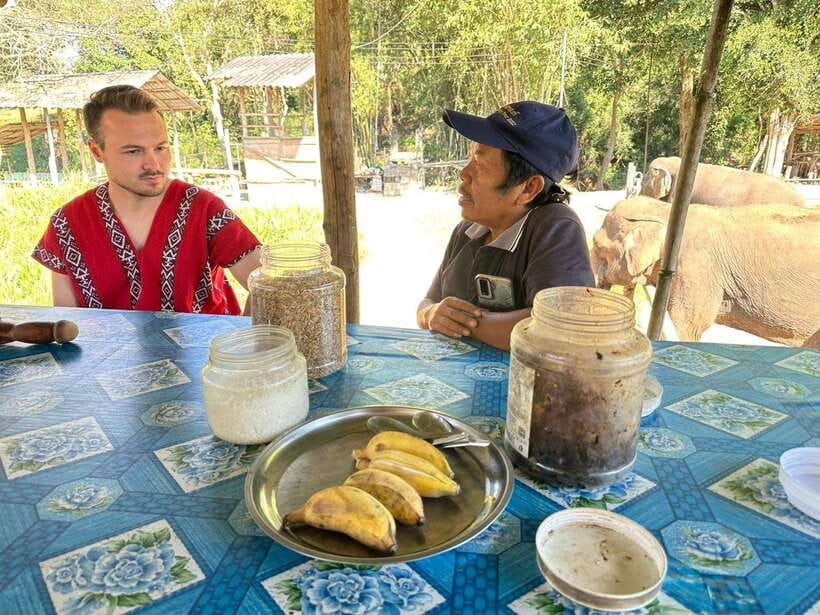
Your first practical task is preparing elephant food using traditional methods. This gives you something useful to do right away, and it helps you understand the amount of daily work involved in caring for an elephant. Food preparation is not just a staged photo opportunity. It is the start of the relationship between you, the mahouts, and the animals.
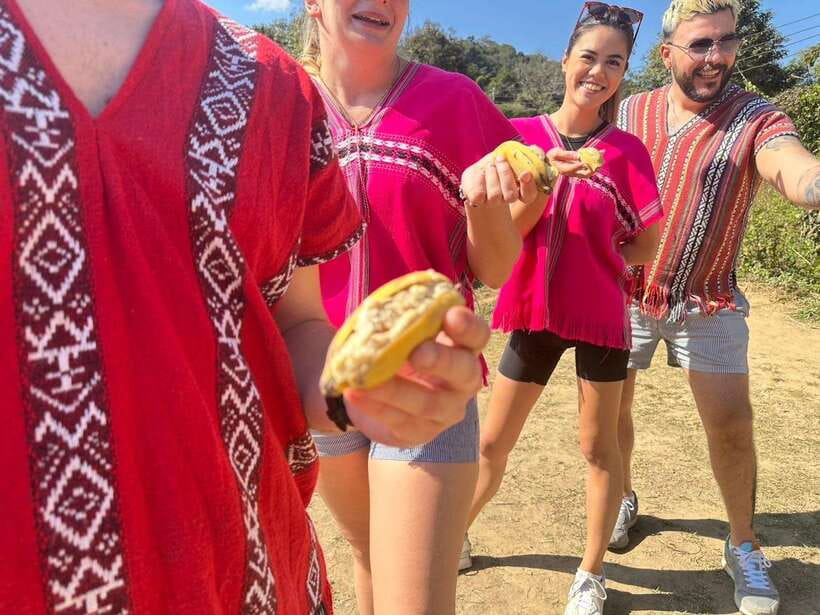
Feeding is done by hand. This is the close-up moment many people hope for, but it requires calm behavior and attention to instructions. You can notice individual habits and personalities while the caretakers explain how they work with the elephants.
Do not expect every elephant to react the same way. One may be eager for food, while another may wander off or show little interest in your carefully prepared offering. That unpredictability is a strength here, not a flaw. The animals are not forced to take part in a set routine.
The experience is guided in English, but it is not described as a formal, highly scripted tour. You should expect help from the caretakers and guide while also having stretches of unstructured time. A guide named Jimmy received especially warm praise for making the day run well, though guide assignments can vary.
Walking through the jungle without saddles
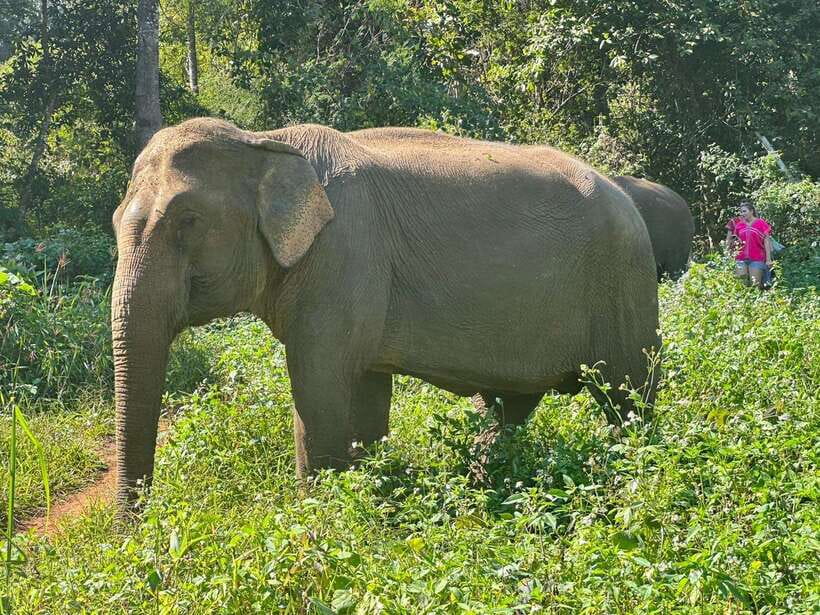
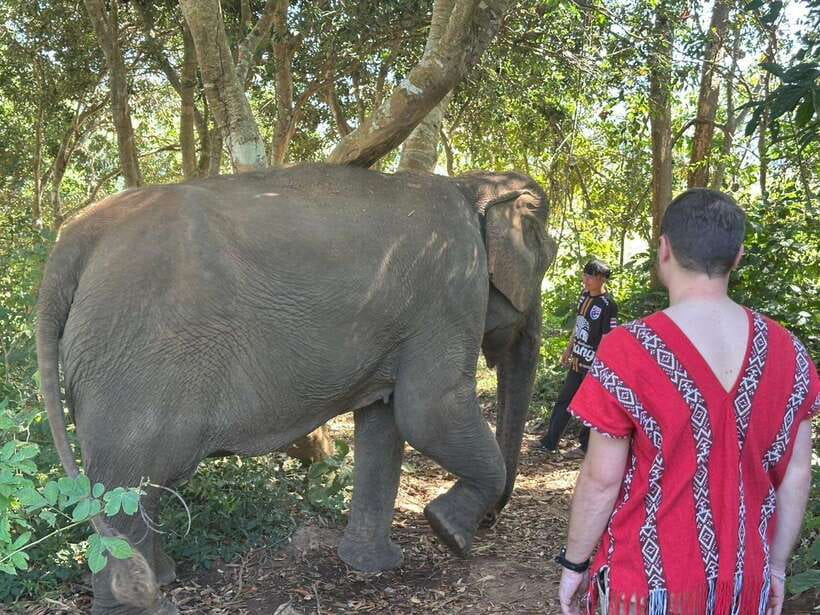
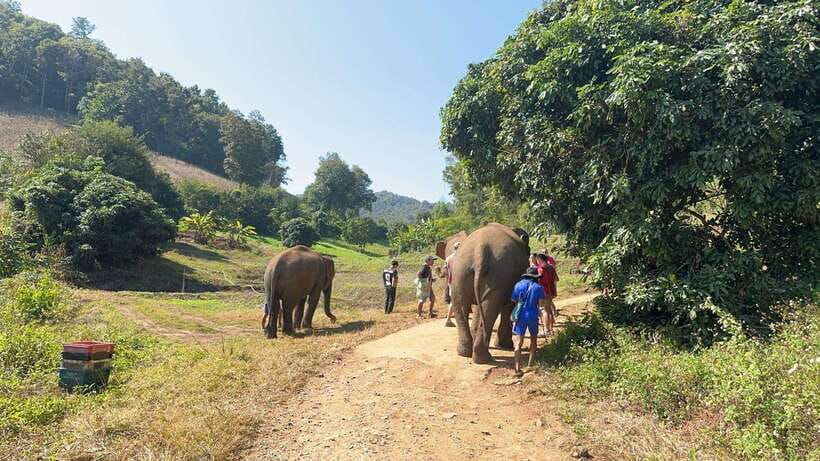
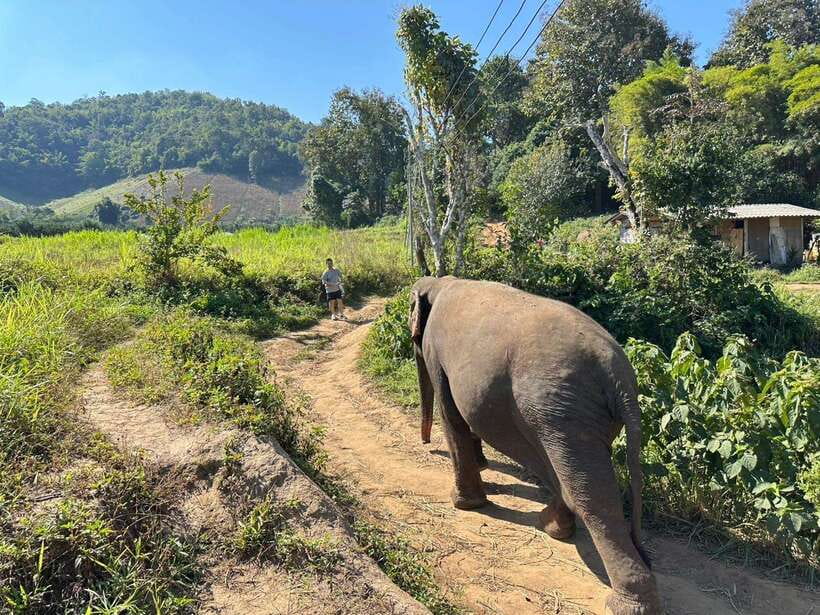
The walk with the elephants is the heart of the morning. You follow them through the surrounding jungle without saddles, chains, or riding. The idea is to watch the elephants move through their environment rather than use them as transport.
This is a more respectful way to spend time with these animals, but it also asks more from you. The ground may be uneven, the air can be hot, and the route involves walking outdoors. A moderate level of fitness is required.
Bring a sun hat, sunglasses, sunscreen, and insect repellent. Comfortable clothes and footwear are sensible choices. The supplied information does not list a towel, swimsuit, or spare clothing, but one person specifically wished these items had been recommended. Since the program includes mud and river bathing, I would pack all three.
You should also bring patience. A traditional tour often moves from one scheduled activity to the next. This one is meant to follow the elephants and their caretakers. If an elephant stops, wanders, eats, or shows no interest in the next activity, the schedule may change.
That makes the walk more authentic, but it can also feel less efficient. You are paying for time with animals that are not required to perform. For many people, that is a fair trade.
More Waterfall Hikes in Thailand
- Chiang Mai Adventure: Trekking, Tubing & Waterfall Slide
★ 4.9 · 20 reviews - Chiang Mai: Elephant Sanctuary & Jungle Trek w/ Waterfall
★ 4.5 · 18 reviews - Chiang Mai: Mae Ya Waterfall & Pha Dok Siew Trail Trek
★ 5.0 · 13 reviews - Chiang Mai: Guided Jungle and Waterfall Trek with Transfer
★ 4.9 · 8 reviews
The river, mud spa, and bathing session
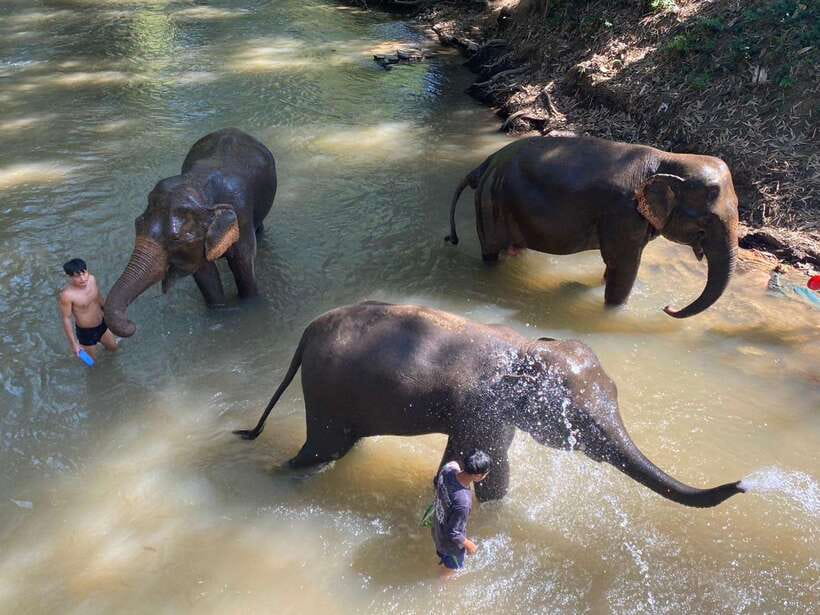
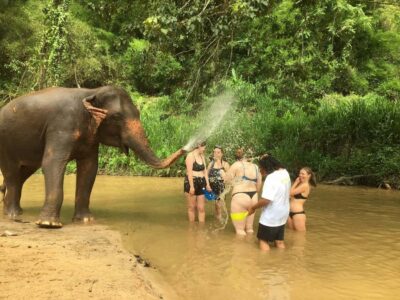
Later, you follow the elephants to a river for mud and bathing. This is the most hands-on part of the experience. You may splash water, scrub mud, and spend time close to the elephants as they cool off.
The important distinction is that the animals are not made to bathe on command. If they want to enter the water, the caretakers support the activity. If they do not, the plan can change. The day’s exact program depends on what the elephants want to do.
Expect to get wet and dirty. Pack a swimsuit or clothes that can handle mud, plus a dry change of clothing and a towel. Your phone also needs protection if you plan to carry it near the river.
This is not the right activity for someone who wants only a distant wildlife sighting. You will be close to large animals, and you need to follow the guide’s directions. It is also not ideal if you dislike wet clothes, slippery ground, or outdoor bathing.
For people who enjoy hands-on animal care, though, the river stop gives the morning a sense of purpose. You are not just watching an elephant feed. You are sharing one of the ordinary care activities that helps keep the animal clean and comfortable.
A home-cooked lunch in the village
After the morning activities, you return to the village for lunch. Local families prepare the meal with fresh ingredients, and drinking water is included.
Food is one of the strongest parts of the experience. The meal has been praised for being delicious, and it offers a more personal connection to the village than a standard restaurant stop. You are eating food prepared for the group in a local setting, rather than receiving a generic boxed lunch.
Do keep expectations realistic. This is rural hospitality, not a restaurant with a full menu and flexible service. Tell the operator about dietary restrictions in advance. That is especially important if you have allergies or follow a specific diet.
One small criticism concerned cold chips, while the broader impression of the meal was positive. That tells you what matters here: expect a generous, local meal rather than a carefully plated dining experience. The food is part of the day’s cultural exchange, not the main attraction.
After lunch, you may relax, help with small daily tasks, or simply enjoy the quiet village setting. The afternoon is intentionally unhurried. You are given a glimpse of the rhythm surrounding the elephants and their caretakers, rather than being pushed through a long list of stops.
Mae Wang Waterfall as the final stop
The final listed stop is Mae Wang Waterfall, with about an hour for visiting and free time. It gives you a chance to stretch your legs after the elephant program and enjoy a different side of Chiang Mai Province.
The waterfall stop is more relaxed than the morning. You can walk, take in the setting, and spend some free time before returning to Chiang Mai. It is a useful contrast to the close animal encounters.
Do not assume it will be empty simply because the elephant camp is described as non-commercialized. At busy times, the waterfall can feel crowded. That does not make it a poor stop, but it does temper expectations if you are picturing a private forest pool.
The waterfall is best viewed as an added nature stop, not the main reason to book. The elephant care and village visit justify the outing. Mae Wang adds variety and makes the five-hour plan feel more complete, but it should not carry the whole value of the tour.
What the $51 price includes
At $51 per person, the price is reasonable if you value transport, a local meal, an English-speaking guide, and several hours of direct elephant care. You also receive hotel pickup and drop-off within the stated Chiang Mai service area, drinking water, the village visit, the elephant program, and the waterfall stop.
The value depends heavily on your expectations. You are not paying for luxury transport or a tightly managed sightseeing product. You are paying for access to a rural community, staff time, food, transfers, and a conservation-minded encounter with rescued elephants.
That makes the price easier to justify for someone who wants ethical animal contact and a full half-day outside the city. It is less appealing if you mainly want a quick elephant photograph or a comfortable ride. The transfer is long, and the vehicle may be basic.
Free cancellation up to 24 hours before departure and the option to reserve now and pay later add useful flexibility. Still, I would read the transport details carefully before booking. A low price can feel less attractive if you are uncomfortable in open-air vehicles or have limited time in Chiang Mai.
Who should book this day
I would recommend this experience to you if you:
- Want to avoid elephant riding and staged performances
- Care about animal welfare and rescued elephants
- Enjoy rural communities, local meals, and unhurried schedules
- Have moderate fitness for walking and outdoor activities
- Can tolerate a long and sometimes rough transfer
- Are happy for the elephants to determine the pace
I would think twice if you:
- Need a precisely timed five-hour program
- Have a flight or fixed booking soon after the scheduled return
- Expect luxury transport
- Prefer a professional guide to explain every moment
- Cannot manage uneven paths, heat, insects, mud, or river activity
- Want guaranteed solitude at the waterfall
The experience is also a good fit for people who value meaningful animal encounters over polished entertainment. The lack of riding and forced interaction is a major positive. Just remember that ethical care often looks slower and less dramatic than a conventional show.
Practical advice for a smoother day
Wear clothes that can get dirty and wet. Pack a swimsuit, towel, spare clothes, sunscreen, insect repellent, sunglasses, and a hat. Bring only what you can protect from water during the bathing session.
Keep your morning open and avoid scheduling an important event immediately afterward. The advertised duration is five hours, but the drive and flexible program can extend the day. If you are staying outside the five-kilometre Old City pickup area, confirm the transport surcharge before departure.
Tell the operator about dietary needs ahead of time. Lunch is included, but the village meal is prepared locally, so advance notice is the sensible way to handle restrictions.
Finally, arrive ready to observe rather than command. The elephants may feed, walk, bathe, rest, or change the plan. That is not poor organization. It is the central promise of an animal-led experience, even if it requires a little flexibility from you.
Should you book the Chiang Mai Untouched Elephant experience?
Book it if you want close, respectful contact with rescued elephants and you are willing to accept basic transport, a long transfer, and an unscripted day. The feeding, jungle walk, river bathing, local meal, and village setting provide more substance than a short photo stop.
Skip it if comfort and exact timing matter more than authenticity. The waterfall may be crowded, the day can run long, and the open-air truck will not suit everyone.
For the right person, the $51 cost is good value. You get a full rural outing, not just an elephant encounter, and the best moments come when the schedule gives way to the animals’ own habits.
FAQ
How long does the Chiang Mai elephant and waterfall experience last?
The stated duration is five hours, but the mountain transfer and flexible activities can make the full outing longer. You should allow extra time, as the day may last around seven hours.
Is hotel pickup included?
Yes. Pickup and drop-off are included for hotels in and around Chiang Mai Old Town, with free transfers within about five kilometres of the Old City. Transport from farther away may cost extra.
Can I ride the elephants?
No. Elephant riding is not included. The elephants are rescued, and the program does not use chains or hooks or force the animals to perform.
What should I bring?
Bring sunglasses, a sun hat, sunscreen, and insect repellent. Because the program includes mud and river bathing, a swimsuit, towel, and change of clothes are also sensible.
Is lunch included?
Yes. A complimentary local meal prepared by local families is included, along with drinking water. Tell the operator about dietary restrictions in advance.
Is the experience suitable for all fitness levels?
No. The program requires moderate fitness because it includes walking, trekking, outdoor conditions, and river activities. The transfer may also involve an open-air pickup truck and a roofed 4×4 vehicle.
More Nature Walks in Chiang Mai
- Doi Inthanon National Park with Nature Trail Trekking 1-Day Tour
★ 4.5 · 230 reviews - Private Doi Inthanon With Trekking Pha Dok Siew Nature Trail
★ 5.0 · 7 reviews - Self guided Hike Trail to Nature Walk & Waterfall
★ 4.5 · 283 reviews - Semi-Private Montserrat Monastery, Funicular & Scenic Nature Walk
★ 5.0 · 172 reviews
Just added around Chiang Mai
- From Chiang Mai: Doi Inthanon National Park Day Trip & Hike★ 4.8 · 125 reviews
- From Chiang Mai: Chiang Dao Cave Trekking Full-Day Tour★ 4.8 · 126 reviews
- From Chiang Mai: Mae Taeng Valley Hike & Bike Day Trip★ 5.0 · 50 reviews
- Chiang Mai: Elephant Sanctuary & Jungle Trek w/ Waterfall★ 4.5 · 18 reviews
- Private Doi Inthanon With Trekking Pha Dok Siew Nature Trail★ 5.0 · 7 reviews
- Chiangmai : Doi Pui Summit Hiking Experience★ 4.8 · 9 reviews
- Chingmai Sunrise Hike & Cultural Traditions★ 4.9 · 17 reviews
- Chiang Mai:Doi Inthanon National Park & Hike at Kew Mae Pan★ 4.4 · 53 reviews
Chiang Mai Hiking Tours, compared.

3-in-1: Doi Inthanon Tour, Elephant Sanctuary, and Trekking Trail
Read our review →
2-Day Jungle Trek with Elephant Farm & Raft Ride
Read our review →
Doi Inthanon Park with Kew Mae Pan Hike Day Trip
Read our review →
Doi Inthanon Private Tour with Trek & Lunch from Chiang Mai
Read our review →Browse the lists this tour appears in