
REVIEW · ARUSHA HIKING TOURS
7 Days Machame Route Trek Mount Kilimanjaro
The mountain changes every day. This 7-day Machame Route trek takes you from rainforest and colobus monkeys to Kilimanjaro’s icy summit, with tented camps along the way. I like the route’s steady altitude pattern, especially the climb to Lava Tower followed by a lower night at Barranco Camp. I also like the small group limit of four, which should make it easier to walk at a sensible pace and get direct help from your guide.
The main consideration is the summit night. You begin around midnight, walk for up to seven hours to Stella Point, continue to Uhuru Peak, then descend to Barafu Camp the same day. That is a punishing stretch, even for a fit hiker. The $2,200 price may offer good value, but you should confirm exactly what it covers before booking, since the supplied details do not list every inclusion.
Key points to know before booking
- Rainforest to glacier in seven days: You pass through several distinct climate zones, from ancient forest to dry heath, alpine desert, and snow near Uhuru Peak.
- A useful acclimatization design: The Lava Tower climb reaches 4,640 meters before you sleep lower at Barranco Camp.
- A demanding summit day: The midnight start, five to seven hours to Stella Point, and further climb to Uhuru Peak require stamina.
- Small-group format: The maximum group size is four people, a useful advantage on a strenuous route.
- Experienced support team: Past trips connected with the operator include guides such as Gideon, Laurent, Emanuel, Meshack, Julius, Johnny, Frank, and Mathias, along with cooks and porters.
- A real finish, not just a photo: After descending through the rainforest to Mweka Gate, you return to a hotel for a shower, pool time, dinner, and a bed.
What the Machame Route feels like over seven days
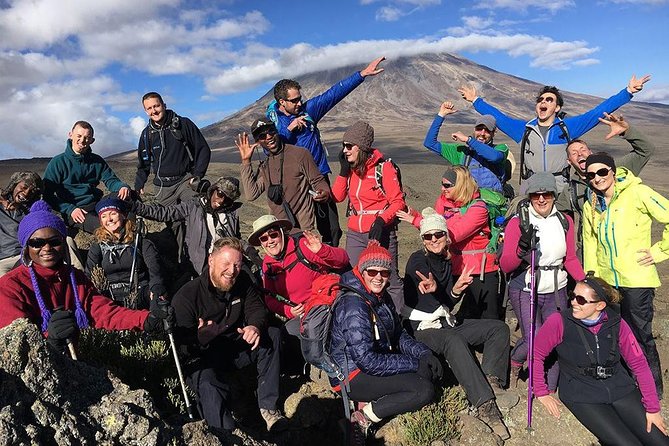
The Machame Route is often chosen for its changing scenery and its chance to acclimatize while moving toward the summit. You do not simply march uphill for a week. The trail rises, drops, crosses ridges, and gives your body different altitudes before the final push.
That variety is the route’s great strength. On the first day, you are in thick forest. By the second day, the trees thin out and give way to heath and moorland. Later, the plants become smaller and stranger, with lobelia and giant senecio plants in the Barranco Valley. Near Barafu Camp, the setting becomes dry and bare, and the mountain feels much more severe.
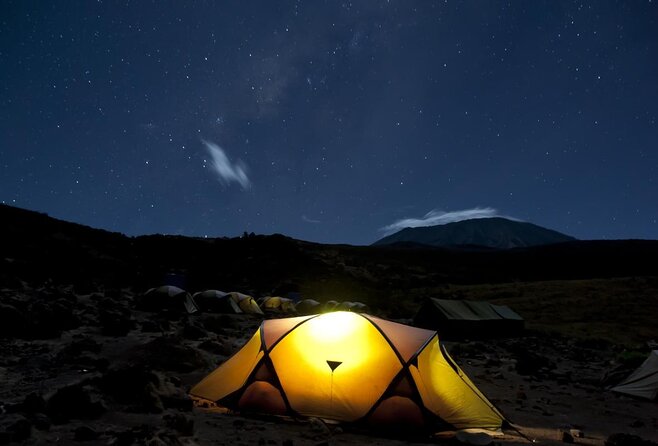
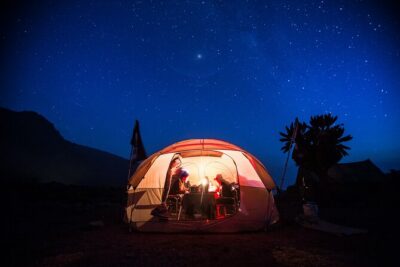
You sleep in tents every night on the mountain. That means this is a proper trekking trip, not a mountain sightseeing excursion with lodge beds. The final night is different, with a return to a hotel after the walk down from Mweka Gate.
The departure time is listed as 8:30 a.m. Pickup from your hotel is offered, and the first transfer takes you to the Kilimanjaro National Park gate. The initial paperwork happens there before you begin walking.
More Mountain and Summit Hikes in Tanzania
- Mountain Kilimanjaro Day Hike
★ 5.0 · 102 reviews - 4 Days Mount Meru Trekking
★ 5.0 · 55 reviews - Mount Kilimanjaro Day Hike Through Marangu Route to Mandara Hut
★ 5.0 · 37 reviews
Day 1: Forest trails to Machame Camp
The first day begins with a drive from your hotel to the park gate. After the necessary paperwork, you start the five to six-hour walk to Machame Camp.
This is a pleasant introduction to Kilimanjaro, though you should not mistake pleasant for easy. The trail passes through rainforest filled with large old trees, ferns, and endemic flowers such as Impatiens Kilimanjari. Black and white colobus monkeys may appear among the branches, though wildlife sightings are never guaranteed.
The forest helps create a strong sense of arrival. You are not walking through a bare mountain corridor from the start. You begin in shade, surrounded by plant life, with the trail gradually carrying you higher.
At Machame Camp, you have time to stretch and rest before eating a cooked meal and settling into your tent. The first night is useful for checking whether your boots, clothing, sleeping arrangement, and daypack feel right. If anything rubs or pinches, deal with it early. Small problems tend to become large problems by summit night.
Day 2: Heath and moorland on the way to Shira Camp
Day two begins early, even though the walking time is not the longest of the trek. The goal is to reach Shira Camp around mid-afternoon.
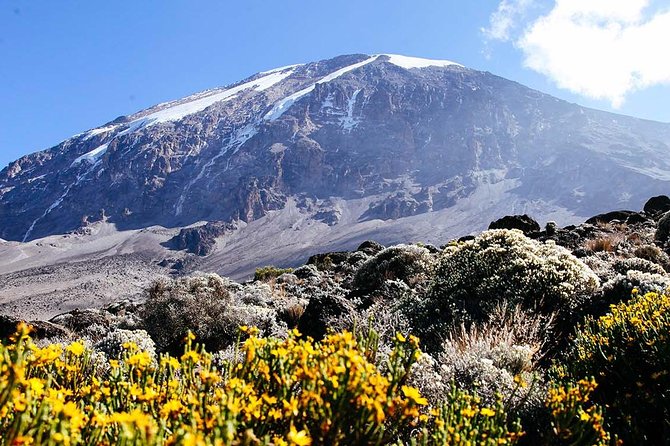
The change from forest to heath and moorland is one of the most noticeable transitions on the route. The trees fall away, the air feels more open, and the views across the mountain range begin to appear. The glaciers of Kibo may catch the evening light, giving you your first clear sense of the summit still ahead.
Shira Camp brings a more exposed night than Machame Camp. The scenery is bigger, but there is less protection from the mountain weather. A warm meal matters here, and so does staying organized. Keep your cold-weather clothing and headlamp easy to reach rather than buried at the bottom of your bag.
The early start and moderate walking time also help you settle into the slow rhythm needed at altitude. This is not a route where speed earns you much. A calm pace saves energy for the upper mountain.
Day 3: Lava Tower at 4,640 meters, then down to Barranco
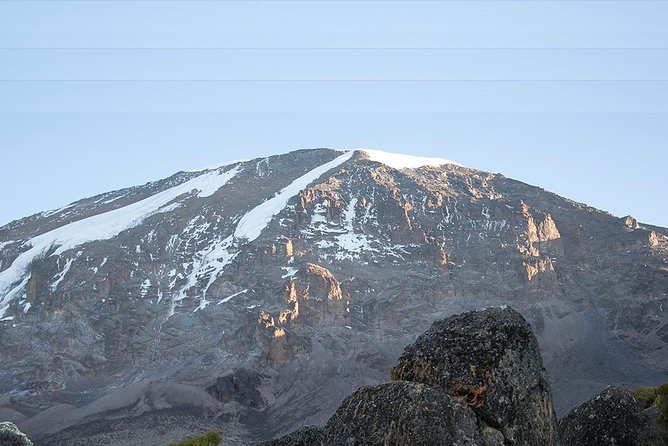
Day three is the key acclimatization day. From Shira Plateau, you climb roughly 700 meters toward Lava Tower, which reaches 4,640 meters, then descend to sleep at Barranco Camp.
That climb high and sleep lower pattern is valuable because it gives you time at a greater altitude without making you spend the night at the highest point reached that day. It also gives your guide a chance to observe how you are handling the thinner air.
The walk takes about six to seven hours. The terrain becomes alpine desert, with less vegetation and a stronger sense that you are leaving ordinary walking country behind. The Barranco Valley brings some welcome visual interest, including small lobelia plants and giant senecio plants.
Lava Tower can be a tough moment. You may feel the altitude, and the trail may seem more demanding than the distance suggests. Do not treat the rest stop there as wasted time. Eat, drink, and pay attention to your body.
Barranco Camp is one of the more memorable overnight points because it sits near the dramatic Barranco Wall. Dinner and a tent await after a long day, but you should still prepare for an early morning. The next obstacle is visible before you even go to sleep.
More Mountain and Summit Hikes in Arusha:
- Mount Kilimanjaro Day Hike
★ 4.5 · 23 reviews - 4 Days Mount Meru Climbing | Hiking | Trekking Tour
★ 5.0 · 13 reviews - Mount Kilimanjaro day trip trekking
★ 5.0 · 12 reviews - Berber villages : Atlas Mountains Day Hike from Marrakech
★ 5.0 · 14,007 reviews
Day 4: Climbing the Barranco Wall to Karanga Camp
The Barranco Wall looks more intimidating than it is. Some sections require you to use your hands for balance and grip, but this is not described as technical climbing. Your guide is present throughout and can help you choose the safest line.
This is a day when confidence matters. You move slowly, place your feet carefully, and avoid rushing the people ahead of you. The route also includes several ups and downs, which continue the acclimatization process but can make the day feel less restful than its three to four-hour walking time suggests.
Once above the wall, you follow a mountain ridge with sharp contrasts between dry ground and scattered vegetation. The views open up, and the route feels more exposed than the forest sections below.
Karanga Camp is reached after a relatively short day, leaving time to rest. The itinerary even suggests a game of rummy, a small detail that says something useful about the pace. You are not walking every daylight hour. You get a chance to recover before Barafu and the summit attempt.
Day 5: Dry ground and the final camp at Barafu
At Karanga, you wake with views toward Kibo Summit before setting out for Barafu Camp. The walk takes about three to four hours and passes through very dry, desert-like terrain.
The mountain feels stripped down here. There is little of the forest greenery that marked your first day, and the summit becomes the constant focus. Kibo remains on your left as you move toward the high camp.
Barafu is the launch point for the summit attempt. You arrive early enough to eat, rest, and prepare for the midnight wake-up. An early dinner is planned because the hardest part of the trek begins only a few hours later.
This is the day to organize everything. Set aside your warmest clothing, headlamp, water, snacks, and any personal items you need for the night climb. You will not want to repack your bag while half asleep.
The short walking time can be misleading. Barafu is high, and the altitude may affect your appetite, sleep, or energy. Rest as much as possible. A poor night at high camp is common on mountain trips, but the main goal is to be ready to move when your guide calls you.
Day 6: Midnight start, Stella Point, and Uhuru Peak
Summit day is the test that gives the entire trek its shape. You wake around midnight for tea and biscuits, then begin walking under moonlight and headlamps.
The climb to Stella Point takes about five to seven hours. The route reaches the crater rim there, at which point you have already completed the hardest sustained part for many people. From Stella Point, you continue for another one to two hours to Uhuru Peak at 5,895 meters.
The reward is the sunrise over the African scenery, with pink light on the snow and glaciers around the summit. It is a striking moment, but do not let the photographs distract you from the practical reality: you are at very high altitude and still have a long descent.
After time at Uhuru Peak, you descend by the same route to Barafu Camp. The return is not an easy stroll. Your legs are tired, the ground can be loose, and the descent may feel especially hard after the upward effort.
One past participant offered a blunt piece of advice: the descent can be the worst part. That is worth taking seriously. Reaching the summit is not the end of the day. Your guide and crew remain important as you return to Barafu, where you collect your belongings and continue with the mountain schedule.
Day 7: Rainforest return and a proper finish at the hotel
After breakfast and a farewell ceremony with the mountain crew, you begin the final descent to Mweka Gate. The walk through rainforest takes about two to three hours.
This final forest section gives you a different view of the vegetation you saw on day one. You may have another chance to spot colobus monkeys, though you should focus first on footing and tired knees.
At Mweka Gate, a transfer takes you back to the hotel. The promised shower, pool time, dinner, and overnight stay are more than comfort extras. After the summit day and the descent, clean clothes and a bed can feel like part of the achievement.
The farewell ceremony also gives you a chance to acknowledge the people who made the climb possible. The strongest praise connected with this operator focuses on the full crew, not only the lead guide. Guides, cooks, and porters are all important on a seven-day camping route.
Guides, crew, and the small-group advantage
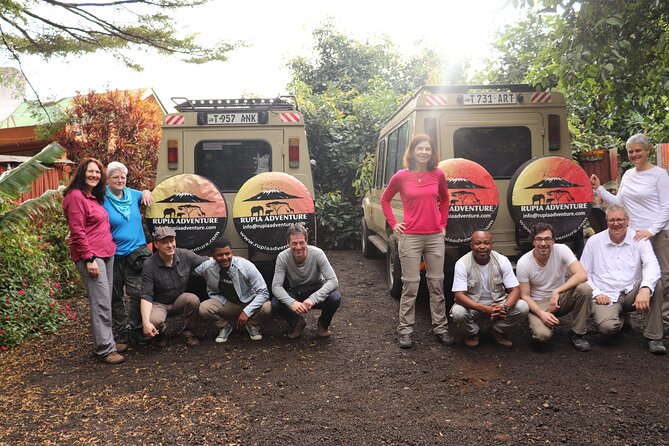
The operator is Rupia Adventure, based in Arusha. The supplied trip details identify an expert guide and a maximum of four people, but they do not guarantee which guide will lead your departure.
Names associated with past trips include Gideon, Laurent, Emanuel, Meshack, Julius, Johnny, Frank, and Mathias. The useful point is not the name list itself. It is the repeated emphasis on guides who assess ability, encourage people during hard sections, and help with practical decisions on the mountain.
Gear checks and pre-climb briefings have also been part of some bookings. Ask for this before you arrive, especially if you are unsure about clothing or equipment. A clear gear check can prevent a simple problem from becoming a miserable summit night.
The small group cap is one of the strongest features here. On a steep trail, a group of four can move more easily than a large party. You should also be able to ask questions without competing for a guide’s attention. Still, confirm the final group size and the guide-to-climber ratio before payment.
Is $2,200 good value?
The listed price is $2,200 per person. That is a substantial amount, but a seven-day Kilimanjaro trek involves more than walking. You are paying for a guide team, park access arrangements, food, camping support, transfers, and the organization needed to move people and equipment up and down the mountain, though the exact inclusions are not provided here.
I would not judge the price by comparing it with a basic multi-day hike. Kilimanjaro requires a high level of planning and support. The value improves if the package includes the major park, camping, crew, meals, hotel, and transfer costs.
Before booking, ask for a written list of inclusions and exclusions. Pay special attention to park fees, accommodation before or after the climb, meals, porter support, transfers, equipment, tips, and emergency arrangements. These details can change the real cost by a lot.
Who should choose this trek?
This route suits you if you want a serious physical challenge with changing scenery and a structured acclimatization plan. You should be comfortable walking for several hours, sleeping in tents, waking around midnight, and dealing with cold, fatigue, and altitude.
It is also a good fit if you prefer a small group and want a guide-led experience rather than an independent attempt. The support crew and gradual route profile offer useful structure, though no itinerary can guarantee a summit.
This is not the best choice if you want a relaxed holiday, hotel comfort every night, or a short sightseeing day. The summit day alone is demanding, and the route includes steep sections such as the Barranco Wall.
The listing says most people can participate, but it does not provide a detailed medical or fitness screening standard. If you have concerns about altitude, health, or stamina, speak with a medical professional before committing.
Practical booking details and cancellation terms
Pickup is offered, and the stated start time is 8:30 a.m. You receive confirmation when booking, and a mobile ticket is available.
Free cancellation applies when you cancel at least 24 hours before the local start time. Changes or cancellations inside that window are not accepted for a refund. Poor weather or failure to reach the minimum number of participants can cause the trip to be rescheduled or refunded.
Because the mountain depends on weather and safe operating conditions, keep some flexibility in your wider Tanzania plans. Also confirm the exact hotel, meeting arrangements, gear support, and package inclusions before you pay.
FAQ
How long is the Machame Route trek?
The experience lasts approximately seven days, including the final descent from the mountain and transfer back to a hotel.
Where does the trek begin?
You are picked up from your hotel after breakfast and taken to the Kilimanjaro National Park gate. The stated meeting time is 8:30 a.m.
Do I sleep in tents?
Yes. Overnight stays on the Machame Route use tents. After reaching Mweka Gate on day seven, you return to a hotel for a shower, pool time, dinner, and an overnight stay.
How high is Uhuru Peak?
Uhuru Peak is 5,895 meters above sea level.
What is the hardest part of the trek?
The summit day is the most demanding section. You wake around midnight, walk five to seven hours to Stella Point, continue one to two hours to Uhuru Peak, and then descend to Barafu Camp.
How many people can join the trip?
The maximum group size is four people.
Can I cancel for a full refund?
You can cancel for a full refund up to 24 hours before the experience begins, based on local time. Cancellations or changes made less than 24 hours before the start are not refunded.
Should you book the seven-day Machame Route?
I would choose this trek if you want a demanding Kilimanjaro experience with strong scenery, tented mountain nights, a small group, and an itinerary that makes room for acclimatization. The Lava Tower climb followed by a lower night at Barranco is a particularly useful part of the plan.
Book only after confirming the full price breakdown and the exact support provided. If you are ready for the midnight summit climb and the long descent that follows, this offers a serious, well-structured route to Uhuru Peak. If you want comfort, short walks, or an easy holiday, choose something else.
More Week-Long Trips around Arusha
- 7 Days Kilimanjaro trek via Machame route
★ 5.0 · 13 reviews - 7-Day Private Kilimanjaro Hiking Tour via Machame from Arusha
★ 5.0 · 11 reviews - 7 Days Machame Route Kilimanjaro Trekking
★ 5.0 · 9 reviews - Private Kilimanjaro Hike 7 Day Lemosho Route
★ 5.0 · 60 reviews
More Kilimanjaro Hikes in Arusha
- 8-Day Small-group Lemosho Kilimanjaro Summit Trekking
★ 5.0 · 186 reviews - Private Full Day Hiking Experience to Marangu Route
★ 5.0 · 61 reviews - 4 days Best experience Kilimanjaro Hike, Serengeti &Ngorongoro
★ 5.0 · 54 reviews - From Arusha/Moshi: Kilimanjaro Hike Marangu Route Day Trip
★ 4.5 · 54 reviews
Just added around Arusha
- 5 days safari, hiking & culture (Serengeti & kilimanjaro)★ 5.0 · 27 reviews
- Private Day Tour Kilimanjaro Hike★ 5.0 · 13 reviews
- Mount Kilimanjaro day trip trekking★ 5.0 · 12 reviews
- 6 Days Serengeti Safari(hiking waterfalls &coffee tour)★ 5.0 · 48 reviews
- 7-Day Private Kilimanjaro Hiking Tour via Machame from Arusha★ 5.0 · 11 reviews
- 7 Days Machame Route Kilimanjaro Trekking★ 5.0 · 9 reviews
- 4 Days Mount Meru Climbing | Hiking | Trekking Tour★ 5.0 · 13 reviews
- 7 Days Kilimanjaro trek via Machame route★ 5.0 · 13 reviews
Arusha Hiking Tours, compared.
8-Day Small-group Lemosho Kilimanjaro Summit Trekking
Read our review →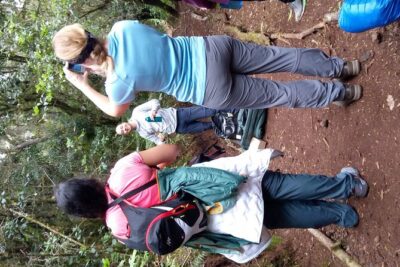
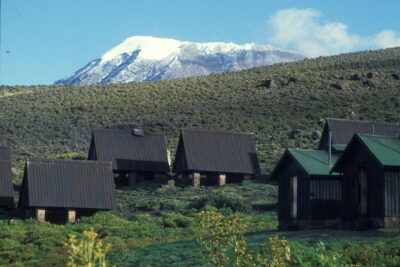
Private Full Day Hiking Experience to Marangu Route
Read our review →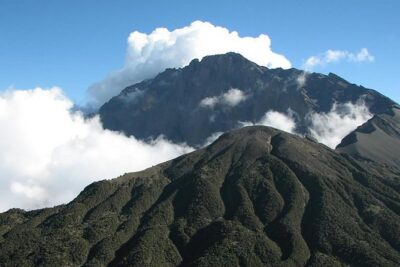
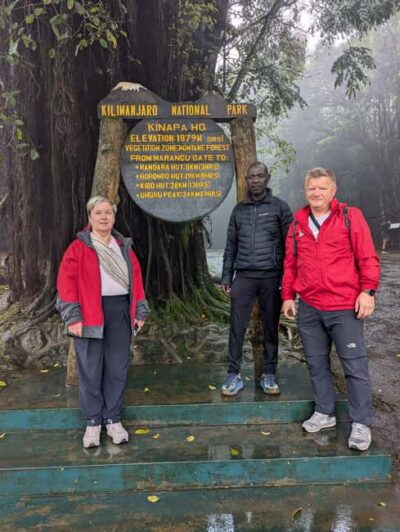
From Arusha/Moshi: Kilimanjaro Hike Marangu Route Day Trip
Read our review →
4 days Best experience Kilimanjaro Hike, Serengeti &Ngorongoro
Read our review →
6 Days Serengeti Safari(hiking waterfalls &coffee tour)
Read our review →
Browse the lists this tour appears in