
REVIEW · ARUSHA HIKING TOURS
7 Days Machame Route Kilimanjaro Trekking
The mountain changes every day. This 7-day Machame Route trek gives you rainforest, moorland, volcanic rock, glaciers, and a sunrise at Uhuru Peak, all on one demanding climb. I especially like the route’s changing habitats and the built-in acclimatization day around Lava Tower and Barranco. I also like that the tour is private, so your group can set its own rhythm with the guides.
The main drawback is the summit schedule. You start around 11:30 p.m. after sleeping at 4,550 meters, then climb for about eight hours before beginning a very long descent. Altitude, cold, mud, and fatigue are not side notes here. They are the central facts of the experience.
Key points before you book
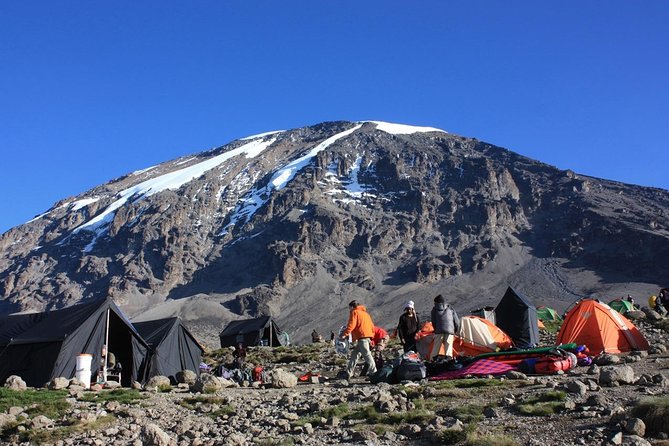
- The Machame Route changes scenery fast: You move from tropical forest to heathland, moorland, semi-desert, alpine desert, and icy summit terrain.
- Lava Tower improves acclimatization: You climb to about 4,630 meters, then sleep lower at Barranco Camp, which gives your body a useful high-and-low day.
- The summit day is extremely long: Expect about 7 kilometers up to Uhuru Peak and 23 kilometers down to Mweka Camp.
- The tour is private: Only your own group takes part, with a professional guide, assistant guides, chef, and porters supporting the climb.
- The $2,200.11 price covers a lot: Park-related costs, rescue fees, camping equipment, food, transport, porters, taxes, and accommodation on the mountain are included.
- The mountain team receives strong praise: Guides including Ombeni, Safaeli, Oliver, Mathew, and Godlove are singled out for kindness, support, and professionalism.
Why Machame is Kilimanjaro’s popular middle ground
Machame is often called the Whiskey Route, though there is nothing leisurely about it. It is popular because it offers impressive views and a wide range of habitats without the longer schedule and higher price often associated with other routes. About half of Kilimanjaro climbers choose it, including many people with previous high-altitude experience.
That popularity comes with a tradeoff. The route is not a quiet walk through empty country. Camps can feel busy, and the trail includes steep, rocky sections. Still, the seven-day version gives you more time to adjust than shorter Machame programs, which matters greatly when you are heading toward 5,895 meters.
The route begins near Arusha, at about 1,400 meters. Pickup is offered, with the stated meeting time at 4:00 a.m. That early start is practical, since the drive to Machame Village and the gate takes time, and the first hiking day is long.
This is a private activity, not a fixed public group. That can be useful if one person needs a slower pace or an extra break. It also means you should ask before booking how many guides and porters will be assigned to your party.
More Kilimanjaro Hikes in Arusha:
- 8-Day Small-group Lemosho Kilimanjaro Summit Trekking
★ 5.0 · 186 reviews - Mountain Kilimanjaro Day Hike
★ 5.0 · 102 reviews - Private Full Day Hiking Experience to Marangu Route
★ 5.0 · 61 reviews
Day 1: Machame Gate and the wet rainforest
After breakfast, you are picked up in Arusha and driven to Machame Village. This is your last easy chance to buy mineral water, and you receive a packed lunch there. Depending on road conditions, the vehicle continues for about 3 kilometers or you walk that section to Machame Gate.
At the gate, you and your guide register with Tanzania National Parks while the porters sort and pack the equipment. This process takes time, so do not expect to leave the moment you arrive. The delay is part of the normal start of a Kilimanjaro climb.
The first hike covers about 18 kilometers and takes roughly seven hours. You begin in montane forest, where rain, mud, and fog are common. The path can feel damp and slippery, so waterproof layers and shoes with good grip are more useful than lightweight city trainers.
This first day is long, but it is not yet the hardest day physically. The main challenge is adjusting to walking for hours with a pack, even though porters carry the main camping load. Keep your own daypack light. Water, rain gear, snacks, sun protection, and a warm layer are the essentials.
You sleep at Machame Camp in the forest zone. Tents are arranged by the porters, and the staff prepares water for drinking and washing. The camping setup is basic, but the included mess tent, mattress, and cooking equipment make it far more comfortable than carrying and organizing everything yourself.
Day 2: Shira Plateau and the first cold night
The second day leaves the rainforest behind. You climb through heathland and moorland, crossing streams and following a rocky ridge toward the Shira Plateau. The distance is shorter than day one, about 9 kilometers, but you still walk for around six hours.
Shira Camp sits at about 3,840 meters beside a stream. From here, you can see toward the Western Breach and its glaciers. The open setting gives you your first strong sense that this is a high mountain journey, not simply a forest hike.
The evening temperature can drop below freezing. Your sleeping bag is not included, though one can be rented. Bring or rent a bag suitable for these conditions, and keep warm clothing accessible rather than buried in the main luggage.
The porters set up the tents before you arrive and prepare water for washing and drinking. Dinner and evening snacks are cooked by the mountain chef. Food is not a minor part of this trip. After six or seven hours on your feet, a hot meal and regular snacks help you keep going.
Day 3: Lava Tower gives your body a high-altitude test
Day three is one of the most useful days on the route. You walk east through semi-desert terrain for about 15 kilometers, taking roughly seven hours. The volcanic surroundings become rockier and more exposed as you climb toward Lava Tower at 4,630 meters.
Lunch is served at Lava Tower. Weather permitting, you may have the option to climb the massive rock formation, though the main value of this stop is the altitude itself. Many people begin to feel headache or shortness of breath here. That reaction is common at this height, but it should never be ignored. Tell your guide how you feel.
After lunch, you descend about 680 meters to Barranco Camp at 3,950 meters. This is the classic acclimatization pattern: climb high, then sleep lower. You may feel tired, but the descent gives your body a better chance to adjust before the summit push.
Barranco is one of the most memorable camps because of its position below the Barranco Wall. The surrounding rock and open sky make the route feel more serious than it did in the forest. Drink steadily, walk slowly, and do not judge your summit chances by how you feel at breakfast. Altitude can change your condition quickly.
More Week-Long Trips around Arusha:
- 7 Days Kilimanjaro trek via Machame route
★ 5.0 · 13 reviews - 7 Days Machame Route Trek Mount Kilimanjaro
★ 5.0 · 12 reviews - 7-Day Private Kilimanjaro Hiking Tour via Machame from Arusha
★ 5.0 · 11 reviews - Private Kilimanjaro Hike 7 Day Lemosho Route
★ 5.0 · 60 reviews
Day 4: The Barranco Wall and a shorter recovery day
Day four covers only about 5 kilometers and takes four to five hours. That shorter distance is welcome after the long approach to Lava Tower and the descent into Barranco.
The main feature is the Barranco Wall. It looks intimidating from camp, but the route is generally described as a Class 2 scramble rather than technical climbing. You use your hands in places, but ropes and specialist climbing skills are not part of the stated program.
At the top, you get views toward Heim Glacier and can look across the clouds. The trail then rises and falls through the Karanga Valley. It is not a simple downhill stroll, but it is an excellent day to keep moving without exhausting yourself.
This is a good point to check your clothing, water supply, and personal gear. The mountain gets colder and more exposed from here. If your boots are causing pain, or your sleeping system is not warm enough, speak up before Barafu Camp.
Day 5: Karanga to Barafu Camp at 4,550 meters
The fifth day is short on paper, only about 4 kilometers and two to three hours. You leave Karanga Camp at about 3,959 meters and follow the trail toward Barafu Hut.
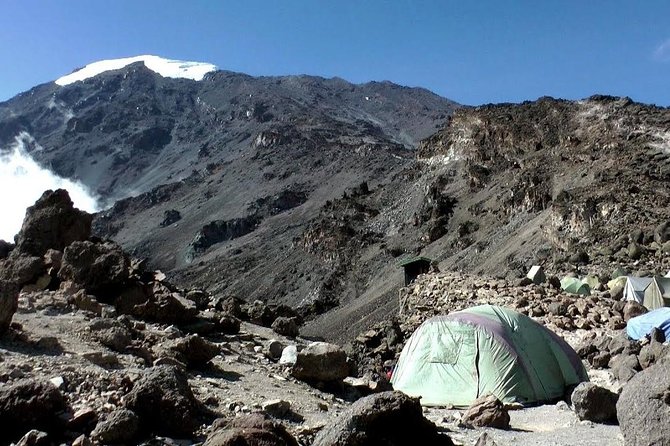
The route intersects with the Mweka Route, which you use during the final descent. After roughly an hour, you reach Barafu Hut. This is the last water stop for the porters. There is no accessible water at Barafu Camp, so the team must carry supplies upward.
Barafu means ice in Swahili. The camp sits on an exposed, rocky ridge at about 4,550 meters, and the name feels fitting. Wind and rocks can make the tents less comfortable than earlier camps. Arrive before dark if possible, and take time to understand where your tent, dining area, and route to the toilet are located.
Dinner is served early, then you rest for the summit attempt. The early bedtime is not always easy because you are excited, cold, and aware that your alarm will come around 11:30 p.m. Try to treat this afternoon as a quiet waiting period, not as lost time.
Day 6: Stella Point, Uhuru Peak, and the long descent
Summit day is the true test. You wake around 11:30 p.m. for tea and biscuits, then begin climbing over stone scree. The ascent to Stella Point at 5,685 meters takes about six hours.
This section is mentally tough because it is dark, cold, steep, and slow. You may not see much beyond the next few steps. The guides’ support matters here, and the team associated with this experience includes guides named Ombeni, Safaeli, Oliver, Mathew, and Godlove. Specific guide assignments can vary, but the repeated praise for their calm support is encouraging.
At Stella Point, you reach the crater rim and can watch the sunrise. From there, it takes about two more hours on a snow-covered trail to Uhuru Peak, the highest point in Africa at 5,895 meters.
You do not have to reach Uhuru Peak for the climb to count as a completion. Climbers who reach Stella Point receive green certificates, while those who reach Uhuru Peak receive gold certificates. Still, the final stretch to Uhuru is the goal for most people, and the snow and ice near the summit give the moment a striking finish.
The descent is where the day becomes punishing. You walk about 23 kilometers downhill toward Mweka, after the 7-kilometer ascent. The stated timing is about seven to eight hours down, following roughly eight hours to reach the summit area.
Your knees and feet may suffer more on the descent than during the climb. Trekking poles, careful steps, and patience help. The camp at Mweka gives you a chance to sleep at a lower altitude, but do not expect a quick, easy afternoon. This is a full mountain day.
Day 7: Mweka Gate, certificates, and the return to Arusha
After breakfast, the staff holds a celebration with dancing and singing. This is also the customary point for presenting tips to the guides, assistant guides, chef or chefs, and porters.
Tips are not included in the price, so you should budget for them separately. The amount is not stated, and the best approach is to ask the operator before departure about its current tipping guidance and how the money is shared among the mountain team.
The final walk takes about three hours through forest to Mweka Gate, covering roughly 15 kilometers. At the gate, you sign your name and receive your certificate if you reached Stella Point or Uhuru Peak.
Afterward, you continue about one hour, or 3 kilometers, to Mweka Village. The activity ends back at the meeting point, so confirm the exact return transfer arrangements with Mafie Adventures before you leave Arusha.
What the $2,200.11 price really covers
At $2,200.11 per person, this is not a cheap holiday, but the price includes many of the expensive and necessary pieces of a Kilimanjaro climb:
- Camping equipment, including a mess tent, mattress, and cooking equipment
- Park and parking fees
- Rescue fees
- Mountain accommodation
- A professional driver and guide
- Porterage
- Breakfast on six mornings
- Six dinners
- Seven lunches
- Taxes and VAT
That package gives you solid value if you need a full-service climb. You are not arranging campsite equipment, carrying the kitchen, buying every meal, or handling park charges yourself.
You still need to pay for international flights, accommodation before and after the trek, a sleeping bag, climbing gear, bath towels, insurance, visa fees, souvenirs, tips, and any later increase in government taxes or park fees. Climbing gear and sleeping bags are available to rent.
One useful comfort detail is that a private toilet may be arranged for the group. Confirm this before paying if it matters to you, since the core inclusions list does not state it as a standard item.
Who should choose this seven-day climb?
I would recommend it to fit hikers who want a classic Kilimanjaro route with varied scenery and a private team. It suits people who value strong logistical support, cooked meals, porters, and a longer schedule for altitude adjustment.
It is less suitable if you dislike camping, cold nights, very early starts, or long downhill walks. It is also not a casual sightseeing trip. Most climbers can take part according to the provided information, but you still need to be honest about your fitness and tell the guide immediately about altitude symptoms.
The tour has received a perfect 5 rating from nine published ratings, and the strongest praise centers on the mountain crew. Ombeni, Safaeli, Oliver, Mathew, and Godlove are praised for being kind, supportive, professional, and attentive. Erastus is also repeatedly associated with quick communication, airport pickup, hotel help, and trip organization.
That personal support is important. On Kilimanjaro, good food and tents help, but patient guides who notice how you are coping can matter even more.
Should you book the Machame Route with Mafie Adventures?
Book it if you want a private, full-service Kilimanjaro climb with varied terrain, a seven-day schedule, and a support team that has earned strong praise for its care. The price is reasonable for the included park fees, rescue coverage, food, porters, camping equipment, and mountain staff.
Before booking, ask three practical questions: what exact gear is available for rent, whether a private toilet is included for your departure, and what tipping guidance applies. Also confirm accommodation before and after the trek, since those nights are not included.
I would choose this route for the scenery and the extra acclimatization value of the Lava Tower and Barranco day. I would avoid it only if the long summit day, cold camping, and non-refundable terms create too much risk for your plans. The cancellation policy is strict: the experience cannot be refunded or changed after booking.
FAQ
Where does the Kilimanjaro trek start?
The tour starts in Arusha, Tanzania. Pickup is offered, and the stated start time is 4:00 a.m.
How long is the Machame Route tour?
The trek lasts about seven days. The hiking times and distances vary by day, with the summit day being the longest.
Is the tour private?
Yes. This is a private activity, and only your group participates.
Is food included?
Yes. The package includes seven lunches, six dinners, and six breakfasts.
Is a sleeping bag included?
No. Sleeping bags are available to rent, but they are not included in the tour price.
Are tips included?
No. Tips for the guides, assistant guides, chef or chefs, and porters are not included.
Just added around Arusha
- 5 days safari, hiking & culture (Serengeti & kilimanjaro)★ 5.0 · 27 reviews
- Mount Kilimanjaro day trip trekking★ 5.0 · 12 reviews
- Private Day Tour Kilimanjaro Hike★ 5.0 · 13 reviews
- 7 Days Machame Route Trek Mount Kilimanjaro★ 5.0 · 12 reviews
- 7-Day Private Kilimanjaro Hiking Tour via Machame from Arusha★ 5.0 · 11 reviews
- 6 Days Serengeti Safari(hiking waterfalls &coffee tour)★ 5.0 · 48 reviews
- 4 Days Mount Meru Climbing | Hiking | Trekking Tour★ 5.0 · 13 reviews
- 7 Days Kilimanjaro trek via Machame route★ 5.0 · 13 reviews
Arusha Hiking Tours, compared.
8-Day Small-group Lemosho Kilimanjaro Summit Trekking
Read our review →
Private Full Day Hiking Experience to Marangu Route
Read our review →
From Arusha/Moshi: Kilimanjaro Hike Marangu Route Day Trip
Read our review →
4 days Best experience Kilimanjaro Hike, Serengeti &Ngorongoro
Read our review →
6 Days Serengeti Safari(hiking waterfalls &coffee tour)
Read our review →
Browse the lists this tour appears in