
REVIEW · RIO DE JANEIRO HIKING TOURS
Rio: Tijuca Forest Small Group Hike to Caves and Waterfalls
Rio’s rainforest is closer than you think. This six-hour Tijuca Forest outing combines a moderate 6.2-kilometer hike with waterfalls, a cave, plantation ruins, and a useful lesson in Brazil’s history and ecology. I especially like the small-group format and the way the guides connect the forest to Rio’s wider story, rather than treating the walk as a simple exercise.
The waterfall shower near the end is another fine touch, particularly on a hot day. I also like the hotel pickup from much of Rio’s South Zone, which removes a fair bit of transport hassle. The main caution is the 448-meter elevation gain: some people find the hike fairly easy, while others find the steep section tiring, especially after rain.
Key points at a glance
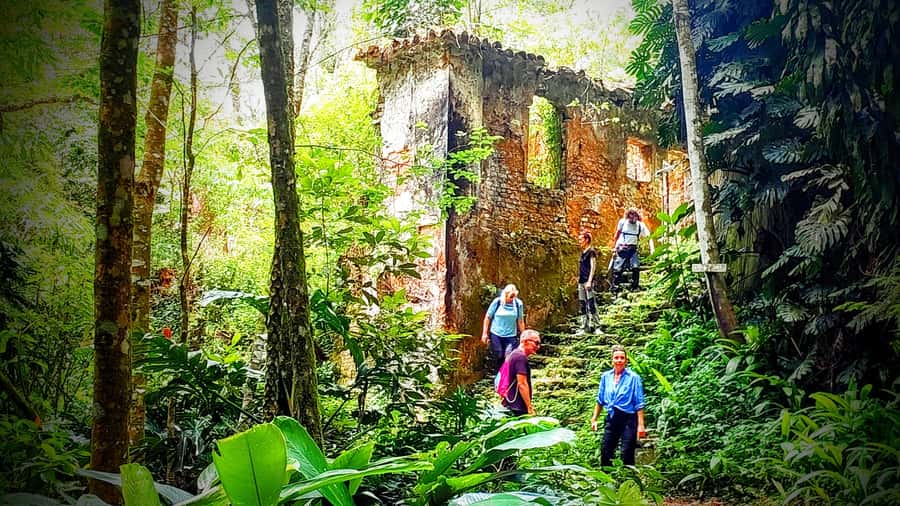
- A 6.2-kilometer historic trail: You walk routes first made in the 19th century, when coffee plantations occupied parts of the forest.
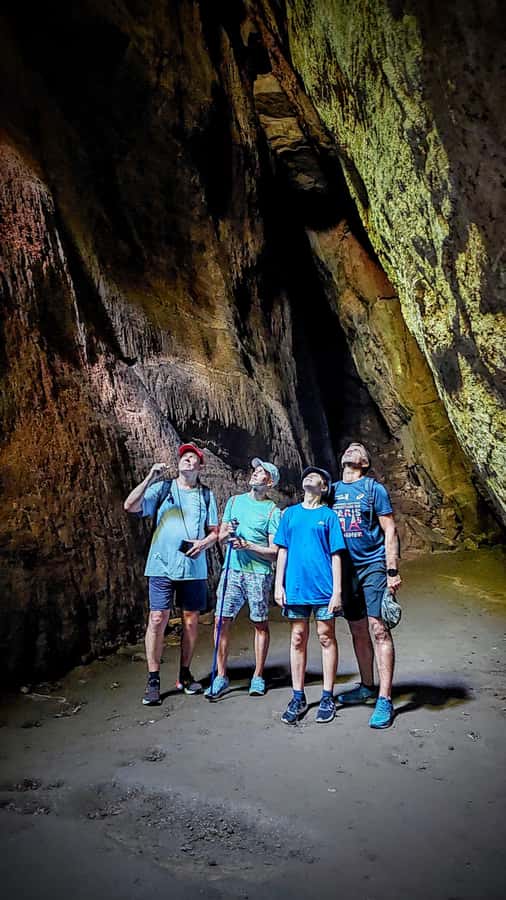
- Brazil’s biggest gneiss cave: Morcego’s Grotto, also called the Bat Cave, is one of the tour’s most unusual stops.
- A genuine waterfall rinse: Baronesa Cascade offers the chance to cool off, so bring clothes and shoes that can handle spray and wet rock.
- Small groups make a difference: Groups can be as small as two to five people, allowing guides such as Vini, Riccardo, Tito, Renata, and Luiza to adjust the pace.
- More than plants and trees: The route includes a chapel, slave cemetery, suspension bridge, old estate remains, fountains, and views.
- Expect a proper uphill walk: The hike lasts about two and a half to three hours and requires good fitness on rough rainforest paths.
Why Tijuca Forest makes a strong half-day escape
Tijuca National Park gives you an unusual Rio experience. You are still near one of the world’s great cities, yet the route passes under thick forest, beside streams, through a cave, and along old paths that tell the story of how this land changed.
The forest is also a piece of environmental history. Much of it was replanted after coffee cultivation damaged the area, making Tijuca one of the world’s largest replanted urban forests. That fact gives the walk extra meaning. You are not simply looking at tropical plants. You are walking through a major attempt to restore a damaged watershed close to a huge city.
I like the way this tour treats the forest as both a natural place and a historical site. The guides explain Brazil, Rio, geography, geology, plants, and wildlife as you go. Strong guides make a clear difference here. Vini is praised for linking the hike to Brazil’s social and political life, while Luiza’s background in botany gives her a particularly strong command of the ecosystem. Riccardo, Tito, Renata, Pietro, Gustavo, and Fernando are also noted for their friendly manner and clear explanations.
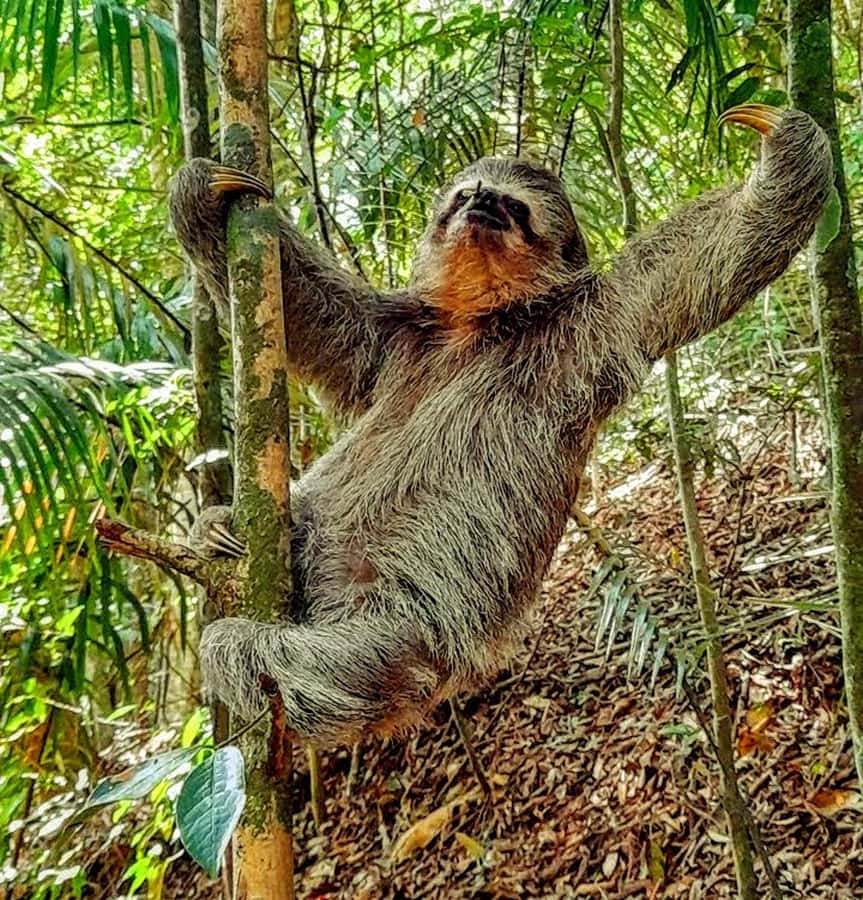
Do not book this expecting a guaranteed wildlife show. Some outings see capuchin monkeys, coatis, or even a sloth during the drive, but other groups see no animals at all. The forest itself, along with the plants, rocks, water, and human history, is the dependable attraction.
More Small-Group Hikes in the world:
- Small Group Waterfall and Rainforest Hiking Adventure on Maui
★ 5.0 · 1,417 reviews - Glacier Hike and South Coast Small-Group Tour from Reykjavik
★ 5.0 · 827 reviews - Sólheimajökull Glacier Hike – Adventure in a Small Group
★ 5.0 · 799 reviews
Hotel pickup keeps the morning simple
Transportation is provided from designated hotels and hostels in Copacabana, Ipanema, Leblon, Leme, Santa Teresa, Gloria, Catete, Flamengo, Urca, and Praia de Botafogo. The long list of pickup points covers much of the South Zone, including major hotels and hostels.
You should confirm your exact address with the operator. If direct pickup is not possible, you receive a nearby meeting point instead. Pickup has generally been punctual, though one practical criticism is worth noting: the vehicle can feel cramped for taller people, and it is sensible to ask for the vehicle’s model or plate number in advance so you can identify it easily.
The drive is short enough that transport is mainly about convenience, not sightseeing. It saves you from arranging a taxi into the park and gives you a guide from the start of the day. Drop-off is also provided after the walk.
The total activity lasts about six hours, but the actual hiking circuit takes roughly two and a half to three hours. The rest goes toward hotel transfers, introductions, stops, and time at the sights. That makes this a useful half-day plan, with room to spend the rest of the day at the beach, in a museum, or over a long Rio lunch.
Cascatinha Taunay introduces the park
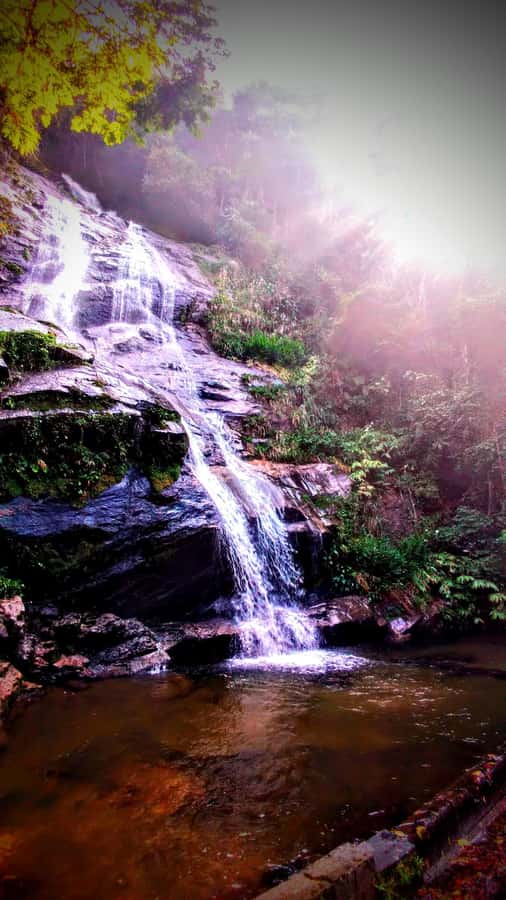
The first major stop is Cascatinha Taunay, described as the largest waterfall in Tijuca National Park. The stop is fairly short, around 15 minutes, but it gives you an immediate sense of the park’s scale and character.
Your guide sets the scene here, explaining the forest and the role of water in Rio’s mountain environment. It is a good opening because you begin with an easy viewpoint before tackling the rougher trail.
Do not expect a long swim at this waterfall. This is mainly a sightseeing and photo stop. The more practical water stop comes later at Baronesa Cascade.
Mayrink Chapel and the old forest road
The small Mayrink Chapel dates from 1850. The visit is brief, around five minutes, but the building adds a human layer to the forest. Its location helps you understand that Tijuca was not always a protected park used for recreation.
The surrounding trails were laid out in the 19th century, when coffee plantations occupied parts of the area. As you walk, the guide explains how farming, water supply, settlement, and later replanting shaped the forest.
This historical thread is one of the tour’s strengths. Without it, a cave or waterfall can feel like an isolated stop. With it, the route becomes a record of changing land use, from plantation ground to restored woodland and public park.
More Waterfall Hikes in the world:
- From Marrakech: Ouzoud Waterfalls Guided Hike and Boat Trip
★ 4.7 · 33,630 reviews - Marrakech: Ourika Valley Trip with Waterfall Hike
★ 4.6 · 6,792 reviews - Marrakech: Ourika Valley Trip with Waterfall Hike & Lunch
★ 4.9 · 5,303 reviews - Marrakech: ourika valley lunch & guided hike to waterfalls
★ 4.9 · 3,737 reviews
Cova da Onça and the suspension bridge
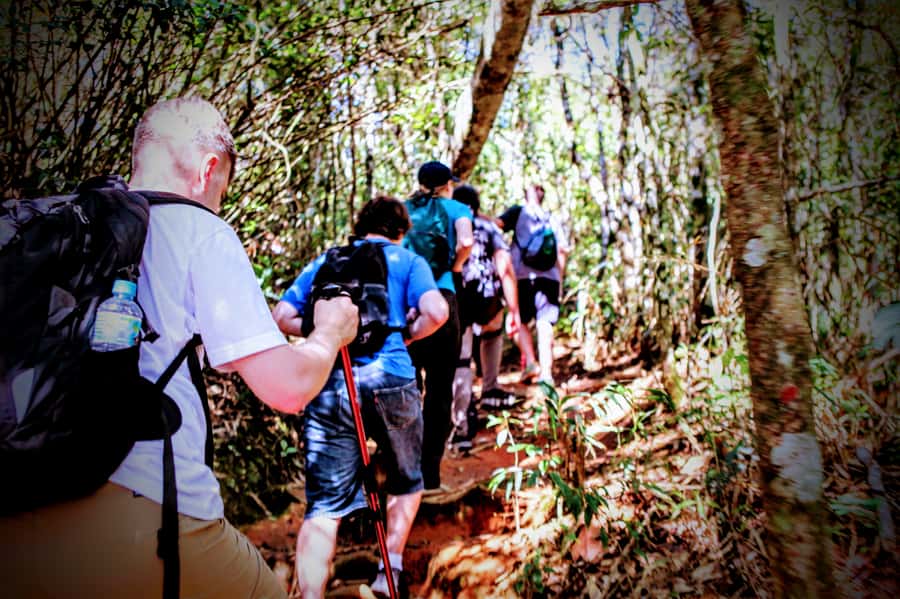
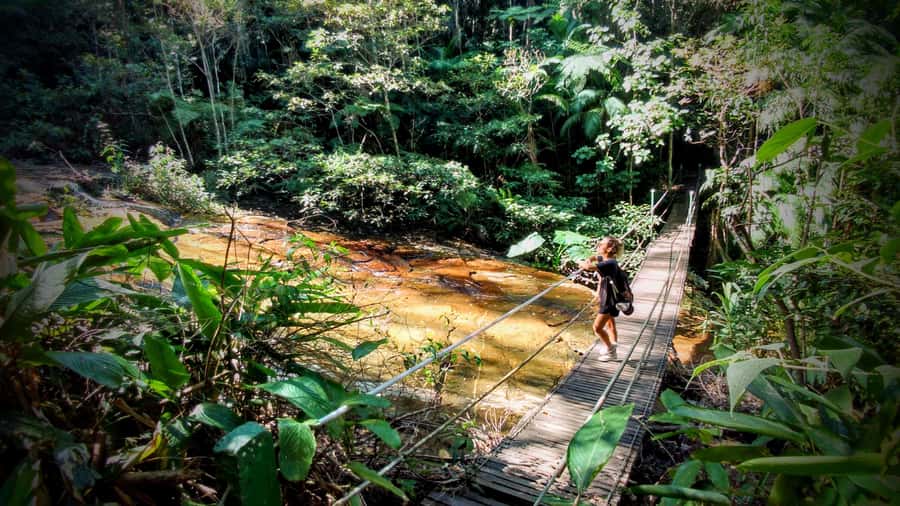
The trail continues through the forest toward Cova da Onça and the Cova da Onça Suspension Bridge. The bridge is a short stop, but it adds a little excitement to the route and gives you a different view into the vegetation and terrain.
The paths are described as rough and include uphill and downhill sections. Roots, uneven ground, rocks, and damp surfaces are all possible in rainforest conditions. Sports shoes with decent grip are essential, and bare feet are not permitted.
The pace depends on the guide and the group. Good guides such as Gustavo and Riccardo have been praised for keeping an even rhythm and making sure people feel included. That matters because the elevation gain is not huge for an experienced hiker, but it can feel demanding in humid weather or after rain.
Eucalyptus trees and an old slave cemetery
The Eucalyptus Forest includes an old slave cemetery, one of the more sobering points along the route. It is easy to race from one scenic stop to the next, but this place asks you to slow down.
The cemetery connects the forest to Brazil’s colonial and plantation past. It gives the coffee-era story a human dimension and reminds you that the trails were shaped by people whose lives were far less comfortable than those of modern visitors.
Your guide’s explanation is important here. The physical remains are limited, so the value comes from context. Guides have been praised for making Brazilian history accessible without turning the walk into a formal lecture.
Morcego’s Grotto, Brazil’s large gneiss cave
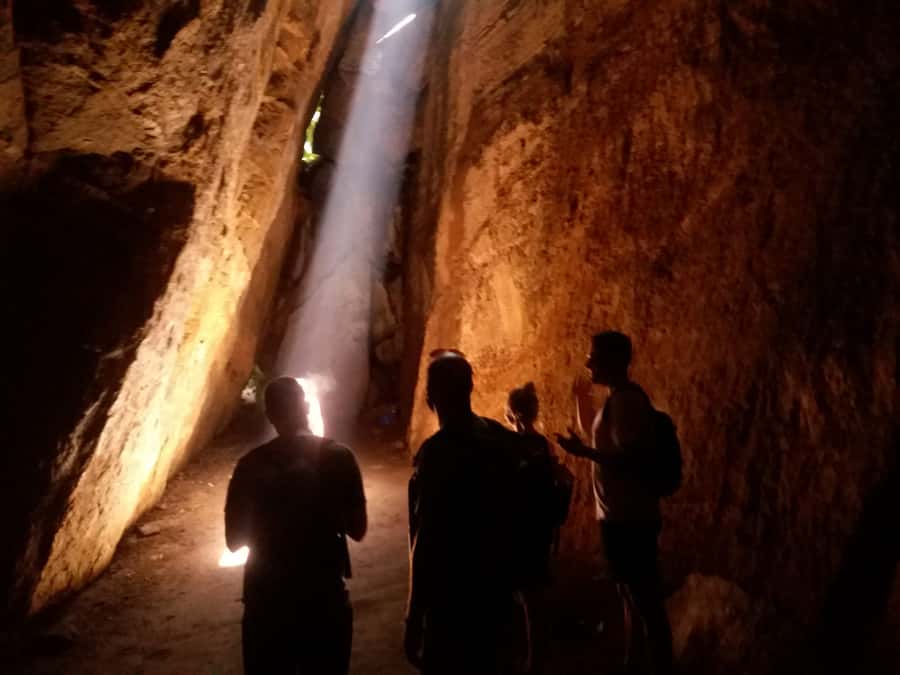
Morcego’s Grotto, also called the Bat Cave, is the route’s most distinctive geological stop. It is described as the largest gneiss cave in Brazil, and the rock formation makes a sharp contrast with the open waterfall areas.
The cave visit takes around 15 minutes and includes a short hike. Bring a small daypack rather than a large bag, since luggage is not allowed and the trail is not designed for bulky items.
The name may suggest a guaranteed encounter with bats, but do not count on it. Bats may be resting deeper inside or may not be visible at all. One guide took care not to disturb hibernating bats, which is exactly the right approach. The cave is interesting even without an animal sighting because of its scale and rock structure.
This is also where a guide adds real value. You can walk into a dark opening by yourself, but you may miss the geological story, the relationship between the cave and the forest, and the small details around the entrance.
Baronesa Cascade provides the best refreshment
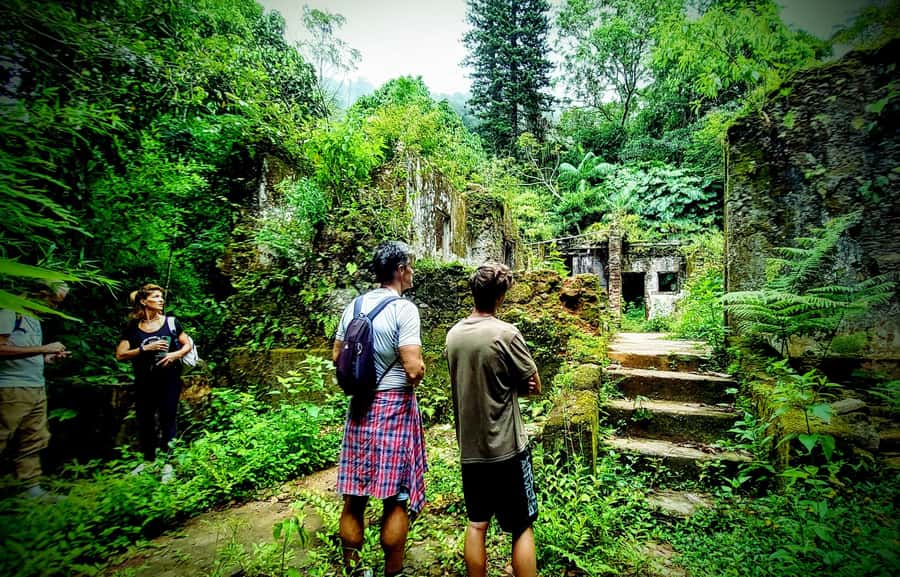
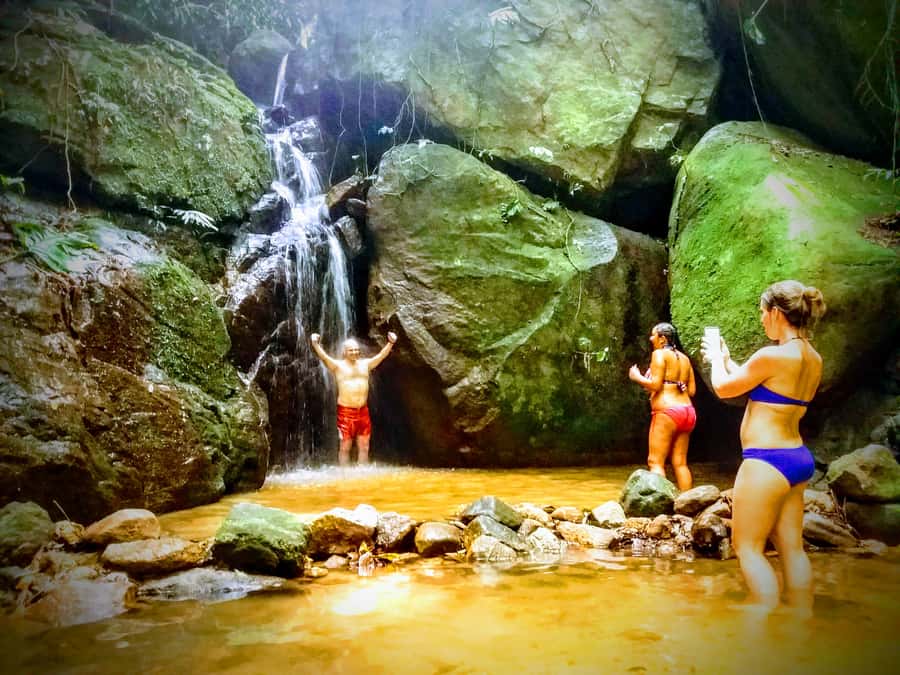
The route then reaches Baronesa Cascade, where you can cool off under the water. This is not a polished resort-style pool. It is a natural waterfall stop, so conditions depend on weather and water flow.
Bring a swimsuit or quick-drying clothes if you want to use the waterfall. A towel, spare shirt, and a plastic bag for wet items would also be sensible, though they are not specifically listed among the included supplies. You need to carry your own food, water, and drinks throughout the outing.
The waterfall shower is one of the clearest reasons to choose this circuit over a purely historical forest walk. After the uphill portions, a few minutes in cool water can reset your energy. Use caution on wet rock, and remember that the tour does not promise a long swim.
The Barão’s residence and the Wallace Fountain
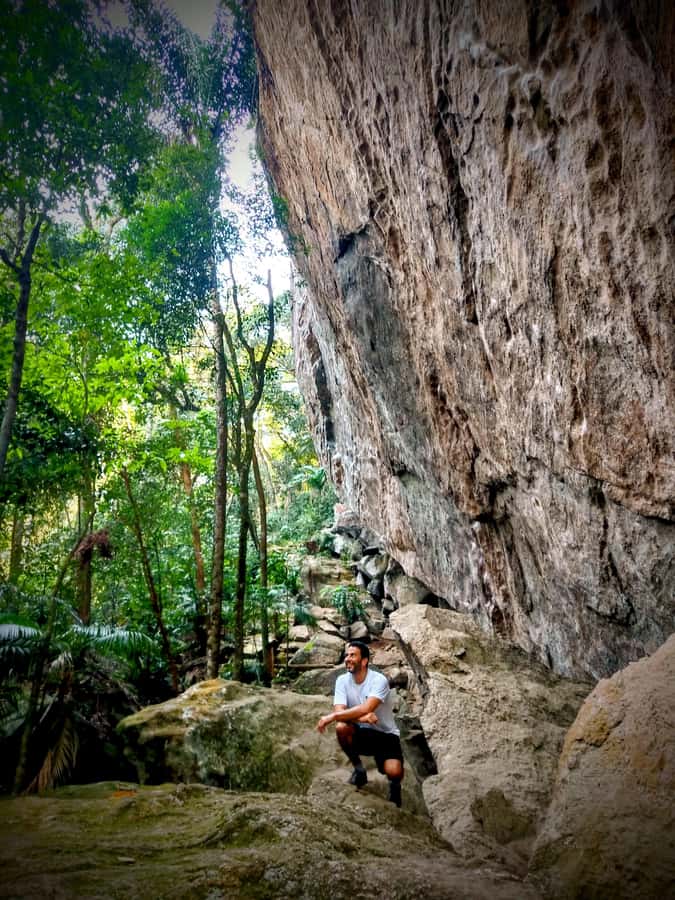
On the return route, you pass the former residence of Barão d’Escragnolle, one of the park’s former managers. The building is now associated with Esquilos restaurant, and it gives the trail another glimpse of the people who shaped Tijuca’s development.
The Wallace Fountain provides a smaller but unusual detail. It was a gift from English philanthropist Richard Wallace to Brazil, made in France in 1870, with a sculpture representing goodness, charity, sobriety, and simplicity.
These stops show why the tour is more than a nature walk. You see forest restoration, plantation history, religious architecture, labor history, geology, water systems, and 19th-century public art in one circuit. The drawback is that some stops are short, so anyone wanting a long, quiet stay at each site may find the schedule brisk.
Viewpoints add a final Rio connection
The circuit includes Mirante da Palmira and another viewpoint, with scenic views along the way. The exact quality of the view depends on weather and visibility, but these points help reconnect the forest to Rio beyond the trees.
One important detail from the route is that the forest is not only an enclosed green wall. You gain different perspectives on the park and the city around it. On clear days, this can make the hike feel like a useful geographic lesson, especially when the guide points out areas of Rio and explains how the forest sits within the city.
Some groups also receive broad views near Vista Chinesa, although the listed circuit focuses on Mirante da Palmira and other viewpoints. Ask your guide what is included on the day rather than assuming every outing follows an identical sequence.
What the hike feels like in practical terms
The advertised level is moderate, with 6.2 kilometers of hiking and 448 meters of elevation gain. That is not a technical mountain climb, but it is more than a flat park stroll.
You should be comfortable walking uphill for sustained periods, stepping over uneven ground, and continuing after a waterfall and cave visit. One person described the route as close to easy, while another found the steep section harder than expected and nearly stopped. Both reactions make sense because fitness, heat, rain, and pace change the experience.
Wear:
- Sports shoes with good grip
- Lightweight sportswear
- Sunscreen
- Insect repellent
- A small daypack
- Enough water and snacks
- A change of clothes if you plan to use the waterfall
The canopy provides shade for much of the hike, but Rio can still feel hot and humid. Rain can make the trail slick. The operator has provided ponchos during wet outings, but you should still pack for changing conditions.
People with heart problems should not take this tour. It is not suitable for wheelchair users because of the rough terrain and elevation. Pets, large bags, alcohol, and drugs are not allowed.
Is $69 a fair price?
At $69 per person, the value is good if you want transport, guiding, and a well-planned route rather than simply entering Tijuca Forest on your own. The fee includes a bilingual English and Portuguese guide, insurance, and transportation from designated South Zone hotels.
The guide is the main part of the value. A self-guided walk could show you trees and waterfalls, but it would be much harder to understand the coffee plantations, replanting effort, slave cemetery, chapel, cave geology, and Rio geography as one connected story.
The small-group setup also matters. Groups may be private or small, and several outings have had only two to five people. That gives you a better chance to ask questions and request a slower pace than you would get on a large coach excursion.
Food, water, and drinks are not included. That is a minor extra cost, but remember to buy supplies before pickup because there may not be a convenient shop once the hike begins.
Free cancellation is available up to 24 hours before departure, and you can reserve now and pay later. The operator also requires your full name, birth date, and passport number for insurance.
Who should book this Tijuca Forest hike?
I would choose this tour if you want a structured introduction to Tijuca Forest and prefer a guide who can explain what you are seeing. It suits active visitors who want exercise but do not want a full-day expedition.
It is especially good for:
- First-time visitors to Rio
- People interested in Brazilian history and nature
- Hikers comfortable with moderate uphill terrain
- Visitors staying in the South Zone
- Anyone who wants caves and waterfalls without arranging several separate trips
- Small groups and solo visitors who prefer company on forest trails
I would look elsewhere if your main goal is guaranteed wildlife. Animal sightings vary, and several outings saw none. I would also skip it if you want a gentle city excursion, dislike wet or uneven paths, or are uncomfortable carrying your own water and snacks.
Should you book it?
Yes, if you want Rio’s forest to make sense, not just look pretty. The strongest part is the combination of places: Cascatinha Taunay, Mayrink Chapel, the suspension bridge, the old cemetery, Morcego’s Grotto, Baronesa Cascade, plantation-era remains, and viewpoints all fit into one manageable circuit.
Book with realistic expectations. You may see capuchin monkeys, coatis, or a sloth, but you may also see no animals. The hike may feel easy to a regular hiker and strenuous to someone unused to hills. For most reasonably fit visitors, $69 is a solid price for hotel transfers, a small group, bilingual guidance, and a forest walk that links Rio’s nature with its past.
FAQ
How long is the Tijuca Forest hike?
The hiking circuit is 6.2 kilometers, or about 3.8 miles, and takes roughly two and a half to three hours. The full activity lasts about six hours, including transportation and sightseeing stops.
What fitness level is required?
The hike is rated moderate and includes about 448 meters of elevation gain. You need good fitness for rough rainforest terrain, uphill and downhill walking, and a steep section that some people find tiring.
Is hotel pickup included?
Yes. Pickup and drop-off are included from designated hotels and hostels in parts of Copacabana, Ipanema, Leblon, Leme, Santa Teresa, Gloria, Catete, Flamengo, Urca, and Praia de Botafogo. If your address is not covered, a nearby meeting point may be arranged.
Do I need to bring food and water?
Yes. Food, snacks, water, and other drinks are not included. Bring sunscreen, insect repellent, sports shoes, sportswear, and a daypack.
Can I swim or shower at a waterfall?
You can cool off under Baronesa Cascade, often described as a waterfall shower. Bring suitable clothing and use care on wet rocks. The experience does not promise a long swim.
Is the tour available in English?
Yes. The live guide service is available in English and Portuguese. Private and small-group options are available.
More Forest and Jungle Hikes in the world
- Hike El Yunque Rainforest and Kayak Bio Bay Combo Tour
★ 4.5 · 1,010 reviews - Chiang Mai: 2-Day Jungle Trek with Elephant Farm & Raft Ride
★ 4.7 · 881 reviews - From Khao Lak: Khao Sok Jungle Hike & River Tour
★ 4.7 · 688 reviews - Guided forest hike to Seattle waterfalls incl. Snoqualmie Falls
★ 5.0 · 589 reviews
More Cave Hikes in the world
- Skaftafell: Ice Cave Tour and Glacier Hike
★ 4.5 · 1,746 reviews - Peniche: Berlengas Island Trip, Hiking and Cave Tour
★ 4.7 · 1,473 reviews - Etna Sunset Tour: Volcano trek, Cave & tasting from Catania
★ 4.8 · 1,290 reviews - Halong Bay Full Day with Kayaking, Hiking viewpoint, Cave – Deluxe To Luxury
★ 5.0 · 884 reviews
Just added around the world
- From Jökulsárlón: Vatnajökull Easy Level Glacier Hike★ 4.2 · 20 reviews
- From Kanab: 3-Hour Peek-a-Boo Slot Canyon Hiking/Photo Tour★ 4.9 · 25 reviews
- From Jujuy: Salinas Grandes, Purmamarca & Los Colorados Hike★ 4.2 · 75 reviews
- From Kalamata: Polylimnio Waterfalls Guided Hiking Tour★ 4.9 · 19 reviews
- From Kalkan: Saklikent Gorge and Gizlikent Waterfall Trek★ 4.7 · 13 reviews
- From Hanoi: Hoa Lu, Hang Mua Hike, Tam Coc Boat, and Lunch★ 4.4 · 28 reviews
- From Huaraz: Hike to the Lagoon 69★ 4.4 · 121 reviews
- From Kalabaka: Authentic Meteora Hiking Tour – Local Agency★ 5.0 · 20 reviews
Rio De Janeiro Hiking Tours, compared.
Pedra do Telégrafo Hike and Beach Full-Day Tour
Read our review →
Sunrise and Sunrise Walk Two Brothers with Local Guide
Read our review →
Rio de Janeiro: Tijuca Forest Challenge Hike Full-Day Trip
Read our review →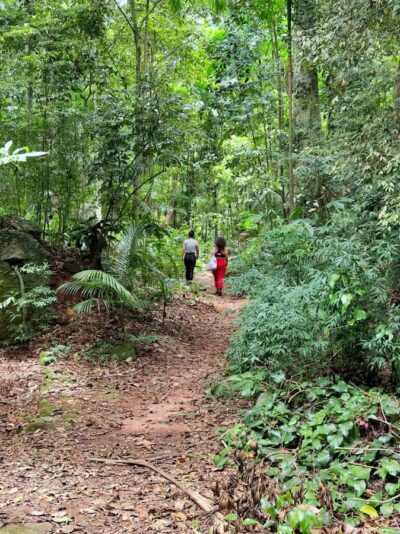
Tijuca Forest´s hike: caves, waterfalls and great views
Read our review →
Discover Pedra do Telégrafo: Scenic Hike with Expert Guide
Read our review →Browse the lists this tour appears in