
REVIEW · RIO DE JANEIRO HIKING TOURS
Rio de Janeiro: Tijuca Forest Challenge Hike Full-Day Trip
Rio hides a wild side. This full-day Tijuca Forest hike takes you well beyond the usual short rainforest walk, with a steep 10.4-kilometer route, old coffee-farm ruins, caves, waterfalls, and wide views across western Rio. I especially like the small group limit of six, which makes it easier to set a steady pace and ask questions. The guides, including Gustavo, Ricardo, Pietro, Tito, and Roberto, are praised for combining forest knowledge with stories about Brazil and Rio.
I also like that the route uses quieter trails rather than stopping only at the park’s best-known sights. The main caution is simple: this is a hard hike, not a casual city excursion. With 848 meters of elevation gain and four to five hours on rough uphill and downhill ground, you need strong fitness, proper shoes, water, and a willingness to work for the views.
Key points before you book
- 10.4 kilometers and 848 meters of climbing: Expect a serious half-day trek inside a full nine-hour outing.
- Taquara Hill reaches 814 meters: Its summit is higher than Christ the Redeemer and offers views toward the forest valley, coast, lagoons, and western Rio.
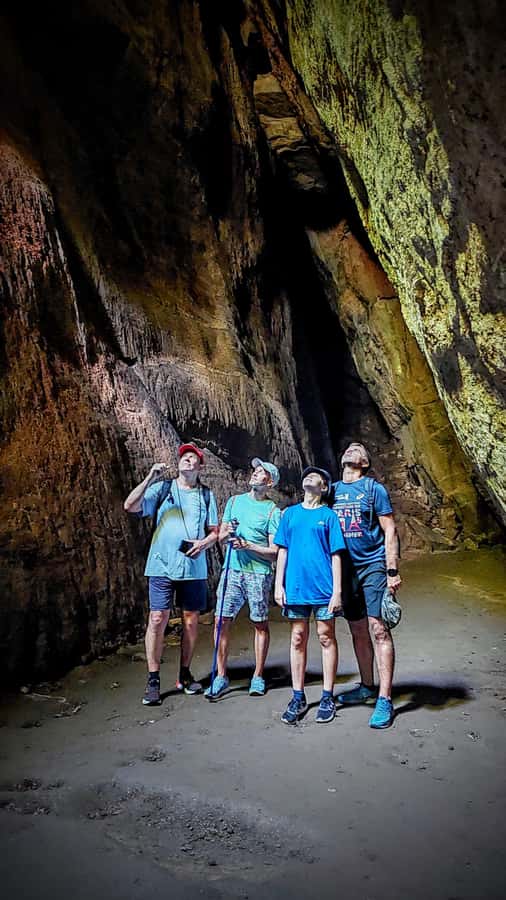
- Less-used forest trails: The route passes old coffee-farm ruins, a grotto, a cave, and parts of Tijuca that many short tours skip.
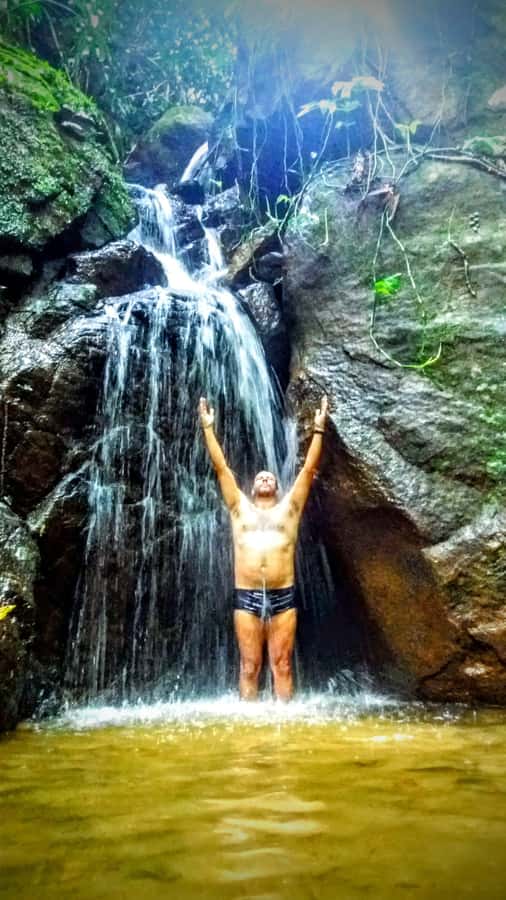
- Waterfall finish: Cascata da Baronesa offers a chance to cool off, though water flow depends on recent rain.
- Maximum six people: A small group helps the guide adjust the pace and keeps the experience more personal.
- Good value for committed hikers: At $86 per person, transportation, a bilingual guide, and insurance are included, but food and drinks are not.
Why this Tijuca hike is different
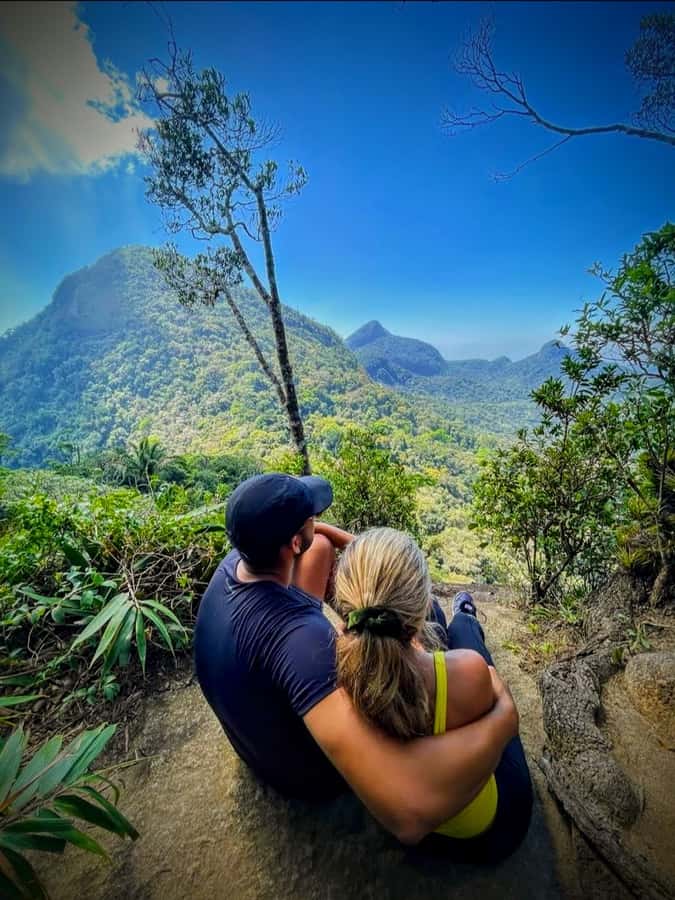
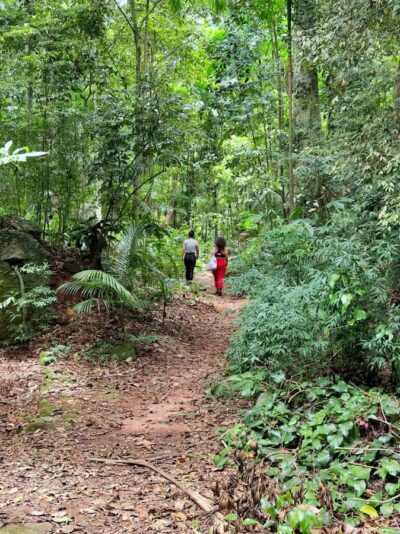
Tijuca National Park is one of the world’s largest urban forests, yet much of Rio’s sightseeing barely touches it. Many visitors see a waterfall, take a short walk, and leave. This trip gives you several hours on forest trails, with enough climbing to make the rainforest feel like a proper mountain outing.
The route reaches Taquara Hill at 814 meters. That is about 100 meters higher than the Christ the Redeemer statue, a useful comparison if you are trying to picture the effort. The summit itself is not just a number on a route sheet. On a clear day, you get one view toward the forest valley and another toward western Rio, its coastline, and lagoons.
The forest setting changes the feel of the climb. Much of the route is shaded, which helps in Rio’s heat, but shade does not make steep ground easy. You will still deal with uneven surfaces, uphill sections, downhill sections, and careful footing. One useful piece of advice from an earlier participant was that the steep stretches deserve more warning and that walking aids could help some hikers.
For me, the best part is the mix of effort and discovery. You are not simply walking to a lookout. You are following an unusual circuit with natural sites and traces of the coffee farms that once occupied this part of Brazil before reforestation in the 1800s.
More Forest and Jungle Hikes in the world:
- Small Group Waterfall and Rainforest Hiking Adventure on Maui
★ 5.0 · 1,417 reviews - Hike El Yunque Rainforest and Kayak Bio Bay Combo Tour
★ 4.5 · 1,010 reviews - Chiang Mai: 2-Day Jungle Trek with Elephant Farm & Raft Ride
★ 4.7 · 881 reviews
From Cascatinha Taunay to the first climb
The day begins with hotel or hostel pickup in selected parts of Rio’s South Zone, including Copacabana, Ipanema, Leblon, Leme, Santa Teresa, Gloria, Catete, Flamengo, and Botafogo. If your address is not covered, the operator provides a nearby meeting point after checking your location.
One of the first stops is Cascatinha Taunay, a well-known waterfall in Tijuca National Park. You get about 15 minutes here, enough for photos and a first look at the forest’s water and rock formations. A short introduction to the national park follows, helping you understand that this is not just a patch of trees beside the city. It is a protected forest shaped by both nature and human history.
The hike then begins in earnest. The first two hours include the main uphill push toward the viewpoints and Taquara Hill. Your guide may stop to explain plants, animals, trees, and the forest’s past. Guides such as Tito and Pietro have been praised for adding useful context about Brazilian geography, politics, and history, rather than treating the walk as a silent fitness test.
That makes a real difference on a hard climb. Short pauses become chances to catch your breath while learning why coffee farming once affected this area and how reforestation changed it. The small group format also helps here, since the guide can usually keep an eye on everyone’s pace instead of pushing a large crowd along.
The Taquara Hill viewpoints
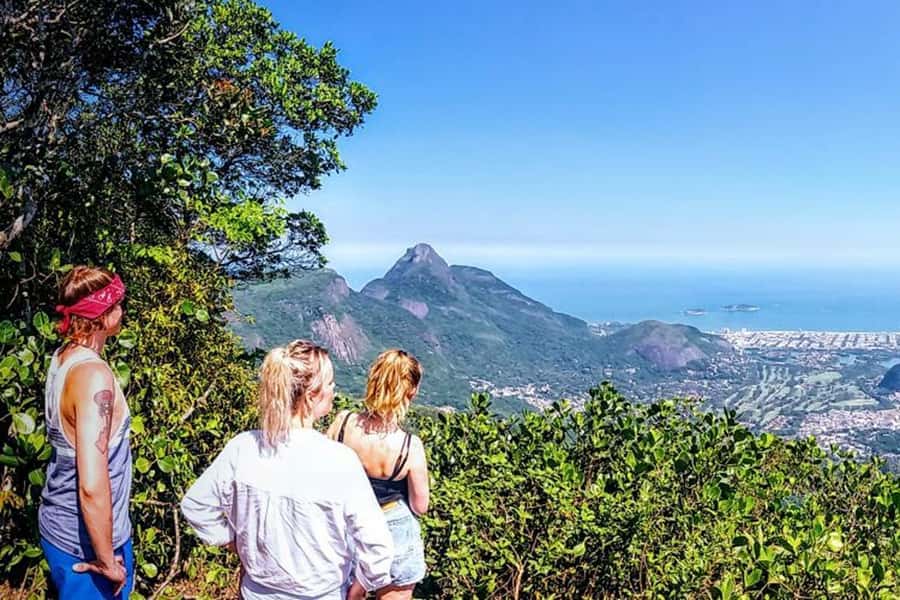
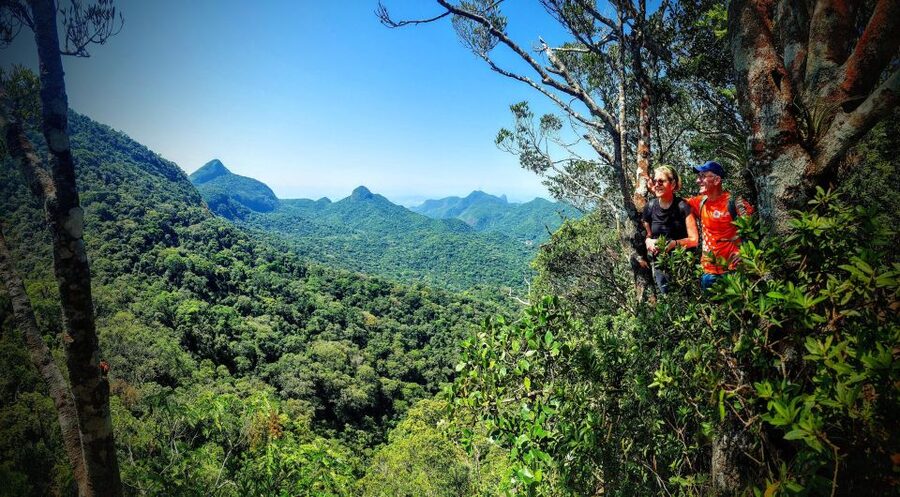
The main viewpoint section is the reward for the climb. On clear days, you can see into the forest valley from one side and toward western Rio, the coastline, and lagoons from another. These are not the standard postcard views from Christ the Redeemer or Sugarloaf. You are looking at Rio from a quieter, higher forest setting.
Weather matters. Cloud, fog, or rain can reduce what you see from the summit. That does not ruin the walk, since the forest, caves, and waterfalls remain worthwhile, but you should not book this solely for a guaranteed panorama. One participant still found the forest experience worthwhile on a cloudy day when the viewpoint was limited.
You get around 30 minutes at one viewpoint, which gives you time for photographs and a proper rest. The trail is not simply a straight climb to a single lookout, so the route continues to offer changes in scenery after the summit.
If you are looking for an easy photo stop, this part will feel demanding. If you enjoy earning a view, the effort is part of the appeal. The climb is also a good test of your fitness early in the day, so be honest with yourself before booking.
Coffee-farm ruins, grottos, and the Bat Cave
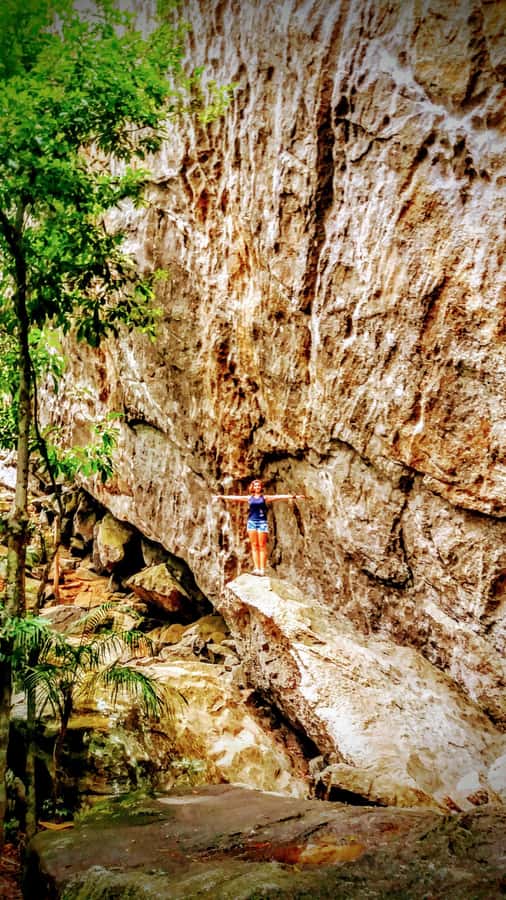
After the high viewpoints, the route heads farther into the forest along a quieter trail. The walk includes both uphill and downhill sections and takes about an hour before reaching the ruins of an old coffee farm.
These ruins give the hike a useful human story. Tijuca is not untouched wilderness in the strict sense. Its present forest owes much to replanting after the coffee era, and the old structures help connect the trees around you with Rio’s past. Guides often use this section to explain Brazil’s development, the city, and the changes that shaped the park.
The trail then reaches a grotto and a cave. The Bat Cave is included as a short guided stop, lasting about 15 minutes. You should expect a natural site rather than a polished attraction. That is exactly why it fits this route: the cave adds a sense of discovery without requiring a separate excursion.
The walk through this section can feel more isolated than the opening stops. The route was designed around trails and sites that are not heavily visited, and some participants have gone for long stretches without seeing another person. That quiet is a major part of the experience, but it also means you should stay close to your guide and watch your footing.
More Full-Day Trips around the world:
- From Marrakech: Atlas Mountains Full-Day Hiking Trip w Lunch
★ 4.8 · 7,417 reviews - From Chania: Full-Day Samaria Gorge Trek Excursion & Guide
★ 4.6 · 3,191 reviews - From Rethymno: Samaria Gorge Full-Day Trek, Pickup & Guide
★ 4.5 · 1,610 reviews - From Sofia: The Seven Rila Lakes Full-Day Hiking Tour
★ 4.7 · 923 reviews
Cascata da Baronesa and the cool-down
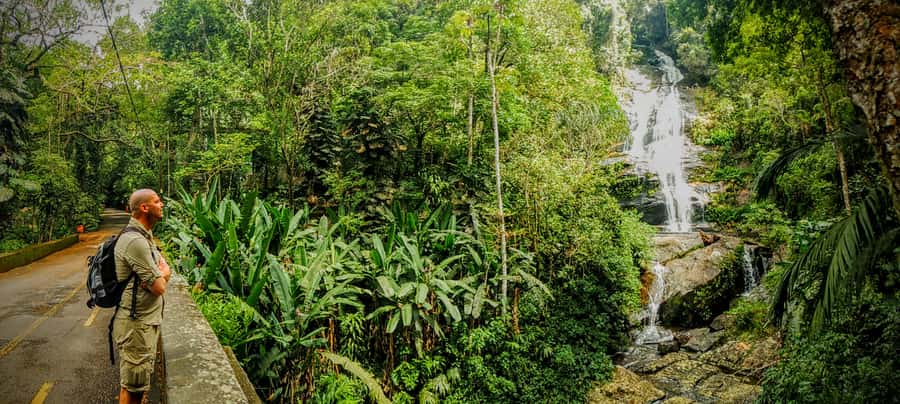
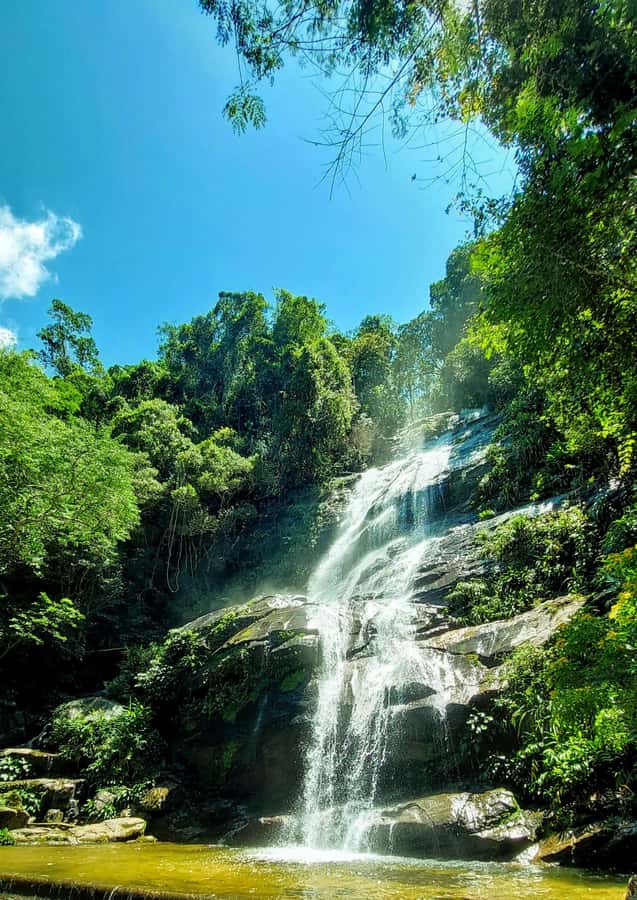
The waterfall stop comes after the cave and another section of forest walking. Cascata da Baronesa is where you can cool off after the climb and descent. Bring a swimsuit and towel if you want to take a shower under the falls or refresh yourself in the water.
Do not expect the same flow every day. The waterfall depends on recent rainfall, so it may be stronger after wet weather and lighter during drier periods. Rain can also affect the trail and the visibility at viewpoints, which is why the guide may adjust the plan when conditions are poor.
This final water stop is a practical pleasure rather than a luxury. After several hours on rough ground, a cold waterfall can reset your legs before the return transfer. It also gives the day a satisfying finish, especially if you have brought dry clothes for afterward.
The itinerary includes additional time in the national park before a final viewpoint or photo stop. On working weekdays, the vehicle can also go to the Vista Chinesa summit after the hike. Vista Chinesa is closed to vehicles on weekends and holidays, so do not count on that stop for every departure.
Guides, pacing, and the small-group advantage
The guide can shape this experience more than any single waterfall. Gustavo has been praised for explaining not only Tijuca but also Rio, Brazil, and the forest’s less obvious details. Ricardo is noted for humor, patience, and taking photos, including on rainy days. Pietro is described as active, warm, and especially good at bringing energy to the climb.
That pattern matters because a difficult hike needs more than route directions. You want someone who can explain what you are seeing, monitor the group, and adjust the pace. One older participant completed the full route because the guide adapted to a slower speed, while other accounts describe private or nearly private departures when group numbers were low.
The maximum group size is six. Private departures are also available. A small group will not make the climb easy, but it can make the day calmer and more flexible. You have less waiting, more room to stop, and a better chance to talk with the guide about Rio, plants, wildlife, or history.
Wildlife sightings are possible, but they are not guaranteed. People have seen monkeys, coatis, frogs, and many birds. Treat these as lucky additions, not promises. The forest experience remains worthwhile even when animals stay out of sight.
What the $86 price includes
At $86 per person, this is a reasonable price for a full day if you want a serious guided hike rather than a short park visit. Transportation from selected South Zone hotels and hostels is included, as is a bilingual English or Portuguese-speaking guide and insurance.
The value comes from the route and the guiding. You are getting roughly four to five hours of hiking, transport, several sites inside Tijuca, a waterfall stop, and access to trails that are not part of most quick forest tours. A guide also matters on a route with steep ground, less-used trails, caves, and changing weather.
Food, water, and other drinks are not included. Bring enough water for a long, strenuous walk and pack snacks. There are no large bags or luggage allowed, so use a compact daypack with only what you need.
The price is less attractive if you are not prepared for the physical work. A shorter Tijuca visit would suit you better if your goal is simply to see a waterfall and forest without spending most of the day hiking.
How to prepare for 10.4 kilometers
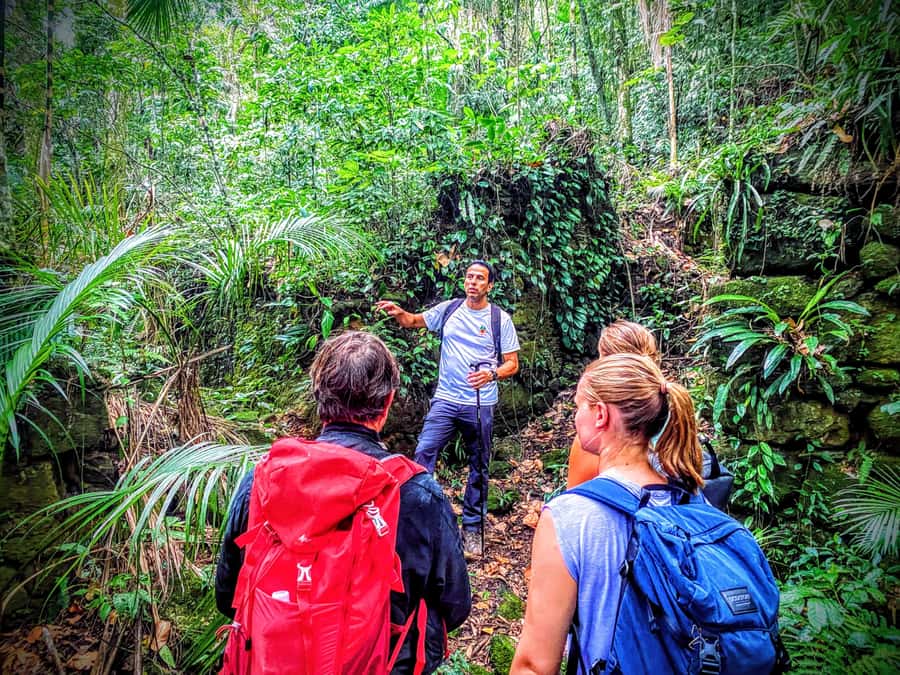
Take the fitness warning seriously. The route covers 10.4 kilometers, includes 848 meters of elevation gain, and takes four to five hours on foot. The full activity lasts about nine hours once pickup, stops, and transport are included.
Wear hiking shoes with reliable grip. The trail is rough, and steep uphill and downhill sections require care. Pack water, snacks, sunscreen, insect repellent, sunglasses, and a sun hat. A swimsuit and towel are important if you want to use the waterfall.
Do not bring a suitcase or large bag. Keep your load light enough that you can move comfortably over uneven ground.
This trip is not recommended for children under 14, wheelchair users, or anyone with heart problems. It is also unsuitable for people with cardiovascular, pulmonary, or other conditions that make difficult physical activity unsafe. The operator can refuse participation if someone appears unable to complete the hike.
The best match is an experienced or well-prepared hiker who enjoys a steady challenge, forest scenery, and a full day away from Rio’s main tourist circuit. If you need a relaxed pace, tell the guide early. The small group makes pace adjustments more realistic, but it cannot remove the steep sections.
Should you book the Tijuca Forest Challenge Hike?
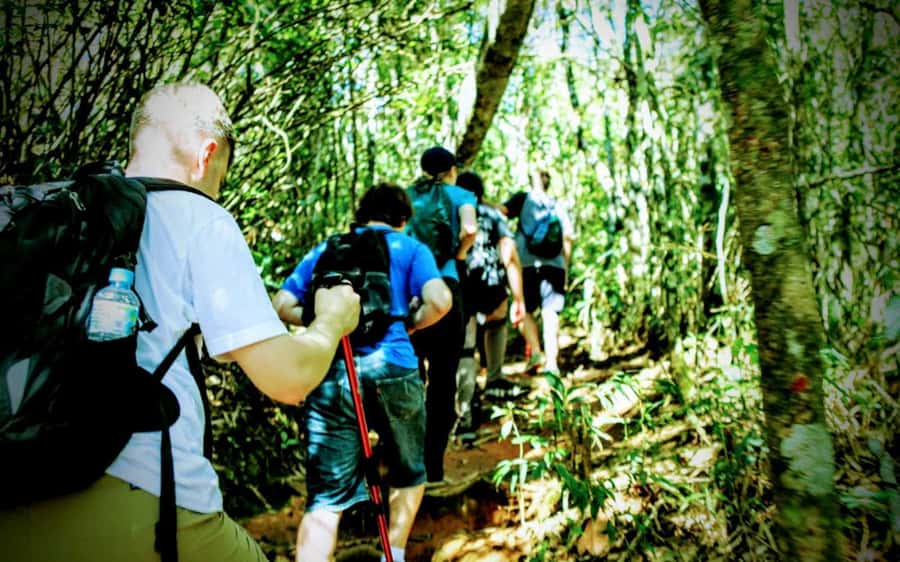
I would book this tour if you want to experience Rio through its forest, not just look at it from a famous monument. The combination of Taquara Hill, quieter trails, coffee-farm ruins, caves, waterfalls, and strong guiding gives the day real substance.
I would skip it if you want a gentle walk, guaranteed clear views, or a short sightseeing stop. This is a demanding hike with weather-sensitive viewpoints and no included meals or drinks.
For fit hikers who pack properly, the $86 cost is fair. You get transport, a bilingual guide, insurance, and a route that reaches parts of Tijuca many visitors never see. The key is to book it for the hiking itself. The views are the reward, not the only reason to go.
FAQ
How long is the Tijuca Forest hike?
The hiking route is approximately 10.4 kilometers, or 6.5 miles, and takes about four to five hours.
How much elevation gain does the hike include?
The route gains approximately 848 meters, or 2,782 feet.
How long does the full activity last?
The complete experience lasts about nine hours, including transportation, stops, and the hike.
What fitness level is required?
This is a hard hike on rough terrain with substantial uphill and downhill sections. You need a very good level of fitness.
Is the tour suitable for children?
Children under 14 are not recommended. Children older than 14 may join if they enjoy hiking and can manage a full-day, challenging activity.
Is hotel pickup included?
Pickup and drop-off are provided from designated hotels and hostels in Rio’s South Zone, including areas such as Copacabana, Ipanema, Leblon, Leme, Santa Teresa, Gloria, Catete, Flamengo, and Botafogo.
What happens if my hotel is outside the pickup area?
You need to check with the local operator. If pickup is not possible from your address, a nearby meeting point will be provided.
Can I swim or shower at the waterfall?
You can refresh yourself at the waterfall. Bring a swimsuit and towel. Water flow changes according to recent rainfall.
Is Vista Chinesa included every day?
The tour can visit the Vista Chinesa summit after the hike on working days. It is closed to vehicles on weekends and holidays.
What should I bring?
Bring water, snacks, hiking shoes, sunscreen, insect repellent, sunglasses, and a sun hat. A swimsuit and towel are useful for the waterfall. Large bags and luggage are not allowed.
More Day Trips around the world
- Cinque Terre Day Trip with Optional Hiking or Pisa
★ 5.0 · 8,486 reviews - Florence: Cinque Terre Day Trip with Optional Hiking or Pisa
★ 4.9 · 4,848 reviews - From Tirana: Bovilla Lake & Gamti Mountain Hiking Day Trip
★ 4.9 · 4,397 reviews - From SF: Yosemite Day Trip with Giant Sequoias Hike & Pickup
★ 4.9 · 1,331 reviews
Just added around the world
- From Jökulsárlón: Vatnajökull Easy Level Glacier Hike★ 4.2 · 20 reviews
- From Kanab: 3-Hour Peek-a-Boo Slot Canyon Hiking/Photo Tour★ 4.9 · 25 reviews
- From Jujuy: Salinas Grandes, Purmamarca & Los Colorados Hike★ 4.2 · 75 reviews
- From Kalamata: Polylimnio Waterfalls Guided Hiking Tour★ 4.9 · 19 reviews
- From Kalkan: Saklikent Gorge and Gizlikent Waterfall Trek★ 4.7 · 13 reviews
- From Hanoi: Hoa Lu, Hang Mua Hike, Tam Coc Boat, and Lunch★ 4.4 · 28 reviews
- From Huaraz: Hike to the Lagoon 69★ 4.4 · 121 reviews
- From Kalabaka: Authentic Meteora Hiking Tour – Local Agency★ 5.0 · 20 reviews
Rio De Janeiro Hiking Tours, compared.

Rio: Tijuca Forest Small Group Hike to Caves and Waterfalls
Read our review →
Pedra do Telégrafo Hike and Beach Full-Day Tour
Read our review →
Sunrise and Sunrise Walk Two Brothers with Local Guide
Read our review →
Tijuca Forest´s hike: caves, waterfalls and great views
Read our review →
Discover Pedra do Telégrafo: Scenic Hike with Expert Guide
Read our review →Browse the lists this tour appears in