
REVIEW · INDONESIA HIKING TOURS
Sidemen Trekking: A Walk from a Different Perspective
Sidemen is Bali at walking pace. This two-hour trek leads you from the traditional market through village lanes, rice terraces, plantations, and working farmland, with Mount Agung appearing across the valley when conditions are clear. I like the route because it shows daily Balinese life rather than simply delivering a photo stop, and the $13 price includes a local English-speaking guide and bottled water.
I also like the one-way route, which keeps the scenery changing and avoids walking back over the same ground. The main consideration is the footing: narrow rice-field paths can be slippery, uneven, and exposed, so this is not a casual stroll in flip-flops. Bring proper walking shoes, a hat, sunscreen, and a little balance.
Why This Sidemen Walk Is Worth Your Time
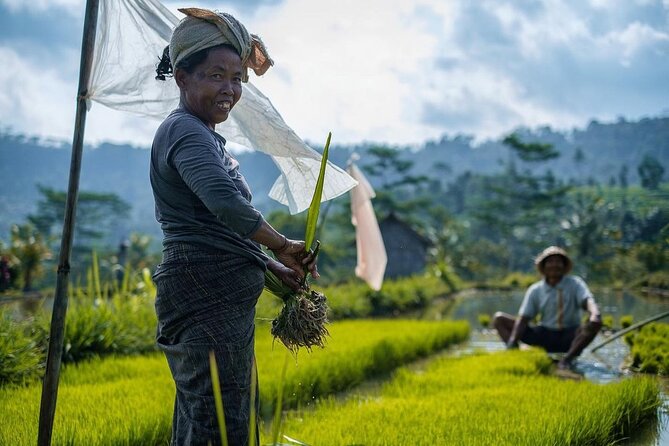
- A working countryside route: You pass farmers plowing, planting, cultivating, and harvesting rice.
- A local guide makes the difference: Guides such as Adi, Daria, Adidas, Wayan, Komang, and Gede have explained crops, village life, irrigation, and Balinese customs along the way.
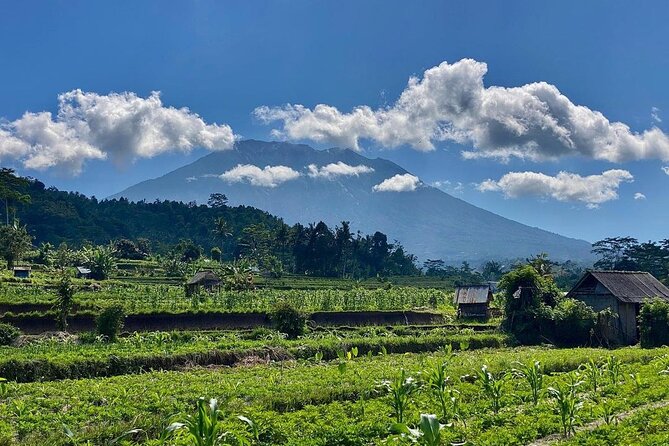
- Mount Agung views: The rice terraces offer broad views toward Bali’s famous volcano when the weather cooperates.
- The Yellow Bridge crossing: Jembatan Kuning Tukad Yeh Unda is a memorable stop, though it can feel slightly shaky.
- A genuine two-hour activity: The pace is generally relaxed, with time for photos and questions rather than a race through the countryside.
- Good value at $13: You get a guide, bottled water, a small group capped at 10 people, and access to paths you would likely struggle to find alone.
Starting at Upa Boga Near Sidemen Market
The walk begins at Toko Upa Boga Pertenunan, a shop beside Pasar Sidemen on the main road. Look for the sign marked Upa Boga. Your guide will meet you there, so arrive with enough time to identify the shop and settle in.
If you are staying in Sidemen, arrange transport through your hotel. The local transport situation needs a little planning because some hotels do not allow Grab drivers to collect passengers. Drop-off by Grab is allowed, but collection is not recommended.
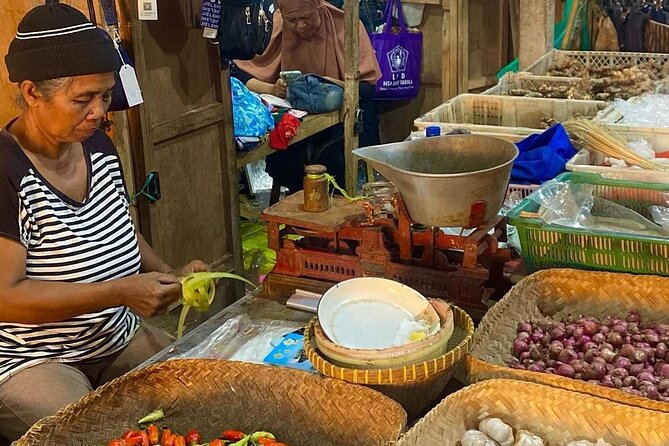
The market is open from about 5:00 AM to 10:00 AM. If you book a morning departure, you can spend around 10 minutes looking through the food market before walking. It is a useful start because you see Sidemen buying and selling everyday food before leaving the road for the fields.
Do not expect a large tourist market packed with souvenirs. The appeal is seeing ordinary local trade and getting a quick sense of the village before the countryside takes over. If you choose an afternoon departure, the market may already be closed.
A few more hikes around Indonesia worth a look
- Bali: Sunrise Mount Batur Guided Hike with Breakfast
★ 4.8 · 9,660 reviews - Bali: Mount Batur Sunrise Guided Hike and Natural Hot Spring
★ 4.8 · 9,284 reviews - Bali: Mount Batur Sunrise Trek With Guide and Breakfast
★ 4.8 · 3,461 reviews
Walking Through Sidemen’s Rice Country
From the market, the route heads upward toward the rice paddies. The walk goes up and down village streets before reaching the fields, so you get a gradual change from shops and homes to irrigation channels, crops, and open views.
One of the most useful parts of the walk is the explanation of the Subak irrigation system. Subak is the traditional Balinese way of managing water for rice farming, and the route passes through the Subak of Ogang. Your guide can point out how water moves through the fields and explain why irrigation is central to farming communities.
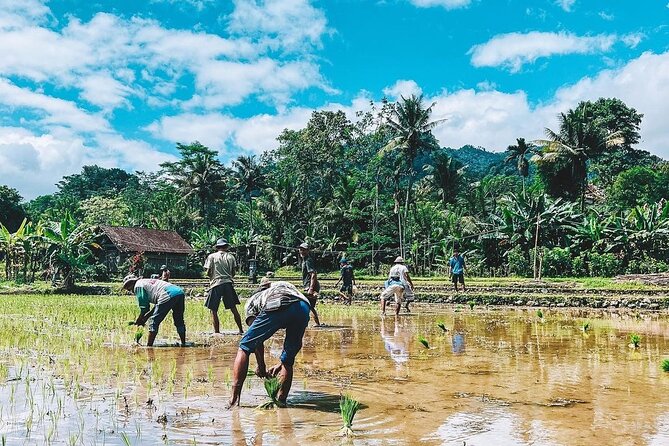
This is more than scenery. Rice terraces can look simple from a viewpoint, but walking among them shows the work behind the neat green patterns. You may see farmers plowing soil, planting seedlings, tending crops, or preparing rice for harvest. The exact activity depends on the season, which makes the route different from a fixed garden display.
The path can be narrow. At times, you walk along the raised edges between paddies, with high grass close by. One useful tip is to wear long trousers if you dislike insects or brushing against plants. A few people have reported red ants along the way, another reminder that this is farmland, not a paved park.
The Yellow Bridge and the Waterway
Jembatan Kuning Tukad Yeh Unda is one of the walk’s most distinctive stops. The yellow wooden bridge is used by both pedestrians and motorbikes, making it a practical part of village life as well as a good photo point.
Crossing it is not a major feat, but it may move slightly underfoot. If you are uneasy with bridges, take your time and follow your guide’s pace. The reward is a different view of the waterway and the surrounding settlement, with the bridge adding a bit of drama to an otherwise peaceful rural walk.
The route follows irrigation water coming from the direction of Mount Agung. That connection between volcano, water, and rice farming gives the scenery more meaning. You are not just looking at terraces. You are following the system that keeps them productive.
Dukuh Village and Local Religious Life
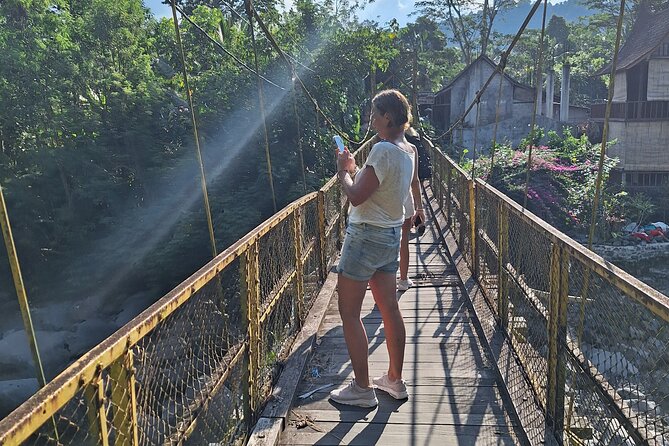
After the bridge, the route continues through Dukuh village. This section brings you close to local homes, roads, temples, and everyday routines. You may see villagers moving through their day rather than performing a cultural show for visitors.
The trek also passes a temple used by local villagers for prayer. Your guide can help explain what you are seeing and how religious spaces fit into village life. As always in Bali, dress and behave respectfully around temples. Keep your voice down and follow any instructions from your guide.
The village portion is one reason I would choose this walk instead of simply visiting a rice terrace viewpoint. From a viewpoint, you get the picture. Here, you see the roads, irrigation channels, plants, houses, religious sites, and people that make the picture work.
Guides are a major part of the experience. Adi and Adidas have been praised for their humor and local insight, while Daria, Wayan, Komang, and Gede have helped explain farming, plants, history, and culture in clear English. Several guides also take photos at good viewpoints, which is handy if you are traveling as a couple or group and want everyone in the picture.
Same trailhead, a different kind of day:
- Mount Batur Sunrise Hike and Natural Hot Spring Option
★ 5.0 · 1,927 reviews - From Ubud: Mount Batur Hiking With Hotspring
★ 4.8 · 1,850 reviews - Mount Batur Sunrise Hike with Breakfast
★ 5.0 · 1,757 reviews - Mount Batur Sunrise Trekking
★ 5.0 · 947 reviews
Babakan Dukuh Rice Terrace Views

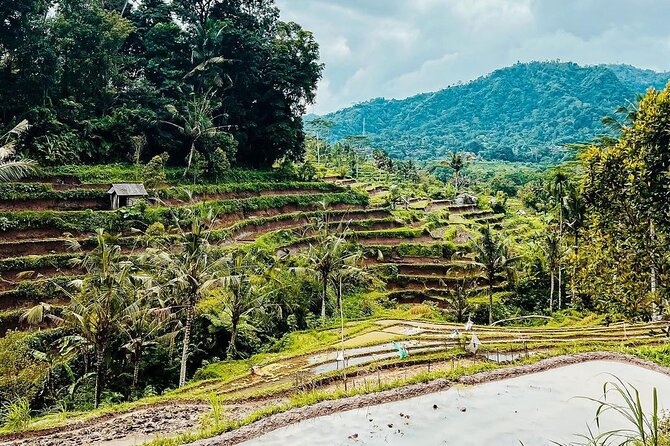
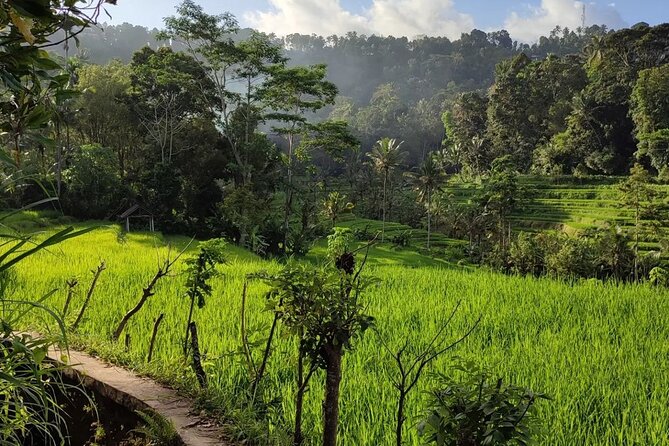
The final major section is Babakan Dukuh Rice Terrace. The route returns to the paddies and opens into some of the best views of the walk. You can look across the terraces toward the valley and, if clouds allow, Mount Agung.
This is the part most likely to satisfy photographers, but the views are not the only reason to value it. You reach these terraces after walking through the village and seeing the water system, so the scenery feels connected to the life around it.
The paths here may be narrow and slick, especially after rain. Several people have enjoyed the muddy, slightly awkward footing, but you should be realistic about your comfort level. Sports shoes or hiking shoes with good grip are strongly advised. Sandals and flip-flops are specifically not suitable.
Rain does not necessarily ruin the walk. One person completed the route in rain and still found the scenery worthwhile, but a light raincoat is sensible. Bali weather can change quickly, and there is no promise that every departure will have clear views of Mount Agung.
Finishing at Warung Ume Anyar
The trek ends at Warung Ume Anyar in Ogang Village. This is not the same place as the starting point, so arrange your onward transport before you set off.
Ask your driver to collect you at the finish point around two to two and a half hours after the trek begins. That gives you a sensible margin if the group walks slowly or stops for extra photos. The walk back to the start is possible, but it takes about 3 kilometers, or 30 to 40 minutes, along the main road.
This end point is an important practical detail. The one-way route makes the experience more interesting, but it also means you cannot simply return to your hotel from the original meeting point unless you arrange it. If you are staying nearby, ask your accommodation to organize a pickup.
How Difficult Is the Two-Hour Trek?
The trek is not described as a mountain climb, but it is more active than a flat village walk. Expect some uphill and downhill walking, narrow paths, uneven ground, and possible slippery sections.
The route is not suitable for children under five, pregnant women, people with heart problems, people over 60, or people with a low level of fitness. Those restrictions should be taken seriously rather than treated as fine print.
A six-year-old completed the walk with careful support from a guide, so older children may manage it, but the path still demands attention. You need to be comfortable walking for two hours and maintaining your balance on narrow raised edges.
Pack lightly. Sunglasses, a hat, sunscreen, water, and proper shoes are the useful basics. One bottled water is included, but you may want more water if you are sensitive to heat or humidity.
What the $13 Price Really Gets You
At $13 per person, this is one of the better-value ways to see rural Sidemen. The price includes an English-speaking guide and bottled water, and the group is limited to 10 participants.
The value comes from the route rather than from expensive facilities. You are paying for local direction, cultural explanation, and access to paths that are difficult to follow independently. One person who had planned to walk alone found the rice-paddy route hard to work out without a guide, which is a useful warning.
The tour does not include hotel pickup or drop-off. Add the cost and effort of transport when comparing it with other activities. Still, even with a separate ride, the low tour price makes it a practical choice for a morning or afternoon in Sidemen.
The guide can also add value in small ways. Guides have stopped for photos, answered questions about local plants, explained farming methods, and stayed with the group until everyone reached the finish safely. Those details matter more here than a formal lecture would.
The Best Time to Book

A morning departure is the best choice if you want to see Pasar Sidemen before the walk. The market operates from 5:00 AM to 10:00 AM, so check the available start time carefully.
A later departure may offer a calmer feel, but you will probably miss the market. Afternoon light can be pleasant for photos, but weather and cloud cover may affect the Mount Agung views.
There is no guaranteed season for green terraces or clear volcano views in the information provided. The farming activity will change as the year progresses, and rain can make the paths slick. I would choose the time that gives you the best balance between market access, heat, and your transport plans.
The activity allows cancellation up to 24 hours ahead for a full refund, and you can reserve now and pay later. That flexibility is useful when your Bali schedule depends on weather.
Who Will Enjoy This Experience Most?
I would recommend this trek to you if you want to see a quieter side of Bali and prefer local life to staged attractions. It suits people who enjoy walking, asking questions, taking photos, and learning how food is grown.
It is also a good fit if you have already seen the rice terraces around Ubud and want something less polished and less crowded. The Sidemen route has been described as more pristine, with a closer look at village routines and farming.
Families with older children may enjoy it, especially with a private walk and a patient guide. The route is not ideal for anyone who needs smooth paths, frequent seating, or an easy flat surface.
You should also book it if you value a guide’s personality. The strongest praise has gone to guides who combine facts with humor. Adidas, Adi, Daria, Wayan, Komang, and Gede have each been singled out for being friendly, careful, entertaining, or well informed about the area.
Should You Book the Sidemen Trek?
Book it if you want a low-cost, local, active look at Bali and can manage uneven paths. The rice fields, Subak irrigation channels, Yellow Bridge, village temple, and Mount Agung views give the two hours plenty of variety.
Skip it if you are looking for a paved nature walk, a long mountain hike, or a tour with hotel transport included. You will need good shoes and a pickup plan at Warung Ume Anyar.
For most fit visitors staying in Sidemen or nearby, I think the price is easy to justify. This is a small, practical experience that connects the pretty views with the people and work behind them.
FAQ
Where does the Sidemen trek begin?
It begins at Toko Upa Boga Pertenunan beside Pasar Sidemen on the main road. Look for the shop sign marked Upa Boga, where the guide will meet you.
Where does the trek finish?
The walk finishes at Warung Ume Anyar Restaurant in Ogang Village.
How long does the trek last?
The trek lasts about two hours. You should arrange pickup around two to two and a half hours after the scheduled start.
Is hotel pickup included?
No. Hotel pickup and drop-off are not included, so you need to arrange transport separately.
Can I visit Pasar Sidemen during the experience?
Yes, if you book a morning session and the market is open. Pasar Sidemen operates from 5:00 AM to 10:00 AM, and the market visit takes about 10 minutes.
What should I wear?
Wear hiking shoes or sports shoes with good grip. Bring sunglasses, a hat, and sunscreen. Sandals and flip-flops are not allowed.
Is the route suitable for children?
The trek is not suitable for children under five. Older children may manage it, but the route includes narrow and sometimes slippery paths.
Does the price include a guide and water?
Yes. The $13 price includes an English-speaking guide and bottled water.
What happens if I need to cancel?
You can cancel up to 24 hours in advance for a full refund. You can also reserve now and pay later.
Just added around Indonesia
- From Banyuwangi: Day Trip to Ijen Volcano with Guided Trek★ 4.9 · 10 reviews
- From Bali : The Majestic Mount Ijen Sunrise Trekking★ 4.6 · 17 reviews
- From Bali: Ijen Volcano Sunrise Hike with Transfer & All Fee★ 4.8 · 139 reviews
- From Bali: Private Mount Ijen Crater Volcano Midnight Trek★ 3.9 · 27 reviews
- Explore rice terraces munduk & waterfall trekking experience★ 4.9 · 7 reviews
- Bukit Lawang: Jungle Trekking and Rafting Day Trip★ 4.6 · 7 reviews
- Banyuwangi: Mt. Ijen Sunrise Hike with Pickup & Health Check★ 4.9 · 109 reviews
- Banyumala Waterfall Trek, Bedugul and Lake Beratan Tour★ 4.7 · 85 reviews
Indonesia Hiking Tours, compared.
Sunrise Mount Batur Guided Hike with Breakfast
Read our review →
Mount Batur Sunrise Guided Hike and Natural Hot Spring
Read our review →
Mount Batur Sunrise Trek With Guide and Breakfast
Read our review →
Mount Batur Sunrise Hike and Natural Hot Spring Option
Read our review →
Mount Batur Sunrise Trekking Private All Inclusive
Read our review →Browse the lists this tour appears in