
REVIEW · INDIA HIKING TOURS
Nag Tibba 2 Days Trek (Pantwari to Pantwari)
The mountains begin where the road gives out. This two-day Nag Tibba trek from Pantwari offers a compact taste of Himalayan walking, with a 5 to 6 kilometer hike to Kathian Campsite, a small Snake God temple, camping, and a second-day climb to Nag Tibba Peak. I especially like the short weekend format and the chance to see Mt. Swargarohini and Mt. Bandarpunch without committing to a long expedition.
The low $24 price is another strong point, particularly for a guided mountain trip with a group limit of 20 people. The catch is simple: this is not a gentle stroll. You need moderate fitness, and the trek can feel quite hard, especially if you are new to mountain walking.
Key things to know before you book
- A real 5 to 6 kilometer first-day hike: The route to Kathian Campsite gives you a proper mountain walk rather than a quick viewpoint visit.
- A small Snake God temple on the route: The temple adds a local spiritual detail to an otherwise physical day outdoors.
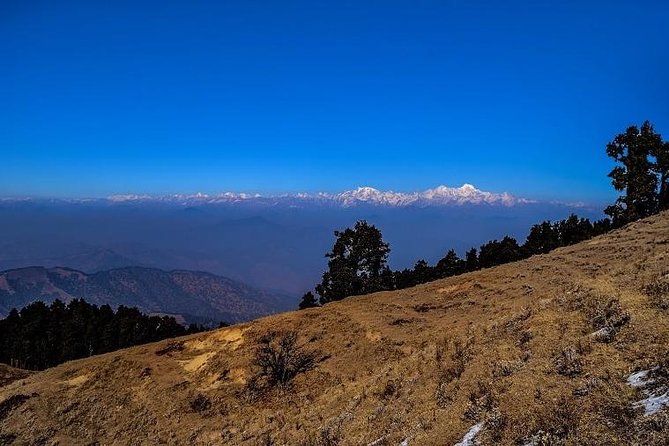
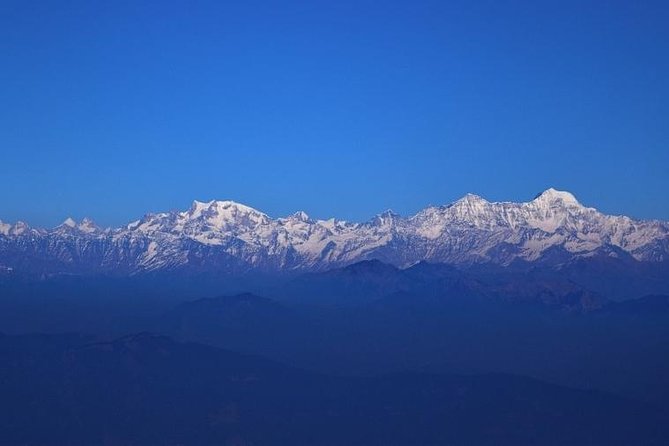
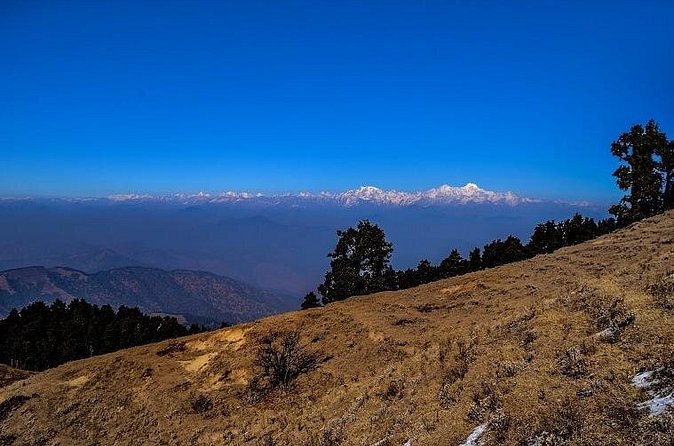
- Big Himalayan views from Nag Tibba Peak: Clear conditions can reveal Mt. Swargarohini, Mt. Bandarpunch, and other high peaks.
- Camping is part of the appeal: Past departures have included tents, fresh meals, hot breakfast, and evening campfire time.
- Guides can make the hard sections manageable: Abhishek, Ramesh, Mukesh, and Adarsh have each been praised for encouragement and care.
- A small group ceiling of 20: That is manageable, though the experience may still feel social rather than private.
Why Nag Tibba works so well as a weekend trek
Nag Tibba is designed for people who want mountain air without giving up a full week. The route begins and ends at Pantwari in Uttarakhand, making the plan relatively clear: arrive at the village, walk up, spend the night near the mountain, reach the peak, then return to the same starting point.
That out-and-back structure matters. You do not need to arrange a second pickup point, and you finish where you began. It also makes the trek easier to understand for a first Himalayan outing, even though the walking itself should not be underestimated.
The experience is best for someone based in or near the North Indian plains who wants a quick break from city noise. You get forest paths, mountain silence, an overnight camp, and a summit view in only two days. That is a lot of scenery for a short schedule.
The tradeoff is that a short trek can feel compressed. You spend much of the first day walking uphill, then have the peak and return on the second day. There is little spare time if the group moves slowly or the weather changes.
More Two-Day Trips around India:
- From Antigua: Adventure, 2-Day Hiking to Acatenango Volcano
★ 4.4 · 1,189 reviews - Mt Toubkal Ascent Express Trek 2 Days 1 Nights
★ 4.7 · 962 reviews - Hanoi – Sapa 2 Days 1 Night Overnight At Homestay
★ 5.0 · 899 reviews
Starting at Pantwari and finding the right rhythm
The meeting point is listed as Pantwari Nagtibba Trek Start, H3MP+GWM, Pantwari, Uttarakhand 249186, India. The activity ends back at this same point, so you should plan your arrival around the group’s departure rather than assuming you can join from somewhere along the route.
The first useful task is pacing yourself. Do not attack the opening section as if it were a short city hike. A steady pace will help you far more than speed, especially since the next day includes the push to Nag Tibba Peak.
Your guide is an important part of the experience. Abhishek has been praised for keeping an eye on the group and offering motivation when the route became difficult. Ramesh received similar praise for helping people continue with a positive attitude. Mukesh has also been singled out for warm leadership, while Adarsh has been described as humble and energetic.
Those names matter because a guide on a short trek does more than point out the route. A good leader notices when someone is tiring, keeps the group together, and helps prevent a hard section from becoming a miserable one. You should still arrive prepared, but strong guide support can change the mood of the entire day.
Day one: the 5 to 6 kilometer walk to Kathian Campsite
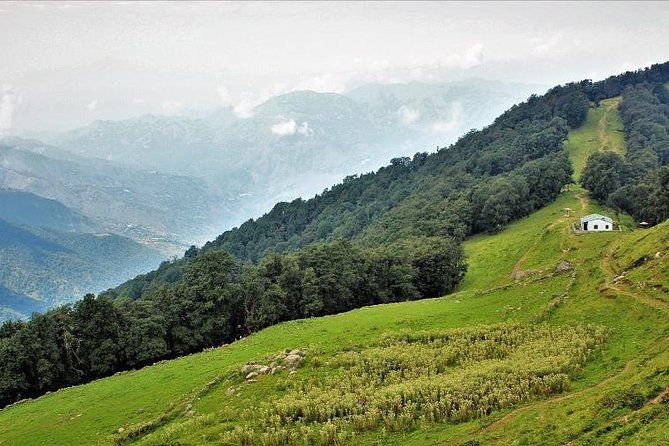
The first day takes you toward Kathian Campsite, with a stop at a small temple dedicated to a Snake God. The walking distance is about 5 to 6 kilometers. The schedule labels the main stop as one hour, but you should not interpret that as the total length of the hiking day. The route itself is the main event.
This is where you begin to understand the character of Nag Tibba. The path gives you time to settle into mountain walking, and the steady climb asks more from your legs than the distance alone suggests. Even a modest number of kilometers can feel demanding when the surface rises and falls.
The temple is a modest feature, but it adds meaning to the route. It is not a grand monument or a long sightseeing stop. Instead, it gives you a glimpse of the local religious character of the mountain and a natural pause during the climb.
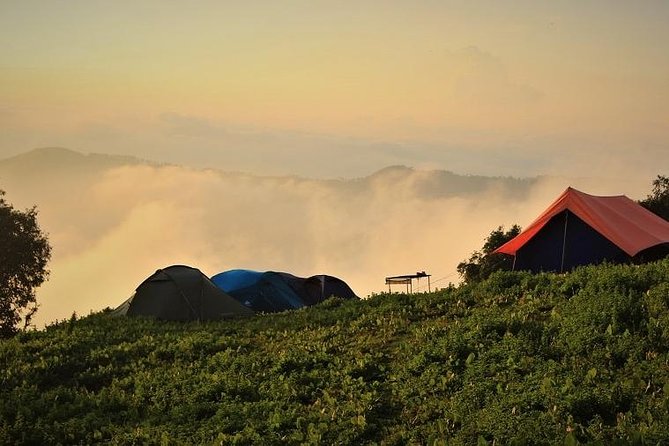
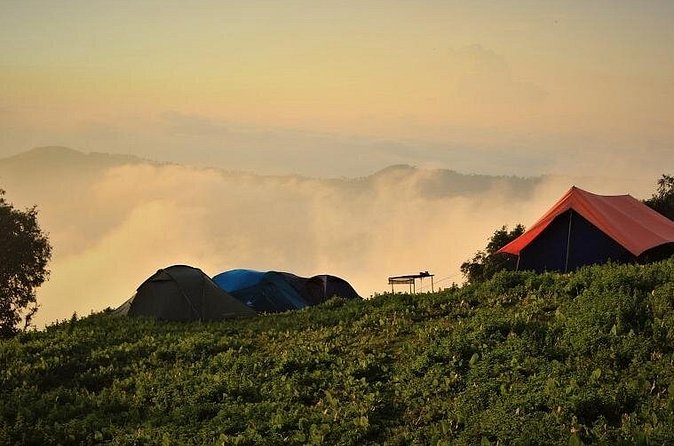
Kathian Campsite is where the trip changes from a day hike into an overnight mountain experience. Past departures have included tent accommodation, and the simple camp setup has been described as comfortable enough for the night. You should think of this as practical outdoor lodging, not a hotel room with mountain views.
Food has been one of the strongest parts of the operation. Fresh meals and hot breakfast have received repeated praise, which is especially valuable after a tiring walk. Mountain food does not need to be fancy to be memorable. A warm meal, served when you are cold and hungry, can matter more than a long menu.
The evening is another reason to choose the two-day version rather than trying to rush up and down in one day. Campfire time and quiet surroundings give you a chance to slow down. The calm after the climb is part of the reward, particularly if you are coming from a crowded city.
Still, overnight camping brings ordinary limits. Tents are simple, conditions can change, and comfort depends partly on weather and how well you prepare. Bring suitable layers and do not expect the campsite to offer the conveniences of a resort.
Day two: Nag Tibba Peak and the high mountain views
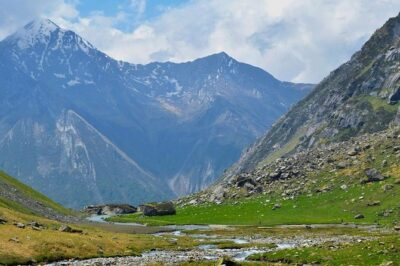
The second day is focused on Nag Tibba Peak. This is the section that gives the trek its visual payoff. From the summit area, you may see Mt. Swargarohini, Mt. Bandarpunch, and other major Himalayan peaks when the weather is clear.
The views are weather-dependent, so keep expectations sensible. A mountain summit does not guarantee a perfect panorama every day. Clouds, mist, or poor conditions may hide the distant peaks, but the climb can still be worthwhile for the feeling of reaching the high point.
This part of the trek is also where the physical demand becomes most obvious. You have already walked to camp, and your legs may feel tired before the summit attempt begins. Moderate fitness is not a formality here. You should be comfortable with sustained uphill walking and a full day outdoors.
The summit experience is likely to be most enjoyable if you treat it as a shared achievement rather than a race. Let faster walkers move ahead if the guide permits it, keep your own pace, and save enough energy for the return. The strongest praise for the trek leaders has focused on encouragement during difficult stretches, which is exactly what you want on this day.
After the peak, the route returns to Pantwari, where the activity ends. The same meeting point at the beginning and end keeps the logistics straightforward. It also means you should not arrange a separate pickup elsewhere unless the operator specifically confirms a change.
A few more hikes around India worth a look
- Mountain Hiking in Munnar (half day) By Munnar Info
★ 5.0 · 390 reviews - Half day trekking (munnar valley Trekking & Tours )
★ 5.0 · 310 reviews - Full day in hiking in Munnar (By Munnar Info)
★ 5.0 · 176 reviews - Har Ki dun Trek by Himalaya Shelter
★ 5.0 · 102 reviews
What the camping and food add to the trip
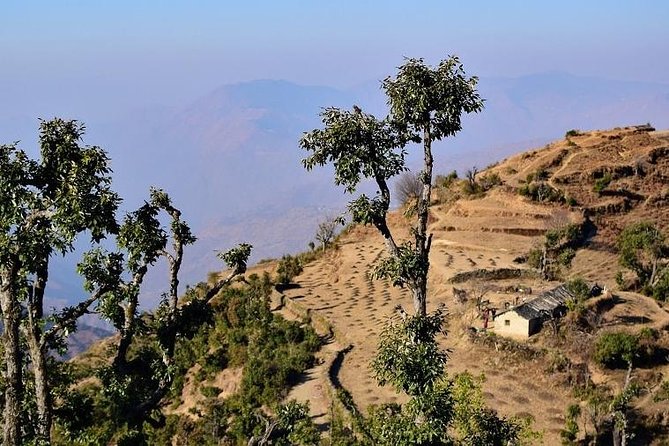
A two-day trek needs more than a scenic path. It needs a workable overnight plan, and this is where the experience appears to offer good value for its low price.
Tents have been described as simple but comfortable. That is the right expectation. You are paying for a night outdoors in the mountains, not private accommodation with room service. If you enjoy basic camping and like the idea of spending an evening away from traffic and screens, the overnight stay adds real character.
The food has drawn unusually strong praise. Fresh cooking, hot breakfast, and meals served at the right time can make a demanding trek feel much more manageable. You should not assume a restaurant-style choice of dishes, since the details of the menu are not specified, but the reported standard is encouraging.
The campfire is another memorable touch. It creates a social center for the evening and gives you a way to relax after the first day. If you prefer a quiet solo trip, a group campfire may feel less private. If you enjoy meeting other walkers, it can become one of the best parts of the night.
Is the $24 price good value?
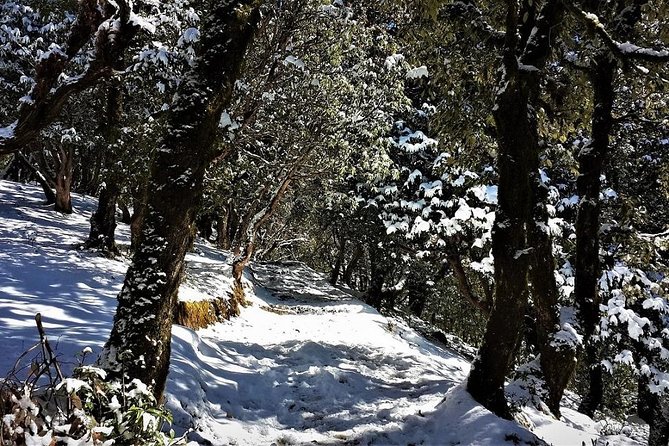
At $24, this is an unusually inexpensive way to access a guided two-day Himalayan trek. The price looks especially attractive when you consider the route planning, guide support, campsite arrangement, and reported meals and tent stay.
You should be careful about reading too much into the headline price, though. The provided details do not spell out every inclusion, such as transport, equipment rental, meals on every section, or personal expenses. Ask what the $24 covers before you commit, especially if you need pickup from another city.
The value is strongest if you can reach Pantwari independently and already own basic trekking clothing. It may be less of a bargain if you need to add long-distance transport, extra equipment, or other services. The meeting point is in Pantwari, and no transfer from Dehradun or another city is included in the stated details.
For a first trek, the price also buys reassurance. A guide-led route is easier than trying to organize an unfamiliar mountain walk alone. That said, low cost should not tempt you to ignore preparation. The route remains physically demanding.
Group size, guide quality, and service expectations
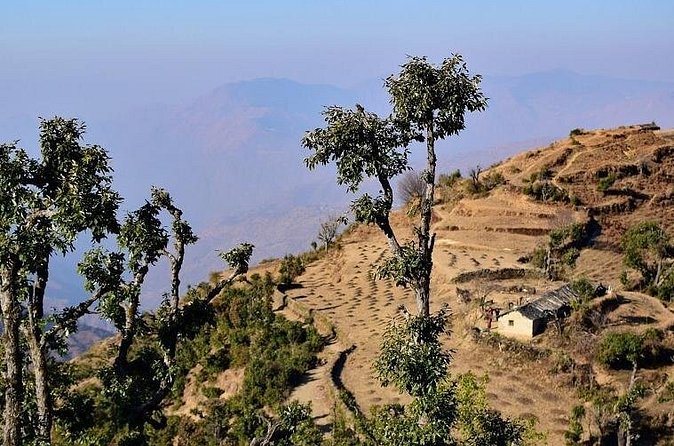
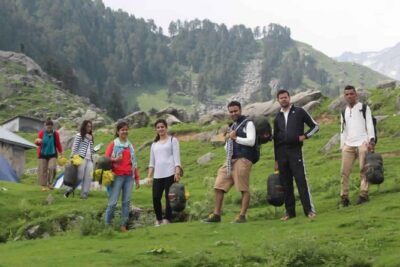
The maximum group size is 20 people. That is small enough for a guide to keep the party organized, but it is not a private trek. You may be walking with a mix of abilities, and the pace can be shaped by the slowest person in the group.
That can be a good thing. New hikers often feel more comfortable when they are not alone, and the social atmosphere can make the evening more enjoyable. It can also mean waiting during climbs or dealing with different expectations about speed and comfort.
The guide team has earned strong praise for motivation and personal care on Nag Tibba departures. Abhishek, Ramesh, and Mukesh are names worth noting if you want to ask who may lead your date. Still, a named guide is not guaranteed unless the operator confirms it.
Service has not been perfectly consistent across the company’s wider trekking program. One separate account described poor hospitality and an unsupportive attitude on another trek. That does not prove the same problem will occur on Nag Tibba, but it is a useful reminder to confirm practical details and raise concerns early if something is unclear.
Who should choose this trek?
I would recommend Nag Tibba to you if you want a first taste of Himalayan trekking, have moderate fitness, and can handle simple camping. It suits people who value mountain scenery, fresh food, a campfire, and a short escape more than luxury or complete flexibility.
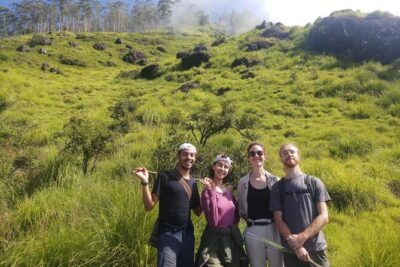
It is also a good choice for friends, couples, and small groups who want a shared challenge. The route is short enough to fit a weekend, but demanding enough to feel like an achievement.
You should think twice if you dislike uphill walking, struggle with basic camping, or want a relaxed sightseeing trip. The phrase weekend getaway can make this sound easy, but the trek leaders and past participants have made clear that it can be hard. Preparation matters more than enthusiasm.
Wear comfortable walking shoes, bring layers, and carry only what you need for two days. Since the trek depends on good weather, flexibility is also important.
Cancellation, weather, and practical booking notes
You can cancel at least 24 hours before the start time for a full refund. Cancellations or changes made less than 24 hours before the start are not accepted for a refund, and the cut-off follows local time.
The trek requires suitable weather. If poor weather causes cancellation, you will be offered another date or a full refund. The experience also requires a minimum number of participants, so an under-filled departure may be moved, replaced with another experience, or refunded.
You receive confirmation at booking, and the ticket is mobile. The activity ends at the original Pantwari meeting point. The stated group limit is 20, and participants should have a moderate fitness level.
Should you book the Nag Tibba trek?
Book it if you want a low-cost, two-day mountain challenge with a clear start and finish, strong summit potential, and an overnight camp that adds atmosphere. The views toward Mt. Swargarohini and Mt. Bandarpunch are the big prize, while the food, campfire, and encouraging guides help make the hard walking worthwhile.
I would not book it expecting an easy nature walk or a polished resort-style trip. Confirm what the $24 includes, prepare for sustained uphill effort, and accept that weather may hide the distant peaks. For a first Himalayan trek on a tight schedule, though, Nag Tibba offers a lot of mountain experience in a very small package.
FAQ
How long is the Nag Tibba trek?
The experience lasts approximately two days.
Where does the trek start?
It starts at Pantwari Nagtibba Trek Start, H3MP+GWM, Pantwari, Uttarakhand 249186, India.
Where does the trek finish?
The activity ends back at the Pantwari meeting point.
How far is the first day’s hike?
The first day includes an approximately 5 to 6 kilometer hike to Kathian Campsite.
What can you see from Nag Tibba Peak?
In suitable weather, you can see Mt. Swargarohini, Mt. Bandarpunch, and other mountain peaks.
Is the trek suitable for beginners?
The experience requires a moderate physical fitness level. It can work for a first trek, but it should not be treated as an easy walk.
How many people can join the group?
The maximum group size is 20 people.
Can I cancel for a full refund?
Yes. You can cancel at least 24 hours before the experience starts for a full refund.
What happens if bad weather cancels the trek?
You will be offered a different date or a full refund if poor weather causes the experience to be canceled.
Just added around India
- Har Ki dun Trek by Himalaya Shelter★ 5.0 · 102 reviews
- Top Tibba Trek – Mussoorie★ 5.0 · 61 reviews
- Private Munnar Tea Trek★ 4.6 · 38 reviews
- Private Peacock Trail Walking Tour in Mylapore★ 5.0 · 50 reviews
- Private Bazaar Trail Walking Tour in George Town★ 5.0 · 66 reviews
- Benog Tibba Day Hike – Mussoorie★ 5.0 · 38 reviews
- Kaflani Day Hike – Mussoorie★ 5.0 · 16 reviews
- Hiking Day Tour to Triund from Dharamshala★ 5.0 · 20 reviews
India Hiking Tours, compared.
Mountain Hiking in Munnar (half day) By Munnar Info
Read our review →
Half day trekking (munnar valley Trekking & Tours )
Read our review →
Private Bazaar Trail Walking Tour in George Town
Read our review →
Browse the lists this tour appears in