
REVIEW · GREECE HIKING TOURS
Kalabaka: Meteora Small-Group Hiking Tour w/ Monastery Visit
Meteora rewards people who walk. This five-hour morning hike gets you beneath the sandstone pillars, past old hermit sites, and toward one of the area’s famous monasteries. I like the local guides, who bring in stories about geology, plants, monks, and village life, and I like the quieter paths that reveal views a bus tour simply cannot reach. The main consideration is fitness: some climbs and the descent from the monastery are steep and rocky.
The tour is especially good value at $35 per person, though you should add the €5 monastery admission fee. Guides such as Christos, Evan, Dimitris, and Chris have earned praise for setting a comfortable pace and helping with walking sticks when needed. Bring proper shoes, though. Sandals are not suitable here, and Meteora is not a place to bluff your way across a rocky trail.
Key points to know before you book
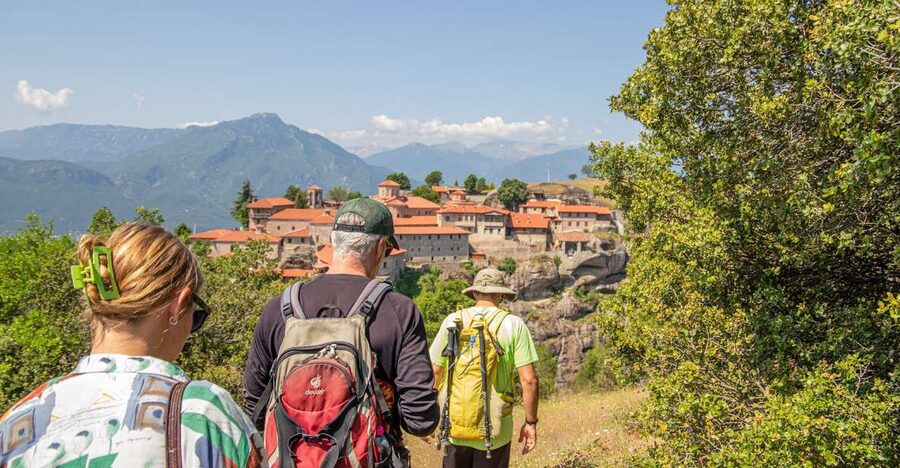
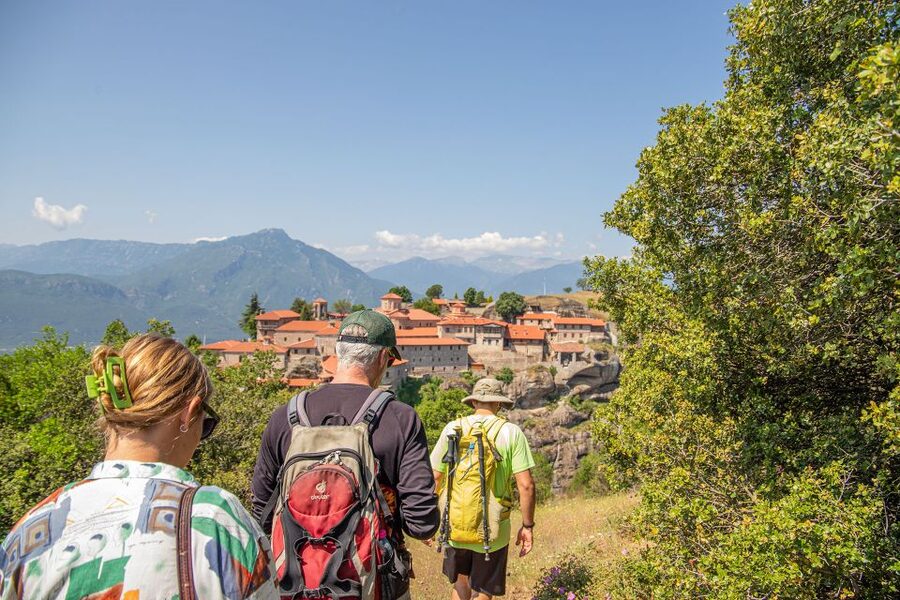
- The route begins near Kastraki Square: You walk through old monastic paths rather than simply stopping at roadside viewpoints.
- You visit one working monastery: The destination is usually Great Meteoron or Varlaam, with about an hour to explore.
- The trail includes real uphill walking: Most of it is manageable, but rocky sections and steep steps make this more than a casual stroll.
- Guides add much more than directions: Expect explanations about Orthodox monastic life, local plants and animals, geology, myths, and Ottoman-era events.
- The quiet approach is the real prize: You see caves, ruins, hermit sites, and monastery views before reaching the main buildings.
- The price is strong for a half-day outing: Transport, a mountain guide, a map, and water are included, while food and the monastery ticket cost extra.
Why walking shows you the real Meteora
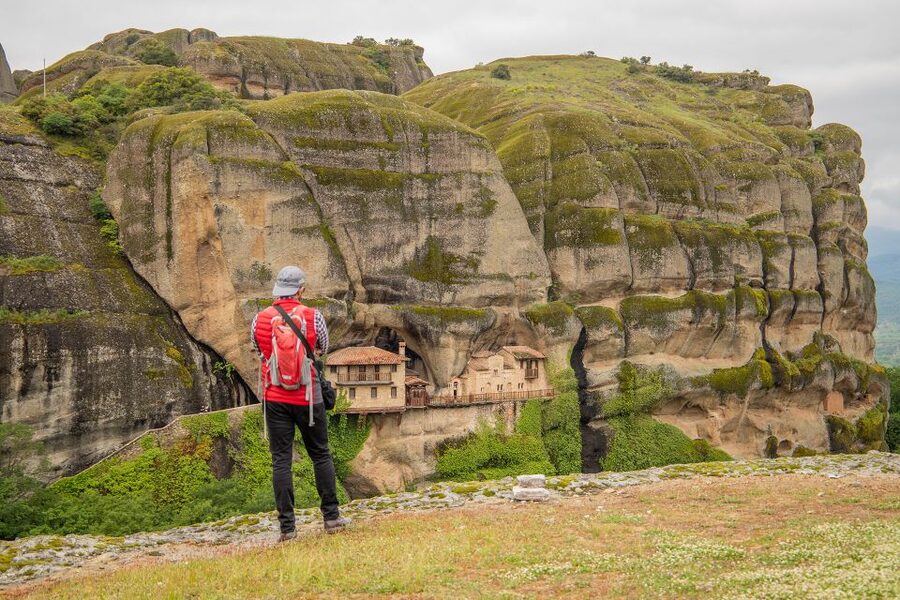
Meteora is famous for monasteries perched on tall sandstone pillars. From a coach, you get the postcard view. On foot, you notice how the rocks fold, split, and form strange patterns around narrow paths and small caves.
That difference matters. The hike takes you close to the rock rather than keeping you at a distance. Your guide can point out the shapes, plants, animals, and old routes that are easy to miss from a vehicle.
The route also gives the place a better sense of scale. You pass beneath cliffs and look back toward the settlements below. At several points, monasteries appear above you, then disappear behind a pillar as the path bends. It feels less like checking off viewpoints and more like following the old way through the hills.
This is not a wilderness expedition. It is a guided half-day walk on established mountain paths, with transport at the beginning and end. Still, the surface can be uneven, and you need to pay attention to your footing.
More Small-Group Hikes in Greece
- Meteora Small Group Hiking tour with Transfer and Monastery Visit
★ 5.0 · 484 reviews - Santorini: 4hr Small Group Caldera Hike from Fira to Oia
★ 5.0 · 75 reviews - Small Group Hiking on Mount Akramitis in Rhodes
★ 5.0 · 45 reviews
From Kalabaka to Kastraki Square
Pickup takes place in Kalabaka, with transport from the listed hotels and guesthouses in Kalabaka and Kastraki. The drive to the trailhead takes about 10 minutes, followed by a roughly four-hour walking program split around the monastery visit.
The hike begins at Kastraki Square, a sensible starting point because it puts you close to the older paths leading into the rock formations. The early part of the walk helps you settle into the pace while your guide explains what you are seeing.
The group is described as small, but no fixed maximum is provided. That makes the experience more personal than a large coach excursion, and the guides have shown a useful habit of adjusting speed for different abilities. Clare, who used walking poles, appreciated the rest stops and the way the guide kept the group together. That kind of care matters more than a fast pace on uneven ground.
Dupiani Hermitage and the old monastic trail
The first important stop is Dupiani Hermitage. This area connects you with the earliest religious history of Meteora, when monks sought solitude in caves and small shelters high among the rocks.
You then walk below the ruined Pantokratoros Monastery on the north side of Dupiani Rock. It is a good example of how much of Meteora’s story exists outside the six famous monasteries. The ruins and rock shelters make the area feel lived in by generations of hermits, not simply arranged for sightseeing.
The trail continues to Ypapanti Monastery and the ruins of St. Dimitrios. St. Dimitrios was destroyed by Ottoman forces in 1808 during a local uprising. Your guide can give this event a human scale, connecting the ruined site with the political and religious pressures that shaped the region.
This section is one of the best reasons to choose the hike. You see places that are not the main headline attractions, and you have time to ask questions. Guides have been praised for covering history alongside geology, nature, and local myths instead of delivering one long speech about monasteries.
Climbing toward Great Meteoron and Varlaam
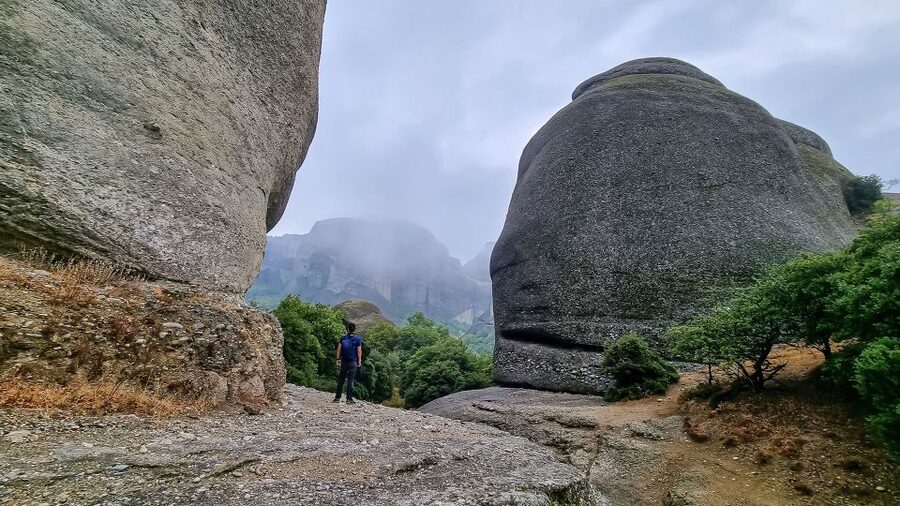
From the ruins, the path rises toward the higher monasteries. The exact monastery visit is Great Meteoron or Varlaam, two of the six Eastern Orthodox monasteries in the Meteora area. Both form part of the UNESCO World Heritage Site.
The ascent is not described as extreme, but it is not flat. Several people found the walk easy to moderate, while others called parts of it challenging, especially in warm weather or on the descent. If you hike now and then, you will likely find the route manageable. If you rarely walk uphill, expect to work.
Much of the route can be shaded, which helps in summer. Even so, bring a hat, water, and a small snack. One bottle of water is included, but that is not a substitute for planning your own supply on a warm day.
The views improve as you gain height. You see the surrounding sandstone pillars from angles that are impossible from the main road. You also get a closer look at the narrow ledges and vertical rock faces that made Meteora such a powerful place for monastic retreat.
Same trailhead, a different kind of day:
- From Chania: Full-Day Samaria Gorge Trek Excursion & Guide
★ 4.6 · 3,191 reviews - From Rethymno: Samaria Gorge Full-Day Trek, Pickup & Guide
★ 4.5 · 1,610 reviews - From Chania/Rethymno: Samariá Gorge Guided Hike with Pickup
★ 4.5 · 1,010 reviews - From Chania: Samaria Gorge with Professional Hiking Guide
★ 4.6 · 720 reviews
One monastery, about one hour, and what to expect
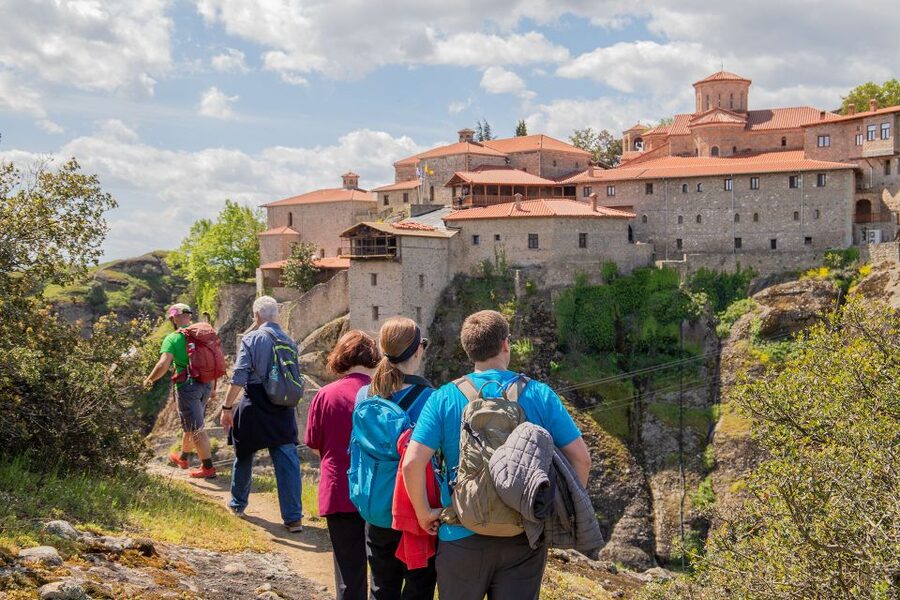
The tour includes a visit to one monastery, not all six. Depending on the day’s plan, that may be Great Meteoron or Varlaam. Allow roughly one hour for the visit, including time to see the grounds and enjoy the views.
Great Meteoron is the largest and best-known monastery in the area. Varlaam is another major monastery with a dramatic setting. The tour information does not guarantee one specific choice, so book this experience for the combination of hiking and one monastery, not for a promise to see both interiors.
The monastery admission fee is €5 per person per monastery and is not included in the $35 tour price. Food and drinks beyond the provided water are also extra. At the monastery, you tour independently rather than with the mountain guide inside the buildings. That gives you freedom, but it also means you should not expect a detailed guided explanation in every room.
Dress modestly. Sleeveless shirts are listed as not allowed, so wear clothing that covers your shoulders. Rules can be enforced at religious sites, and it is easier to dress appropriately from the start than to scramble for a cover at the entrance.
The time allocation feels sensible. You get enough time to see the monastery without turning the walking portion into a rushed transfer. If your main goal is to study every religious object and museum display, a dedicated monastery visit may suit you better. If you want one substantial monastery paired with the paths and views around it, this balance works well.
The descent to St. George the Madilas
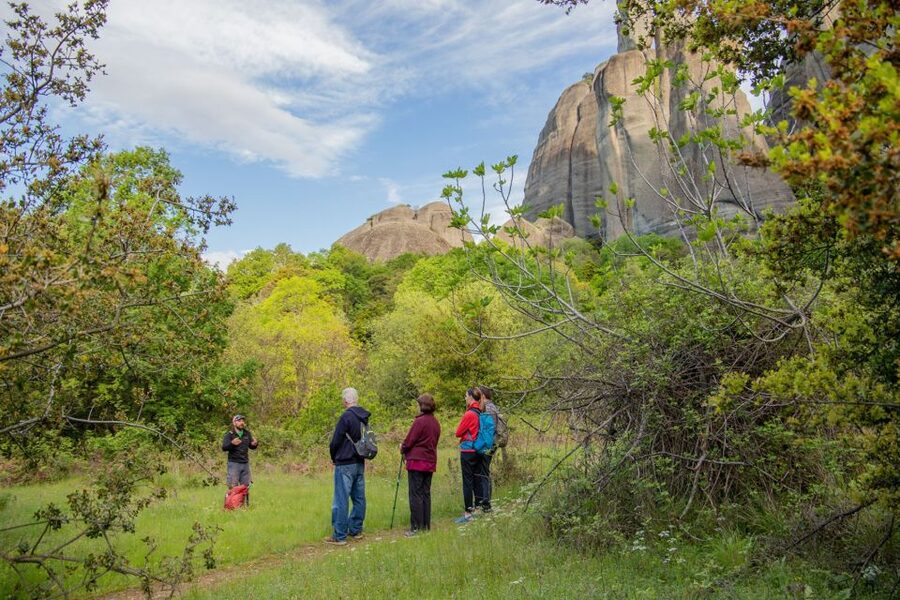
After the monastery, the route returns through Meteora for more walking and photo stops. The descent leads toward St. George the Madilas, a small but memorable site associated with a local custom.
Here, children from the area climb using only a rope to leave offerings to St. George. That detail gives the stop a strong local character. It is not just another viewpoint. It shows how old religious traditions remain connected to daily community life.
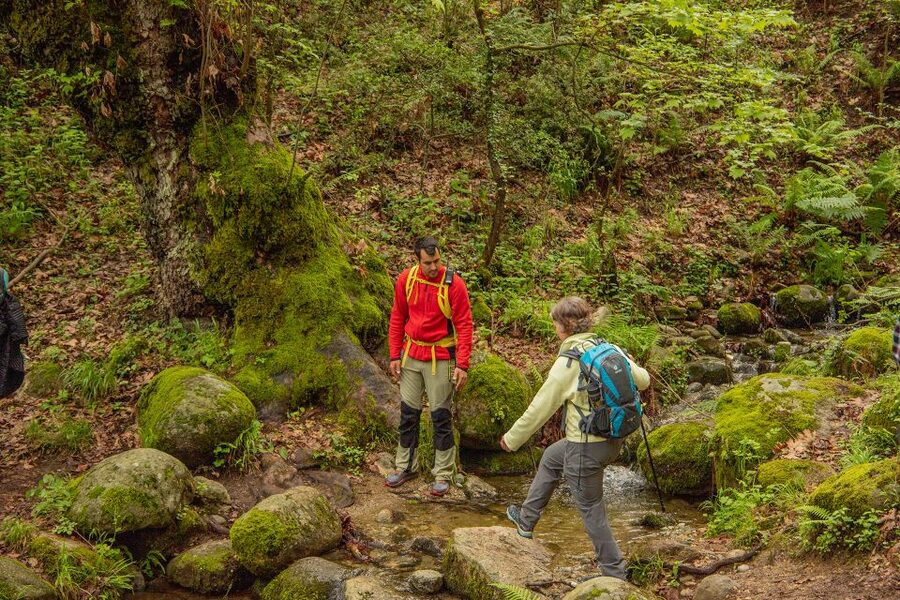
The descent is the part to take seriously. Several people found the uphill section gentle but the roughly 30-minute downhill stretch more demanding because of steep steps and loose or rocky ground. Trail shoes or sturdy sneakers with non-slip soles are the right choice.
A walking stick may be available from the guide, and one person specifically appreciated having poles for extra support. You should still bring your own confidence and patience. Moving slowly is sensible here, especially if the ground is damp after rain.
What the guides add to the experience
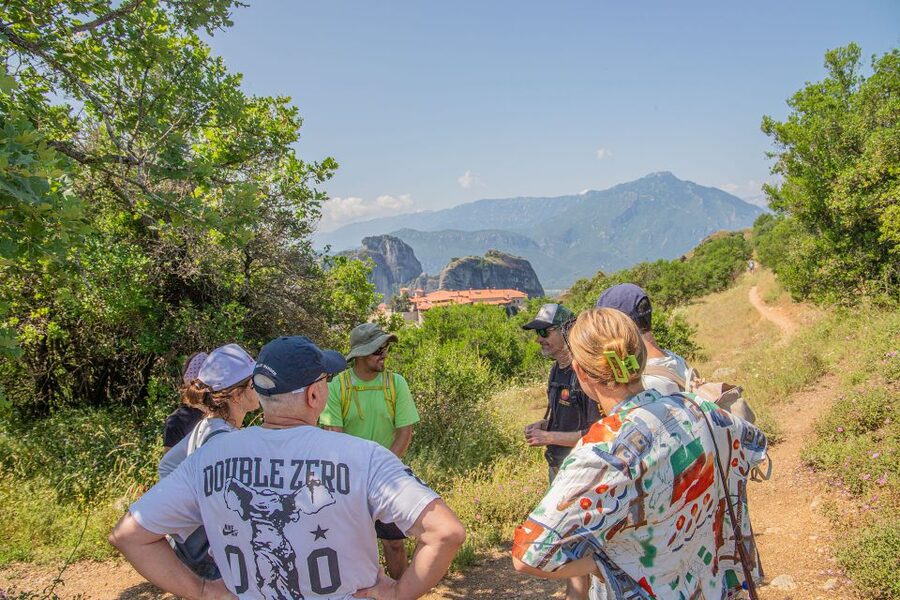
The strongest part of this tour is the guiding. Christos, Evan, Dimitris, Chris, Vangelis, and other local guides have been singled out for warmth, humor, flexibility, and strong knowledge of the area.
That praise is specific. Guides have identified plants and animals, explained how the monasteries were built, pointed out turtles and lizards, discussed climbing traditions, and connected the rocks with local stories. They also answer questions instead of treating the walk as a one-way lecture.
The pace is another advantage. A good guide can keep a mixed group moving without making the slower walkers feel like a problem. People with different fitness levels have been accommodated with pauses and adjustments. This is especially useful because the tour lasts around five hours, with transport taking about 25 minutes in total.
The guide is also your safety net on a route that can be hard to follow alone. Old paths, ruins, caves, and side routes are not always obvious. Kostas was praised for taking the group along traditional trails that would have been difficult to find without local help.
English is the listed tour language. The quality of the experience depends partly on the guide assigned that morning, but the consistent pattern is clear: the guide is a central part of the value, not just a person leading you from point A to point B.
Price, timing, and practical value
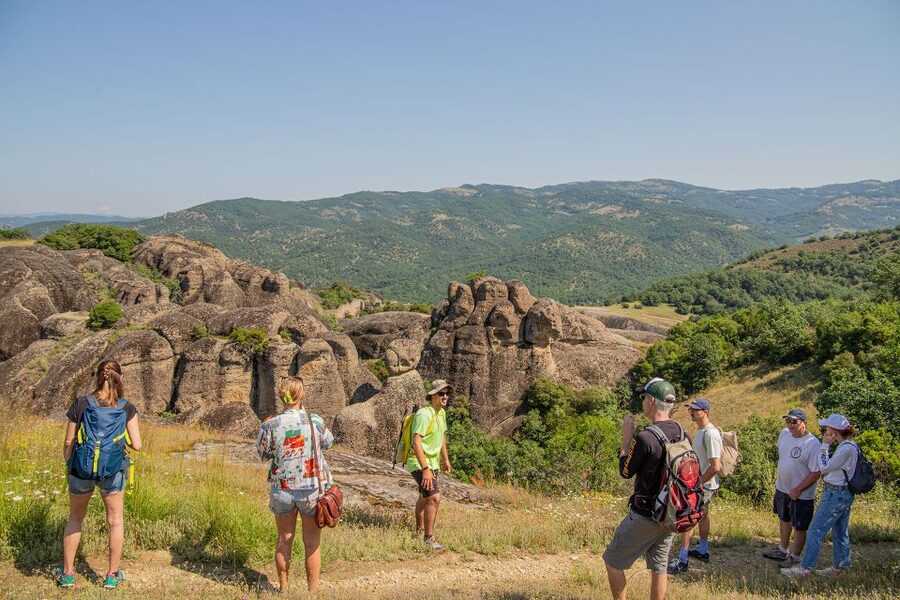
At $35 per person, this is one of the better-priced ways to spend a half-day in Meteora. The fee covers pickup and drop-off, a mountain guide, a map, and a bottle of water. You also get a route that combines scenery, ruins, history, and a monastery.
Add €5 for the monastery entrance. Bring cash for that fee, snacks, and any other purchases. There is no food included, and the tour starts in the morning, so eating before pickup is a sensible plan.
The tour lasts five hours. The published schedule allows about 2.5 hours for the main guided hike, one hour at the monastery, another hour of walking, and short vehicle transfers. In practice, the pace can vary with weather, group ability, and stops.
Free cancellation is available up to 24 hours before departure, and you can reserve while paying later. Pickup is available from a long list of hotels and guesthouses in Kalabaka and Kastraki, including Hotel Doupiani House, Hotel Dellas Boutique, Hotel Meteora, Hotel Kastraki, Villa San Giorgio, and Guesthouse Arsenis. Check that your accommodation appears on the pickup list when you reserve.
Who should choose this Meteora hike?
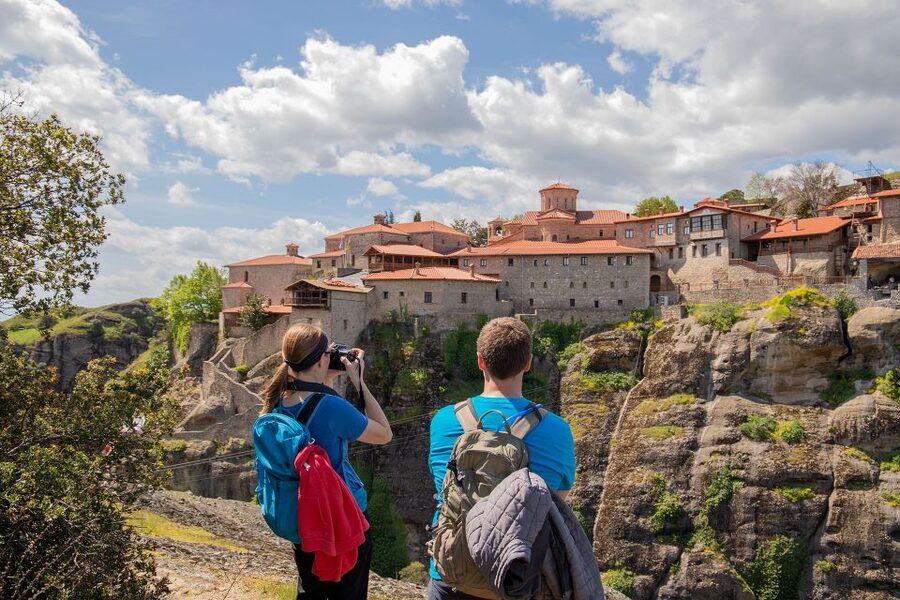
Choose it if you want more than roadside photographs. It suits people who enjoy walking, want local explanations, and prefer a small-group outing to a large bus circuit.
It can work for beginners who are comfortable with several hours on their feet. The trail has been described as mostly easy by some participants, but the steep steps and downhill section mean you should not treat it as a gentle city walk.
You should reconsider if you have a low fitness level, mobility impairment, heart problems, or serious difficulty with uneven ground. The activity is not suitable for children under seven, visually impaired people, or anyone unable to manage a mountain trail. Pets are not allowed.
Families with older children may find the route appealing. Children aged nine, 11, and 13 have enjoyed it, but the adult should judge each child’s stamina and balance. The operator’s minimum age is seven, and that rule should guide your planning.
What to wear and carry
Wear closed-toe shoes with good grip. Walking boots, trail shoes, or sturdy sneakers are suitable. Flip-flops and sandals are specifically not allowed, and ordinary smooth-soled shoes can be a poor choice on the descent.
Pack:
- A hat
- Comfortable clothes
- Snacks
- Cash
- A water bottle if you prefer more than the included bottle
- A light layer if the morning is cool
Dress for an active outing, not a monastery-only visit. You need clothes that allow you to climb, but your shoulders should be covered for the religious site.
Rain does not automatically ruin the experience. One January outing continued in wet weather and was still described as memorable, with fewer people on the trail. Still, rain can make rocks slick, so ask about conditions and use extra care if the path is wet.
Should you book it?
Book this tour if you want to understand Meteora through its paths, ruins, rocks, and stories, with one major monastery included. The combination is excellent for a first visit, and the $35 price leaves room in your budget for the monastery ticket and a later meal in Kalabaka.
Skip it if your priority is visiting several monastery interiors, avoiding uphill walking, or setting your own schedule. This is a real hike, not a scenic transfer with a little walking added.
For most active visitors, I would choose it early in a Meteora stay. You get your bearings, learn the area from a local guide, and see the famous monasteries from angles that a road tour misses. Just wear proper shoes, cover your shoulders, and leave enough energy for the descent.
FAQ
How long does the Meteora hiking tour last?
The tour lasts five hours, including transportation from Kalabaka and the walking portions around Meteora.
Where does pickup take place?
Pickup and drop-off are available from Kalabaka and a long list of hotels and guesthouses in Kalabaka and Kastraki. Boutique Hotel Iridanos, Hotel Doupiani House, Hotel Dellas Boutique, Hotel Kastraki, and Guesthouse Arsenis are among the listed locations.
Which monastery will I visit?
The visit is to Great Meteoron or Varlaam Monastery. The tour includes one monastery, not both.
Is the monastery entrance fee included?
No. Entrance costs €5 per person per monastery and should be paid separately.
Is a guide provided inside the monastery?
No. The mountain guide leads the hiking portion, but the monastery visit is self-guided.
What language is the tour conducted in?
The live tour guide speaks English.
What should I wear?
Wear comfortable clothing and closed-toe shoes with non-slip soles. Walking boots or sturdy sneakers are suitable. Sleeveless shirts, sandals, and flip-flops are not allowed.
Is the hike suitable for beginners?
Some people find the trail mostly easy, but it includes uphill sections, rocky paths, and a challenging downhill stretch. Basic fitness and suitable footwear are required.
What is included in the price?
The price includes pickup and drop-off, a mountain guide, a map, and a bottle of water. Food, extra drinks, and monastery admission are not included.
Just added around Greece
- From Kalamata: Polylimnio Waterfalls Guided Hiking Tour★ 4.9 · 19 reviews
- From Kalabaka: Authentic Meteora Hiking Tour – Local Agency★ 5.0 · 20 reviews
- Georgioupolis /Petres: Samaria Gorge one Day Hike with Guide★ 4.4 · 28 reviews
- From Georgioupoli: Easy Hiking Day-Trip to Imbros Gorge★ 4.7 · 100 reviews
- From Chania: Samariá Gorge Guided Hike★ 4.4 · 15 reviews
- From Chania:Imbros Gorge Tour with Professional Hiking Guide★ 4.6 · 71 reviews
- Andros: Achla River Trekking to the Waterfall★ 5.0 · 11 reviews
- Zagori: Vikos Gorge full-day guided hike★ 4.6 · 26 reviews
Greece Hiking Tours, compared.
Full-Day Samaria Gorge Trek Excursion & Guide
Read our review →
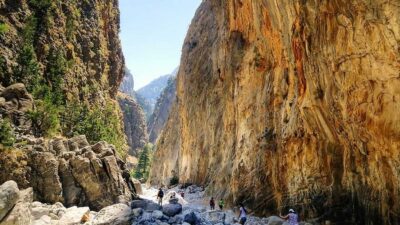
From Chania/Rethymno: Samariá Gorge Guided Hike with Pickup
Read our review →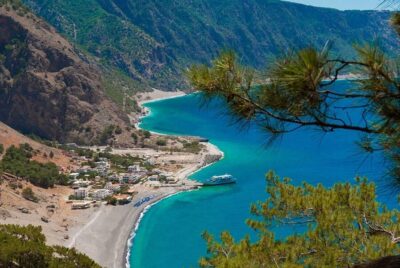
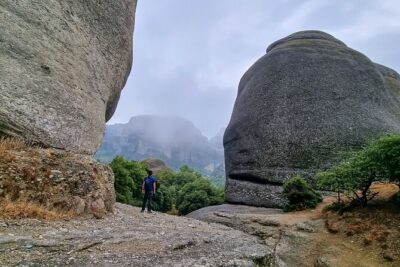
Meteora Small Group Hiking tour with Transfer and Monastery Visit
Read our review →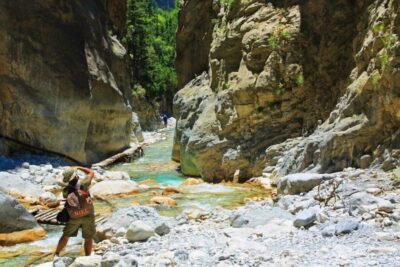
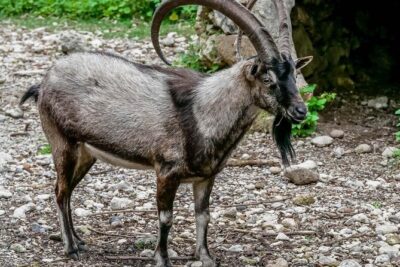
Samaria Gorge Hiking from Chania with Professional Hiking Guide
Read our review →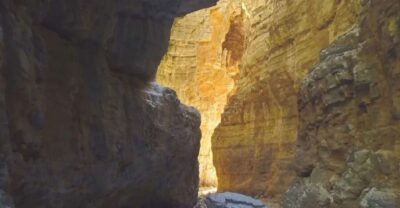
Browse the lists this tour appears in