
REVIEW · USA HIKING TOURS
Hilo: Waterfall Hike and Swim with Native Hawaiian
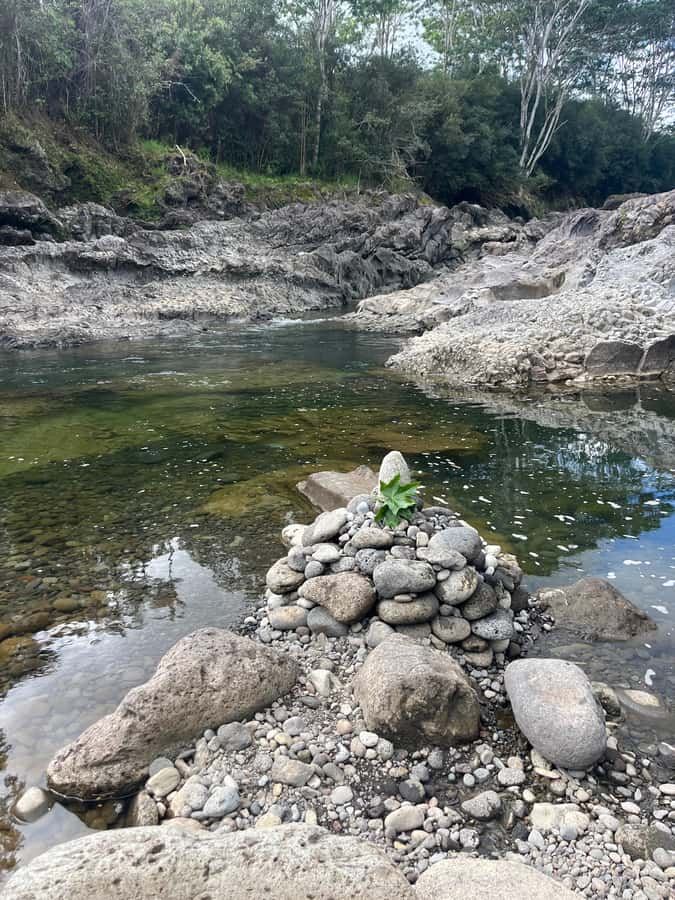
Water here is more than scenery. This four-hour Hilo adventure follows forest trails to several waterfalls, with time to swim at Waiʻale Falls and learn about Hawaiian language, culture, plants, animals, and local history. I love the small group size, limited to six people, and I love that guide Christian brings genuine feeling to the experience, including fluent Hawaiian and a clear respect for the land.
The route visits Waiānuenue, Peʻepeʻe, and Waiʻale Falls, then follows two alawai, or water-channel, trails toward the base of Waiʻale and the forested ridge above it. The main caution is physical: parts of the route are steep, rocky, wet, and technical, and the swimming area can be deeper than expected.
Christian’s strength is the cultural side. He explains the meaning of wai, or water, and connects the falls to Hawaiian history and customary practice rather than treating them as quick photo stops. You’ll need sturdy waterproof shoes, swimwear, a towel, and a waterproof bag for your phone and other valuables.
Key Points to Know Before You Go
- Small group of six or fewer: You get a more personal outing and better access to the guide’s explanations.
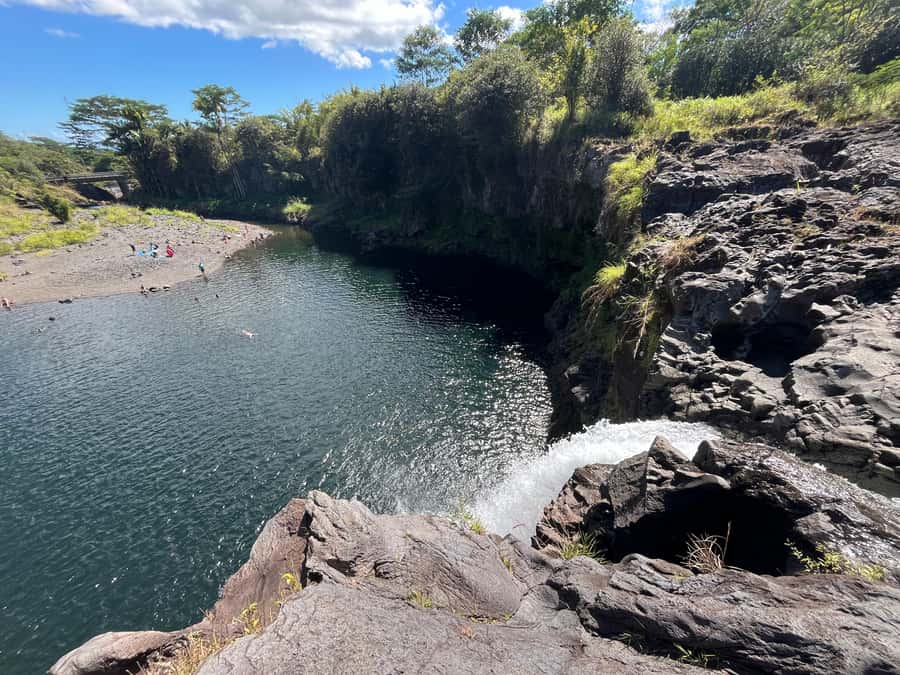
- Three waterfall areas: The experience includes Waiānuenue, Peʻepeʻe, and Waiʻale Falls, with additional trails toward Waiʻlima Falls.
- Swimming at Waiʻale Falls: Bring swimwear and a towel, but be ready for deep water and slippery rocks.
- Hawaiian language and cultural practice: Christian teaches through Hawaiian words, local stories, history, and respect for the natural world.
- Moderate physical effort: Expect wet conditions, steep sections, forest trails, rock crossings, and some technical footing.
- $150 for four hours: The price pays for a focused, guide-led cultural and nature experience rather than transport or a simple waterfall lookout.
Meeting Christian at King Kamehameha
The meeting point is the Statue of King Kamehameha in Hilo. Hotel pickup and drop-off are not included, so you’ll need to arrange your own way to the starting point and arrive ready for an active morning or afternoon.
The tour is led in English, but Hawaiian language is an important part of the experience. Christian’s fluency gives the outing a quality that a standard sightseeing walk may not have. He does not simply point toward a waterfall and name it. He explains words, ideas, and customs connected to the water and the surrounding area.
That matters because Hilo’s waterfalls are easy to treat as scenery alone. This tour asks you to pay attention to the relationship between water, forest, food, ancestry, and community. The included hua ʻai, or fruit, and lei, or garland, support that cultural focus, though the experience is not a meal and food and drinks are not included.
The six-person limit is useful here. A large group would make conversation harder, especially on narrow paths or around a swimming area. With fewer people, you have more room to ask questions and more chance to hear the Hawaiian words and explanations clearly.
More Waterfall Hikes in the USA
- Small Group Waterfall and Rainforest Hiking Adventure on Maui
★ 5.0 · 1,417 reviews - Blue Ridge Parkway Waterfalls Hiking Tour from Asheville
★ 5.0 · 593 reviews - Guided forest hike to Seattle waterfalls incl. Snoqualmie Falls
★ 5.0 · 589 reviews
The First Waterfall Stops: Waiānuenue and Peʻepeʻe
The outing includes visits to Waiānuenue and Peʻepeʻe Falls before or alongside the walk toward Waiʻale Falls. The exact order can depend on conditions and the guide’s plan, so you should think of the experience as a connected waterfall route rather than a rigid series of timed stops.
Waiānuenue is associated with Rainbow Falls, one of Hilo’s best-known waterfall areas. Peʻepeʻe is another notable stop along the Wailuku River system. Together, these locations help set the scene before the more active trail sections begin.
I like this part of the plan because it gives you more than one view of Hilo’s water. You are not spending four hours at a single overlook. Instead, you see different parts of the river system and learn how the falls connect to the wider forest and local traditions.
Do not expect a polished walk at every stage. This is not designed as a fully paved sightseeing route. The more demanding sections involve uneven ground and wet conditions, so the quality of your shoes will affect your enjoyment. Waterproof hiking shoes with firm soles are a better choice than casual sneakers.
Two Alawai Trails and the Walk to Waiʻale
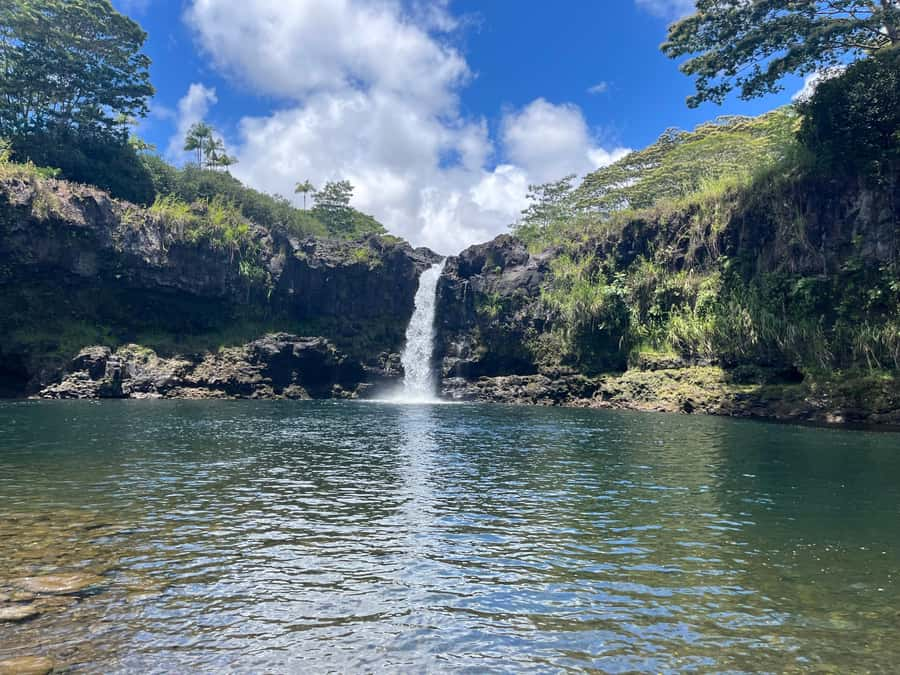
The central part of the experience follows two alawai trails. One route goes toward the base of Waiʻale Falls and includes a stone-beached island. The other passes through a forested ridge above the falls and continues toward Waiʻlima Falls.
These two routes offer different ways to understand the area. The lower trail brings you close to the water, rocks, and swimming area. The higher route gives you a forest walk and a broader sense of how the water moves through the district. You may find that the ridge path feels more technical than expected, especially if you are not used to wet roots, uneven ground, or climbing over rocks.
A previous participant lost a pair of glasses near the waterfall, and Christian tried hard to help find them. That small detail offers useful advice: secure your glasses, phone, hat, and other loose items before crossing rocks or entering the water. A waterproof bag is not just a suggestion for keeping electronics dry. It also helps keep your hands free.
The trail is described as moderate, but that label can mean different things to different people. If your knees or back make steep paths difficult, this may not be a good match. The route is not suitable for people with mobility impairments, and children under five cannot join.
Swimming at Waiʻale Falls
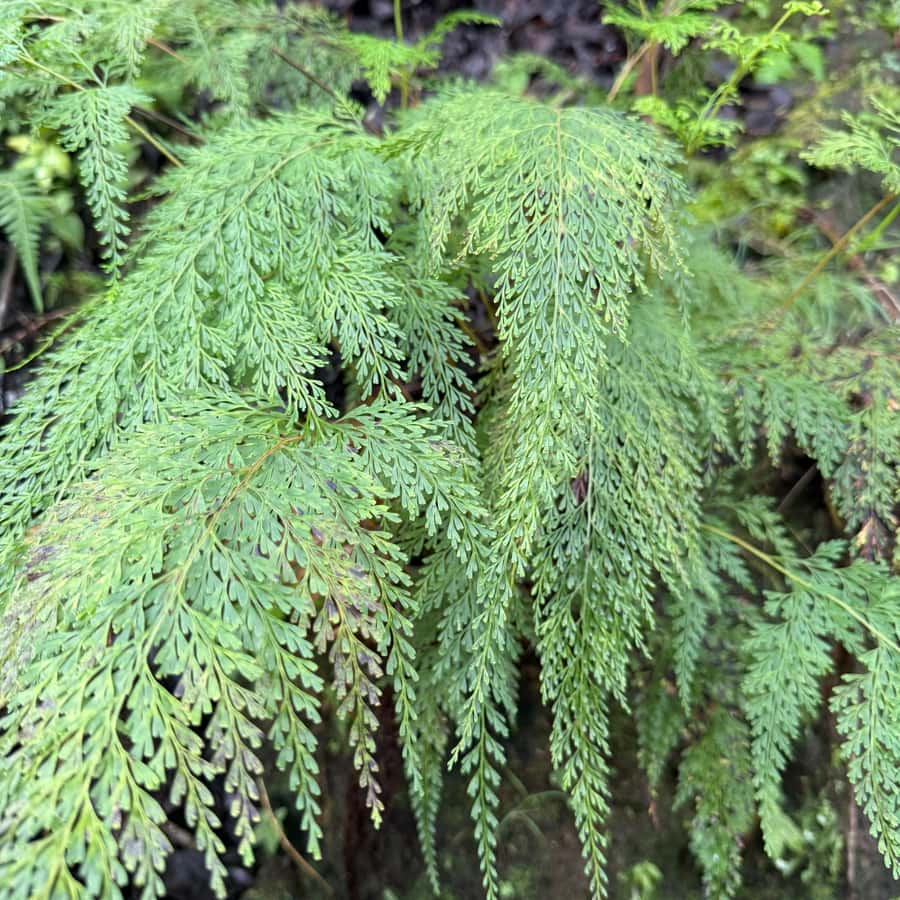
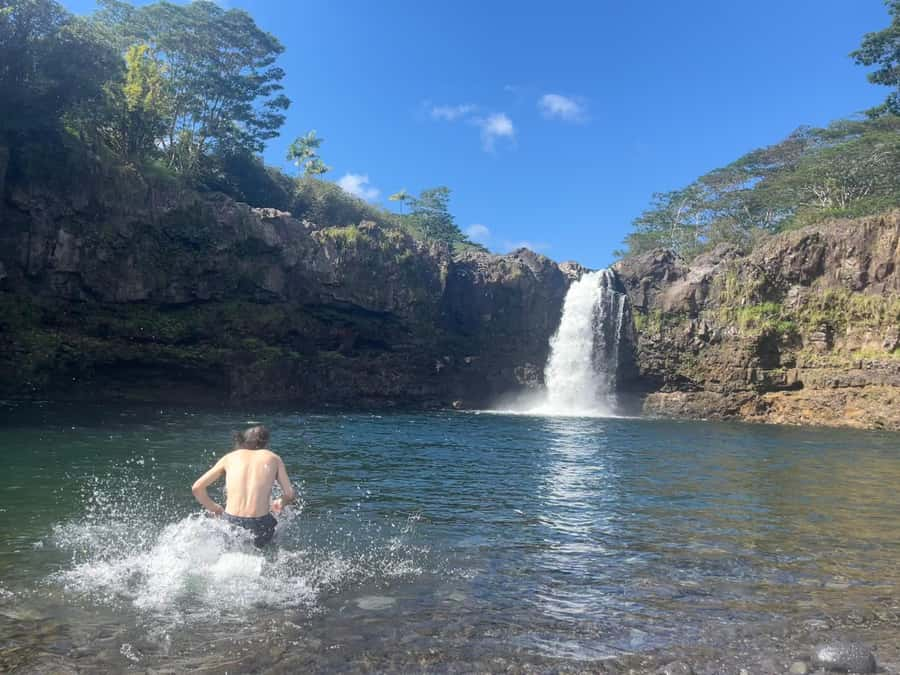
The chance to swim at Waiʻale Falls is one of the main reasons to choose this outing. The water offers a cool break after the walk, and the setting is more intimate than a simple roadside viewing area.
Still, treat the swim with care. The water near the falls can be deeper than you expect, and the rocks may be slick. The experience information does not describe lifeguard service or swimming equipment, so you should follow Christian’s instructions and judge your own comfort honestly.
Bring a swimsuit under your hiking clothes if that makes changing easier. Pack a towel and use a waterproof bag for your phone, glasses, wallet, and camera. You may also want to limit what you carry on the trail. Anything loose can be lost in the water or on the rocks.
This is not a good place to test your limits for the sake of a photograph. If you are comfortable in natural swimming areas and can handle uneven footing, the swim can be a fine reward. If you are unsure about deep water, you can still gain plenty from the waterfall walk and cultural discussion without forcing yourself into the pool.
Same trailhead, a different kind of day:
- Lower Antelope Canyon Hiking Tour
★ 5.0 · 6,216 reviews - Small Group: Valley of Fire Half Day Tour from Las Vegas
★ 5.0 · 2,130 reviews - Multnomah Falls and Columbia River Gorge Half-Day Hiking Tour
★ 5.0 · 2,108 reviews - San Francisco: Yosemite National Park & Giant Sequoias Hike
★ 4.5 · 1,777 reviews
Learning Through Hawaiian Language and Practice
The strongest feature of this experience is its cultural purpose. Christian speaks about Hawaiian history, food, plants, animals, and mana, a spiritual force or power connected with people and place. He also teaches the importance of wai, water, which is central to the tour’s theme.
You will hear Hawaiian language during the outing, not just see place names written on a map. That adds depth to the names of the waterfalls and trails. It also encourages you to listen to the sound and meaning of the language instead of treating it as decoration.
The experience includes a lei and fruit, and you may witness a Hawaiian cultural practice during the visit. The descriptions do not promise a formal performance, so you should expect an authentic explanation or act connected to place rather than a staged show for an audience.
I appreciate that distinction. The tour is built around respect for the natural world and Hawaiian traditions. You are asked not to touch plants, smoke, or litter. Those rules are basic, but they matter on a forest route where plants and water systems are part of the lesson.
Christian’s approach has earned especially strong praise for his passion, warmth, and command of Hawaiian history and culture. He is also described as friendly and enthusiastic, which helps when the trail becomes wet or tiring. The result sounds less like a lecture and more like a conversation carried along the route.
Plants, Animals, and the Wailuku River System
The tour also introduces endemic plants and animals connected to Hilo’s river systems. The supplied details do not name individual species, so I would not book this expecting a fixed wildlife checklist. The value is in learning how native life fits into the water system and why care for the forest matters.
You may find that Christian’s explanations change how you see ordinary details along the trail. A plant is not merely something beside the path. Water is not merely something falling over a cliff. The forest, river, food, and cultural practice are treated as parts of one living system.
That is a useful contrast with a quick waterfall stop. A lookout can give you a strong photograph in ten minutes. This tour gives you four hours to ask why the place matters and how people relate to it.
Because the group is small, you can ask questions as they come up. You will get more from the experience if you stay curious and listen closely. This is not a silent nature walk, and it is not meant to be.
What $150 Includes, and What It Does Not
The cost is $150 per person for four hours. That is a fair price if you want a private-feeling small group, a guide with strong cultural knowledge, waterfall access, and a swim opportunity. You are paying for interpretation and local perspective as much as for the walk itself.
The price includes the guided waterfall visit, the stops at Waiānuenue, Peʻepeʻe, and Waiʻale, the chance to swim, cultural and historical explanations, water, fruit, and a lei. It does not include hotel transportation, food, or drinks.
That missing transportation is important if you are planning a full Hilo day. You need to get to the King Kamehameha statue yourself, and you should leave enough time to arrive with proper footwear and your gear ready.
The tour also offers free cancellation up to 24 hours before the start time, plus a reserve-now, pay-later option. Those terms make it easier to fit the experience around changing island plans, though you should still check the available start times before building your day around it.
How to Prepare for Wet and Uneven Conditions
Wear sturdy waterproof footwear. Comfortable shoes alone are not enough if they have poor grip or absorb water quickly. Sandals and smooth-soled casual shoes are risky choices for wet rocks and uneven forest paths.
Bring:
- Swimwear
- A towel
- A waterproof bag for electronics
- Comfortable clothing suited to wet conditions
- Secure storage for glasses and small valuables
Smoking and littering are not allowed, and you should not touch plants. Expect to get wet, particularly near the waterfalls and during the swim. Plan your clothing and transportation afterward with that in mind.
The activity lasts four hours, so it is long enough to feel like a real outing but short enough to fit into a larger Hilo schedule. You should still leave room after the tour to dry off, change, and recover if the trail feels demanding.
Who Will Enjoy This Hilo Waterfall Tour?
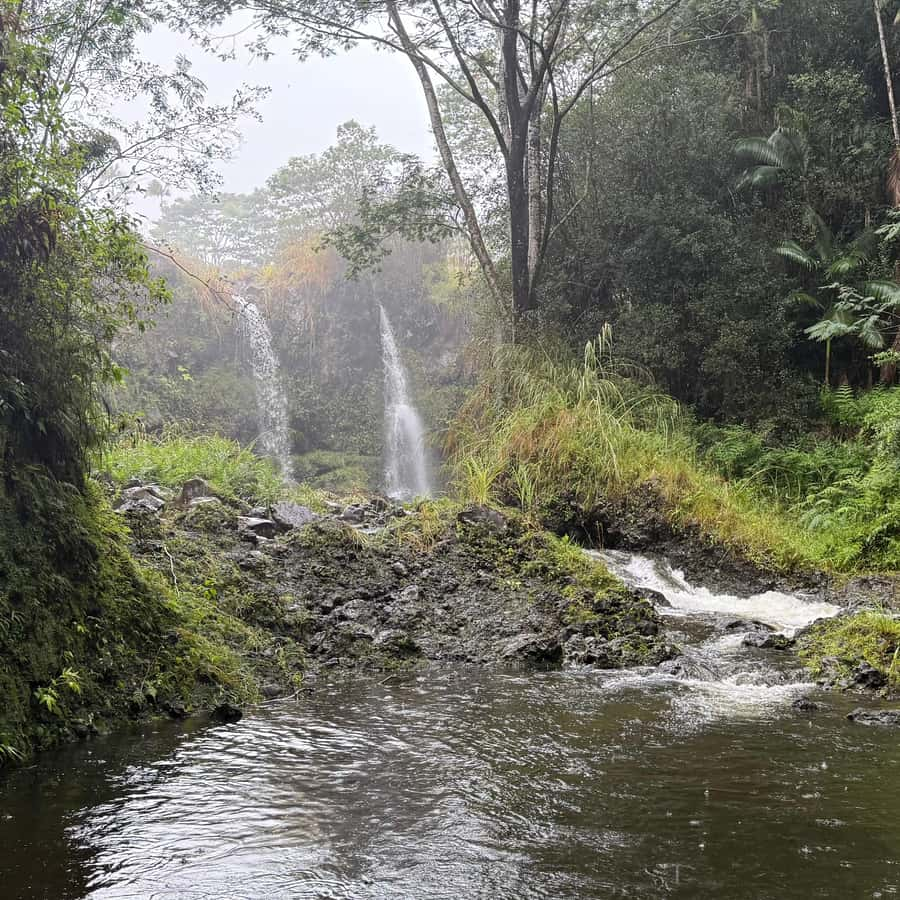
I would choose this experience if you want more than a waterfall photograph. It suits active adults, couples, solo visitors, and families with older children who enjoy walking, swimming, and learning through conversation.
It is especially good for you if Hawaiian culture and language are a major reason for visiting the islands. Christian’s teaching is the heart of the outing, and his passion comes through in the way he discusses ancestry, history, food, water, and care for the land.
I would be cautious if you have back or knee problems, limited mobility, or little comfort on steep and rocky trails. The swimming area may be deeper than expected, and the route can be more technical than its moderate description suggests.
Children under five are not allowed. Older children may manage the activity, but the physical demands and wet rocks mean you should consider each child’s ability rather than assume this is an easy family walk.
Should You Book It?
Book this tour if you want Hilo waterfalls with a strong cultural connection and a guide who can explain Hawaiian language and traditions with real feeling. The small group, swim at Waiʻale Falls, fruit, lei, and three waterfall areas make the $150 price reasonable for an active four-hour experience.
Skip it if you need a flat, dry, highly predictable outing, or if you are mainly looking for transportation and quick viewpoints. This route asks you to walk carefully, get wet, respect the forest, and stay open to a lesson about water and place.
For the right person, Christian is the main reason to book. He brings history, language, and warmth to a route that could otherwise be only a pretty walk. Bring good shoes, protect your valuables, and let the waterfalls be more than scenery.
FAQ
Where does the Hilo waterfall tour meet?
The meeting point is the Statue of King Kamehameha in Hilo. Hotel pickup and drop-off are not included.
How long does the experience last?
The tour lasts four hours. Starting times vary, so you should check availability when booking.
Which waterfalls are included?
The experience includes Waiānuenue, Peʻepeʻe, and Waiʻale Falls. The two alawai trails also lead toward Waiʻlima Falls.
Can I swim during the tour?
Yes. You have the opportunity to swim at Waiʻale Falls. Bring swimwear and a towel, and be prepared for potentially deep water and slippery rocks.
What should I bring?
Bring comfortable, sturdy waterproof shoes, swimwear, a towel, and a waterproof bag for electronics. Expect wet conditions and moderate physical activity.
Is the tour suitable for young children or people with mobility impairments?
Children under five are not permitted. The experience is not suitable for people with mobility impairments because the route includes steep, rocky, wet, and technical sections.
Just added around the USA
- Strawberry Hill and Downtown KCK Hike★ 5.0 · 18 reviews
- Kansas City Crossroads Art District and Westside Urban Hike★ 5.0 · 22 reviews
- Mendenhall Glacier Guided Hike Juneau★ 5.0 · 125 reviews
- Juneau Shore Excursion: Mendenhall Glacier Canoe, Paddle and Hike★ 5.0 · 75 reviews
- Juneau Shore Excursion: Mendenhall Glacier Guided Hike★ 5.0 · 71 reviews
- Rainforest & Waterfalls Trek★ 5.0 · 35 reviews
- Norris Adventure: Seaplane, Paddle and Glacier Hike★ 5.0 · 12 reviews
- Diamond Head and Manoa Falls Hike and Adventure Tour★ 4.5 · 15 reviews
USA Hiking Tours, compared.
Small Group: Valley of Fire Half Day Tour from Las Vegas
Read our review →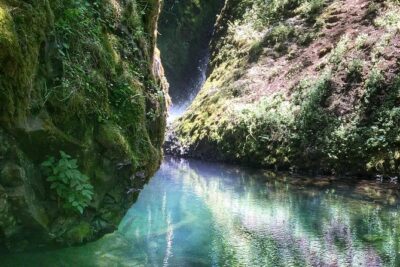
Multnomah Falls and Columbia River Gorge Half-Day Hiking Tour
Read our review →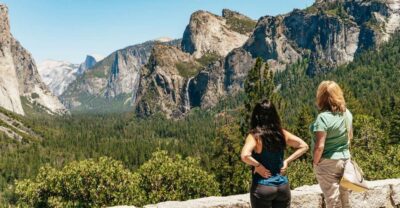
Yosemite National Park & Giant Sequoias Hike
Read our review →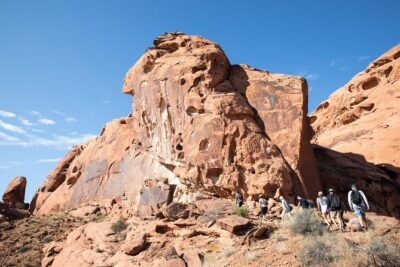

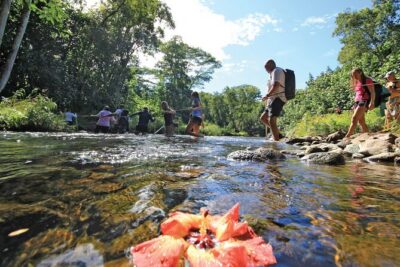
Kauai Adventure: Kayak & Hike to Secret Falls with Expert Guide
Read our review →Browse the lists this tour appears in