
REVIEW · SPAIN HIKING TOURS
Hiking experience in the High Sierra Nevada National Park
Trade the city heat for mountain air. This Sierra Nevada hike takes you from central Granada to a high trailhead at about 8,200 feet, then into the glacial San Juan Valley and toward Tajos del Campanario above 10,000 feet. I like the small groups, capped at eight people, and the chance to see mountain goats, eagles, snowfields, wildflowers, and unusual high-altitude plants in one day.
I also like the careful pacing and the way guides such as Jaime, Buitre, Jesús, and Duab adapt to different abilities. The main caution is simple: this is a real uphill hike at high altitude, not a gentle countryside stroll. Trainers can work, but sturdy trail shoes, poles, water, and a good level of fitness will make the day much more pleasant.
What makes this Sierra Nevada hike special
- Start at 2,500 meters: You begin high in the mountains, saving much of the long climb from the valley floor.
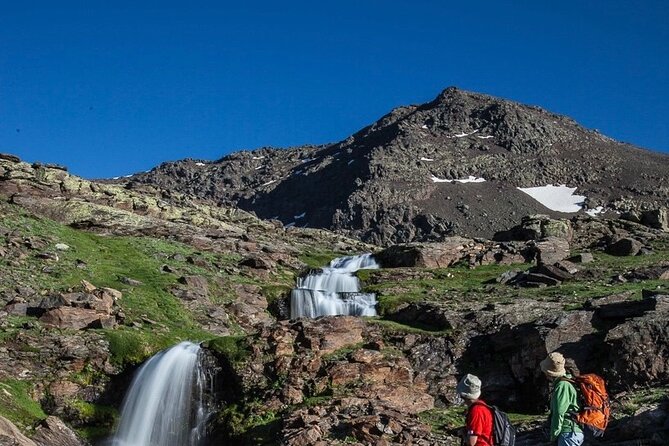
- Walk through San Juan Valley: Expect glacial rock, flowing water, waterfalls, small lakes, wildflowers, and clear mountain air.
- Reach views above 3,000 meters: Tajos del Campanario opens views toward Mulhacén, Veleta, and Alcazaba.
- Small groups up to eight: The guide can adjust the pace and stop often for rest, photographs, and explanations.
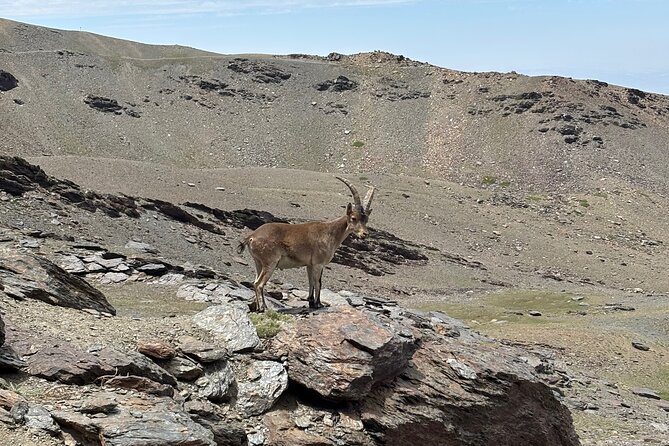
- Wildlife is part of the day: Mountain goats, vultures, eagles, sheep, cattle, and migratory birds may appear along the route.
- Transport is included: Pickup and return from Plaza de Mariana Pineda save you from arranging mountain transport.
Leaving Granada for an 8,200-foot trailhead
The day begins at 9:00 a.m. at Plaza de Mariana Pineda in central Granada. A private vehicle takes you up the Sierra Nevada road, with the drive lasting roughly 45 minutes according to several accounts.
That short transfer matters. Granada can be very hot, especially in summer, while the high mountains can feel cool and breezy. One account described city temperatures near 40 Celsius and mountain temperatures around 22 or 23 Celsius. You still need sun protection, but the mountain air is a welcome change from city pavement.
The road climbs quickly through changing scenery. At the top, you are already around 2,500 meters above sea level. This is both an advantage and a warning. You avoid a huge approach climb, but your body must work in thinner air from the first step.
I would not plan a late train, restaurant booking, or other fixed appointment immediately after the tour. The advertised duration is about seven hours, and the group may move more slowly if someone needs extra rests or if weather changes.
More National Park Hikes in Spain:
- La Palma: Caldera de Taburiente National Park Guided Hike
★ 4.8 · 140 reviews - PRIVATE TOUR Teide National Park: Hiking and Stargazing
★ 5.0 · 38 reviews - San Francisco: Yosemite National Park & Giant Sequoias Hike
★ 4.5 · 1,777 reviews
San Juan Valley and the marks left by ice
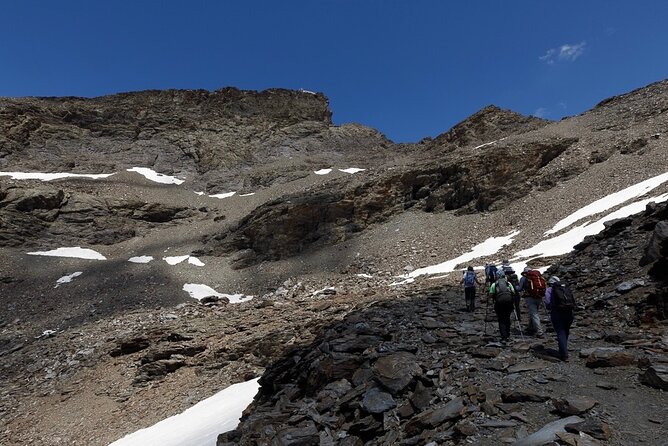
The first major part of the walk leads into the San Juan Valley, described as one of Sierra Nevada’s finest glacial valleys. Here, the interest is not only the scenery but also the explanation of how ice shaped the rock over thousands of years.
You can expect flowing water, waterfalls, small lakes, polished or shiny rocks, and plants flowering beside the trail. The valley gives the hike a useful rhythm. Instead of climbing without interruption, you move through changing ground with places to stop and take in the surroundings.
This is also where a guide adds real value. A mountain leader can point out the difference between glacial features, explain the local plants, and help you notice animals that are easy to miss. Jaime is often praised for explaining flora, fauna, rock formations, and mountain history in clear English. He also guides in Spanish and has been happy to help people practice the language.
The route is not crowded in the way many famous European mountain paths can be. Some outings have found long quiet stretches with no other hikers in sight. That silence is one of the best reasons to leave Granada for the day.
Posiciones del Veleta and Civil War fortifications
Partway through the hike, the route reaches Posiciones del Veleta. Fortifications built during the Spanish Civil War remain here, giving the walk a human layer as well as a natural one.
The position looks across the northern face of Sierra Nevada. From here, you can see high slopes and snowfields that remain into warmer months. Snow has appeared on some outings in June and autumn, although conditions change with the season and weather.
This stop also gives you a natural pause before the harder climbing. The guides make several breaks, and the group pace is set by the guide rather than by the fastest person. That makes a big difference in a small group.
You should still expect uneven ground. The trail can include steep sections, loose slate, and rocky surfaces where good grip helps. One person with weak trainers found the lack of traction a problem, while others completed the hike in running shoes. I would treat trainers as acceptable in dry, easy conditions, not as the best footwear for every departure.
The final climb above 3,000 meters
The approach to Tajos del Campanario is the demanding part of the day. You gain more than 3,000 meters in altitude, with some steep climbs and thinner air adding to the effort.
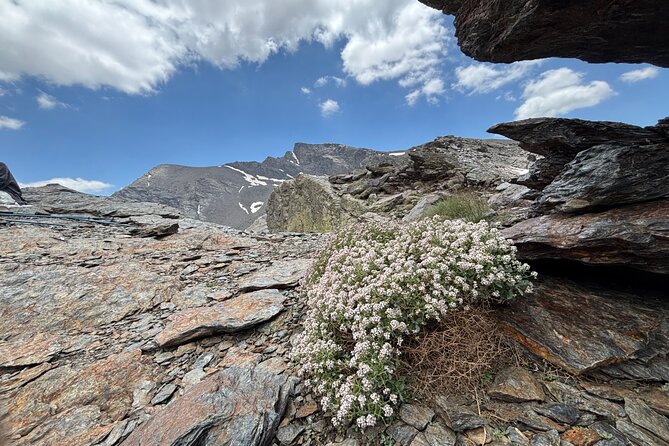
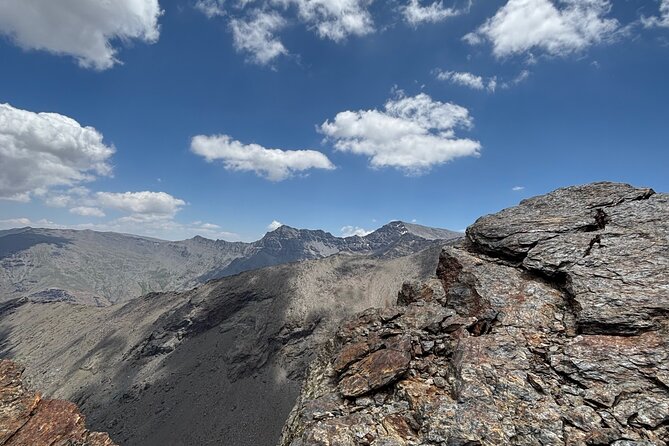
At the top, the reward is a wide view toward Mulhacén, Veleta, and Alcazaba. Mulhacén rises to 3,482 meters, the highest point on the Iberian Peninsula. The high ridges, snow patches, dark rock, and open sky make the summit section feel far removed from Granada.
Some descriptions of the route refer to reaching the Veleta area at about 3,396 meters. The exact high point can vary with the route and conditions, so you should focus less on claiming a precise summit and more on preparing for a hike that reaches serious altitude.
The final ascent is not technically difficult in the mountaineering sense, but it is physically demanding. The terrain is mostly rocky, and loose stones can slide underfoot. Several people described the hike as challenging but manageable, especially with regular exercise or previous hiking at elevation.
If you tire, the guide can identify safe places to wait while the rest of the group continues or returns. This is useful, but it does not turn the activity into an easy walk. You should be comfortable with several hours outdoors, uphill effort, and a long descent.
A few more hikes around Spain worth a look
- La Palma: Tajogaite Volcano Guided Trek
★ 4.8 · 1,810 reviews - From Valencia: Montanejos Guided Hike with Natural Pools
★ 4.5 · 1,741 reviews - From Seville: Caminito del Rey Hike Day Trip
★ 4.5 · 1,240 reviews - Lanzarote: Hike Across Timanfaya’s Volcanic Landscapes
★ 4.8 · 1,234 reviews
Wildlife, flowers, and the quiet side of Sierra Nevada
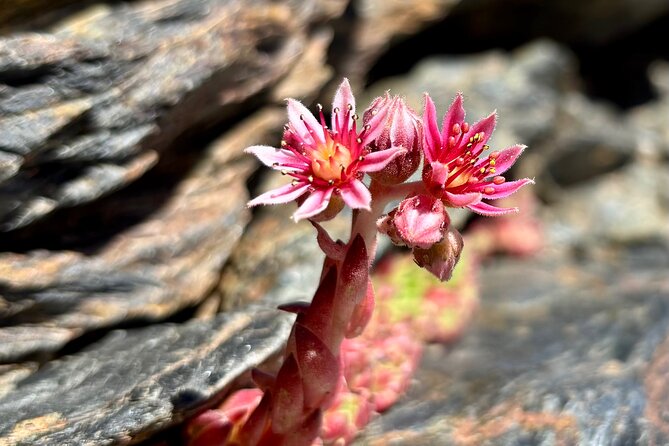
Sierra Nevada is a UNESCO-listed Biosphere Reserve, and the hike gives you a chance to see why the area deserves protection. The high zone supports plants and insects found only in this region, along with birds that cross between Africa and Europe.
Mountain goats are among the most likely memorable sightings. Eagles and vultures may circle overhead, and sheep, cattle, and horses have also appeared along the route. Wildlife is never guaranteed, so treat it as a bonus rather than the main purpose of the trip.
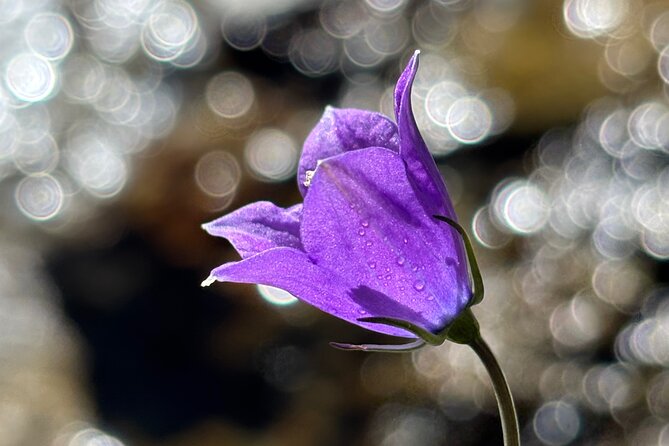
The plants can be just as interesting. In spring and early summer, flowers appear beside the water and trail. A guide who knows the area can turn a quick patch of color into a lesson about survival at altitude.
I like that the route offers more than a viewpoint. You are not simply driven to a photo stop, given ten minutes, and taken back to town. The day connects geology, wildlife, local history, and physical effort.
Jaime, Kai, and the value of a small group
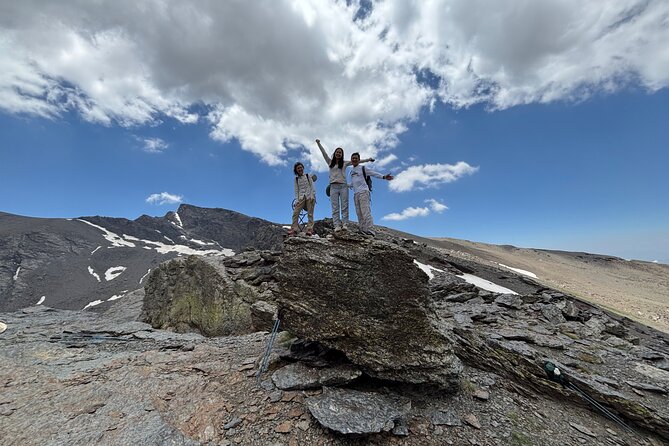
Guiding quality is one of the strongest parts of this experience. Jaime is repeatedly described as calm, kind, attentive, and highly experienced in mountain terrain. His dog Kai often joins the group, adding an entertaining companion on the trail, especially in snowy conditions.
Other named guides, including Buitre, Jesús, and Duab, have also led outings. Buitre was praised for keeping a manageable pace and making the day relaxed and sociable. Jesús was described as patient with different ability levels, while Duab handled a weather-related change with care and good local knowledge.
The operator uses UIMLA mountain guides, a professional international association for mountain leaders. That matters on rocky ground and in rapidly changing mountain weather. Your guide is not only there to point out views. The guide watches the group, adjusts the pace, chooses rest points, and helps you deal with wind, rain, snow, or loose rock.
The maximum group size is eight. That is small enough for conversation and personal attention, yet still gives the outing a social feel. If one person is much slower than the others, the group may need patience. The good news is that the guides have shown they can support a wide range of fitness levels.
What to bring for a high-altitude day
You need to provide your own food and drinks unless something else is specifically arranged. Pack a lunch, snacks, and at least 1.5 liters of water. A two-liter bottle is a sensible choice if you drink heavily during exercise.
Wear comfortable hiking clothes with a moisture-wicking base layer, long activewear trousers, a hat, and sunscreen. Add a light jacket or windbreaker even when Granada feels hot. At altitude, wind and cloud can change the temperature quickly.
The company can provide warm clothing, and hats, gloves, rain ponchos, and poles have been supplied on some outings. Still, do not assume every item will be available in every size or on every date.
There is mixed information about hiking boots and poles. Some people received shoes or gloves, while one person was told boot hire was available but found that the service had stopped. Another person found only one large pair available. If you need borrowed footwear, contact Sierra Nevada Guides several days ahead and confirm what is actually available.
Strong trainers may be enough in dry conditions. I would choose trail shoes or hiking boots with ankle support if you have room in your luggage. Poles are useful on the rocky ascent and descent, especially if you are not confident on loose ground.
Fitness, altitude, and who should book
The company asks for moderate physical fitness. That is fair, but the phrase should not be read too lightly. Regular running, cycling, swimming, or tennis should give you a useful base, yet the combination of uphill walking, uneven rock, and altitude can still feel tough.
One account described two to three hours of uphill movement, including breaks. Another compared the effort to a demanding spin class. You do not need advanced climbing skills, but you should be prepared to breathe hard and take your time.
This is a good match for you if you want a full day outdoors, enjoy a physical challenge, and would rather see quiet mountain terrain than spend another day in Granada’s streets. It can also work for a mixed group, since guides adjust the pace and allow rests.
It is a poor choice if you want a relaxed sightseeing trip, dislike steep paths, or have not prepared for high altitude. The guide can help when you are tired, but the route still asks you to walk for several hours.
Is the $71.35 price good value?
At $71.35 per person, the tour offers transport from central Granada, a private vehicle, a UIMLA mountain guide, assistance and liability insurance, and a small group limited to eight people.
That is good value if you compare it with arranging mountain transport, finding a suitable route, and hiring a qualified guide independently. The pickup and return are especially useful because the trailhead is high in the Sierra Nevada and not a simple city bus outing.
The price does not cover food or drinks. You also need to budget for proper footwear if you do not already own it. The potential need for warm layers, sunscreen, and water adds a little more to the day, though these are normal costs for any high-altitude hike.
The strongest value is the guide’s local judgment. A scenic drive alone would be cheaper, but it would not give you the same help with route choice, pace, weather, geology, wildlife, and safety.
Weather, cancellation, and practical timing
This activity depends on good weather. If poor conditions force cancellation, you can choose another date or receive a full refund. You can also cancel for a full refund up to 24 hours before the start time. Changes or cancellations made inside that window are not accepted.
Mountain weather deserves respect. Rain and wind have made some outings tougher than expected, and snow can remain on the upper slopes outside winter. Pack for more than one season, even if Granada is sunny and hot when you leave.
The tour returns to Plaza de Mariana Pineda. The planned day is around seven hours, but mountain timing can shift. Keep your afternoon flexible, especially if you have a train or other time-sensitive booking.
Should you book this Sierra Nevada hike?
I would book it if you want a serious day in the mountains and have enough fitness for uphill walking at 2,500 to more than 3,000 meters. The views toward Mulhacén, Veleta, and Alcazaba are excellent, but the real pleasure is the full route through glacial valleys, old fortifications, wildlife areas, and quiet high terrain.
Bring lunch, plenty of water, a windproof layer, sunscreen, and shoes with good grip. Confirm borrowed boots or poles ahead of time rather than relying on an old equipment note.
Skip it if you want a gentle outing or if steep, rocky ground makes you uneasy. For prepared hikers, though, the combination of easy Granada pickup, a small group, capable guides, and wild Sierra Nevada scenery makes the $71.35 cost a sensible use of one day.
FAQ
Where does the Sierra Nevada hike start?
The meeting point is Plaza de Mariana Pineda in central Granada. The activity also ends back at the meeting point.
What time does the tour start?
Pickup and departure are scheduled for 9:00 a.m.
How long does the experience last?
The tour lasts approximately seven hours. The hiking portion is about six hours, with transport included in the full day.
How many people can join the group?
The maximum group size is eight people.
Is transport included?
Yes. Transport by private vehicle from central Granada to the trailhead and back is included.
What altitude does the hike reach?
The hike starts at about 2,500 meters and climbs to more than 3,000 meters near Tajos del Campanario. Some route descriptions refer to the Veleta area at about 3,396 meters.
Do I need hiking boots?
Sneakers or trainers can be used, but trail shoes or hiking boots provide better grip and support on loose, rocky ground. If you need borrowed footwear, contact the provider several days before the hike to confirm availability.
Is food included?
No. Food and drinks are not included unless specifically stated. Bring lunch, snacks, and plenty of water.
Can I cancel for a refund?
You can cancel at least 24 hours before the start time for a full refund. If poor weather causes the operator to cancel the activity, you can choose another date or receive a full refund.
Just added around Spain
- Ibiza Transformative Hiking Experience In The Heart Of Nature★ 5.0 · 19 reviews
- Private Walking & Hiking Experience Ibiza★ 5.0 · 37 reviews
- West Coast Ibiza Hike & Fitness – Energising HIIT Session★ 5.0 · 9 reviews
- Ibiza Transformative Hiking Experience Es Vedrà★ 5.0 · 8 reviews
- Explore Secret Ibiza: Guided Hiking Tours with Local Experts★ 5.0 · 130 reviews
- Hiking guide tours in Ibiza – Explore stunning views with us! IHL★ 5.0 · 7 reviews
- Combo : Boat, 4×4, hiking in Es Vedra for sunset★ 5.0 · 39 reviews
- Hike along the Gollizno route★ 5.0 · 10 reviews
Spain Hiking Tours, compared.
The Volcano Heart Tour: Hiking, Tasting and Sunset Experience
Read our review →
Granada: Los Cahorros de Monachil Canyon Hiking Tour
Read our review →
Browse the lists this tour appears in