
REVIEW · SPAIN HIKING TOURS
El Torcal de Antequera Hike with Transfer
Time travel starts on foot. This four-hour outing from Antequera takes you into a strange world of stacked limestone, ancient fossils, and wide Andalusian views. I like the small groups of up to eight and the chance to walk beyond the busiest paths. I also like that the guide explains the rocks, plants, animals, and ammonites instead of simply pointing at them.
The main thing to consider is the terrain. The 4.5-kilometer walk includes plenty of climbing over uneven rock, so this is not a gentle stroll. You need hiking shoes, water, and a reasonable level of fitness. Anyone with vertigo or limited mobility should choose another way to see El Torcal.
Key points at a glance
- A 20-minute vintage van ride connects central Antequera with the park, saving you the trouble of arranging transport up the mountain.
- The Ammonites Route covers 4.5 kilometers, with explanations about the geological forces that shaped the park.
- A small group capped at eight people gives the guide room to answer questions and keep the pace personal.
- Guides speak Spanish, English, and French, with Justine and Natacha receiving especially warm praise for their explanations and friendly manner.
- The outing includes a walking stick, plus snacks and a typical Spanish sweet wine along the way.
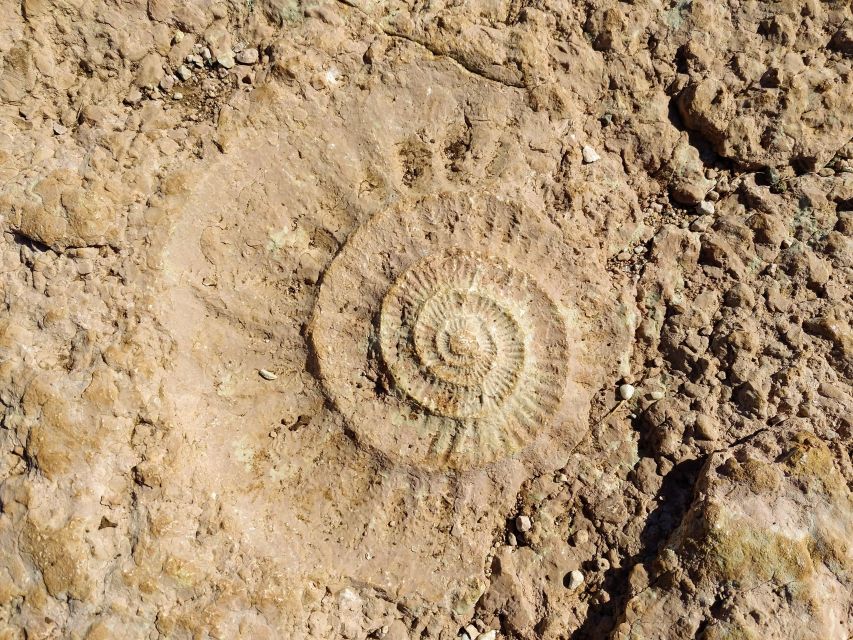
- The rocks were once beneath the Tethys Sea, and the fossils help turn an abstract geology lesson into something you can touch.
Why El Torcal feels like another planet
El Torcal de Antequera is one of those places where the ground seems to have been stacked by hand. Layers of limestone form shelves, towers, ridges, and narrow passages. Millions of years of erosion have worn the rock into curious shapes, leaving a setting that can feel more like a science-fiction film than southern Spain.
The story begins roughly 200 million years ago, when these rocks lay beneath the Tethys Sea. As the land shifted and rose, the limestone was pushed, cracked, and exposed. Water and weather then worked slowly through the stone. The shapes you see today are the result of that long process, not human construction.
That geological story matters because the walk is not just a pretty outing. Once you understand that the rocks were marine sediments, fossils and horizontal layers become clues. An ammonite is no longer simply an interesting object in the stone. It is evidence of an old sea that has vanished from this mountain.
I like this kind of guiding because it gives the scenery a sense of scale. You are not merely looking at unusual rocks. You are walking across a former seabed that has been changed by pressure, uplift, rain, wind, and time.
More Hikes with Hotel Pickup in Spain:
- Lanzarote: Guided Volcano Hike with Transfers
★ 4.9 · 861 reviews - Funchal: Pico do Arieiro Sunrise Hiking Transfer
★ 4.8 · 4,021 reviews - Funchal: Pico do Arieiro & Pico Ruivo Hiking Transfer
★ 4.9 · 1,845 reviews
Leaving Antequera in a blue vintage van
The meeting point is at Puerta de Estepa, where the van stops between the kiosk and the bus shelter. From there, the drive to the hiking area takes about 20 minutes. Hotel pickup and return are included for hotels in central Antequera, which makes the excursion easy to fit into a stay in town.
The vintage blue van adds some character to what could otherwise be a basic transfer. More important, it removes a practical headache. You do not have to work out your own ride to a mountain park about 1,200 meters above sea level, or deal with the return journey after walking.
The transfer is also short enough that the activity does not lose half its day to driving. The stated duration is four hours, with about three hours spent on the guided walk and roughly 40 minutes in the van. That is a good balance if you want to see El Torcal without committing an entire day.
There is one clear limit. Pickup and drop-off are offered in Antequera, not in other cities. If you are staying in Málaga, Seville, Granada, or another nearby place, you need to arrange your own transport to Antequera before joining the group.
Walking the 4.5-kilometer Ammonites Route
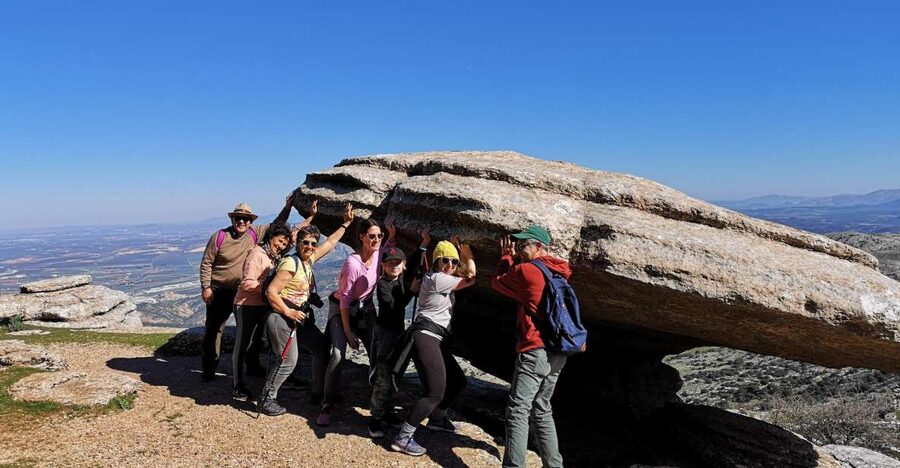
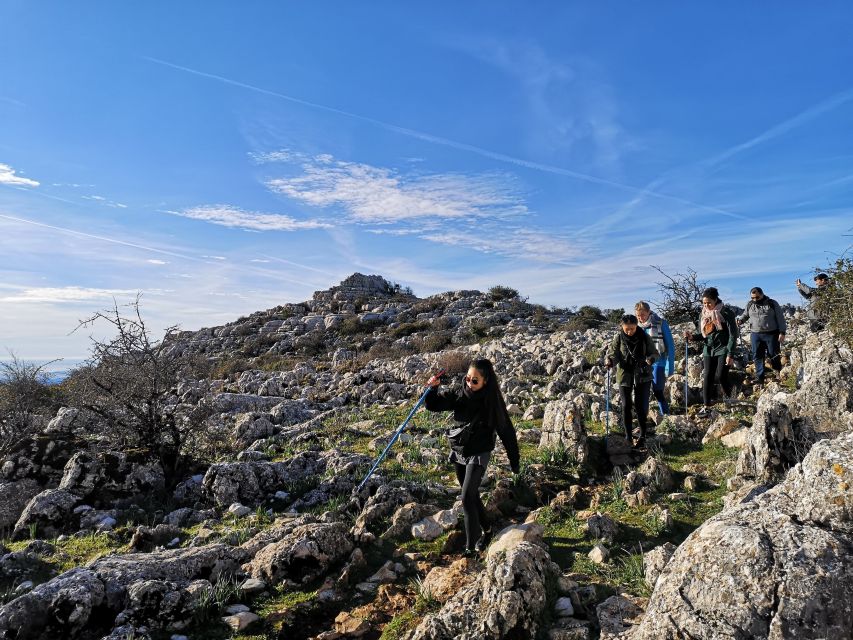
The hike follows the Ammonites Route for about 4.5 kilometers, or three miles. The distance may look modest, but the ground makes a difference. You will cross uneven rocks and tackle uphill sections, so your walking time depends on the group pace and the number of stops for explanations.
A walking stick is included, and that is more useful here than it may sound. A stick can help with balance on rough surfaces and reduce strain on descents. It does not turn the route into an easy path, though. Bring proper hiking shoes rather than smooth-soled sports shoes, even though sports shoes are listed among the recommended items.
You should also bring water and warm clothing. El Torcal sits high above Antequera, and mountain conditions can feel cooler than in town. The advice to bring warm layers is practical, even if the day begins sunny. You will be outdoors for several hours with little reason to assume the temperature will remain constant.
The route is best suited to someone who enjoys walking on natural ground rather than someone seeking a flat park trail. If you are comfortable with climbs and uneven rock, the distance is manageable. If you have a mobility impairment or vertigo, the activity is specifically not suitable.
A guide who explains more than the scenery
The strongest part of this outing is the guide’s role. The walk includes explanations of the geological formation of the Natural Park, as well as details about local plants, animals, and ammonite fossils. That turns a scenic hike into a proper introduction to the area.
Justine is one of the guides praised for her friendly manner and clear explanations. She has been especially appreciated for discussing the site’s geology, local plants, and wildlife. Natacha has also been singled out for covering vegetation, history, geology, and the value of caring for nature.
The language choice is useful for an international group. Tours are available in Spanish, English, and French. If you want to ask questions rather than simply follow along, confirm the language at booking and make sure it matches your preference.
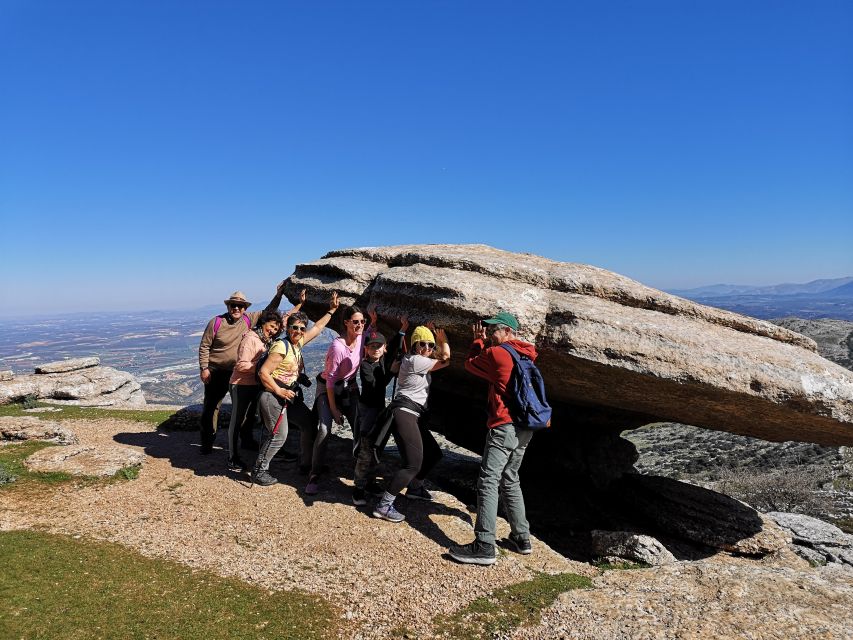
The group size is limited to eight participants. That is a meaningful advantage on a rocky route. A small group can stop without blocking a large procession, and you have a better chance to hear the guide clearly. It also gives you room to ask about a fossil, plant, or rock formation when something catches your eye.
Guiding quality can never be guaranteed on every departure, but the available feedback is remarkably consistent. The praised elements are not only the views. People have especially valued the explanations about flora, fauna, geology, and fossils, along with the warm approach of guides such as Justine and Natacha.
A few more hikes around Spain worth a look
- La Palma: Tajogaite Volcano Guided Trek
★ 4.8 · 1,810 reviews - From Valencia: Montanejos Guided Hike with Natural Pools
★ 4.5 · 1,741 reviews - From Seville: Caminito del Rey Hike Day Trip
★ 4.5 · 1,240 reviews - Lanzarote: Hike Across Timanfaya’s Volcanic Landscapes
★ 4.8 · 1,234 reviews
Fossils, plants, and a close look at the rock
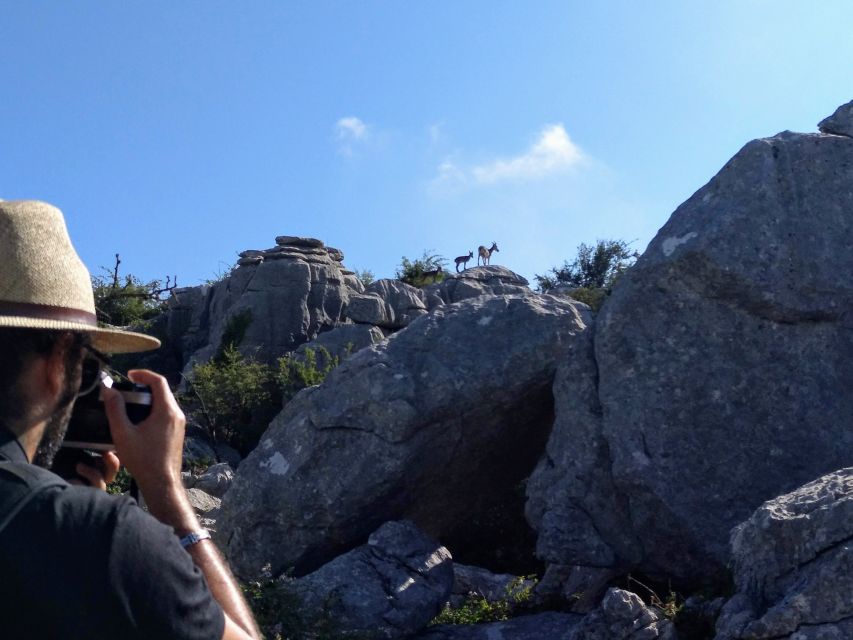
The ammonites are a central theme of the walk. These fossils connect the high mountain park to its marine past and give the route its name. You may see fossil traces in the rocks as the guide points out where to look and explains what they reveal.
You should not expect a museum-style display or a polished walkway with every feature labeled. The appeal is that the evidence remains part of the natural setting. You walk over stone that once lay underwater, then pause while the guide helps you read what is in front of you.
The natural side of the outing goes beyond geology. The guide may discuss plants and animals found in the park, and one group had the good fortune to encounter wild ibex. That sighting cannot be promised, but it shows why the walk benefits from someone who pays attention to more than the largest rock formations.
The route also takes you beyond the most obvious tourist paths. That does not mean you will have the park to yourself, and it does not mean every section is remote. It does mean the experience is designed around observation and interpretation rather than a quick photo stop at a viewpoint.
Views across Andalusia from 1,200 meters
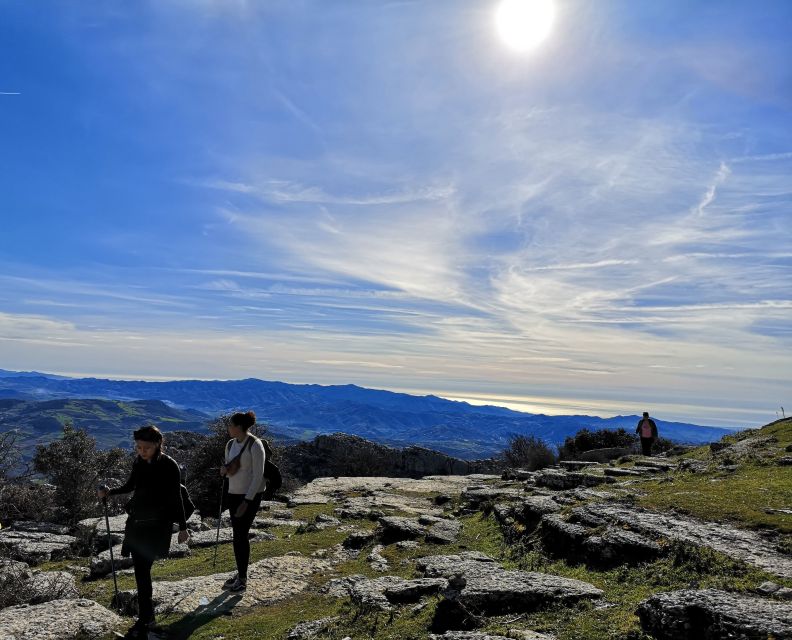
The views are a major reward for the climb. From the elevated setting, you can look out across Andalusia and see how sharply the stone formations contrast with the wider countryside. The changing scale is part of the pleasure: close-up rock textures lead to distant open views.
Weather will affect what you see. On a clear day, the outlook can be broad and dramatic. On a hazier day, the rock formations close by may become the main event. Either way, the unusual shapes give you plenty to look at even when distant views are less sharp.
The setting is also a good reminder to pace yourself. It is tempting to hurry toward the next viewpoint, but the guide’s pauses are part of the value. A short explanation about erosion or a fossil can make the next rock formation more interesting than it would be in a quick independent walk.
I would choose this outing for the combination of views and context. If you only want a scenic photograph, you may find the geology talks slow you down. If you like knowing why a place looks the way it does, those pauses improve the experience.
Snacks, sweet wine, and the human touch
The walk includes snacks and a typical Spanish sweet wine. This is a small feature, but it gives the outing a social rhythm. After walking over uneven ground, a simple bite and a local drink can feel more welcome than another rushed viewpoint.
Do not book this as a food tour. The main event is the park, not a tasting menu. The snack and wine are best understood as a pleasant regional touch that breaks up the walk and gives the group a chance to pause together.
If you do not drink alcohol, the wine should not be a reason to avoid the activity, but the supplied information does not specify an alternative drink. Anyone with dietary needs should ask the provider before booking, since no details are given about the snack ingredients.
Is $41 good value?
At $41 per person, the price is reasonable for a four-hour small-group outing, especially if you are staying in Antequera. You are paying for the return transfer, a live guide, a walking stick, the guided route, and the convenience of not arranging your own transport to the park.
The value depends on how you would otherwise reach El Torcal. If you already have a car and prefer to walk alone, you could decide that the guide is less important. But independent access does not provide the same explanation of the fossils, geological formation, plants, and animals.
The group limit also helps justify the price. An eight-person maximum is much more personal than a large coach excursion, particularly on a route where the guide needs to point out details in the rock. The included snacks and sweet wine add a modest extra benefit rather than being the main reason to book.
At this price, I would see the tour as good value for visitors without a car, first-time visitors to El Torcal, and anyone who wants the park explained in English, French, or Spanish. It is less compelling for strong walkers who already know the area and want complete freedom to set their own route.
What to bring and who should skip it
Pack water, warm clothing, and hiking shoes. The activity information also lists sports shoes, but hiking footwear is the safer choice for rocky ground. A walking stick is provided, so you do not need to bring one unless you prefer your own.
This is a good fit for you if:
- You want a half-day outing from Antequera.
- You enjoy geology, fossils, plants, and wildlife.
- You prefer a small group to a large bus tour.
- You are comfortable with climbs and uneven rocks.
- You want a guide who can speak Spanish, English, or French.
Think twice if:
- You have limited mobility.
- You experience vertigo.
- You want a flat, easy path.
- You are staying outside Antequera and do not want to arrange your own transport.
- You prefer to explore alone without scheduled explanations or group pauses.
The hike is described as easy by one participant, but another correctly points out that it involves many uphill sections through rocks. Both impressions can be true. The distance is not extreme, yet the surface and climbing require a certain level of fitness.
Should you book the El Torcal hike?
I would book this experience if you are based in Antequera and want more than a quick look at the rock formations. The combination of a short transfer, small group, clear nature and geology explanations, and Andalusian views gives you a well-rounded half-day.
The best reason to choose it is the guiding. Justine and Natacha have been praised for making the geology, vegetation, fossils, and wildlife understandable and engaging. The chance to see ibex is a bonus, not a promise, while the ammonites and ancient seabed story are built into the route.
Skip it if uneven mountain walking is uncomfortable for you, or if vertigo makes exposed rock formations stressful. For everyone else, $41 is a fair price for a compact, well-supported introduction to one of Andalusia’s most unusual natural sites. Free cancellation up to 24 hours before the activity and the reserve-now, pay-later option also make it easier to fit into a changing schedule.
FAQ
How long does the El Torcal hike take?
The full activity lasts four hours. The van ride takes about 20 minutes each way, and the guided visit at El Torcal lasts about three hours.
How far is the hike?
The route covers approximately 4.5 kilometers, or three miles, along the Ammonites Route.
Where does the activity start?
The meeting point is at Puerta de Estepa in Antequera. The van stops between the kiosk and the bus shelter.
Is hotel pickup included?
Hotel pickup and drop-off are included for hotels in central Antequera. Pickup and drop-off in other cities are not included.
How high is the hiking area?
The starting point at El Torcal is about 1,200 meters, or 4,000 feet, above sea level.
What languages are available?
The live tour guide may speak Spanish, English, or French.
Is the tour suitable for people with mobility impairments?
No. The activity is not suitable for people with mobility impairments.
Is the hike suitable for people with vertigo?
No. People with vertigo are advised not to take this activity.
What should I bring?
Bring warm clothing, water, and hiking shoes. Sports shoes are also listed, and a walking stick is included.
Just added around Spain
- From Barcelona: Montserrat Mountain Hike and Abbey Tour★ 4.8 · 38 reviews
- Barcelona: Costa Brava Hiking, Sea Kayaking & Lagoon Dipping★ 5.0 · 119 reviews
- Caminito del Rey Full Experience+ 2-Hour E-Bike guided Tour★ 4.9 · 20 reviews
- El Chorro: Zipline, Bridge, and Hiking Adventure Tour★ 5.0 · 8 reviews
- Sant Elm: Guided kayak tour to the Island Dragonera & Hiking★ 4.8 · 16 reviews
- Chulilla: Hanging Bridges & Canyon Private Hiking Day Tour★ 4.4 · 10 reviews
- Caleta de Fuste/Corralejo: Guided E-Bike Tour & Crater Hike★ 4.7 · 57 reviews
- Valencia: Sierra Calderona & El Garbí Mountain hiking Tour★ 5.0 · 14 reviews
Spain Hiking Tours, compared.

The Volcano Heart Tour: Hiking, Tasting and Sunset Experience
Read our review →

Granada: Los Cahorros de Monachil Canyon Hiking Tour
Read our review →
Browse the lists this tour appears in