
REVIEW · USA HIKING TOURS
Denali Primitive Survival – 4hr Easy Hiking & Survival Workshop
Try something beyond the park road. This four-hour Denali survival workshop takes you into the forest just outside Denali National Park to learn fire-making, shelter building, and wild-food basics from a survivalist guide. I like the hands-on focus, especially the chance to work with a bow drill and build a debris shelter rather than simply listen to a talk. I also like that pickup, trekking poles, binoculars, and rain jackets are provided.
The main consideration is time. Four hours gives you a useful introduction, but not enough time to fully finish every project. You may begin a shelter, practice starting a fire, and learn about edible plants without mastering each skill. Bring sturdy hiking boots, warm socks, and suitable clothing, and expect to walk a mile or two.
Key points to know before you book
- Learn how to start a fire with a shoelace: The workshop includes practical instruction in primitive fire-making, including a bow drill.
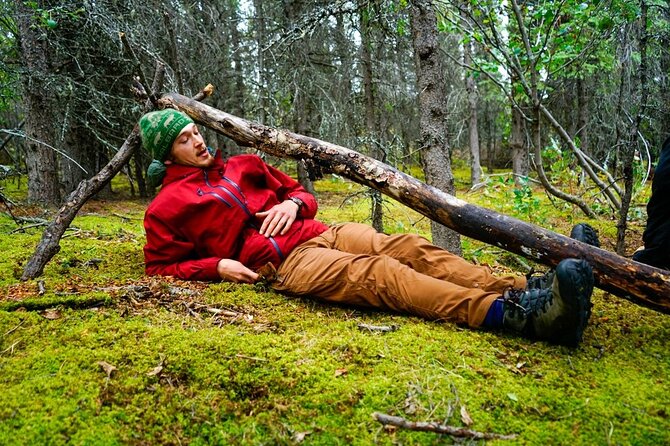
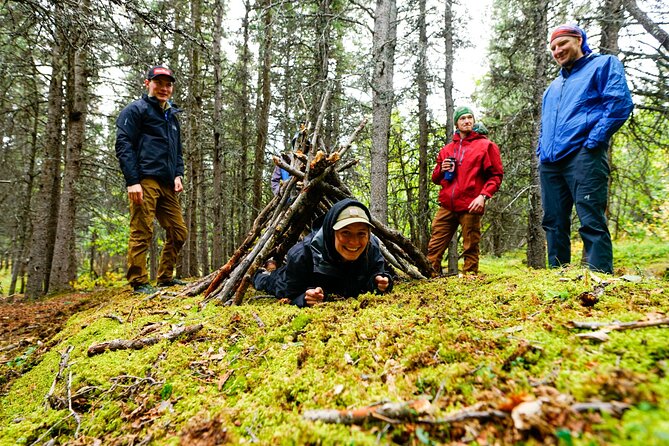
- Build a warm debris shelter: You work as a group to choose a site and begin a shelter designed for sleeping without a sleeping bag or pad.
- Forage with care: Your guide points out edible plants and berries, along with mushrooms that should not be eaten.
- Pickup is included: Your guide contacts you the day before to settle the pickup time and location.
- Small group size: The maximum is 11 people, which allows for shared work while keeping the session fairly personal.
- A gentle but real hike: Most participants can take part, but you should be able to walk about one or two miles.
Why this Denali workshop feels different
Denali is often experienced from a road, a shuttle bus, or a marked trail. Those are worthwhile ways to see the park, but they can leave you as an observer. This workshop asks you to pay attention to the forest in a more basic way: Where is the dry wood? Which plants can be eaten? How would you stay warm if your planned trip suddenly went wrong?
That practical angle gives the experience its appeal. You are not signing up for a long wilderness expedition or an extreme endurance test. You are spending about four hours learning a compact set of skills used by Athabaskan peoples, pioneers, and later survivalists in Alaska.
I like that the instruction is tied to the place. The woods near Denali are not just a backdrop for generic team-building exercises. The guide uses the local plants, local materials, and local weather conditions to explain how people have managed in northern country. You come away with a better sense of what the forest provides, and what it demands.
The tour is also a good fit if your Denali schedule is already full of scenic stops. It gives you a change of pace without taking an entire day. The pace is active, but the experience is not built around covering great distances.
More Workshops around the USA:
- BarCa Winery Cinqueterre Trekking & Wine Tasting & Pesto Class
★ 5.0 · 48 reviews - Skiathos: Dog Shelter Visit, Hike & Cooking Class with Lunch
★ 4.7 · 40 reviews - Pu Luong 3-Day Adventure: Trekking, Cycling & Local Cooking Class
★ 5.0 · 26 reviews
Pickup near Denali and the start of the walk
Your guide contacts you the day before the activity to finalize the pickup time and details. Since pickup is offered, you do not have to arrange your own way to the starting point, though you should pay attention to the instructions when the guide reaches out.
The workshop takes place in the woods just outside Denali National Park. That location matters. You get a wilderness setting without committing to a long backcountry trip, and the four-hour format leaves room for other plans in the area.
At the beginning, your guide leads you into the forest. The walk is part of the lesson, not simply a transfer to the activity site. You begin looking at the ground and vegetation as potential sources of food, fuel, and shelter.
The total walking distance is only described as about a mile or two, but the tour still requires basic hiking ability. A participant who needed extra support for their knees found the provided trekking poles useful. That is a small but helpful touch, especially on uneven ground.
Wear hiking boots with good support. Warm socks are a smart choice, and a rain jacket should be in your day pack even if the forecast looks friendly. Northern weather can change quickly, and the workshop continues outdoors.
Edible berries, plants, and mushroom warnings
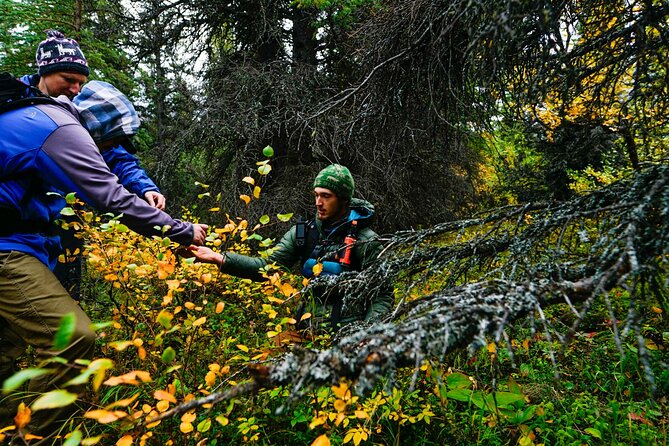
As you walk, the guide points out edible plants and berries. This is one of the most appealing parts of the experience because it turns an ordinary woodland walk into a practical lesson.
You may have the chance to taste some of the berries you identify. That makes the information memorable, but you should follow the guide closely and avoid sampling anything on your own. Plant identification is not a skill to guess at, particularly when mushrooms are involved.
The mushroom portion is just as useful for what you do not eat. The guide explains which mushrooms to avoid, giving you a sharper sense of the risks involved in wild foraging. A four-hour workshop cannot turn you into an expert forager, but it can teach you to slow down, ask questions, and treat unfamiliar species with caution.
I appreciate this grounded approach. The lesson is not about collecting a meal for the rest of your trip. It is about seeing natural resources differently and understanding that survival depends on accurate identification, not enthusiasm.
Binoculars are included, although the main purpose of this experience is survival instruction rather than wildlife viewing. They may add interest during the walk, but you should book this for the practical skills, not as a dedicated animal-watching excursion.
Choosing a shelter site in the Alaskan woods
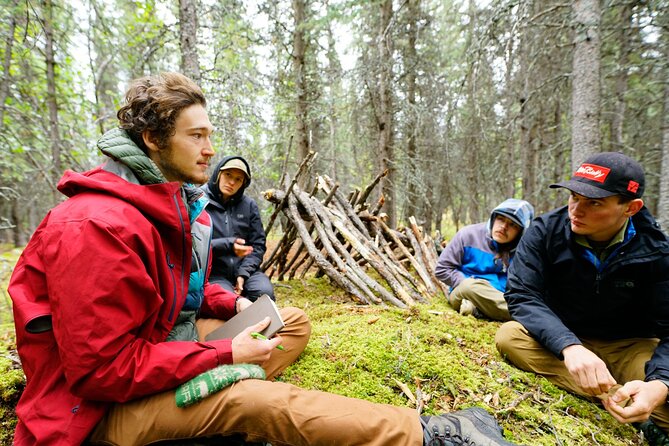
Once the guide decides you have reached a suitable place, the walking portion ends and the main instruction begins. The first major subject is shelter.
You learn how to choose a good location and what to think about during the first five days of a survival situation. That time frame helps organize the lesson. You are not being taught to solve every wilderness problem at once. You are learning how to protect yourself, conserve energy, and make sensible choices during the early part of an emergency.
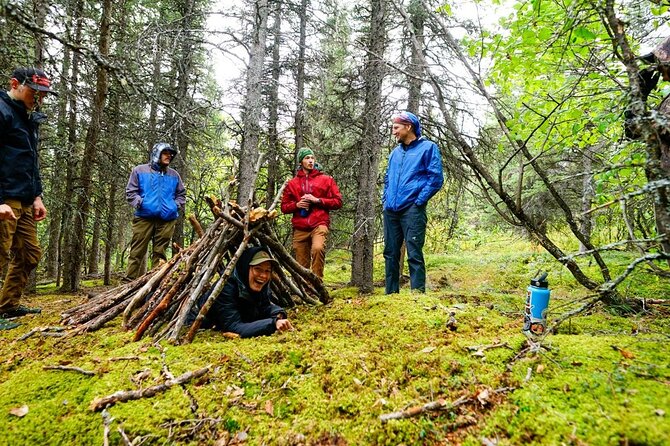
The group works on a debris hut shelter. This type of shelter uses natural materials collected from the surrounding area. The point is not just to pile branches together. Site choice, insulation, structure, and warmth all matter.
You should set your expectations carefully. The session allows you to begin the project and understand the method, but you may not completely build out a shelter large enough for everyone. One family particularly enjoyed this part and wished there had been time to finish the structure. That is a fair trade-off in a four-hour class, since fire-making and foraging also need time.
If you want a finished shelter-building project from start to finish, this may feel rushed. If you want an introduction to the decisions involved, the partial build is still worthwhile. You get to handle materials and see how a shelter takes shape, which is more useful than a demonstration from a distance.
A few more hikes around the USA worth a look
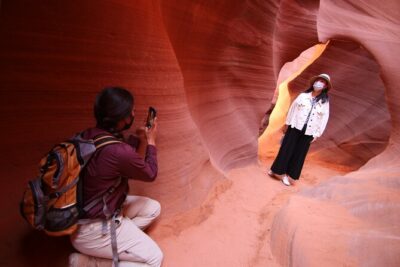
- Lower Antelope Canyon Hiking Tour
★ 5.0 · 6,216 reviews - Multnomah Falls and Columbia River Gorge Half-Day Hiking Tour
★ 5.0 · 2,108 reviews - San Francisco: Yosemite National Park & Giant Sequoias Hike
★ 4.5 · 1,777 reviews - Valley of Fire Guided Hike from Las Vegas
★ 5.0 · 1,611 reviews
Primitive fire-making with a bow drill
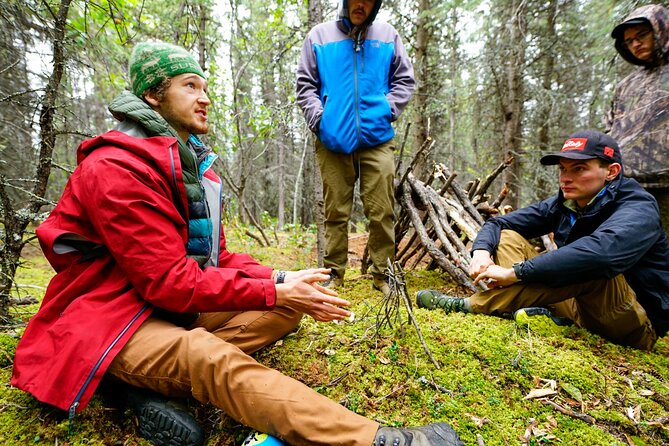
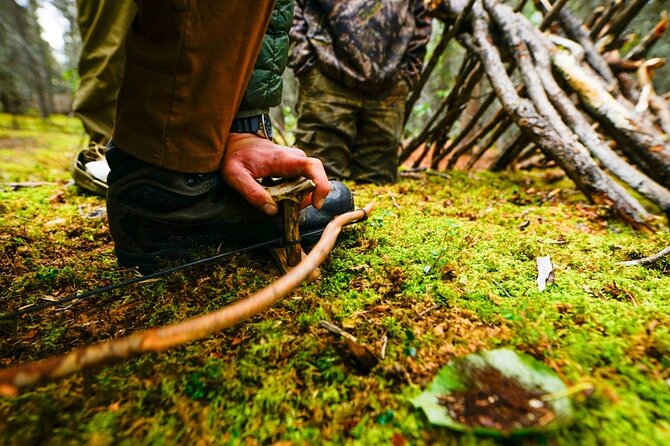
Fire-making is likely to be the most memorable part of the workshop. The guide shows you how to start a fire using very basic materials, including a shoelace.
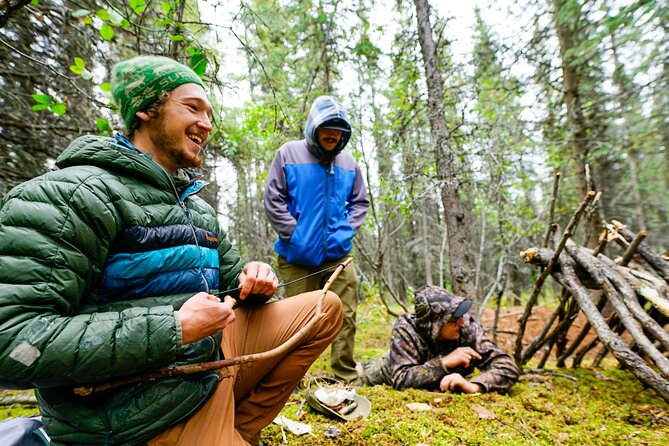
You may also work with a bow drill. This requires patience and coordination, so the session is not simply a matter of watching the guide produce a flame. The group works together, and the guide helps participants through the process.
That teamwork makes the activity suitable for families. An 11-year-old was able to take part with help from Jade, the guide. Younger participants may not have the strength or technique to manage every step alone, but they can still contribute and learn how the parts fit together.
A bow drill is a good reminder that survival skills are physical. You need the right materials, steady movement, and enough persistence to keep going when the first attempt fails. The lesson has more value when you take part, even if the guide must assist.
Do not assume you will leave ready to light a fire in any weather. Four hours offers practice and an understanding of the method, not guaranteed mastery. Still, learning how fire, shelter, and food connect gives the workshop a clear purpose.
Jade’s teaching style and the small-group setting
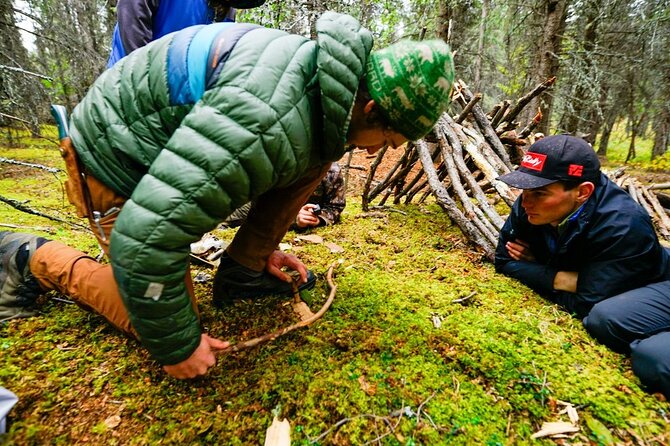
Jade is described as patient, engaging, and willing to help participants at different ages and ability levels. That matters because the class combines several kinds of instruction. You need clear explanations for foraging, physical guidance for the shelter, and encouragement during fire-making.
With a maximum of 11 people, the group is small enough for shared participation. You may not receive constant one-on-one attention, but you should have a chance to take part in the main tasks. Group work also makes sense for survival practice, since building a shelter and starting a fire are easier when people cooperate.
The pace sounds fairly full. You cover plants, berries, mushrooms, shelter choices, fire-making, and the first five days of a survival situation within four hours. I would expect a brisk introduction rather than a slow, highly detailed course.
That is both a strength and a limitation. If you enjoy learning several useful ideas in one session, the variety keeps the class interesting. If you prefer to practice one skill until you can do it independently, you may wish the workshop lasted longer.
What the $259 price includes
At $259 per person, this is not a low-cost walk in the woods. The value depends on what you want from your Denali visit.
The price includes about four hours of guided instruction, pickup, trekking poles, binoculars, and rain jackets. Snacks are available, but lunch is not included. If you want a full meal, bring your own food.
You are paying for access to a specialized activity, not simply transportation and a nature walk. The guide brings a particular set of survival skills and turns the surrounding forest into a classroom. For visitors who want a personal, active experience outside the usual Denali sightseeing routine, that can justify the cost.
The price is harder to justify if you only want a short hike or a scenic outing. The included binoculars and rain jackets are useful, but they are supporting equipment rather than the main attraction. The real value lies in the instruction and the chance to practice.
The booking pattern is also worth noting. This activity averages 87 days of advance booking, so you should not assume you can decide at the last minute during a busy Denali visit. If the workshop fits your plans, reserve it early.
Who should book this experience
I would recommend it most strongly to you if you enjoy learning by doing. Families, couples, and small groups who want something more active than sightseeing should find plenty to hold their attention.
It is also a good choice if you are curious about Indigenous Athabaskan survival traditions, pioneer methods, and the practical demands of Alaska. The workshop does not replace a longer cultural program or a full survival course, but it gives you useful context in a short session.
You should be comfortable walking a mile or two. Most people can participate, and service animals are allowed, but this is still an outdoor hiking activity. If you have trouble walking that distance, the workshop may not be a good match.
Bring your own lunch if you need a full meal, wear sturdy boots, and dress for rain and cool conditions. The company provides rain jackets, but your own warm layers and socks still matter.
The activity is offered in English. Since the session covers several skills in a limited period, you should be ready to listen closely and take part rather than expect a relaxed sightseeing tour.
Weather, cancellation, and practical planning
The experience depends on good weather. If poor conditions force a cancellation, you are offered another date or a full refund. That policy reduces the risk of paying for an outdoor class that cannot run safely.
You can cancel for a full refund up to 24 hours before the scheduled start time. Changes or cancellations made less than 24 hours ahead are not accepted for a refund, so keep an eye on your Denali plans and the local forecast.
Pickup details are finalized the day before. Keep your phone available so you do not miss the guide’s message. Since the exact pickup time is settled close to the activity, leave some flexibility in your schedule that morning.
The tour is capped at 11 people, which helps keep the workshop manageable. It also means you should not expect a private lesson unless your booking happens to include only your own party.
Is Denali Primitive Survival worth booking?
Book this workshop if you want an active Denali experience built around real skills rather than scenery alone. The strongest parts are the edible plant walk, the hands-on bow drill practice, the shelter lesson, and Jade’s patient help with younger participants.
Skip it if you want a finished shelter, a long hike, or a full meal included. Four hours moves quickly, and the $259 price is a serious part of the decision.
For the right person, this is a useful way to look at Denali differently. You leave with more than photographs. You gain a clearer idea of how people find warmth, food, and safety in the northern woods, and you may never look at a shoelace quite the same way.
FAQ
How long does the Denali Primitive Survival workshop last?
The experience lasts approximately four hours.
Where does the workshop take place?
The guide takes you into the woods just outside Denali National Park.
Is pickup included?
Yes. Pickup is offered, and the guide contacts you the day before to finalize the pickup time and details.
How much does the experience cost?
The listed price is $259 per person.
How far do you hike?
The activity involves walking about one or two miles. You should be able to manage that distance to participate comfortably.
What survival skills will I learn?
You learn about edible plants and berries, mushrooms to avoid, shelter-site selection, the first five days of a survival situation, primitive fire-making, and debris shelter construction.
Are meals included?
Lunch is not included. The guide has snacks available, but you need to bring your own food if you want a full meal.
What equipment is provided?
Trekking poles, binoculars, and rain jackets are provided.
What happens if bad weather cancels the workshop?
If poor weather causes a cancellation, you are offered a different date or a full refund. You can also cancel up to 24 hours before the start time for a full refund.
Just added around the USA
- Strawberry Hill and Downtown KCK Hike★ 5.0 · 18 reviews
- Kansas City Crossroads Art District and Westside Urban Hike★ 5.0 · 22 reviews
- Mendenhall Glacier Guided Hike Juneau★ 5.0 · 125 reviews
- Juneau Shore Excursion: Mendenhall Glacier Guided Hike★ 5.0 · 71 reviews
- Juneau Shore Excursion: Mendenhall Glacier Canoe, Paddle and Hike★ 5.0 · 75 reviews
- Rainforest & Waterfalls Trek★ 5.0 · 35 reviews
- Norris Adventure: Seaplane, Paddle and Glacier Hike★ 5.0 · 12 reviews
- Diamond Head and Manoa Falls Hike and Adventure Tour★ 4.5 · 15 reviews
USA Hiking Tours, compared.
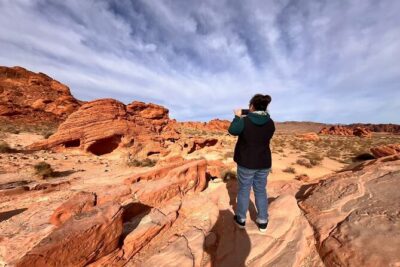
Small Group: Valley of Fire Half Day Tour from Las Vegas
Read our review →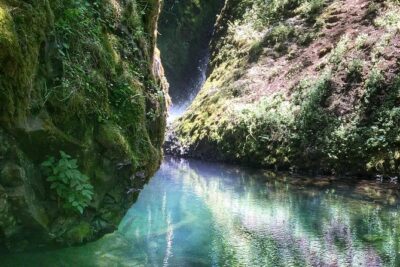
Multnomah Falls and Columbia River Gorge Half-Day Hiking Tour
Read our review →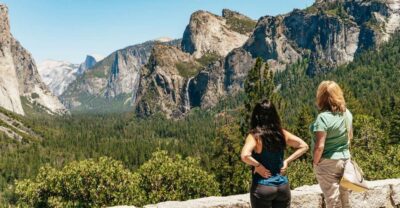
Yosemite National Park & Giant Sequoias Hike
Read our review →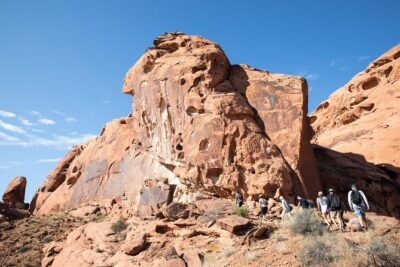

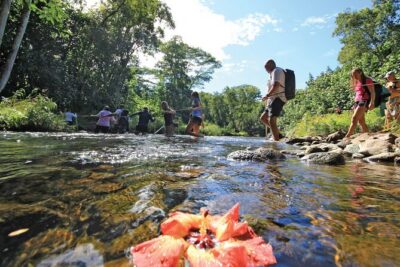
Kauai Adventure: Kayak & Hike to Secret Falls with Expert Guide
Read our review →Browse the lists this tour appears in