
REVIEW · INDONESIA HIKING TOURS
Banyuwangi: Ijen Crater Bluefire and Sunrise Guided Trek
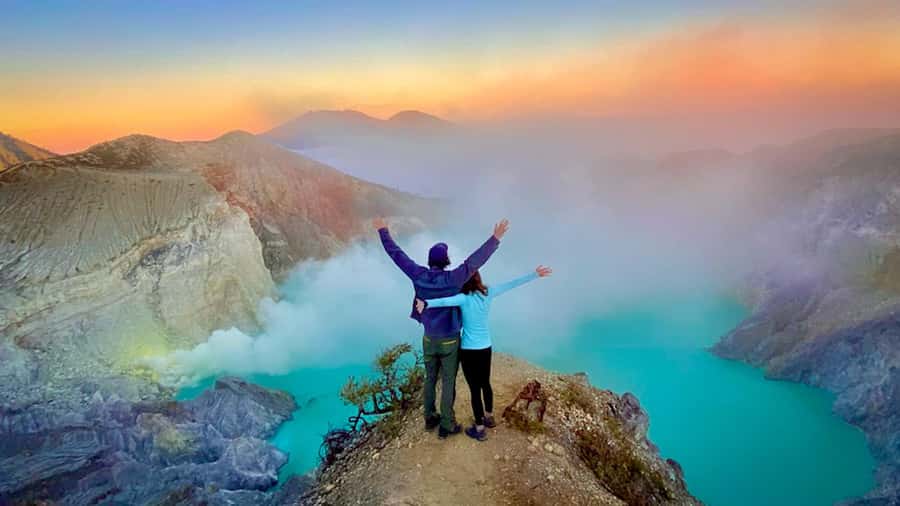
The mountain glows before dawn. This $25 guided trek takes you from Banyuwangi to Kawah Ijen for the rare blue fire, a sunrise over turquoise water, and a close look at traditional sulfur mining. The night start, steep trail, gas mask, and crater descent make it a serious outing, not a gentle sightseeing trip.
I like the strong practical support, including round-trip transport, an entrance ticket, headlamp, gas mask, first aid, oxygen, and mineral water. I also like the human touch from guides such as Suleiman, Sulliman, Soufian, and Sule, who are praised for humor, energy, safety checks, and help with photographs. The main drawback is the physical effort: the hike is tiring, and the crowded crater route can split a combined group.
Key points before you book
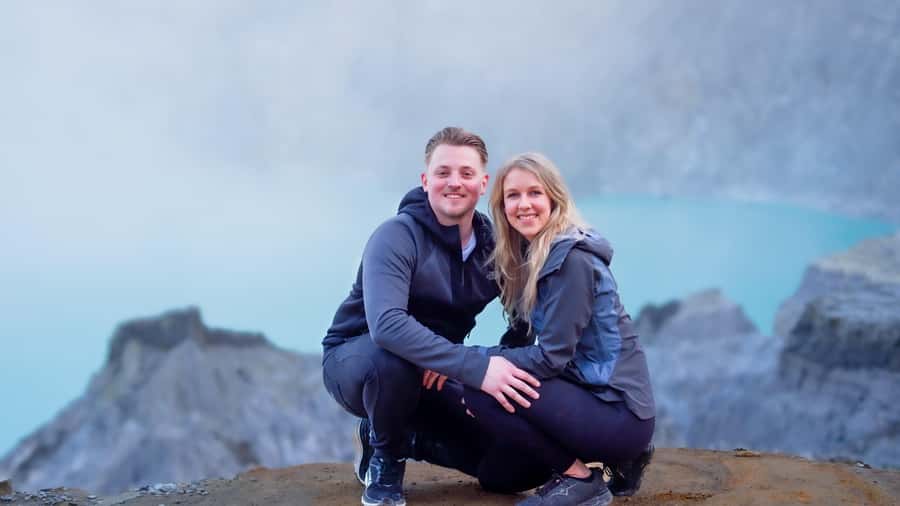
- Blue fire requires a midnight start: You hike in darkness and need enough stamina to reach the crater before sunrise.
- The six-hour Ijen visit is the heart of the day: It includes hiking, blue fire, sunrise, crater views, and the return walk.
- Safety gear is supplied: A headlamp, gas mask, first aid, and portable oxygen are included.
- The trail is strenuous: It may not suit children under 12, pregnant women, or people with respiratory problems.
- Guides add real value: Suleiman and other local guides are praised for keeping spirits up and helping with difficult sections.
- The $25 price covers the basics well: Transport, entry, guidance, insurance, equipment, and water are all included, though medical certification and personal spending are extra.
Why Ijen is worth losing sleep over
Kawah Ijen is not a normal sunrise stop. You leave Banyuwangi around midnight, ride toward the trailhead, and begin walking while the sky is still dark. The reward is a rare natural sight: blue flames glowing near sulfur deposits before daylight washes out the effect.
The blue fire is the tour’s main draw. It is visible against the dark sky and gives the crater an unusual, almost otherworldly feel. The sight depends on conditions and safety instructions, so you should treat it as a possibility within a demanding mountain visit, not a guaranteed stage show.
After the blue fire, you return to the upper crater area to wait for sunrise. The first light reaches the turquoise crater lake and the surrounding slopes, giving you a completely different view from the one you saw in darkness.
I like that the experience brings together geology, local work, and mountain scenery. You are not only looking at a pretty lake. You are also watching sulfur miners carry out a tough traditional job in an active volcanic setting.
More Sunrise Hikes in Indonesia
- Bali: Sunrise Mount Batur Guided Hike with Breakfast
★ 4.8 · 9,660 reviews - Bali: Mount Batur Sunrise Guided Hike and Natural Hot Spring
★ 4.8 · 9,284 reviews - Bali: Mount Batur Sunrise Trek With Guide and Breakfast
★ 4.8 · 3,461 reviews
From Banyuwangi hotel to the Ijen trailhead
Pickup is included from your hotel in Banyuwangi Regency. You should wait in the hotel lobby, since the package is built around door-to-door transport rather than having you arrange your own way to the mountain.
The drive takes you from Banyuwangi to the starting point of the trek. The exact pickup time depends on availability and the date you select, but this is a night operation designed to reach the crater in time for the blue fire and sunrise.
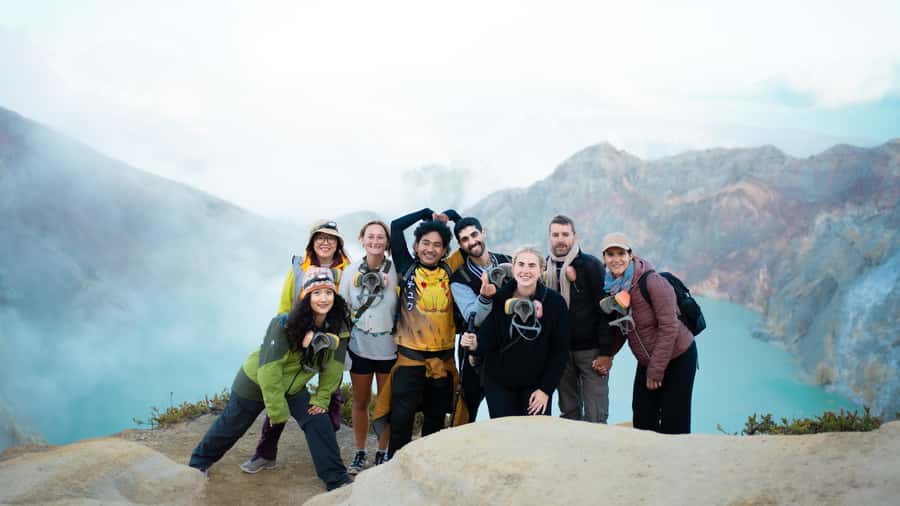
At the trailhead, your guide gives a safety briefing. You receive a headlamp and gas mask, and the tour also carries first aid supplies and a portable oxygen tank. Mineral water is provided during the trip.
That equipment matters. The headlamp helps you manage the dark trail, while the mask is for sulfur gas near the crater. The supplied gear does not make the outing risk-free. Mount Ijen reopened on September 8, 2024, after closure caused by earthquake tremors and toxic gas, and the supplied information warns that toxic gases can harm people at any time.
Take the warning seriously. Follow the guide’s instructions, keep your mask ready, and do not treat the crater as a place for casual wandering.
The uphill walk: steady effort, little sightseeing at first
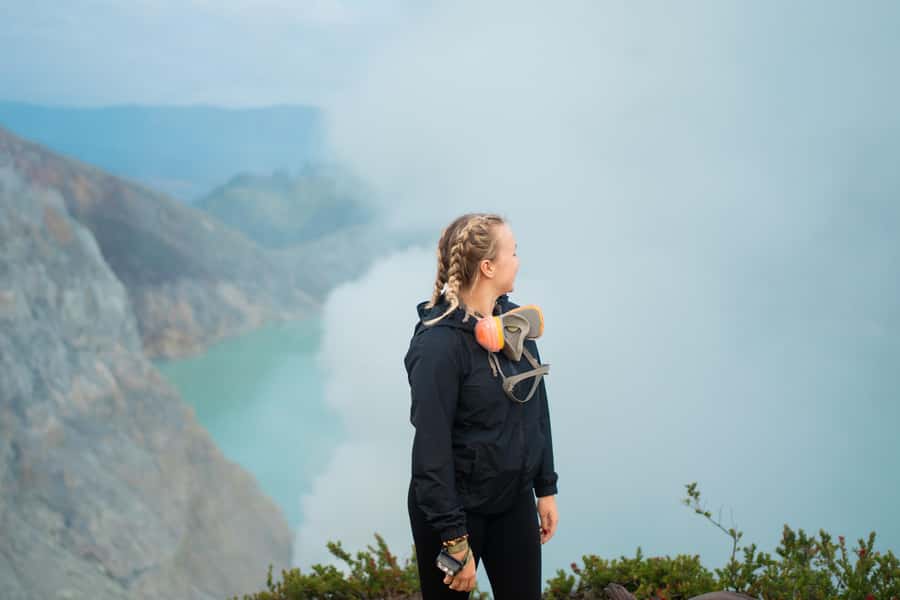
The trek begins at night, so the early section is mostly about putting one foot in front of the other. You get a cool night breeze and, when conditions allow, a starry sky. The darkness hides much of the scenery until sunrise, but it also makes the blue fire more dramatic.
The hike is described as strenuous, and the people who enjoyed it most were ready for a real physical challenge. Several guides are praised for keeping the pace moving, especially when time was short before the blue fire. That can help you reach the crater on schedule, though a brisk group pace may feel demanding if you are not used to uphill walking.
You should bring snacks. Water is supplied, but a long nighttime hike is easier when you have something small to eat. Wear practical walking clothes and bring a camera if you want photographs of the flames and sunrise.
The group is combined, so walking speeds can differ. One practical issue is that a guide may need to pause or go back for another member. That can leave you waiting or walking briefly without the guide while the group regathers. The route is straightforward enough to follow with other people heading the same way, but the safest plan is to stay close to your guide and group whenever possible.
Blue fire in the crater darkness
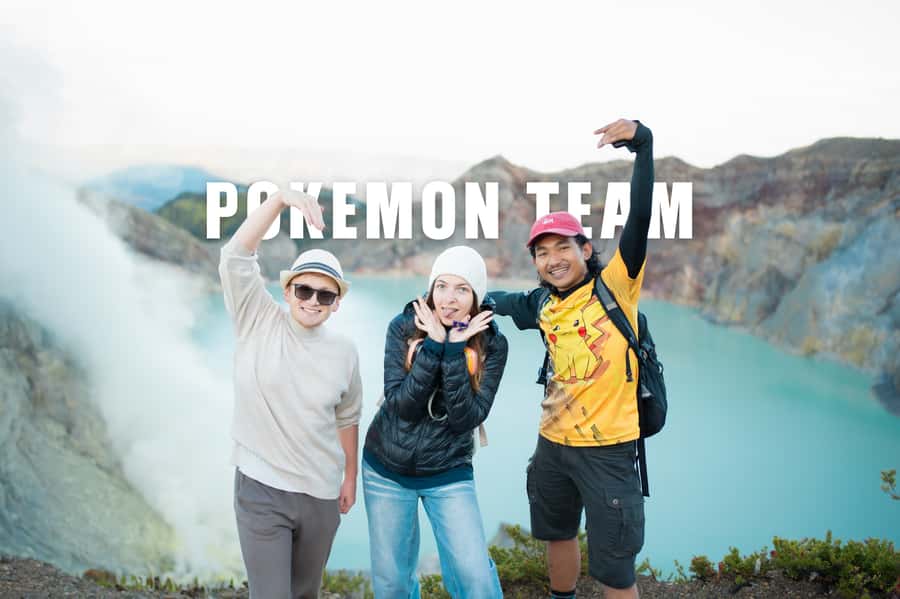
The blue fire is the unusual centerpiece of the outing. In darkness, the flames glow against the black crater, creating a sight that is hard to compare with ordinary volcanic scenery.
Getting close to the blue fire may involve a more difficult section of the route. One person described the crater descent as unsuitable for anyone afraid of heights, which is useful advice even though the supplied details do not give a precise distance or technical grade.
Your guide’s help matters here. Suleiman is praised for assisting people on the descent, while other guides are described as checking on the group and explaining the difficult parts. The blue fire is not a place to rush ahead for a better photograph. Gas, loose ground, darkness, and other people on the route all call for care.
The guide may also help with pictures. Sule was specifically praised for taking photographs near the flames, which is handy when you are carrying a headlamp and safety equipment and do not want to focus on camera work at the wrong moment.
Keep your expectations sensible. The experience is atmospheric and rare, but it is also crowded at times and physically awkward. You may spend more time walking, waiting, and managing the conditions than simply staring at the flames.
More Volcano Hikes in Indonesia
- Mount Batur Sunrise Hike and Natural Hot Spring Option
★ 5.0 · 1,927 reviews - From Ubud: Mount Batur Hiking With Hotspring
★ 4.8 · 1,850 reviews - Mount Batur Sunrise Hike with Breakfast
★ 5.0 · 1,757 reviews - Mount Batur Sunrise Trekking
★ 5.0 · 947 reviews
Sunrise over the turquoise crater lake
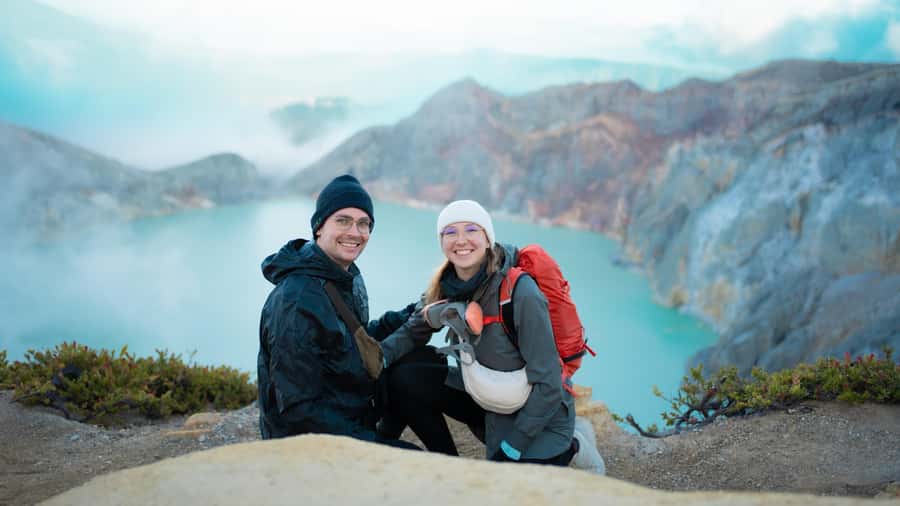
Once the blue fire portion is over, the group watches sunrise from the top of Kawah Ijen. This is where the mountain becomes easier to read. The crater lake’s turquoise water comes into view, and the first light reveals the surrounding slopes and broad views beyond the crater.
The contrast is the magic. Before dawn, you see a glowing blue phenomenon in darkness. Soon afterward, you are looking at a bright volcanic lake under morning light. The two scenes feel like separate experiences packed into one long morning.
Sunrise also makes the sulfur mining activity easier to see. Traditional miners work around the crater, carrying sulfur as part of a difficult daily job. Watching them adds a human dimension to the visit, though you should observe respectfully and avoid getting in their way.
This is also the best time to take wider photographs. The supplied details highlight panoramic views during the descent, so do not spend the entire sunrise focused only on the lake. Look around as the light changes. The scenery is part of the value of the trip, not just a backdrop for the blue fire.
Meeting the guides who shape the day
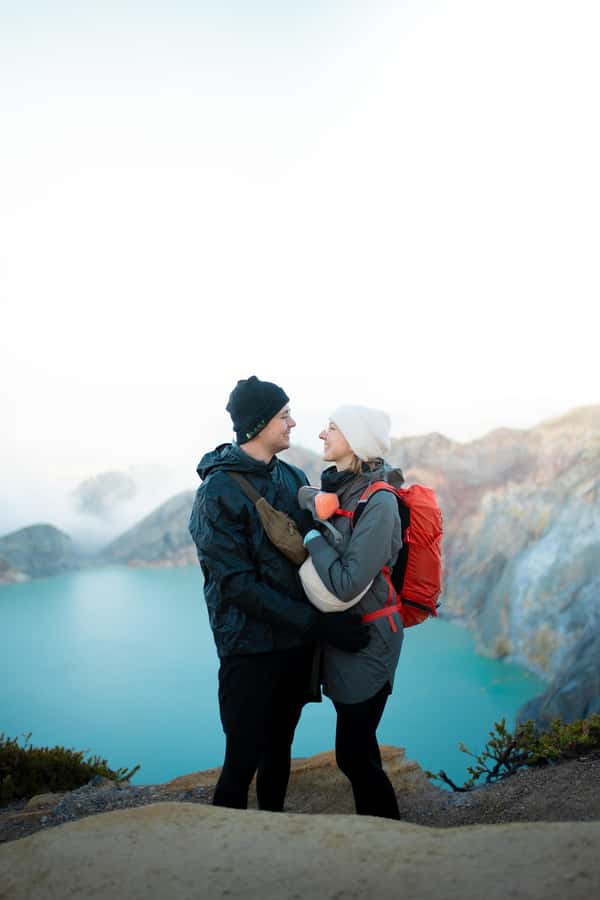
The strongest part of this tour is the guide service. Names that come up repeatedly include Suleiman, Sulliman, Soufian, and Sule. The descriptions of their work are consistent: good humor, strong energy, clear English in at least some cases, help on hard sections, and regular checks that people are managing safely.
Suleiman in particular is praised for making the long walk feel easier through humor and enthusiasm. Sule is also praised for helping with photos and speaking with guests in English, French, and German during one outing. The language listed for the activity is English and Malay, so you should not assume every guide will speak all three languages.
A good guide makes a difference on a night hike. You need someone who can explain when to use the gas mask, point out difficult sections, keep the group moving, and help people who are struggling. The guides appear to bring that practical support along with a cheerful attitude.
There is one limitation. This is a combined group package, not a private walk. Different walking speeds may mean the guide spends time moving between people. If you want constant one-to-one attention, a private arrangement would be worth asking about, though no private option is specified here.
The descent, local vendors, and the drive back
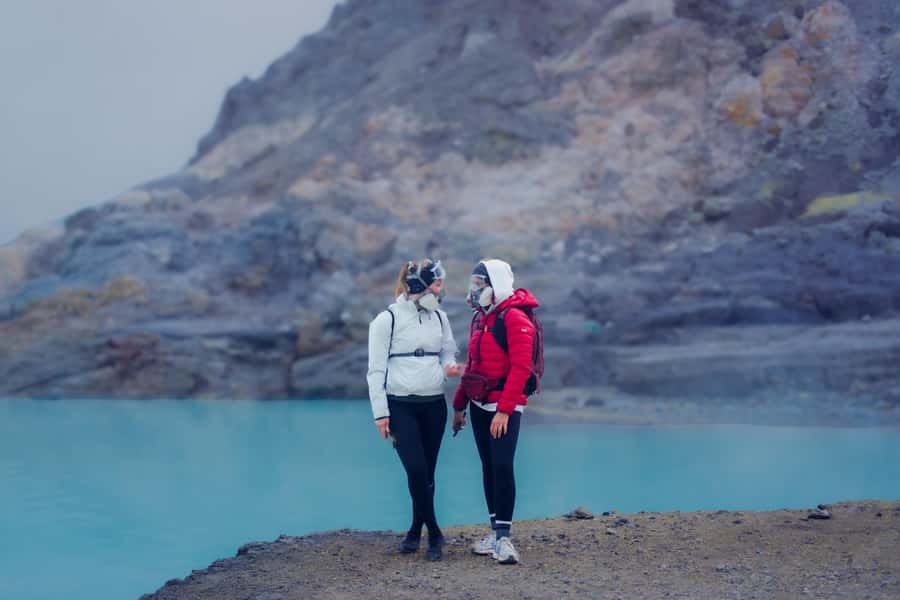
After sunrise, you walk back down to the starting point. The descent gives you more time to see the surrounding views, and many people find downhill walking easier than the climb. It can still be tiring after a night without normal sleep and a steep uphill route.
At the trailhead, you can rest and refresh. Local vendors sell snacks and drinks, giving you a chance to replace some energy before the drive back to Banyuwangi.
The tour then returns you to your hotel. The full activity lasts about nine hours, with roughly six hours allocated to the Ijen visit, including the guided tour, hiking, scenic stops, and sunrise.
One small but useful reminder: return the headlamp and gas mask before leaving the group. A participant accidentally kept the mask and headlamp in a bag, requiring the driver to collect them from the hotel the next day. It is an easy mistake after a long night, but checking your gear at the trailhead saves everyone trouble.
What the $25 price really includes
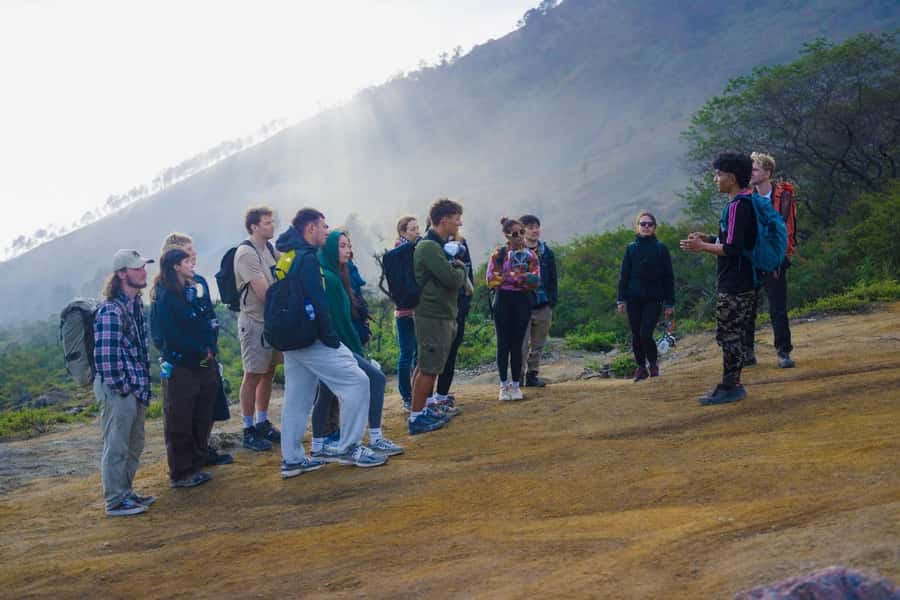
At $25 per person, this is strong value if you want the main logistics handled. The price includes:
- Round-trip transport from Banyuwangi to Kawah Ijen
- Kawah Ijen entrance ticket
- Ijen crater insurance
- An experienced local guide
- Headlamp and gas mask
- First aid and portable oxygen
- Mineral water
That is a useful bundle. You avoid arranging a nighttime transfer, buying an entry ticket separately, and finding safety equipment at the last minute. The guide is also important because the timing and crater conditions are not simple to manage alone.
The price does not include the cost of a medical certificate or personal expenses. Snacks and drinks at the trailhead are extra, and you should budget for those if you expect to be hungry after the hike.
The low price comes with a tradeoff: this is a shared experience. You may have to match a group pace, wait while someone catches up, or briefly lose sight of the guide in a busy section. For many people, the savings outweigh that inconvenience. If you need a private pace or highly personal service, the package may feel less comfortable.
Free cancellation is available up to 24 hours before the activity for a full refund, and you can reserve now and pay later. Those terms are useful for a mountain outing where conditions and personal health matter.
Who should and should not book this trek
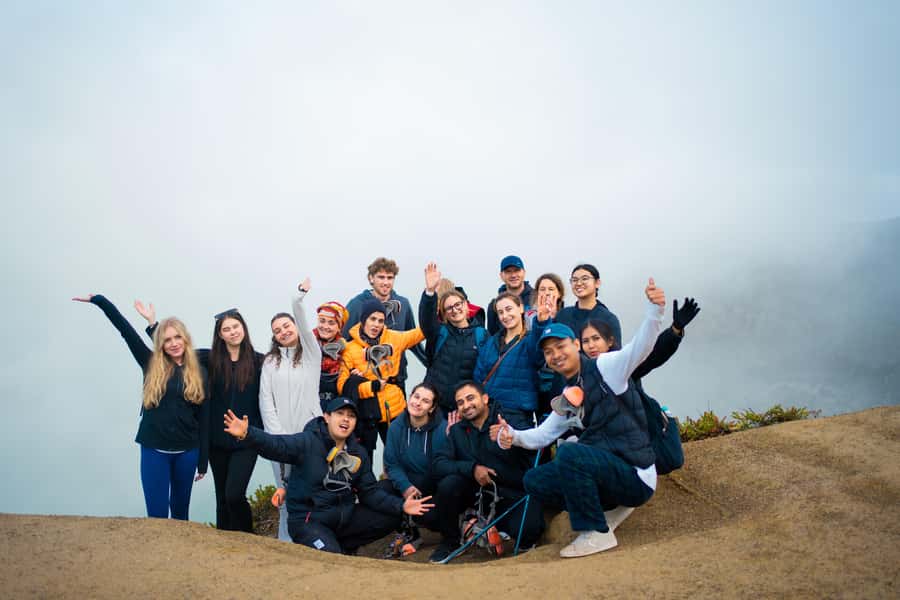
I would recommend this for fit adults who want an unusual volcanic experience and are comfortable starting around midnight. You should be ready for a strenuous hike, dark conditions, sulfur gas, a possible crater descent, and limited sleep.
It is not suitable for children under 12, pregnant women, or people with respiratory issues. A valid health certificate is required, so arrange that before the pickup date. Bring your passport, or a copy, along with a camera and snacks.
Jewelry is not allowed. Leave it behind, along with anything you do not need for the walk.
The mountain can close for safety reasons. Ijen is closed every Friday in the first week, and the reopening notice makes clear that volcanic and gas conditions can change. Check availability and current operating information before setting your wider Java schedule around this trip.
Should you book the Ijen Blue Fire trek?
Book it if you want a rare natural sight, do not mind a tough night hike, and value having transport and safety gear arranged for you. The guides, especially Suleiman and Sule, add warmth and practical help, while the combination of blue fire, sunrise, turquoise water, and sulfur miners gives the morning real variety.
Skip it if you need a relaxed outing, have breathing problems, dislike heights, or cannot manage a steep trail in the dark. The $25 price is excellent for the inclusions, but this is still a demanding mountain trip with real volcanic risks.
For the right person, it is a memorable use of one night in Banyuwangi. Just arrive prepared, stay close to the guide, respect the gas warnings, and save enough energy to enjoy the sunrise after the flames fade.
FAQ
How long does the Ijen Blue Fire tour last?
The full activity lasts about nine hours. The Ijen portion is listed as six hours and includes the guided visit, hiking, scenic views, blue fire, sunrise, and the return walk.
Where does pickup take place?
Pickup is included from your hotel in Banyuwangi Regency. You should wait in the hotel lobby.
What languages are available for the guide?
The activity lists English and Malay as available guide languages.
Is transportation included?
Yes. Round-trip transportation from Banyuwangi to Kawah Ijen is included.
Is the Kawah Ijen entrance ticket included?
Yes. The entrance ticket to Kawah Ijen is included in the price.
Is safety equipment provided?
Yes. The tour supplies a gas mask and headlamp. First aid and a portable oxygen tank are also included.
Do I need a medical certificate?
Yes. A valid health certificate is required, and the cost of obtaining the medical certificate is not included.
Who should not take this trek?
It is not suitable for children under 12, pregnant women, or people with respiratory issues. The hike is strenuous and may also be uncomfortable for anyone afraid of heights, particularly during the crater descent.
Can I cancel the booking?
You can cancel up to 24 hours in advance for a full refund. You can also reserve now and pay later.
More Early-Start Trips around Indonesia
- Mount Batur Sunrise Trekking Private All Inclusive
★ 5.0 · 906 reviews - Mount Batur Sunrise Trekking Private Tour with Breakfast and Hotel Transfer
★ 5.0 · 885 reviews - Private Mount Batur Sunrise Trekking Tour
★ 5.0 · 634 reviews - Mount Batur Sunrise Trekking (Private Tour and Breakfast at Restaurant)
★ 5.0 · 598 reviews
Just added around Indonesia
- From Banyuwangi: Day Trip to Ijen Volcano with Guided Trek★ 4.9 · 10 reviews
- From Bali : The Majestic Mount Ijen Sunrise Trekking★ 4.6 · 17 reviews
- From Bali: Ijen Volcano Sunrise Hike with Transfer & All Fee★ 4.8 · 139 reviews
- From Bali: Private Mount Ijen Crater Volcano Midnight Trek★ 3.9 · 27 reviews
- Explore rice terraces munduk & waterfall trekking experience★ 4.9 · 7 reviews
- Bukit Lawang: Jungle Trekking and Rafting Day Trip★ 4.6 · 7 reviews
- Banyuwangi: Mt. Ijen Sunrise Hike with Pickup & Health Check★ 4.9 · 109 reviews
- Banyumala Waterfall Trek, Bedugul and Lake Beratan Tour★ 4.7 · 85 reviews
Indonesia Hiking Tours, compared.
Sunrise Mount Batur Guided Hike with Breakfast
Read our review →
Mount Batur Sunrise Guided Hike and Natural Hot Spring
Read our review →
Mount Batur Sunrise Trek With Guide and Breakfast
Read our review →
Mount Batur Sunrise Hike and Natural Hot Spring Option
Read our review →
Mount Batur Sunrise Trekking Private All Inclusive
Read our review →Browse the lists this tour appears in