
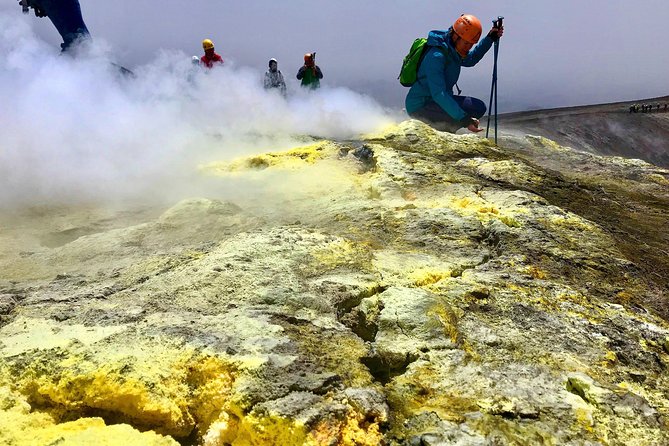
REVIEW · ITALY HIKING TOURS
Etna – Trekking to the summit craters (only guide service) experienced hikers
Etna rewards strong legs. This demanding north-side excursion combines a 4×4 ride through lava fields with a guided climb toward Mount Etna’s summit craters, reaching roughly 3,323 meters when volcanic conditions allow. I like the quieter setting at Piano Provenzana and the small-group format, which make the experience feel less like a conveyor belt and more like a serious mountain outing.
I also like the guides’ clear focus on geology, safety, and volcanic activity. Guides such as Nikos, Daniele, Poldo, Paolo, and Raphael receive especially warm praise for explaining the volcano while keeping the pace manageable. The main drawback is the long return on foot, plus an extra charge of €50 per person for the one-way off-road vehicle ride from the lower station, with a higher fee if you return by bus.
Key points before you book
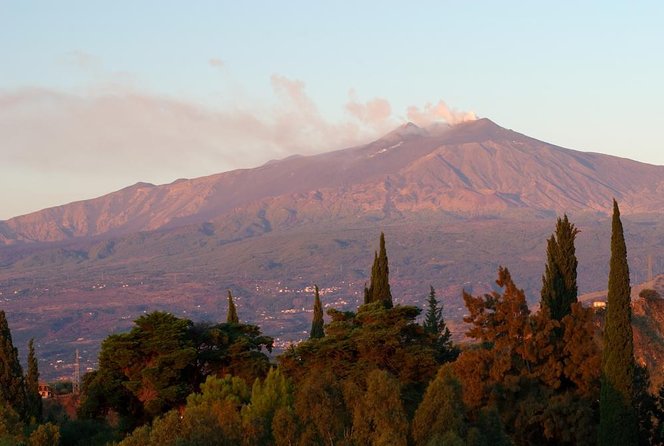
- The north side feels quieter: Piano Provenzana is less crowded than Etna’s southern station and sits among pine forest, lava flows, and the remains of the 2002 eruption.
- The hike is for fit adults: Expect about 12 to 13 kilometers overall, with a 550-meter climb and a much longer descent of roughly 1,500 meters.
- The summit route can change: Guides select the safest possible route based on gas, heat, fractures, weather, and current volcanic restrictions.
- The group stays small: The maximum group size is 12 people, giving the guide room to answer questions and adjust the pace.
- Equipment is supplied: Trekking poles, shoes, helmets, a warm jacket, extra socks, and an extra backpack are included, though you should still bring proper clothing.
- The extra transport fee matters: The listed price is $139.13 per person, but the one-way off-road ride is paid locally and is not included.
Why Piano Provenzana is the right starting point
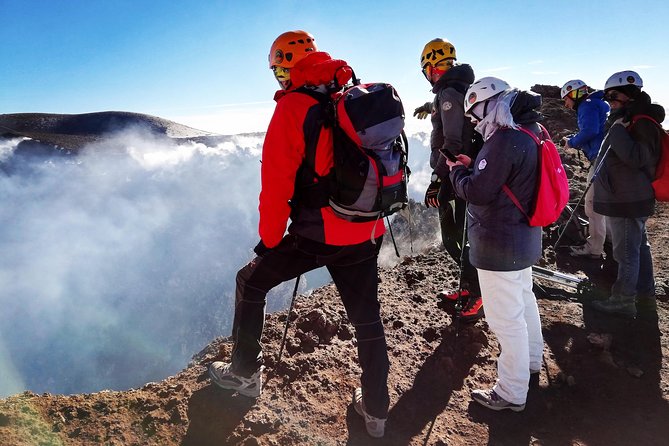
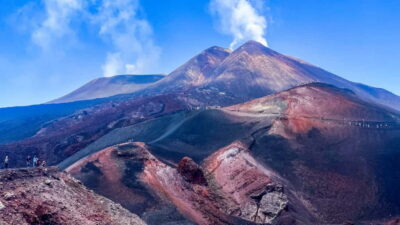
Piano Provenzana gives you a more open and rugged introduction to Etna than the busier southern side. The starting area sits at about 1,800 meters, surrounded by pine forest, black lava, and broad views across the north of Sicily.
This is not just a convenient parking area. The site was destroyed by the October 27, 2002 eruption, and the old ski facilities were reshaped by the lava. You can see the volcano’s recent power before the climb even begins. It is a useful reminder that Etna is an active volcano, not a dormant museum piece.
You meet the guide at Chiosco Bar Mareneve di Ferraro on Via Provenzana. The meeting time is 7:45 a.m., with departure usually between 8:00 and 8:15. From May through October, an afternoon departure at 1:00 p.m. may also be available.
Arrive early enough to use the restroom and get a coffee, tea, or pastry. There are cafés, bars, souvenir shops, parking areas, and places to refill water bottles. Parking costs €5 for the full day on weekdays and €8 on Sundays and public holidays.
The access road is paved and suitable for a private or rental car. In winter, carry snow chains or use winter tires. There is no accommodation pickup, so you must arrange your own way to Piano Provenzana.
More Volcano Hikes in Italy
- Mount Etna: Summit Guided Hiking Tour up to 3,400 m
★ 4.8 · 4,792 reviews - Mount Etna: Trek to 3000m with cable car and 4×4
★ 4.6 · 3,823 reviews - Mount Etna: Summit Crater Trek with Cable Car
★ 4.8 · 1,875 reviews
The 4×4 ride across Etna’s north flank
After a safety briefing, you board an authorized 4×4 vehicle for the climb from 1,800 meters toward the high mountain station. The drive follows about 9.5 kilometers of rough track and gains height through a striking sequence of volcanic scenery.
You pass forest, fresh-looking lava flows, eruptive cracks, lateral craters, and a lava-flow channel. Some lateral craters are more than 40 meters deep. The route reaches about 2,960 meters, where the walking portion begins.
The ride is valuable because it removes a long, rough approach on foot and gets you quickly into the high volcanic zone. It also gives you a moving view of Etna’s changing surfaces, from green woodland to bare black and gray scoria.
On clear days, look for northern Sicily, the Aeolian Islands, Calabria, the Strait of Messina, and both the Ionian and Tyrrhenian seas. Exceptional visibility can reveal the Madonie range, the Gulf of Catania, Syracuse, Augusta, and the wide Valle del Bove.
Do not expect perfect views. Cloud, wind, ash, and volcanic conditions can change quickly at this height. The drive is part of the adventure, but the rough track can feel bumpy, and the high point is cold even when Sicily below is warm.
What the summit hike actually demands
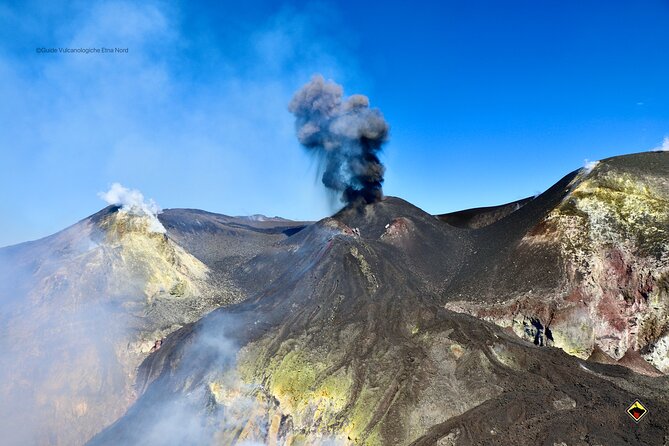
From approximately 2,960 meters, the guided climb heads toward the summit area. The ascent covers around 5 kilometers and gains about 550 meters, reaching an altitude between 3,000 and 3,323 meters when access is permitted.
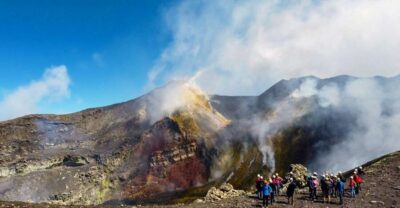
The route aims toward Etna’s four principal summit craters: the North-East Crater, Voragine, Bocca Nuova, and the South-East Crater. You will not necessarily visit every crater edge. The guide decides where to go based on the day’s activity and the safest route available.
That flexibility is essential. Gas, heat, unstable rock, fractures, and sudden changes in volcanic conditions can close areas without much warning. The guide may stop below the highest point or redirect the group to a safer crater. Some excursions have reached around 3,000 meters rather than the advertised maximum because of eruptive activity.
This is also why a clear understanding of the product matters. You are booking a summit-area trek, not a guaranteed visit to one exact crater at one exact height. On an active volcano, safety rules and conditions control the route.
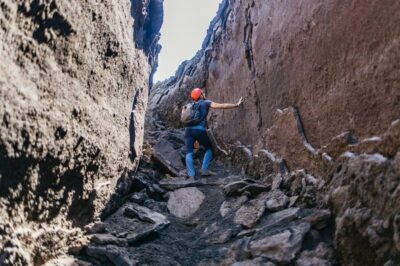
The climb travels across soft scoria and sandy gullies. You may find the surface surprisingly tiring because your feet sink and slide with each step. The thin air adds to the effort, and even healthy hikers can feel fatigue or mild altitude effects.
Guides usually include stops for explanations and recovery. The most praised part of the experience is often the human side: guides explain Etna’s eruptions, crater formation, gases, and lava flows in a way that makes the black slopes easier to understand. Nikos, Daniele, Poldo, Paolo, and Raphael are singled out for warmth, humor, patience, and strong command of volcanic subjects.
The descent is the part to respect
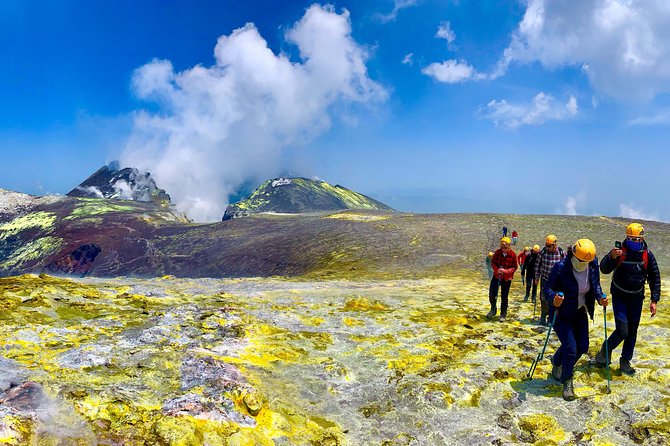
The return is not a gentle walk back to the vehicle. The route descends on foot from roughly 3,300 meters to 1,800 meters, losing about 1,500 meters of elevation over approximately 7 kilometers.
Many people find the downhill harder than the ascent. Your knees and ankles absorb the strain, while loose ash and small lava stones can shift under your boots. The path eventually reaches the broad Piano delle Concalze, then crosses about 2.5 kilometers of ski slopes with rougher, stony ground.
Long socks and trousers that cover your ankles are smart choices. Fine volcanic grit can work into your shoes, and small stones may enter around the cuffs. Several people also recommend sturdy hiking clothing, sunscreen, and a windbreaker. Bring lightweight gloves, especially if you sometimes use your hands for balance on rough rock.
The total walking distance is around 12 to 13 kilometers, and the active portion takes roughly six hours, although the published duration is about five and a half hours. Allow extra time. One experience took about six and a half hours from the morning meeting until arrival back at the parking area.
This is not the place to test your fitness for the first time. You need good physical health, strong knees, and enough stamina for a high-altitude climb followed by a long descent. The activity is not suitable for children under 12, and it is not intended for people with serious breathing conditions or hypertension.
Same trailhead, a different kind of day:
- Cinque Terre Day Trip with Optional Hiking or Pisa
★ 5.0 · 8,486 reviews - Florence: Cinque Terre Day Trip with Optional Hiking or Pisa
★ 4.9 · 4,848 reviews - Etna: summit craters trekking with volcano guide 3350mt
★ 4.7 · 1,712 reviews - Catania: Mount Etna Trekking Tour Beyond the Tourist Trails
★ 4.9 · 1,596 reviews
Clothing, equipment, and what you still need
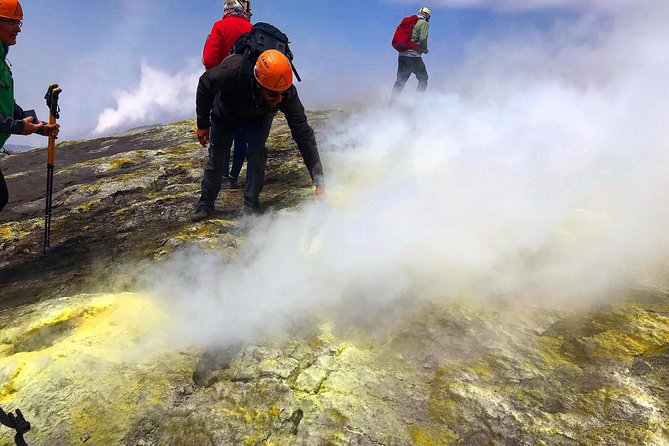
The tour includes a licensed volcano guide, trekking poles, trekking shoes, helmets, a warm jacket, extra socks, an additional backpack, accident insurance, and entry to Mount Etna.
That equipment is a major value if you are traveling light or do not want to pack mountain gear for a single day. Still, do not treat the supplied jacket as your entire clothing plan. Etna’s summit zone can be cold and windy, so wear warm layers and bring a hat and gloves in autumn, winter, and spring.
You should also carry water, snacks, sunscreen, sunglasses, and a packed lunch. There is no promise of a meal on the mountain, and food tastes particularly welcome after the steepest part of the climb.
Contact lenses are discouraged because volcanic gases and ash can irritate your eyes. You should tell the guide about relevant health conditions before setting out. The ground is unstable in places, and gas emissions can occur near active areas.
Pay attention to the footwear rule. Without adequate shoes, you are not covered by the insurance. The supplied trekking shoes solve that issue, but confirm what is available when you arrive and wear the footwear that the guide approves.
The real cost and what it buys you
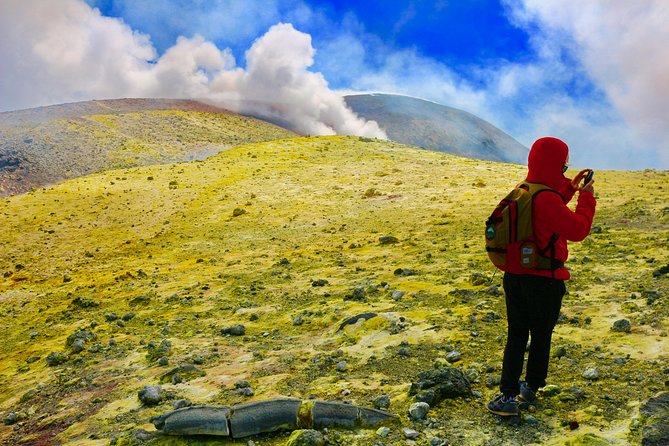
The advertised cost is $139.13 per person. That covers the guide service, equipment, insurance, and access to Etna, but it does not cover transport from your accommodation, parking, or the off-road vehicle connection.
The one-way off-road vehicle ride from 1,800 meters to the upper station costs €50 per person and is paid on site. If you choose to return by public bus from around 2,850 meters to 1,800 meters, the stated charge is €70 instead of €50.
That extra fee can surprise people because the ride lasts less than ten minutes in some sections. Still, the 4×4 transfer is not just a sightseeing add-on. It takes you to high ground that would otherwise add a long and tiring approach to an already demanding day.
At roughly $139.13 before the local vehicle charge, the experience offers solid value for a licensed volcano guide, equipment, a small group, and access to the upper slopes. It becomes less attractive if you expected every transport cost to be included. Read the price details carefully and carry enough cash or payment options for the local charge.
Weather, volcanic rules, and changing plans
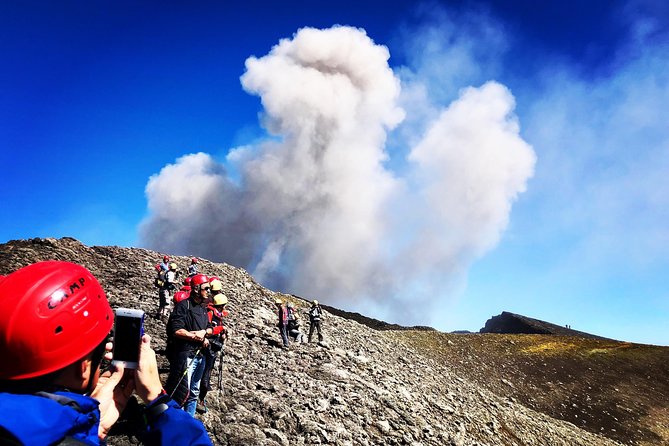
Etna controls the schedule more than any company does. Weather, ash, ice, snow, gas, and eruptive activity can all force a route change or cancellation.
Guides follow current orders from the authorities. They may stop at a lower height, choose a different crater, or end the excursion if conditions threaten the group. That is not a failure of the experience. It is the basic rule of walking on an active volcano.
Still, you should understand the risk of booking a summit trek. One outing ended early in poor weather, while another reached only about 3,000 meters after volcanic activity closed the higher route. If the activity is canceled because of poor weather or because the minimum group size is not met, you can choose another date or receive a full refund.
You can cancel for a full refund up to 24 hours before the start time. Changes or cancellations inside that window are not accepted for a refund.
Who will enjoy this Etna experience
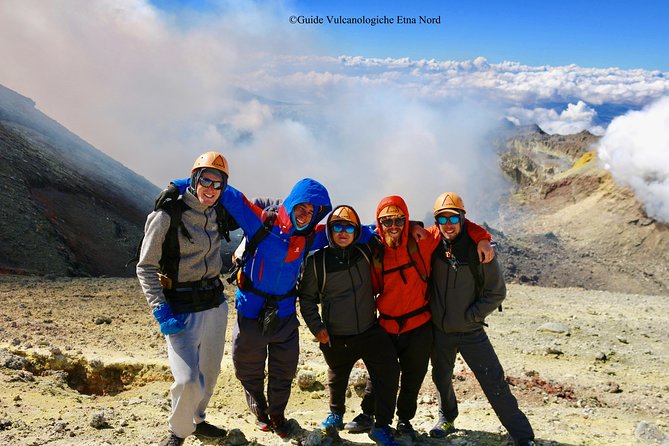
I would choose this tour if you want a serious mountain day, not a quick photo stop. It suits hikers who enjoy loose volcanic ground, changing conditions, long descents, and detailed explanations from a guide.
It is also a good fit if you want the quieter north side of Etna. Piano Provenzana feels less crowded than the southern station, and small groups of around 10 or fewer can make the guide’s explanations easier to follow.
I would not choose it if you want guaranteed access to 3,323 meters, dislike steep downhill walking, or have limited physical fitness. You should also think twice if cold, wind, ash, or unstable ground will make you uncomfortable.
The 4.9 rating from 286 ratings and a 97 percent recommendation rate reflect the tour’s strongest qualities: excellent guides, careful organization, impressive volcanic scenery, and a genuine sense of reaching a wild high place. The main complaints concern the extra transport cost, the physical effort, and route changes caused by volcanic restrictions.
Should you book the summit crater trek?
Book it if you want Etna in its most powerful setting and are ready to work for the view. The north-side approach, expert guides, supplied gear, and access to the summit area make this one of the more serious Etna outings available from Piano Provenzana.
Before booking, check the weather, prepare for a six-hour mountain day, and budget the additional €50 vehicle fee. Bring warm layers, long socks, gloves, water, food, sunscreen, and patience for a route that may change.
For a fit hiker, this can be the highlight of a Sicily trip. For anyone seeking a relaxed volcano visit, choose a shorter option instead.
FAQ
Where does the Etna summit trek start?
The meeting point is Chiosco Bar Mareneve di Ferraro at Etna Nord, Piano Provenzana, Via Provenzana, 95015 Linguaglossa CT, Italy. The meeting time is 7:45 a.m.
How long does the excursion take?
The stated duration is about five hours and 30 minutes, but the walking portion and return can make the full day closer to six hours or more. One schedule took about six and a half hours from meeting time to return.
How far do you walk?
The total walking distance is about 12 to 13 kilometers. The route includes a climb of about 5 kilometers and a descent of about 7 kilometers.
Is the hike suitable for beginners?
The tour requires good physical fitness and is intended for experienced hikers. Loose scoria, unstable volcanic rock, high altitude, and the long descent make it unsuitable for people who are not prepared for strenuous walking.
Is the off-road vehicle included in the price?
No. The one-way off-road vehicle ride from 1,800 meters to the upper station costs €50 per person and is paid locally. Returning by public bus from around 2,850 meters costs €70 instead of €50.
What equipment is provided?
The tour includes trekking poles, trekking shoes, helmets, a warm jacket, extra socks, and an extra backpack. You should still bring suitable layers, gloves, water, snacks, sunscreen, and other personal items.
Will I definitely reach the summit at 3,323 meters?
No. The guide selects the highest safe route based on volcanic activity, gas, heat, fractures, weather, and official restrictions. The excursion may stop lower or be redirected for safety.
Just added around Italy
- From Catania: Mount Etna Trekking Private Experience★ 4.6 · 11 reviews
- From Cala Gonone: Gorropu hiking with lunch★ 4.8 · 46 reviews
- Florence: Hiking Tuscany & Chianti wine 3 wineries and lunch★ 5.0 · 9 reviews
- Explore the Dolomites, a hiking day in the mountains★ 5.0 · 8 reviews
- Etna: Trekking to the summit craters at 3340 meters★ 4.0 · 10 reviews
- Catania: Etna Morning or Sunset Trek with Lava Tunnel & Gear★ 5.0 · 27 reviews
- Etna: hiking to a stunning viewpoint over Valle del Bove★ 4.8 · 22 reviews
- Etna: Summit Area Guided Hike from Cable Car Station★ 4.8 · 36 reviews
Italy Hiking Tours, compared.
Cinque Terre Day Trip with Optional Hiking or Pisa
Read our review →
Florence: Cinque Terre Day Trip with Optional Hiking or Pisa
Read our review →
summit craters trekking with volcano guide 3350mt
Read our review →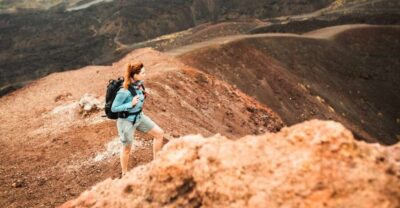
Mount Etna Trekking Tour Beyond the Tourist Trails
Read our review →Browse the lists this tour appears in