
REVIEW · NORWAY HIKING TOURS
Flåm: Tvinde Waterfalls, Stalheimskleiva Hike & Gudvangen
Norway packs drama into every mile. This four-hour outing from Flåm takes you through the Gudvangatunnel, to the 110-meter Tvindefossen waterfall, along historic Stalheimskleiva, and down to Gudvangen. I especially like the variety of stops and the chance to walk instead of watching Norway slide past a bus window. The relaxed pace is another plus, with time for photographs and short walks.
The main caution is value. At $110 per person, this is not a bargain if you expect a full guiding service or a long stop at every viewpoint. Some visitors found the English explanations hard to follow, while others praised the friendly guide and clear commentary. You should also know that the planned short stop in Gudvangen may feel long if you prefer mountain viewpoints to village sightseeing.
What makes this Flåm outing worth considering
- Tvindefossen drops 110 meters: Flat paths lead toward the base, where you can see the waterfall split into bright streams over old rock.
- Stalheimskleiva has 14 hairpin bends: The 1.5-kilometer walk gives you a close look at one of Norway’s steepest historic roads.
- Two waterfalls frame the valley: Sivlefossen and Stalheimsfossen fall on opposite sides of the route.
- The Gudvangatunnel is part of the journey: At 11.4 kilometers, it is one of Norway’s longest road tunnels.
- Gudvangen adds a fjord-level view: The village sits at the end of the Nærøyfjord, surrounded by steep mountains.
- Stegastein is a separate add-on: You may arrange it after the main tour for an additional 34 euros, subject to availability.
Starting in Flåm, a tiny village with a big view
The tour begins in Flåm, at the inner end of the fjord in Flåmsdalen Valley. Only around 350 people live here, yet the village receives close to half a million visitors each year. That tells you something about the setting: Flåm is small, but it sits in one of Norway’s most heavily visited scenic corners.
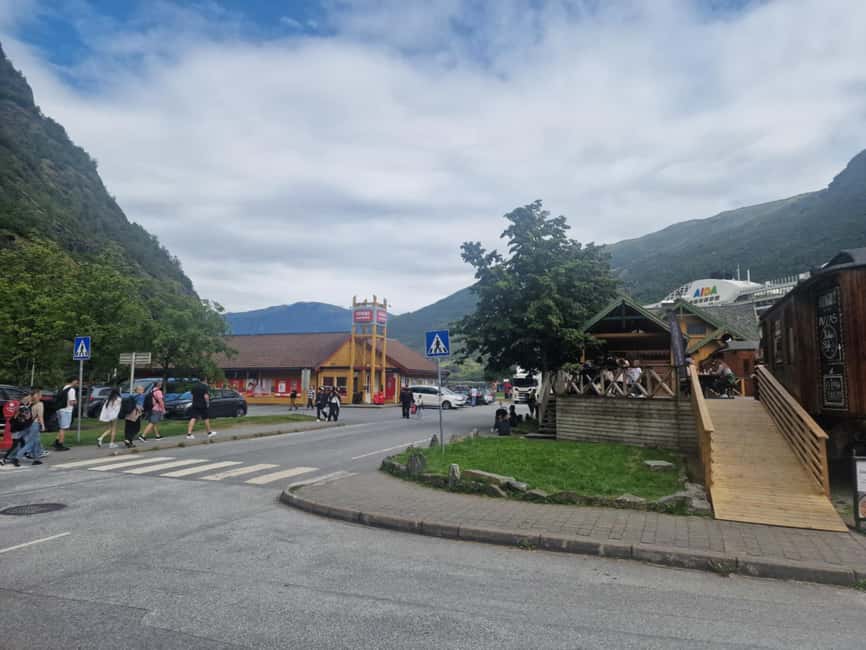
If you arrive by cruise ship, do not wait until the last minute to find the bus. The meeting point is about a five-minute walk from the port. Cross the small bridge, turn left, and follow the road for two or three minutes until you see the large Flåm parking lot on the right. The vehicle waits inside the lot, not directly at the ship terminal.
Look for a white bus or maroon minibus with the Eidfjord Shuttle Bus logo. I would arrive 10 to 15 minutes early, especially if you are unfamiliar with Flåm or traveling with children. The meeting directions include a photograph on the booking page, and checking it before departure could save you a rushed start.
The transport runs between Flåm and Gudvangen, with an English or Tagalog-speaking driver and guide. This is a road tour, not a private car excursion, so expect to share the vehicle with other people. Exact group size is not provided, but the use of both a bus and minibus suggests that vehicle type can vary.
More Waterfall Hikes in Norway:
- Frafjord Paddling & Månafossen Waterfall Hike Stavanger
★ 5.0 · 22 reviews - Alta: Igloo Ice Hotel and Hiking to the Frozen Waterfall.
★ 5.0 · 8 reviews - From Marrakech: Ouzoud Waterfalls Guided Hike and Boat Trip
★ 4.7 · 33,630 reviews
Through the Gudvangatunnel into the fjord country
After leaving Flåm, the route heads through steep mountains and narrow valleys toward Gudvangen. The Gudvangatunnel stretches for 11.4 kilometers, making it one of Norway’s longest road tunnels.
A tunnel is not a scenic stop, of course, but it helps explain the region. These roads cut through solid mountain country, linking small communities that would otherwise be separated by cliffs, snow, and water. Once you emerge, the reward is a succession of steep valley walls, waterfalls, and open views connected with the UNESCO-listed Nærøyfjord area.
The drive is one of the strongest parts of the outing for anyone who wants to see more than Flåm itself. You get a wider sense of the region, rather than spending the entire day at one viewpoint. The tradeoff is that part of the four hours is spent in the vehicle, including the long tunnel crossing.
Bring a camera, but do not spend the entire drive looking through it. The scenery changes quickly, and some of the best views may appear between planned stops. If you are sensitive to road motion, you may want to eat lightly before departure, since the route includes mountain roads and switchbacks.
Tvindefossen: a 30-minute waterfall stop

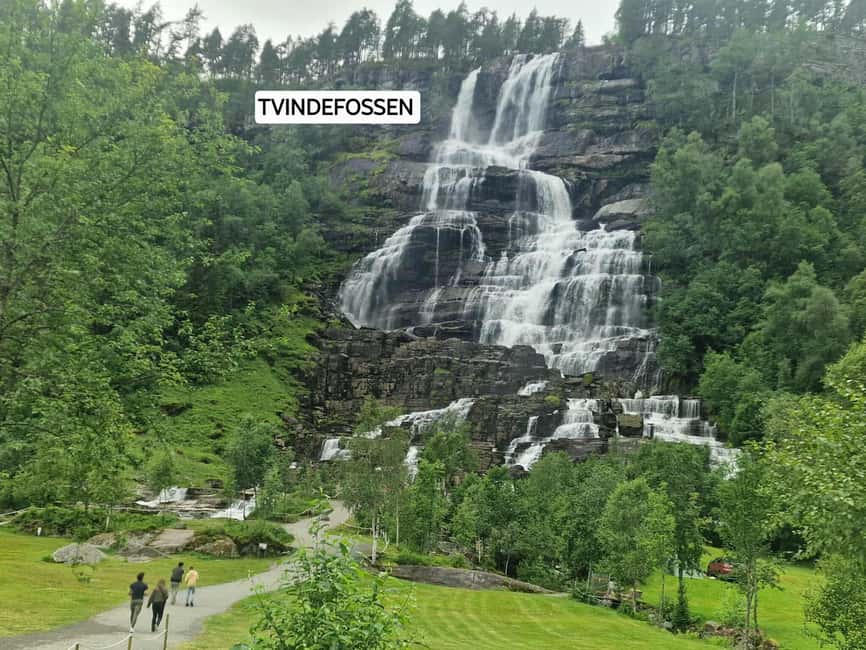
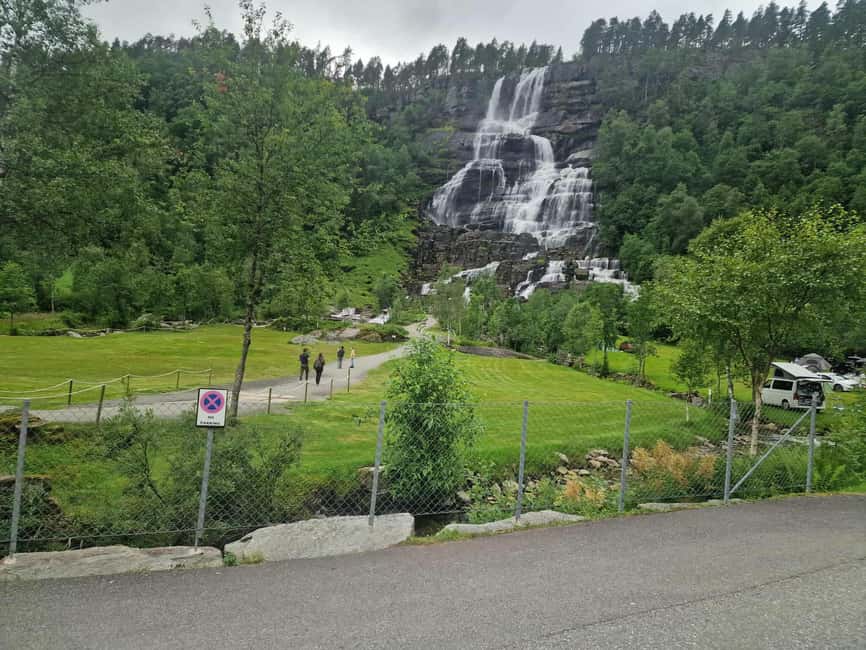
The first major stop is Tvindefossen, a 110-meter waterfall that splits into several silver streams as it drops down the rock face. The water runs over ancient formations, with the cliff and surrounding mountains providing the setting.
You get about 30 minutes here for photographs and a walk. That is enough time to reach the viewpoints near the base, pause in the cool spray, and take in the falls without turning the visit into a long hike. The paths are described as flat and well maintained, making this the easiest walking stop on the route.
Tvindefossen is often called the Fountain of Youth. That name comes from local legend, not from a promise you should take literally, but the misty air and rushing water do give the place a refreshing feel. This is a good stop for families and for anyone who wants an accessible waterfall visit without a demanding trail.
The limitation is time. Thirty minutes lets you see the main area, not explore every angle. If you want a quiet, solitary encounter, the group schedule may feel brisk. Still, as an opening stop, Tvindefossen works well: it gets you out of the vehicle early and gives you a clear taste of Norway’s scale.
Walking Stalheimskleiva and seeing two waterfalls
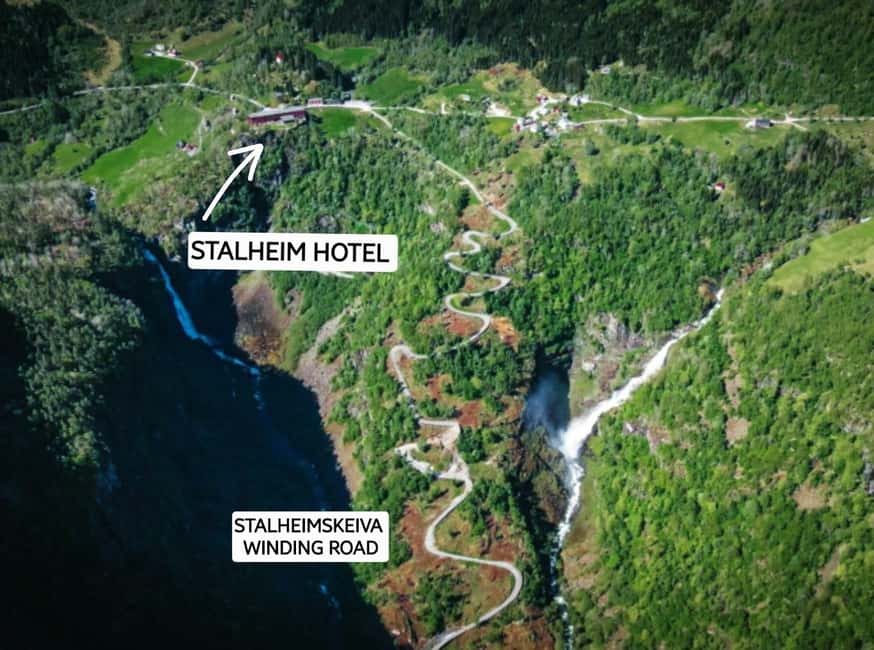
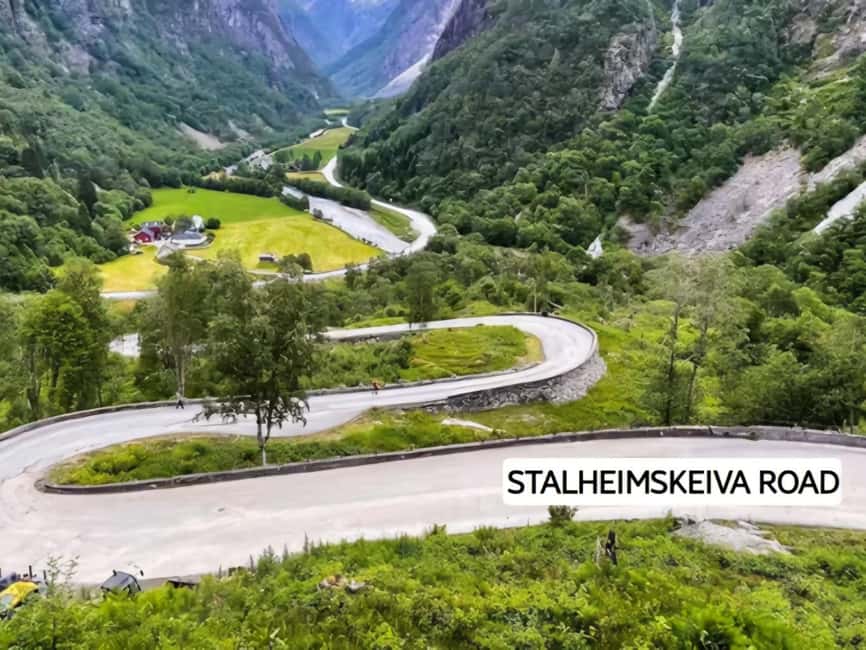
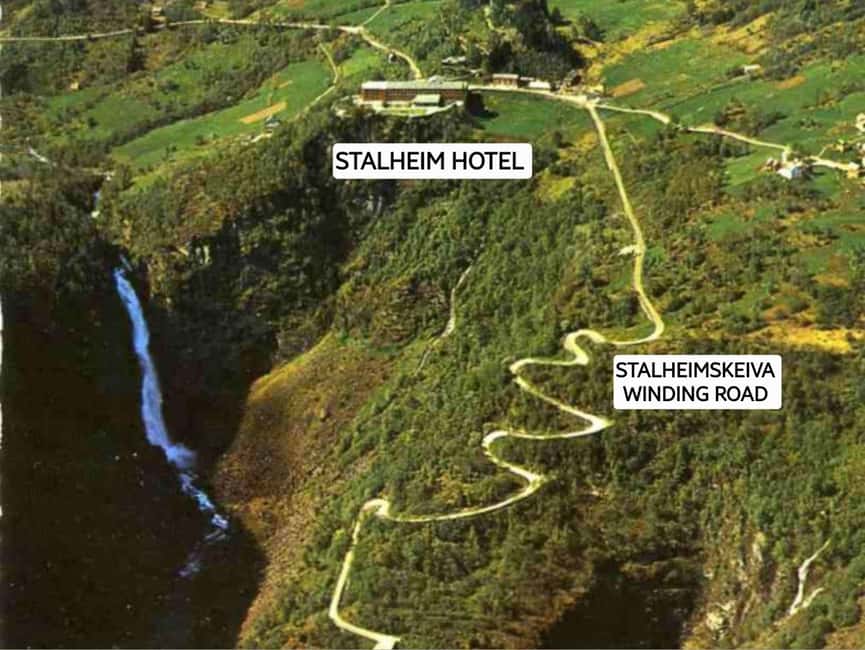
The most distinctive part of the day is the walk along Stalheimskleiva. This historic mountain road runs for about 1.5 kilometers and is known for its 14 hairpin bends. It is also regarded as one of Northern Europe’s steepest historic roads.
This is not simply a photo pullout. You walk along the route and look across the Nærøydalen Valley, which forms part of the UNESCO World Heritage area. The bends show how engineers built a route through a difficult mountain pass, while the views explain why the road remains famous.
The scenery here has a different character from Tvindefossen. At the waterfall, you focus on falling water close at hand. At Stalheimskleiva, you look outward across the valley and downward along the twisting road. The contrast gives the tour a useful rhythm.
Two waterfalls add drama to the walk. Sivlefossen drops on one side, while Stalheimsfossen plunges on the other. Depending on the conditions and your position along the road, you may hear or see them more clearly than at a single formal viewpoint.
Wear sturdy shoes with a good grip. The walk is only 1.5 kilometers, but this is a mountain road rather than a smooth city promenade. The tour information does not give a detailed elevation profile or a precise accessibility assessment. It does state that the activity is not suitable for wheelchair users, and the route should be treated as a real outdoor walk.
Stalheimskleiva also hosts the annual uphill race called Stalheimskleiva Opp. That detail gives the road a sporting identity, but you do not need to be a runner to enjoy it. The appeal is the combination of engineering, waterfalls, and valley views in one short stretch.
A few more hikes around Norway worth a look
- From Tromsø: Snowshoeing Hike with Picnic Lunch and Photos
★ 4.9 · 840 reviews - From Tromsø: Guided Husky Snowshoe Hike and Husky Camp Visit
★ 4.9 · 715 reviews - From Tromsø: Snowshoe Hike in the Arctic
★ 4.9 · 467 reviews - Guided hike to Pulpit Rock Preikestolen
★ 5.0 · 390 reviews
Gudvangen at the end of the Nærøyfjord
After the mountain road, the route continues down toward Gudvangen. This fjord village sits at the end of the Nærøyfjord and is surrounded by steep mountains and waterfalls.
The stop is intended mainly for photographs. Gudvangen gives you a lower, more enclosed view of the region, with the mountains rising sharply around the water. It is a useful contrast to the open valley views from Stalheimskleiva.
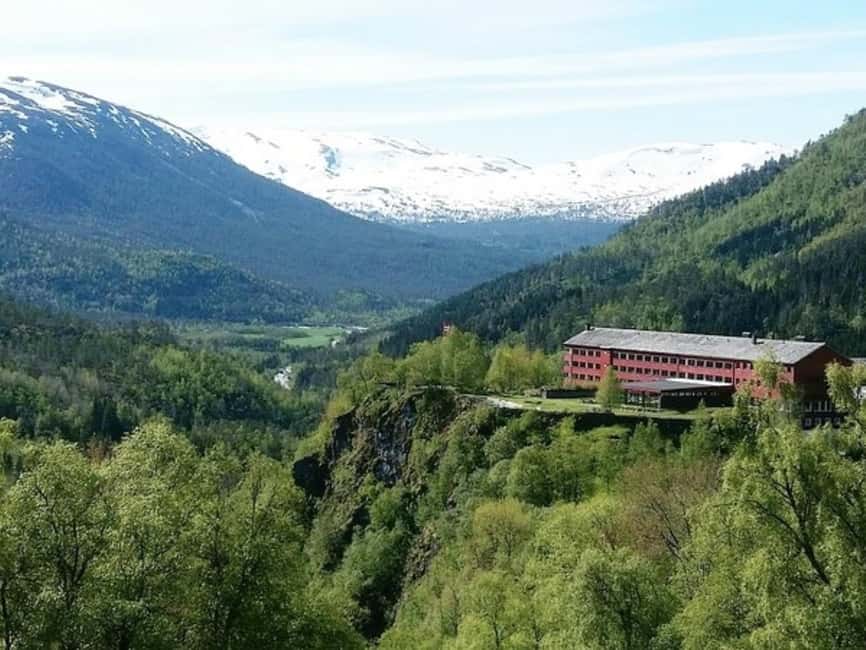
The timing here deserves attention. The planned description presents Gudvangen as a short photo stop, but one account found that the stop in the Viking village area lasted close to an hour. That could be welcome if you enjoy village atmosphere and cultural displays. If you would rather spend more time near the upper viewpoint by Hotel Stalheim, it could feel too long.
This is one place where your own priorities matter. If you want a fast-moving scenic circuit, confirm the expected timing with the driver at the start. If you like having time to look around without being rushed, the longer stop may suit you. The tour’s schedule appears relaxed overall, but exact time at each stop may shift.
How much guiding will you receive?
The quality of the commentary appears to be the most uneven part of the experience. Some people found the guide very helpful and friendly, with clear explanations at the stops. Others felt there was little information about the sights, and one person had difficulty understanding the guide’s English.
That matters because this tour is more than transport. The waterfalls and roads are easy to admire on your own, but historical and geographic context helps you understand what you are seeing. If the commentary is brief on your departure, ask direct questions at Tvindefossen or Stalheimskleiva. The driver may be able to add useful details even if there is no long talk during the drive.
The guide language is listed as English and Tagalog. There are no named guides provided, so you should not book this expecting a particular guide. I would think of the experience as a scenic road tour with guiding, rather than a fully narrated cultural excursion.
That distinction helps set a fair expectation. If your main goal is scenery, transport, and a few walks, the tour can work well. If you want detailed history at every stop, a more specialized guide may offer better value.
Is $110 per person fair?
At $110 per person, the price is reasonable only if you value convenience. The tour connects Flåm, Tvindefossen, Stalheimskleiva, and Gudvangen in four hours, with transport arranged and a driver who knows the route. Organizing those stops independently could be awkward, especially if you are visiting Flåm for a short time.
The value is strongest for cruise passengers and visitors without a car. You can step off near the port, take a half-day road trip, and return to Flåm without arranging several separate buses. The tour also saves you from driving mountain roads while trying to watch the scenery.
The price feels less attractive if you expect a small private group, extensive commentary, or a long visit at every stop. Adult and child tickets cost the same, so families should calculate the total carefully. Children who need a car seat, especially those aged four and under, must be included in the booking, and seats are limited.
Food and drinks are not included. Bring water and a snack if you need them, since the tour is four hours and the main stops focus on scenery rather than meals.
Stegastein after the main tour

Stegastein Viewpoint is not part of the main four-hour route. You may ask the driver about adding it after the tour, with an extra cost of 34 euros. Tickets can be bought directly from the driver, but advance online booking is recommended if you want to secure a place.
This is a useful option for people who want a famous high view over the Aurlandsfjord. It should not be treated as guaranteed, however, since it depends on availability and is paid separately.
If you already have Stegastein arranged elsewhere, the main tour still has plenty of scenery of its own. If you have only one half-day in the area and want a broad fjord panorama, check whether the add-on fits your schedule before booking the main excursion.
Who should book this tour?
I would choose this tour if you want a compact introduction to the Flåm and Gudvangen area, especially without a rental car. It suits people who enjoy short walks, waterfalls, mountain roads, and frequent photo stops.
It is also a good fit for families with older children who can manage the Stalheimskleiva walk. The flat paths at Tvindefossen are helpful, but the tour is not suitable for wheelchair users, babies under one year, or anyone bringing a non-folding wheelchair or stroller.
You should think twice if you need detailed guiding in English, dislike shared transport, or want control over how long you stay at each viewpoint. The experience can be excellent when the scenery is your priority, but its value depends partly on the guide’s communication and the exact timing on the day.
Cancellation is free up to 24 hours before departure. Personal illness, wrong bookings, and late cancellations are not covered by the stated refund policy, so check your travel insurance or card benefits before booking if your plans may change. Severe weather, road closures, tunnel problems, traffic delays, and other events beyond the operator’s control generally do not qualify for a refund either.
Should you book it?
Book it if you want a practical half-day circuit from Flåm with strong scenery and no complicated transport planning. Tvindefossen, the 14 bends of Stalheimskleiva, the twin waterfalls, and Gudvangen give you a satisfying range of sights in four hours.
Skip it if you want a deeply narrated tour or a carefully controlled private itinerary. At $110, the tour earns its price through access and convenience, not luxury. For a short Flåm visit, though, it offers a lot of Norway in a small amount of time, and the waterfall and mountain-road stops are the real reason to go.
FAQ
How long is the Flåm to Gudvangen tour?
The tour lasts four hours, including transport, waterfall stops, the Stalheimskleiva walk, and the Gudvangen photo stop.
Where does the tour meet in Flåm?
The meeting point is inside Flåm Parking Lot, about a five-minute walk from the cruise port. Cross the small bridge, turn left, follow the road for two or three minutes, and look for a white bus or maroon minibus with the Eidfjord Shuttle Bus logo.
Is the Stalheimskleiva walk difficult?
The walk is about 1.5 kilometers along the historic road. The tour is not suitable for wheelchair users, and you should wear sturdy walking shoes.
Is food included?
No. Food and drinks are not included, so bring water and a snack if needed.
Can I add the Stegastein Viewpoint?
You may arrange an optional visit after the main tour. It costs 34 euros and is paid separately. Advance booking online is recommended to help ensure availability.
Is the tour suitable for young children?
Children are welcome, but adult and child tickets cost the same. If a child needs a car seat, especially at age four or under, contact the operator in advance because seats are limited. Babies under one year are not permitted.
Just added around Norway
- Frafjord Paddling & Månafossen Waterfall Hike Stavanger★ 5.0 · 22 reviews
- Flørli 4444: RIB & Hike★ 5.0 · 8 reviews
- Dovrefjell National Park: Hiking Tour and Musk Ox Safari★ 4.8 · 88 reviews
- Bergen: Guided mountain hike on top of Bergen★ 4.8 · 14 reviews
- Bergen: Fjord Hiking★ 4.1 · 21 reviews
- Bergen: Easy Hike to Bondhus Glacier Lake & Rosendal Visit★ 4.7 · 67 reviews
- Arctic hike on Kvaløya Island with drinks and snacks★ 5.0 · 8 reviews
- Alta: Igloo Ice Hotel and Hiking to the Frozen Waterfall.★ 5.0 · 8 reviews
Norway Hiking Tours, compared.
From Tromsø: Snowshoeing Hike with Picnic Lunch and Photos
Read our review →
From Tromsø: Guided Husky Snowshoe Hike and Husky Camp Visit
Read our review →

From Stavanger: Pulpit Rock Guided Hike with Pickup
Read our review →
Stavanger: Preikestolen (Pulpit Rock) Hike with Local Guide
Read our review →
Stavanger: Preikestolen Classic Hike and Side Trail
Read our review →Browse the lists this tour appears in