
REVIEW · PORTUGAL HIKING TOURS
Pico Mountain: Climb the Highest Point of Portugal 2351m
Pico demands your full attention. This guided climb takes you from Casa da Montanha at 1,200 meters to Portugal’s highest point, 2,351-meter Pico Mountain, across steep volcanic rock and into views that can stretch across the Azores. I like the small-group format and the help of experienced guides such as Raisa, Isabel, Nunu, and Haise, who are praised for steady pacing and personal support. I also like that hiking poles, personal insurance, photos, videos, and all fees are included.
The catch is simple: this is a hard climb, not a casual walk. The trail is about 8 kilometers round trip, with an average slope of 30 percent, and the uneven lava underfoot makes the descent especially demanding. You need strong fitness, proper hiking boots, plenty of water, and the mental patience to keep moving when your legs begin to complain.
Key points to know before climbing Pico
- The summit reaches 2,351 meters: You are climbing Portugal’s highest point, not just taking a scenic island walk.
- The route begins at 1,200 meters: The climb gains more than 1,100 meters on volcanic rock.
- The full outing takes about seven hours: Some groups may take longer, especially when pace and mountain conditions vary.
- The final section reaches Piquinho: Expect a more hands-on scramble near the summit cone.
- Guides make access easier: Guided spaces may be available even when regular permit slots are full.
- Early starts can improve the climb: A pre-sunrise departure can mean cooler conditions and better comfort on the ascent.
Why Pico Mountain is worth the effort
Pico Mountain is the centerpiece of Pico Island and the highest point in Portugal. That fact gives the climb a clear purpose. You are not simply walking toward a viewpoint. You are working your way to the top of the country, one rough step at a time.
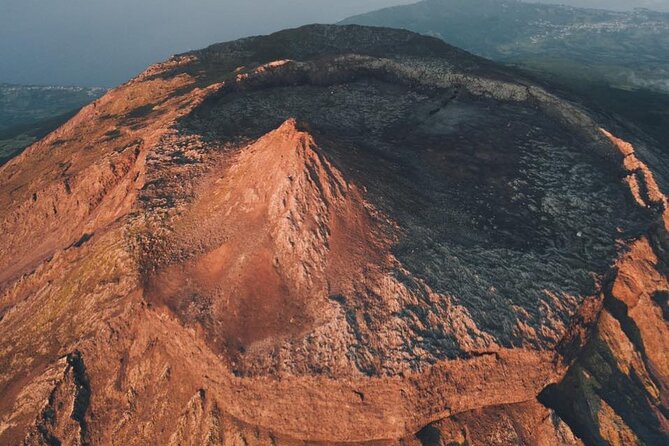
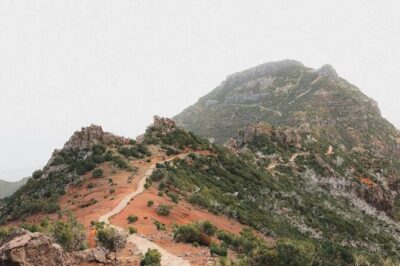
The mountain is volcanic in every sense. The trail runs over dark lava rock rather than a smooth dirt path, and the slope stays serious for much of the route. The setting feels raw and spare. There is little padding between you and the mountain, which is part of the appeal and part of the challenge.
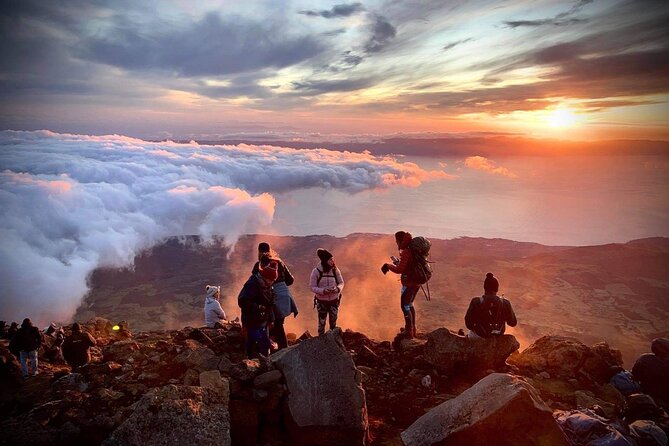
I like this experience because the physical work has a strong payoff. From the summit, clear conditions can reveal nearby Azorean islands such as Terceira and Graciosa. At the top, you may also feel warm volcanic vapor coming through cracks in the rock. That small detail gives the summit a sense of life beneath your boots.
The climb also offers a more personal way to experience Pico than simply viewing it from below. You get a slow, demanding look at the mountain’s changing terrain, weather, and scale. The summit photo is nice, but the real memory is the steady progress from the mountain house to Piquinho and back.
More Mountain and Summit Hikes in Portugal
- Half-day Hike & Picnic with Dog Love in Porto’s Mountains
★ 5.0 · 136 reviews - Madeira Stairway to Heaven to Larano Hike Mountain to Sea
★ 4.9 · 47 reviews - Hiking tour to the highest point of Arrábida mountain
★ 5.0 · 20 reviews
Starting at Casa da Montanha at 1,200 meters
The meeting point is Casa da Montanha, reached via Caminho Florestal nº 9 in Candelária, near Madalena. The climb begins at about 1,200 meters, so the route does not start at sea level. Even so, the remaining ascent is substantial, with roughly 1,151 meters between the trailhead and the summit.
Before setting off, the guide gives a briefing, checks the required equipment, and provides a locator for the group. Hiking poles are included and are useful from the first steep sections. They help with balance on loose volcanic rock and reduce some pressure on your knees during the descent.
Pay attention during the opening part of the route. The guide uses this early stretch to assess how participants are handling the steep ground and changing breathing pattern. If you quickly become unsteady or have trouble controlling your breathing, that may be a warning that the climb is not suitable for you that day.
This early check is not there to spoil your plans. It is a sensible safety measure. Pico is not a place where you want to discover your limits several hours from the trailhead.
The volcanic route and its 30 percent slope
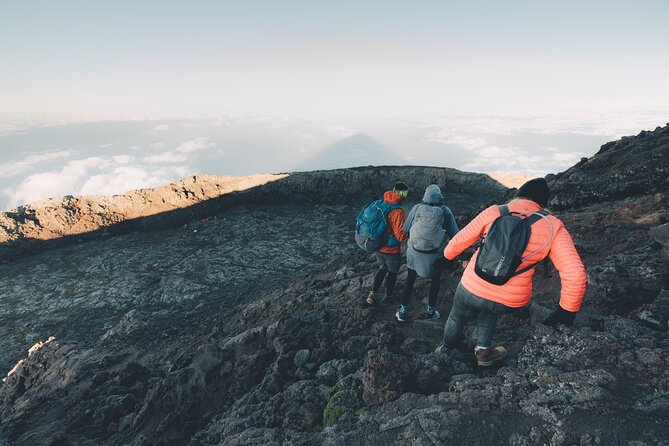
The route is about 8 kilometers in total, but distance alone does not explain the effort. The average slope is around 30 percent, and much of the trail crosses uneven volcanic rock. You will need to watch each foot placement, especially on the way down when tired legs can make small obstacles feel much larger.
The climb is usually broken into manageable sections with water, snack, and photo pauses. Raisa is particularly praised for keeping breaks useful without allowing the group to lose its rhythm. That balance matters. Too few stops can drain you early, while too many can make the climb feel longer and colder.
The guides also adjust support to individual needs. Some participants may need encouragement, extra time, or a reminder to eat and drink. Others may be ready to push ahead. A good guide keeps the group together without treating every person as if they have the same pace.
That said, a guided group can still contain different fitness levels. If one person needs frequent stops, the whole party may move slowly. On a busy day, you may spend time waiting for the group to regroup, particularly on narrow or steep sections. I would rather accept that delay than see anyone rush on loose rock, but you should know that the seven-hour estimate is not a guarantee.
Reaching Piquinho, the final summit section
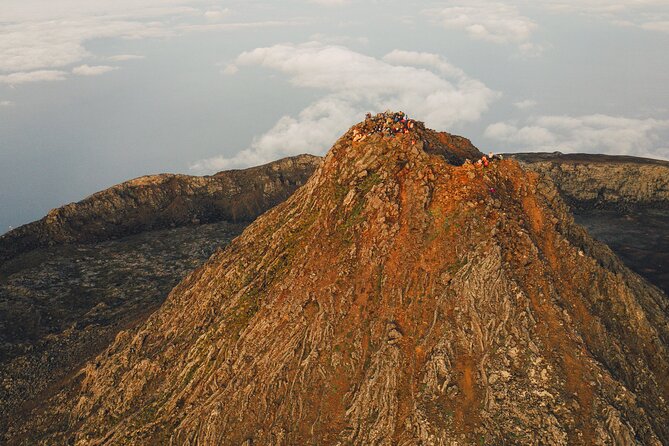
The last part of the ascent leads toward Piquinho, the cone at the top of Pico. This section feels different from the earlier climb. It is steeper and more hands-on, and you may need to use your hands as well as your feet while moving over the rock.
The final scramble is one of the most memorable parts of the outing, but it is also where fatigue matters most. Your concentration should be high, even if your legs are tired and the summit feels close. Follow the guide’s instructions and move at a controlled pace rather than trying to rush toward the top.
At the summit, clear weather can provide wide views across the Azores. The exact visibility depends on conditions, but the possibility of seeing Terceira and Graciosa adds real value to the climb. You may also notice heat rising from cracks in the volcanic rock.
Some guides mark the achievement with a small toast at the summit. It is a modest gesture, but after several hours of uphill work, it can feel well earned. The photos and videos included with the activity are useful here because your attention can stay on the moment instead of trying to document every step yourself.
Same trailhead, a different kind of day:
- Funchal: Pico do Arieiro Sunrise Hiking Transfer
★ 4.8 · 4,021 reviews - Madeira: Pico Arieiro to Pico Ruivo Hike
★ 4.6 · 2,224 reviews - Funchal: Pico do Arieiro & Pico Ruivo Hiking Transfer
★ 4.9 · 1,845 reviews - Rabaçal: 25 Fontes & Risco Levada Hiking Transfer
★ 4.8 · 1,670 reviews
Why the descent is not an afterthought
Many people focus on getting up. On Pico, you should give equal respect to getting down.
The return route uses much of the same rough volcanic ground, but your balance and concentration may be fading. The steep descent can be hard on knees and ankles, and loose rock increases the chance of slipping. Good boots with solid grip are essential. Hiking poles also become especially helpful as you lower yourself over uneven sections.
Guides keep an eye on the group during the descent and may divide the pace when appropriate. A faster subgroup can sometimes move ahead with guidance, while others continue at a steadier speed. The important point is not to turn the return into a race.
A late descent in strong sun can also make the trip feel longer. One group finished after about eight and a half hours, partly because of varied pace. An early departure, such as 6:30 a.m., can make the first hours cooler and more comfortable. Confirm the start time in advance, since timing can change close to the outing.
Guides who add value to a difficult day
The guide is a major part of this experience. The most praised names include Raisa, Isabel, Nunu, and Haise. Their roles go beyond pointing out the route. They manage pace, watch for signs of fatigue, organize breaks, and help participants stay calm when the climb becomes tough.
Raisa is praised for her upbeat manner, practical pacing, and attention to water and snacks. She also shares information about Pico, hiking, island culture, food, and local life. Isabel is noted for her careful and responsible approach, while Nunu receives high marks for making the climb feel safe and personal.
Haise is praised for managing the group’s pace and helping everyone reach both the summit and the trailhead safely. These details matter because Pico is not a route where you want a guide who simply walks in front and disappears around the next bend.
The guides also bring local character to the day. Stories about the people, food, and culture of Pico give the climb a stronger connection to the island. You still need to do the physical work yourself, but the guide can make the hours feel more meaningful.
What to bring for the 7-hour climb
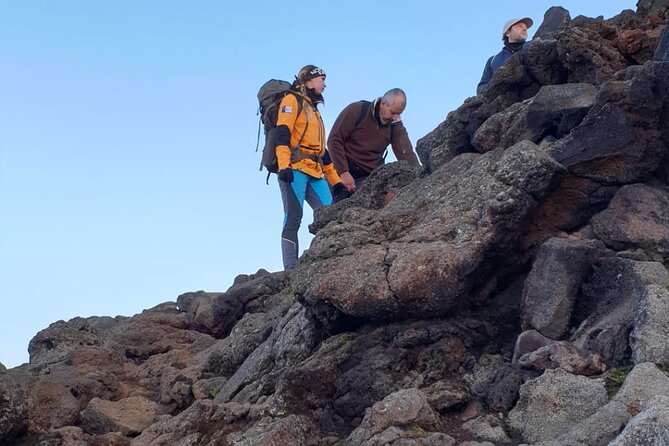
The included equipment is useful but limited. You receive hiking poles, personal insurance, a locator, and professional guiding. Meals are not included, so you need to carry your own food and water.
Wear proper hiking boots. Trainers may not provide enough grip or ankle support for the volcanic surface, especially during the descent. Clothing should allow for changing conditions, and strong sun protection is essential. One group reported sunburn despite using sunscreen during a long, bright day, so reapply and cover exposed skin.
I would bring:
- Plenty of water
- High-energy snacks or a packed meal
- Sturdy hiking boots
- Sunscreen and sun-protective clothing
- A light extra layer
- A small personal pack
- Any medication you may need during a long climb
The guide provides photos and videos, but your own phone can still be useful for quick personal shots. Keep it secure, since stopping to retrieve something from the rock is never worth a risky move.
Fitness, age limits, and who should book
This activity is intended for people with a strong fitness level. You do not need previous mountaineering experience, but you do need to be comfortable with several hours of steep uphill and downhill movement.
I would recommend it to an active hiker who can manage a long day outdoors and stay focused on uneven ground. It can also suit a fit first-time mountain climber who listens carefully to the guide and prepares properly.
I would not choose it for a casual walker, anyone unsure about steep terrain, or someone who struggles with balance, breathing, or extended cardio effort. The early part of the route may reveal that the climb is not a good match, and that is useful information rather than a failure.
Participants under 12 and over 60 are not included in the standard groups. A private activity may be possible at another price, but you need to request that separately.
Is the $90.74 price good value?
At $90.74 per person, the price is reasonable for a demanding guided mountain day. The fee includes all taxes, personal insurance, an experienced professional guide, hiking poles, and quality photos and videos. You are paying for more than route-finding. You are also paying for group management and help with a climb where weather, fatigue, and terrain can change the plan.
The guided option may be especially valuable if regular mountain permits are already full. A self-guided climb can be cheaper in theory, but availability may be the real obstacle. Guided spaces can also be useful if you are alone, unsure about the route difficulty, or want the reassurance of a local professional.
Meals are not included, and transport to Casa da Montanha is not listed as part of the experience. Build those needs into your planning. The activity begins and ends at the mountain house, so you are responsible for reaching the meeting point.
The rating is very strong, with 98 percent of participants recommending the experience and an average score of 4.9 from 187 ratings. That does not remove the physical demands, but it supports the idea that the service and guiding are well regarded.
Timing, weather, and group size
The advertised duration is about seven hours, with a maximum of 10 participants. A small group can make it easier to ask questions and receive personal help. It also lets the guide monitor balance, hydration, and energy more closely.
Actual timing can vary. A strong, evenly matched group may keep a steady rhythm, while a mixed group can take longer. Weather affects both safety and the quality of the summit views. Clear conditions may reveal distant islands, while cloud can limit the reward at the top.
The climb requires suitable weather. If poor conditions cancel the activity, you are offered another date or a full refund. The same applies if the minimum number of participants is not reached. You can cancel for a full refund up to 24 hours before the start time, but late cancellations and late changes are not accepted.
Should you book this Pico climb?
Book it if reaching Portugal’s highest point is a serious goal and you are ready for a steep, rough, full-day effort. The guides, small group, poles, safety support, and included photos make the $90.74 fee good value, especially when independent permits are unavailable.
Skip it if you want a relaxed nature walk or dislike loose rock, long descents, and changing mountain conditions. Prepare with boots, water, food, sun protection, and honest self-assessment. If you can accept the hard work, the summit of Pico can become one of the Azores’ strongest memories.
FAQ
Where does the Pico Mountain climb begin?
The activity begins at Casa da Montanha, also called Mountain House, at about 1,200 meters. The address is Caminho Florestal nº 9, Candelária, 9950-000 Madalena, Portugal.
How long does the experience take?
The advertised duration is approximately seven hours, including the ascent and return. Some groups may take longer depending on pace, conditions, and the number of breaks.
How far is the route?
The trail is approximately 8 kilometers long. It crosses volcanic rock and has an average slope of about 30 percent.
What is the highest point reached?
The climb reaches Pico Mountain’s summit at 2,351 meters, the highest point in Portugal. The final summit area is known as Piquinho.
Do I need mountaineering experience?
Previous mountaineering experience is not required, but you need a strong level of physical fitness. The route is steep, uneven, and demanding.
Are hiking poles provided?
Yes. Hiking poles are included with the activity and are supplied for use during the climb.
Are food and meals included?
No. Meals are not included, so you need to bring your own food and water for the approximately seven-hour outing.
Are children and people over 60 accepted?
The standard groups do not include children under 12 or participants over 60. You can request a private activity at a different price.
What happens if the weather is poor?
The activity requires good weather. If it is canceled because of poor conditions, you are offered another date or a full refund.
Just added around Portugal
- From Funchal/Caniço: Rabaçal Hike (25 Fontes) Bus Transfer★ 4.7 · 77 reviews
- From Funchal: Levada Nova Hiking Tour with stopover at beach★ 4.9 · 15 reviews
- Hiking Trip with a Local★ 5.0 · 31 reviews
- The Original 7 Hanging Valleys Guided Hike With Pickup★ 4.9 · 59 reviews
- Guided hiking tour on the Seven Hanging Valleys Trail★ 5.0 · 25 reviews
- Baías de Agualva hiking – Terceira island★ 4.9 · 10 reviews
- Azores: São Miguel and Lagoa do Fogo Hiking Trip★ 4.7 · 79 reviews
- Algarve: 7 Seven Hanging Valley Hike Tour- Photos & Transfer★ 4.8 · 38 reviews
Portugal Hiking Tours, compared.
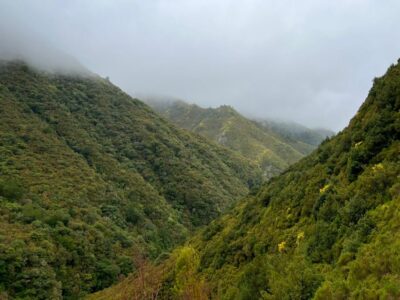
Rabaçal: 25 Fontes & Risco Levada Hiking Transfer
Read our review →
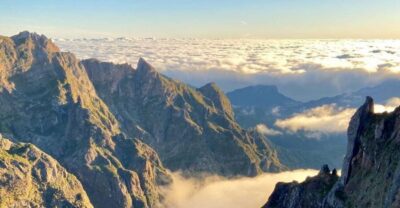
Pico Do Arieiro Pico Ruivo Sunrise or Morning Hike Transfers
Read our review →
Browse the lists this tour appears in