
REVIEW · STAVANGER HIKING TOURS
Stavanger: Kjerag Summer Hike with Packed Lunch
Kjerag rewards an early start. This 12-hour trip from Stavanger gives you a small-group route to the famous boulder, a packed lunch, and a better chance to enjoy the mountain before the busiest part of the day. I especially like the groups limited to eight people and the fact that experienced local guides lead the hike rather than simply dropping you at the trailhead.
I also like the three-hour drive through villages and open countryside, since it turns the transfer into part of the day rather than dead time. The main caution is simple: this is a serious hike, not a casual viewpoint walk. The route includes steep climbs, rough sections, about 12 kilometers of walking, six hours on foot, and roughly 800 meters of ascent.
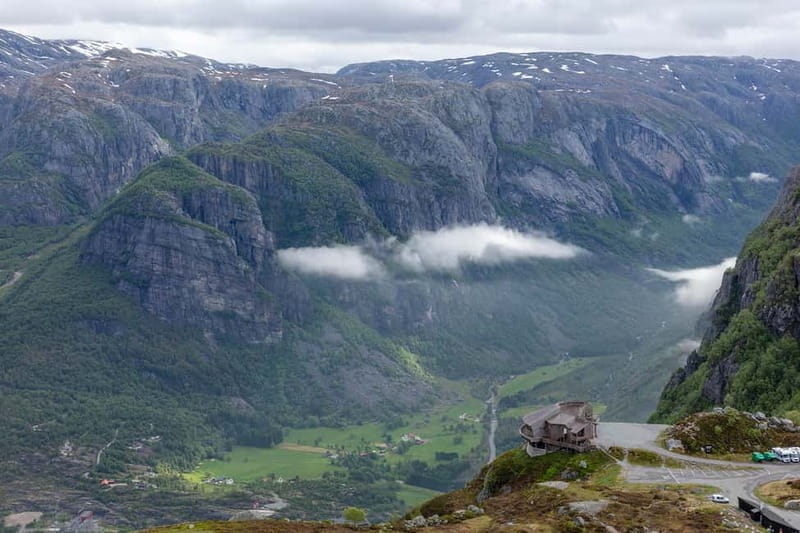
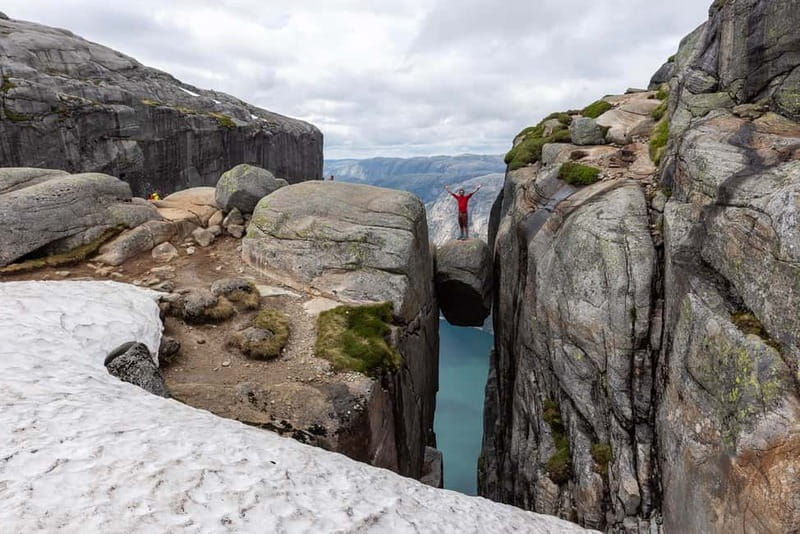
The reward is a huge one. From Kjerag’s plateau, you look down from a cliff about 1,000 meters above the Lysefjord. If your legs and nerves are willing, you can also step onto the famous Kjerag boulder for the classic photograph.
Key points to know before booking
- Early morning pickup from Stavanger: You leave early and reach the trailhead before much of the day’s foot traffic arrives.
- Three steep climbs: The hike alternates between demanding uphill sections and two shallow valleys, so pacing matters.
- A 42-kilometer fjord below: The view from the plateau reaches along the Lysefjord toward Lysebotn.
- Small groups of up to eight: Guides can keep a closer eye on the group and adjust help when needed.
- Lunch and warm berry juice included: You receive a packed lunch at the Eagle’s Nest trailhead, plus a small snack and hot berry juice.
- For experienced or fit hikers: Prior mountain experience is recommended, and the route can be technical in places.
Why Kjerag is worth the long day
Kjerag is not just another Norwegian mountain viewpoint. The cliff gives you a high, open view down the length of the Lysefjord, with Lysebotn visible at the fjord’s head. The famous boulder is wedged above the drop, making it one of Norway’s most recognizable photo spots.
The setting also feels more remote than a city-based excursion. Once you leave Stavanger, the road passes through pastoral countryside and small villages before reaching the mountain road and the trailhead. You spend about three hours getting there, but that time helps you see a broader slice of Rogaland.
I like the balance of drama and structure here. You are not left to work out the mountain on your own. Your guide gives a briefing, leads the route, points out the best viewpoints, and can help with photographs. That matters on a hike where weather, footing, and energy levels can change quickly.
The early departure is another major advantage. Kjerag is famous, and its popularity can mean queues or crowded photo spots later in the day. Starting early does not guarantee total solitude, but it gives you the best chance of reaching the boulder before the main flow of people.
More Hikes with Lunch in Stavanger:
- Stavanger: Off-Season Hike to Kjerag + Packed Lunch
★ 4.8 · 25 reviews - From Marrakech: Atlas Mountains Full-Day Hiking Trip w Lunch
★ 4.8 · 7,417 reviews - Marrakech: Ourika Valley Trip with Waterfall Hike & Lunch
★ 4.9 · 5,303 reviews
The three-hour ride from Stavanger
Pickup is arranged from your preferred meeting place in Stavanger, or from a point along the route to the parking area. Check your exact pickup time after booking, since the schedule changes by month and the sunrise-hike table must be checked carefully.
The vehicle transfer takes about three hours. That is a long ride, so I would treat the transport as an important part of the decision. You gain convenience because you do not need to drive, navigate, or arrange parking. You also get to watch the scenery change from the city to villages, open fields, and mountain country.
The trip is especially useful if you are staying in Stavanger without a car. Roundtrip transport removes the need to coordinate a rental vehicle with an early start and a demanding return drive. After six hours of hiking, that saved effort has real value.
The drawback is the length of the day. With roughly six hours of hiking and six hours of transport, you should expect a full-day commitment from early morning until evening. This is not the right choice if you want a relaxed half-day activity or a short scenic outing.
Starting at the Eagle’s Nest trailhead
The trail begins at the Eagle’s Nest parking area, where restrooms are available. You receive your packed lunch there, and the guide explains the route and the conditions for the day before setting off.
This briefing is useful because the hike has three distinct uphill sections rather than one steady climb. You will cross two shallower valleys between them, giving your legs a chance to recover before the next ascent. The route is not technically extreme in every section, but some areas require care and secure footing.
The trail has been improved by Nepalese Sherpas. That does not turn it into an easy path. It simply means parts of the route have been made more manageable and durable for hikers. You still need proper hiking boots, warm layers, rain protection, and enough water.
The first part of the hike asks for patience. You may feel the climb early, especially if you are not used to sustained uphill walking. A good guide can help with pace and footing, but no guide can remove the physical work.
Three climbs, two valleys, and six hours on foot
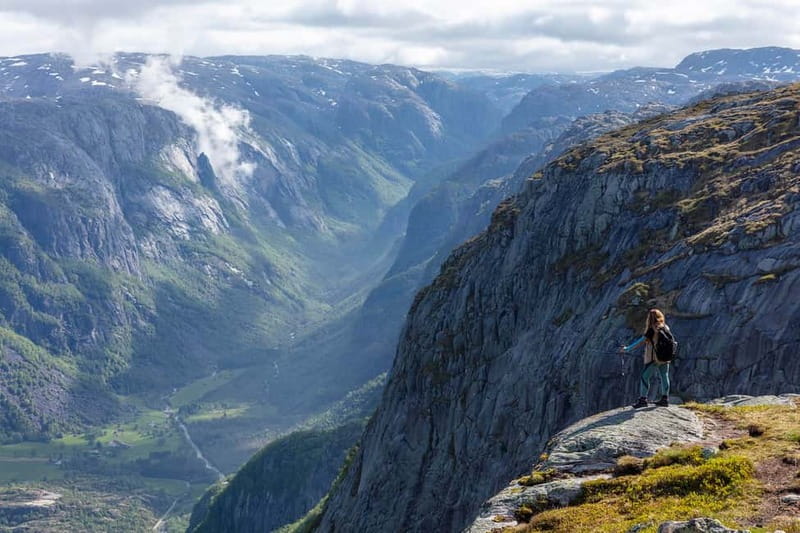
The hike to the boulder takes about 2.5 hours, followed by a roughly three-hour return to the parking area. The complete walking distance is about 12 kilometers, with around 800 meters of total ascent.
You should expect a mixture of steep rock, uneven ground, and more level trail. The route is described as somewhat technical in places, so this should not be your first mountain hike unless you already have solid fitness. The official advice is aimed at people with prior hiking experience, though an active person with at least one good cardio workout each week may be able to manage it.
The two shallow valleys are important psychologically as well as physically. They break up the climbing and give you short stretches where you can focus on the surroundings instead of your breathing. Still, do not mistake the valleys for an easy route. The final climbs remain demanding.
One useful feature is the last two kilometers before Kjerag. This section is relatively flat. After the earlier climbing, that level trail gives you time to settle your breathing and pay attention to the open mountain scenery.
A small group helps here. A guide can notice if someone is struggling, offer pacing advice, and keep the group together. Bernadette, one of the guides, was praised for recognizing that a less experienced hiker needed extra support and choosing an easier route where possible. That kind of attention is more valuable than a fast pace.
More Trips with Lunch around Stavanger:
- Marrakech: ourika valley lunch & guided hike to waterfalls
★ 4.9 · 3,737 reviews - Marrakech: Atlas Mountains & Valleys Waterfall Hike w/ Lunch
★ 4.8 · 1,236 reviews - From Tromsø: Snowshoeing Hike with Picnic Lunch and Photos
★ 4.9 · 840 reviews - Wailua River Kayak and Sacred Falls Guided Hike with Lunch
★ 5.0 · 783 reviews
The Lysefjord from a 1,000-meter cliff
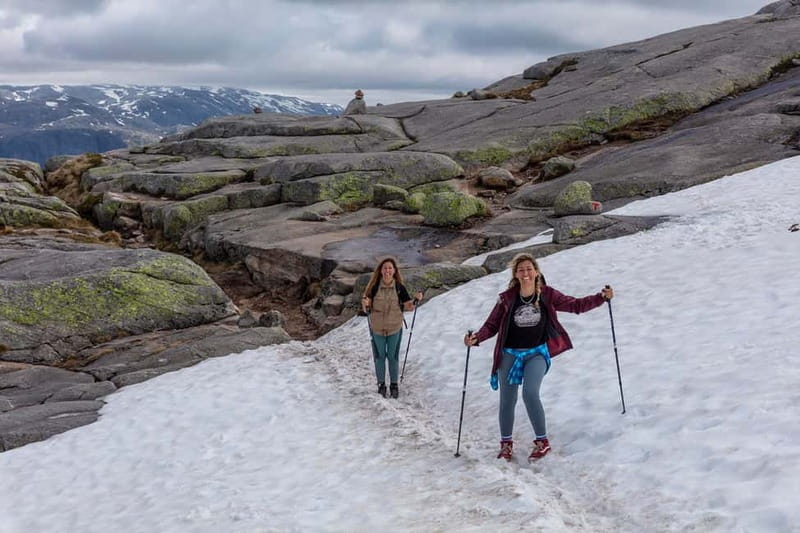
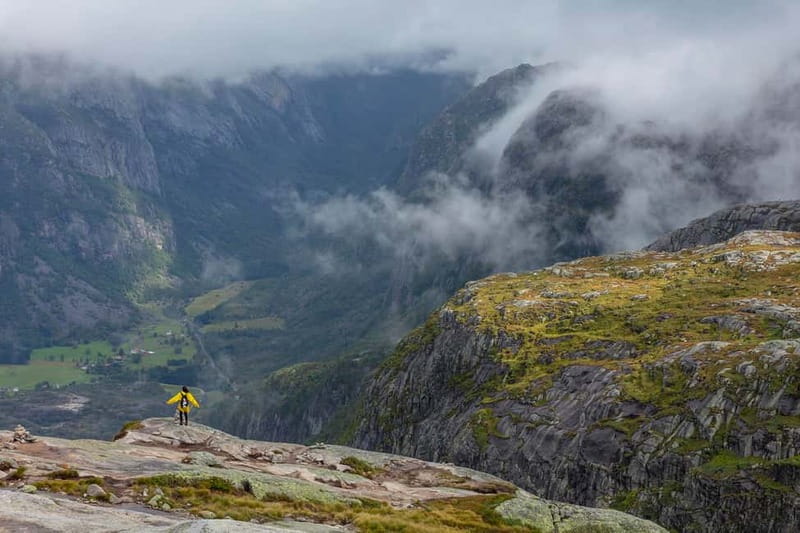
When you reach the mountain plateau, the walking effort pays off quickly. You arrive at the edge of a cliff about 1,000 meters above the Lysefjord, with a broad view over the 42-kilometer waterway.
Lysebotn sits at the head of the fjord below. From this height, the fjord’s winding shape becomes clear, and the high viewpoint gives you a much stronger sense of the terrain than a roadside stop can provide.
This is the time to slow down. The guide can point out good viewing spots and help you frame photographs. Helga was especially praised for taking plenty of pictures, explaining the area, and paying close attention to group safety. Stephan was also described as a guide with a strong store of information.
The famous Kjerag boulder is the main photo goal. Standing on it is optional, and you should not feel pressured to do so. The rock sits above a major drop, so your comfort with height matters. The plateau and cliff view are already the main event.
You may also see base jumpers. Base jumping is legal in Norway, and on a suitable day you might watch people leap from the cliff. It is a striking sight, but keep your attention on your own footing and the guide’s instructions. The mountain is no place for casual risks.
Lunch with the fjord below
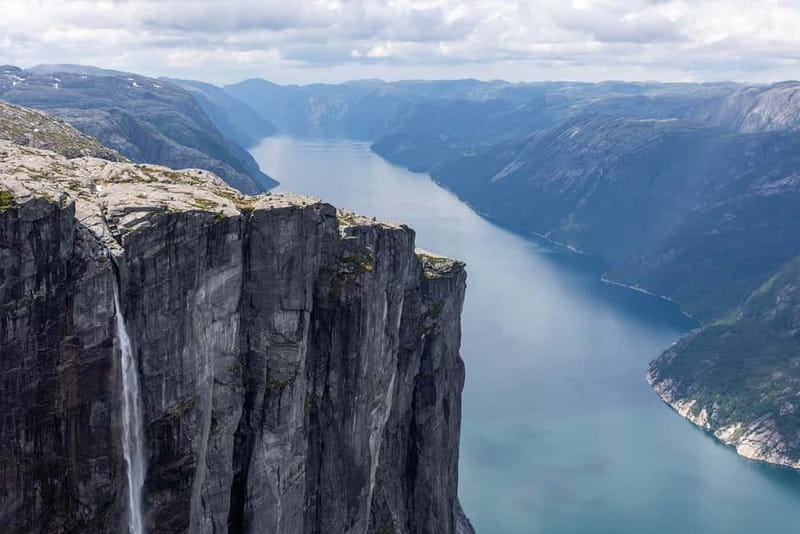
The packed lunch is provided at the trailhead, and dietary restrictions should be given well before the tour date. You also receive a small snack and a serving of hot berry juice.
That food is practical rather than luxurious, but it is welcome after the climb. You can eat near the cliff-side viewpoint while resting your legs and taking in the fjord. I would still bring water and any extra snacks you know you need, since additional food and drinks are not included.
The lunch break also creates a natural pause before the return. You have time to enjoy the view instead of reaching the boulder, taking one picture, and immediately turning around. In cold conditions, the warm berry juice can be especially useful. One guide was praised for providing snacks and warm drinks when the weather turned very cold.
Do not rely on the packed lunch to solve every dietary need. Ask about restrictions in advance, and bring backup food if you have a very specific diet. The tour asks you to provide that information early for a reason.
What the guides add to the day
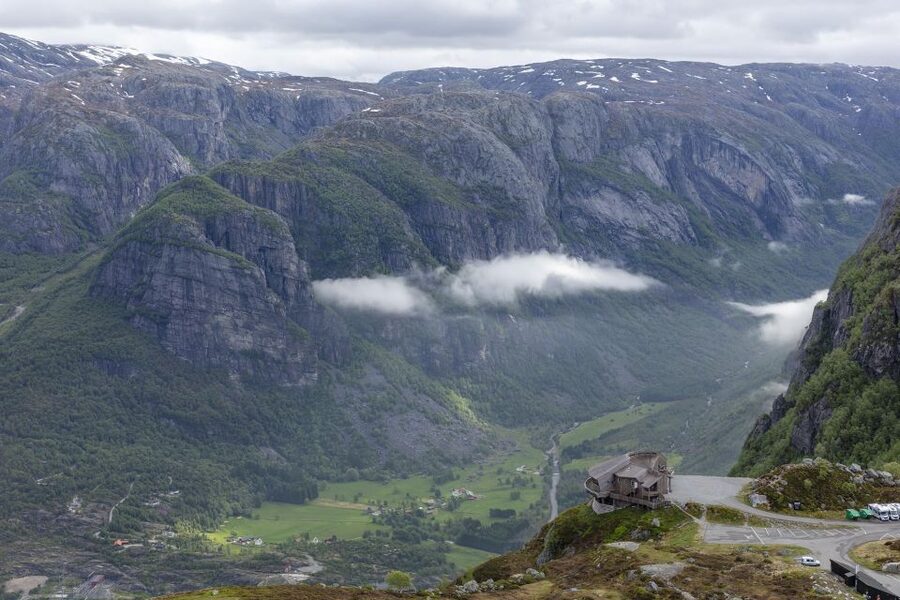
The guide is one of the strongest reasons to choose this trip instead of arranging the hike alone. Local nature guides know the Ryfylke area and can add context about its natural and cultural background as you travel and walk.
More important, they provide practical mountain support. Helga was praised for helping from pickup through the return journey, keeping safety in view, explaining Norway and the local area, and taking photographs. Bernadette’s careful support for a newer hiker shows the value of a small group. Stephan was praised for the depth of information he shared.
The best guide service here is not a nonstop lecture. It is knowing when to explain, when to slow down, when to suggest a photo spot, and when to let you enjoy the silence. The small group limit of eight makes that kind of personal attention more realistic.
The guide cannot make poor weather disappear, and the route may still feel hard even with help. But you are less likely to waste energy on navigation or miss the best viewpoints.
The return to Eagle’s Nest
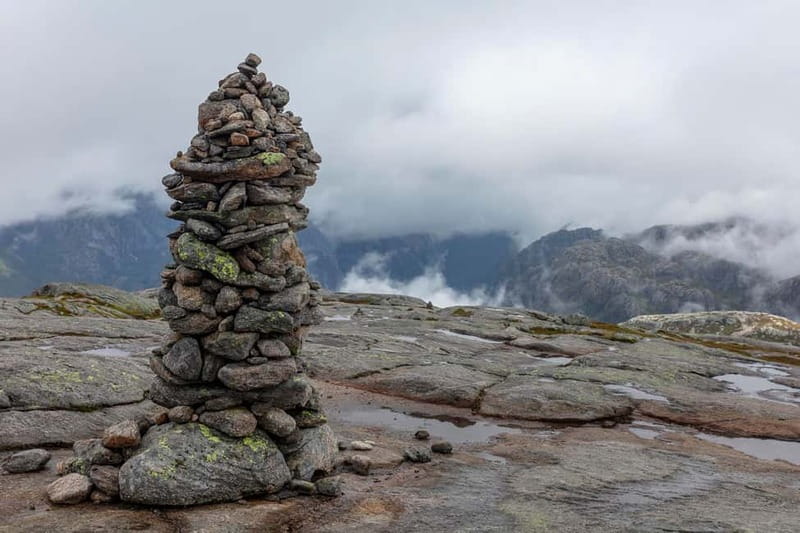
After lunch and time at the plateau, you follow the guide back to the Eagle’s Nest parking area. The descent takes about three hours, which may surprise hikers who assume going down is easy.
Downhill walking can be hard on knees and ankles, especially after a long day. Use trekking poles if you have them, keep your pace controlled, and do not rush the final sections. Your guide can help the group maintain a safe rhythm.
The return is also when good footwear matters most. Wet rock, loose ground, or tired legs can make a descent feel less stable than the climb. Water-resistant pants and a rainproof jacket are sensible because conditions can shift in the mountains.
Back at the parking area, the restrooms are useful before the drive to Stavanger. The transport home gives you a chance to rest, but the long return drive means you should still plan on a full day of effort.
Is $185 good value?
At $185 per person, this is not a cheap mountain walk. I think the price is reasonable if you value convenience, a small group, and professional guidance.
You are paying for roundtrip transport from Stavanger, a local guide for the day, seasonal technical equipment, a packed lunch, a snack, and hot berry juice. The transport alone has practical value because the trailhead is about three hours from Stavanger. You also avoid arranging a car, driving mountain roads after a hard hike, and working out the route without local help.
The small group is another part of the value. With no more than eight people, the guide can give more individual support than on a large coach excursion. That matters if you are fit but not an expert hiker, or if you want help with photographs.
You will need to budget for or bring several personal items. Gear for rent or purchase includes a small backpack, warm hat, gloves, rainproof jacket, water-resistant pants, and hiking boots. Those costs are not included, so check your kit before booking.
Free cancellation up to 24 hours before the tour and the reserve-now-pay-later option add flexibility. The tour does not require a minimum turnout, so low demand does not automatically cancel the day.
What to wear and pack
Take the equipment list seriously. You should have hiking shoes or boots, thick socks, gloves, a warm hat, a jacket, a fleece or wool sweater, a daypack, water, snacks, and rain gear.
Water-resistant pants and a rainproof jacket are particularly important. The mountain weather can be colder and wetter than Stavanger, and the tour runs for many hours. Jeans are not allowed, and high-heeled shoes are clearly unsuitable.
A small backpack is enough for the essentials. Keep your hands free for balance on rough sections, and pack layers you can add or remove during the climb. If you do not own suitable gear, some items can be rented or purchased, but the tour does not include them.
Who should book this hike?
I would recommend this experience to an active adult who wants Kjerag with transport, a local guide, and a better chance of avoiding the busiest hours. It is also a good fit if you want a more personal outing than a large-group excursion.
You do not need to be an elite climber, but you should be comfortable with long uphill walks and uneven mountain trails. Prior hiking experience is preferred. If this is your first hike, you should already have a reasonable fitness base rather than treating this as a test of beginner fitness.
The experience is not suitable for children under 16, pregnant women, or people under 100 centimeters tall. It is also a poor match if you dislike heights, long vehicle rides, early starts, or changeable mountain weather.
Should you book the Kjerag early hike?
Book it if you want the full Kjerag experience without handling the long drive and route planning yourself. The early start, eight-person limit, experienced guides, packed lunch, and powerful Lysefjord view make the $185 fare easier to justify.
Skip it if you want a gentle scenic outing, have little hiking fitness, or prefer to set your own pace without a fixed 12-hour schedule. This is a demanding day with real climbing, not a quick photo stop.
For the right person, the formula works well: leave Stavanger early, cross the mountain in a small group, reach the boulder before the busiest hours, eat above the fjord, and return with the hard work behind you. Bring proper gear, save room in your schedule, and let the mountain set the pace.
FAQ
How long does the Kjerag tour take?
The full experience lasts about 12 hours, including transport from Stavanger, the hike, the lunch break, and the return journey.
How long is the hike?
The hike covers about 12 kilometers in total. The walking time is roughly six hours, with about 2.5 hours to Kjerag and three hours back to the Eagle’s Nest trailhead.
How much climbing is involved?
The route includes approximately 800 meters of total ascent and three steep uphill sections separated by two shallow valleys.
Is transport from Stavanger included?
Yes. Roundtrip transport from Stavanger is included, and pickup can also be arranged from a location along the route to the parking area.
Is lunch included?
Yes. You receive a packed lunch at the trailhead, along with a small snack and a serving of hot berry juice. Tell the provider about dietary restrictions well ahead of the tour date.
How large is the group?
The group is limited to eight participants.
What languages does the guide speak?
Guided instruction is available in English and Norwegian.
Do I need hiking experience?
Prior hiking experience is recommended. If this is your first hike, you should be active and able to manage at least one good cardio workout session per week.
What equipment should I bring?
Bring hiking boots or shoes, thick socks, gloves, a warm hat, a jacket, a fleece or wool sweater, a small backpack, water, snacks, and rain gear. Water-resistant pants are also recommended.
Can children join the hike?
No. The experience is not suitable for children under 16. It is also not suitable for pregnant women or people under 100 centimeters tall.
Just added around Stavanger
- Stavanger: Preikestolen Sunrise Hike with Breakfast Buffet★ 5.0 · 43 reviews
- Stavanger: Off-Season Hike to Kjerag + Packed Lunch★ 4.8 · 25 reviews
- Stavanger/Sandnes: Preikestolen Guided Hidden Nature Hike★ 4.9 · 8 reviews
- Stavanger: Preikestolen (Pulpit Rock) Guided Hike★ 4.8 · 121 reviews
- Stavanger: Lysefjorden Cruise and Preikestolen Hike★ 4.5 · 83 reviews
- Lysefjorden cruise & Preikestolen guided hike – winter★ 5.0 · 13 reviews
- Frafjord Paddling & Månafossen Waterfall Hike Stavanger★ 5.0 · 22 reviews
- Flørli 4444: RIB & Hike★ 5.0 · 8 reviews
Stavanger Hiking Tours, compared.
From Stavanger: Pulpit Rock Guided Hike with Pickup
Read our review →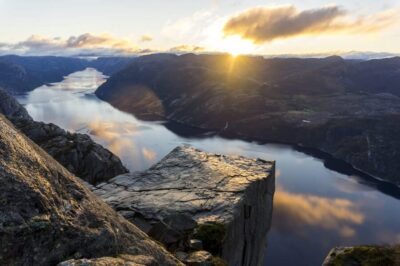
Stavanger: Preikestolen (Pulpit Rock) Hike with Local Guide
Read our review →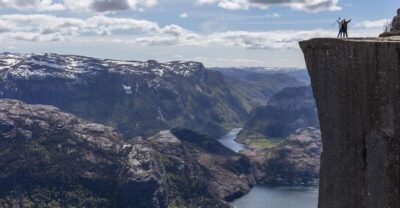
Stavanger: Preikestolen Classic Hike and Side Trail
Read our review →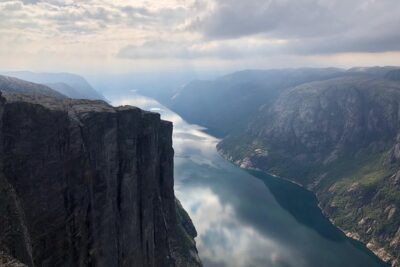
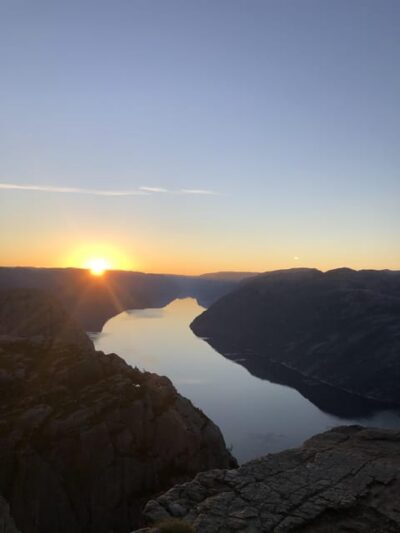
Stavanger: Preikestolen (Pulpit Rock) Guided Hike
Read our review →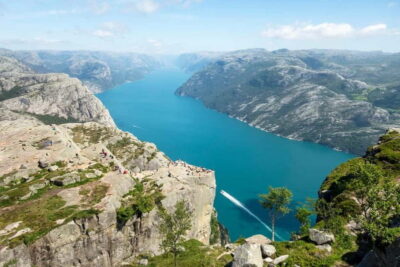
Stavanger: Lysefjorden Cruise and Preikestolen Hike
Read our review →
Stavanger: Preikestolen Sunrise Hike with Breakfast Buffet
Read our review →Browse the lists this tour appears in