
REVIEW · INDONESIA HIKING TOURS
Banyuwangi: Mt. Ijen Sunrise Hike with Pickup & Health Check
The mountain glows before dawn. This Banyuwangi trip combines a steep night hike, sunrise over Ijen’s huge acid lake, and a chance to see the famous blue fire. I like the hotel pickup and health certificate, which remove two chores from a very early morning. I also like the guides, especially Sopi, who is praised for keeping tired hikers calm, amused, and together. The main drawback is simple: this is a demanding climb in darkness, and the blue fire is never guaranteed.
At $28 per person, the tour packs in transport, entry, equipment, a guide, and the health check. That is strong value if you want Ijen handled in one neat package. Still, you need warm clothes, proper hiking shoes, and a reasonable level of fitness. One report noted that several headlamps had weak batteries, so check your light before setting off.
Key things to know before climbing Ijen
- The hike begins in the middle of the night: You travel from Banyuwangi by van before starting the 1.5-hour climb.
- The blue fire is a lucky extra: Clear conditions and access make it possible, but no guide can promise a sighting.
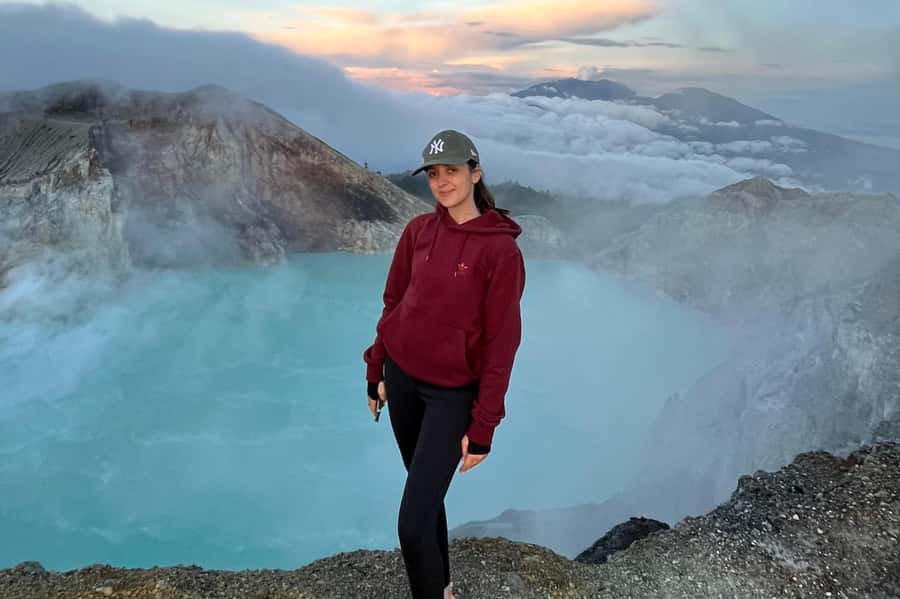
- The crater lake is the main reward: Sunrise reveals Ijen’s striking acid lake and the surrounding Java highlands.
- Sulfur miners share the trail: You may see workers carrying heavy yellow rock as part of their daily work.
- Guides are a major strength: Sopi, Rafi, Nowan, Sule, Qim Qim, Surai, and others are praised for patience and encouragement.
- Health matters here: The experience is not suitable for people with heart or respiratory problems.
Why Mt. Ijen makes such a powerful morning
Mt. Ijen is not just a viewpoint with a nice sunrise. It is an active volcanic area where the scenery, sulfur mining, and early start all form one intense experience.
The crater lake is the great visual reward. From above, you look across the largest acid lake associated with Ijen, surrounded by steep volcanic slopes and broad views across East Java. The color and mood depend on weather and light, but sunrise gives the crater a changing display as the sky brightens.
The mining side adds weight to the visit. Local sulfur miners carry chunks of sulfur rock from the crater area as part of their work. Seeing them on the same steep paths used by hikers can be striking, but it is worth keeping a respectful distance and remembering that this is a workplace, not a stage set.
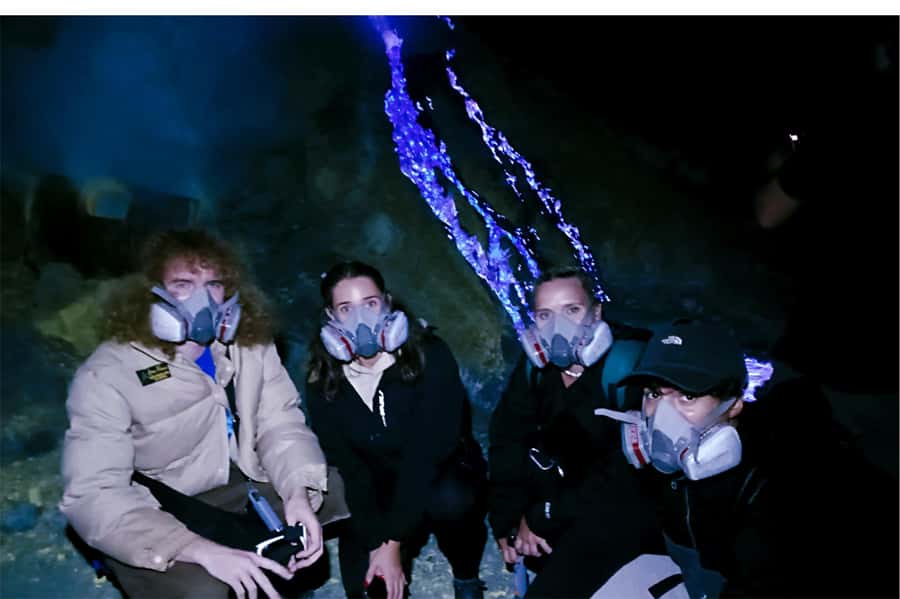
The blue fire is the most unusual part of the outing. It is caused by burning sulfur gases and can appear as an eerie blue glow in the darkness. You might see it if conditions are right, but it is not guaranteed. Weather, volcanic conditions, access, and timing all matter, so book this for the mountain as a whole, not for one single sight.
More Mountain and Summit Hikes in Indonesia
- Bali: Sunrise Mount Batur Guided Hike with Breakfast
★ 4.8 · 9,660 reviews - Bali: Mount Batur Sunrise Guided Hike and Natural Hot Spring
★ 4.8 · 9,284 reviews - Bali: Mount Batur Sunrise Trek With Guide and Breakfast
★ 4.8 · 3,461 reviews
The middle-of-the-night pickup from Banyuwangi
Your day begins long before sunrise. Pickup is available from accommodation within Banyuwangi city, and the drive to the Ijen area takes about an hour by van.
That hotel service matters more here than it does on many ordinary day trips. You are leaving while most of the town is asleep, and arranging a separate taxi at that hour would add stress. The vehicle also lets you conserve energy for the climb.
The trip is offered privately or in a small group. A private departure gives you more control over breaks and pace, while a small group can make the climb feel more social and often costs less per person. The quality of the experience depends partly on the guide assigned to your group, but the repeated praise for Sopi, Rafi, Nowan, Sule, and Qim Qim points to a strong guiding team.
One useful detail: the health check certificate is arranged as part of the outing. This is not a box to ignore. The climb is steep, the air can be cold, and the blue-fire section may involve extra effort. The health check gives the morning a more responsible start, though it does not replace your own judgment about your fitness.
The 1.5-hour climb to the crater rim
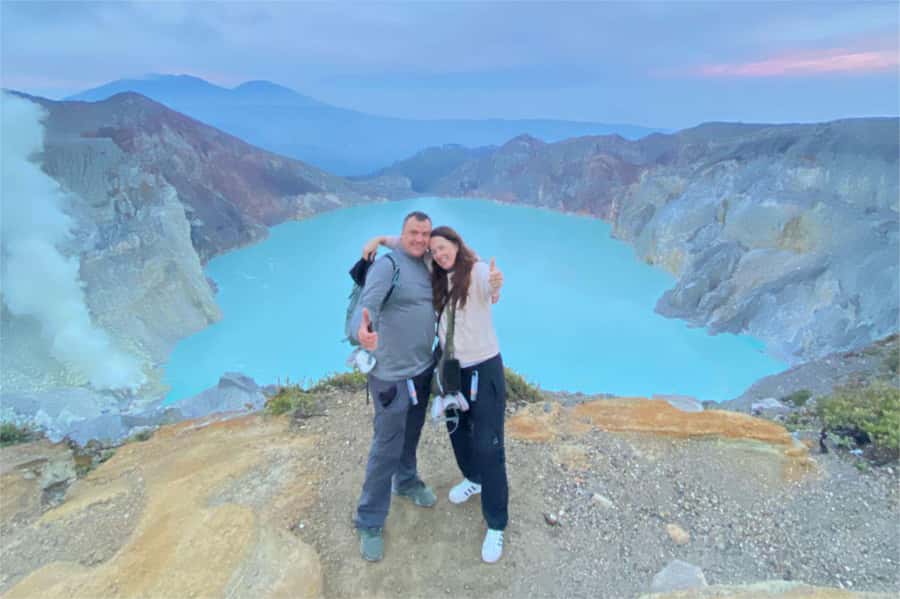
The hike to the summit takes about an hour and a half. That sounds manageable on paper, but the path is described as steep and moderately challenging, with some sections that can feel quite hard in the dark.
Your pace will depend on the group and the guide. The best guides keep everyone together, schedule pauses, and adjust when someone is struggling. Sopi is often praised for doing exactly this, while Rafi received special credit for helping a 12-year-old climber. Another guide stayed with a hiker whose knee was causing trouble on the descent.
That kind of support is more useful than a fast pace. You are not racing up Ijen. A guide who gives clear instructions and keeps an eye on the group can make a hard walk feel controlled rather than chaotic.
Wear shoes with a firm grip. Comfortable shoes are listed as essential, and this is not the place for sandals or smooth soles. Warm clothing also matters. Temperatures can be low before sunrise, and you will be outside for hours before returning to Banyuwangi.
You receive a headlamp, but inspect it before walking far. One safety complaint concerned headlamps with drained batteries. In darkness on a steep trail, that is not a small inconvenience. If you have a reliable personal light, bring it as a backup.
The blue fire: extraordinary, but never promised
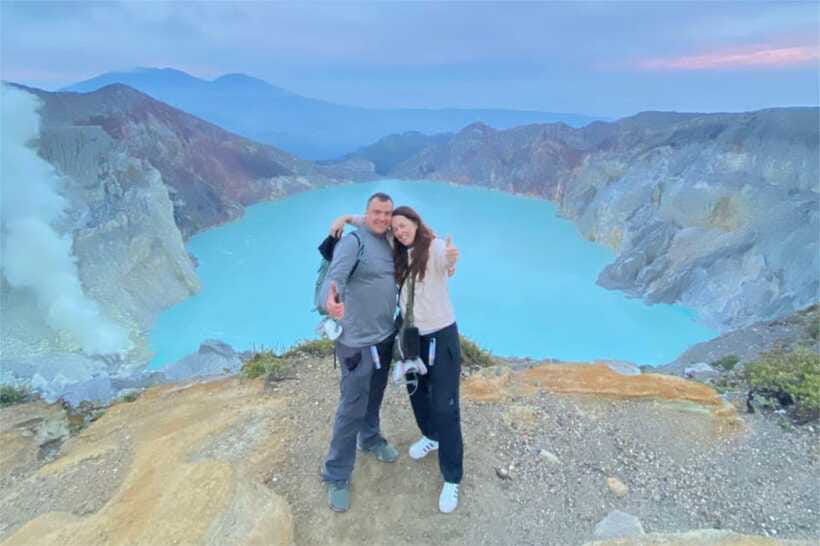
The possible blue-fire visit is the most dramatic part of the morning. If conditions allow, you may be taken toward the crater area to look for the blue flames before daylight washes them out.
The timing is important. The glow is visible in darkness, so this part happens before or around the early climb and sunrise schedule. The tour material makes clear that the sighting is a chance, not a guarantee. You may get the perfect conditions, or you may see only sulfur fumes, rock, and a dark volcanic hollow.
This is also the part that requires the most caution. The terrain is steep, and volcanic gases can be unpleasant or hazardous, which explains the supplied gas mask. Use the protective equipment as directed and stay close to your guide.
I would not choose this trip only because of online photographs of blue flames. Choose it because you want the full Ijen experience. If the fire appears, it becomes a memorable bonus. If it does not, the sunrise, crater, and mining activity still give the morning plenty of purpose.
More Sunrise Hikes in Indonesia
- Mount Batur Sunrise Hike and Natural Hot Spring Option
★ 5.0 · 1,927 reviews - Mount Batur Sunrise Hike with Breakfast
★ 5.0 · 1,757 reviews - Mount Batur Sunrise Trekking
★ 5.0 · 947 reviews - Mount Batur Sunrise Trekking Private All Inclusive
★ 5.0 · 906 reviews
Sunrise above Java’s largest acid lake
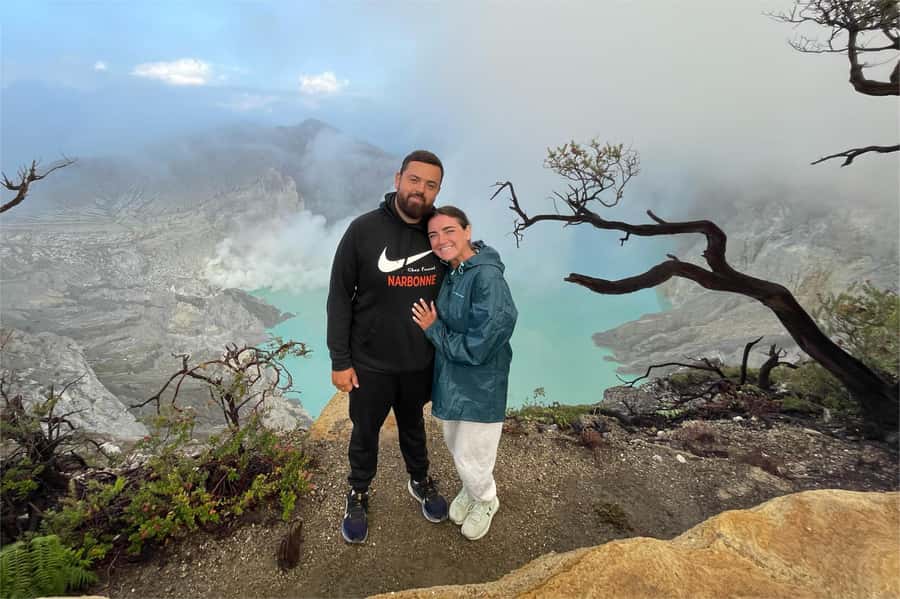
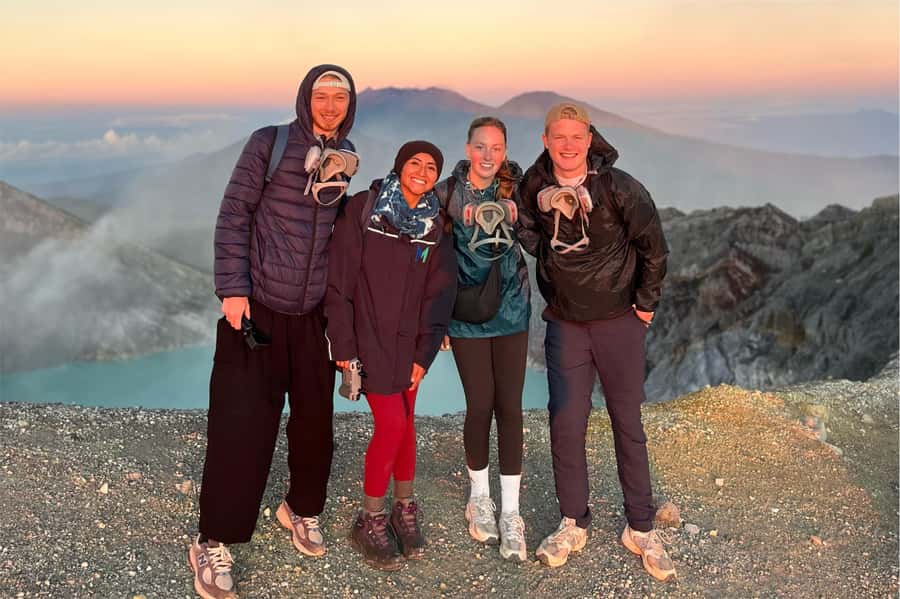
After the dark sections, the sunrise feels like a change of gear. The crater becomes visible, the surrounding ridges take shape, and you can finally appreciate the scale of the place.
The viewpoint is the emotional center of the trip. You have spent the morning climbing in cold darkness, so the first broad view across the lake feels earned. Clear weather makes a major difference. Clouds or haze can soften the view, but they can also give the crater a more moody character.
Your guide can help with photographs and positioning. Surai, for example, is praised for taking memorable pictures while also explaining the volcano, local life, wildlife conservation, and East Java. That combination is valuable because it gives the view context instead of reducing the stop to a quick photo.
Allow yourself time to look around rather than rushing straight back. The sightseeing portion is listed at about an hour, which gives you a chance to take in the crater, watch the miners, and rest after the climb.
Meeting the sulfur miners on the trail
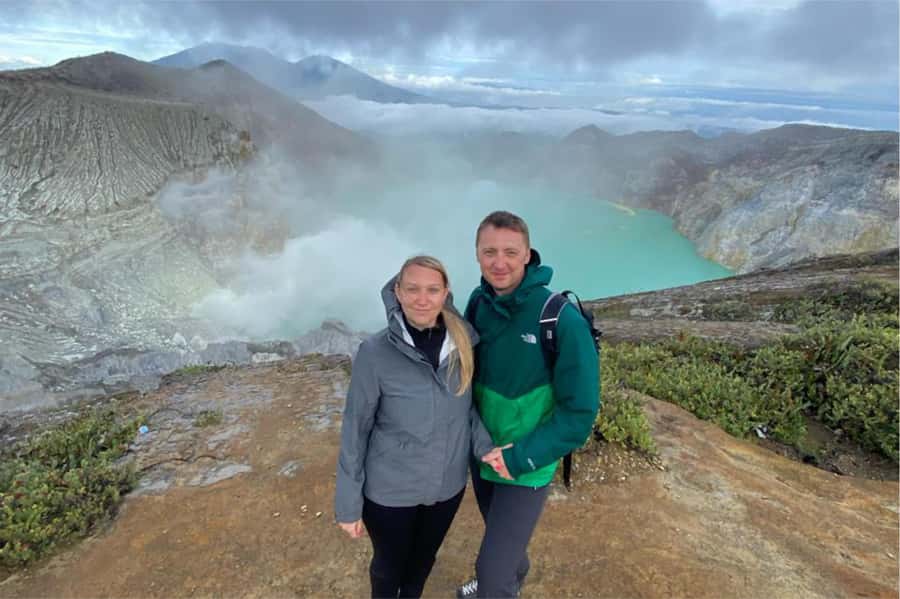
The miners are part of what makes Ijen different from a standard mountain walk. They carry sulfur rock for a living, often along the same narrow and steep routes used by hikers.
You may see them during the crater visit or on the path. Their work puts the mountain in human terms. Ijen is not only a scenic attraction. It is also a place where local people earn money through physically demanding labor.
A respectful approach matters. Avoid blocking the path, ask before taking close photographs, and let workers pass. Your guide can help you understand what you are seeing and how to behave around the mining activity.
The guides also add local context. Sopi is a Banyuwangi local who previously worked at the crater for four years, according to the supplied information. That background can make his explanations more grounded than a simple memorized script.
The descent and return to Banyuwangi
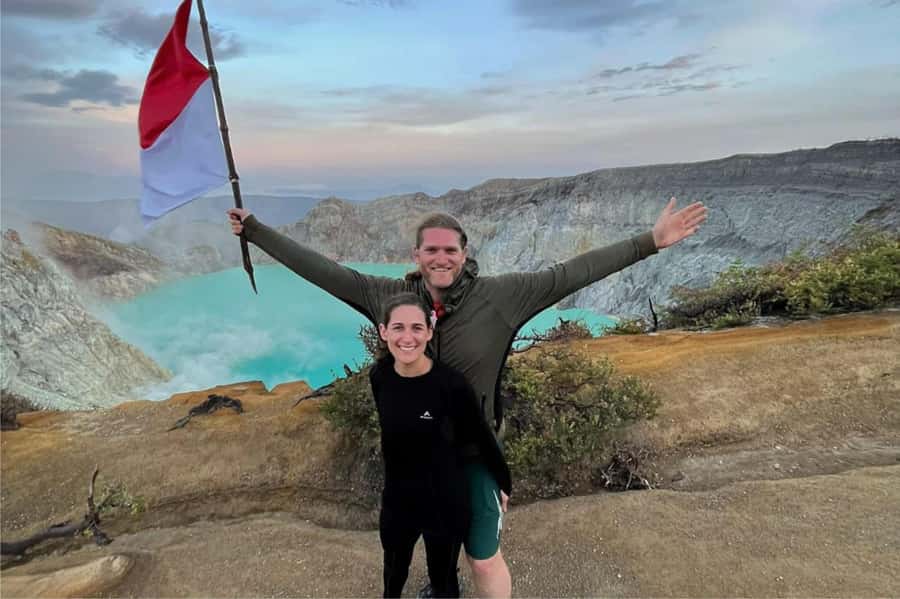
The way down takes about an hour on foot before you return to the parking area. Do not assume the descent is easy. Tired legs, loose ground, crowds, and steep sections can make going down just as awkward as climbing up.
This is where a patient guide matters most. Stay with your group, use your headlamp if the light is still poor, and take care with every step. Several guides are praised for slowing down, helping people with sore knees, and offering encouragement when the climb becomes tough.
After reaching the parking area, you ride back toward Banyuwangi. The stated schedule brings you back to your hotel at roughly 8:30 in the morning, though the overall activity is described as lasting eight hours. Pickup time can vary depending on the exact departure and health-check arrangements, so confirm the start time when booking.
The early return is useful if you are continuing by ferry, train, or road. It also leaves much of the day free. Still, do not plan a demanding activity immediately afterward. A middle-of-the-night start and a steep hike will leave you ready for breakfast and rest.
What the $28 price really gives you
At $28, this is a good-value package for visitors staying in Banyuwangi. The price includes hotel pickup and drop-off, the entry fee, a hiking guide, gas mask, headlamp, and health check certificate.
Buying each part separately could be awkward, especially the transport and health paperwork at an early hour. The included equipment also means you do not need to rent a gas mask or headlamp locally.
The value is strongest for first-time visitors who want a simple plan. You pay for access to the mountain, but also for coordination, safety support, and a guide who knows how to manage the timing.
The price does not change the physical nature of the climb. You are still responsible for bringing warm clothing and suitable shoes. You should also understand that small-group trips can vary in group pace, while a private trip may give you more flexibility.
Free cancellation up to 24 hours before departure and the option to reserve now and pay later add useful flexibility. These terms are helpful when mountain conditions or your transport plans are uncertain.
The guides can make or break the morning
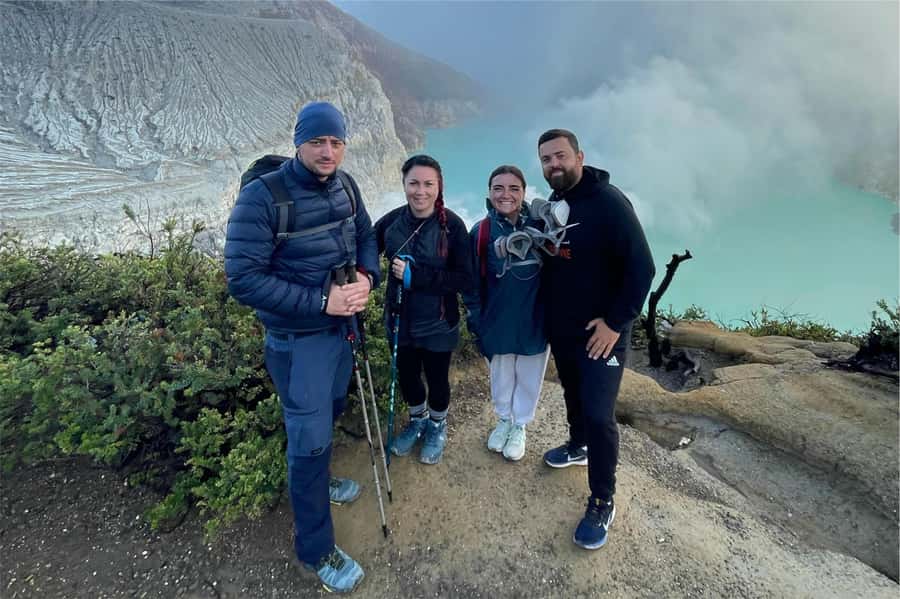
The strongest part of this experience is the human support. Sopi receives especially warm praise for his humor, English, clear instructions, and ability to keep tired people positive. Travelers in solo groups and families alike appreciated his energy.
Qim Qim is also praised for motivation, good stories, and keeping the group together during difficult sections, even in rain. Rafi helped reassure a young climber, while Nowan was noted for explaining the national park and managing crowded, steep paths.
Surai brings another strength: photography and wider explanations about Indonesia, local people, wildlife, and conservation. Sule and Suleyman are praised for energy and care, and guides such as Iqbal, Aqil, Nofan, and Noven also receive strong personal credit.
Guide assignments can change, so you cannot select a particular person unless the operator confirms it. Still, the pattern is encouraging. The best guides do more than lead the way. They watch your pace, explain the setting, and make a tough morning feel friendly.
Who should book this Ijen experience?
I would recommend it to fit hikers, first-time Ijen visitors, photographers, and anyone who wants a sunrise outing with transport already arranged. It also suits solo visitors who would rather join a small group than tackle a dark mountain path alone.
Families may find it workable if children are fit and comfortable with a steep hike. One guide successfully supported a 12-year-old, but that does not mean every child will enjoy the effort. You know your child’s stamina best.
I would not recommend it to anyone with heart problems or respiratory issues. The supplied guidance also says you need a good level of fitness. If steep paths, cold temperatures, darkness, or sulfur fumes sound alarming, choose a gentler Banyuwangi activity.
My verdict: book it for Ijen, not just the blue fire
This is a well-priced, well-supported way to visit Mt. Ijen from Banyuwangi. The sunrise over the acid lake, the sulfur miners, and the chance of blue fire make it far more memorable than a simple viewpoint stop.
Book it if you accept the early start and hard climb. Pack warm layers, sturdy shoes, and a backup light, and treat the blue fire as an uncertain bonus. If you want a guide who brings humor and steady encouragement, note the strong praise for Sopi and the wider guiding team, but ask who will lead your group.
Skip it if you need an easy walk, dislike cold night departures, or have heart or respiratory concerns. For the right person, though, $28 buys a full volcanic morning with very little planning burden.
FAQ
How long does the Mt. Ijen tour take?
The experience lasts about eight hours. The stated return to your Banyuwangi hotel is roughly 8:30 AM, depending on the departure schedule and timing.
Is hotel pickup included?
Yes. Pickup and drop-off are included from locations within Banyuwangi city. Pickup can also be arranged from another location within the city.
Is the blue fire guaranteed?
No. The blue fire is only possible in suitable conditions, so it is not guaranteed.
How difficult is the hike?
The hike is moderately challenging and takes about 1.5 hours to reach the summit. The route includes steep sections and requires a good level of fitness.
What equipment is provided?
The tour includes a gas mask and headlamp. Because one safety report noted weak headlamp batteries, bringing a reliable backup light is sensible.
What should I wear and bring?
Bring comfortable hiking shoes, warm clothing, and your passport. A copy of your passport is accepted.
Who should avoid this activity?
It is not suitable for people with heart problems or respiratory issues. The hike also requires enough fitness for steep terrain and a long early-morning outing.
More Early-Start Trips around Indonesia
- Mount Batur Sunrise Trekking Private Tour with Breakfast and Hotel Transfer
★ 5.0 · 885 reviews - Private Mount Batur Sunrise Trekking Tour
★ 5.0 · 634 reviews - Mount Batur Sunrise Trekking (Private Tour and Breakfast at Restaurant)
★ 5.0 · 598 reviews - Bali: Mount Batur Sunrise Hike and Hidden Waterfall
★ 4.8 · 591 reviews
Just added around Indonesia
- From Banyuwangi: Day Trip to Ijen Volcano with Guided Trek★ 4.9 · 10 reviews
- From Bali : The Majestic Mount Ijen Sunrise Trekking★ 4.6 · 17 reviews
- From Bali: Ijen Volcano Sunrise Hike with Transfer & All Fee★ 4.8 · 139 reviews
- From Bali: Private Mount Ijen Crater Volcano Midnight Trek★ 3.9 · 27 reviews
- Explore rice terraces munduk & waterfall trekking experience★ 4.9 · 7 reviews
- Bukit Lawang: Jungle Trekking and Rafting Day Trip★ 4.6 · 7 reviews
- Banyumala Waterfall Trek, Bedugul and Lake Beratan Tour★ 4.7 · 85 reviews
- Banyuwangi : Mt Ijen Hike, Blue Fire & Panoramic Lake Guided★ 4.9 · 98 reviews
Indonesia Hiking Tours, compared.
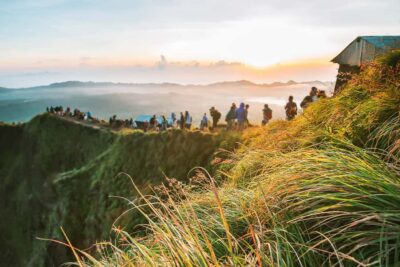
Sunrise Mount Batur Guided Hike with Breakfast
Read our review →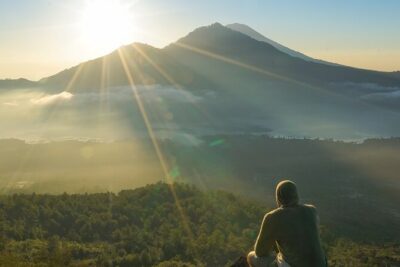
Mount Batur Sunrise Guided Hike and Natural Hot Spring
Read our review →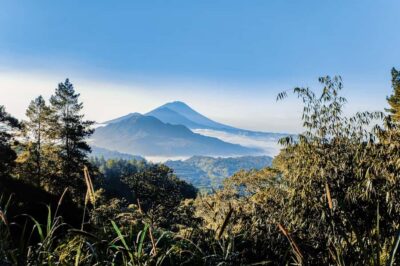
Mount Batur Sunrise Trek With Guide and Breakfast
Read our review →
Mount Batur Sunrise Hike and Natural Hot Spring Option
Read our review →
Mount Batur Sunrise Trekking Private All Inclusive
Read our review →Browse the lists this tour appears in